
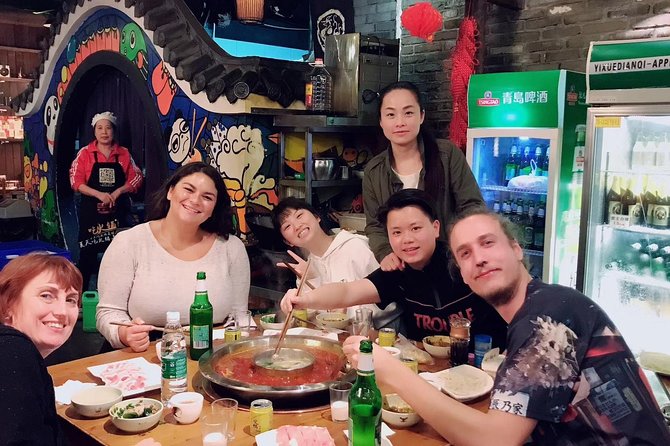
Review · CHENGDU
Half-Day Private Hot-Pot Cooking Class with a Local Market Visit
Chengdu hotpot is more than a meal. It is a hands-on lesson in how Sichuan cooks balance heat, fragrance, texture, and presentation. This private half-day experience begins in a local spice market, then moves to a cooking class where you prepare both red and white hotpot with a professional chef.
I like the two-part format. The market gives you a useful look at the ingredients before you cook, while the class turns that lesson into dinner. I also like the private setup, since your group can ask questions and work at its own pace with guide Lance. The main drawback is the heat: if chili peppers and Sichuan peppercorns are not your friends, the non-spicy pot will be your safer choice.
Key points
- Two hotpots in one class: Prepare both the spicy red pot and the mild white pot.
- Market visit first: Explore a Chengdu spice market and sample local snacks before cooking.
- Hands-on instruction: A professional chef teaches cutting, arrangement, and hotpot preparation.
- Private group experience: Only your party participates, with pickup offered.
- A full four-and-a-half hours: The schedule allows time for the market, tea, cooking, and the meal.
- Hosted by Chilli Cool China: Lance guides the outing and helps explain the food and customs.
Why Chengdu hotpot makes a good cooking class
Sichuan hotpot has been eaten in China for at least 1,700 years. The basic idea is simple: a pot of simmering broth sits in the middle of the table, and you cook ingredients in it. The pleasure comes from choosing what goes in, how long it cooks, and which dipping sauce or broth suits it best.
The Sichuan version is famous for two ingredients. Chili peppers provide heat, while Sichuan peppercorns create a tingling, almost buzzing sensation on your lips. That combination can be startling at first, but it is also what gives the food its distinctive character.
This class teaches the two main styles side by side. The red pot uses a spicy broth with chilies and Sichuan peppercorns. The white pot is non-spicy and broth-based. You also learn about the double pot, which combines both in one divided vessel.
I like this arrangement because it works for mixed groups. One person can chase the strongest heat in the red pot while another keeps things gentle in the white pot. You do not need to choose one style for the whole meal.
More Market Tour Cooking Classes in China
- Half-Day Chengdu Cooking Class with a Local Market Visit
★ 5.0 · 465 reviews - Chengdu: Cooking Class with Fresh Market Half Day Experience
★ 5.0 · 42 reviews - Half-Day steamed Buns Cooking Class with a Local Market Visit
★ 5.0 · 26 reviews
Starting at the spice market
The experience begins with a guide-led visit to a local spice market. This is not just a quick walk past food stalls. The purpose is to see the ingredients that shape Sichuan cooking and to try some local snacks along the way.
You can expect Lance to help explain what you are seeing and to connect the market visit with the cooking class that follows. That connection matters. Instead of arriving at the kitchen with a list of unfamiliar ingredients, you first get a sense of the flavors and foods used in Chengdu.
The snack tasting adds a welcome break from simply looking. It also makes the market feel like part of the food experience rather than a separate sightseeing stop. Since the tour information does not specify which snacks are served, you should treat the selection as seasonal or market-dependent rather than expecting a fixed tasting menu.
The market portion may be the most useful part for anyone interested in everyday food culture. A restaurant can show you the finished dish. A market shows you the raw materials and the setting in which local food shopping happens.
The trade-off is that markets can be lively and sensory-heavy. If you prefer a quiet, polished cooking studio from the start, this class may feel less orderly in its opening section. For me, that is part of its appeal, but it is worth considering if you want a strictly classroom-based activity.
A pause for Sichuan tea
After the market, you go to the cooking class location. The schedule includes a break with Sichuan local tea before the cooking begins.
That small pause helps the experience keep a comfortable rhythm. Four and a half hours is a substantial block of time, especially when it includes a market visit, instruction, food preparation, and a full meal. Tea gives you time to settle in before handling ingredients and paying attention to the chef.
It also adds a local touch without making the class feel rushed. You are not simply moved from one activity to another. You have a moment to sit, refresh, and prepare for the lesson.
The information provided does not specify the type of tea, how it is served, or how long the break lasts. I would view it as a short cultural pause, not a separate tea ceremony.
Learning red and white hotpot side by side
The main lesson covers both spicy and non-spicy hotpot. This is the heart of the experience, and it gives you more than a recipe to take home.
The chef guides you through the preparation of the two broths and explains how they work. You will also learn to cut ingredients and arrange dishes with decoration. That presentation work is easy to overlook, but it matters in hotpot culture. Food is placed on the table before it enters the broth, so the appearance of the ingredients becomes part of the meal.
I especially like the chance to prepare both versions. A class focused only on the red pot might teach you about heat but leave out the gentler side of Sichuan cooking. The white pot gives you a useful comparison. You can notice how the broth, seasoning, and ingredients change when chili and peppercorns are removed.
The chef leads the kitchen work, while Lance helps guide the overall experience and answer questions. Previous descriptions of the class point to clear explanations without a stiff, memorized speech. That is a good sign for anyone who wants a social lesson rather than a formal demonstration where you only watch.
You should still expect to follow instructions carefully. Cutting and arranging food may sound simple, but the class includes several stages, and the hot broth requires attention. The private format helps here. You are not competing with a large group for access to the cooking space.
Same place, a different menu:
- Flavors of Beijing: Eat Like A Real Chinese
★ 5.0 · 78 reviews - Beijing: Dumpling Making Workshop with Meal and Tea
★ 4.7 · 69 reviews - Online Cooking Class Beijing Dumplings and Cuisine by Sunflowerli Renowned Chef
★ 5.0 · 65 reviews - Shanghai-Cooking Dumpling & Meal in Local Family-w/Vegan
★ 4.9 · 36 reviews
What the private format changes
This is a private tour, so only your group participates. That gives the experience a more personal feel than a large public cooking class.
You can ask questions that fit your own interests. If you want to know more about the spice market, the red broth, the white broth, or ingredient presentation, you do not have to wait for a general question period. Lance can also adjust the conversation to your group’s pace.
A private tour is especially useful for families, couples, or small groups with different comfort levels around spicy food. One person may want a detailed explanation of Sichuan peppercorns, while another may be more interested in the practical cooking steps. The format makes both possible.
The limitation is price. At $90 per person, this is not a cheap meal or a casual market walk. You are paying for roughly four and a half hours, private guiding, a market visit, professional chef instruction, and the food you prepare. For a group that values direct attention and a full activity, the price can make sense. If you only want to eat hotpot, a restaurant will be a simpler and likely less expensive choice.
Group discounts are available, which may improve the value for larger private parties. Since the exact discount is not given, check the final booking price rather than assuming a set percentage.
Ending with the meal you prepared
After the cooking instruction, you sit down to enjoy the hotpot you made. Beers and other beverages are included as part of the meal experience.
This final stage gives the class a clear payoff. You have seen the market ingredients, learned the methods, and then tasted the result. That is more satisfying than watching someone else cook while you wait for a prepared meal.
The double-pot idea is helpful at the table. You can move between spicy and non-spicy broth, compare the flavors, and find the level of heat that works for you. The red pot may be the main attraction, but the white pot keeps the meal accessible for anyone who finds Sichuan heat too strong.
Do not assume that the class is mild simply because a non-spicy option is offered. The red pot is specifically built around chilies and Sichuan peppercorns. If you are sensitive to spice, tell the guide and chef early. The class provides a non-spicy broth, but the overall experience still centers on Sichuan flavor.
The inclusion of beer or other drinks makes the meal feel relaxed and complete. The provided details do not identify the beverage choices or quantity, so do not book this expecting a special drinks tasting. The drinks are there to accompany the hotpot.
Timing, pickup, and planning
The experience lasts about 4 hours and 30 minutes. That is long enough to make the market visit meaningful and still allow proper time for cooking and eating. It is not a quick morning activity that leaves you with only a short demonstration.
Pickup is offered, and the class is also near public transportation. Those options make the tour easier to fit into a Chengdu schedule, though the exact pickup area and meeting arrangements should be confirmed when you book.
The activity is booked, on average, about 10 days ahead. That suggests you should reserve in advance, especially if you need a particular date or are arranging the class for a private group. You receive confirmation when booking, and a mobile ticket is available.
Good weather is required. If poor weather causes cancellation, you are offered another date or a full refund. Otherwise, you can cancel for a full refund up to 24 hours before the start time. Inside that 24-hour window, the payment is not refunded and changes are not accepted.
Those rules are ordinary but important. I would avoid placing this class on the tightest day of your itinerary. The market and cooking session together make it a substantial commitment, and traffic or a delayed morning could make a private pickup stressful.
Who will get the most from this class
I would recommend this experience to anyone who wants food to be the center of a Chengdu visit. You get a local market, a guided lesson, and a shared meal in one outing.
It suits:
- First-time visitors who want an introduction to Sichuan flavors
- Couples or families who prefer a private activity
- Small groups with different spice preferences
- Food-focused visitors who want to cook instead of only dine out
- People interested in ingredients, preparation, and presentation
- Anyone who wants a structured half-day with pickup available
It may not suit you if you dislike spicy food entirely, do not enjoy market visits, or want a quick restaurant meal. The non-spicy broth helps, but the class still focuses on Sichuan hotpot and its chili-forward identity.
It is also less suitable for someone seeking a highly technical culinary course. You learn important preparation and presentation skills, but the experience is designed as a cultural cooking activity, not professional chef training.
What the strong feedback tells you
The most praised elements are the host, the clarity of the explanations, and the way the activity combines several parts without feeling like a speech. Lance receives repeated praise for being engaging, helpful, and involved from the pickup onward.
The professional kitchen instruction also earns strong approval. That matters because a market visit alone can feel passive, while a cooking class without context can feel generic. Here, the two sections support each other.
The warm human side of the experience also comes through. The class is not presented as a rigid series of commands. You should expect conversation, questions, and guidance from both Lance and the chef.
Still, keep the scale of the feedback in mind. The experience has a small number of published ratings, so I would not treat the perfect score as a guarantee for every group. Your enjoyment will depend heavily on your tolerance for spice, your interest in food preparation, and how much you value a private guide.
Should you book the Chengdu hotpot class?
Book it if you want to understand Sichuan hotpot by seeing the ingredients, preparing the food, and eating the result. The market visit gives the four-and-a-half-hour class a strong sense of place, while the two broths make it workable for people with different spice preferences.
At $90 per person, it offers good value for a private, guided food experience, particularly when pickup, professional instruction, snacks, beverages, and the meal are part of the plan. It is harder to justify if your only goal is to eat hotpot cheaply.
My practical advice is to reserve ahead, ask about pickup details, and tell Lance about your spice tolerance at the start. If your group wants a personal introduction to Chengdu food culture rather than a standard restaurant booking, this is a smart choice.
FAQ
How long does the hotpot cooking experience last?
The experience lasts approximately 4 hours and 30 minutes.
What does the tour include?
It includes a local spice market visit, local snack tasting, Sichuan tea, a cooking class, preparation of spicy and non-spicy hotpot, ingredient cutting and presentation instruction, and a meal with beer or other beverages.
Will I cook both spicy and non-spicy hotpot?
Yes. The class teaches you to prepare both the spicy red pot and the non-spicy white pot.
Is this a private activity?
Yes. Only your group participates in the activity.
Is pickup available?
Yes. Pickup is offered, and the experience is also near public transportation.
Who leads the experience?
The experience is provided by Chilli Cool China. Lance is identified as the guide, and a professional chef leads the cooking instruction.
How much does the experience cost?
The listed price is $90 per person. Group discounts are available.
Can I cancel for a full refund?
Yes. You can cancel at least 24 hours before the start time for a full refund. Cancellations or changes made within 24 hours are not accepted for a refund. If poor weather causes the experience to be canceled, you are offered another date or a full refund.
More Hands-On Workshops in China
- Private Cooking Class: Make Your Own Dim Sum In Shanghai
★ 5.0 · 27 reviews - Half-Day Sichuan Cooking Class Experience in Chengdu
★ 4.0 · 17 reviews - China’s Favourite Street Food Cooking Workshop
★ 5.0 · 16 reviews - Private Home Cooking Class with Shanghai Mama
★ 5.0 · 14 reviews
More Shopping Trips in China
- Half-Day Professional Mapo Tofu Cooking with a Local Market Visit
★ 5.0 · 19 reviews - Beijing: Dumpling-Making Class with wet Market visit
★ 5.0 · 9 reviews - Half-day Dandan Noodles Cooking Class with a Local Market Visit
★ 5.0 · 8 reviews - Beijing: Vegan Home Cooking & Local Market Tour with Sanxia
★ 4.8 · 4 reviews
Just added around China
- Private Panda Tour with Cooking Class One-day Trip★ 5.0 · 11 reviews
- Half day Chengdu Dumpling Class: Make from Scratch★ 5.0 · 8 reviews
- Half-Day Sichuan Cooking Class Experience in Chengdu★ 4.0 · 17 reviews
- Half-day Chengdu Handmade Tofu Making and Mapo Tofu Cooking Class★ 5.0 · 3 reviews
- Half-day Dandan Noodles Cooking Class with a Local Market Visit★ 5.0 · 8 reviews
- Beijing: Private Dumpling Cooking Class in Local Family★ 5.0 · 3 reviews
- Dumpling Cooking Class and Local Market Tour★ 5.0 · 3 reviews
- Private Hutong Culture Tour with Dumpling Cooking Class plus Cricket Fighting Game★ 5.0 · 5 reviews
Cooking Classes with a Market Tour, compared.
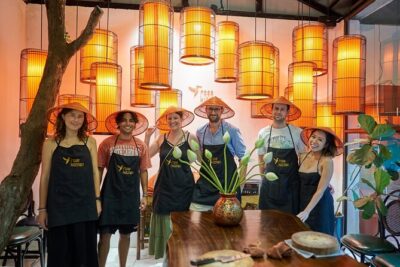
Hanoi Cooking Class: Culture, Local Market & Meaning CSR Impact
Read our review →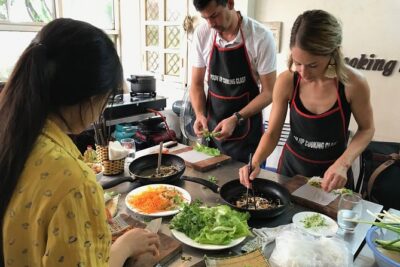
5 Traditional Dishes Hanoi Cooking Class with Market Trip
Read our review →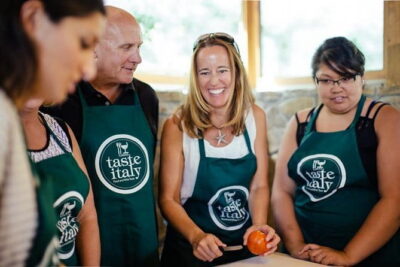
Cooking Class and Lunch at a Tuscan Farmhouse with Local Market Tour from Florence
Read our review →
Chiang Mai: Cooking Class, Market & Thai Herbs Garden Tour
Read our review →
Chiang Mai: Authentic Cooking Class with Market & Farm Visit
Read our review →
Barcelona: Paella Cooking Experience & Boqueria Market Tour
Read our review →
Cooking Class Hoi An:Local Market, Basket Boat, Fishing & Cooking
Read our review →
Hoi An Cooking Class(Market,BasketBoat Crabfishing&Cooking Class)
Read our review →Browse the lists this tour appears in