
Review · CHENGDU
Half-Day Sichuan Cooking Class Experience in Chengdu
Sichuan food is not just about heat. It is the balance of chili, peppercorn, vinegar, sugar, garlic, and savory sauces that makes this four-hour cooking class worthwhile. You cook several dishes yourself, then sit down to eat the full meal.
I like the small maximum group of five, which gives you real time at the stove instead of watching from the back of a crowded room. I also like the practical finish: you get recipe cards and can request a different Sichuan dish in advance. The main thing to consider is language. Some chefs speak good English, while others rely on gestures or a translator, so the depth of food explanation can vary.
Key points to know before booking
- Cook four Sichuan dishes: The standard menu includes Kung Pao chicken, sweet and sour pork, Sichuan-style eggplant, and steamed dumplings.
- Small-group format: The class is limited to five people, and some sessions become private lessons when fewer people book.
- Hotel transport included: Pickup begins around 4:00 pm, with return to your Chengdu hotel after the meal.
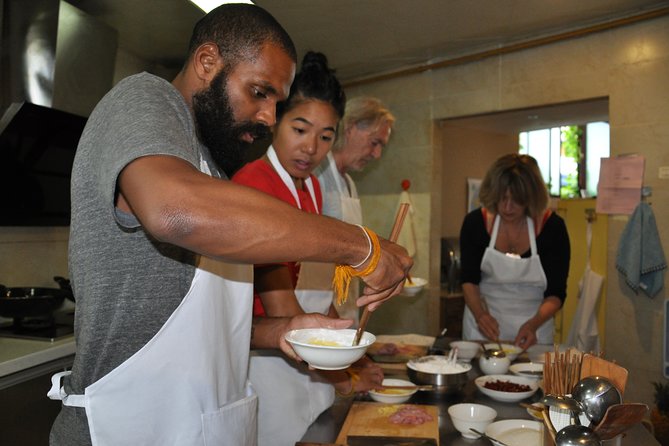
- Hands-on rather than a demonstration: You repeat the chef’s steps, including dumpling folding and finishing sauces.
- Menu changes may be possible: Ask for another dish in the Special Requirements box, though the chef cannot guarantee it.
- Expect a home-style setting: Classes have taken place in a hostel kitchen, family-run café, guesthouse, or the chef’s home.
Cooking Sichuan food in a small Chengdu kitchen
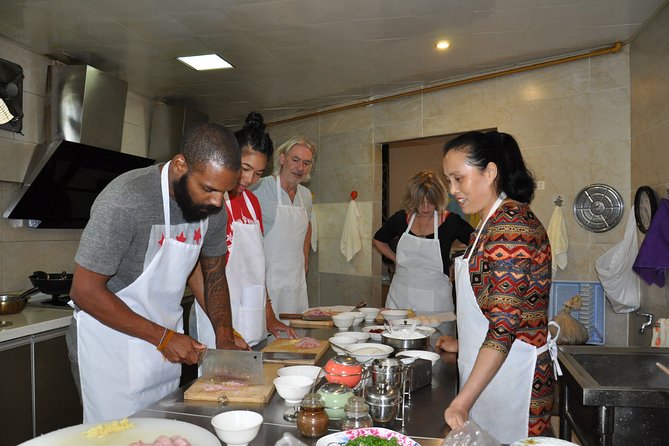
This is a useful class for you if you want to understand how Sichuan food comes together at home. It is not built around a polished culinary school with a formal lecture and a long list of technical terms. Instead, you should expect a working kitchen, a local cook, prepared ingredients, and plenty of repetition at the stove.
The class normally begins after hotel pickup at about 4:00 pm. The driver takes you to the cooking venue, which may be a hostel kitchen, a small café, a guesthouse, or the chef’s home. That variety is part of the character of the experience, but it also means the setting is not identical for every booking.
The kitchens described by past participants were simple and clean. One class took place in a café kitchen, another in a hostel, and another in the chef’s home with an assistant helping with the dishes. If you want a highly designed teaching kitchen, this may feel basic. If you want to see how local dishes are prepared in an ordinary setting, the arrangement makes sense.
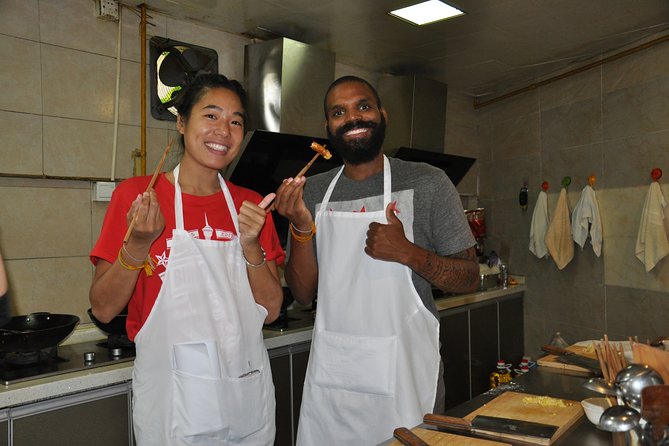
You put on a chef’s hat, listen to an introduction to Sichuan spices, and begin cooking. The chef demonstrates a step, then you repeat it. This approach is especially helpful with sauces, where the order of ingredients matters as much as the ingredients themselves.
More Hands-On Workshops in China:
- Half-Day Chengdu Cooking Class with a Local Market Visit
★ 5.0 · 465 reviews - Beijing: Dumpling Making Workshop with Meal and Tea
★ 4.7 · 69 reviews - Online Cooking Class Beijing Dumplings and Cuisine by Sunflowerli Renowned Chef
★ 5.0 · 65 reviews
What you cook during the four-hour class
The advertised menu covers four traditional dishes. The usual combination is Kung Pao chicken, sweet and sour pork, Sichuan-style fish-flavored eggplant, and soft steamed dumplings.
Kung Pao chicken gives you a useful lesson in balance. The dish is associated with dried chilies and a savory-sweet sauce, but the best version is not simply hot. You learn how the sauce, aromatics, and frying technique work together. The recipe is familiar enough to recognize at home, yet still shows why Sichuan food has more range than chili heat alone.
Sweet and sour pork can be a pleasant surprise here. The class version is described as less syrupy than the heavily sweet restaurant style often found outside China. That makes it a good dish for learning how vinegar and sugar can sharpen each other instead of producing a sticky glaze.
The fish-flavored eggplant contains no fish. The name refers to a traditional flavor profile used with fish dishes, usually built from garlic, ginger, chili, vinegar, and other seasonings. This is one of the more useful recipes to take home because eggplant absorbs sauces well and shows how a few strong ingredients can change a plain vegetable.
Dumplings add a different kind of work. You prepare the filling, fold the wrappers, and steam the finished dumplings. The chef may be especially helpful here, since neat folding takes practice. This is also the most social part of the class, particularly when several people work around the same table.
The exact menu is not fixed in every session. Other dishes prepared in past classes have included mapo tofu, twice-cooked pork, dandan noodles, pork ribs with potatoes, bean curd in XO sauce, and shrimp dumplings. You can request a dish not listed in the standard menu when booking, but the chef may not be able to provide it.
That flexibility is a real advantage for repeat visitors to China. If you already know how to make Kung Pao chicken, you can ask to replace it. One participant requested a different dish and was offered several alternatives. Still, treat the request as a preference, not a promise.
The value of learning by repetition
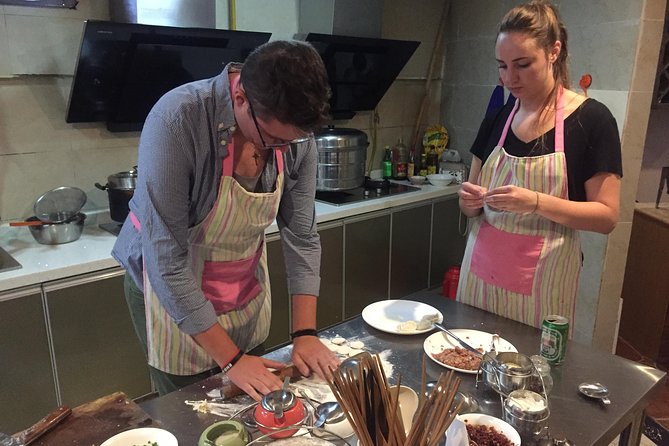
The best part of this class is the hands-on format. You do not simply watch a chef prepare dinner while someone translates a recipe. You handle ingredients, repeat the cooking steps, and finish the dishes yourself.
That matters because Sichuan cooking often depends on timing. Aromatics may need only a short time in hot oil. A sauce can change quickly as it reduces. Dumpling wrappers can split if overfilled. A written recipe helps later, but practicing the sequence gives you a better chance of reproducing the dish at home.
Past sessions have varied in how much background the chef provides. Some participants had a chef with very good English and received answers to their questions. In another class, the instructor spoke almost no English, but was friendly and communicated well enough through demonstration. Some sessions had a helper translating.
I would not book this mainly for a long history of Chinese cuisine or a technical discussion of spice chemistry. The class is strongest as a practical cooking lesson. You learn what to do, see the method, and get a chance to ask questions when communication allows.
That is also why the small group matters. With a maximum of five people, the chef can watch how you fold dumplings or handle a wok. When only one or two people book, the format can become a private lesson. Several sessions have been just one student or a couple, which gives you more control over the pace and menu.
Eating the meal you prepared
After cooking, you add the final touches and sit down for dinner. The meal is included in the price, and it is made up of the dishes you have just prepared.
This turns the class into more than a lesson. You can taste how the sauces work together, compare your results with the chef’s version, and talk with the other people in the group. It is a relaxed way to finish the afternoon, with no separate restaurant reservation needed.
Plan your appetite carefully. One morning version of the class had students eating each dish as soon as it was cooked, and the same principle applies to the afternoon session. You are preparing a full meal, not a few sample bites.
The food is the most consistently praised part of the experience. Participants have found the recipes easy enough to repeat at home, and one person cooked a dish soon after returning home with good results. That is a useful test of a cooking class: the recipe should not remain trapped in your holiday notebook.
More Half-Day Experiences in China:
- Half-Day steamed Buns Cooking Class with a Local Market Visit
★ 5.0 · 26 reviews - Half-Day Professional Mapo Tofu Cooking with a Local Market Visit
★ 5.0 · 19 reviews - Half-day Dandan Noodles Cooking Class with a Local Market Visit
★ 5.0 · 8 reviews - Half-Day Private Hot-Pot Cooking Class with a Local Market Visit
★ 5.0 · 3 reviews
What the setting tells you about Chengdu food
A class held in a modest kitchen can teach you something a polished restaurant cannot. Restaurant dishes arrive finished. Here, you see the basic work behind them: chopping, mixing, filling, folding, frying, steaming, and seasoning.
Some classes have taken place at a family-run café or a guesthouse with a small kitchen. One session included a market visit to look at the ingredients before cooking, though that should not be treated as a guaranteed part of every booking. The main promise is the cooking class itself.
The surroundings may also be less formal than you expect. You may cook in a small kitchen with an assistant, or in the chef’s home. That can make the encounter feel personal, but it also means the quality of the experience depends on the individual chef and the day’s group size.
If you want a polished, standardized class with identical instruction every time, this format may frustrate you. If you enjoy meeting local people and seeing how food is prepared in a working environment, the informal setting is one of its best features.
Hotel pickup, timing, and group size
The class starts at approximately 4:00 pm and lasts about four hours, though the exact length depends on the number of participants. Pickup and drop-off at your Chengdu hotel are included.
The included transport is useful in Chengdu, especially when you do not know the location of a small kitchen or family café. Some drivers may speak little English, so it is wise to have your hotel name and address available in Chinese. The driver’s job is mainly transport, not a guided introduction to the city.
The small group limit is more important than it may look. A cooking class becomes much less useful when several people need to share one cutting board or wait for a turn at the stove. With no more than five participants, you should have a better chance of taking part in each dish.
The course can also change with the group. A private or two-person class may move at a comfortable pace and allow a menu substitution. A larger group may feel more social, but the class could take longer. The stated duration is an estimate rather than a fixed promise.
Is $83.99 a fair price?
At $83.99 per person, this is not the cheapest way to eat Sichuan food in Chengdu. You can have a delicious restaurant meal for far less, and a simple kitchen setting may make the price feel high at first.
The value comes from the package. You receive hotel pickup and return, a local English-speaking chef or translation help depending on the session, hands-on instruction, dinner, a small group, and recipes to take home. If you use those recipes later, the class gives you something beyond one meal.
The price makes more sense for people who care about the process. If you simply want to taste Sichuan dishes, spend the money on several restaurant meals instead. If you want to cook, ask questions, practice techniques, and bring the meal home in a useful form, the cost is easier to justify.
The variable English instruction is the main factor that affects value. A chef with strong English can explain ingredients and flavor combinations in detail. A chef with limited English may still teach the method well through demonstration, but you should expect less cultural and culinary explanation.
Who should book this cooking class?
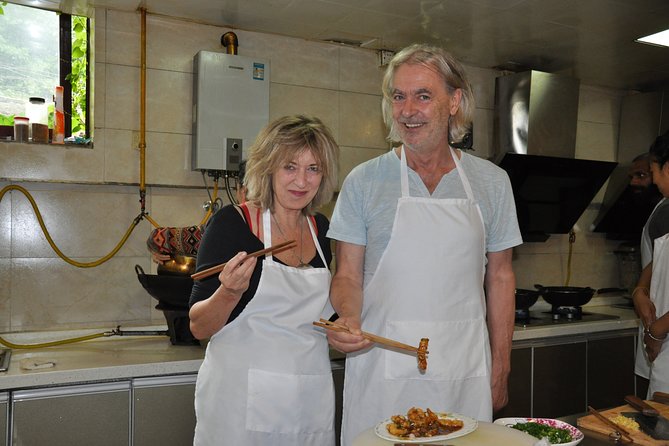
I would recommend it to food-focused visitors, couples, families with older children, and solo participants who like practical activities. The class has been described as a manageable challenge for a parent and teenage sons, with the group moving from simpler dishes to harder tasks such as dumpling folding.
It also suits you if you want an evening activity that does not feel like another sightseeing stop. You cook, eat, meet local staff, and leave with recipes. That is a good fit for a first visit to Chengdu, when you want a direct introduction to local food.
You may want to skip it if you need a formal culinary lesson in fluent English. The instruction can be excellent, but it is not consistent enough to promise a detailed lecture on ingredients, regional food traditions, or the science of every sauce.
Vegetarians should ask about the menu before booking. The standard dishes include chicken and pork, and the available alternatives also include meat or seafood in several cases. The supplied information does not confirm a vegetarian menu, so do not assume one will be provided.
Free cancellation is available if you cancel at least 24 hours before the local start time. Changes made later are not accepted, so submit any menu request when booking rather than waiting until the day of the class.
Final call: book it for the cooking, not the ceremony
Book this experience if you want to prepare real Sichuan dishes in a small, informal setting and then eat your own work. The strongest features are the hands-on format, personal attention, flexible menu in some sessions, and recipes that you can actually use at home.
Pass if your priority is a polished cooking school, guaranteed fluent English, or a fixed professional kitchen. The setting and instruction can vary, and the $83.99 price is high for a meal alone.
For the right person, this is a practical Chengdu food experience. You leave with a fuller understanding of how Sichuan flavors are built, a satisfying dinner, and at least a chance of recreating part of the meal after your China trip.
FAQ
What time does the cooking class start?
The stated start time is 4:00 pm.
How long does the class last?
The class lasts about four hours, although the course duration depends on the number of participants.
How many people can join the class?
The activity has a maximum of five participants.
Which dishes will I cook?
The standard dishes include Kung Pao chicken, sweet and sour pork, Sichuan-style fish-flavored eggplant, and soft steamed dumplings. The menu can vary by session.
Can I request a different Sichuan dish?
Yes. You can request another dish in the Special Requirements box when booking. The chef will try to accommodate the request, but it cannot be guaranteed.
Is hotel transportation included?
Yes. Hotel pickup and drop-off are included.
Can I cancel for a full refund?
Yes, if you cancel at least 24 hours before the experience start time. Cancellations made less than 24 hours in advance are not refunded, and late changes are not accepted.
Just added around China
- Private Panda Tour with Cooking Class One-day Trip★ 5.0 · 11 reviews
- Half day Chengdu Dumpling Class: Make from Scratch★ 5.0 · 8 reviews
- Half-Day Private Hot-Pot Cooking Class with a Local Market Visit★ 5.0 · 3 reviews
- Half-day Chengdu Handmade Tofu Making and Mapo Tofu Cooking Class★ 5.0 · 3 reviews
- Half-day Dandan Noodles Cooking Class with a Local Market Visit★ 5.0 · 8 reviews
- Beijing: Private Dumpling Cooking Class in Local Family★ 5.0 · 3 reviews
- Dumpling Cooking Class and Local Market Tour★ 5.0 · 3 reviews
- Private Hutong Culture Tour with Dumpling Cooking Class plus Cricket Fighting Game★ 5.0 · 5 reviews
Cooking Classes, compared.
Half-Day Thai Cooking Class at Organic Farm in Chiang Mai
Read our review →
Florence: Pasta Cooking Class with Unlimited Wine
Read our review →
3 in 1 Cooking Class near Navona: Fettuccine, Ravioli & Tiramisu
Read our review →
Hanoi Cooking Class: Culture, Local Market & Meaning CSR Impact
Read our review →
5 Traditional Dishes Hanoi Cooking Class with Market Trip
Read our review →
Cooking Class and Lunch at a Tuscan Farmhouse with Local Market Tour from Florence
Read our review →
Chiang Mai: Cooking Class, Market & Thai Herbs Garden Tour
Read our review →Browse the lists this tour appears in