
Review · CRETE
Chania Cooking Class-The Authentic Enjoy traditional Cretan meal
Cretan cooking is built for sharing, and this class takes that idea seriously. Near Chania, Veerna and her family welcome you with homemade cookies, Greek coffee, or a cool house drink, then put you to work making a full meal in an outdoor kitchen beside an olive grove. You will roll dough, stuff vegetables, fold grape leaves, and help prepare lamb kleftiko.
I like the hands-on cooking and the clear link between food and Cretan customs, especially the story behind the thieves dinner. I also like the warm family setting, where Veerna leads the class and Alex, Kostas, and other family members help keep the food, wine, and conversation moving. The main thing to consider is timing: you may not eat the meal until roughly three hours into the four-hour session, so have a small snack first.
Key points to know before booking
- Make a full Cretan feast: Prepare lamb kleftiko, dolmades, stuffed vegetables, dakos, tzatziki, savory kalitsounia, and desserts.
- Learn from Veerna and her family: The class blends practical instruction with stories about Cretan food and traditions.
- Expect a generous meal: Local wine, soft drinks, lunch or dinner, and all cooking ingredients are included.
- Plan for a late meal: Appetizers are prepared near the end of the cooking work, then served first at the table.
- Pickup costs extra: The class begins and ends in Nerokouros, outside central Chania, with transfers available for an additional fee.
- Allow four to five hours: The exact length depends on the number of participants, and class size can vary.
A Cretan kitchen near Chania, not a staged food show
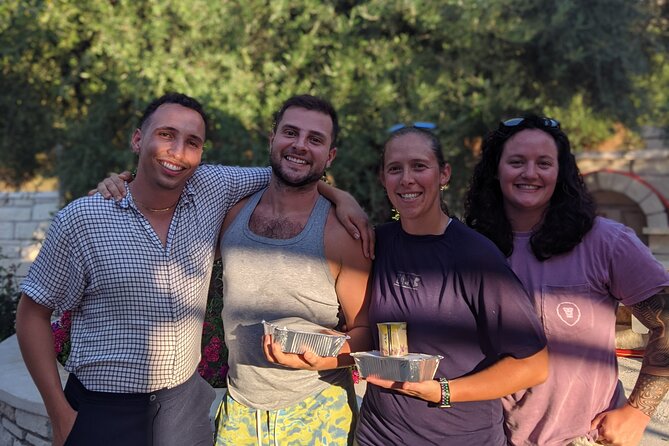
This experience takes place in Nerokouros, at the Chania Cooking Class meeting point. The exact location is sent after confirmation. The setting described by participants includes an outdoor cooking area, shaded seating, a garden, and olive trees, giving the class a relaxed country feel rather than the atmosphere of a formal culinary school.
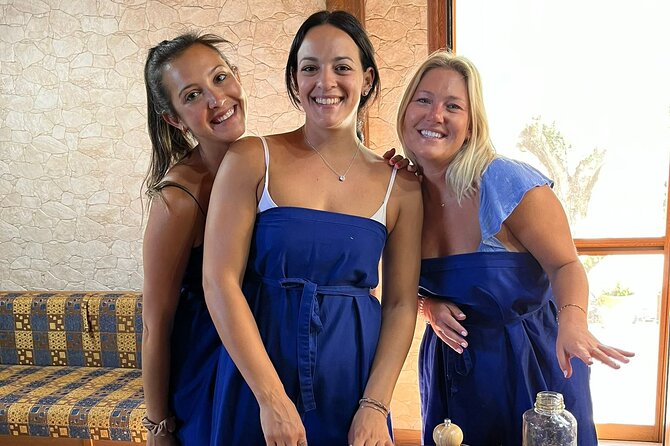
Veerna leads the instruction, with help from family members including Alex and Kostas. The family connection matters here. You are not simply shown a finished dish and handed a recipe. You chop, mix, roll, stuff, and shape the food yourself, with the hosts moving through the group to explain the steps.
That makes this a good choice if you want more than a meal. You will still eat very well, but the point is to understand how a Cretan household might turn simple local ingredients into a long shared table.
The class is offered in English. Solo participants and groups of fewer than four can ask to join another group, subject to availability. The maximum listed capacity is 40 people, although the experiences described by participants include groups of about 20 and 27. That means the size can vary, so ask ahead if a small class is important to you.
More Cooking Classes with Lunch in Greece
- Santorini: Cooking Class with Lunch and Wine Tasting
★ 4.8 · 289 reviews - Greek Cooking Class with a Local Chef, Wine, & Meal in Drios
★ 4.9 · 246 reviews - Half-Day Greek Cooking Class of Zakynthian Culture with Lunch
★ 5.0 · 215 reviews
Coffee, cookies, and the menu lesson
The opening is gentle. Veerna welcomes you with a homemade refreshment or Greek coffee, along with homemade cookies. This gives you time to settle in before the cooking begins.
Next comes an explanation of the Mediterranean-based menu. This is useful because the dishes are not random Greek favorites. They form a meal with a clear Cretan rhythm: small starters, filled vegetables, lamb cooked slowly in a sealed packet, cheese pies, and sweet spoon preserves.
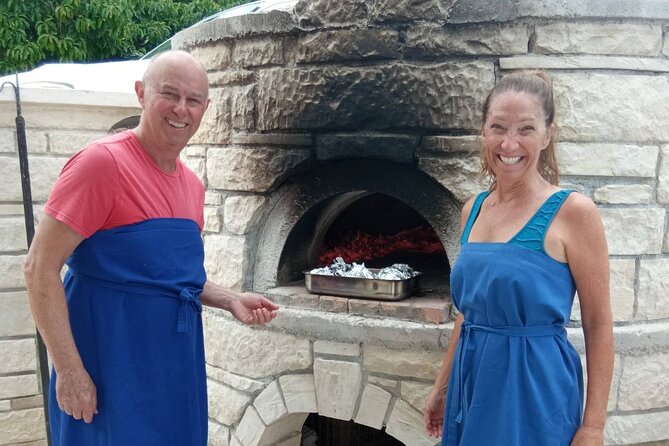
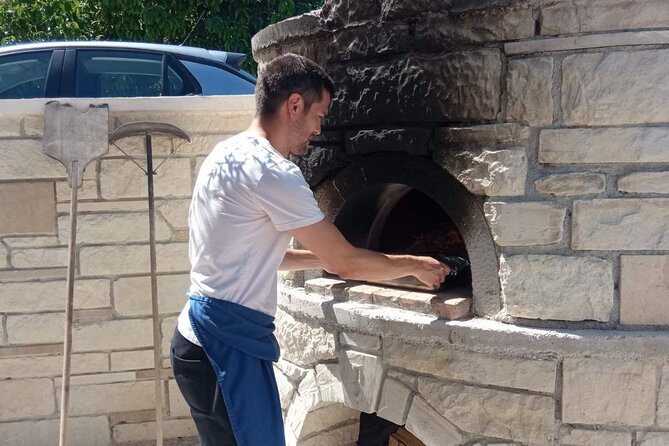
The cultural explanation of kleftiko is one of the more interesting parts. The dish is also called thieves dinner, and the story connects the sealed lamb pouch with a way of cooking that concealed the smell and smoke of a meal. You will prepare lamb with goat cheese and vegetables inside a pouch, then it is cooked in the oven. The slow cooking produces tender meat, though you should understand that your role is preparation and learning, not standing over the oven for the whole cooking time.
The menu also gives you a chance to see how Cretan food uses a few strong ingredients in several ways. Yogurt becomes tzatziki, cheese fills both savory and sweet kalitsounia, tomatoes anchor dakos and stuffed vegetables, and herbs bring flavor to rice fillings and greens.
Rolling dough for savory and sweet kalitsounia
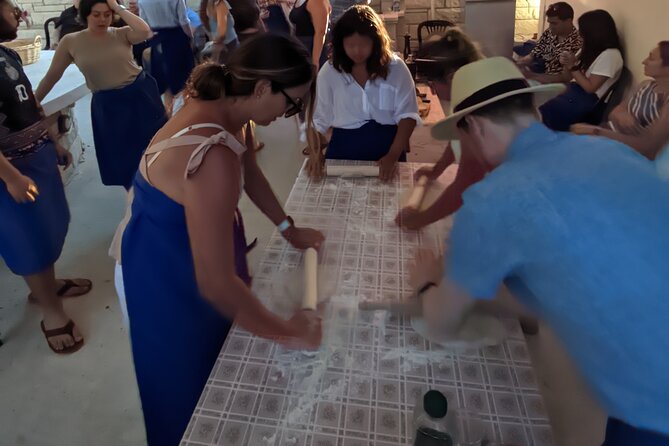
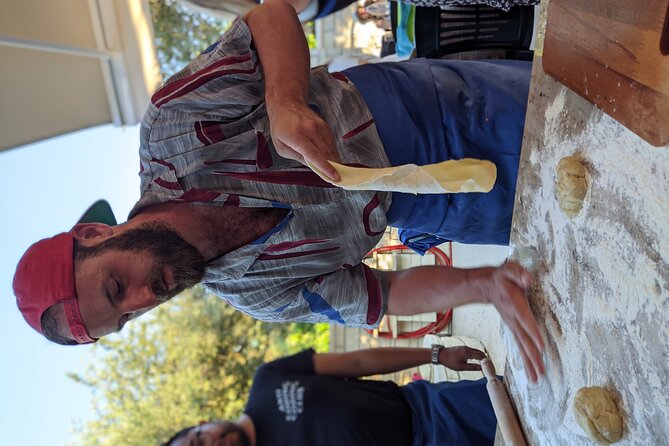
One of the most hands-on parts is making kalitsounia. You use rolling pins to roll out the dough, then prepare both savory and sweet versions.
The savory pies are filled with cheese, wild greens, and herbs from the organic garden. This is a good example of Cretan cooking at its best: the filling is modest, but the combination of salty cheese, herbs, and pastry gives it plenty of character.
The sweet kalitsounia use cheese again, this time with honey. You may also have yogurt with spoon sweet, made from wild fruit cooked into a thick preserve. Spoon sweets are served in small portions, often as a sweet accent rather than a large dessert. Here they provide a distinctly Greek finish to the meal.
Rolling pastry takes a bit of patience, especially in a group where people work at different speeds. That is part of the appeal, but it also means the class is not a quick demonstration. You are expected to participate, and the meal takes shape gradually.
Stuffed vegetables, dolmades, and the Cretan table
You will prepare tomatoes, peppers, and zucchini stuffed with rice and herbs, along with dolmades, the familiar grape leaves filled with a seasoned rice mixture.
Stuffed vegetables are a useful lesson in Cretan home cooking because the filling is not heavy or elaborate. Rice, herbs, and vegetables do most of the work. Dolmades add a different technique: grape leaves must be filled and rolled tightly enough to hold their shape, but not so tightly that the rice has no room to expand.
These tasks are easy for beginners to follow, and the class is not aimed only at trained cooks. One participant with professional cooking experience appreciated the instruction, while many other participants arrived without much cooking experience. The group format allows the instructors to explain basic techniques while still adding cultural context.
Do not expect a separate lesson for every dish. Several preparations happen at once, with different people handling different jobs. That keeps the class moving, but it also means you may not personally complete every single step. If you want to take part in a specific preparation, say so.
Same place, a different menu:
- Athens: Classic Cooking Class with Market Visit and Wine
★ 5.0 · 1,101 reviews - Athens: Food Market Visit and Cooking Class with Wine
★ 4.9 · 1,087 reviews - Greek Cuisine Cooking Class in Santorini with Recipes and Wine
★ 5.0 · 969 reviews - Naxos: Half-Day Cooking Class at Basiliko Family Tavern
★ 5.0 · 887 reviews
Dakos, tzatziki, and appetizers saved for last
The appetizers are prepared toward the end, although they are eaten first. The spread includes ntakos, tzatziki, and Cretan salad.
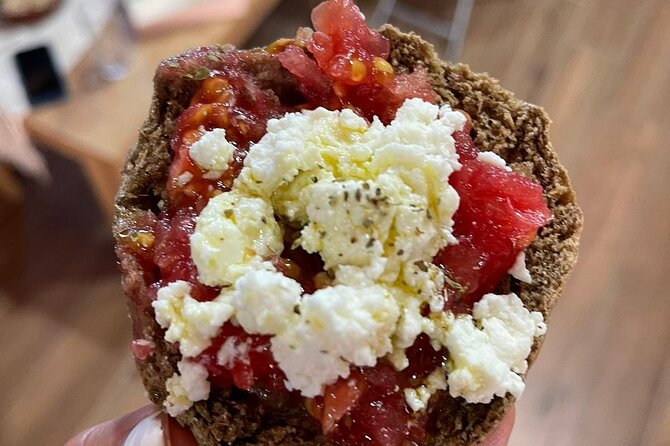
Ntakos uses baked Cretan bread or rusks topped with grated or crushed tomato and goat cheese. The rusks provide a firm, crunchy base, while the tomato softens them just enough. This is a simple dish, but it shows how Cretan cooks make a satisfying starter from bread, ripe produce, cheese, and olive oil.
Tzatziki brings yogurt, cucumber, and garlic to the table. The Cretan salad adds more fresh vegetables and herbs. These dishes are less demanding than the pastry or stuffed vegetables, which is why they are prepared later. They also give you something fresh to eat while the main dishes finish cooking.
The order is worth noting. You are not served small bites throughout the whole class. Most of the meal comes after the cooking work is done. One practical tip is to eat something light before arriving, particularly if you choose the lunch session. You may be working for close to three hours before sitting down to the full spread.
The thieves dinner and a very full table
Once the cooking is finished, you sit down to eat the food you helped prepare. The menu includes lamb kleftiko, stuffed vegetables, dolmades, savory kalitsounia, ntakos, tzatziki, Cretan salad, sweet kalitsounia, and yogurt with spoon sweet.
This is a substantial meal for a four-hour activity. Local wine and soft drinks are included, and the food is served as a shared feast rather than a tasting menu. If you enjoy trying several dishes, the value is strong. You are not paying only for a lesson and a small plate at the end. You are also receiving a full lunch or dinner, drinks, ingredients, and instruction.
The lamb kleftiko is likely to be the centerpiece. It is prepared with goat cheese and vegetables in a sealed pouch, then cooked until tender. The stuffed vegetables and dolmades provide a softer, herb-filled contrast, while the pies and starters add salt, crunch, and acidity.
Leave room for dessert. The sweet kalitsounia with honey and the yogurt with spoon sweet are small but rich endings. If you have dietary restrictions, ask before booking or include the information in your booking form. The supplied details do not promise alternative menus.
Why the family setting matters
The best part of this class is not any single recipe. It is the way food, family, and place are tied together.
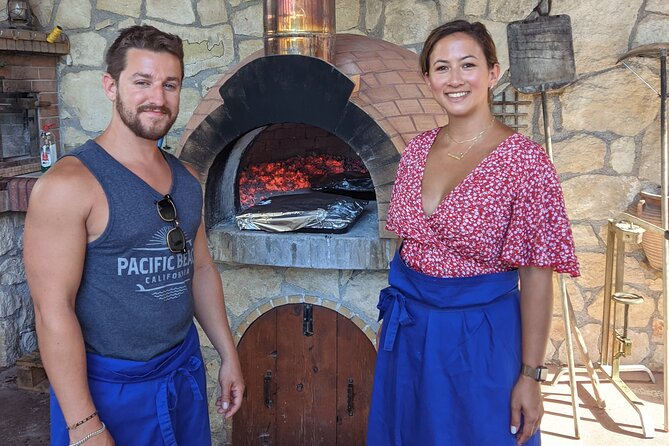
Veerna is described as the main teacher and host, with Alex and Kostas helping during the experience. Their hospitality is a central part of the visit. You may hear family stories connected with Crete, meet other people at the table, and spend time in a home-style setting instead of moving from one commercial kitchen station to another.
That atmosphere can make the class feel personal, but it also means you should arrive ready for a social experience. You will likely cook with people from different countries and share the final meal with them. If you want a private lesson focused only on your own cooking technique, this may not be the right format.
The family approach also helps beginners. You can ask questions as you work, and the pace is described as steady rather than rushed. Still, a larger group can mean less individual attention. The listed capacity reaches 40, and group sizes have varied, so ask about the expected number of participants if that affects your decision.
Lunch or dinner, and how long to allow
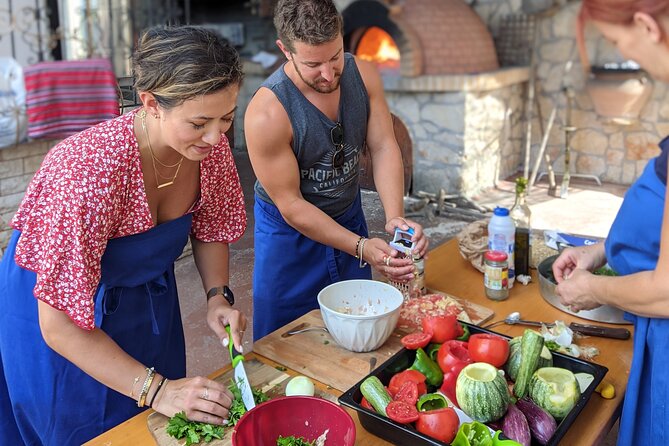
You can choose a lunch session from 10:00 to 14:00 or a dinner session from 16:00 to 20:00. The stated duration is about four hours, but it can run from four to five hours depending on the number of participants.
The lunch option works well if you want a substantial midday meal and a cooking activity that fills part of your day near Chania. The dinner option lets you spend the afternoon elsewhere before arriving, then finish with a long communal meal.
Do not schedule a tight connection, ferry departure, or evening reservation immediately afterward. The class ends back at the meeting point, but the preparation and meal can take longer when the group is large.
The meeting point is in Nerokouros, listed with the postal codes 731 00 and 733 00. Transportation is not included in the basic price. A transfer service is available for an extra fee based on your location, using a nine-seat van and an electric vehicle. The ride may be shared with other participants, so ask for the exact pickup cost and arrangements before you commit.
Is the $133 price a good value?
The listed price is $133.08 per person. The provider also gives adult pricing of 105 EUR, with children ages 5 to 12 priced at 50 EUR and children ages 0 to 4 free. Since the two figures do not match exactly, check the final price shown for your date and booking before paying.
For an adult, the cost is reasonable if you value both the food and the activity. The fee includes all ingredients, alcoholic drinks, soft drinks, and the full lunch or dinner. You also receive instruction, access to a family-run setting, and the chance to make several dishes rather than one simple recipe.
The value is weaker if you mainly want a quick meal or a short cooking demonstration. You will spend most of half a day at the class, and transportation from Chania is extra. The class makes more sense for people who enjoy cooking, long meals, conversation, and local food traditions.
Children can take part at a reduced price, and young children up to age four are free. Since the class includes rolling dough, stuffing vegetables, and working around food preparation areas, adults should decide how much active participation is suitable for their children.
Who should book this cooking class?
I would choose this for you if you want to:
- Learn several Cretan dishes in one session
- Meet a family connected with the cooking and teaching
- Eat a generous meal with wine
- Take part in a social activity near Chania
- Learn food traditions as well as recipes
- Cook with a partner, family, or mixed group
It is particularly well suited to food lovers who do not consider themselves expert cooks. The instructions are accessible, but the menu has enough variety to keep experienced cooks interested.
Solo participants are welcome, though you may be placed with another group. Couples and families also fit the format well. Older children and teenagers can take part in rolling, chopping, stuffing, and shaping the food, while the shared table gives the class a friendly finish.
I would hesitate if you need a very small class, want to eat early, or have strict dietary requirements that have not been confirmed in advance. I would also ask about the group size if individual instruction is important to you.
Booking details worth checking
Confirmation is received at booking. The exact location is emailed after confirmation, and the activity ends at the same meeting point where it begins.
Free cancellation is available up to 24 hours before the start time for a full refund. Changes or cancellations made within 24 hours are not accepted for a refund. Service animals are allowed.
The class is typically booked well ahead, with an average booking time of about 49 days. Solo participants and groups smaller than four should contact the provider to check availability. Groups of more than 10 can ask about a discount.
Should you book Chania Cooking Class: The Authentic?
Yes, if you want a full afternoon or evening built around food, family, and participation. The combination of lamb kleftiko, dolmades, stuffed vegetables, kalitsounia, dakos, tzatziki, wine, and dessert gives you a real meal to work toward, not just a token tasting.
Book it with realistic expectations. You may share the class with a sizable group, the meal comes late, and transport costs extra. But if you arrive hungry for Cretan cooking rather than a polished restaurant performance, this offers a warm and practical way to spend time near Chania. Bring an appetite, a little patience, and room for dessert.
FAQ
Where does the Chania cooking class take place?
The class starts and ends at Chania Cooking Class in Nerokouros, Crete. The exact location is emailed after confirmation.
How long does the cooking class last?
The activity lasts about four hours, but it may take four to five hours depending on the number of participants.
Is pickup from Chania included?
No. Transfer service is available for an extra fee based on your location. Transportation uses a nine-seat van and an electric vehicle, and you may share the vehicle with other participants.
What food will I prepare?
You will prepare ntakos, tzatziki, Cretan salad, savory and sweet kalitsounia, lamb kleftiko, stuffed tomatoes, peppers and zucchini, and dolmades.
Are drinks included?
Yes. Local wine, alcoholic beverages, and soft drinks are included.
Can I choose lunch or dinner?
Yes. Lunch is offered from 10:00 to 14:00, and dinner is offered from 16:00 to 20:00.
Is the class suitable for solo participants?
Solo participants and groups smaller than four can contact the provider to ask about joining another group, subject to availability.
What is the cancellation policy?
You can cancel at least 24 hours before the start time for a full refund. Cancellations or changes made less than 24 hours before the start time are not refunded.
More Hands-On Workshops in Greece
- Greek Cooking Class in Athens Including Rooftop Dinner with Acropolis View
★ 5.0 · 826 reviews - Greek Small-Group Athens Cooking Class & Dinner
★ 5.0 · 574 reviews - Chania: Authentic Cooking Class in the White Mountains
★ 4.9 · 529 reviews - Naxos:Half-day cooking class at Basiliko
★ 5.0 · 457 reviews
Just added around Greece
- 5 Hours Private Cooking Classes in Langadas Thessalonikis★ 5.0 · 14 reviews
- Cook & Dine With a Local Greek Family in Thessaloniki★ 5.0 · 26 reviews
- Thessaloniki: Greek Cooking Class, Market visit and Lunch★ 5.0 · 15 reviews
- Thessaloniki: Cooking & Dining Experience with Greek Family★ 4.9 · 85 reviews
- Rhodes: Cooking Lesson and Wine Tasting with Lunch★ 4.9 · 93 reviews
- Tasting Rhodes: Cooking Class, Wine Tasting & more in an Authentic Greek village★ 5.0 · 66 reviews
- Rhodes Wine & Food Tour: 10 Meal Course Lunch, Wine Tasting, Cooking Class★ 5.0 · 109 reviews
- Cooking Classes in Mykonos Greece★ 5.0 · 180 reviews
Cooking Classes with Lunch or Dinner, compared.
New Orleans Demonstration Cooking Class with Meal
Read our review →
Pasta Making & Wine Tasting with Dinner in Frascati from Rome
Read our review →
New Orleans Hands-On Cooking Class with Meal
Read our review →
Palermo: Pizza and Gelato Cooking Class with Dinner and Wine
Read our review →
Krabi: Cooking Class at Thai Charm Cooking School with Meal
Read our review →
Paris Evening Cooking Class French Dinner and Market Visit Option
Read our review →
Hanoi: 5 Local Dishes Cooking Class with Meal & Market Visit
Read our review →Browse the lists this tour appears in