
Review · MOROCCAN
Traditional Moroccan and Berber cooking classes
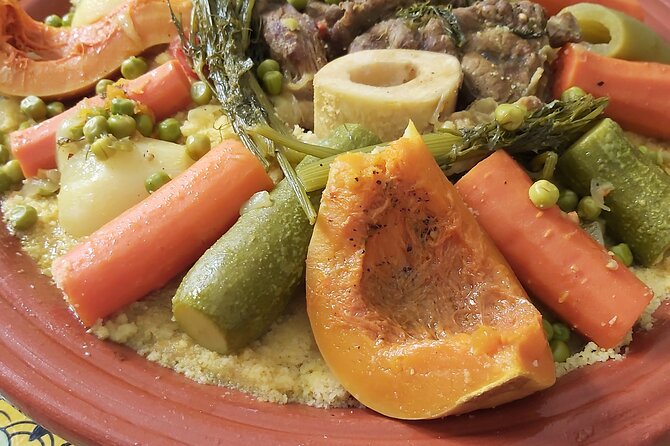
The best part of this Essaouira cooking class is that you do not simply watch someone prepare Moroccan food. You work through the meal yourself, from cutting vegetables to seasoning and cooking, then sit down together to eat it in a Moroccan home. Khadija hosts in French, English, Arabic, and Berber, which makes the class easy to follow for a wide mix of visitors.
I like the small private setting, where only your group takes part, and the focus on local produce, cleanliness, and traditional methods. I also like the useful range of dishes, from tagine and couscous to pastilla, zaalouk, and taktouka, rather than one fixed recipe for every booking.
The main consideration is timing. Three hours gives you a satisfying introduction, but it is not a full culinary school course. You also need to reach 21 Av. Princesse Lalla Amina yourself, since transportation is not included.
Key points
- Cook, do not just watch: You take part in chopping, seasoning, and preparing the meal.
- Hosted by Khadija: The class is offered in French, English, Arabic, and Berber.
- Choose from Moroccan staples: Possible dishes include tagine, couscous, pastilla, Moroccan salads, zaalouk, and taktouka.
- A private home setting: Only your group participates, followed by a shared meal.
- Start with tea and cakes: The class opens with mint tea or spiced coffee and small Moroccan pastries.
- Good value at $58.31: The price covers the class, food, drinks, and recipe cards, but not transportation.
A Moroccan welcome over mint tea
The class begins at 21 Av. Princesse Lalla Amina in Essaouira. This is also where the experience ends, so you do not need to arrange a second pickup point after the meal.
Khadija welcomes you in a Moroccan setting and introduces the plan for the session over mint tea and small Moroccan cakes. You may also taste spiced coffee. This opening matters because Moroccan food is not only about a list of ingredients. The tea ritual, the way food is shared, and the unhurried conversation all help explain how the meal fits into daily life.
You will learn the basics of preparing Moroccan mint tea as part of the welcome. That makes the first few minutes useful even before the cooking starts. If you enjoy food experiences that include conversation and local customs, this gives the class a warmer start than a standard demonstration kitchen.
The host speaks French, English, Arabic, and Berber. You should still expect a hands-on class rather than a formal lecture. The language choice is especially helpful if your group includes people with different levels of French or Arabic.
More Moroccan Cooking Classes in Morocco:
- Marrakech: Moroccan Cooking Class with Pickup
★ 4.6 · 1,862 reviews - Marrakech: Traditional Moroccan Cooking Class & Market Visit
★ 4.8 · 1,861 reviews - Marrakesh: Moroccan Dishes Cooking Class with a Local Chef
★ 5.0 · 1,615 reviews
Choosing recipes and understanding Moroccan spices
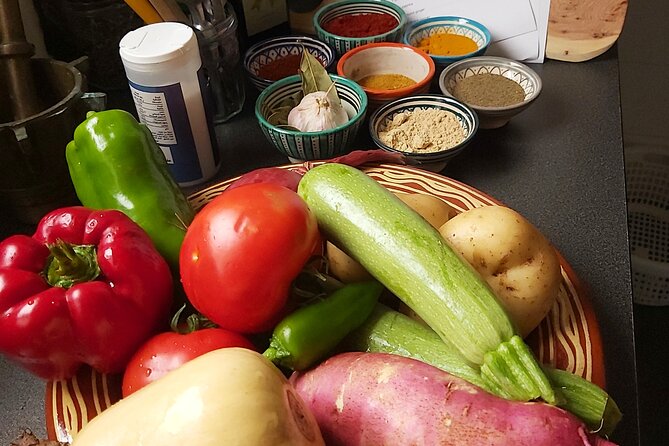
The recipes are presented after the welcome. The possible menu can include a tagine, couscous, pastilla, Moroccan salads, or a combination of these dishes. The exact selection may depend on the menu chosen for your session and your group’s food preferences.
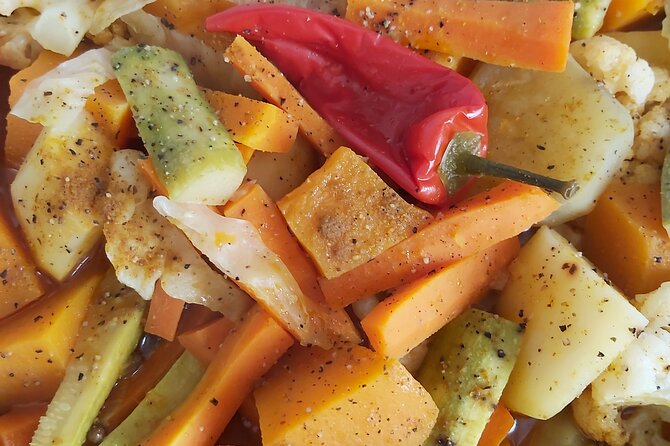
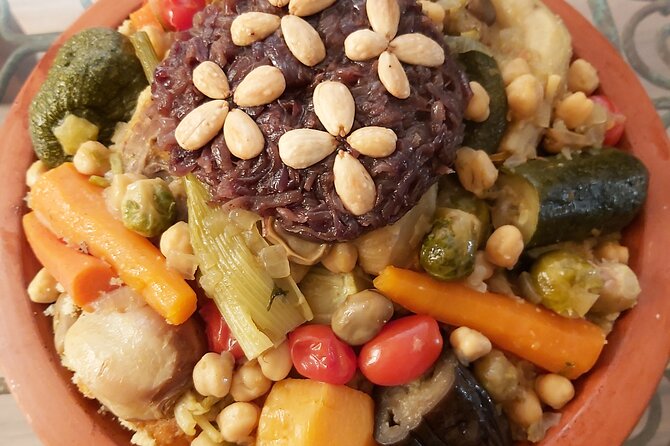
This range is one of the strongest parts of the class. Tagine teaches you about slow cooking and careful seasoning. Couscous shows a different method, with steaming at the center. Pastilla introduces a crisp pastry preparation. Salads such as carrot salad with chermoula, aubergine zaalouk, and taktouka bring vegetables and spice to the table in a very different form.
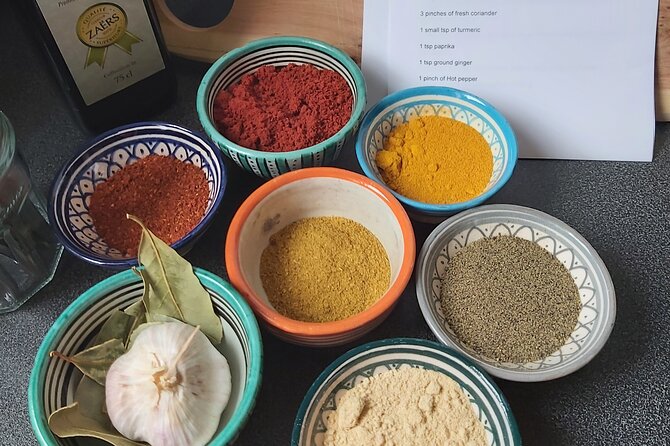
Khadija also presents the main spices and condiments used in Moroccan cooking. You will hear about ras el hanout, cumin, saffron, cinnamon, preserved lemon, and olives, along with the role each plays in a dish.
This section is valuable because Moroccan cooking can look deceptively simple. A short list of ingredients can produce very different flavors depending on when you add the spices, how you balance salt and acidity, and how long the dish cooks. Preserved lemon, for example, is not just a lemon substitute, while ras el hanout is not a single spice but a traditional blend whose character can vary.
The class is also built around fresh, mainly local produce. That does not mean every ingredient is guaranteed to come from Essaouira, but the cooking style places emphasis on buying good produce and limiting unnecessary food miles. It is a practical touch rather than a slogan, and it supports the home-style feel of the meal.
Cutting, seasoning, and cooking the main dish
The heart of the class is the preparation of the main course. You take part in each stage, including cutting ingredients and seasoning them. This is the point at which the experience becomes more useful than simply eating a Moroccan meal at a restaurant.
If your menu includes tagine, you can expect a simmered preparation. You will see how the ingredients are arranged and seasoned before the slow cooking does its work. The class does not promise a single fixed tagine recipe, so the vegetables, meat, or other ingredients will depend on the chosen menu.
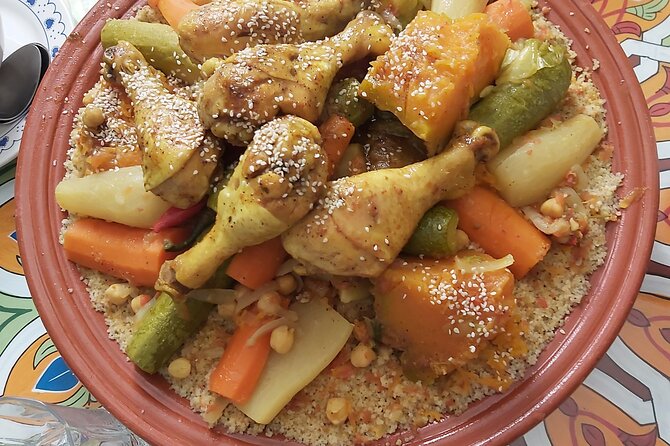
Couscous focuses on steaming. That technique is worth learning because a good couscous texture depends on more than adding hot water to grains. The method requires attention and patience, and it gives you something you can repeat at home.
Pastilla brings a different challenge. Its crisp pastry requires care during preparation, and the contrast between the delicate outer layer and the seasoned filling is part of what makes the dish special. This may be the most technically demanding choice, especially if your group wants to learn several steps rather than rush through the meal.
The class gives you a chance to ask questions as you cook. You are not left to guess why a spice is added or when a preparation is ready. The emphasis is on showing you the process, then having you help carry it out.
For that reason, wear clothes you are comfortable cooking in and arrive ready to participate. There is no need to treat this as a passive tasting. The more willing you are to chop, mix, season, and ask questions, the more you will take away.
Moroccan salads that balance the meal
The salad portion adds welcome variety to the class. Possible preparations include carrot salad with chermoula, aubergine zaalouk, and taktouka.
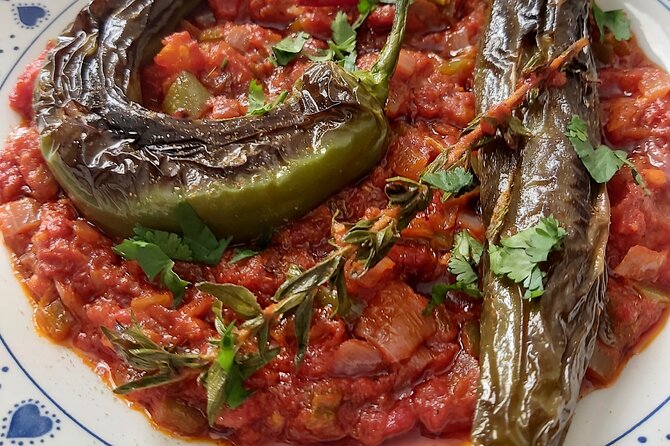
These are not throwaway side dishes. They show how Moroccan meals balance cooked vegetables, herbs, spices, and acidity. Carrot salad with chermoula gives you a lesson in how a herb and spice mixture can change a plain vegetable. Zaalouk shows how aubergine can be cooked down into a soft, seasoned dish. Taktouka offers another way to handle vegetables with Moroccan seasoning.
This part of the meal also suits home cooks because the techniques are generally easier to repeat than a complicated pastry. If you are looking for ideas that can work in an ordinary kitchen, pay close attention here.
The salads help make the final meal feel complete. You are not simply preparing one large dish and calling it lunch or dinner. You are building a table with different textures and flavors, much as you would in a Moroccan home.
More Hands-On Workshops in Morocco:
- Moroccan Cooking Class & Marrakech Market Visit with Chef Khmisa
★ 5.0 · 1,504 reviews - Half-Day Cooking Class with Local Chef Laila in Marrakech
★ 5.0 · 952 reviews - Marrakech: Moroccan Cooking Class with a Local Family
★ 4.9 · 668 reviews - Marrakech: Moroccan Cuisine Cooking Class in Local Home
★ 4.8 · 508 reviews
Sitting down to eat what you prepared
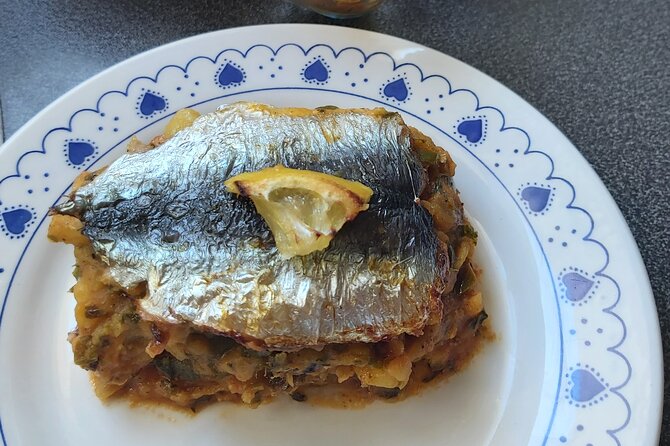
Once the dishes are ready, you sit down with your group and eat the meal together. The shared table is an important part of the experience, especially because the class takes place in a private home rather than a large commercial cooking studio.
The meal is paired with the food and drink included in the booking. Mint tea or spiced coffee is included, as is bottled water. The small Moroccan cakes served at the start are also included, so you are not paying extra for the basic refreshments connected with the class.
A shared meal gives you time to talk with Khadija and ask questions that may not come up while you are chopping. The atmosphere is intended to be friendly and personal, and the private format means your group does not have to keep pace with a large room of strangers.
That privacy can be especially useful for families, couples, or friends with particular food interests. The available information says food wishes were taken into account for one booking, so it is sensible to mention preferences when you reserve. Do not assume every dietary request can be met unless it is confirmed, but the host’s approach appears flexible enough to discuss the menu.
The private format also has a tradeoff. You will not get the energy or variety of a large market tour or a busy group workshop. If you want a social event with many fellow participants, this is probably not the right match. If you want direct attention and a relaxed meal, the small setting makes more sense.
Recipe cards and a useful finish
The session ends with recipe cards and a final discussion. This is a small but valuable detail. Food classes can be enjoyable in the moment, then difficult to repeat once you are back home. Written recipes give you a better chance of making the dish again.
Use the closing discussion to clarify measurements, spice substitutions, cooking times, and the best order for preparing the dishes. The class covers several possible recipes, so you may want to check exactly which cards apply to your menu.
The recipe cards also make the class more than a one-time meal. You can bring home a practical reminder of the techniques, especially for tagine, Moroccan salads, or couscous. You should not expect a full professional cookbook, but the cards are a useful follow-up to a three-hour introduction.
What $58.31 includes, and what it does not
At $58.31 per person, this is a fair price if you value both instruction and a full meal. You are paying for about three hours of teaching, ingredients, tea or coffee, bottled water, Moroccan cakes, the meal you prepare, and recipe cards.
The value is strongest for someone who would otherwise book a meal and a separate cultural activity. Here, the food and the setting are combined, and you take part in making the dishes rather than simply ordering them.
You should factor in the cost and time of reaching the meeting point. Private transportation is not included, and you are responsible for getting to 21 Av. Princesse Lalla Amina in Essaouira. The location is near public transportation, which helps, but the provided details do not include a hotel pickup service.
The class is booked about 13 days ahead on average. That is a useful planning clue: you do not need to reserve many months out in every case, but you should not leave it until the last day if the date matters to you. Confirmation is provided at booking.
The activity has a current rating of 5 out of 5 from 40 ratings, with 100 percent recommending it. That record supports the strongest parts of the experience: the food, Khadija’s hosting, the clear explanations, and the private atmosphere. Still, a rating cannot tell you whether the menu, pace, or home setting suits your own preferences, so use those details to make the decision.
Who will enjoy this Essaouira cooking class
I would choose this class if you want a personal introduction to Moroccan food and prefer doing something active. It fits couples, families, friends, and small private groups who want to cook and eat together.
It is also a good choice if you are curious about more than tagine. The chance to cover couscous, pastilla, preserved lemon, ras el hanout, Moroccan salads, and mint tea gives the session a broader reach than a single-recipe lesson.
The class may suit you less if you want a market visit, a restaurant-style demonstration, or a long professional course. There is no market tour listed, and the three-hour schedule is designed as an introduction rather than advanced training.
You should also consider the home setting. It offers a personal atmosphere and direct contact with the host, but it may feel less polished or structured than a purpose-built culinary school. That is not necessarily a flaw. It simply means you are choosing hospitality and cultural exchange over a formal classroom.
The experience is suitable for service animals, and it is near public transportation. No other accessibility details are provided, so contact the provider before booking if you need specific arrangements.
Booking, cancellation, and weather details
You can cancel free of charge up to 24 hours before the local start time for a full refund. Cancellations or changes made less than 24 hours before the experience are not refunded or accepted.
The class requires good weather. If poor weather causes cancellation, you will be offered another date or a full refund. The activity also requires a minimum number of participants, and if that condition is not met, you will be offered another date or experience, or a full refund.
These terms are worth noting even though the class itself is indoors or home-based in the information provided. Keep the local cutoff time in mind, particularly if your Essaouira schedule is changing.
Should you book it?
Book this class if you want to learn by doing, eat a Moroccan meal in a private home, and leave with recipes you can use later. The strongest reasons are Khadija’s multilingual hosting, the hands-on preparation, the choice of traditional dishes, and the chance to discuss Moroccan spices in a relaxed setting.
Skip it if you want transportation included, a large social group, or a full-day food tour with markets and several stops. At $58.31, the class offers good value for a focused three-hour experience, especially when you count the meal and drinks, but its appeal depends on enjoying close, practical participation.
FAQ
How long does the Moroccan cooking class last?
The class lasts approximately three hours.
Where does the experience begin and end?
It begins at 21 Av. Princesse Lalla Amina, Essaouira 44000, Morocco, and ends back at the same meeting point.
What dishes can I learn to prepare?
Possible dishes include tagine, couscous, pastilla, Moroccan salads, carrot salad with chermoula, aubergine zaalouk, and taktouka. The exact menu may vary.
Is food and drink included?
Yes. The experience includes mint tea or spiced coffee, bottled water, small Moroccan cakes, and the meal prepared during the class.
Is transportation included?
No. Private transportation is not included. The meeting point is near public transportation.
Is this a private activity?
Yes. Only your group participates in the activity.
What is the cancellation policy?
You can cancel up to 24 hours before the local start time for a full refund. Changes or cancellations made less than 24 hours before the start time are not accepted or refunded. If poor weather or an insufficient minimum number of participants causes cancellation, you will be offered another date or experience, or a full refund.
Just added around Morocco
- Pastries / Baking class★ 5.0 · 3 reviews
- Moroccan Cuisine Fez Cooking Class★ 5.0 · 87 reviews
- Moroccan Cooking Class at a Riad in Fez★ 5.0 · 4 reviews
- Moroccan Cooking Workshop in Fez★ 5.0 · 3 reviews
- Full Day Fes Cooking Class Experience★ 3.5 · 3 reviews
- 2 Hours Cooking Experience in Fez★ 5.0 · 3 reviews
- Unforgettable Cooking Class in Fez★ 5.0 · 89 reviews
- Fez Souk 4-Hour Traditional Home Cooking★ 5.0 · 3 reviews
Moroccan Cooking Classes, compared.
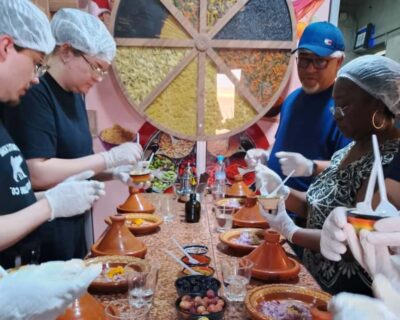
Marrakech: Moroccan Cooking Class with Pickup
Read our review →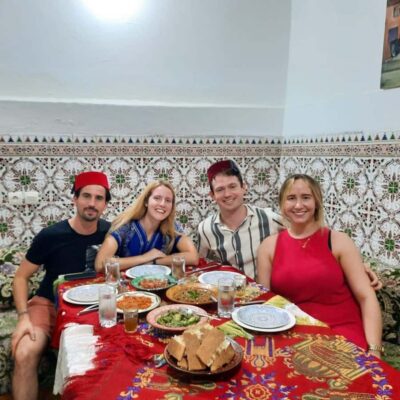
Marrakech: Traditional Moroccan Cooking Class & Market Visit
Read our review →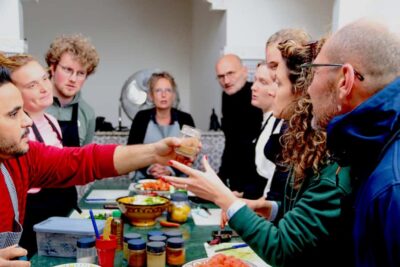
Marrakesh: Moroccan Dishes Cooking Class with a Local Chef
Read our review →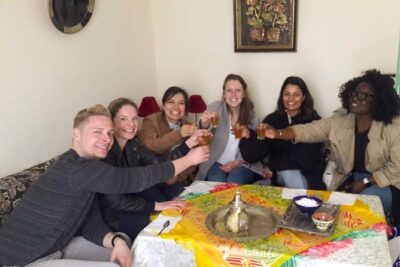
Moroccan Cooking Class & Marrakech Market Visit with Chef Khmisa
Read our review →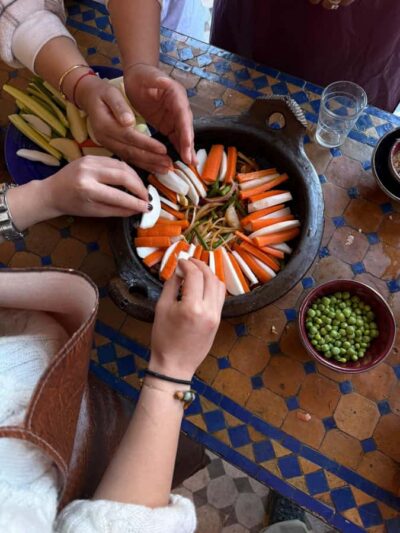
Marrakech: Moroccan Cooking Class with a Local Family
Read our review →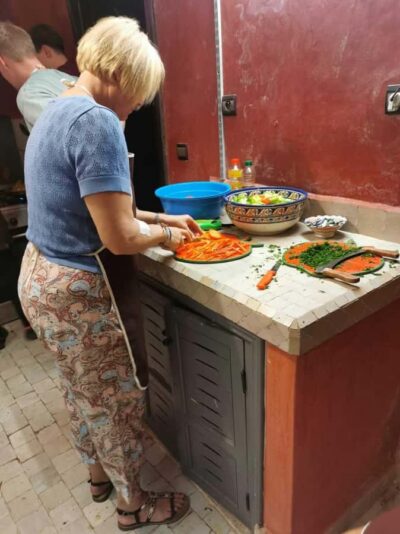
Marrakech: Moroccan Cuisine Cooking Class in Local Home
Read our review →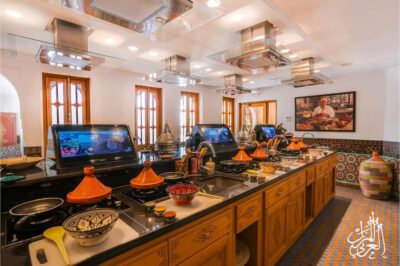
Marrakech: Moroccan Cooking Workshop at La Maison Arabe
Read our review →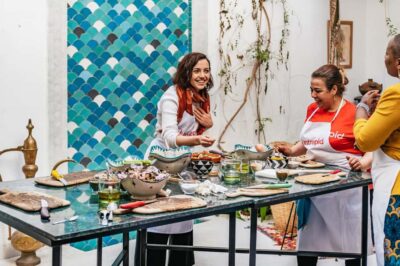
Marrakech: Tajine Cooking Class in a Traditional Riad
Read our review →Browse the lists this tour appears in