
Review · FEZ
Full Day Fes Cooking Class Experience
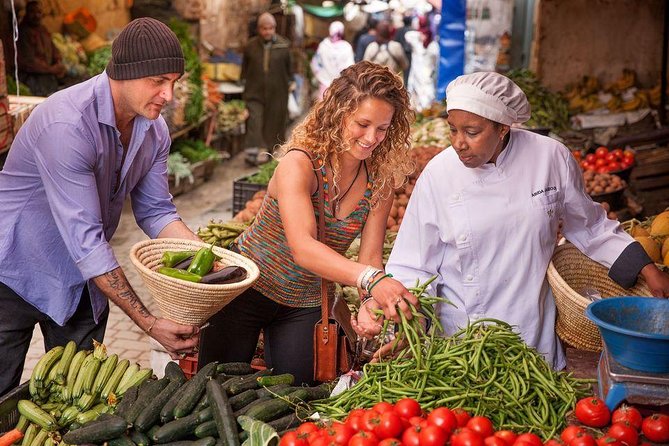
The best part of this Fez experience is that the meal begins before the cooking. You visit a local market, choose ingredients and spices, then return to a 14th-century Moroccan house to prepare lunch with a professional chef. The day ends around a round table, with the food you helped make in front of you.
I like the choice of dishes, from tagine and couscous to pastilla, Moroccan breads, pastries, and mint tea. I also like the family-style setting, which can give you a warmer look at Moroccan food than a restaurant meal. The main drawback is the fixed, non-refundable booking policy, so you should commit only when your plans are firm.
Key points to know before booking
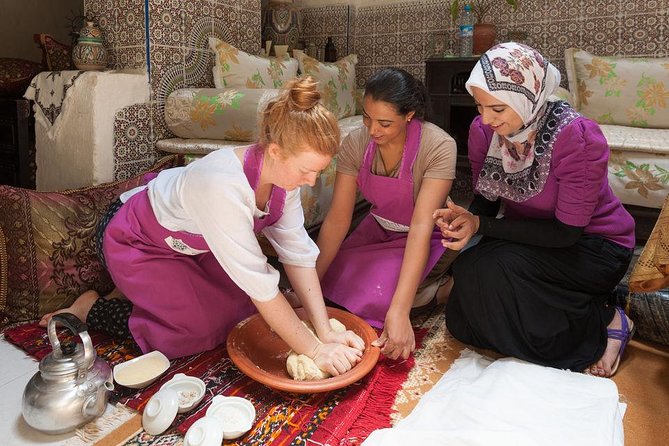
- Market shopping comes first: You help choose ingredients and see spices such as ras el-hanout, saffron, ginger, turmeric, cinnamon, anise, fenugreek, and sesame.
- The setting is part of the lesson: Cooking takes place in a traditional 14th-century Moroccan home with a garden.
- You choose from a broad menu: Options include tagine, kefta, chicken maqalli, couscous, pastilla, soups, salads, bread, pastries, and mint tea.
- Bread can be baked at a local farran: You may prepare khubz, harcha, msemen, or baghrir, then take the dough to a neighborhood oven.
- Transfers remove much of the day’s hassle: Hotel or riad pickup and drop-off are included in an air-conditioned vehicle.
- The group is capped at 15 people: That is small enough for a personal feel, though it is not a private class.
A Fez cooking day that starts at the market
This is not a quick demonstration followed by a plate of food. The class is planned as a full-day outing, beginning at about 9:30 a.m. with pickup in Fez. You are driven to the cooking location, where you discuss the menu with the master chef before buying what you need.
That opening conversation matters. Moroccan cooking covers much more ground than the familiar tagine found on restaurant menus. You can focus on a single main dish, build a meal around several salads, work on bread, or spend time with pastries and tea. The exact combination depends on the menu discussion and the available choices.
The market visit gives the food a useful sense of place. Instead of seeing spices as anonymous powders in a tourist shop, you can connect them with the dishes you are about to make. Ras el-hanout is the best-known blend, but the selection may also include anise, fenugreek, sesame, cinnamon, saffron, ginger, and turmeric.
You should expect this part to be practical rather than a formal sightseeing tour. The point is to collect ingredients and learn how they fit into Moroccan cooking. It also gives you a chance to ask about unfamiliar items before you handle them in the kitchen.
More Hands-On Workshops in Fez:
- Cooking Class – Moroccan cuisine
★ 5.0 · 124 reviews - Unforgettable Cooking Class in Fez
★ 5.0 · 89 reviews - Moroccan Cuisine Fez Cooking Class
★ 5.0 · 87 reviews
Choosing between tagine, couscous, pastilla, and more
The menu is one of the strongest features here because it lets you shape the class around your interests. You might choose tagine, the slow-cooked dish served in the familiar conical pot, or kefta with tomato sauce and eggs. Chicken maqalli with preserved lemons is another classic option.
For something suited to a larger table, couscous with seven vegetables is available. Lamb with prunes offers a sweet and savory direction, while meshwi focuses on grilled food. These choices make the class useful even if you have already eaten Moroccan food in restaurants, since you can concentrate on a dish you want to understand better.
There are also traditional soups and salads. Harira is a well-known Moroccan soup, while herbal soup is another option. Salads can include ttaktouka with chopped cucumbers, tomatoes, and onions, bakoula, rice and tuna salad, potato salad, or green bean salad.
This range is especially helpful for mixed groups. One person can be curious about tagine, another about salads, and someone else can focus on bread or sweets. The trade-off is that a broad menu can make the day feel less focused if you want a very structured, single-recipe lesson. Ask early how the selected dishes will be divided among the group.
Working inside a 14th-century Moroccan home
The house gives the class much of its character. It is a traditional Moroccan home dating to the 14th century, with a garden and a round table for the final meal. That setting feels more connected to everyday food culture than a purpose-built school kitchen.
I like the round-table arrangement because it suits Moroccan hospitality. You sit together rather than being separated at individual restaurant tables, and the meal becomes a social part of the day. A published account of this experience described a family that was especially kind and welcoming, with humor, family anecdotes, and a clear sense of how food fits into local life.
That personal side is worth keeping in mind when you book. This is not designed as a slick cooking show with a stage and a polished script. The appeal lies in spending time in a home setting, hearing stories, and learning through shared work.
The home may not suit everyone. If you prefer a fast class with modern equipment and a tightly timed sequence, this setting could feel slower and less formal. If you like food connected to people and place, the slower pace is part of the value.
Learning the techniques behind Moroccan food
After the market, you roll up your sleeves and begin preparing the meal with the chef. The description promises instruction in classic Moroccan dishes, but it does not set out a minute-by-minute lesson plan or name a specific chef. You should therefore expect a hands-on group class rather than a private masterclass built around advanced culinary theory.
That format can still teach you plenty. You may learn how the selected spices are used, how ingredients are combined, and how bread or pastries are handled. The useful question is not only what goes into the pot, but how the chef balances savory, sweet, fresh, and fragrant flavors.
Tagine preparation can help you understand why Moroccan food often depends on patience and careful seasoning. Couscous and salads show a different side of the cuisine, with vegetables and herbs carrying more of the meal. Bread and pastry work adds another set of skills, especially for visitors who want something they can repeat at home.
The group limit is 15 people. That is modest enough to keep the activity from feeling like a large demonstration, but it is not an intimate one-on-one lesson. Your experience will depend partly on how many people choose the same dish and how much direct time the chef can give each participant.
More Full-Day Experiences in Fez:
- Full Day Thai Cooking at Farm (Chiang Mai)
★ 5.0 · 1,127 reviews - Tokyo: Mount Fuji and Hakone Full Day Tour with Ramen Making
★ 4.5 · 476 reviews - Full-Day Jeep Safari Tour with Cooking Lesson
★ 5.0 · 284 reviews - Paris: Full-Day Cooking Class with 3-Course Lunch
★ 4.9 · 135 reviews
Taking bread to the neighborhood farran
The bread option adds a special local detail. You can prepare ordinary khubz, khubz with olives, harcha, msemen, or baghrir. The dough can then be taken to a local farran, or neighborhood oven, for baking.
This step connects the class with a working food tradition rather than leaving everything inside the teaching kitchen. It also gives you a better sense of how bread fits into daily Moroccan life. The farran is not just another cooking station. It is part of the local food system, where bread is baked outside the home.
The choices cover several textures and styles. Harcha is a Moroccan semolina bread, while baghrir is known for its porous surface. Msemen is another Moroccan bread with a layered, folded shape. Khubz is the everyday Arabic-style bread, and the olive version adds a simple variation.
The timing may depend on the day’s program and the bakery’s routine, so do not count on a long bakery visit unless the chef confirms it. Still, this is one of the most distinctive parts of the experience, especially if bread interests you more than making another tagine.
Making pastries and finishing with mint tea
The class can also include cookies, baklava, and other Moroccan sweets. This is useful if you want to understand the pastry side of the cuisine, which can receive less attention than tagine and couscous on a standard food tour.
Pastry work often takes patience, so the selection may affect how much time remains for the main meal. If sweets are your priority, say so during the menu discussion. If you are more interested in savory food, ask how the pastry option will fit into the schedule.
Moroccan mint tea is included among the possible preparations. It is a natural way to finish the cooking session and the meal. Tea also gives you a quieter moment after the market and kitchen work, when you can sit around the table and enjoy the food without rushing to the next attraction.
The meal itself is included. You are not simply handed a recipe and sent away. You sit down to eat what the group has prepared, which makes the final course feel like the reward for the work earlier in the day.
Why the transfers add real value
Pickup and drop-off at your hotel or riad are included, along with transportation in an air-conditioned vehicle and a professional driver. In Fez, that is more than a minor convenience. You do not need to arrange a taxi for an early start, find the house on your own, or work out how to return after a long cooking day.
The experience begins at about 9:30 a.m., but the exact pickup time may depend on where you are staying. Give the operator your hotel or riad details when booking, and keep your phone available for coordination.
The vehicle also helps if your cooking location is outside the part of Fez where you are staying. The provided information does not give a precise driving time or identify the house’s neighborhood, so you should not plan another fixed activity immediately after the class.
The driver is part of the included service, but the cooking instruction comes from the local master chef. No guide name is provided, so you should not book this expecting a named culinary personality. The draw is the setting, menu choice, and local format.
Is $63.43 a fair price for a full day?
At $63.43 per person, the price looks reasonable for a full-day experience that includes transport, market shopping, ingredients, instruction, and lunch. You are paying for several connected services rather than just a cooking lesson.
The value is strongest if you want an activity that combines food, local shopping, and a home setting. A comparable restaurant meal would not normally include the market visit, hands-on preparation, bread option, and transport. The price is also easier to justify if you would otherwise pay separately for taxis and a food tour.
The value is less clear if you want a private lesson or a highly technical class. The maximum group size is 15, and the details do not promise private instruction. You may also find that the day feels long if your main goal is simply to eat Moroccan food.
I would treat this as a cultural food experience with cooking at its center, not as professional chef training. That distinction helps set the right expectations.
Who will enjoy this class most?
I would recommend it to you if you like learning by doing, want to meet local people through food, and have a full day available in Fez. It is also a good fit for families and small groups who can enjoy choosing dishes and sharing the final meal.
The experience may be particularly meaningful for anyone interested in Moroccan hospitality. The home setting, family anecdotes, market stop, and shared table create more personal contact than a standard restaurant booking.
It is less suitable if you dislike group activities, need a guaranteed private guide, or want a short lesson between sightseeing stops. The full-day format requires a relaxed schedule. Since the booking cannot be refunded or changed, you should also avoid booking until your Fez plans are settled.
The class is available with a mobile ticket, and service animals are allowed. Confirmation is provided at booking. For questions or coordination, the listed phone number is 00212660047248.
My recommendation for this Fez cooking experience
I would book this if you want your Fez food experience to include the people, shopping, and preparation behind the meal. The market and farran visit give the day more substance than a class held entirely indoors, while the 14th-century home and garden provide a memorable setting.
I would skip it if you want a short, polished demonstration or need flexible cancellation. The small group limit is helpful, but 15 people can still feel social rather than private. For the price, though, the combination of transfers, ingredients, cooking, and lunch is solid value.
The best reason to choose it is simple: you leave with more than a full stomach. You get a better sense of how Moroccan dishes move from market stall to kitchen to shared table.
FAQ
Where does the cooking class take place?
The class takes place in a traditional Moroccan house in Fez that was built in the 14th century and has a garden.
What time does the experience start?
The stated start time is 9:30 a.m.
How long does the cooking experience last?
It is described as a full-day experience lasting approximately one day.
Is hotel or riad pickup included?
Yes. Pickup and drop-off at your hotel or riad are included.
Is transportation included?
Yes. Transportation is provided in an air-conditioned vehicle with a professional driver.
How many people can join the class?
The maximum group size is 15 people.
Do I visit a local market?
Yes. The itinerary includes a local market visit to buy ingredients and discover Moroccan spices.
What food can I learn to prepare?
Possible dishes include tagine, kefta with tomato sauce and eggs, chicken maqalli, lamb with prunes, couscous with seven vegetables, pastilla, Moroccan soups, salads, breads, pastries, and mint tea.
Can I make Moroccan bread?
Yes. Bread options include khubz, olive khubz, harcha, msemen, and baghrir. The bread can be taken to a local farran for baking.
Is lunch included?
Yes. Ingredients, cooking instruction, and lunch are included. Extras are not included.
Can I cancel or change my booking?
No. The experience is non-refundable and cannot be changed for any reason.
Just added around Fez
- Moroccan Cuisine Fez Cooking Class★ 5.0 · 87 reviews
- Moroccan Cooking Class at a Riad in Fez★ 5.0 · 4 reviews
- Moroccan Cooking Workshop in Fez★ 5.0 · 3 reviews
- 2 Hours Cooking Experience in Fez★ 5.0 · 3 reviews
- Unforgettable Cooking Class in Fez★ 5.0 · 89 reviews
- Fez Souk 4-Hour Traditional Home Cooking★ 5.0 · 3 reviews
- Fez Cooking Class★ 5.0 · 33 reviews
- Fez view cooking with grandmother★ 5.0 · 70 reviews
Cooking Classes, compared.
Half-Day Thai Cooking Class at Organic Farm in Chiang Mai
Read our review →
Florence: Pasta Cooking Class with Unlimited Wine
Read our review →
3 in 1 Cooking Class near Navona: Fettuccine, Ravioli & Tiramisu
Read our review →
Hanoi Cooking Class: Culture, Local Market & Meaning CSR Impact
Read our review →
5 Traditional Dishes Hanoi Cooking Class with Market Trip
Read our review →
Cooking Class and Lunch at a Tuscan Farmhouse with Local Market Tour from Florence
Read our review →
Chiang Mai: Cooking Class, Market & Thai Herbs Garden Tour
Read our review →Browse the lists this tour appears in