
Review · HANOI
Hanoi: Cook 2–5 Vietnamese Dishes With Traditional Tea Ceremony
The best part of this Hanoi class is that you do the work yourself. You choose dishes, prepare ingredients, cook a full meal, and finish with a traditional Vietnamese tea ceremony in a quiet garden villa. It feels more personal than simply eating at a restaurant.
I like the community support tied to each booking, including charity meals and education programs. I also like the practical setup: air conditioning, unlimited mineral water, luggage storage, and all tools supplied. The main thing to consider is the format. A join-in booking covers two dishes, while five dishes are reserved for private groups, and the overall capacity can reach 100 people.
Key points at a glance
- Choose your cooking format: Join other diners for two signature dishes, or book privately and prepare five.
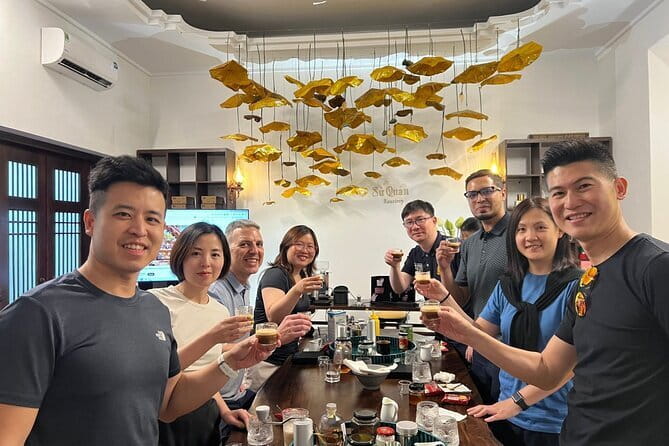
- Finish with tea and stories: The tea ceremony explains how tea fits into Vietnamese daily life and culture.
- Cook in a garden villa: The air-conditioned setting offers a quiet break from Hanoi’s traffic and heat.
- Meet a helpful cooking team: Alex, Aroma, Tung, Linh, Hai, and Chloe are among the hosts named in the experience details.
- Your booking has a social purpose: Funds help provide cancer patient meals, education programs, and work for ethnic minority women.
What the Rose Kitchen experience is really like
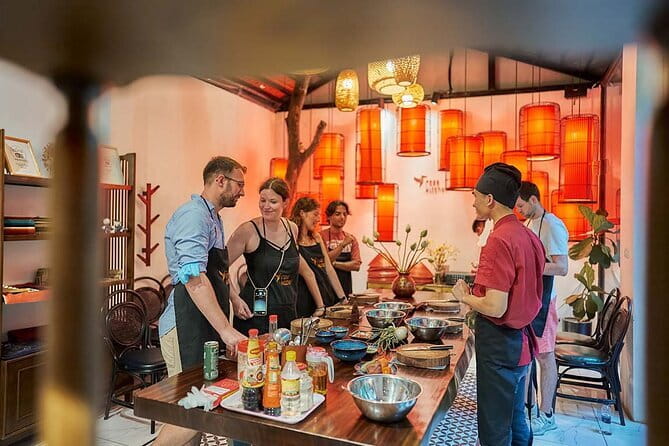
This is a four-hour Hanoi food activity built around participation, not a quick demonstration. You arrive at Rose Kitchen Cooking Class at 7/32, Ngh. 173/75 Đ. Hoàng Hoa Thám, in Ba Đình, and the session ends at the same place.
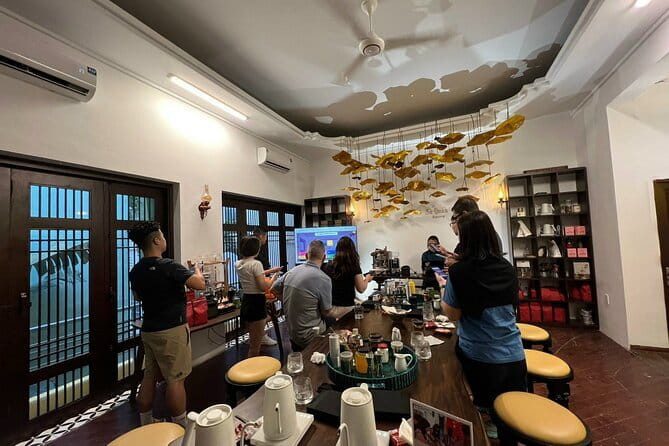
The setting matters. Instead of holding the class in a busy street-front restaurant, Rose Kitchen uses a hidden garden villa with air conditioning. You get a calmer place to work, talk, and eat. That can be a welcome change after a morning of Hanoi traffic, heat, and noise.
A herbal welcome drink starts the session. Mineral water is available throughout, and the cooking tools and ingredients are supplied. You only need to bring an appetite and a willingness to handle the food yourself.
The class is presented by English-speaking cultural storytellers, with support from a personal butler during the session. That combination is useful. You are not left to guess how to slice, fold, mix, or brew, and the stories give the food a place in Vietnamese life rather than treating it as a set of recipes.
More Vietnamese Cooking Classes in Hanoi:
- Vietnamese Food Cooking Class in Hanoi with Market Experience
★ 5.0 · 778 reviews - Hanoi Cooking Class: Pho/Bun Cha/Banh Xeo…+Free Egg/Salt Coffee
★ 5.0 · 267 reviews - Vietnamese Bread & Brew: Banh Mi Baking Class & Specialty Coffee
★ 5.0 · 76 reviews
Join-in cooking or five dishes in a private group
The booking choice has a real effect on the class.
With a join-in session, you cook two signature Vietnamese dishes alongside other people. This is the lower-cost option at $29 per person, and it suits solo visitors, couples, and anyone who enjoys meeting people at a shared table. The class may be social, though the maximum permitted group size is listed as 100, so you should not assume every date will feel like a small workshop.
A private booking lets your group cook five signature dishes. That is the better choice if you want more time at the worktable, more food to prepare, or a session shaped around your own group. The private format costs more than the advertised join-in price, so check the price for your chosen date and group before booking.
The dish selection is one of the activity’s strongest ideas. Rather than forcing every person through one fixed menu, the class lets you choose what you want to prepare. The exact dish list is not provided, so you should not book expecting one particular recipe unless the provider confirms it in advance.
The food work is hands-on. You can expect step-by-step help with preparation and cooking, not just a seat near a chef. In past sessions, the instruction has included cutting vegetables and preparing spring rolls. The pace should suit beginners, since the hosts provide individual guidance and explain each stage.
A possible market visit before the cooking
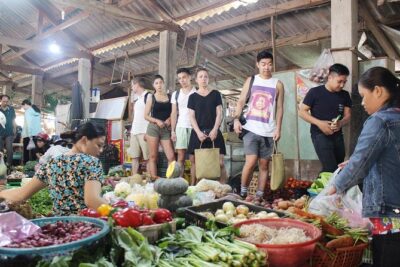
Several descriptions of past sessions include a visit to a local Hanoi market before the kitchen work. In those sessions, the group selected ingredients, learned a few Vietnamese words, and then carried the food knowledge back to the villa.
This is a useful addition when it is part of your schedule. A market shows you the raw ingredients before they become a finished dish. It also helps explain why Vietnamese cooking pays close attention to fresh herbs, vegetables, texture, and balance.
Still, the formal details for this particular experience focus on the cooking class and tea ceremony, not a guaranteed market tour. Ask Rose Kitchen to confirm the current schedule if the market visit is important to you. Do not assume every time slot includes it.
Cooking with Alex, Aroma, Tung, Linh, and the team
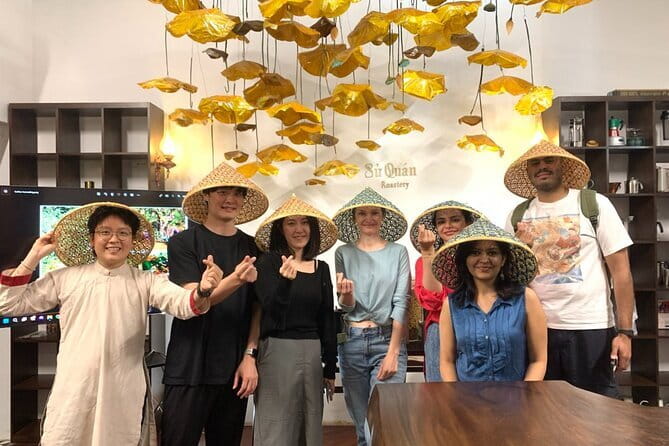
The teaching style appears to depend on which host leads your session. Alex has been named as a guide for evening classes, while Aroma has led sessions involving coffee and cooking. Tung has handled food preparation and explained techniques such as cutting vegetables and making spring rolls.
Linh has led the market portion and then taken the group into the garden kitchen. She also worked well with a five-year-old child, helping make the class safe and manageable for a young family member. Chloe has provided table-level help, practical tips, and humor while keeping an eye on individual participants.
Hai has also been named alongside Alex. Since host assignments can change, you cannot count on one specific person unless Rose Kitchen confirms it. The useful point is that the team offers more than one layer of help: a main instructor, cultural explanation, and personal support at the table.
The English guidance is especially important if you are new to Vietnamese cooking. You can ask about technique, ingredients, and the meaning behind a dish without relying on guesswork. The best value here is not just the meal. It is learning enough to recognize what you are doing and why.
Same place, a different menu:
- Hanoi Cooking Class: Culture, Local Market & Meaning CSR Impact
★ 5.0 · 5,147 reviews - 5 Traditional Dishes Hanoi Cooking Class with Market Trip
★ 5.0 · 4,890 reviews - Hanoi: Handcrafted Wood Carving Workshop with Local Artisan
★ 5.0 · 733 reviews - Hanoi: 5 Local Dishes Cooking Class with Meal & Market Visit
★ 5.0 · 420 reviews
The tea ceremony gives the class a slower ending
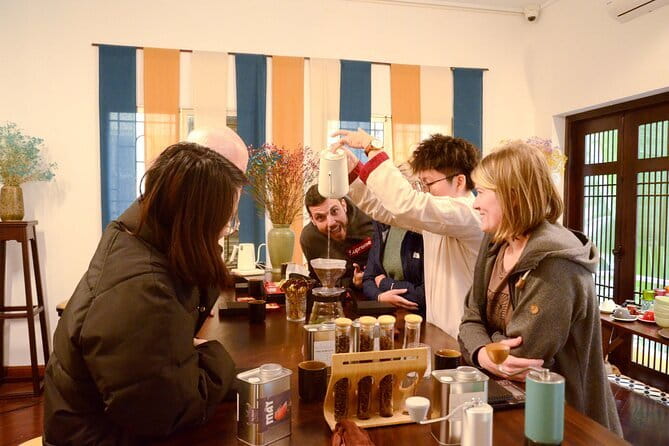
After cooking and eating, the pace changes. You sit down for a traditional Vietnamese tea ceremony and learn about tea’s place in Vietnamese life.
This part keeps the activity from becoming only a recipe lesson. Tea can be tied to hospitality, conversation, family customs, and quiet attention. The supplied details promise cultural stories about both the tea and the dishes, so the ceremony works as a bridge between the meal and broader Vietnamese traditions.
You should think of it as a cultural session rather than a formal performance. The details do not promise a particular tea variety, ceremonial costume, or long historical presentation. What you can expect is an explanation of tea customs and a chance to slow down after several hours of cooking.
That slower ending is a good fit for an evening booking. It also makes the class feel like a complete meal and cultural activity rather than a stand-alone cooking lesson.
Why the garden villa and practical extras matter
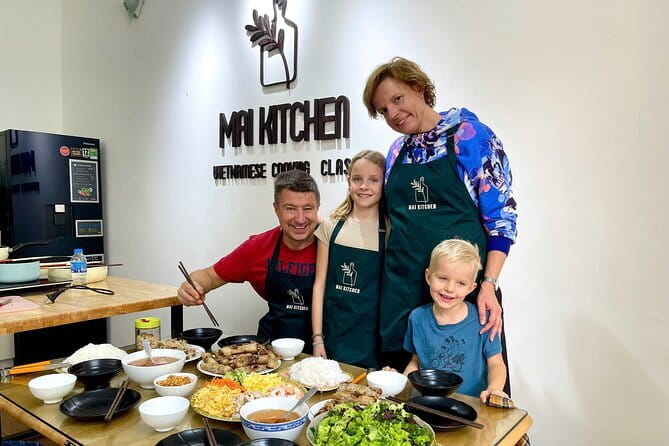
Hanoi cooking classes can become tiring if you spend several hours standing in heat or working in a cramped kitchen. Here, air conditioning gives you a more comfortable place to prepare food, especially during Hanoi’s warmer months.
Luggage storage is another small but useful benefit. If you have checked out of your hotel or are between stops, you can leave your bags at the meeting point instead of carrying them through the class. The activity ends where it begins, and the location is near public transportation.
A complimentary herbal welcome drink sets the tone before the cooking starts. Unlimited mineral water is available during the session, which is sensible for a four-hour activity involving heat, food preparation, and eating.
The equipment is supplied, including cooking and brewing tools. The eco-friendly approach uses stainless-steel containers and canvas bags instead of plastic. That will not transform your trip, but it is a practical sign that the class has considered waste in its daily operation.
What you eat and how much food you get
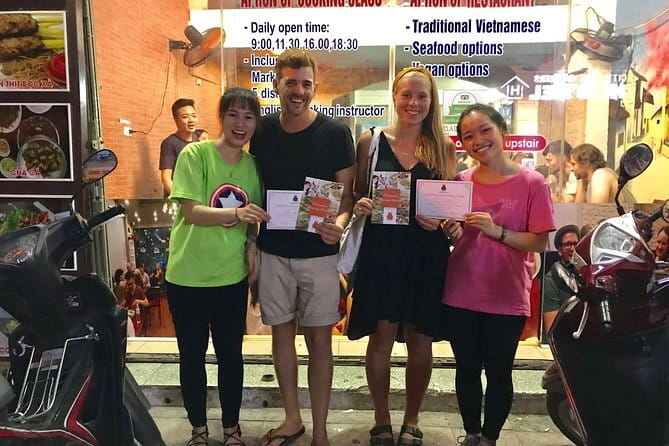
The class includes a full meal, served as breakfast, lunch, or dinner depending on your time slot. That makes the $29 join-in price easier to judge. You are not paying only for a short demonstration or a tasting spoon. You receive instruction, ingredients, a cooked meal, tea, drinks, and use of the equipment.
The exact menu is not specified. That is helpful if you like choosing, but less helpful if you need to plan around allergies, dietary rules, or strong dislikes. Contact the provider before booking if your food needs are important. The supplied information does not promise vegetarian, vegan, gluten-free, halal, or allergy-specific menus.
The cooking itself can be a strong memory of Hanoi because you handle familiar local ingredients in a new way. Past sessions have focused on fresh vegetables and spring rolls, and one class also included Vietnamese coffee and egg coffee. Coffee is not listed as a guaranteed part of this experience, so treat it as a possible feature of certain sessions, not a standard inclusion.
The community contribution adds value, but keep expectations clear
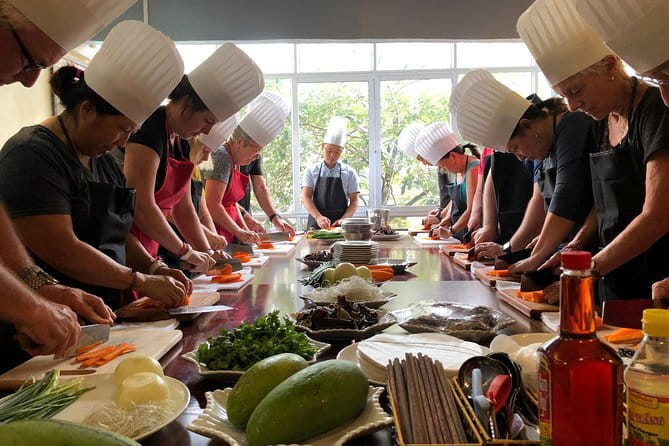
Every booking supports three types of community work: monthly charity meals for cancer patients, educational programs for disadvantaged children in remote areas, and sustainable jobs for ethnic minority women working as butlers.
That gives the activity a purpose beyond your own meal. I like this kind of model when the support is connected directly to the provider’s work and does not ask you to add a separate donation during the class.
You should still judge the experience on its own merits. The social programs are a meaningful extra, but they do not tell you how the class will run on your particular day. The value comes from the full package: a four-hour class, food, guidance, tea, a comfortable setting, and a contribution to community programs.
Is $29 a good value in Hanoi?
For a join-in class, $29 per person is a fair price if you want more than a restaurant meal. You receive hands-on instruction, two dishes, a full meal, a welcome drink, unlimited water, tea, equipment, cultural explanations, and luggage storage.
The price is strongest for people who would otherwise pay separately for lunch or dinner and a short cultural activity. The class combines both. You also leave with cooking skills, which can be more useful than a one-time tasting.
The value drops if you only want to eat and do not enjoy preparation. Four hours is a long time for anyone who prefers a quick food stop. It can also feel less personal on a crowded date, especially since the stated maximum is 100 people.
Private groups get five dishes and a more focused format, but the private price is not provided. Compare that rate with the join-in option before deciding. Families and groups of friends may find the private format worthwhile, while solo visitors will likely prefer the lower-cost shared class.
Who should book this class?
I would choose this experience if you want to understand Vietnamese food by preparing it yourself. It suits people who like practical activities, families looking for a supervised food experience, and couples who want something more active than a standard dinner.
It is also a good pick for people who value social impact and low-waste details. The canvas bags, stainless-steel containers, community employment, charity meals, and education programs give the class a broader purpose.
Families should find useful support here. A five-year-old has taken part safely in the past, and the team can provide close help. Still, children need supervision around knives, hot surfaces, and cooking tools, so parents should stay involved.
You may want another activity if you need a strict dietary menu, a guaranteed market visit, or a very small class. You should also confirm whether your preferred dish is available and whether the tea ceremony fits your interests.
Booking details worth checking before you go
Confirmation is provided at booking. The meeting point is Rose Kitchen Cooking Class, 7/32, Ngh. 173/75 Đ. Hoàng Hoa Thám, Ngọc Hồ, Ba Đình, Hanoi 10000, Vietnam. The activity returns to that same location.
Mobile tickets are available, and group discounts are offered. Free cancellation applies when you cancel at least 24 hours before the start time. Cancellations or changes made within 24 hours are not refunded or accepted, with cut-off times based on Hanoi local time.
I would also confirm the class format before paying. Ask whether you are booking join-in or private, how many dishes you will prepare, whether a market visit is included, and which food choices are available. Those details affect the value more than the basic price alone.
Should you book the Rose Kitchen class?
Book it if you want a calm, practical introduction to Vietnamese cooking with a full meal and a cultural tea session at the end. The $29 join-in price is appealing, especially with ingredients, instruction, drinks, equipment, and luggage storage included.
Choose private if your group wants five dishes and more control over the pace. Choose another Hanoi food activity if you want a guaranteed market tour, a fixed menu, or a tiny class with no chance of a large group.
For most food-loving visitors, this is a well-rounded half-day activity. You cook, eat, learn, and support community programs without giving up basic comforts.
FAQ
How long does the Hanoi cooking class last?
The experience lasts approximately four hours.
How much does the join-in cooking class cost?
The advertised price is $29 per person. Group discounts are available.
How many dishes do I prepare?
A join-in session includes two signature Vietnamese dishes. A private booking includes five signature Vietnamese dishes.
Where does the activity start and finish?
It starts and ends at Rose Kitchen Cooking Class, 7/32, Ngh. 173/75 Đ. Hoàng Hoa Thám, Ngọc Hồ, Ba Đình, Hanoi 10000, Vietnam.
Are ingredients and cooking equipment provided?
Yes. Ingredients, utensils, cooking tools, and brewing tools are provided. The session also includes a herbal welcome drink, unlimited mineral water, and a full meal based on the time slot.
Can I cancel for a full refund?
Yes, if you cancel at least 24 hours before the experience starts. Cancellations made less than 24 hours before the start time are not refunded, and changes within that period are not accepted.
Just added around Hanoi
- Hanoi Market & Villa Cooking Class: Free Old Quarter Transfer★ 5.0 · 20 reviews
- Hanoi Cooking Class in Hidden Villa with Free Pick-Up★ 5.0 · 9 reviews
- Vietnamese Home Cooking Class in Hanoi★ 5.0 · 7 reviews
- Hanoi Cooking Class and Market Tour with Chef Tien★ 5.0 · 35 reviews
- Authentic Cooking Class in Hanoi with a Vietnamese Grandmother★ 5.0 · 11 reviews
- Local Market Tour and Private Cooking Class★ 5.0 · 104 reviews
- Hanoi Cooking Class: Market Tour, Free Liquor & Coffee Tasting★ 5.0 · 86 reviews
- Hanoi Cooking Class in a Haven of Tranquility – Thom culinary★ 5.0 · 101 reviews
Vietnamese Cooking Classes, compared.
Cooking Class Hoi An:Local Market, Basket Boat, Fishing & Cooking
Read our review →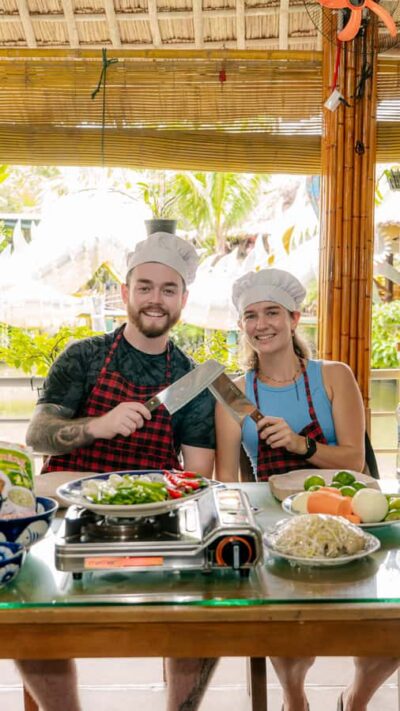
Hoi An: Market Tour, Basket Boat Ride and Cooking Class
Read our review →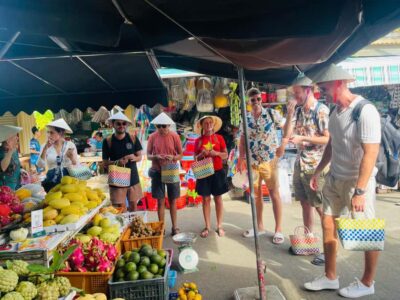
Hoi An: Basket Boat with Lantern-Making & Cooking Class Tour
Read our review →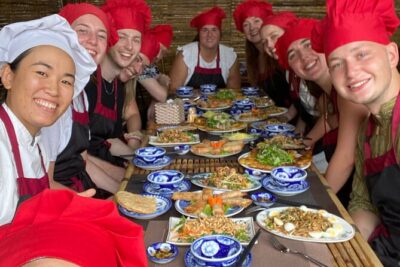
Hoi An Cooking Class(Local market,Basket Boat,Fishing & Cooking)
Read our review →
Hoi An: Basket Boat Ride, Cooking Class by Hangcoconut
Read our review →
Vietnamese Food Cooking Class in Hanoi with Market Experience
Read our review →
Hoi An Eco Tour Cooking Class & Fishing (Local market,basket boat,learn cooking)
Read our review →
Traditional Cooking Class with Basket Boat Ride and market Tour
Read our review →Browse the lists this tour appears in