Review · COOKING CLASSES
New Malaysian Kitchen Cooking Class and Garden Tour
The best part of this Kuala Lumpur cooking class happens before the stove comes on. Sara Khong takes you through her home garden, where more than 50 herbs, spices, vegetables, and flowers grow for the kitchen. You can touch, smell, and taste ingredients such as turmeric and curry leaves, then use them in a real Malaysian meal.
I like the small six-person limit, which gives Sara room to explain each step and help with hands-on preparation. I also like the family setting: you cook in Sara’s home kitchen, eat what you made, and talk with Sara and her mother about food and daily life in Malaysia.
The main consideration is price. At $150 per person, this costs more than a basic group cooking lesson, so it makes the most sense if you want personal instruction, a garden visit, lunch, and recipes you can use at home.
Key points at a glance
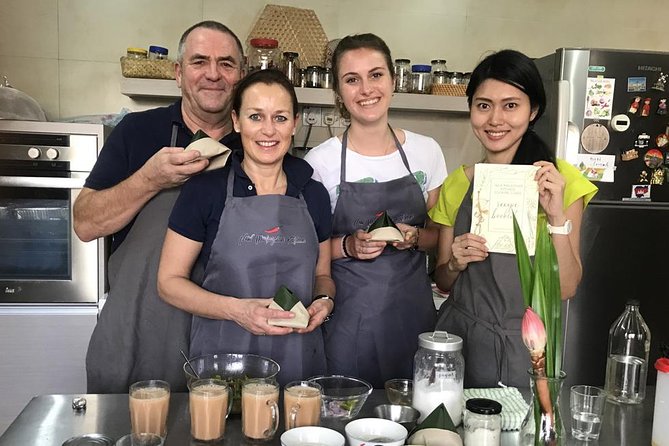
- Cook in a real family kitchen: Sara Khong welcomes you into her home rather than a large commercial school.
- Start with an edible garden tour: See more than 50 plants used in Malaysian cooking, including herbs, spices, vegetables, and flowers.
- Make five Malaysian dishes: The class is hands-on, with examples including nasi lemak, chicken rendang, four-angled bean salad, ondeh-ondeh, and teh tarik.
- Keep the group small: The maximum is six people, allowing for close guidance and plenty of questions.
- Eat what you prepare: The class ends with a shared meal and conversation about Malaysian food and culture.
- Take the lesson home: A recipe booklet helps you repeat the dishes for family and friends.
A family kitchen, not a standard cooking studio
This experience begins at New Malaysian Kitchen in Taman Len Seng, about 20 minutes from Kuala Lumpur. The setting matters. You are not simply standing at a demonstration counter while an instructor cooks in front of you. Sara Khong brings you into her family home and has you prepare the food yourself.
Sara is a professional cook and the author of four Malaysian cookbooks. That background gives the class a clear structure, but the mood remains personal. Her mother is also part of the welcome and meal, adding a family touch that a formal school would struggle to copy.
I would choose this class if you want more than a list of ingredients and a quick tasting. The focus is on how Malaysian food is put together, how local plants are used, and how you can repeat the recipes after returning home.
The class runs from 9 a.m. to 1 p.m., Monday through Friday. That morning schedule works well with the heat of Kuala Lumpur and leaves your afternoon open. It also means you need to plan around a weekday morning rather than treating this as a casual evening activity.
More Hands-On Workshops in the world:
- Half-Day Thai Cooking Class at Organic Farm in Chiang Mai
★ 5.0 · 19,087 reviews - Florence: Pasta Cooking Class with Unlimited Wine
★ 4.9 · 10,285 reviews - 3 in 1 Cooking Class near Navona: Fettuccine, Ravioli & Tiramisu
★ 5.0 · 7,376 reviews
The garden tour comes before the cooking
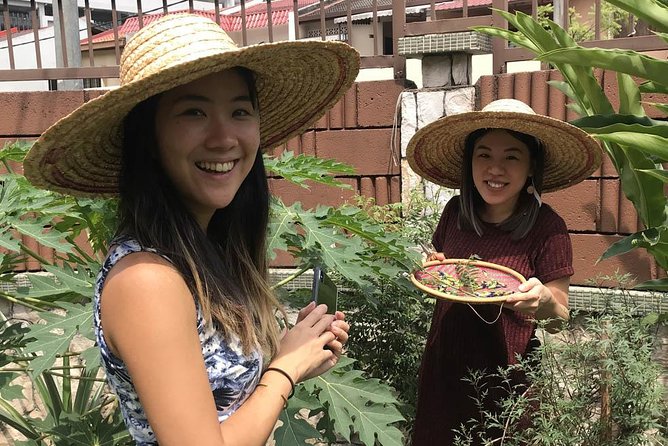
You begin with a glass of flower tea, then head into the organic edible garden. More than 50 herbs, spices, flowers, fruits, and vegetables are grown there for everyday cooking.
This is not just a quick look around a few potted plants. The useful part is learning to connect the plant with the finished dish. You can see, touch, smell, and taste ingredients before encountering them on the chopping board. Turmeric and curry leaves are specifically included, and the garden also gives you a better sense of how much fresh plant material goes into Malaysian food.
I like this opening because it gives context to ingredients that may be unfamiliar at home. A recipe can tell you to add curry leaves, but seeing and smelling the leaves first makes the instruction easier to remember. The same goes for flowers, herbs, and spices that may look alike in a market or packaged form.
The garden also makes the class feel tied to the home itself. You are not being shown a staged display built only for visitors. The plants are connected to the kitchen and the meal you are about to prepare.
Five dishes with plenty of hands-on work
After the garden visit, you cook five Malaysian foods of your choice in a real Malaysian kitchen. The exact combination can vary, but the dishes described in the class include familiar favorites and a few items that show different sides of Malaysian cooking.
Nasi lemak is one example. It is a useful dish to learn because it brings together several elements of Malaysian food in one meal. One participant was especially pleased to be able to prepare it at home afterward, which tells you something important about the class: the aim is not just to watch a local specialty being made, but to understand the steps well enough to repeat it.
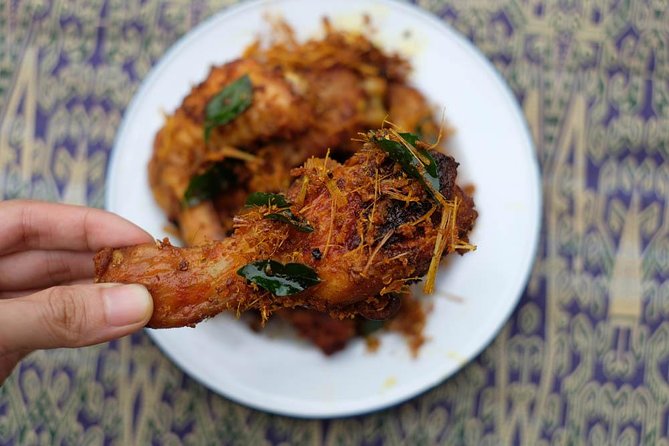
Chicken rendang offers a different lesson, with its slow-cooked, strongly seasoned character. Four-angled bean salad brings fresh vegetables and a different texture to the table. Ondeh-ondeh gives the class a sweet finish, while teh tarik adds a drink that depends as much on technique as ingredients.
You may also prepare other Malaysian street food dishes, depending on your chosen menu and the class arrangement. The information provided describes five dishes of your choice, so you should not assume that every session follows one fixed menu.
The class is designed for participation. You select and prepare ingredients, follow each stage, and work through the cooking rather than simply taking notes. Sara’s teaching style is described as patient and careful, which matters when you are handling unfamiliar spices or trying a technique for the first time.
This also suits people with little cooking experience. One account came from someone who rarely cooked, yet still completed a Malaysian dish with Sara’s help. You do not need to arrive as an expert. You do need to be willing to take part.
Sara’s teaching style is the main value
The strongest reason to pay the premium price is the instruction. A maximum of six people changes the feel of the morning. Sara can watch what you are doing, answer individual questions, and explain why a step matters instead of rushing through a large group.
The cooking class is often praised for clear explanations and close attention. That does not mean the session is stiff or technical. The tone is friendly and relaxed, with room to ask about ingredients, Malaysian food, and family customs.
I would expect Sara to be especially helpful if you are unsure about preparation or have limited experience in the kitchen. The descriptions of her teaching consistently focus on patience, clarity, and encouragement. Those qualities are more useful than a flashy demonstration when you want to make the recipes again.
The family presence adds another layer. Sara and her mother help create the feeling of being welcomed into a home, and lunch becomes a chance to talk about Malaysian lifestyle and food culture. This is one of the better reasons to choose a home-based class over a polished cooking venue.
Still, the setting may not suit everyone. If you prefer a formal school with commercial equipment, a fixed menu, and a highly standardized timetable, this experience may feel informal. The home kitchen is part of the appeal, but it also means the focus is on personal instruction rather than theatrical presentation.
A few more cooking classes around the world worth a look
- Florence: Pasta & Tiramisu Cooking Class with Unlimited Wine
★ 4.9 · 6,708 reviews - Florence: Pasta Cooking Class with Unlimited Wine
★ 5.0 · 6,413 reviews - Hanoi Cooking Class: Culture, Local Market & Meaning CSR Impact
★ 5.0 · 5,147 reviews - 5 Traditional Dishes Hanoi Cooking Class with Market Trip
★ 5.0 · 4,890 reviews
Lunch is the payoff
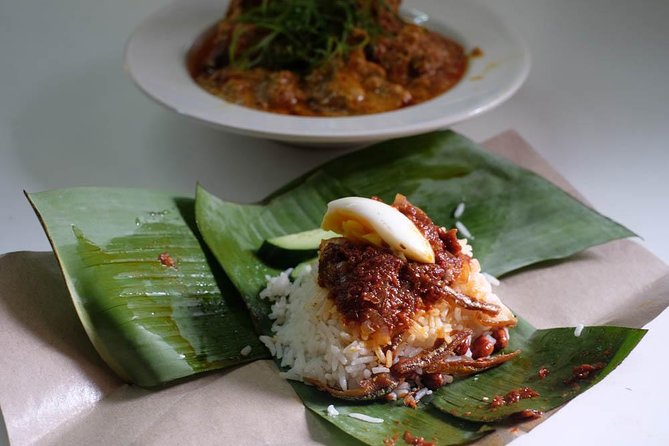
Once the cooking is finished, you sit down and eat the food you prepared. That simple ending gives the morning a clear purpose. You are not sampling one bite and then leaving. You share a proper meal and can see how the separate dishes work together.
I like this format because it closes the loop between garden, preparation, and table. You have seen the plants, worked with the ingredients, and then tasted the result. It is easier to remember a recipe when the lesson ends with the food in front of you.
Lunch is also the time for conversation with Sara and her mother. The focus can move beyond measurements to Malaysian food, culture, and lifestyle. If you want a personal introduction to local cooking, this conversation may be as useful as the recipe booklet.
The meal is based on what the class makes, so the experience is directly tied to your work. That can be rewarding, but it also means this is not the place to expect a long restaurant-style menu with many alternatives. You come to cook, then eat the result.
What the $150 price really covers
At $150 per person, this is not a bargain cooking class in the narrow sense. You are paying for about four hours of instruction, a garden tour, ingredients, a meal, a small group, and a recipe booklet. You are also paying for access to Sara’s home and her experience as a cookbook author.
The value improves if you plan to use what you learn. Someone who wants to recreate nasi lemak, rendang, or other Malaysian dishes at home will get more from this than someone looking only for a one-time lunch.
The six-person limit is important when judging the cost. A large class can spread an instructor thin, while this format allows more direct help. If the class fills, you still share the kitchen with other food lovers, but the group remains small enough for questions and individual guidance.
The price is harder to justify if your main goal is simply to taste Malaysian food. Kuala Lumpur has many less expensive ways to eat local dishes. This experience earns its price through participation, personal attention, and the chance to take the recipes home.
Who should book this class
I would recommend it most strongly to home cooks, food-focused visitors, and people who want a cultural activity with a personal setting. Couples can enjoy the shared work, and small groups of friends or family can make the four-hour session part of a Kuala Lumpur itinerary.
It is also a good choice for beginners. You do not need advanced kitchen skills, and the small group allows Sara to guide you through the process. The garden helps if you are curious about ingredients but do not yet know how Malaysian herbs and spices look or smell.
Families may also appreciate the practical format, although the supplied information does not give a minimum age or specific child policy. If you are booking with children, confirm those details first.
I would be more cautious if you dislike morning activities, prefer a fully fixed menu, or want a short food tasting rather than active cooking. The class requires four hours and asks you to participate from start to finish.
Practical details before you go
The meeting point is New Malaysian Kitchen Cooking Class at No. 2, Jalan 11, Taman Len Seng, 56000 Kuala Lumpur. The activity ends back at the same point.
The location is near public transportation, but the supplied details do not state that transportation to the class is included. Plan your route to Taman Len Seng in advance, especially for a 9 a.m. start.
Booking is often made about 32 days ahead, so reserve early if your Kuala Lumpur dates are fixed. Confirmation is sent within 48 hours, subject to availability. The class is offered Monday through Friday from 9 a.m. to 1 p.m., and the maximum group size is six.
Mobile tickets are accepted. Free cancellation is available if you cancel at least 24 hours before the local start time. Cancellations or changes made inside that window are not refunded or accepted.
Should you book New Malaysian Kitchen?
Book it if you want to learn Malaysian cooking in a genuine home setting, not just eat it. The garden tour, hands-on preparation, small group, family meal, and recipe booklet make this a full morning rather than a quick demonstration.
I especially like the link between the edible garden and the kitchen, plus Sara’s patient instruction. Those details give the class substance. The drawbacks are the high price, weekday-only schedule, and four-hour commitment.
For a food lover who wants to return home with practical Malaysian recipes and a better feel for local ingredients, the $150 can be fair value. If you only want to sample street food or keep costs low, spend the money elsewhere and enjoy Kuala Lumpur’s many food stalls instead.
FAQ
Where does the cooking class take place?
It takes place at New Malaysian Kitchen Cooking Class, No. 2, Jalan 11, Taman Len Seng, 56000 Kuala Lumpur, Malaysia.
How long does the experience last?
The class lasts about four hours, from 9 a.m. to 1 p.m.
On which days is the class available?
It is offered Monday through Friday.
How many people can join?
The activity has a maximum of six travelers.
Who teaches the cooking class?
Sara Khong, a professional cook and author of four Malaysian cookbooks, leads the class. Her mother also welcomes you into the family home and joins the experience.
What will I do during the garden tour?
You will explore an organic edible garden with more than 50 herbs, spices, flowers, vegetables, and fruit. You can see, touch, smell, and taste plants such as turmeric and curry leaves.
How many dishes will I prepare?
You will prepare five Malaysian foods of your choice. Examples connected with the class include nasi lemak, chicken rendang, four-angled bean salad, teh tarik, and ondeh-ondeh.
Can I cancel for a full refund?
Yes. You can cancel at least 24 hours before the local start time for a full refund. Cancellations or changes made less than 24 hours before the start time are not refunded or accepted.
Just added around the world
- Sushi – Authentic Japanese Cooking Class – the best souvenir from Kyoto!★ 5.0 · 93 reviews
- Traditional Balinese Cooking Class with Ubud Tour★ 5.0 · 6 reviews
- Chef Bagus Balinese Indonesian Food Cooking Class★ 5.0 · 89 reviews
- Cycling and Cooking Class in Ubud★ 5.0 · 5 reviews
- Cooking Class in Ephesus Selcuk Town★ 5.0 · 9 reviews
- Private Ephesus Tour & Cooking Class in Village★ 5.0 · 24 reviews
- Balinase Cooking Class and Private Ubud Day Tour★ 5.0 · 3 reviews
- Market Visit & Private Hands-on Cooking Class at Daun Senja★ 5.0 · 51 reviews
Cooking Classes, compared.
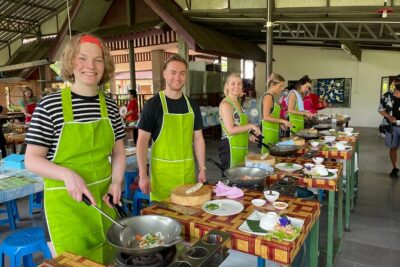
Half-Day Thai Cooking Class at Organic Farm in Chiang Mai
Read our review →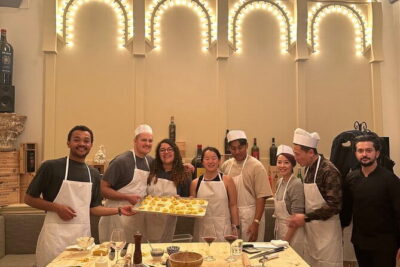
Florence: Pasta Cooking Class with Unlimited Wine
Read our review →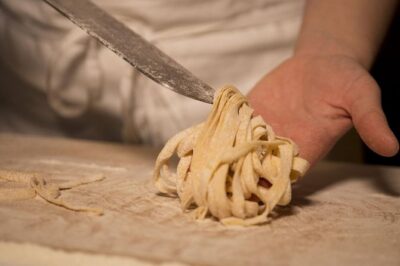
3 in 1 Cooking Class near Navona: Fettuccine, Ravioli & Tiramisu
Read our review →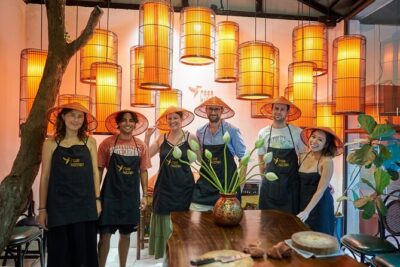
Hanoi Cooking Class: Culture, Local Market & Meaning CSR Impact
Read our review →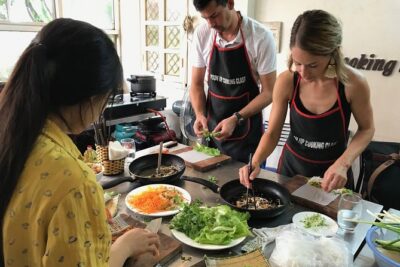
5 Traditional Dishes Hanoi Cooking Class with Market Trip
Read our review →
Cooking Class and Lunch at a Tuscan Farmhouse with Local Market Tour from Florence
Read our review →