Review · COOKING CLASSES
Market Visit & Private Hands-on Cooking Class at Daun Senja
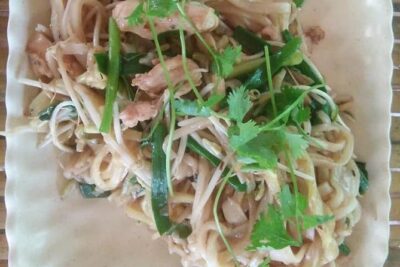
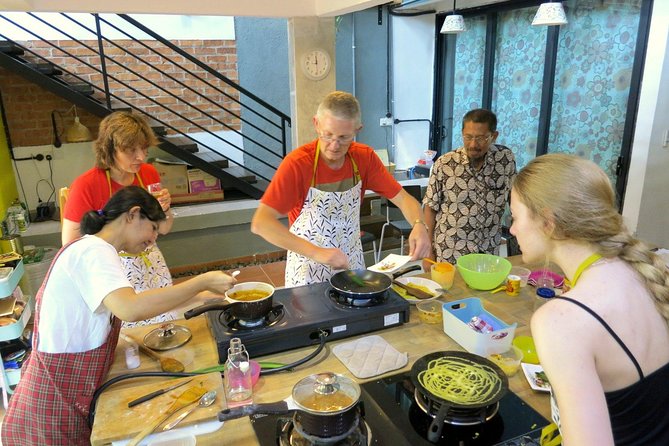
The best part of this Kuala Lumpur experience happens before the cooking begins. Patricia and Kingston take you to a local market, help you understand unfamiliar ingredients, and share a simple breakfast before bringing you into their home kitchen. I especially like the small private format, which gives you room to ask questions, and the family-style welcome, which feels more personal than a standard demonstration class.
The main consideration is location. You meet in Taman Suntex, in Cheras, rather than central Kuala Lumpur, and one past participant estimated a 20 to 30 minute Grab ride from the city center. The market is also closed on Mondays, though the class still runs with breakfast at a local restaurant instead.
Key points at a glance
- Market before the kitchen: Visit a local wet market, except on Mondays, and have breakfast at a food stall.
- Private group of up to five: Patricia and Kingston can focus on your questions, cooking skills, and pace.
- Three Malaysian menu choices: Cook dishes such as nasi lemak, chicken pong teh, chicken curry, roti jala, and local sweets.
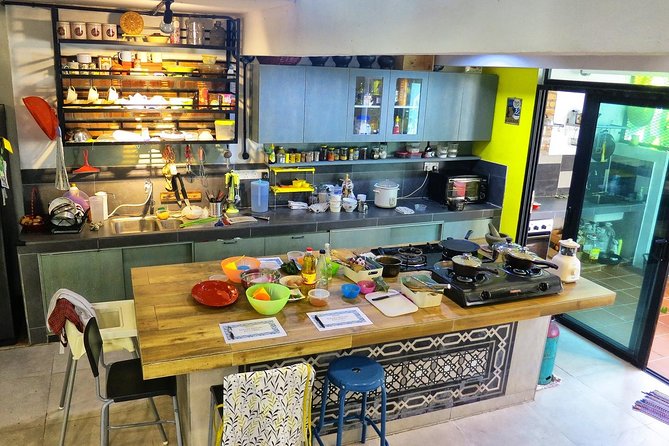
- A home-based setting: The class takes place in a family home, with hosts who include their children in the friendly atmosphere.
- A full four-and-a-half-hour morning: The experience includes the market, breakfast, cooking, and a meal at the end.
- Useful for home cooks: The recipes use ingredients that one participant felt were practical to find back in Switzerland.
Why this class feels different from a standard cooking lesson
Many cooking classes begin with a cutting board and end with a plate of food. Daun Senja starts earlier, at the point where you learn what Malaysian ingredients look like, how they are sold, and how locals use them.
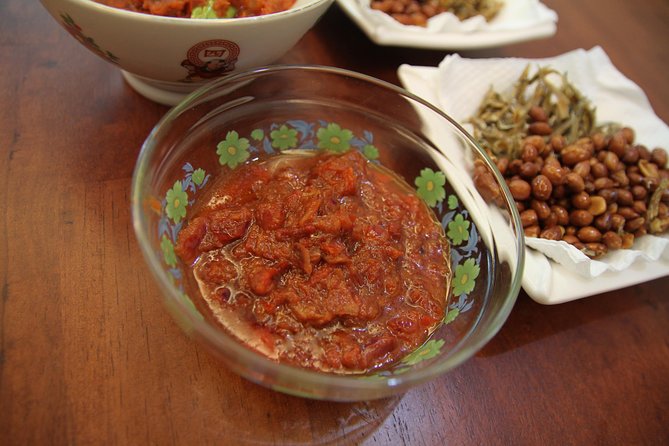
That market visit gives the cooking lesson a reason. Instead of hearing a rushed explanation of pandan, sambal, coconut milk, or local vegetables in a classroom, you encounter ingredients in their normal setting. You can ask questions while shopping, then see some of the same products appear in the food you prepare later.
The class is hosted by Patricia and Kingston, and the tone is home-based rather than professional-school formal. You can expect step-by-step instruction, plenty of chances to cook yourself, and time to ask why an ingredient is added or how it changes the final dish.
I like this setup for beginners because you are not expected to arrive with much technical skill. It also works for experienced cooks, since the value is less about learning how to boil rice and more about understanding Malaysian flavor combinations and home methods.
The experience is private for your party, with a maximum of five people. That matters. You will not be standing behind a large group trying to see a single pan, and you can adjust the pace by asking for more explanation or taking on more of the preparation.
More Market Tour Cooking Classes in the world:
- Hanoi Cooking Class: Culture, Local Market & Meaning CSR Impact
★ 5.0 · 5,147 reviews - 5 Traditional Dishes Hanoi Cooking Class with Market Trip
★ 5.0 · 4,890 reviews - Cooking Class and Lunch at a Tuscan Farmhouse with Local Market Tour from Florence
★ 5.0 · 4,831 reviews
Starting at 8 am in Taman Suntex
The meeting point is in Taman Suntex, 43200 Cheras, Selangor, with the activity ending back at the same point. The listed start time is 8 am, so this is a morning experience rather than an afternoon class followed by dinner.
If you are staying in central Kuala Lumpur, plan the transfer carefully. A Grab is the practical choice, and one participant described the journey as roughly 20 to 30 minutes from the city center. That estimate can change with traffic, so I would not schedule a tight appointment immediately afterward.
The location is a real part of the experience. You leave the central hotel and shopping districts and spend the morning in a more residential part of the Kuala Lumpur area. If you want a class within walking distance of Bukit Bintang, this will not be the right fit. If you want to see a calmer neighborhood and meet a local family, the extra ride makes more sense.
The experience is near public transportation, and service animals are allowed. Confirmation is sent within 48 hours of booking, subject to availability, so give yourself time before your planned cooking day.
The local market visit and breakfast
On days other than Monday, the morning begins at a local wet market. This is not just a quick stop to collect ingredients. It gives Patricia and Kingston a chance to explain the products you will use and to connect the dishes with everyday Malaysian shopping.
You may see ingredients that are familiar in name but different in appearance, along with items you have never cooked before. The useful part is the link between market and kitchen. You can ask what an ingredient does, how it is selected, and which dishes it suits before trying it yourself.
Breakfast is served at one of the market food stalls. Several accounts of the experience describe an Indian-style breakfast, including roti and dosa, though the exact food stall meal may vary. This is a good addition to the class because you get to taste a local dish before preparing your own food.
The breakfast also keeps the morning from becoming a long stretch of instruction on an empty stomach. You should still arrive ready for an early start, but the meal makes the market stop feel like part of the cultural experience rather than a shopping errand.
The Monday arrangement is worth noting. Since the market is closed that day, the morning begins at a small local restaurant instead. Past participants describe having roti and dosa before making the short trip to Patricia’s home. You still get breakfast and the cooking lesson, but you will miss the market portion.
Three menu paths, from nasi lemak to chicken pong teh
The class offers three menu options. The exact selection should be clear when you book or when the provider confirms your reservation, since each option contains a different main dish, side, and dessert.
More Shopping Trips in the world:
- Chiang Mai: Cooking Class, Market & Thai Herbs Garden Tour
★ 4.9 · 4,824 reviews - Chiang Mai: Authentic Cooking Class with Market & Farm Visit
★ 4.9 · 4,546 reviews - Barcelona: Paella Cooking Experience & Boqueria Market Tour
★ 4.8 · 3,661 reviews - Cooking Class Hoi An:Local Market, Basket Boat, Fishing & Cooking
★ 5.0 · 3,660 reviews
Option 1: Chicken pong teh, eggplant sambal, and pulut inti
Chicken pong teh is served with rice and forms the main dish in this menu. Eggplant sambal adds a spicy vegetable course, while pulut inti finishes the meal with sticky rice and a sweet topping.
This menu is useful if you want to see how a Malaysian meal balances savory, spicy, and sweet elements. It also gives you more than one kind of cooking task, from preparing the main dish to handling sambal and a traditional dessert.
Option 2: Nasi lemak, pineapple and cucumber salad, and sago gula Melaka pudding
Nasi lemak is one of Malaysia’s best-known dishes, built around fragrant coconut rice and the accompaniments that make it a complete meal. The pineapple and cucumber salad brings a fresh contrast, and sago gula Melaka pudding uses palm sugar for dessert.
Choose this option if you want a familiar Malaysian classic and a meal with clear contrasts in texture. The cool salad and sweet pudding also make the menu feel lighter beside the rice dish.
Option 3: Chicken curry, roti jala, and ondeh ondeh
This menu pairs chicken curry with roti jala, a lacy Malaysian crepe often used to scoop up sauce. Ondeh ondeh is the sweet finish, with a soft texture and palm sugar flavor.
I find this the most hands-on sounding option because the roti jala requires attention to shape and technique. It is a good choice if you want to prepare something that may be less familiar than nasi lemak and that shows how bread-like foods fit into Malaysian meals.
Cooking in a family home
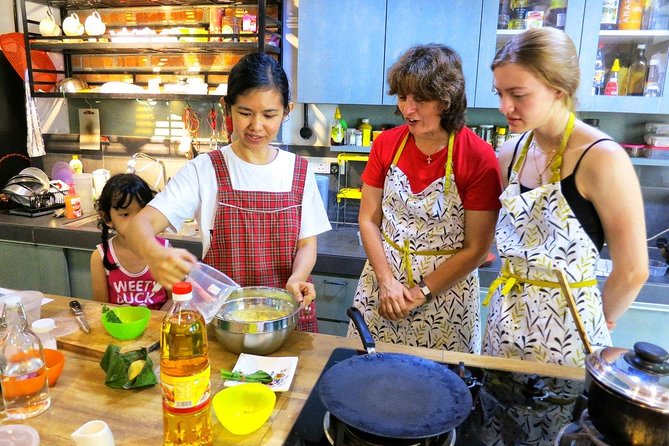
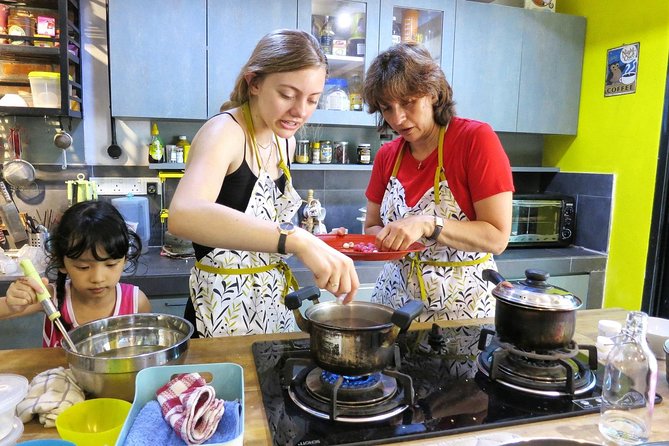
After the market and breakfast, you go to the family home for the main lesson. The cooking is described as side by side and very hands-on, not a demonstration where you watch someone else do all the work.
Patricia’s teaching style is calm and patient. That is especially useful when you are learning unfamiliar recipes, since you can stop and ask how ingredients affect the final dish. One participant valued being able to see how each ingredient contributed to the finished food, rather than simply copying a list of steps.
The family setting also shapes the mood. Patricia and Kingston welcome you into their home, and their daughters may be around during the visit. This is not a polished restaurant kitchen with a formal staff and a set performance. You should expect a more relaxed environment, conversation, and a sense of cooking with a family.
That informality is a strength for most people, but it may not suit you if you want a highly structured culinary course with professional equipment or advanced technical training. The experience is about Malaysian home cooking and cultural exchange, not chef certification.
Families with children have found the setting workable. One account described a two-year-old being accommodated while the parents took the class. Still, the activity is four and a half hours long, so parents should consider their child’s comfort with an early start and time in a kitchen.
What you actually eat at the end
The class concludes with the three-course meal you have prepared. The meal is accompanied by a glass of wine or beer, which adds a pleasant finish without turning the activity into a drinking tour.
The final meal is important because it gives you a chance to understand the dishes as a complete menu. You are not tasting a spoonful from each pan while rushing to the next recipe. You sit down and eat what you made, with the hosts.
Past participants have found the food different from the Malaysian dishes they had eaten in restaurants. That makes sense: home cooking often uses different recipes and combinations than a restaurant menu aimed at a broad audience. The meal may give you a better sense of how Malaysian food works in a household setting.
The recipes also appear practical for cooking later. One participant from Switzerland felt the ingredients would be possible to find at home, rather than depending on a cupboard full of rare products. You should not assume every ingredient will be available in your local shop, but the recipes are presented as something you can try to repeat.
Bring a notebook or use your phone to record key steps if the hosts allow it. The class is designed to teach recipes, and the chance to ask questions is one of its strongest benefits. You will get more from it if you pay attention to quantities, cooking order, and substitutions rather than simply enjoying the meal.
Is $130 good value?
The price is $130 for the experience, with group discounts available. Since the activity is private for up to five people, the value changes a lot depending on the size of your party.
For one person, the cost is high for a cooking class. For a couple or a family of four or five, it covers a private morning with the market visit, breakfast, instruction, ingredients, the completed meal, and a drink. You also avoid the weaker parts of a large group class, such as waiting for equipment or receiving only brief attention from the instructor.
I would compare this with the cost of a private guide, a market visit, and a separate meal. Daun Senja combines all three in one four-and-a-half-hour experience. The price is easier to justify if you value direct teaching and personal contact more than a low-cost group activity.
Group discounts may improve the calculation for families and friend groups. If you are traveling alone, look carefully at the price before booking and decide how much the private format matters to you.
The small practical details that matter
Free cancellation is available if you cancel at least 24 hours before the local start time. Cancellations made less than 24 hours before the experience are not refunded, and changes inside that window are not accepted.
The activity ends at the original meeting point, which makes planning easier if you need to return to your hotel. It does not provide a drop-off at another Kuala Lumpur attraction according to the information supplied.
The market is closed on Mondays. You can still take the class that day, but the market visit changes to breakfast at a small local restaurant. If the market is a major reason for booking, choose another day.
The group limit is five people. That makes this a good choice for couples, families, and small groups of friends who want one shared activity without strangers. It also means the class may feel quite personal, so book it for people who enjoy conversation and participation.
Who should book this Kuala Lumpur cooking class?
I would choose Daun Senja if you want to understand Malaysian food through a local family rather than through a commercial cooking school. The market, breakfast, home kitchen, and shared meal form one connected morning.
It suits beginners, since the teaching is patient and hands-on. It also suits experienced cooks who want practical recipes and a better feel for ingredients. Families can benefit from the private format, especially because the hosts have experience making the setting comfortable for children.
You may want another class if you are mainly interested in central Kuala Lumpur, a short demonstration, advanced restaurant techniques, or a market visit on Monday. The ride to Cheras is part of the commitment, and the four-and-a-half-hour schedule is longer than a basic cooking lesson.
Should you book Daun Senja?
Book this experience if you want more than a recipe card. You will visit a local market on most days, eat breakfast at a food stall, cook Malaysian dishes in a family home, and sit down to eat the results with Patricia and Kingston.
The strongest reasons to go are the private attention, the warm family setting, and the link between market ingredients and the final meal. The main drawbacks are the out-of-center location, the early start, and the loss of the market visit on Mondays.
For a small group that values food, conversation, and a real neighborhood experience, $130 can be a fair price. For a solo visitor seeking the cheapest cooking lesson in central Kuala Lumpur, it may be harder to justify. Choose your menu carefully, avoid Monday if the market matters, and leave enough time for the ride to Taman Suntex.
FAQ
Where does the cooking class start?
The meeting point is in Taman Suntex, 43200 Cheras, Selangor, Malaysia.
What time does the experience begin?
The start time is 8 am.
How long does the activity last?
The experience lasts approximately four hours and 30 minutes.
Is the class private?
Yes. It is a private activity for your group only, with a maximum of five participants.
Does the experience include a market visit?
Yes, the experience includes a local wet market visit, except on Mondays.
What happens if I book on a Monday?
The market is closed on Mondays. Instead, the morning includes breakfast at a small local restaurant before the cooking class.
What food can I learn to cook?
The menu options include chicken pong teh with rice, eggplant sambal, pulut inti, nasi lemak, pineapple and cucumber salad, sago gula Melaka pudding, chicken curry, roti jala, and ondeh ondeh.
Is breakfast included?
Yes. You visit a local food stall for breakfast, or a small local restaurant on Mondays.
What is the cancellation policy?
You can cancel for a full refund up to 24 hours before the local start time. Cancellations or changes made less than 24 hours before the start are not accepted for a refund.
More Hands-On Workshops in the world
- Half-Day Thai Cooking Class at Organic Farm in Chiang Mai
★ 5.0 · 19,087 reviews - Florence: Pasta Cooking Class with Unlimited Wine
★ 4.9 · 10,285 reviews - 3 in 1 Cooking Class near Navona: Fettuccine, Ravioli & Tiramisu
★ 5.0 · 7,376 reviews - Florence: Pasta & Tiramisu Cooking Class with Unlimited Wine
★ 4.9 · 6,708 reviews
Just added around the world
- Sushi – Authentic Japanese Cooking Class – the best souvenir from Kyoto!★ 5.0 · 93 reviews
- Traditional Balinese Cooking Class with Ubud Tour★ 5.0 · 6 reviews
- Cooking Class in Ephesus Selcuk Town★ 5.0 · 9 reviews
- Chef Bagus Balinese Indonesian Food Cooking Class★ 5.0 · 89 reviews
- Cycling and Cooking Class in Ubud★ 5.0 · 5 reviews
- Private Ephesus Tour & Cooking Class in Village★ 5.0 · 24 reviews
- Balinase Cooking Class and Private Ubud Day Tour★ 5.0 · 3 reviews
- New Malaysian Kitchen Cooking Class and Garden Tour★ 5.0 · 54 reviews
Cooking Classes with a Market Tour, compared.
Hanoi Cooking Class: Culture, Local Market & Meaning CSR Impact
Read our review →
5 Traditional Dishes Hanoi Cooking Class with Market Trip
Read our review →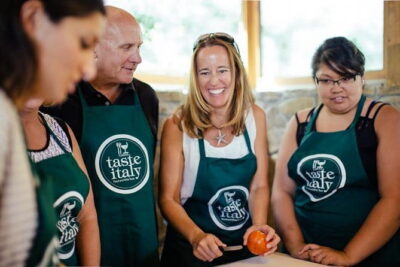
Cooking Class and Lunch at a Tuscan Farmhouse with Local Market Tour from Florence
Read our review →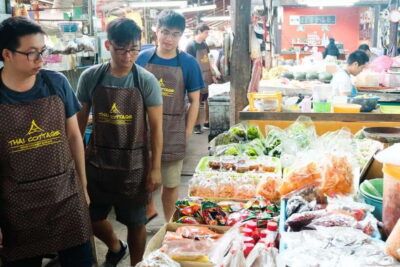
Chiang Mai: Cooking Class, Market & Thai Herbs Garden Tour
Read our review →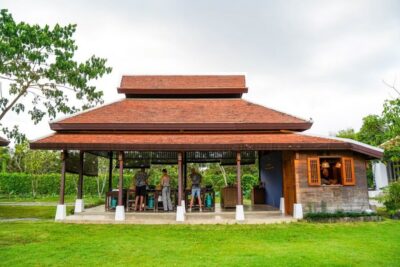
Chiang Mai: Authentic Cooking Class with Market & Farm Visit
Read our review →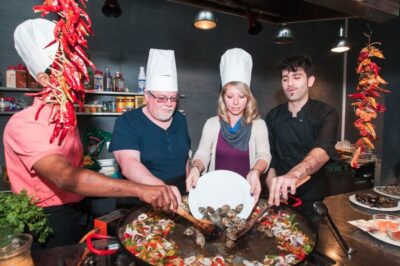
Barcelona: Paella Cooking Experience & Boqueria Market Tour
Read our review →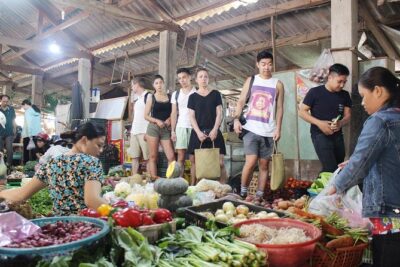
Cooking Class Hoi An:Local Market, Basket Boat, Fishing & Cooking
Read our review →