
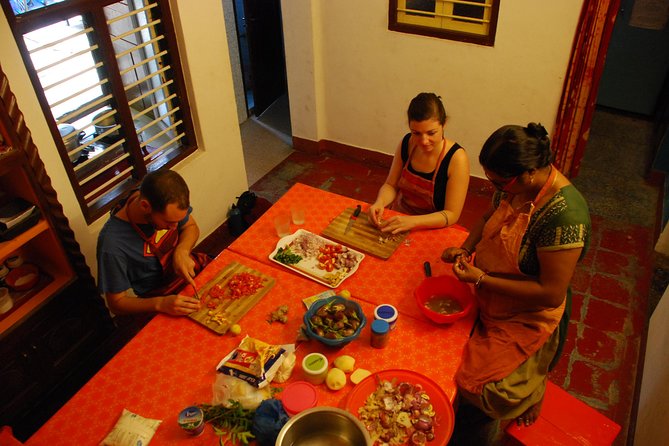
Review · INDIAN
Indian Cooking Class in Pondicherry
The best part of this Pondicherry cooking class happens before the stove is lit. You choose your dishes, then head to Goubert Market to buy the vegetables, spices, fish, or meat needed for lunch. Back at Sita Cultural Center, chef Manisha turns those purchases into a hands-on South Indian meal.
I like the freedom to choose from roughly 30 dishes, rather than being handed a fixed menu. I also like the small group, capped at six people, which gives you a real chance to chop, stir, season, and ask questions. The main consideration is that drinks cost extra, and the four-hour morning can feel long for young children.
Key points to know before booking
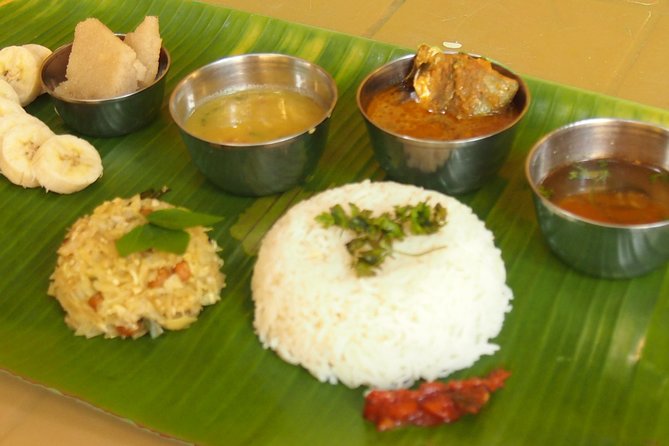
- Choose your own menu: Pick a combination of rice, gravy, side dishes, and dessert from about 30 choices.
- Shop at Goubert Market: Your market visit gives the class a direct connection to everyday cooking in Pondicherry.
- Learn with Manisha: She is praised for her humor, clear explanations, and practical tips, and may teach in more than one language.
- Eat South Indian style: Your finished lunch is served on a banana leaf, a simple detail that makes the meal feel special.
- Small-group setting: The class allows no more than six people, with at least two required for a booking.
- Good value at $28.21: Lunch, instruction, taxes, and a recipe booklet are included, but drinks are not.
Starting at Sita Cultural Center in White Town
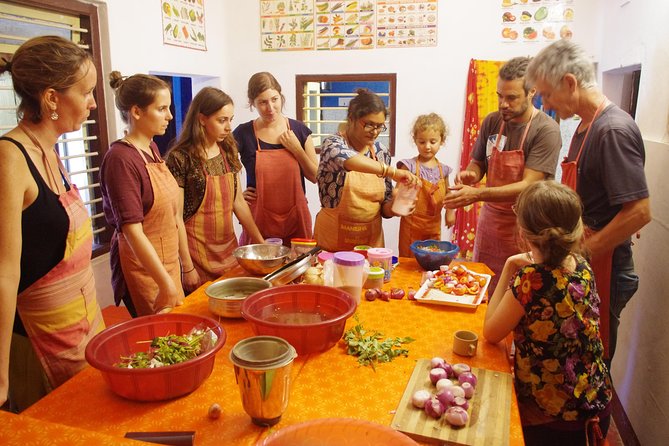
Your morning begins at 10:00 am at Sita Cultural Center, located at 22 Kandappa Mudaliar Street in Pondicherry’s White Town. The center is near public transportation, and the activity returns to this same meeting point after lunch.
This location works well for a cooking class. You are not being taken to a distant resort kitchen or a polished restaurant set. The center is described as friendly and low-key, with simple but suitable facilities. That means you should expect a practical teaching space rather than a luxury culinary school.
The group limit of six matters. Cooking lessons can become frustrating when too many people crowd around one cutting board. Here, you should have room to take part, though the amount of hands-on time can still depend on the size of your group and the dishes selected.
The class requires at least two people per booking. If you are booking alone, check availability carefully before making fixed plans around the experience. Confirmation is sent within 48 hours, subject to availability.
More Indian Cooking Classes in India:
- Indian Cooking Class in an Authentic Local Home – Learn 6 Dishes
★ 5.0 · 195 reviews - Authentic Indian Cooking Classes at Palolem Beach Road Goa
★ 5.0 · 132 reviews - Indian Traditional Hands On Cooking Classes with local Family
★ 5.0 · 69 reviews
Choosing four hours of South Indian cooking
The menu choice gives this class a useful personal touch. You can select from around 30 dishes, with many vegetarian options. A typical lunch includes rice, one main gravy, side dishes, and dessert. The gravy may be based on vegetables, fish, or chicken.
Examples of dishes prepared in the class include fish curry, sambar, aloo gobi, cardamom rice pudding, dal tadka, paneer butter masala, aloo masala parathas, and carrot halwa. You may not make this exact combination, since the menu is chosen by the group, but these examples show the range.
This is especially helpful if you already know what you want to learn. You might focus on vegetarian food, ask for a fish curry, or choose a menu that gives you a broad lesson in spice, gravy, bread, and dessert. If you are new to Indian food, the instructor can help shape a balanced meal.
The class is not only about collecting recipes. It also shows how a South Indian lunch fits together. Rice, gravy, vegetables, and dessert each play a different role. You begin to see why Indian cooking is not simply a matter of adding curry powder to a pot.
Goubert Market: the class begins with shopping
After choosing the dishes, you visit Goubert Market to buy the ingredients. This is one of the strongest parts of the experience because you see the food before it reaches the cooking table.
The market includes fruit, vegetables, fish, chicken, cookware, spices, and herbs. You may also go by tuk-tuk, depending on how the session is arranged. That short ride can add a little local flavor, but the main value is the chance to see the ingredients being selected and purchased for your own lunch.
A market visit also gives you useful context. You can look at produce that may be unfamiliar, see the range of fish and poultry, and get a better sense of the ingredients that shape South Indian home cooking. Instead of treating spices as anonymous powders in small jars, you can connect them to a real meal.
Do not expect a guided food tour lasting the whole morning. The market stop is a practical shopping trip, so it is relatively brief. You are there to gather supplies before returning to the cultural center. Still, it is an effective way to make the cooking lesson feel connected to Pondicherry rather than separated from it.
If you are sensitive to heat, crowds, or strong food smells, the market may be more demanding than the cooking room. Wear comfortable clothes and shoes, and keep your expectations practical. This is an everyday market visit, not a staged attraction.
Learning with Manisha at the stove
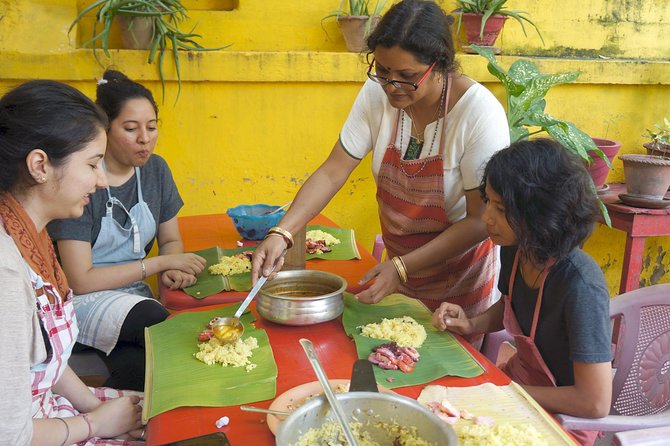
Manisha is the instructor most often named in the supplied details, and she appears to be a key part of the experience. Her teaching style is described as friendly, humorous, energetic, and clear. That combination matters in a cooking class, especially when the food is unfamiliar.
The instruction is hands-on. You can expect to help prepare the dishes rather than simply watch a chef work. The exact tasks will depend on your menu, but the class is designed to involve you at each stage of preparation.
One useful lesson is timing. Indian cooking often depends on when ingredients enter the pan, not just which ingredients are used. A spice added at the right moment can shape the aroma and flavor of the whole dish. Manisha is specifically praised for explaining the timing of spices carefully, which is the sort of detail you can use at home.
She also teaches practical tips rather than presenting cooking as a rigid performance. People have learned dishes such as dal, paneer koftas, parathas, fish curry, and sweets in the class. The recipes are varied enough to give you more than one way into Indian cooking.
The teaching may be multilingual. The class can be operated by a multilingual guide, and one session was taught in both English and French. If language is important to you, confirm the available language when booking rather than assuming every session will operate the same way.
More Hands-On Workshops in India:
- Pink City Cooking Class
★ 5.0 · 452 reviews - Five Course Cooking Class & Meal
★ 5.0 · 250 reviews - Veg and Non veg : Private Cooking Class in Delhi home (7 meal)
★ 5.0 · 226 reviews - Private Guided Cooking Workshop Experience in Jodhphur
★ 5.0 · 158 reviews
What you eat, and how you eat it
Once the dishes are ready, you sit down for lunch. The meal is included in the price, along with the chef’s instruction and all taxes, fees, and handling charges.
The banana leaf serving is a small but memorable detail. Instead of placing the food on an ordinary plate, you eat in a traditional South Indian style. It changes the rhythm of the meal and gives you a simple introduction to local dining customs.
You should not expect restaurant service. This is food you have helped prepare, served in the same place where you cooked it. That is the point. The lunch feels like the final lesson, not a separate reward at the end.
Drinks are not included, so budget for them separately. The supplied information does not specify which drinks are available or their price. If you need a particular beverage, ask before the class begins.
The menu can include vegetarian, fish, or chicken dishes. Since you choose the menu with the group, tell the instructor about your preferences early. The class has many vegetarian choices, making it a good option for people who want to avoid meat or simply learn more vegetable-based Indian cooking.
What the recipe booklet adds
You receive a free cook booklet at the end. This improves the value of the class because the main challenge after a cooking lesson is remembering what happened.
Indian cooking can involve several spices, preparation steps, and timing cues. A booklet gives you something to refer to when you try the dishes at home. It is particularly useful for recipes such as dal tadka, paneer dishes, parathas, curry, and Indian desserts, all of which can seem complicated after a single session.
Do not treat the booklet as a full cookbook. It is a souvenir and a reminder of the recipes prepared in class. Your best results will come from writing your own notes during the lesson, especially about spice quantities, cooking time, and the texture you are meant to achieve.
Is $28.21 good value?
At $28.21 per person, this is a fair price for a four-hour activity that includes a market visit, a professional chef, lunch, taxes, and a recipe booklet. You are paying for more than a meal, but the meal gives the class a practical finish.
The value is strongest if you want participation. If you only want to eat Indian food, a local restaurant will usually take less time and may cost less. But a restaurant will not give you the market trip, menu choice, cooking instruction, or recipes to take home.
The small group also helps justify the price. With no more than six people, the experience is better suited to questions and hands-on work than a large demonstration. The class is priced for an activity that occupies much of your morning, not a quick cooking show.
The average booking lead time is 39 days. That suggests you should not leave this until the last morning of your Pondicherry stay, particularly if you are visiting during a busy period. Availability is still subject to confirmation, so allow time for the booking response.
Who will enjoy this class most?
This class is a strong choice for you if food is one of the main reasons you travel. It suits curious home cooks, first-time visitors to Indian cuisine, vegetarians, couples, friends, and small family groups.
You do not need advanced cooking skills. In fact, the class is particularly suitable if you are new to Indian cooking and want a clear introduction without committing to a long professional course.
It also suits people who want an activity with local contact. The market visit, tuk-tuk ride in some sessions, banana-leaf lunch, and neighborhood setting give the morning a stronger sense of place than a classroom-only lesson.
Families should note the age guidance. The activity is not recommended for children aged four and under, and older children must be accompanied by an adult. Four hours may still be a long stretch for a child who does not enjoy cooking, so consider your child’s patience before booking.
This may not suit you if you dislike markets, have a very limited diet that cannot be discussed in advance, or want a polished, air-conditioned culinary studio. The facilities are simple, and the experience is built around participation rather than comfort and spectacle.
Practical details for planning your morning
The class starts at 10:00 am and lasts about four hours. Plan to be available until roughly 2:00 pm, although the end time is approximate. Since lunch is part of the experience, avoid scheduling another fixed activity too close afterward.
Your mobile ticket is accepted, and the meeting point is easy to identify in White Town. The activity ends back at Sita Cultural Center, so you do not need to arrange a separate return transfer.
Book at least 24 hours ahead if you may need to cancel. You can receive a full refund when you cancel at least 24 hours before the start time. Cancellations or changes made less than 24 hours before the class are not accepted for a refund, and the cut-off follows Pondicherry local time.
The activity can be run by a multilingual guide, but language arrangements may vary. If you want instruction in a particular language, ask when you book. Also remember that the minimum booking is two people and the maximum group size is six.
Should you book the Pondicherry cooking class?
I would book this if you want to understand Indian food by making it yourself. The market stop gives the lesson a local beginning, the menu choice keeps the cooking personal, and Manisha’s clear, cheerful style appears well suited to beginners.
The main reason to skip it is not quality. It is fit. Four hours is a serious slice of a sightseeing day, the facilities are simple, and drinks are extra. If those points work for you, $28.21 buys a useful meal, a cultural activity, and recipes you can try long after you leave Pondicherry.
FAQ
Where does the cooking class begin?
It begins at Sita Cultural Center, 22 Kandappa Mudaliar Street, White Town, Puducherry, 605001, India.
What time does the class start?
The class starts at 10:00 am.
How long does the experience last?
The experience lasts approximately four hours.
Does the class include a market visit?
Yes. You visit nearby Goubert Market to select and buy ingredients before cooking.
How many dishes can I choose from?
You can choose from around 30 different dishes, including many vegetarian options.
Is lunch included?
Yes. Lunch is included, and you eat the food prepared during the class.
Are drinks included?
No. Drinks are not included in the price.
Can children join the class?
Children must be accompanied by an adult, and the activity is not recommended for children aged four and under.
Just added around India
- Vegetarian : Private Cooking Class in Delhi home ( Learn 7 meal)★ 5.0 · 58 reviews
- e-Cook (Virtual Cook Class)★ 5.0 · 55 reviews
- Kailash Colony Market Tour & Amritsari Cooking Class in New Delhi★ 5.0 · 3 reviews
- Delhi Food Walk and Cooking Class With A Chef★ 5.0 · 11 reviews
- Online: Indian Food Cooking Class★ 5.0 · 9 reviews
- Food Tour With Cooking Class in Local Village from Delhi★ 4.5 · 18 reviews
- Indian Cooking Class With Chef (Half Day)★ 5.0 · 6 reviews
- Delhi Kabul Cooking Class★ 5.0 · 19 reviews
Indian Cooking Classes, compared.
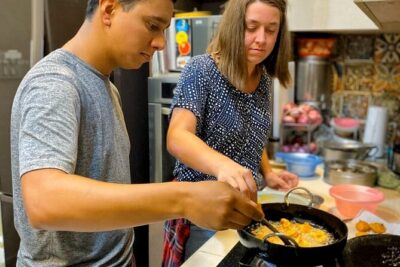
Indian Cooking Class in an Authentic Local Home – Learn 6 Dishes
Read our review →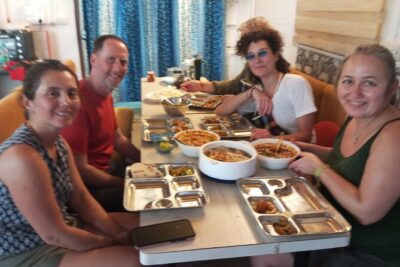
Authentic Indian Cooking Classes at Palolem Beach Road Goa
Read our review →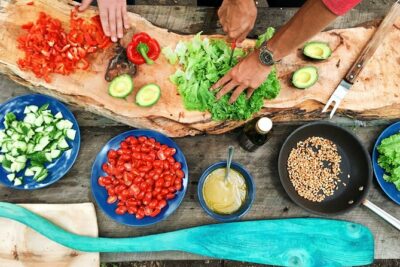
Indian Traditional Hands On Cooking Classes with local Family
Read our review →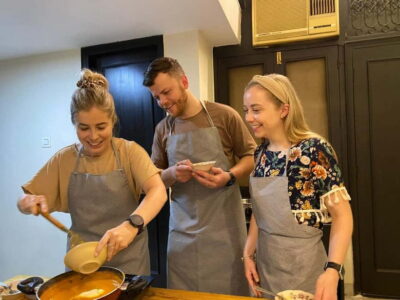
Cooking Demo + Lunch/Dinner and interaction with an Indian family @ Chez Anjali
Read our review →
Traditional Indian Cooking Class in Goa, Anjuna [vegetarian]
Read our review →
Mumbai: Indian Cooking Class & Cultural Delights
Read our review →Browse the lists this tour appears in