
Review · POSITANO
Ravioli & Tagliatelle Cooking Class at a Local’s Home in Positano
The best part of this Positano cooking class is that it takes you away from the crowded waterfront and into a family home in Montepertuso, where pasta making feels like a shared meal rather than a formal lesson. Emily, Genny, and their family guide you through ravioli, tagliatelle, and tiramisu using recipes tied to their grandmother.
I like two things right away: you help gather ingredients from the garden, and the meal continues with local wine, prosecco, homemade limoncello, and family stories. The main consideration is getting to the home, since it is above central Positano and the meeting point is at Piazza Cappella rather than by the beach.
The three-hour format leaves time for both cooking and eating, and the maximum group size of 14 keeps it social without making it feel like a large demonstration. If you want a quiet, highly technical pasta workshop, the family-style setting may feel informal. If you want food, conversation, and a genuine look at local home cooking, it fits beautifully.
Key details of the Montepertuso cooking class

- Three handmade dishes: Prepare ravioli, tagliatelle, and the family’s tiramisu recipe.
- Garden-to-table ingredients: Pick fresh produce at the home before using it in the meal.
- Family hosts: Emily and Genny lead the class with help from their mother and other family members.
- A full Italian meal: Begin with salami, cheese, olives, tarallucci, prosecco, caprese salad, and grilled vegetables.
- A mountain setting above Positano: Cook and eat in a private home with broad views from the balcony.
- Small-group feel: The activity accepts up to 14 people and lasts about three hours.
Leaving Positano for Montepertuso
The class begins at Piazza Cappella in Positano and ends back at the same meeting point. The cooking home is in Montepertuso, a higher part of the Positano area, so plan for an uphill journey rather than a short stroll from the main beach.
This matters because Positano is compact on a map but steep in real life. A shared taxi may be arranged with other people attending the class, which can make the ride easier and less expensive. That arrangement is not described as a guaranteed transfer, so confirm the pickup details when you book.
The location gives the class a different feel from a restaurant kitchen. You are not simply shown how pasta is made and then sent to a dining room. You enter a family home, meet several members of the household, and settle in for an afternoon or evening built around cooking and conversation.
Montepertuso also changes the pace. Instead of staying among shops, buses, and beach crowds, you spend several hours in a quieter residential setting. The views from the family villa are an important part of the appeal, especially when you sit down to eat what you have made.
More Home Cooking Classes in Italy
- Pastamama, Home Cooking Classes at Grace’s Home
★ 5.0 · 521 reviews - Traditional Home Cooking Experience in Venice
★ 5.0 · 377 reviews - Catania: Pistachio Ravioli, Pasta Home Cooking Class w/ Wine
★ 4.7 · 204 reviews
A welcome table before the pasta begins
The class starts with an aperitif rather than an immediate lesson. Expect salami, tarallucci, local cheese, olives, and a glass of prosecco. This is a generous opening, so arrive ready for more than a quick snack.
The welcome food gives you a chance to meet the family and the other people in your group before everyone begins working with dough. It also sets the tone: this is a social meal with instruction woven through it, not a strict school where every minute is devoted to technique.
The menu then adds caprese salad with local mozzarella and fresh tomatoes, rocket, and grilled vegetables picked from the garden. The produce is central to the meal, not just decoration. You get to taste ingredients before they are cooked and see how a simple dish depends on good tomatoes, cheese, herbs, and vegetables.
I especially like this part for anyone who wants to understand Italian cooking beyond pasta. The food is not built around a long list of complicated ingredients. Instead, you see how fresh produce and careful preparation carry a meal.
Making ravioli by hand
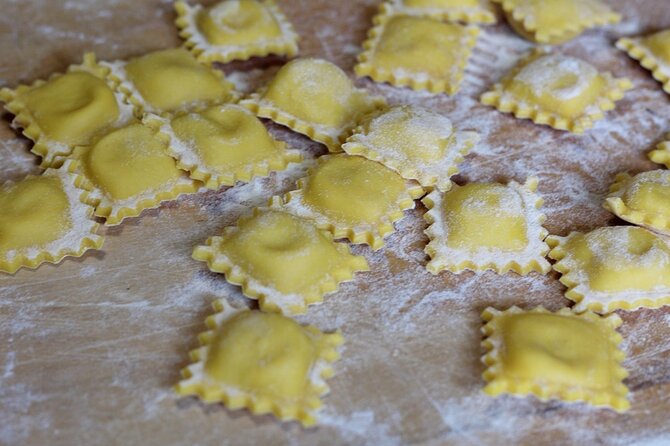
The first pasta project is fresh ravioli. The filling may use ricotta, vegetables, or meat, with the ingredients chosen together. That flexibility is useful if you have a preference, although the exact filling is not fixed in advance.
You will work with the dough as a group and learn how to shape the ravioli. One memorable detail is the size of the pasta sheet: people work together as the dough becomes long and wide. That shared effort makes the process playful, especially for families or couples who want an activity rather than a passive demonstration.
The instruction focuses on the family method for making good pasta. You can expect practical guidance on handling the dough and assembling the ravioli, but this is not presented as a professional chef certification course. Emily’s role is part teacher and part host, explaining the recipes while keeping the mood relaxed.
That distinction matters. If you want exact measurements, repeated drills, and a technical breakdown of flour types, ask about the lesson before booking. If you want to learn a method you can repeat at home, then sit down to eat the result with the people who taught you, this format has more charm.
Rolling tagliatelle with garden ingredients
The second pasta is tagliatelle, described on the menu as handmade noodles prepared with fresh ingredients from the garden. Making a second shape helps you see that pasta is not one single skill. Ravioli asks for filling and sealing, while tagliatelle puts more attention on rolling, cutting, and handling long strands.
You are likely to spend time working alongside the other people in the group. The maximum is 14, and the actual class size may vary, but the format is designed around participation. Several people who attended with families found the cooking organized and easy to follow, while still relaxed enough for jokes, music, and conversation.
The family’s recipes come from their grandmother, and Emily explains the connection between the food and the household traditions. That personal link gives the pasta lesson more meaning than a generic recipe card. You are learning how this family prepares food, not being told that there is only one correct way to cook Italian pasta.
After the cooking, the pasta becomes part of the meal. You are not packing the dough away to cook later. You eat the ravioli and tagliatelle at the home, along with the starters and vegetables.
More Pasta Making Classes in Italy:
- Florence: Pasta Cooking Class with Unlimited Wine
★ 4.9 · 10,285 reviews - 3 in 1 Cooking Class near Navona: Fettuccine, Ravioli & Tiramisu
★ 5.0 · 7,376 reviews - Florence: Pasta & Tiramisu Cooking Class with Unlimited Wine
★ 4.9 · 6,708 reviews - Florence: Pasta Cooking Class with Unlimited Wine
★ 5.0 · 6,413 reviews
Tiramisu keeps the meal going
The dessert is tiramisu, made from an old family recipe. It is a welcome choice for people who want a complete meal rather than a class that ends after the savory dish.
The lesson includes making the dessert, so you get three different kinds of kitchen work in one visit: fresh pasta dough, filled pasta, and a chilled dessert. Tiramisu is also a forgiving dish for a group because people can share tasks rather than each person needing a separate work station.
The family takes its recipes seriously, but the atmosphere is not stiff. Singing, dancing, laughter, and homemade limoncello may all become part of the meal. If you prefer a silent, tightly timed class, this could feel loose. I see that informality as part of the point, but it helps to know what you are booking.
You should also expect plenty of food. With an aperitif, caprese salad, grilled vegetables, two pasta dishes, dessert, and wine, this is closer to a long Italian lunch or dinner than a small tasting.
Food, wine, and stories at the table
The strongest feature of the class is the way cooking leads into family conversation. Emily shares stories about her grandmother, the home, and the family’s connection to recipes passed down through generations. Her English is described as fluent, which makes the storytelling easy to follow for English-speaking visitors.
Genny and Emily’s mother also take part, adding a generational quality to the meal. The relationship between family members is part of the entertainment, and you are not separated from the household once the formal cooking ends.
Local wine and prosecco are included, and homemade limoncello may be served after the meal. The drinks help turn the class into a long, friendly gathering, but keep the setting in mind if you do not drink alcohol. The supplied details do not specify nonalcoholic alternatives, so ask in advance if you need them.
Photos and videos may also be taken during the class and shared through WhatsApp. This is useful if you want a record of the pasta lesson, but tell the hosts if you would rather not be photographed.
Why the view matters
The villa has broad views from its balcony, and eating there gives you a clear sense of place. Positano is famous for its dramatic setting, but you do not need to spend every hour in the busiest part of town to appreciate it.
The named locations include Montepertuso and Li Galli. The important practical point is that the cooking takes place up in the hills rather than on the main beach, with the home and its outlook forming part of the visit.
I would not book this solely for sightseeing. This is a cooking activity first. The view is a bonus that makes the meal more memorable, not a substitute for a dedicated scenic tour.
What the $181.41 price means
At $181.41 per person, this is not a budget meal or a quick pasta lesson. The value comes from the amount packed into roughly three hours: instruction, a welcome aperitif, a substantial meal, garden ingredients, several drinks, dessert, family storytelling, and the private-home setting.
You are also paying for the social side of the visit. A restaurant class may give you a more polished kitchen and more formal instruction. Here, the price covers access to a family’s home, their recipes, their time, and a meal prepared with the group.
For a couple or family marking a birthday, anniversary, or final night in Positano, the price can make sense as a special event. For a solo visitor focused mainly on learning professional pasta technique, compare it with a smaller workshop before booking.
The maximum group size is 14, so this is not guaranteed to be a private class. Still, the home setting and family participation create a more personal atmosphere than a large restaurant demonstration.
Who will enjoy this most
I would choose this for you if you enjoy food as a way to meet people and understand a place. It suits couples, families, and small groups who want to cook together, eat a full meal, and hear stories about local traditions.
It is also suitable for children, according to the activity details. Young participants may enjoy rolling dough, shaping ravioli, and making tiramisu, though adults should decide if the three-hour length and uphill location fit their group.
The class works well as a break from Positano’s busy center. You get out of the main streets, see a residential part of the area, and spend time with a family rather than moving from one attraction to another.
I would hesitate only if you have strict dietary needs that have not been discussed in advance, dislike group activities, or want a class centered on advanced culinary technique. The menu includes dairy, meat options, alcohol, and several shared dishes, so ask about possible changes before paying.
Booking and practical details
Confirmation arrives at booking, and the experience is offered in English. It is near public transportation, but the meeting point and uphill home still make it wise to allow extra time.
This class is often reserved well ahead, with bookings averaging about 77 days in advance. That is a useful warning for a Positano itinerary, especially if your dates are fixed. Book early if you want a particular day.
The activity requires good weather and a minimum number of people. If poor weather cancels the class, you can receive another date or a full refund. The same applies if the minimum group size is not met.
You can cancel for a full refund up to 24 hours before the start time. Changes or cancellations inside that 24-hour window are not accepted for a refund, so keep the local start time in mind.
Should you book the Barba Angela cooking class?
Book it if you want family hospitality, fresh pasta, and a long meal with a view. The combination of ravioli, tagliatelle, tiramisu, garden produce, wine, and stories makes this far more than a recipe demonstration.
The best reason to choose it is the setting. You are welcomed into a family home in Montepertuso and included in a tradition that reaches back to the grandmother’s recipes. The main drawback is practical: the class costs more than a simple meal and requires getting up from central Positano.
For most visitors who value personal contact over polished presentation, I would make room for it. Just confirm transportation, mention dietary needs, and reserve early.
FAQ
Where does the cooking class begin?
The meeting point is Piazza Cappella in Positano, Italy. The activity ends back at the same meeting point.
How long does the class last?
The cooking class lasts approximately three hours.
What dishes will I make?
You will prepare fresh ravioli, handmade tagliatelle, and tiramisu.
What food is served besides the pasta?
The menu includes salami, tarallucci, local cheese, olives, prosecco, caprese salad, local mozzarella, fresh tomatoes, rocket, and grilled vegetables.
Are drinks included?
The welcome includes a glass of prosecco, and the meal includes a selection of local wine. Homemade limoncello may also be served.
Is the class suitable for children?
Yes. The activity is listed as suitable for children.
How many people can join?
The maximum group size is 14 people.
What happens if bad weather cancels the class?
You will be offered a different date or a full refund if poor weather causes the activity to be canceled.
More Hands-On Workshops in Italy
- Naples: Pizza-Making Workshop with Drink and Appetizer
★ 4.9 · 5,411 reviews - Cooking Class and Lunch at a Tuscan Farmhouse with Local Market Tour from Florence
★ 5.0 · 4,831 reviews - Authentic Pizza Making Class in Naples with Appetizers and Drink
★ 5.0 · 3,178 reviews - Rome: Pasta Making Class with Wine, Limoncello, and Dessert
★ 4.9 · 3,177 reviews
Just added around Italy
- Verona: Pasta and Tiramisu Cooking Class with Fine Wine★ 4.8 · 633 reviews
- Siena: Small group Cooking Class in Chianti Farmhouse★ 5.0 · 162 reviews
- 3-hour Tuscan Cooking Class with Wine & Oil Tasting★ 4.5 · 36 reviews
- Italian Cooking Class and Wine Tasting in Tuscany★ 5.0 · 30 reviews
- Truffle Hunting and Cooking Class★ 4.5 · 26 reviews
- Cooking Class in a Secret Courtyard – Culurgiones (Sardinian Pasta)★ 4.5 · 55 reviews
- Cagliari Cooking Class: Sardinian Ravioli, Wine & Local Flavors★ 5.0 · 20 reviews
- Alghero Home Cooking Pasta Class at a Farmhouse with Wine★ 5.0 · 130 reviews
Pasta Making Classes, compared.
Florence: Pasta Cooking Class with Unlimited Wine
Read our review →
3 in 1 Cooking Class near Navona: Fettuccine, Ravioli & Tiramisu
Read our review →
Rome: Pasta Making Class with Wine, Limoncello, and Dessert
Read our review →
Rome Cooking Class: Make Pasta and 3 Spritz Cocktails
Read our review →
Rome: 3-in-1 Fettuccine, Ravioli, and Tiramisu Cooking Class
Read our review →
Rome: Fettuccine Pasta Cooking Class in Rome’s City Center
Read our review →Browse the lists this tour appears in