
Review · THESSALONIKI
5 Hours Private Cooking Classes in Langadas Thessalonikis
At Agnifarm, Greek cooking begins in the garden, not at the stove. You may gather eggs, pick tomatoes and herbs, meet the family horse Hermes, then turn those ingredients into a full meal with Maria, Aggelos, and their family. It is a farm visit, cooking lesson, and long Greek lunch rolled into one.
I like the farm-to-table work because it gives you a clear link between the food and the place. I also like Maria’s practical approach: you prepare several dishes, learn methods you can repeat at home, and sit down to eat what you made. The main consideration is time. Five hours is a substantial block, and the cooking can feel busy if you want a quick demonstration rather than hands-on work.
Key points to know before booking
- A real farm kitchen: Gather eggs, vegetables, herbs, and other ingredients before cooking.
- Maria leads the lesson: She teaches traditional family recipes, including giouvetsi, gemista, tzatziki, and semolina halva.
- A full shared meal: Your cooking becomes lunch or dinner, served with local wine and other drinks.
- More than food: Meet the family, see the animals, visit the garden, and hear about Langadas.
- Private format: Only your own group takes part, which suits families, couples, and solo visitors.
- Plan your transport carefully: Pickup is offered from the statue of Eleftherios Venizelos on Egnatia Street, and the activity returns there.
From central Thessaloniki to the Agnifarm kitchen
The meeting point is in front of the statue of Eleftherios Venizelos on Egnatia Street. Look for a guide holding an Agnifarm sign. Pickup is offered, which makes the outing easier if you are staying in Thessaloniki and do not want to arrange your own way to Langadas.
The farm is outside the city in Langadas, about a rural change of pace from central Thessaloniki. The transfer matters because this is not a cooking studio in town. You are going to a working family farm, where the setting supplies much of the experience.
The activity lasts about five hours. That gives enough time for introductions, a farm walk, cooking, and a shared meal without rushing every step. It also means you should treat this as one of the main activities in your day, not a quick stop between city sights.
The tour is private, so only your group participates. That is useful in a cooking class. You can ask Maria to repeat a step, adjust your work, or explain an ingredient without trying to keep up with a large room full of people. A solo booking is possible too, and the family-style setting can make the day feel pleasantly personal.
More Hands-On Workshops in Greece:
- Athens: Classic Cooking Class with Market Visit and Wine
★ 5.0 · 1,101 reviews - Athens: Food Market Visit and Cooking Class with Wine
★ 4.9 · 1,087 reviews - Greek Cuisine Cooking Class in Santorini with Recipes and Wine
★ 5.0 · 969 reviews
Coffee, tea, and a warm welcome
The visit begins with traditional welcome drinks, Greek coffee or hot mountain tea, meze snacks, and a spoon dessert. These opening tastes help set the pace. Greek hospitality often begins at the table, and here the first table is part of the introduction rather than an afterthought.
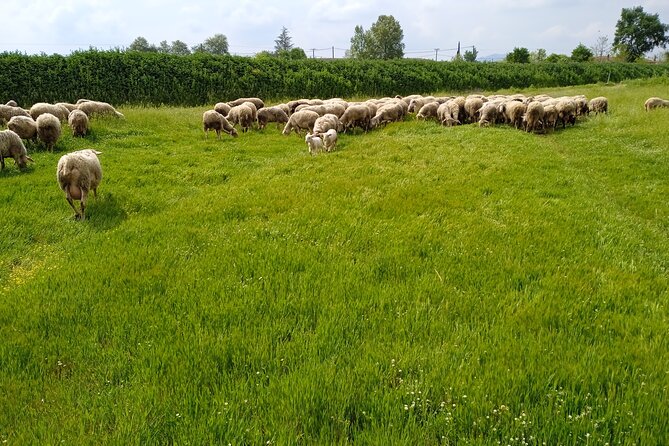
Maria and Aggelos welcome you with their children, pets, and Hermes, the family horse. The animals add a relaxed farm element, especially if you enjoy seeing how a household is tied to its land. You can familiarize yourself with the animals before getting to work, so the day does not feel like a formal lesson with a strict classroom boundary.
You may also hear something about Langadas and the family’s way of life. That local context gives the cooking more meaning. A dish such as gemista is not just a recipe to copy. It is part of a pattern of home cooking, garden produce, preserving, and feeding family and friends.
The welcome is one of the strongest parts of the experience, but it also explains why the day takes five hours. Conversations, samples, and time around the family table are built into the visit. If you prefer a tightly timed class with little social interaction, this may feel slow.
Picking vegetables and eggs from the farm
Before cooking, you help collect some of the ingredients. Depending on the day’s produce, you might gather tomatoes, peppers, cucumbers, lettuce, rocket arugula, herbs, and fresh eggs from the coop.
This simple step changes how you see the meal. You are not just opening packets and measuring ingredients in a demonstration kitchen. You see the raw materials where they grow, then carry them into the cooking process. Freshness is not a marketing line here. It is part of the activity itself.
The garden portion also gives you a better sense of what Greek home cooking depends on: good vegetables, olive oil, herbs, cheese, and sensible seasoning. You may see homemade and preserved items around the house too, including tomato sauce, olive oil, cheese, and other farm products.
The farm visit is not described as a long agricultural tour, so do not expect a full working-farm lecture. Its purpose is more direct. You collect what you need, meet the animals, and connect the meal to the family’s daily setting.
Cooking seven dishes with Maria
Maria guides the cooking, explaining the steps and showing you the family’s methods. The menu listed for the class includes eggs with tomatoes, Greek salad known as horiatiki, tzatziki, giouvetsi with veal, traditional gemista, and semolina halva. The hands-on sessions can include several additional salads or small dishes, with some participants preparing six or seven separate items.
That is a lot of food for one lesson. You will chop, stir, stuff peppers and tomatoes, prepare the salad, mix the tzatziki, and help with the main dishes. The attraction is variety. You do not spend five hours learning one recipe in microscopic detail. Instead, you get a working introduction to several familiar Greek dishes and the basic habits behind them.
A few more cooking classes around Greece worth a look
- PRIVATE Authentic Balinese Cooking Class in Ubud at Putu’s Home
★ 5.0 · 644 reviews - Rome: Pasta Making Class with Tiramisu & Wine PRIVATE OPTION
★ 4.8 · 404 reviews - Semi-Private Pizza Making Experience in Naples with Drink
★ 5.0 · 324 reviews - Private Market Tour & Cooking Class in Puerto Vallarta with Manu
★ 5.0 · 241 reviews
Eggs with tomatoes
This starter shows how a few good ingredients can make a satisfying dish. Fresh eggs, tomatoes, and homemade sauce create a simple combination that is easy to remember and repeat at home.
It is also a useful first recipe because it does not require complicated equipment or rare ingredients. Maria’s lesson focuses on cooking principles, so pay attention to how she handles the sauce and combines the eggs with it.
Horiatiki Greek salad
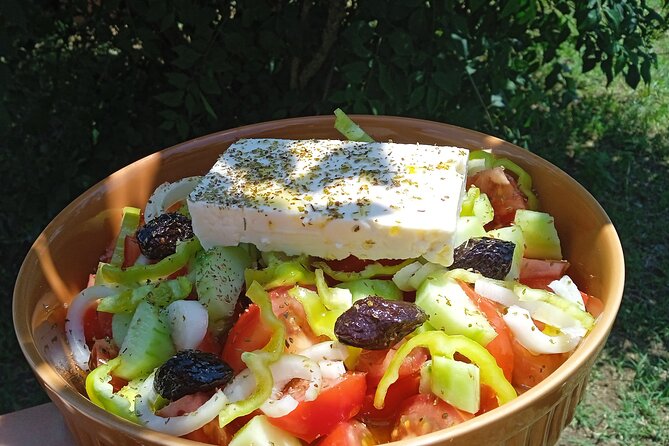
The salad uses fresh vegetables picked from the farm, with ingredients such as tomatoes, cucumbers, lettuce, rocket, and herbs appearing in the meal. It is a reminder that Greek salad is at its best when the vegetables carry the flavor.
You may also sample sheep’s-milk feta and local olive oil. These small tastings help you understand why Greek food can taste so good without heavy sauces or elaborate preparation. The quality of the basic ingredients does much of the work.
Tzatziki
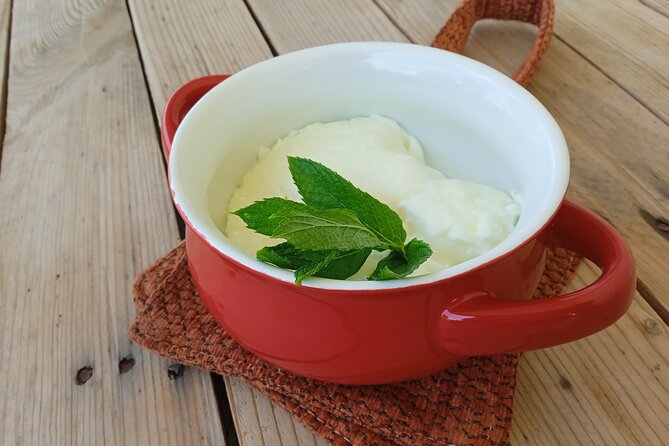
Tzatziki is one of the most useful recipes to take home. It is familiar, flexible, and easy to serve with other foods. Maria’s version forms part of the larger meal, so you learn how it fits alongside salad, vegetables, and meat rather than treating it as an isolated dip.
Giouvetsi with veal
Giouvetsi with veal is the main dish that gives the meal its weight. It is a traditional baked Greek preparation, and the cooking takes more time than the quick starters. You help prepare it, then wait while the flavors develop.
That waiting period is not wasted. It gives you time to work on the other dishes, sample homemade items, and talk with the family. You also get to see how a Greek meal is built around several dishes coming together at different speeds.
Traditional gemista
Gemista means stuffed vegetables, commonly tomatoes and peppers. You help prepare and fill them, using the vegetables gathered from the farm.
This is one of the more hands-on parts of the class. It also teaches a useful Greek cooking idea: vegetables can serve as both container and main part of the dish. The final result depends on careful preparation, good produce, and enough time in the oven.
Semolina halva
Semolina halva closes the meal with a sweet, grain-based dessert. If you have not tried it before, this is a good chance to meet a traditional Greek sweet in a home setting rather than as a packaged restaurant dessert.
The dessert also rounds out the lesson. You leave with ideas for starters, salad, dips, main dishes, and something sweet, rather than only one narrow recipe.
Homemade tastings beyond the menu
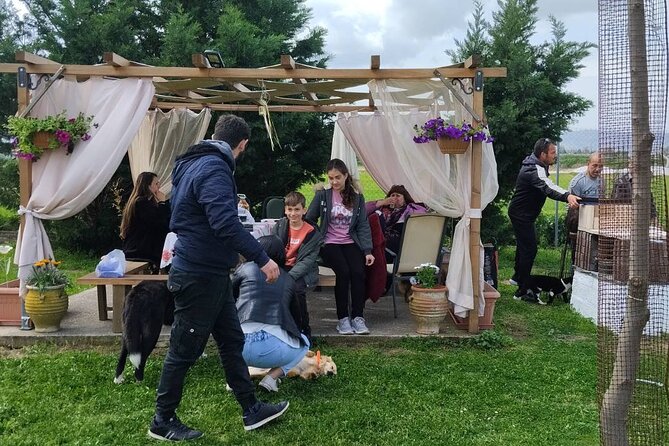
The class includes more than the dishes you prepare. You may taste homemade tomato sauce, sheep’s-milk feta, olive oil, preserves, and herb-infused drinks. The family also makes products such as cheese, tomato sauce, and natural skin-care items.
Not every extra item is the central focus, so keep your expectations sensible. These samples are part of the family farm setting, not a separate tasting course with formal notes and a printed scorecard. Still, they make the visit more personal and show how the household uses and preserves what it produces.
The sheep’s-milk feta receives particular attention for its quality, while the homemade tomato sauce helps explain why the eggs and other dishes have such a strong base. If you enjoy food shopping and local products, these details may be as interesting as the formal recipes.
Eating the meal you helped prepare
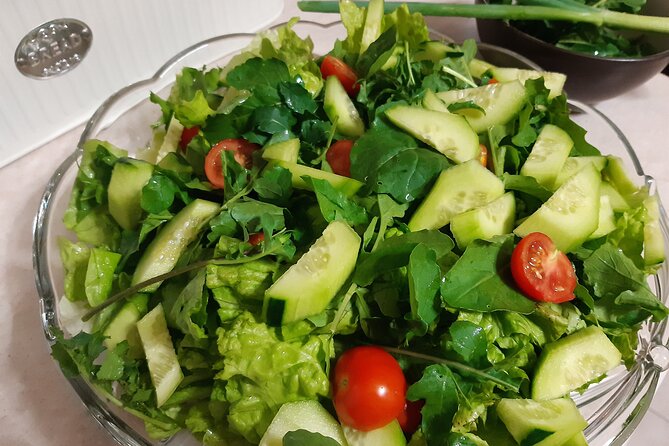
After the cooking, you sit down to eat together. The meal can be served on the family terrace, with Maria, Aggelos, and the children joining you. Local wine and other drinks accompany the food.
This shared meal is where the class earns its place as a cultural activity. You are not simply handed a plate at the end. You have gathered ingredients, worked in the kitchen, and then watched the dishes arrive at the table one by one.
The atmosphere is friendly and conversational. Solo visitors can enjoy the company without needing to form their own group, while couples and families have room to spend time together. The setting is informal, so you should expect family hospitality rather than restaurant service.
The food itself is the payoff. The veal, fresh salad, stuffed vegetables, eggs, tzatziki, and halva create a generous spread. Since you help prepare the dishes, lunch becomes a lesson in portion, timing, and balance as well as a meal.
Is $180.44 per person fair value?
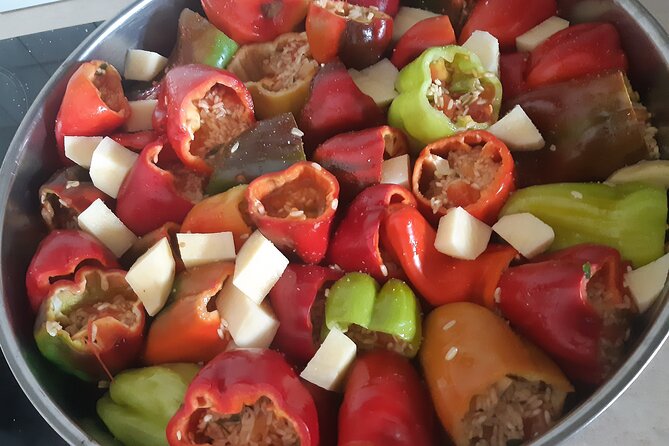
At $180.44 per person, this is not a cheap way to eat lunch. You are paying for about five hours, pickup service, a private cooking lesson, farm access, ingredients, a full meal, drinks, and personal time with the family.
The value improves if you want several experiences in one booking. A city cooking class may teach a recipe or two, while this outing adds transport, a garden visit, animals, local context, and a long shared meal. The private format also matters if you want close instruction or are celebrating a birthday.
The price is harder to justify if your main goal is simply to taste Greek food. Thessaloniki has many less expensive places to eat, and you could spend those five hours visiting city sights. Book this for the personal contact and hands-on work, not just for the number of dishes on the table.
Who will enjoy Agnifarm most?
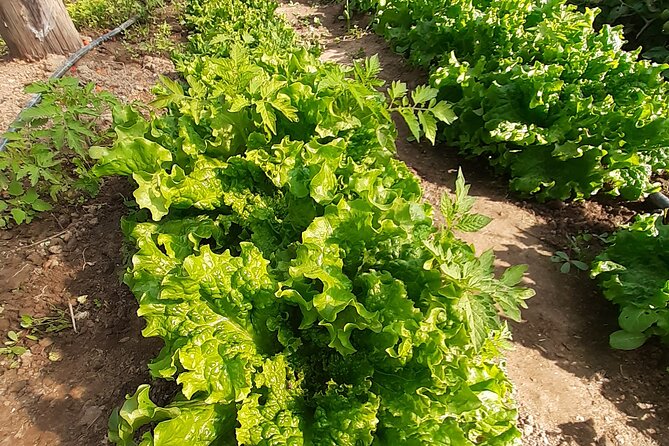
I would recommend this experience to:
- Solo visitors who want a welcoming day with local hosts.
- Couples looking for a relaxed food experience outside the city.
- Families who enjoy animals, gardens, and hands-on activities.
- Home cooks who want recipes they can recreate after returning home.
- People celebrating a birthday or special occasion.
- Anyone who wants to connect food with Greek family life.
It may be less suitable for someone who dislikes group meals, farm animals, or extended social time. It is also not the best pick if you want a short, polished cooking demonstration with minimal participation.
The class is offered in English, and confirmation is provided at booking. The meeting point is near public transportation, and the activity ends back at the meeting point. Since the experience is non-refundable and cannot be changed after booking, check your schedule and transport plans carefully before paying.
Should you book this Greek cooking class?
Book it if you want to cook with real farm ingredients, learn several traditional dishes, and spend time with Maria and her family in Langadas. The strongest feature is the complete chain from garden and chicken coop to kitchen and terrace table.
I especially like that you can take practical recipes home. You are not only tasting Greek food. You are learning how eggs, tomatoes, herbs, cheese, vegetables, olive oil, and patience become a family meal.
Skip it if you want a low-cost meal, a quick class, or a strictly professional setting. For everyone else, Agnifarm offers a generous five-hour visit with food, animals, conversation, and a clear sense of Greek hospitality. The farm setting and personal welcome are the reasons to choose it.
FAQ
Where does the cooking class take place?
The class takes place at Agnifarm in Langadas, Thessaloniki, Greece. The listed starting location is Langadas 572 00, Greece.
Is pickup available from Thessaloniki?
Yes. Pickup is offered from in front of the statue of Eleftherios Venizelos on Egnatia Street. Look for a guide holding an Agnifarm sign.
How long does the experience last?
The cooking class lasts approximately five hours. It ends back at the meeting point.
What food will I prepare?
The sample menu includes eggs with tomatoes, horiatiki Greek salad, tzatziki, giouvetsi with veal, traditional gemista, and semolina halva. The hands-on session may include six or seven dishes.
Is this a private activity?
Yes. Only your own group participates in the activity. Solo bookings are also possible.
What language is the class offered in?
The experience is offered in English. Confirmation is received at the time of booking.
Just added around Greece
- Thessaloniki: Cooking & Dining Experience with Greek Family★ 4.9 · 85 reviews
- Cook & Dine With a Local Greek Family in Thessaloniki★ 5.0 · 26 reviews
- Thessaloniki: Greek Cooking Class, Market visit and Lunch★ 5.0 · 15 reviews
- Rhodes: Cooking Lesson and Wine Tasting with Lunch★ 4.9 · 93 reviews
- Tasting Rhodes: Cooking Class, Wine Tasting & more in an Authentic Greek village★ 5.0 · 66 reviews
- Rhodes Wine & Food Tour: 10 Meal Course Lunch, Wine Tasting, Cooking Class★ 5.0 · 109 reviews
- Cooking Classes in Mykonos Greece★ 5.0 · 180 reviews
- Athens Market Tour and Cooking Class in a Beautiful Garden★ 5.0 · 122 reviews
Cooking Classes, compared.
Half-Day Thai Cooking Class at Organic Farm in Chiang Mai
Read our review →
Florence: Pasta Cooking Class with Unlimited Wine
Read our review →
3 in 1 Cooking Class near Navona: Fettuccine, Ravioli & Tiramisu
Read our review →
Hanoi Cooking Class: Culture, Local Market & Meaning CSR Impact
Read our review →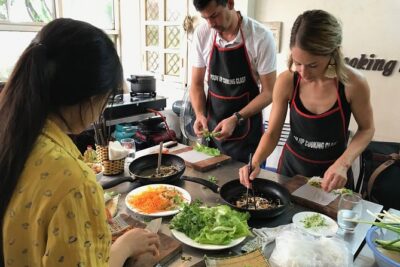
5 Traditional Dishes Hanoi Cooking Class with Market Trip
Read our review →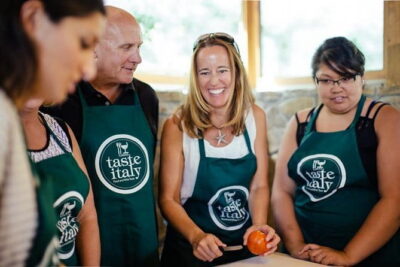
Cooking Class and Lunch at a Tuscan Farmhouse with Local Market Tour from Florence
Read our review →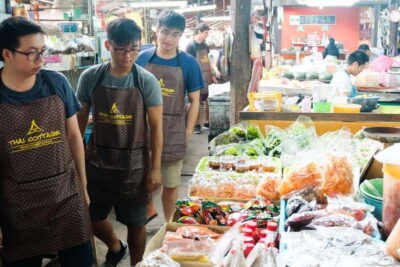
Chiang Mai: Cooking Class, Market & Thai Herbs Garden Tour
Read our review →Browse the lists this tour appears in