Review · VALENCIA
Real Paella Cooking Class – Market Visit & Sangría Workshop
Valencia’s signature dish makes the most sense when you cook it where it was born. This hands-on paella class takes you through Ruzafa Market, into a working kitchen, and finally to a shared table with the paella you helped prepare. You learn the practical details, not just the recipe.
I especially like the market stop, where you shop alongside local residents rather than spending the whole morning in the city’s more photographed food hall. I also like the focus on socarrat, the crisp rice layer at the bottom of the pan, plus the chance to learn sangria while tapas and drinks keep the mood lively.
The main consideration is the group size. Some sessions are small, while others bring together a larger crowd. That can mean less individual attention, though it also creates the social, communal meal that gives the class much of its appeal.
Key points at a glance
- Ruzafa Market first: Begin with a guided visit to a neighborhood market and see the ingredients used in Valencian cooking.
- Choose your paella: Prepare either meat and vegetable paella or seafood paella with traditional salmorreta sofrito.
- Learn the socarrat: Your chef explains how to create the prized crisp layer without burning the rice.
- Drinks are part of the class: Tapas, sangria, beer, DO Valencia wine, soft drinks, coffee, and mistela are included.
- A meal, not a demonstration: You take part in preparing the dish, then sit down with the group to eat it.
- Useful take-home skills: You learn about J. Sendra rice, saffron, sofrito, and methods you can try in your own kitchen.
Starting at San Valero Church and entering Ruzafa Market
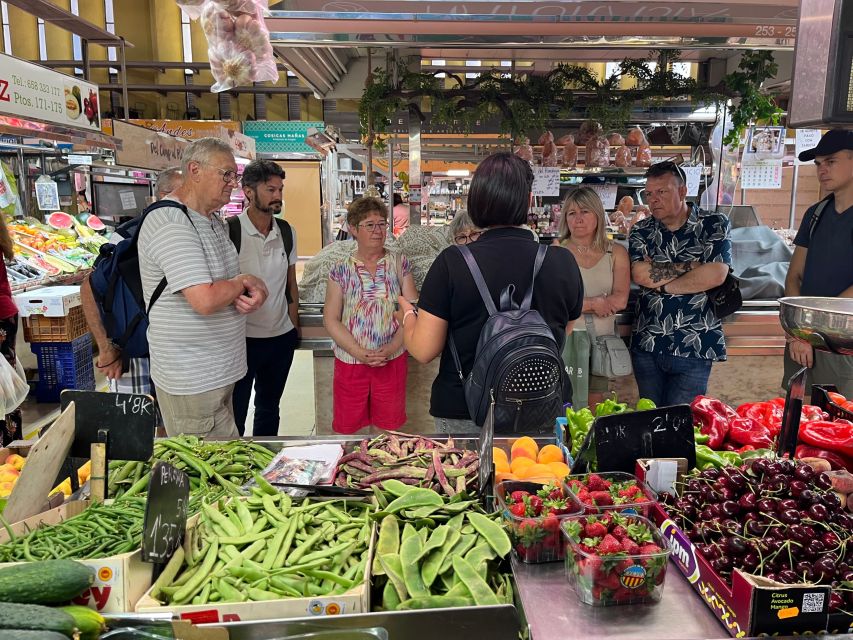
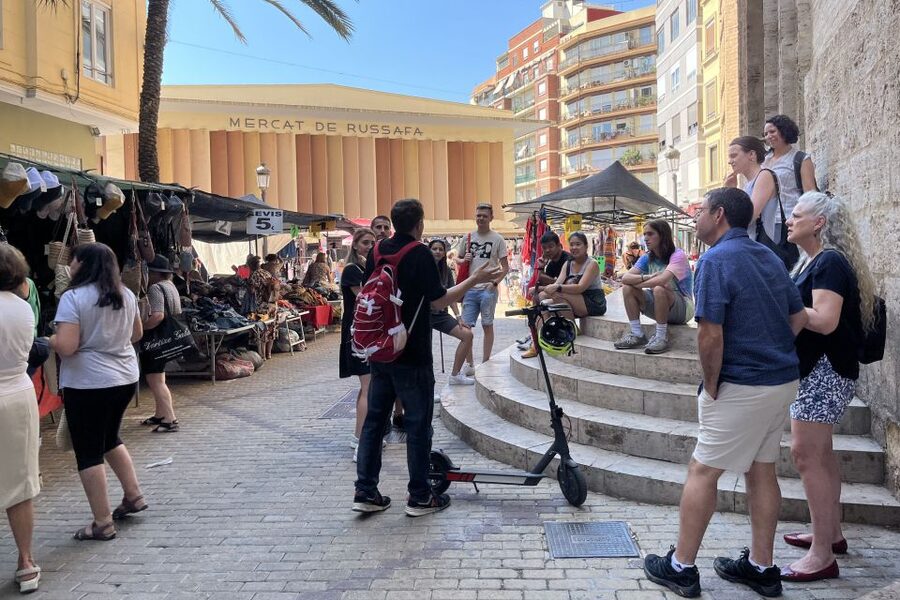
Your meeting point is at the door of the Church of San Valero. From there, the class heads to Ruzafa Market, a neighborhood market where Valencians do their regular shopping.
That choice matters. Valencia’s Central Market is an excellent sight, but it can feel like a stop on every visitor’s list. Ruzafa offers a quieter look at ordinary food shopping. You see the setting where the ingredients begin, rather than meeting them only after they have been measured into bowls.
The market visit is guided, and the chefs use it to explain the produce and other ingredients needed for paella. You are not simply led past stalls for a few quick photographs. The point is to understand what goes into the pan and why fresh, well-chosen ingredients matter.
I would pay attention here, especially if you plan to cook paella later. This is the part that connects the finished dish to Valencia’s food culture. It also gives you context for the recipe before you begin handling rice, stock, saffron, and seafood or meat.
The market stop is not a full shopping excursion, so do not expect a long period to browse and buy food for yourself. Extra purchases are not included. Still, it is a useful opening to a class that aims to show paella as everyday cooking, not a restaurant trick.
More Market Tour Cooking Classes in Spain
- Barcelona: Paella Cooking Experience & Boqueria Market Tour
★ 4.8 · 3,661 reviews - Barcelona Paella Cooking Class with Market Visit, Tapas & Sangria
★ 5.0 · 2,531 reviews - Paella Cooking Class, Wine Tasting & Central Market in Valencia
★ 5.0 · 1,150 reviews
Tapas and sangria before the main cooking
After the market, you walk a short distance to the cooking kitchen. The class begins with a spread of Spanish tapas, including Manchego cheese, jamón serrano, steamed mussels, patatas bravas, and olives.
This opening works well. You have something to eat while the chefs explain the activity, and the group has time to settle in before the cooking begins. Patatas bravas, jamón, and Manchego also give you a quick taste of familiar Spanish flavors before the more involved paella course.
You also learn to make sangria. Sangria is often treated as a simple holiday drink, but here it becomes part of the lesson and the social rhythm of the afternoon. Sangria is available throughout the cooking period, along with beer, wine, and soft drinks.
The drink service is generous, but it is worth pacing yourself. The class lasts three and a half hours, and the meal still includes wine, dessert, coffee, and mistela. If you prefer not to drink alcohol, soft drinks are included, and the cooking itself remains the main event.
The teaching team helps set a welcoming tone. Anna is repeatedly singled out for her humor, warmth, and clear instruction, while José, Guillermo, and Christina are also among the chefs who lead sessions. Names can vary by date, but the format remains centered on friendly, active guidance rather than a formal lecture.
Making Valencian paella with your own hands
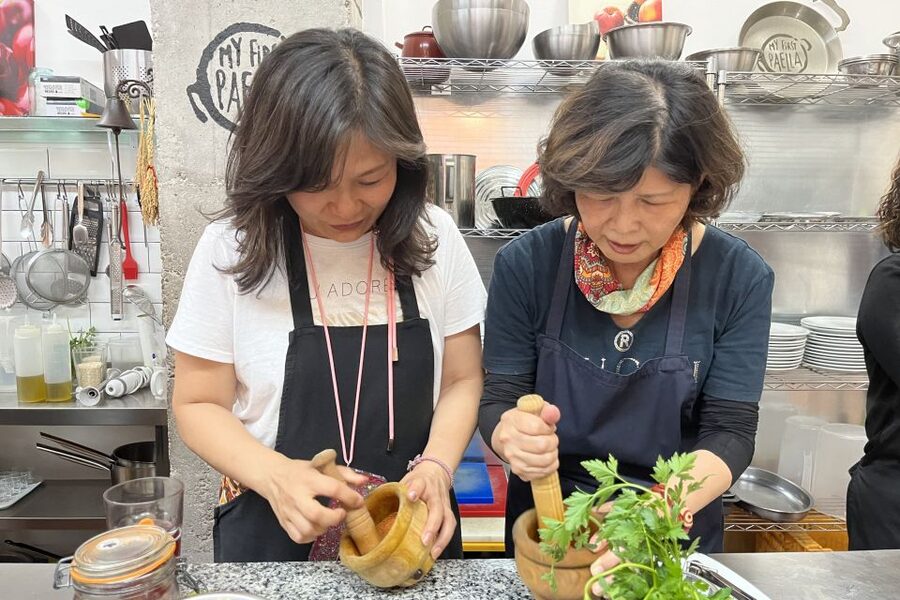
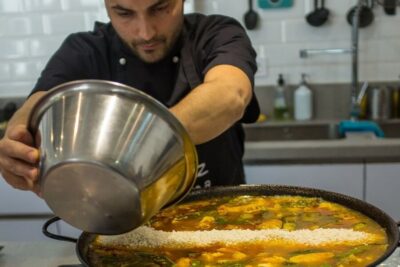
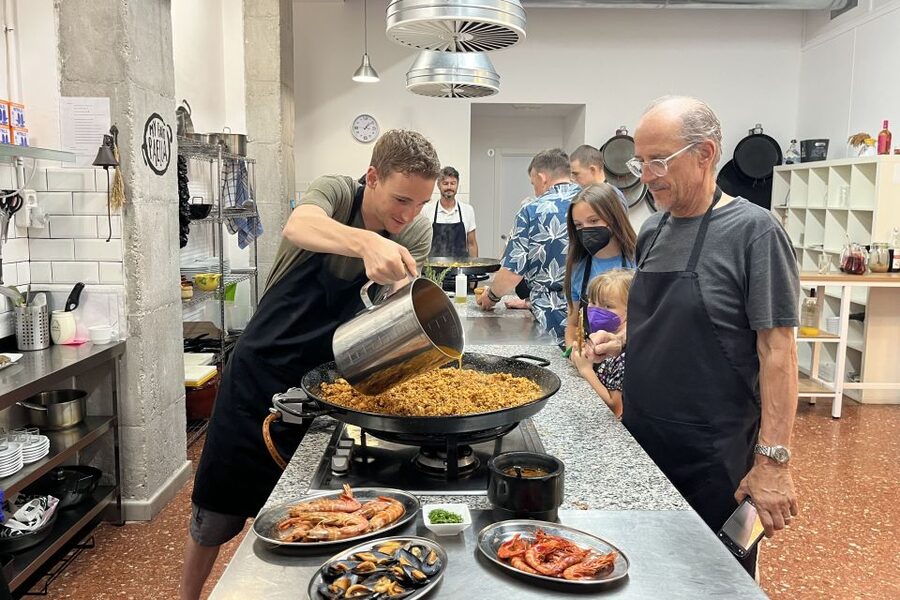
The central lesson is practical. You work with the chefs as they explain each stage of the dish, then take part in preparing the paella yourself.
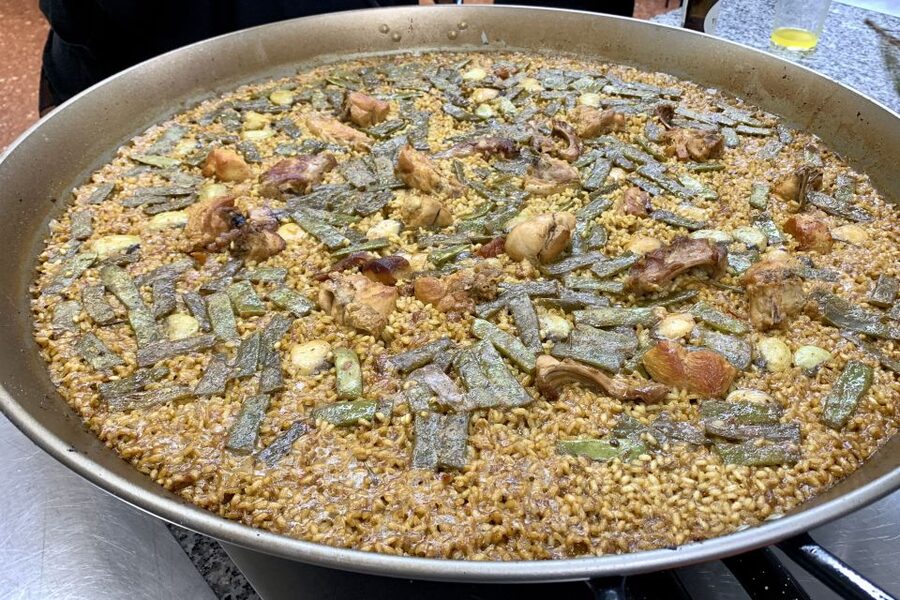
You can prepare a traditional Valencian version with meat and vegetables or a seafood paella. The class information makes an important point about the Valencian style: meat and seafood are not combined in one pan. You choose one direction, rather than receiving a muddled mixture of everything.
The seafood option uses a traditional salmorreta sofrito. That gives the class a chance to explain how flavor is built before the rice goes in. The meat and vegetable version offers a different look at the style commonly associated with Valencian paella.
A useful lesson here is rice. The chefs explain why J. Sendra rice is used and how the grain behaves in the pan. You also learn about saffron and the danger of using too much. These details are easy to skip in a casual recipe, but they are exactly the sort of choices that affect the final dish.
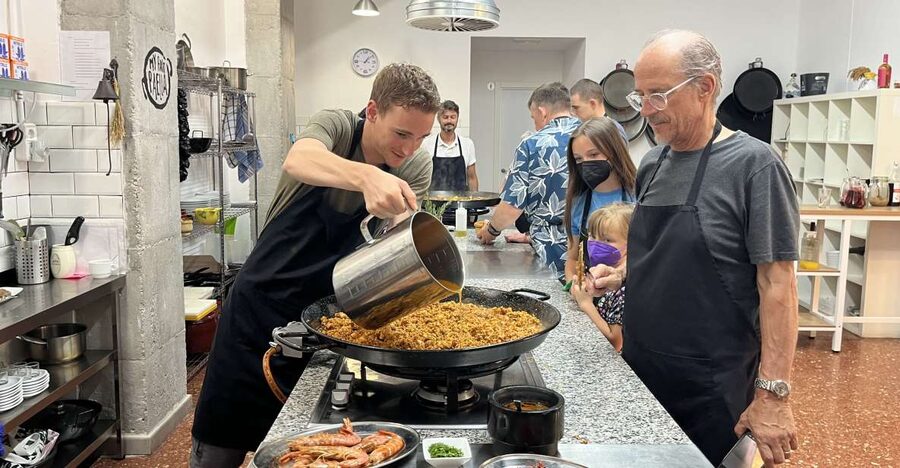
The class is designed for participation. You are not sitting in an audience while a chef does all the work at the front. The instructors correct your technique and keep the group moving through the preparation. That makes this a good choice if you want to return home with a method you can actually repeat.
The group is divided into smaller cooking teams during some sessions. A larger class may therefore feel less intimate than a private lesson, and you should not expect a chef to spend the whole afternoon beside you. On the other hand, the shared work gives the class a relaxed, social character. You cook with people from different countries, then eat together.
The real prize is the socarrat
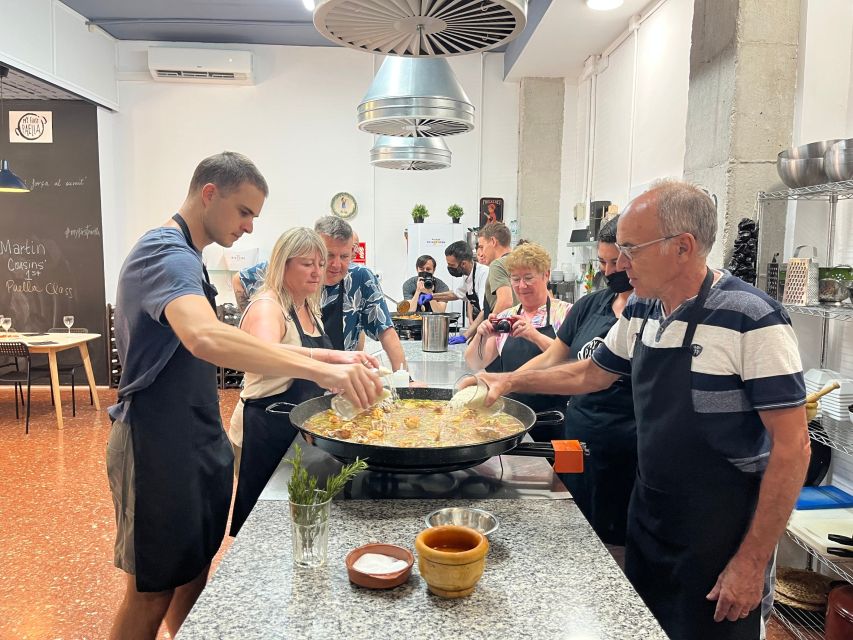
For many Valencians, the best part of paella is the socarrat, the golden, crisp rice crust that forms at the bottom of the pan. The class gives it proper attention instead of treating it as an accidental bonus.
Getting socarrat right requires care. The rice needs to cook properly, and the final heat must be controlled so the bottom develops color without turning bitter. Your chef explains how to judge that balance and when to stop.
This is one of the most useful reasons to take the class rather than simply order paella at a restaurant. You taste the finished crust, but you also learn what the cook was trying to achieve. That helps you recognize the difference between pleasant crisp rice and burnt rice.
I would listen closely during this stage and ask questions. The instructors are there to correct mistakes as they happen, and several sessions are led by chefs who make a point of explaining the traditions behind each step.
More Paella and Spanish Classes in Spain:
- Barcelona Interactive Spanish Cooking Experience
★ 4.5 · 2,155 reviews - Spanish Cooking Class Paella Tapas and Sangria in Madrid
★ 5.0 · 1,340 reviews - Paella Cooking Class in Madrid with Bottomless Wine Pairing
★ 5.0 · 985 reviews - Seville: Spanish Cooking Class with Dinner
★ 4.9 · 900 reviews
Sitting down to the paella you helped prepare
When the paella is ready, the class becomes a shared meal. You sit with the group and eat the dish you prepared, rather than receiving a separate plate cooked by someone else.
The meal includes Valencian tomato salad, seasonal fruit, coca de llanda, coffee, and mistela. Coca de llanda is a traditional Valencian sponge cake, while mistela is served as the final local drink. The progression gives the afternoon a clear shape: savory tapas first, paella at the center, then local sweets and a small after-dinner pour.
Wine is served with the meal, and the included drinks add real value to the price. At $77 per person, you are paying for more than a short cooking demonstration. The fee covers the market visit, chef instruction, ingredients, tapas, sangria, beer, wine, dessert, coffee, and mistela.
I would call that a fair price for a three-and-a-half-hour food experience in Valencia, especially if you value a full meal and several drinks. It is less compelling if you only want to learn a recipe as quickly and cheaply as possible. A private kitchen lesson would offer more personal attention, but this activity is built around meeting people and eating together.
The communal meal is a major part of the appeal. The cooking teams may begin as strangers, but the format gives everyone a shared task and a common table. That suits solo visitors, couples, families, and friends who want a cultural activity with food at its center.
What the atmosphere is really like
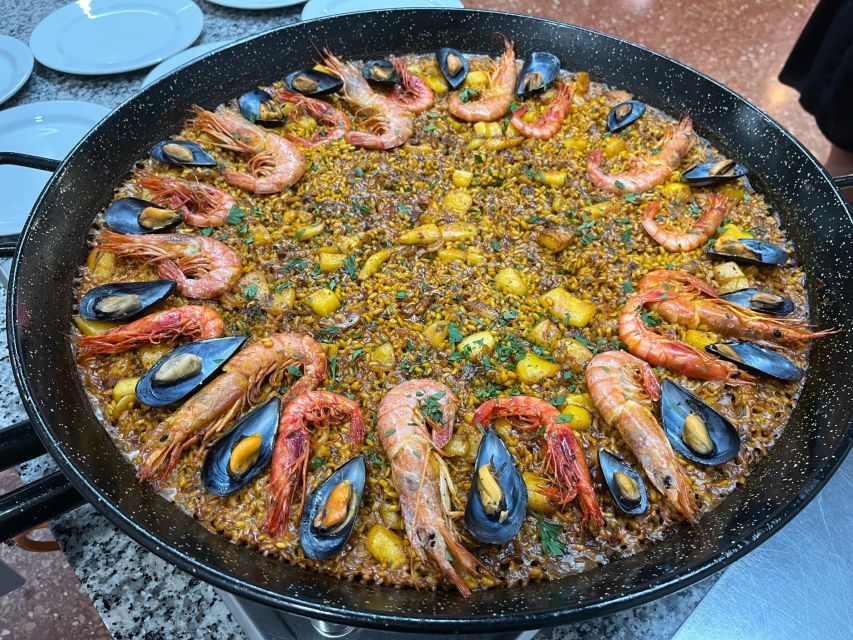
The tone is lively and informal. The chefs use humor, encourage questions, and include people in the preparation. Children can take part in the activities, which makes the class workable for families, provided they are comfortable with a food-centered group activity.
The experience can also work well if you are traveling alone. One participant described meeting other people and enjoying the group atmosphere, and that makes sense here: the class naturally gives you conversation points, from the market ingredients to the choice between seafood and meat paella.
Still, you should know what you are booking. This is not a quiet, private culinary lesson. Some dates have only a handful of participants, while others are considerably larger. A larger group may reduce the amount of direct instruction you receive, but it can also add energy and make the final meal feel like a big Valencian family table.
The guides’ personalities are central to the experience. Anna, José, Guillermo, and Christina are among the staff praised for being engaging and attentive. The strongest part of the format is not a fancy kitchen or a long list of dishes. It is the way the team keeps people involved.
Who should book this class
I would choose this for a first visit to Valencia if you want one activity that combines food, local shopping, cooking, and conversation. It gives you a practical introduction to paella while also showing you a neighborhood market.
It is particularly well suited to:
- Couples looking for a shared activity beyond sightseeing
- Families whose children enjoy helping with food
- Solo visitors who want an easy social setting
- Food lovers who want to recreate paella at home
- Anyone who prefers participation over watching a chef perform
It may be less suitable if you dislike alcohol-centered social settings, though soft drinks are available. It is also not the best match if you need a very small private class every time. Group size varies, and the atmosphere is part of the design.
The class is conducted in English. Check the available start times when booking, since the exact schedule is not fixed in the basic description. Free cancellation is available up to 24 hours in advance, and you can reserve now and pay later, useful if your Valencia plans are still shifting.
My verdict on the $77 experience
I would book this if you want to understand why paella matters in Valencia, not merely eat another version of it. The Ruzafa Market visit gives the dish a local setting, the cooking lesson teaches methods you can reuse, and the shared meal makes the afternoon feel like a complete outing.
The strongest features are the hands-on format, the attention to socarrat, the quality of the included food and drink, and the warmth of the cooking team. The main tradeoff is that the class can be larger than expected, so those seeking a quiet or highly private lesson should look elsewhere.
For most visitors, $77 is reasonable because it combines a guided market visit, a full meal, several drinks, dessert, and three and a half hours of activity. If you have only one open afternoon in Valencia and want a taste of local life with a recipe to take home, this is a strong choice.
FAQ
How long does the paella experience last?
The activity lasts 3.5 hours, including the market visit, cooking class, food, and drinks.
Where is the meeting point?
Meet the guide at the door of the Church of San Valero.
Which market does the class visit?
The class visits Ruzafa Market, a neighborhood market where local residents shop.
Is the paella class hands-on?
Yes. You take part in preparing the paella while the chefs guide and correct your technique.
What types of paella can you make?
You can prepare either Valencian meat and vegetable paella or seafood paella. The class does not combine meat and seafood in one paella.
What is socarrat?
Socarrat is the golden, crisp rice layer that forms at the bottom of the paella pan. The chefs explain how to achieve it.
Are food and drinks included?
Yes. The experience includes tapas, sangria, beer, DO Valencia wine, soft drinks, dessert, coffee, and mistela, along with all workshop ingredients.
Is the activity conducted in English?
Yes. The live tour guide and activity language are English.
Can I cancel or pay later?
You can cancel up to 24 hours in advance for a full refund. Reserve now and pay later is also available.
More Hands-On Workshops in Spain
- Barcelona: Paella Cooking Class with Market Visit and More
★ 4.9 · 711 reviews - Málaga: Spanish Cooking Workshop with Paella and Sangria
★ 4.9 · 613 reviews - Paella Cooking Class with Professional Chef: Four Course Dinner
★ 5.0 · 561 reviews - Taste of Spain: Tapas Cooking Class with Bottomless Wine Pairing
★ 5.0 · 414 reviews
More Shopping Trips in Spain
- Valencian paella cooking class, tapas and visit to Ruzafa market.
★ 5.0 · 828 reviews - Spanish Cooking Class & Triana Market Tour in Sevilla
★ 5.0 · 760 reviews - Seville: 3.5-Hour Spanish Cooking Class & Triana Market Tour
★ 4.9 · 751 reviews - Valencia: Paella Cooking Class with Central Market Tour
★ 5.0 · 721 reviews
Just added around Spain
- A Coruña: Local Market Shopping and Cooking Workshop★ 5.0 · 16 reviews
- San Sebastian: Authentic Basque Cooking Class★ 4.9 · 102 reviews
- Authentic Basque Cooking Class in San Sebastian Old Town★ 4.5 · 87 reviews
- Basque Cooking Experience: Market Tour & Hands-On Class English★ 5.0 · 144 reviews
- Local Cooking Class in San Sebastian★ 5.0 · 44 reviews
- Sevilla: Rooftop Paella Cooking Class & 30-minute expert Q&A★ 5.0 · 198 reviews
- Paella Cooking Class in Malaga★ 5.0 · 209 reviews
- Madrid: 10 Tapas 2.5-Hour Cooking Class★ 4.7 · 222 reviews
Spanish & Paella Cooking Classes, compared.
Barcelona: Paella Cooking Experience & Boqueria Market Tour
Read our review →
Barcelona Paella Cooking Class with Market Visit, Tapas & Sangria
Read our review →
Barcelona Interactive Spanish Cooking Experience
Read our review →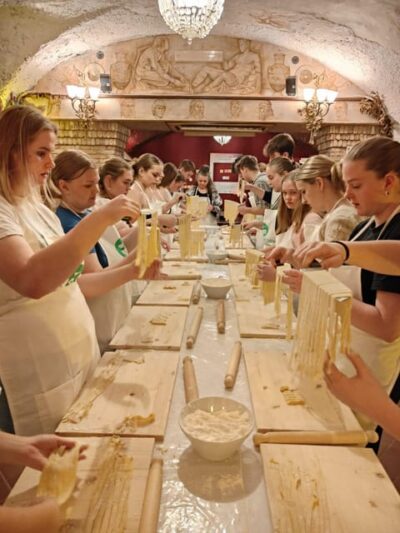
Rome: Pasta & Tiramisu Cooking Class near the Spanish Steps
Read our review →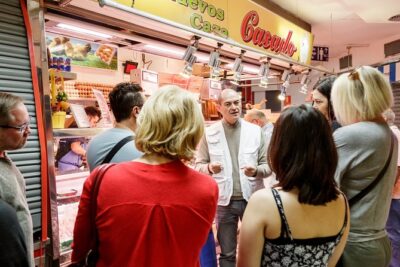
Spanish Cooking Class Paella Tapas and Sangria in Madrid
Read our review →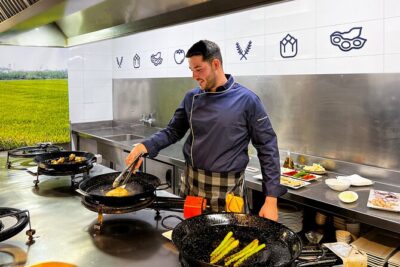
Paella Cooking Class, Wine Tasting & Central Market in Valencia
Read our review →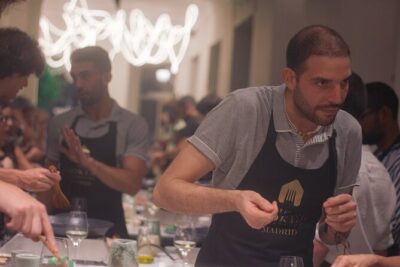
Paella Cooking Class in Madrid with Bottomless Wine Pairing
Read our review →