
Review · BANGKOK
Bangkok: Blue Elephant Thai Cooking Class
Bangkok’s Blue Elephant cooking class turns a meal into a full Thai food lesson. The morning option starts at a local market, where you examine herbs, curry pastes, coconut, spices, and produce before cooking four dishes under a chef’s direction. The afternoon class skips the market and goes straight to the kitchen.
I like the market visit, which gives you a practical sense of Thai ingredients rather than a quick list of unfamiliar names. I also like the demo-then-cook format: you watch each dish being made, taste it, then prepare it yourself at a proper station with a burner and wok. The main drawback is pace. Reading recipes while cooking can feel rushed, especially if you are new to Thai food or want to linger over every step.
Key points to know before booking
- Morning classes include the market visit, while afternoon classes begin at Blue Elephant.
- You prepare four dishes, then eat your own food in the restaurant’s elegant dining room.
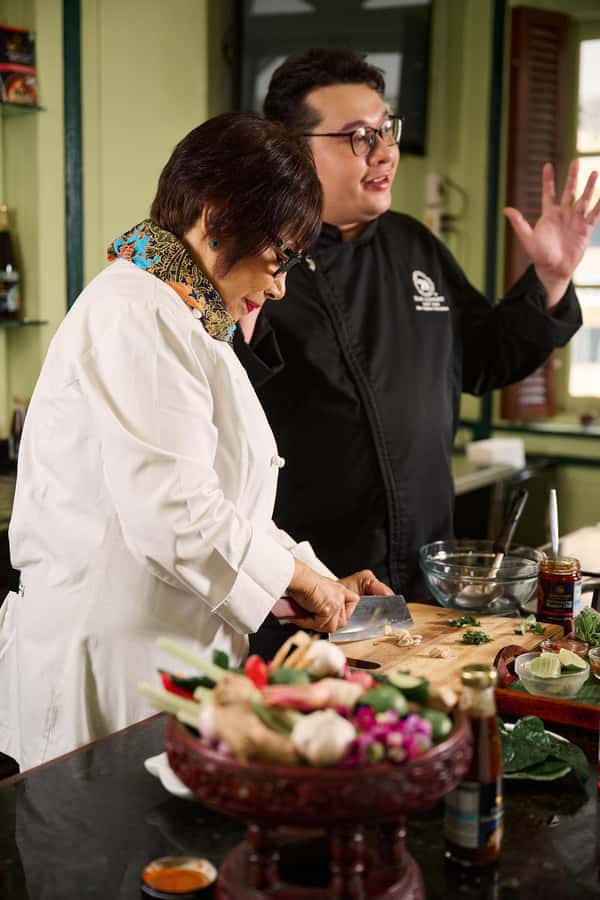
- Chefs demonstrate every recipe first, followed by hands-on cooking with help from assistants.
- Menus change daily, so check the dishes and alert the school to dietary needs before booking.
- The setting is special, with the class based at Blue Elephant’s century-old restaurant.
- The $143 price includes more than the lesson, including ingredients, equipment, a drink, apron, recipes, certificate, and souvenir bag.
Why Blue Elephant makes a good Bangkok cooking class
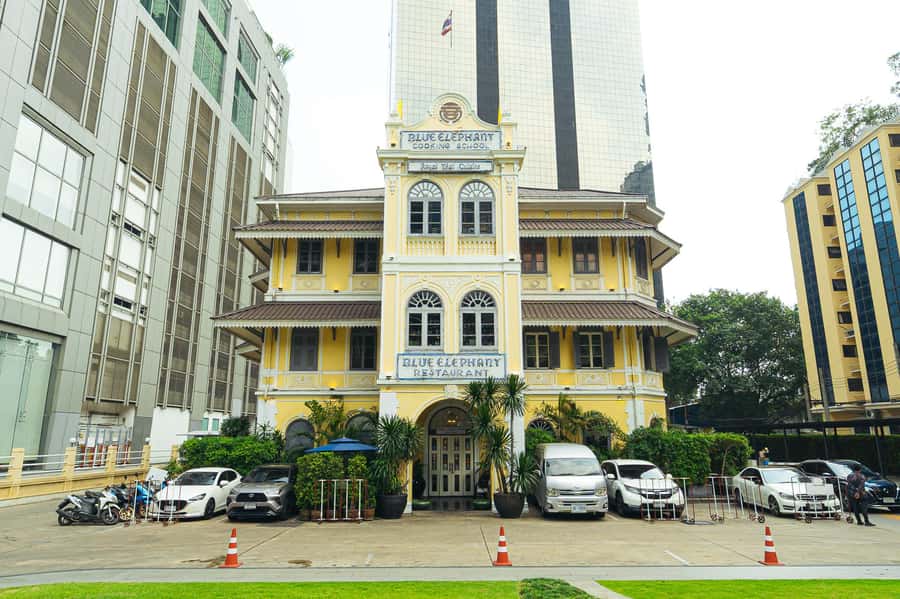
Blue Elephant is not a plain cooking studio tucked into a shopping center. The class takes place at the Blue Elephant restaurant on Sathorn Road, a well-known Bangkok establishment recognized by the Michelin Guide. You get a polished setting, serious equipment, and a meal at the end, not just a quick demonstration followed by a snack.
That setting matters because Thai food is closely tied to ingredients, technique, and presentation. The class explains all three. You learn what goes into a dish, watch how the chef handles it, and then try to reproduce the result at your own station.
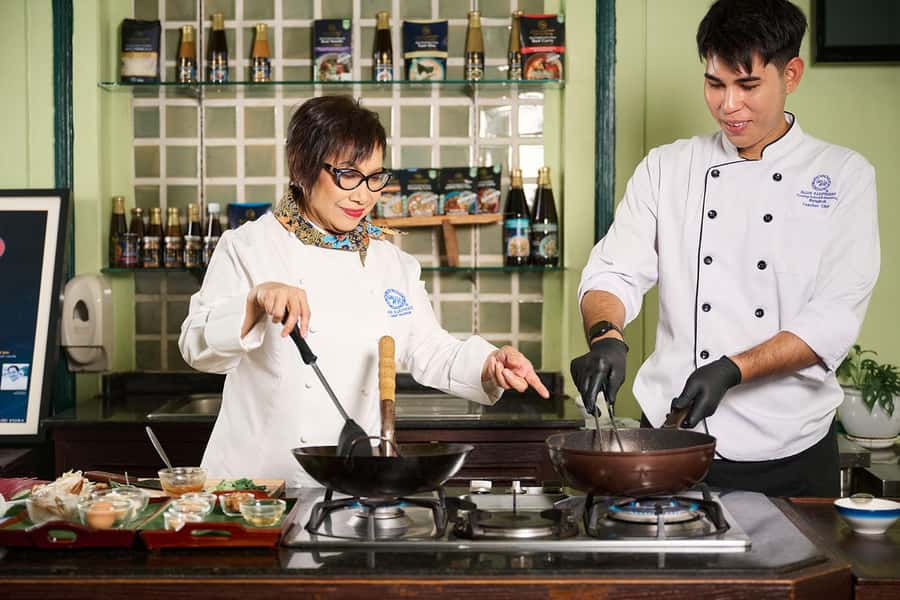
The class is taught in Thai and English, with English commentary for international participants. Instructors named in the class feedback include Chef Chay, Chef Mint, Teacher Yui, and guide Krishna. The specific chef can vary, but the pattern is consistent: explanation first, demonstration next, cooking after that.
You do not need to be an experienced cook. One useful feature is the support from assistants during the hands-on section. They prompt you through the recipe and offer help when you need it. Even participants who describe themselves as poor cooks have managed to produce successful dishes.
More Thai Cooking Classes in Bangkok:
- Bangkok: Hands-on Thai Cooking Class and Market Tour
★ 4.9 · 1,614 reviews - Bangkok: Tingly Thai Cooking School Half-Day Cooking Class
★ 4.9 · 1,191 reviews - Bangkok: Maliwan Thai Cooking Class with Market Tour
★ 4.9 · 1,133 reviews
The morning market visit adds real context
If you can choose your schedule, I would favor the morning class. It includes a visit to a local market before the cooking begins, and this is the part that gives the lesson its strongest sense of place.
You meet at Blue Elephant, then travel to the market by Skytrain and on foot. Guide Krishna has taken groups by metro and stopped for Thai tea from vendors along the way. The market portion is not a long guided food walk. It is better understood as a focused ingredient visit, usually involving a few shops or stalls where you can see and smell the items used later in class.
You might examine herbs, spices, coconut, curry pastes, and fresh produce. This is useful because Thai recipes often rely on ingredients that are easy to confuse when you first encounter them. Seeing the leaves, roots, pastes, and aromatics in their everyday setting gives you a better chance of finding substitutes at home.
The guide explains what the ingredients do and answers questions as you go. That makes the market more than a shopping stop. It connects the food on the table to the products sold in Bangkok kitchens every day.
Still, set your expectations correctly. This is not a broad market tour with hours to browse. If you want a long, independent visit with extensive street food tasting, this class is not designed for that. The market visit is short and purposeful, but it is a strong reason to choose the morning session.
The afternoon class is simpler and more focused
The afternoon class does not include the market. You meet at Blue Elephant and begin with the cooking school program.
That shorter route may suit you if you have already visited a Bangkok market, dislike early starts, or want to fit the class around sightseeing. You lose the ingredient-shopping context, but you gain a direct path into the lesson.
There are no afternoon classes on Sundays, so check the available schedule before building your day around this option. The menu changes each day, too. Ask the local partner for the menu after booking if the dishes matter to you.
Theory first, then a proper cooking station
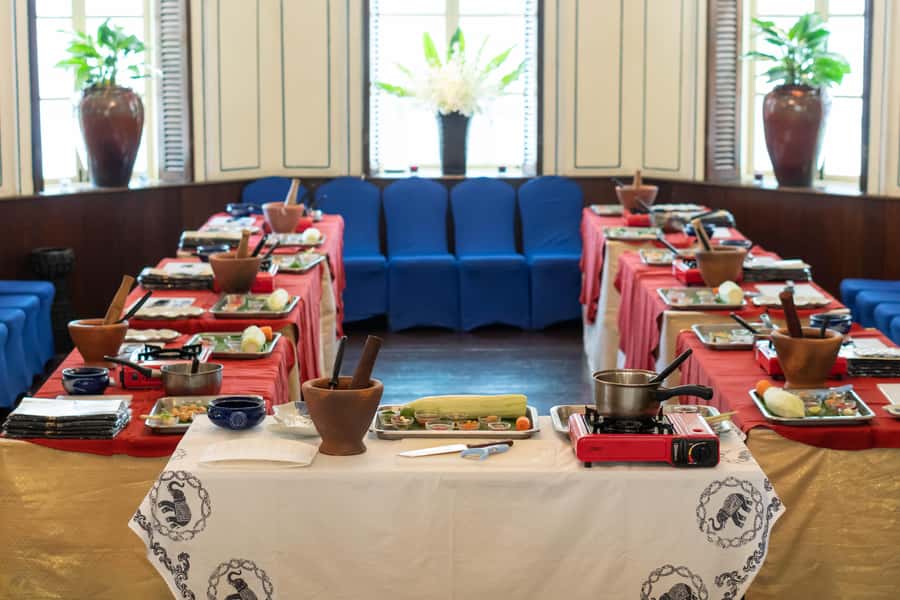
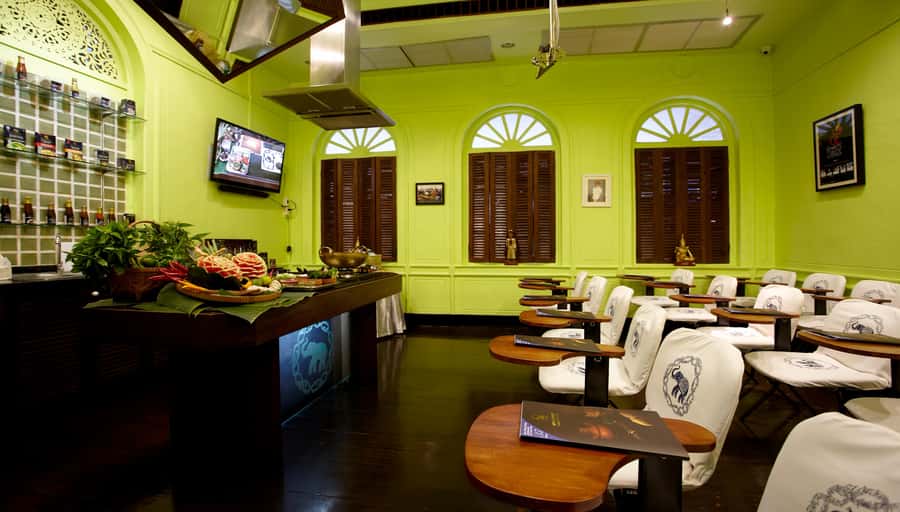
The class begins with an explanation of Thai ingredients and cooking methods. The chef presents the recipes and demonstrates the techniques before you start. This matters because Thai cooking often depends on order and timing. You need to know what goes into the wok first, what cooks quickly, and how the flavors are balanced.
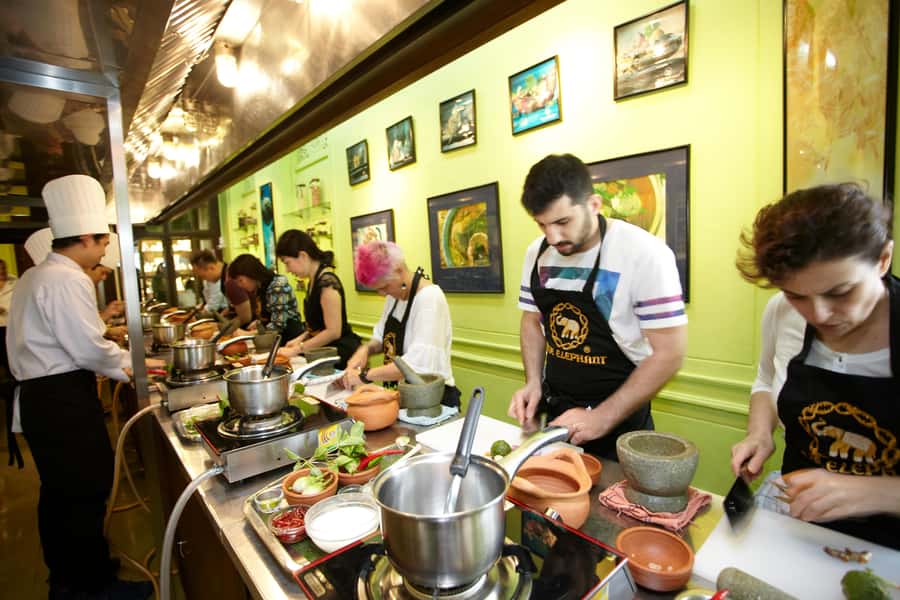
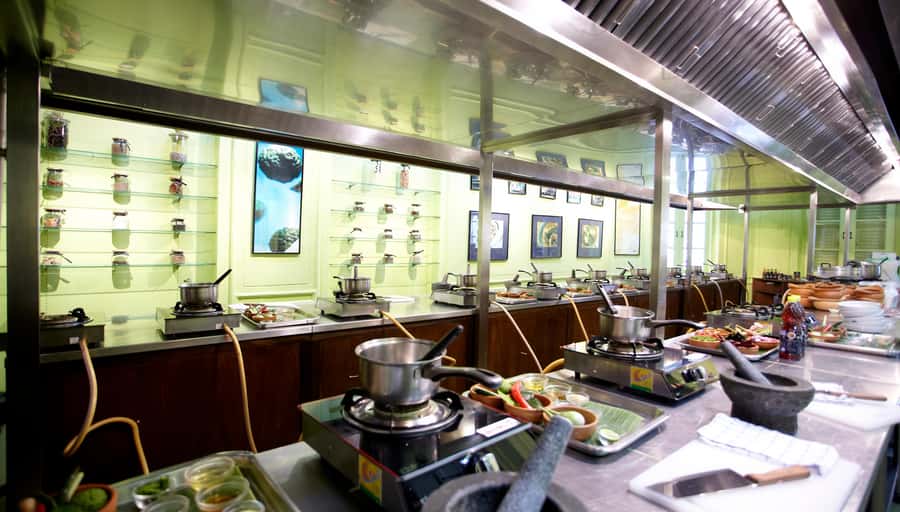
After the demonstration, you put on the Blue Elephant apron and move to your cooking station. The setup includes the ingredients, utensils, a burner, and a wok. You are not simply watching a chef prepare lunch while standing at the edge of a room.
The demonstration and hands-on format is one of the class’s best features. You can watch a dish from start to finish, taste it, then repeat the process yourself. Chef Chay, for example, has demonstrated all four dishes before participants begin cooking. Other instructors have been praised for explaining ingredients and methods clearly, with assistants stepping in when someone falls behind.
The pace is active. You may be reading a recipe while stirring a sauce and preparing the next ingredient. That can be exciting, but it can also feel fast. If you want to take notes, do so during the explanation rather than trying to write while cooking.
More Hands-On Workshops in Bangkok:
- Hands on Thai Cooking Class and Market Tour
★ 5.0 · 660 reviews - Tingly Thai Cooking Class with Morning Market Tour
★ 5.0 · 589 reviews - Hands-on Thai Cooking Class & Market Tour in Sukhumvit
★ 5.0 · 571 reviews - Pink Chili – Thai Cooking Class and Market Tour in Bangkok
★ 5.0 · 416 reviews
Four dishes, then lunch in the dining room
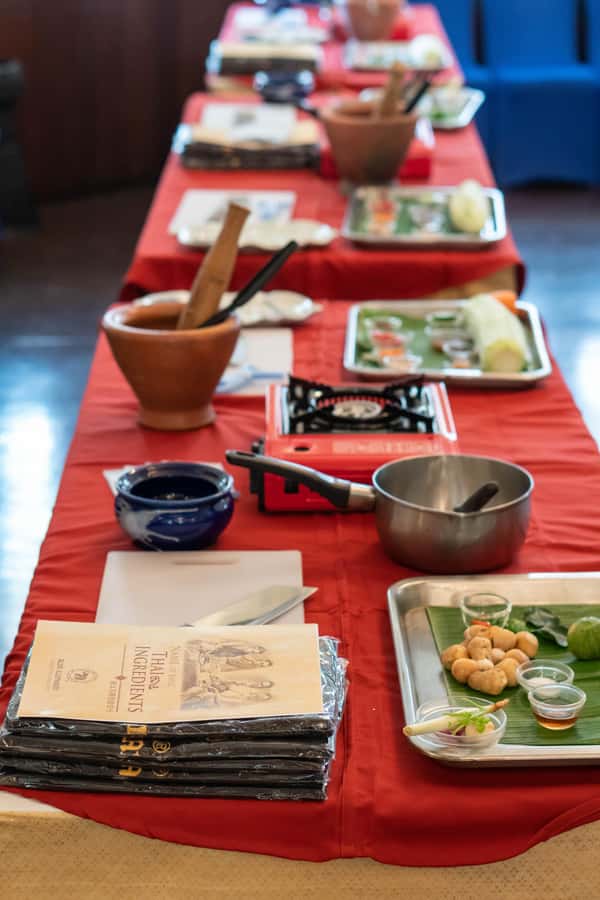
You prepare a four-course meal, though the exact menu changes from day to day. The recipes may include different combinations of Thai curries, soups, stir-fries, salads, or other dishes, but you should confirm the menu directly if you have a particular favorite in mind.
The meal is not only about learning four isolated recipes. The chef explains how ingredients can work in other dishes and how you might adapt them outside Thailand. Instructors have also offered alternative ingredients for cooks who may not find the Thai originals at home.
After cooking, you sit down in the Blue Elephant dining room and eat what you made. This is a welcome change from classes where you cook a dish, taste two bites, and leave. Here, you have time to enjoy the food as a proper meal.
The dining room is part of the experience. It is located in the restaurant’s century-old setting, and the polished surroundings make the final meal feel like a special occasion. Some menus have included a complimentary mango sticky rice dessert, along with water service and a Thai herbal drink during the class.
Come hungry. You may taste food during the demonstrations, then eat the meal you prepared afterward. Portions can add up quickly, and you may not finish every dish. That is a good problem, but it is worth knowing before you arrive.
Dietary needs and spice levels
Tell the provider about dietary requirements before checkout. This is important because the class is built around a set menu and shared instruction, so the school needs notice to prepare suitable changes.
The class has adapted dishes for people who do not eat fish. It has also handled serious allergies by preparing a customized curry paste without the problem ingredient. You should not assume every request can be met at short notice, but early notice gives the kitchen a chance to plan.
Spice levels can also be adjusted. A participant with a low tolerance for heat received toned-down dishes, and the instructor suggested substitute ingredients for cooking in the United States. That flexibility is helpful, but Thai food varies by recipe and instructor, so be clear about your needs at the start.
If you love strong heat, the class can still teach you how chilies and curry pastes work. If you prefer mild food, say so before the cooking begins rather than waiting until the plate is finished.
What the $143 price includes
At $143 per person, this is not Bangkok’s budget cooking lesson. The value comes from the amount wrapped into the fee.
You receive:
- A cooking class with four dishes
- All ingredients and equipment
- Instruction and commentary in English
- A Thai herbal drink
- The market visit if you choose a morning class
- Your Blue Elephant apron
- Recipes for the dishes you make
- A cooking certificate
- A souvenir bag
- The meal you prepare in the restaurant
You are paying for a polished venue, experienced chefs, a full meal, supplies, and take-home materials. The apron, recipe set, certificate, and bag are small items, but they make the experience feel complete and give you practical reminders of what you learned.
The price makes the most sense if you care about food and want more than a casual activity. If you only want to stir a curry once and take a few photos, cheaper classes may suit you better. If you want clear instruction, a comfortable setup, and recipes you can use at home, the cost is easier to justify.
Private-class pricing is available as an option. The supplied details do not specify the exact private supplement or class size, so check those points before paying if personal instruction is important to you.
What you take home beyond the certificate
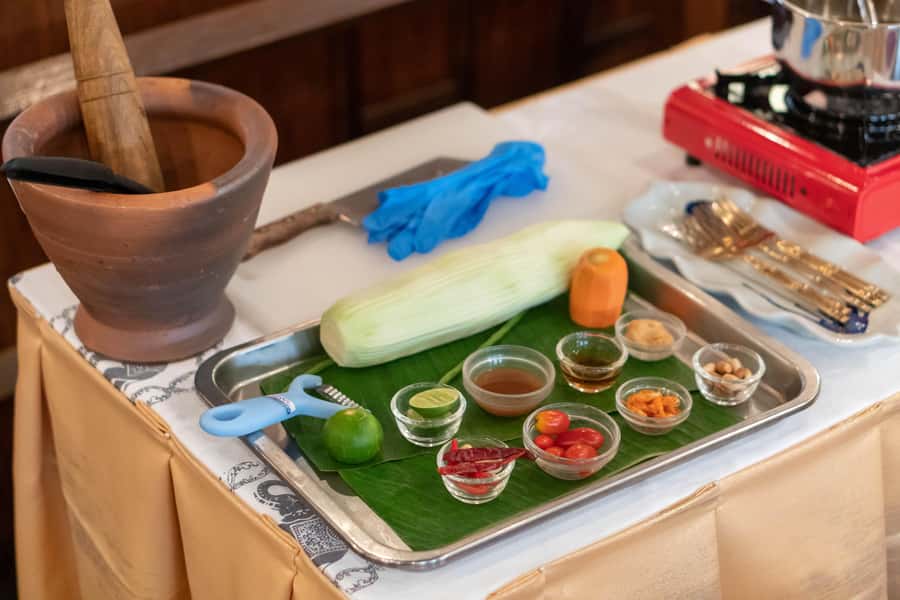
The recipes are the most useful souvenir. An apron is fun, and the certificate makes a good keepsake, but the recipe sheets are what let you continue the experience in your own kitchen.
The recipes also come with practical context. You learn what ingredients do, how to replace items that are hard to find, and how to adjust heat. That makes the lesson more useful than simply collecting a list of dishes.
The certificate is presented at the end, along with a souvenir bag. For some people, these extras may feel like standard class merchandise. For others, especially families or first-time cooks, they add a pleasant finish.
Getting there and planning your day
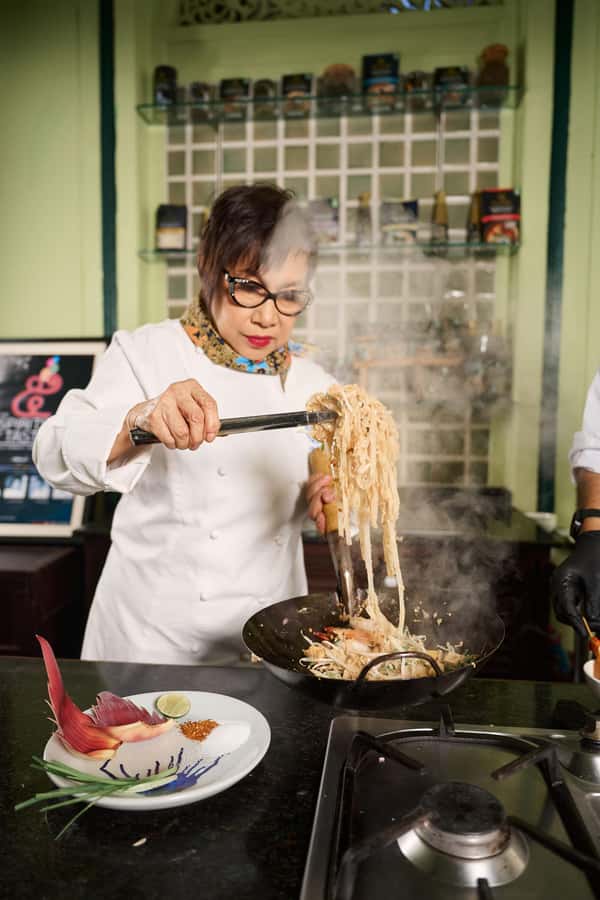
The meeting point is Blue Elephant, 233 S Sathorn Road, in Bangkok’s Sathon district. The easiest public transport option is the Skytrain to Surasak BTS Station. You can also take a taxi directly to the restaurant.
Hotel transfer is not included, so allow time to reach the meeting point on your own. For the morning session, leave enough room for the market visit and the trip back to the cooking school. A late arrival would be especially inconvenient because the class follows a set sequence of demonstrations and cooking.
The activity is sold as a one-day experience, but the provided details do not give a fixed number of hours. Check the available starting times when you book. You can reserve now and pay later, and cancellation is free up to 24 hours in advance.
Who should book this class
I would recommend Blue Elephant to you if Thai food is a major part of your Bangkok plans, or if you want a structured activity rather than a casual food stop.
It suits:
- First-time cooks who want close guidance
- Confident cooks looking for Thai techniques
- Couples, families, and small groups
- People who want a market visit and a sit-down meal
- Anyone hoping to recreate Thai dishes at home
- Diners who value a refined setting
It may not suit you if you dislike scheduled activities, want a long market tour, or prefer to choose every dish yourself. The daily menu is fixed enough that you should check it first, especially with allergies or dietary restrictions.
The class is also a strong option for repeat visitors. The menu changes from day to day, so a second visit may teach you a different set of dishes. One participant returned for another session the next day and found the second class distinct from the first.
Should you book Blue Elephant?
Book it if you want a full Thai food experience with a local market visit, careful instruction, hands-on cooking, and a proper meal in a beautiful restaurant. Choose the morning class if the ingredient visit matters to you. Choose the afternoon class if you want a simpler schedule and direct access to the kitchen.
At $143, it costs more than a basic Bangkok cooking lesson, but you receive a polished venue, four dishes, all equipment, chef instruction, dinner, recipes, an apron, certificate, and bag. The one real caution is the brisk pace, so arrive ready to listen, cook, and keep moving.
For a food-focused day in Bangkok, this is a strong pick. The cooking is the point, but the market, the historic setting, and the chance to repeat the recipes at home give the class lasting value.
FAQ
Where does the Blue Elephant cooking class meet?
The class meets at The Blue Elephant, 233 S Sathorn Road, Khwaeng Yan Nawa, Khet Sathon, Bangkok.
How do I get to Blue Elephant?
You can take the Skytrain to Surasak BTS Station or take a taxi directly to the restaurant.
Does every class include a market visit?
No. The market visit is included only with the morning class. Afternoon classes begin at Blue Elephant.
How many dishes will I prepare?
You will prepare a four-course meal. The menu changes daily, so check the current dishes with the local partner after booking.
Is the class taught in English?
Yes. The class includes English commentary, and the instructors speak Thai and English.
Are ingredients and cooking equipment included?
Yes. The class provides all ingredients, utensils, a burner, and a wok.
What do I take home?
You receive the recipes for the dishes you prepare, a Blue Elephant apron, a cooking certificate, and a souvenir bag.
Can the class accommodate dietary requirements?
You should provide your dietary requirements before checkout. Menu adjustments have been made for people who do not eat fish and for specific food allergies, but you should give the school advance notice.
Just added around Bangkok
- Bangkok Udomsuk Thai Cooking Class with local market tour★ 5.0 · 5 reviews
- Hands-On Thai Cooking Class Bangkok with Local Chef (Small Group)★ 5.0 · 119 reviews
- Thai cooking class experience in Bangkok with Tingly Thai cooking school★ 5.0 · 59 reviews
- Thai Cooking Class in Bangkok★ 5.0 · 23 reviews
- White Lotus Thai Cooking Class in Bangkok★ 5.0 · 31 reviews
- Thai Cooking Class★ 5.0 · 25 reviews
- Sompong Thai Cooking School in Bangkok★ 5.0 · 4 reviews
- Baipai Thai Cooking School: Authentic Cooking Class Tour★ 5.0 · 3 reviews
Thai Cooking Classes, compared.
Half-Day Thai Cooking Class at Organic Farm in Chiang Mai
Read our review →
Chiang Mai: Cooking Class, Market & Thai Herbs Garden Tour
Read our review →
Phuket Thai Cooking Class with Market Tour Option
Read our review →
Bangkok: Hands-on Thai Cooking Class and Market Tour
Read our review →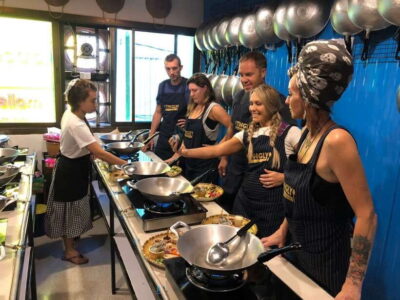
Bangkok: Tingly Thai Cooking School Half-Day Cooking Class
Read our review →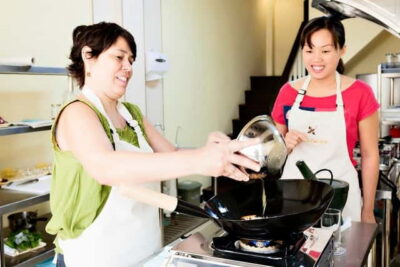
Bangkok: Maliwan Thai Cooking Class with Market Tour
Read our review →
Browse the lists this tour appears in