
Review · CASABLANCA
Casablanca : Traditional Moroccan Cooking Class with Locals
The best part of this Casablanca experience happens before the food reaches the table. You enter a local family home, meet Inas and her family, and learn Moroccan cooking as it is practiced at home, not as a polished restaurant demonstration. Tagine and couscous are made by hand, with family methods passed down from Inas’s grandmother and mother.
I like two things in particular: the class is genuinely hands-on, and the shared meal gives you time for stories and everyday conversation. I also like the small group size, limited to 10 people. The main consideration is the meeting point. You must make your own way to Résidence El Fath on Abdellah Ibrahim Street, near BIM Attacharok, and the class takes place in a private home rather than a purpose-built cooking school.
Key points at a glance
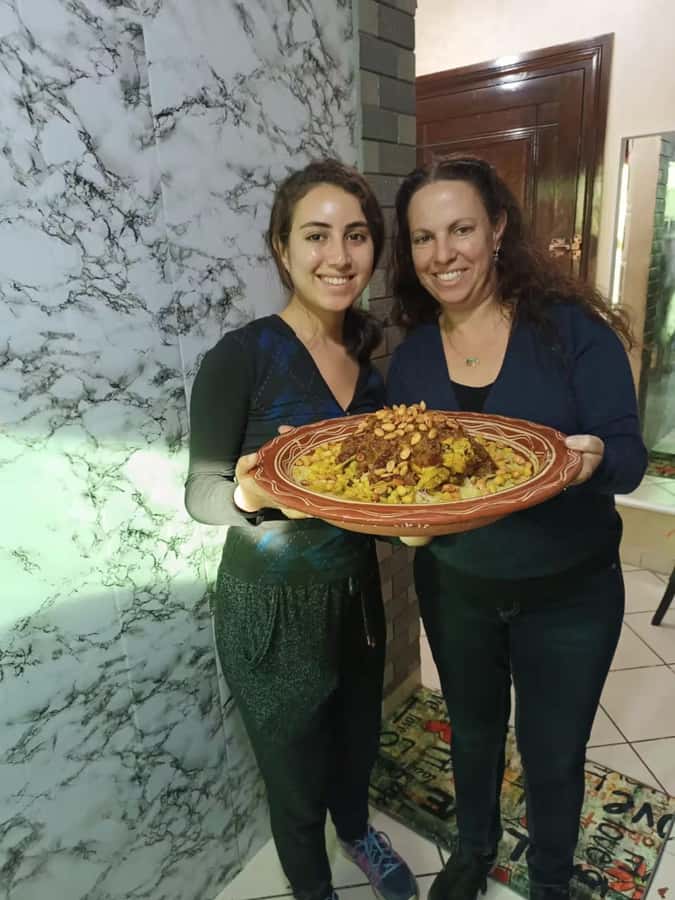
- Cook inside a real Casablanca home: This is a family kitchen experience, not a restaurant lesson or staged demonstration.
- Learn from Inas: She teaches in Arabic, French, and English, with recipes and methods learned from her grandmother and mother.
- Prepare Moroccan classics: Depending on the session, you may work on tagine, couscous, pastilla, and Moroccan salads.
- Share the finished meal: The cooking ends around the table with Inas and her family, along with conversation about Moroccan customs.
- Keep the group small: A maximum of 10 participants makes it easier to ask questions and take part.
- Plan for four hours: The length allows time for preparation, cooking, eating, and conversation rather than a rushed recipe lesson.
Entering a Casablanca family kitchen
This class gives you a side of Casablanca that sightseeing alone rarely provides. You are not simply watching a cook prepare a dish. You are welcomed into a family home and asked to take part in the work that produces the meal.
That setting matters. Moroccan cooking is tied to hospitality, family habits, and the rhythm of sharing food. A home kitchen gives those customs room to appear naturally. You may hear stories about family traditions, learn how dishes are prepared for ordinary meals, and see how cooking connects with social life.
Inas learned from her grandmother and mother, each of whom has more than 40 years of experience with Moroccan cuisine. That family link is one of the strongest reasons to choose this activity. You are learning from a cook who was taught at home, rather than following a generic class designed for tourists.
The tone is friendly and relaxed. Several participants describe Inas as patient and welcoming, and that is important for a class where the goal is participation. You do not need to arrive with professional kitchen skills. The point is to follow the steps, ask questions, and understand why the food is prepared in a certain way.
More Moroccan Cooking Classes in Morocco:
- Marrakech: Moroccan Cooking Class with Pickup
★ 4.6 · 1,862 reviews - Marrakech: Traditional Moroccan Cooking Class & Market Visit
★ 4.8 · 1,861 reviews - Marrakesh: Moroccan Dishes Cooking Class with a Local Chef
★ 5.0 · 1,615 reviews
What you may cook during the four hours
The exact menu can vary, but the class centers on well-known Moroccan dishes. You may prepare tagine or couscous, along with pastilla and Moroccan salads.
Tagine is perhaps the clearest introduction to Moroccan home cooking. The name refers both to the dish and to the traditional cooking vessel. The method is slow and careful, allowing the ingredients to cook together and develop their flavor. Inas can show you the family techniques behind the dish, including the small choices that are hard to learn from a printed recipe.
One session included chicken tagine with preserved lemon. That detail is useful if you are choosing between a standard cooking class and this one. Preserved lemon is a classic Moroccan ingredient, and its sharp, salty flavor gives the dish a character that is very different from ordinary fresh lemon.
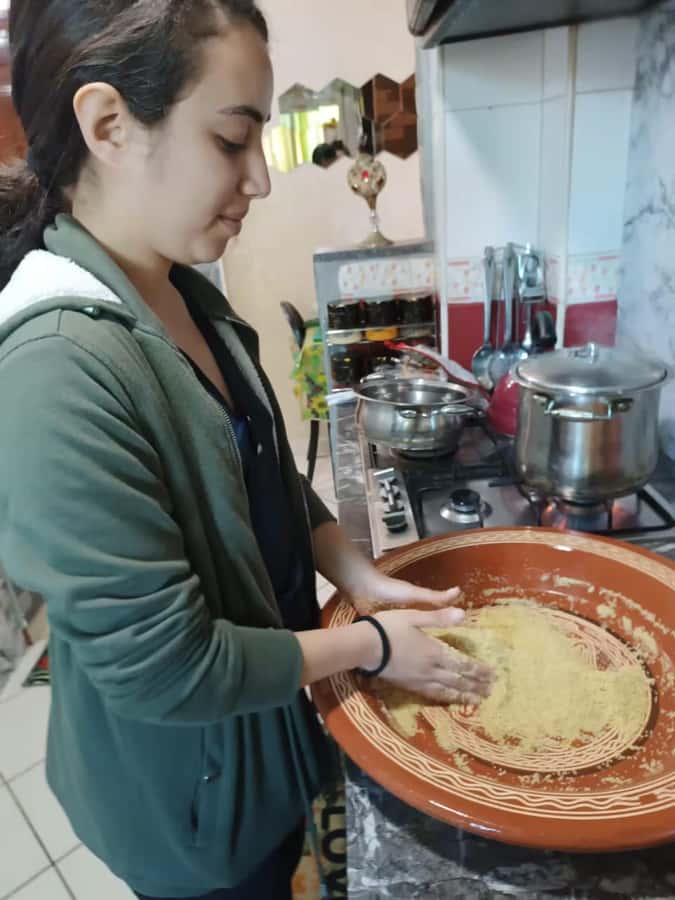
Couscous offers another lesson in patience and technique. It is often treated as a simple side dish outside Morocco, but traditional preparation involves more care. Inas teaches the dish in a home setting, using vegetables and family methods rather than reducing it to a quick recipe.
Pastilla adds a different style of cooking. This well-known Moroccan dish combines delicate pastry with a seasoned filling, creating a contrast between crisp texture and warm spices. It may not appear in every session, so you should regard it as one of the possible dishes rather than a guaranteed part of the menu.
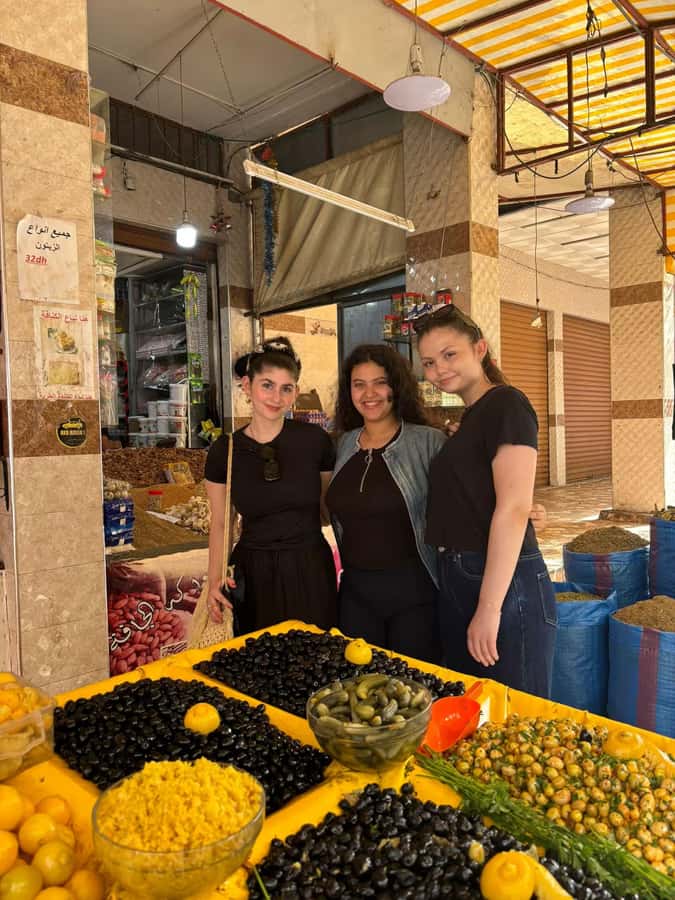
Moroccan salads round out the meal. They are useful for understanding how a Moroccan table balances cooked dishes with fresh, seasoned vegetables. Since the activity uses fresh local ingredients, you also get a practical sense of how the meal is built from several smaller elements.
Learning the family methods, not just the recipe
The most useful part of a cooking class is often what never appears in the ingredient list. Inas shares techniques and tips passed through her family, including methods that are difficult to pick up from a cookbook.
That may mean learning how ingredients are combined, when to add them, or how to judge the cooking process. The supplied details do not list every family tip, so I would not promise a particular secret technique. You can expect, however, to learn the reasoning behind traditional preparation, not just copy a list of steps.
This is also where the instructor’s patience matters. A good home cooking class should let you work at a human pace, and the available feedback points to Inas explaining each step clearly and helping participants as they go. That makes the activity suitable for beginners and for people who already cook but want a closer look at Moroccan methods.
Language should be manageable for most international visitors. Inas teaches in Arabic, French, and English. You can ask questions in English, while the multilingual setting also reflects the everyday cultural mix of Casablanca.
The meal is part of the lesson
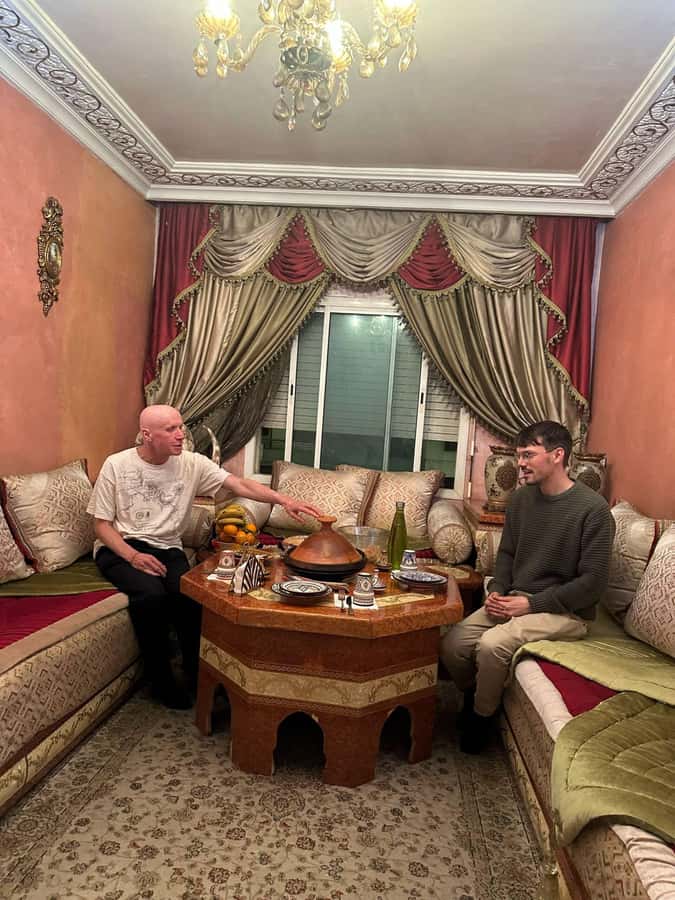
After the cooking, you sit down and eat with the family. This is not an optional extra or a quick taste at the end. The shared meal is the natural finish to the class.
I like this format because it lets you see the result of your work in a social setting. Moroccan food is made for sharing, and eating together helps explain why the preparation matters. The meal also gives you time to talk, hear stories, and ask about customs that might not come up while everyone is chopping and cooking.
Several participants describe feeling welcomed as part of the family. That is warm praise, but you should understand it in practical terms. The experience is built around hospitality and conversation, so it suits you if you enjoy meeting people and taking part in a relaxed social meal.
It may be less suitable if you want a strictly timed professional class with a formal kitchen setup. This is a home visit. The appeal is the personal setting, but that also means the atmosphere is informal and shaped by family life rather than by a cooking school schedule.
More Hands-On Workshops in Morocco:
- Moroccan Cooking Class & Marrakech Market Visit with Chef Khmisa
★ 5.0 · 1,504 reviews - Half-Day Cooking Class with Local Chef Laila in Marrakech
★ 5.0 · 952 reviews - Marrakech: Moroccan Cooking Class with a Local Family
★ 4.9 · 668 reviews - Marrakech: Moroccan Cuisine Cooking Class in Local Home
★ 4.8 · 508 reviews
Why the small group matters
The group limit is 10 people. That is still large enough to meet other visitors, but small enough to allow direct contact with the instructor.
One participant joined with a friend and ended up making new friends from Australia. That detail gives you a fair idea of the social side of the class. You may be cooking with people from different countries, then sharing the meal as a group.
A small group also helps with the practical work. You have more opportunity to handle ingredients, ask about a technique, and get help if a step is unclear. The class should feel more personal than a large demonstration where you sit at the back and watch.
Still, a group of 10 is not private. If you want one-to-one instruction, you should check the booking details before committing. The activity is designed as a small shared experience, not a private lesson for one household.
Location, timing, and getting there
The meeting point is Résidence El Fath on Abdellah Ibrahim Street at BIM Attacharok. Transportation to and from the location is not included, so you need to arrange your own route.
This is the main practical point to handle before booking. A private-home experience depends on arriving at the correct residential meeting point, and you should allow enough time to find it. The information provided does not specify a pickup service, so do not assume that transport from your hotel is part of the price.
The class lasts four hours. That is long enough for the activity to feel like an afternoon or evening program rather than a short food tasting. You have time to prepare the dishes, hear about Moroccan culture, sit down to eat, and continue the conversation.
Starting times vary, so you need to check availability for your chosen date. The activity is suitable for people who want to build a food-focused part of their Casablanca schedule around a single substantial experience.
Is the $60 price good value?
The cost is $60 per person. For four hours, a hands-on cooking class, fresh ingredients, cultural conversation, and a shared meal, that is a reasonable price if you value personal contact more than a bargain meal.
You are paying for several things at once. The food is included, but so is the teaching, the use of a family kitchen, and the chance to spend time with a local household. A restaurant meal could cost less, but it would not give you the same access to preparation or family customs.
The value is strongest for you if you plan to cook Moroccan food at home after the trip. Learning how tagine, couscous, pastilla, or salads are prepared gives the meal a longer life. You leave with techniques and a better sense of how the dishes fit together.
The price may feel less attractive if you mainly want to eat and have little interest in cooking. In that case, the four-hour commitment could be more than you need. This is an activity for participation, not simply a food stop.
Who should book this experience?
I would recommend it most strongly to:
- First-time visitors who want a personal introduction to Moroccan food
- Couples, friends, and small groups who enjoy cooking together
- Beginners who appreciate patient instruction
- Food lovers interested in tagine, couscous, preserved lemon, and family recipes
- People who want conversation and cultural exchange rather than a formal sightseeing tour
- Visitors with an open afternoon or evening in Casablanca
It can also suit families, though the provided information does not specify children’s policies, so you should confirm that before booking. The same applies to detailed dietary arrangements. One participant received help with dietary requests, which is encouraging, but you should tell the provider about your needs in advance rather than assume every menu can be changed.
You should think twice if you dislike entering private homes, prefer a professional cooking studio, or need included transportation. None of those concerns makes the activity poor. They simply describe a different kind of experience from the one offered here.
Booking and cancellation details
You can reserve the experience and pay later, which is useful if your Casablanca plans are still moving around. Free cancellation is available up to 24 hours before the activity for a full refund.
Those terms reduce the risk of booking early, but you still need to check the available start time and plan your route to Résidence El Fath. Accommodation is not included, and neither is transportation.
The bottom line: is it worth your time?
Book this class if you want to understand Moroccan food through a family, not just through a menu. Inas’s patient teaching, the home setting, the chance to cook classic dishes, and the shared meal create a personal four-hour experience with real social value.
The strongest reason to choose it is the welcome. You are not being moved through a standard kitchen demonstration. You are spending time with Inas and her family, learning recipes shaped by generations of home cooking.
Skip it if you want a short activity, included hotel transport, or a formal culinary school setting. For everyone else, especially anyone who wants to carry a piece of Casablanca’s food culture home, this is one of the better uses of an afternoon.
FAQ
Where does the cooking class take place?
The class takes place in a local family’s home in Casablanca. The meeting point is Résidence El Fath on Abdellah Ibrahim Street at BIM Attacharok.
How long is the activity?
The cooking class lasts four hours. You should allow time for cooking, cultural conversation, and the shared meal with the family.
Which languages are spoken?
The instructor teaches in Arabic, French, and English.
What dishes will I learn to cook?
The class may include Moroccan dishes such as tagine, couscous, pastilla, and Moroccan salads. The specific dishes can vary.
Is the meal with the family included?
Yes. After the cooking session, you share the prepared meal with the local family.
Is transportation included?
No. Transportation to and from the meeting point is not included.
What is the cancellation policy?
You can cancel up to 24 hours before the activity for a full refund. You can also reserve now and pay later.
Just added around Morocco
- cooking with rabab Tagahzout★ 5.0 · 11 reviews
- Moroccan Cooking Class and Eco-Farm Visit – Full day★ 5.0 · 13 reviews
- Cooking the Moroccan Way, Tamraght★ 5.0 · 37 reviews
- Agadir Cooking Class with Locals★ 4.5 · 6 reviews
- Agadir Cooking class (tajin+msemen+thé)with 1h camel ride★ 5.0 · 8 reviews
- Cooking Class and 2 hours Camel Ride★ 5.0 · 7 reviews
- Taghazout: Authentic Moroccan Botanical Garden Cooking Class★ 4.1 · 5 reviews
- Rabat: Authentic Moroccan Cooking Class with Expert Chefs★ 5.0 · 17 reviews
Moroccan Cooking Classes, compared.
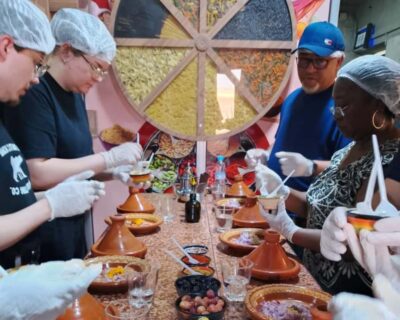
Marrakech: Moroccan Cooking Class with Pickup
Read our review →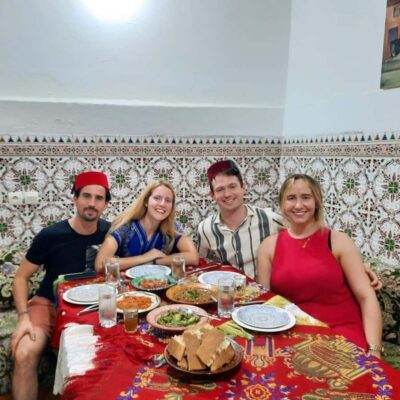
Marrakech: Traditional Moroccan Cooking Class & Market Visit
Read our review →
Marrakesh: Moroccan Dishes Cooking Class with a Local Chef
Read our review →
Moroccan Cooking Class & Marrakech Market Visit with Chef Khmisa
Read our review →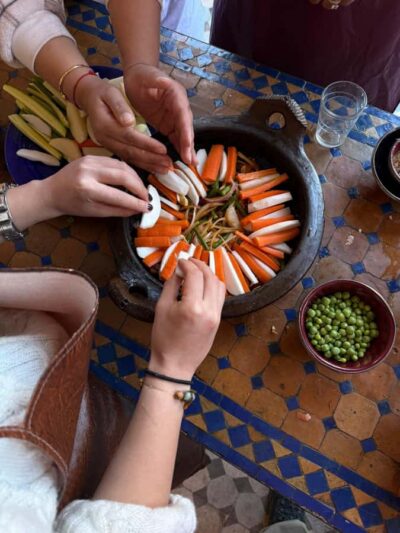
Marrakech: Moroccan Cooking Class with a Local Family
Read our review →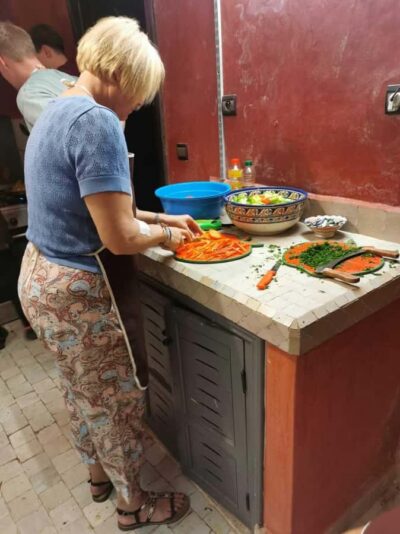
Marrakech: Moroccan Cuisine Cooking Class in Local Home
Read our review →
Marrakech: Moroccan Cooking Workshop at La Maison Arabe
Read our review →
Marrakech: Tajine Cooking Class in a Traditional Riad
Read our review →Browse the lists this tour appears in