
Review · GREECE
Chania Area: Cooking Class at a Farm in Stylos Village
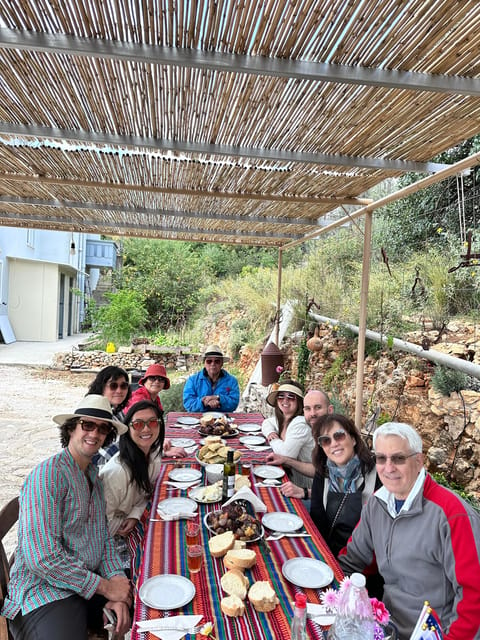
Cretan cooking here starts in the garden, not at a counter. At a family farm in Stylos Village, you gather herbs and vegetables, then turn them into a long meal cooked over wood fires. I like the hands-on format and the easy contact with local family life. I also like that the ingredients are biological and gathered on site.
The five-hour visit feels more like being welcomed into a home than attending a formal lesson. The main thing to consider is the lack of hotel transfer, so you need to arrange your own way to the farm. Wear good shoes and sun protection, since part of the experience takes place outdoors.
Key points to know before booking
- The garden supplies the lesson: You gather fresh ingredients and aromatic herbs before cooking.
- Cooking happens over wood fires: The farm does not use electricity for the cooking, which gives the meal an old-fashioned character.
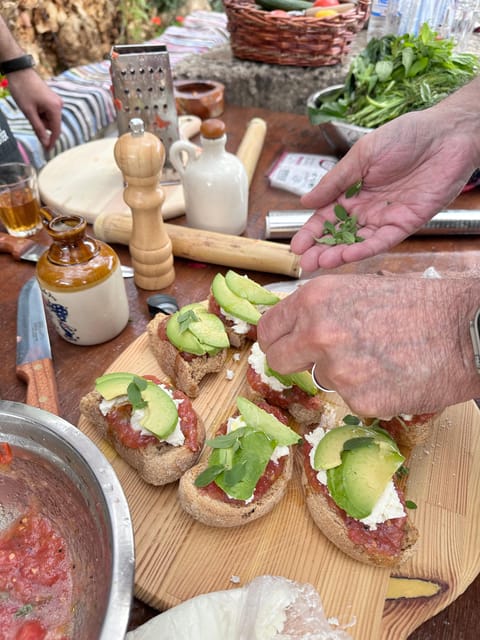
- You make a full Cretan spread: Dishes include tzatziki, dakos, Cretan salad, gemista, lamb, fried potatoes, and cheese pies.
- The meal comes with local drinks: Coffee, homemade lemonade, raki, house wine, and a full meal are included.
- This is a family-style cultural visit: The hosts share food, conversation, and everyday Cretan traditions in a relaxed setting.
- Plan your own transport: Hotel transfer is not included, though the activity is wheelchair accessible.
A farm visit with a meal at its center
This is not a quick lesson where you prepare one dish and leave. The five-hour schedule gives the cooking room to unfold at a natural pace, from a welcome snack to a walk through the garden, then preparation, wood-fire cooking, and lunch.
You begin with traditional delicacies, coffee, and homemade lemonade. That opening matters. It gives you time to settle in before the practical work begins, and it sets the tone for a visit built around hospitality rather than speed.
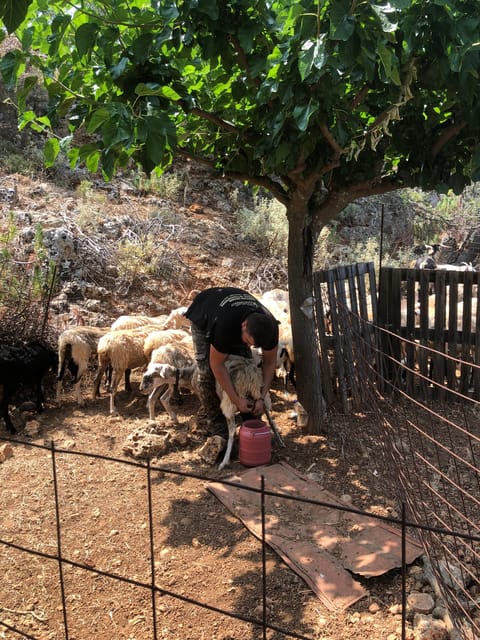
The farm sits in the Stylos area, with views across the surrounding countryside. You are not simply brought to a kitchen and handed ingredients. You see where some of the food starts, and you take part in collecting what will later appear on the table.
I like this approach because it connects the recipes to the place. A handful of herbs picked in the garden means more when you have just walked among the plants yourself. It also gives the activity a gentle rhythm that suits a village setting.
More Farm Cooking Classes in Greece
- Naxos Perivoli Farm Experience & Wood-fire Cooking Class
★ 5.0 · 339 reviews - Melanes: Naxos Perivoli Farm & Cooking Class with Wood Fire
★ 5.0 · 177 reviews - Santorini Family Farm Food & Wine Tour with Cooking Class
★ 5.0 · 107 reviews
Gathering ingredients in the garden
The garden walk is one of the most useful parts of the day. You collect the fresh ingredients and aromatic herbs needed for the cooking, then bring them back to the work area.
The available information does not specify every plant or vegetable you will gather, so the exact selection may change with the season. That is worth keeping in mind. You should expect a hands-on farm visit, but not a fixed harvest list.
The hosts place strong emphasis on biological ingredients, which adds value for anyone interested in how Cretan food is produced. You get a clearer sense of the link between garden produce, simple preparation, and the final meal.
This section also suits children and curious cooks because it makes the food easier to understand. You can see that many Cretan dishes rely less on complicated technique than on good produce, herbs, olive oil, and careful cooking.
Learning recipes from family tradition
The class is taught through family recipes passed down from the host’s grandmother and mother. The approach is described as creative, so you should expect practical instruction rather than a strict culinary school format.
You will learn tricks for cooking along the way. The supplied details do not name the individual instructors, but they make clear that the teaching comes from the family connected with the farm. Several aspects of the experience point to a warm, open setting where conversation matters as much as exact measurements.
That makes this a good fit if you want to learn how Cretan home cooking works in practice. It may be less suitable if you want a tightly timed professional class with printed recipes, formal demonstrations, or advanced kitchen equipment. No such materials or structure are promised.
The class also gives you a chance to ask about the dishes as you prepare them. The strongest part of the experience is likely the exchange with the family and their friends, along with the chance to learn about Greek culture in an ordinary setting.
The dishes: from dakos to cheese pies
The menu is broad enough to make the meal feel like a proper Cretan table rather than a small tasting. You prepare:
- Tzatziki
- Dakos
- Cretan salad
- Gemista
- Tsigariasto lamb
- Fresh fried potatoes
- Traditional cheese pies
Dakos is a particularly useful dish to learn because it is closely tied to Cretan home cooking. It combines the island’s familiar ingredients in a simple format, and it fits well with a farm setting.
Gemista gives you a chance to work with stuffed vegetables, while tzatziki shows how a few basic ingredients can become a central part of the meal. The Cretan salad keeps the focus on fresh produce, and the cheese pies add a more hands-on pastry element.
The lamb and potatoes make the meal more substantial. The lamb is prepared as tsigariasto, a traditional Cretan style of cooking. Fresh potatoes are fried in the wood fire, giving this familiar side dish a strong connection to the cooking method used at the farm.
You should arrive hungry. This is not a demonstration where you watch someone else prepare lunch. You help create several dishes and then eat the results with the hosts.
Same place, a different menu:
- Athens: Classic Cooking Class with Market Visit and Wine
★ 5.0 · 1,101 reviews - Athens: Food Market Visit and Cooking Class with Wine
★ 4.9 · 1,087 reviews - Greek Cuisine Cooking Class in Santorini with Recipes and Wine
★ 5.0 · 969 reviews - Naxos: Half-Day Cooking Class at Basiliko Family Tavern
★ 5.0 · 887 reviews
Why the wood fire changes the experience
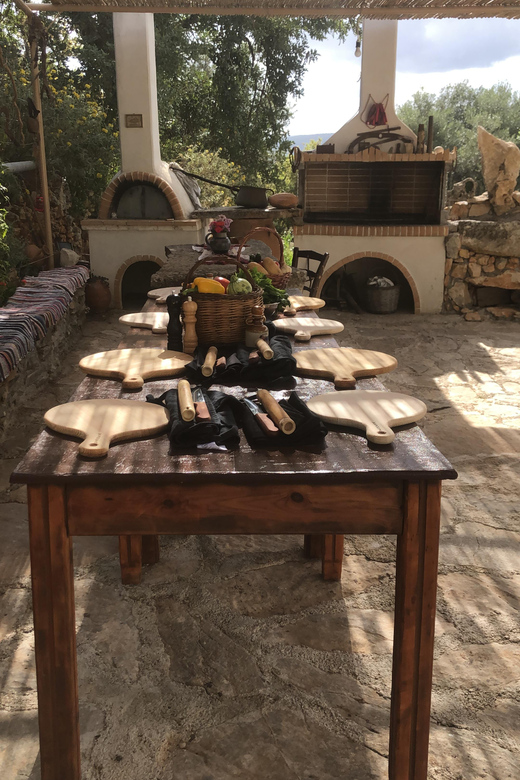
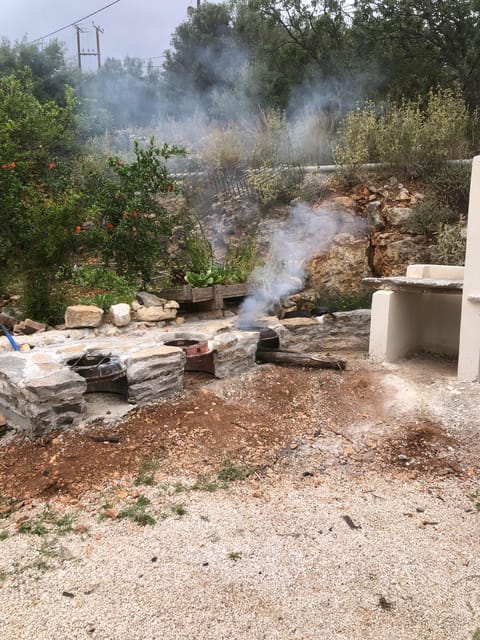
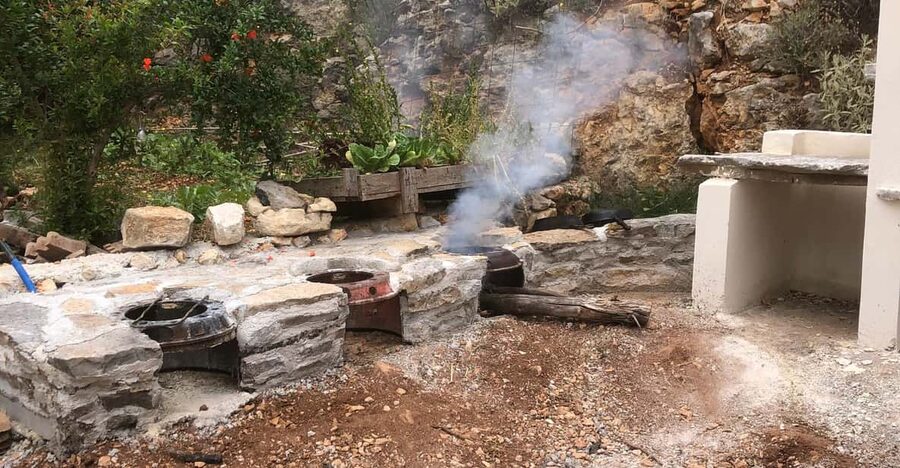
The farm cooks only with wood fires and does not use electricity for the cooking. That choice is one of the most distinctive features of the visit.
It affects the pace. A wood fire needs attention, and food prepared this way does not follow the instant timing of a modern electric stove. You get a closer look at an older method of cooking, along with the practical judgment needed to manage heat.
I would not book this expecting the precision or convenience of a professional kitchen. The fire is part of the point, and it can make the class feel less polished in the conventional sense. For me, that is also what gives it character.
The approach is described as planet friendly, but the main benefit for you is practical and cultural. You see how a meal can be prepared with local ingredients, a garden, and firewood, without depending on a fully equipped modern kitchen.
Lunch with wine, raki, and village hospitality
After the cooking, you sit down to a full meal accompanied by local drinks. House wine, raki, coffee, and homemade lemonade are included, so the price covers more than the instruction itself.
Raki is a traditional Greek spirit, and it is often offered as part of hospitality. If you do not drink alcohol, you still have coffee and lemonade, but the available information does not specify nonalcoholic wine or other alternatives. You may want to ask before booking if that matters to you.
The meal is also the social heart of the day. You are given time to eat, talk, and enjoy the setting instead of rushing straight to the next activity. The family atmosphere is repeatedly emphasized by the way this visit is organized, and the warm welcome is one of its main strengths.
A few direct accounts describe feeling accepted into a Cretan family setting, even when arriving late. That suggests the hosts place real value on making people comfortable. Still, I would not deliberately arrive late. You will get more from the garden walk and cooking if you are there from the start.
What the five-hour duration means
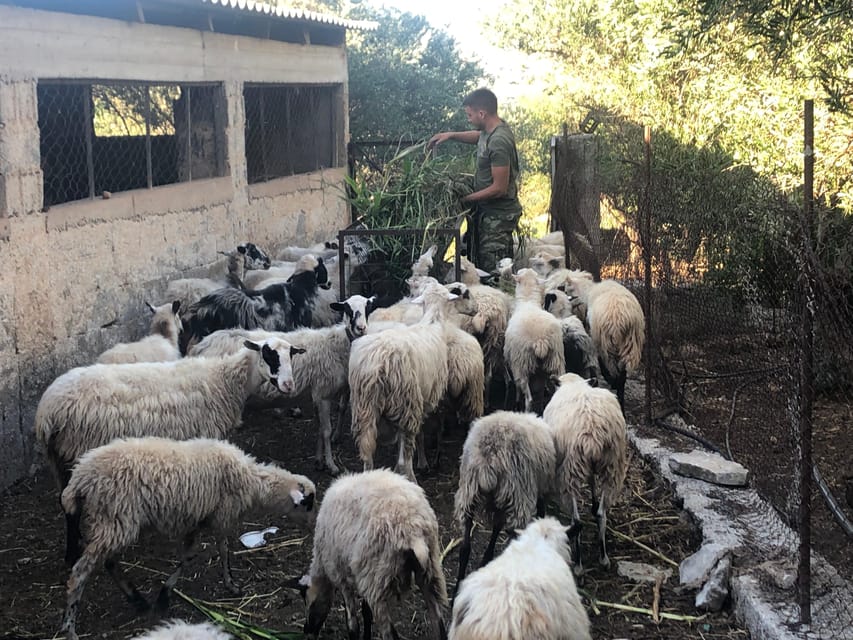
Five hours is a substantial block of time. You should set aside half a day, not try to squeeze this between two short sightseeing stops.
The length works well because the visit includes several distinct parts: refreshments on arrival, the garden walk, ingredient gathering, cooking lessons, time around the fire, and a full meal. A shorter class would likely have to cut out either the farm element or the relaxed meal.
The trade-off is that you need to enjoy unhurried activities. If you want a quick lesson with a single recipe, this will feel too long. If you like food, conversation, and rural surroundings, the pace should feel appropriate.
The outdoor portions also mean conditions may affect your comfort. Bring sun protection cream and comfortable shoes, as specifically advised. Those details are simple, but they matter when you are walking around a farm and spending time outside.
Is the $129 price good value?
At $129 per person, this costs more than a standard restaurant lunch and more than a short cooking demonstration. The value depends on what you want from the day.
You are paying for five hours, a cooking class, ingredient gathering, a full meal, coffee, homemade lemonade, raki, house wine, and time with the family hosting the experience. You also receive a farm visit and an activity connected to local food production.
I consider the price reasonable if you value personal contact and a full half-day activity. The combination of instruction, food, drinks, and cultural exchange gives it more substance than a meal alone.
The value is weaker if you mainly want a recipe lesson. You might not use every dish at home, and there is no promise of a formal recipe booklet or advanced culinary training. You are paying for the setting and the welcome as much as for the cooking.
The lack of hotel transfer is another cost consideration. You must arrange your own transportation to Stylos Village, so include that in your budget and planning.
Who will enjoy this most?
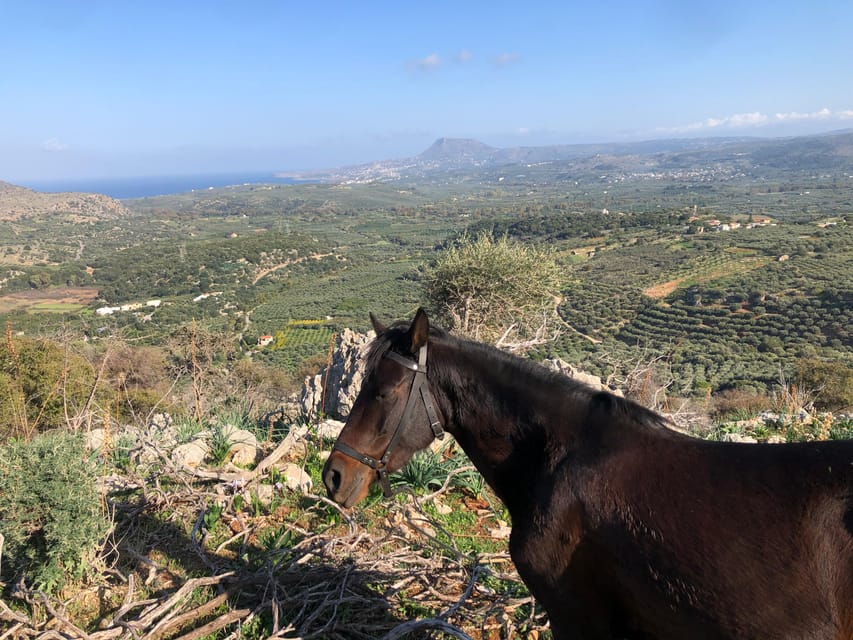
I would recommend this to anyone who enjoys traditional food, home cooking, and conversation with local people. It is particularly well suited to couples, families, and small groups who want a shared activity rather than a passive sightseeing stop.
It also suits people who want to understand Cretan food beyond restaurant menus. Gathering herbs, working with garden ingredients, and cooking over wood fires give you useful context for the dishes you eat elsewhere on Crete.
The activity may work well for children, provided they are comfortable with a five-hour visit and outdoor farm conditions. The provided information does not give a minimum age, so families should confirm that point before booking.
You should think twice if you dislike long meals, outdoor activity, rustic cooking methods, or alcoholic drinks as part of the social setting. The class is not presented as a luxury culinary workshop, and its appeal comes from its informal family character.
Practical details that affect your day
The activity is wheelchair accessible, which is important to know in advance. However, the supplied information does not explain the exact surfaces, distances, or accessibility arrangements around the garden and cooking areas. If you use a wheelchair, contact the provider before booking to confirm which parts of the farm are accessible.
Hotel transfer is not included. You need to make your own way to the farm in Stylos Village, and the starting time depends on availability.
Free cancellation is available up to 24 hours before the activity for a full refund. You can also reserve now and pay later, which helps if your Crete plans are still changing.
Wear comfortable shoes and sun protection cream. Bring an appetite, since the program includes several dishes and a full meal. A positive attitude is useful too, because the experience depends on joining in, asking questions, and spending time with the people who run the farm.
My verdict on this Stylos cooking class
Book this if you want a personal, food-centered day with a Cretan family, not just a polished cooking show. The strongest reasons are the garden gathering, the wood-fire cooking, the wide menu, and the time set aside for conversation and lunch.
I especially like that the experience joins the farm, the recipes, and the meal into one story. You see the ingredients, help prepare them, and eat them in the same place. That is more memorable than simply watching a chef work.
Skip it if you need hotel pickup, a short schedule, or a formal class with guaranteed professional facilities. For everyone else, the $129 price can make sense as a half-day cultural visit with plenty of food and genuine participation.
FAQ
Where does the cooking class take place?
The activity takes place at a farm in Stylos Village in the Chania area of Crete, Greece.
How long does the experience last?
The cooking class and farm visit last five hours.
How much does the experience cost?
The listed price is $129 per person.
Is hotel transportation included?
No. Hotel transfer is not included, so you must arrange your own transportation to the farm.
What food will I prepare?
You will prepare tzatziki, dakos, Cretan salad, gemista, tsigariasto lamb, fresh fried potatoes cooked over a wood fire, and traditional cheese pies.
Are drinks included?
Yes. Coffee, raki, house wine, homemade lemonade, and a full meal are included.
Are the ingredients biological?
Yes. The activity uses biological ingredients, and you gather ingredients and aromatic herbs from the farm and garden.
How is the food cooked?
The farm does not use electricity for cooking. Food is prepared only with wood fires.
Is the activity wheelchair accessible?
Yes, the activity is described as wheelchair accessible. The available information does not provide detailed access notes for each part of the farm.
What should I wear?
Wear comfortable shoes and sun protection cream. Some of the activity takes place outdoors around the farm and garden.
More Hands-On Workshops in Greece
- Athens: Classic Cooking Class with Market Visit and Wine
★ 5.0 · 1,101 reviews - Athens: Food Market Visit and Cooking Class with Wine
★ 4.9 · 1,087 reviews - Greek Cuisine Cooking Class in Santorini with Recipes and Wine
★ 5.0 · 969 reviews - Naxos: Half-Day Cooking Class at Basiliko Family Tavern
★ 5.0 · 887 reviews
Just added around Greece
- Private Walking Meze Cooking Course★ 5.0 · 6 reviews
- Greek Cooking Class with Acropolis View★ 5.0 · 76 reviews
- Cook with Katerina: Authentic Greek Home Cooking Class in Athens★ 5.0 · 15 reviews
- Private Greek Cooking Class in Athens-Learn to Cook with Angelina★ 5.0 · 3 reviews
- Cooking Class in Athens: Learn the Art of Phyllo with Christina★ 5.0 · 24 reviews
- Hands On Greek Cooking Classes in Athens★ 5.0 · 7 reviews
- Athens: Traditional Vegan Cooking Class incl. Drinks★ 5.0 · 41 reviews
- Greek Meze Cooking class and dinner with an Acropolis view★ 5.0 · 41 reviews
Farm & Countryside Cooking Classes, compared.
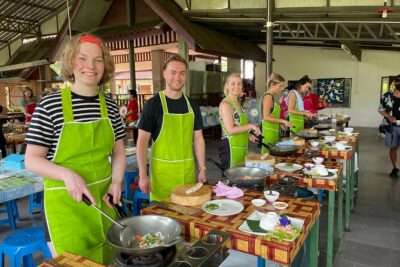
Half-Day Thai Cooking Class at Organic Farm in Chiang Mai
Read our review →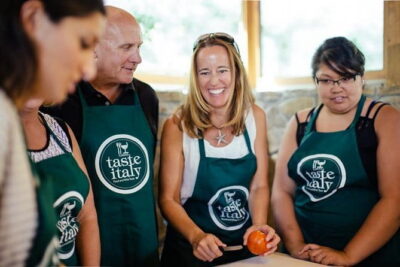
Cooking Class and Lunch at a Tuscan Farmhouse with Local Market Tour from Florence
Read our review →
Chiang Mai: Authentic Cooking Class with Market & Farm Visit
Read our review →
Ubud: Balinese Cooking Class at an Organic Farm
Read our review →
Ubud: Authentic Cooking Class in a Local Village
Read our review →
Chiang Mai: Cooking Class with Organic Farm at Mama Noi
Read our review →

Hands-On Cooking Class & Farmhouse Tour on the Amalfi Coast
Read our review →Browse the lists this tour appears in