
Review · GREECE
Cretan Cooking Class and Dinner: Evening in a Rethymno Home
The best part of this evening is that you do not just eat Cretan food, you help make it in Androniki and Pantelis’s home. You may pick herbs from the garden, work with homegrown produce, learn to make fresh cheese, and watch traditional dishes cook in a wood oven. I especially like the hands-on cooking and the chance to share a real family-style meal rather than sit through a formal restaurant class.
I also like the small group, capped at 10 people, and the generous menu. The cheese pies, wild-green pies, dolmadakia, moussaka, and rooster with orzo make this much more than a quick lesson. The main consideration is the location information: the tour is described as taking place in Loutra near Rethymno, Crete, although the supplied summary labels the location as the Cyclades Islands. Check your confirmation carefully before setting out.
Key points at a glance
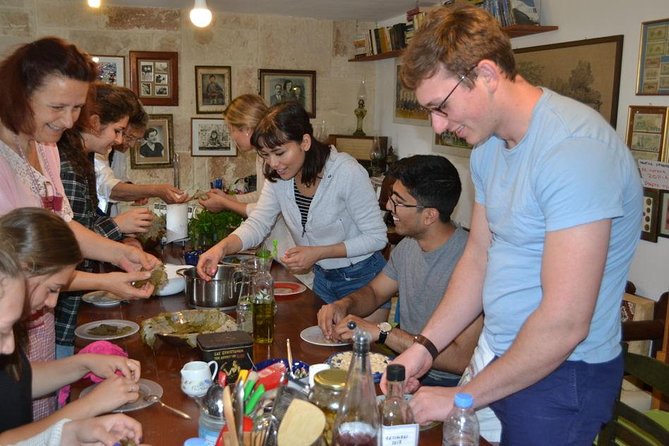
- Cook in Androniki and Pantelis’s home: This is a home-based evening, not a standard restaurant classroom.
- Work with Cretan ingredients: Fresh herbs, vegetables, olive oil, wild greens, vine leaves, and homemade cheese shape the meal.
- Learn several traditional pies: Kremidokalitsouna, chortopites, and Sfakianes pites each show a different side of local cooking.
- Use a traditional wood oven: Moussaka and rooster with orzo are part of the substantial dinner.
- Expect a full evening meal: Wine, raki, Greek coffee, dessert, and the dishes you prepare are included in the flow of the evening.
- Keep the group small: No more than 10 people makes it easier to get direct help at the worktable.
Cooking Cretan food in a private home
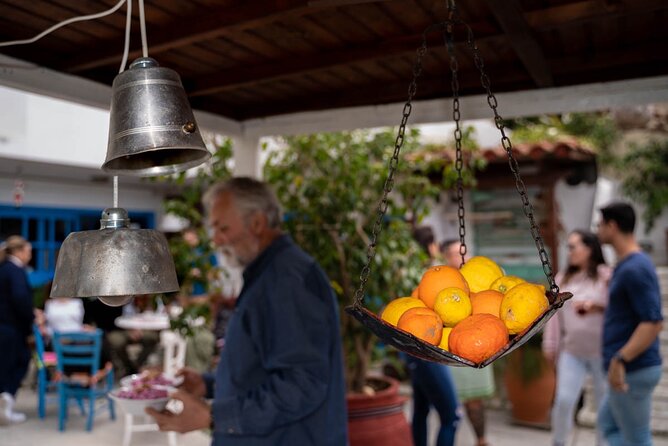
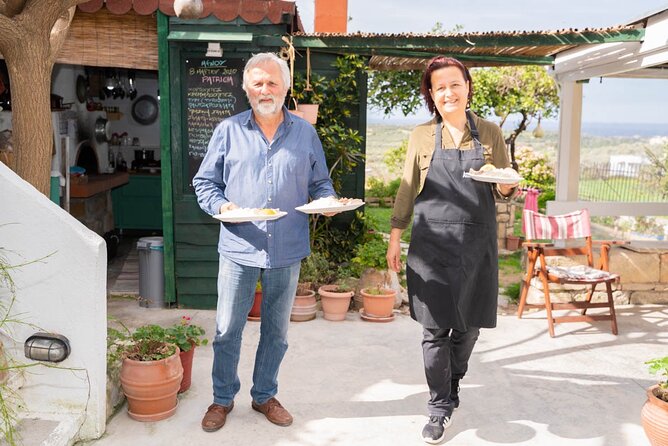
This four-hour class begins at 6 p.m. in Loutra, a village in the hills near Rethymno. You meet Androniki and Pantelis at their home, where the garden, outdoor cooking area, and wood oven form the setting for the evening.
That setting matters. Cretan cooking is closely tied to what grows nearby and what can be prepared for a household or a Sunday table. Here, you are not simply handed a plate of food and told its name. You work through parts of the process, from gathering herbs and vegetables to shaping dough and preparing fillings.
Androniki leads the cooking, with demonstrations and hands-on instruction. Pantelis is also part of the warm hosting that makes the event feel social rather than strictly instructional. The class is offered in English, and the group size is limited to 10 people, so you should have a fair chance to follow along and ask questions.
Do not expect a professional cooking school with individual stations and restaurant-style timing. The appeal is the home setting and the shared rhythm of preparing many dishes at once. Some parts may be demonstration-based, while others call for your direct help. If you want a polished, technical lesson focused on knife skills or precise culinary theory, this may feel informal. If you want to understand how a Cretan household prepares food for company, the informal format is a strength.
More Dinner Experiences in Greece:
- Greek Cooking Class in Athens Including Rooftop Dinner with Acropolis View
★ 5.0 · 826 reviews - Greek Small-Group Athens Cooking Class & Dinner
★ 5.0 · 574 reviews - Athens: Greek Cooking Class & Dinner on a Rooftop
★ 5.0 · 383 reviews
From herb garden to cooking table
One of the most appealing details is the use of homegrown produce. You may walk through the herb garden, learn how different plants are used, and enjoy the scent of fresh herbs before cooking begins. This gives you a useful link between the food on your plate and the land around the house.
The ingredients listed for the evening include fresh vegetables, olive oil, wild greens, vine leaves, zucchini flowers, tomatoes, cucumber, green pepper, onion, caper, kritamo, olives, barley rusk, and homemade cheese. The exact ingredients and order of preparation can vary, but the emphasis is clear: this is a produce-led meal rather than a generic Greek cooking class.
A particularly memorable part is the fresh cheese. You learn that making sheep’s cheese at home can be surprisingly simple when the process is explained step by step. That is the kind of detail you can carry back to your own kitchen, even if your final result will not have the same garden setting or wood-oven flavor.
I like this practical side of the class. You leave with recipes and techniques rather than only photographs of a meal. Still, you should keep your expectations sensible. Recreating the dinner at home will require access to the right ingredients, time, and patience. The food is also shaped by the hosts’ experience, so your first batch of pies may be less tidy than theirs.
Three Cretan pies, three different lessons
The pie-making portion gives the class much of its character. You work with several traditional preparations, each built around a different filling and style.
Kremidokalitsouna are small pies filled with onions. They show how a simple vegetable can become a savory filling with the right seasoning and pastry. The dish is also a good reminder that Cretan cooking does not depend on expensive ingredients to make a memorable plate.
Chortopites are small pies made with many kinds of wild greens. The class description refers to 10 to 12 different greens, which makes these more interesting than a basic spinach pastry. You get a taste of the variety that can come from gathering and combining local plants.
Sfakianes pites are associated with Sfakia and are made with homemade cheese. Their inclusion adds another style of pie to the evening and lets you compare the texture and flavor of cheese-filled pastry with the onion and greens versions.
Expect flour, fillings, folding, and plenty of shared work. The class is not just about memorizing a recipe. It shows how Cretan cooks turn seasonal ingredients into small dishes for a table crowded with food.
This is also the point where group dynamics matter. With 10 people or fewer, you are likely to work alongside others rather than cook in isolation. That can be a pleasure if you enjoy meeting people from different places. It may be less appealing if you prefer a quiet class with a private instructor focused only on you.
A Greek table with more than enough food
After the cooking, you sit down to eat the meal you helped prepare. The menu is unusually broad for a four-hour home class.
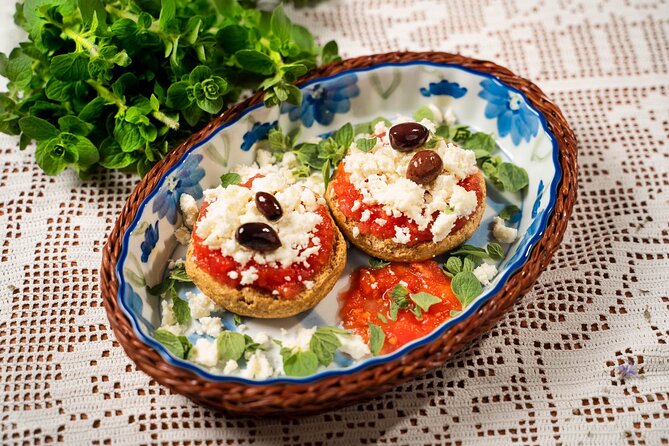
The meal may begin with raki or Greek coffee, followed by the cheese pies, onion pies, wild-green pies, and Sfakianes pites. The Greek salad comes with homemade barley rusk and an array of local ingredients, including kritamo and capers. The salad is not an afterthought. With good olive oil and sturdy rusk, it becomes a substantial part of the table.
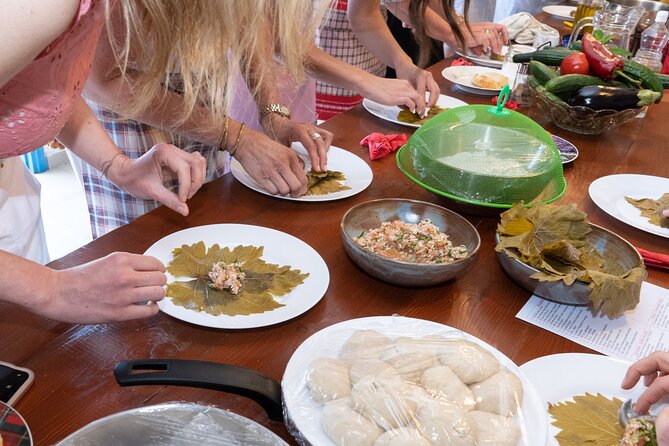
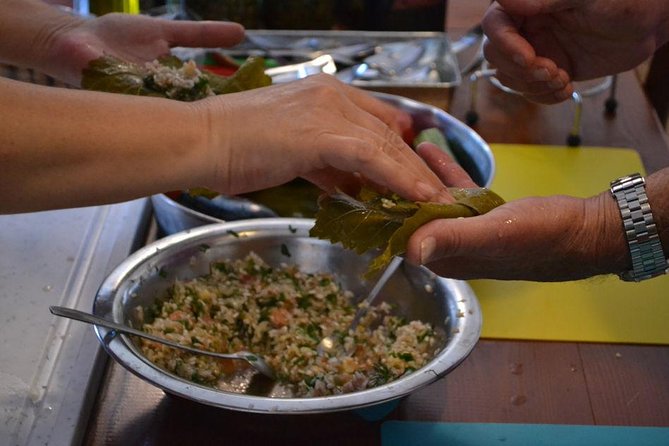
You may also prepare dolmadakia, stuffed vine leaves made with rice, vegetables, herbs, and olive oil. Zucchini flowers are included in this part of the menu as well. These dishes take some care, so the evening gives you a sense of how much work can go into a meal that looks effortless once it reaches the table.
The main courses make clear that this is not a light tasting. Moussaka combines potatoes, zucchini, aubergines, minced meat in tomato sauce, and béchamel. Giouvetsi features rooster and orzo cooked in the wood oven, described as a traditional Sunday dish.
I appreciate that the food has the scale of a family gathering. You are not paying to make one small plate and leave hungry. You receive dinner, wine, and after-dinner drinks as part of a long evening around the table. At the same time, the large menu means you should not expect every dish to receive the same amount of detailed instruction. The focus is on shared preparation and hospitality, not mastering a dozen recipes in one sitting.
Dessert may be Greek yogurt or homemade ice cream with a spoon sweet or another local sweet. The ending is simple and fitting after a rich meal. Raki, made at home by Androniki and Pantelis, is also available. It is a strong spirit, so take a small serving if you are not used to it.
More Dining Experiences in Greece:
- Athens: Greek Cuisine Cooking Class and 3-Course Dinner
★ 4.8 · 270 reviews - Traditional Greek cooking class and lunch or dinner with an Acropolis view
★ 5.0 · 250 reviews - Thessaloniki: Cooking & Dining Experience with Greek Family
★ 4.9 · 85 reviews - Greek Meze Cooking class and dinner with an Acropolis view
★ 5.0 · 41 reviews
Why the wood oven changes the evening
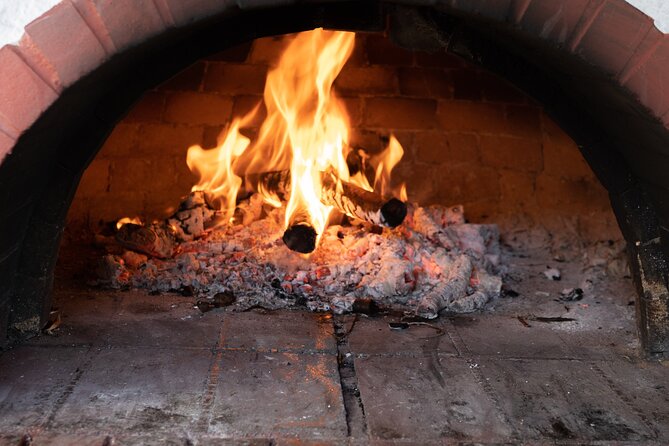
The wood oven is more than a decorative feature. It gives the class a clear sense of place and links the cooking to older household methods. Moussaka and giouvetsi benefit from slow, enclosed heat, and watching food go into the oven helps explain why the hosts include it in the evening.
While dishes cook, the table does not stop. Plates of samples may continue to come out of the oven as the preparation moves along. This keeps the evening from feeling like a rigid lesson followed by a separate dinner. You cook, taste, wait, talk, and eat in a more natural sequence.
There is a small tradeoff. Home ovens and outdoor cooking areas do not operate with the exact timing of a modern restaurant kitchen. Your evening may feel leisurely and less predictable. That is part of the charm, but it is worth knowing if you have a late appointment afterward. The activity lasts about four hours and ends back at the meeting point, so allow the whole evening rather than planning another fixed event soon after.
What the $126.50 price includes
At $126.50 per person, this is not a budget meal. The value comes from the combination of instruction, food, drinks, setting, and time.
You receive about four hours with the hosts, a cooking class, a full multi-course dinner, Greek wine, raki or Greek coffee, dessert, and recipes to use at home. You also get access to a private home and garden setting that a restaurant meal cannot provide. The small group limit helps protect that personal feel.
I would consider it good value for someone who places equal importance on meeting a local host and eating a generous meal. It is less compelling for someone who mainly wants the cheapest way to sample moussaka or a few Greek pastries. A regular taverna will cost less, but it will not give you the garden walk, pie-making lesson, cheese preparation, or direct time with Androniki and Pantelis.
The price also makes more sense if you will actually use the recipes afterward. Think of the class as dinner plus a practical souvenir. If you cook only one of the dishes again, the value is still partly in the evening itself, the setting, and the company.
Who will enjoy this most
I would recommend this for couples, solo visitors, food-focused families, and small groups who like social activities. The shared cooking format gives solo visitors an easy way to meet people, while couples get a more personal connection to Cretan food than they would at a standard meal.
It should also suit people who enjoy learning by doing. You may shape pastry, prepare fillings, handle herbs, and take part in the work that leads to dinner. It is a better choice for curious eaters than for people who want a quick, polished demonstration with no participation.
Food restrictions need to be communicated in advance. The menu includes meat, dairy, gluten, and many vegetables, and the hosts need to know about allergies or special diets before the evening. Do not wait until you arrive to raise the issue.
Service animals are allowed, and the meeting point is near public transportation. The full address appears in the Before You Go section of your confirmation voucher. Since the summary includes a location mismatch between the Cyclades Islands and Loutra near Rethymno, use the confirmed address rather than relying on a general map search.
Free cancellation is available if you cancel at least 24 hours before the 6 p.m. start time. Changes or cancellations inside that window are not accepted for a refund.
Is this Cretan cooking evening worth booking?
Book it if you want a generous meal tied to a real home, a small group, and hands-on work with Cretan recipes. The strongest reasons are the garden ingredients, the wood oven, the fresh cheese, and the chance to learn several kinds of traditional pies from Androniki.
Think twice if you dislike group cooking, have a very strict food restriction that may be difficult to accommodate, or want a short class with precise restaurant-style instruction. Also confirm the location before paying attention to the start time.
For most food-minded visitors staying near Rethymno, this is a memorable use of an evening. You get a meal, a lesson, local hospitality, and recipes that can bring a little of Crete back to your own kitchen.
FAQ
Where does the cooking class take place?
The activity starts at Loutra 741 50, Greece, in the hills near Rethymno according to the supplied meeting information. The full address is provided on your confirmation voucher under the Before You Go section.
What time does the experience start?
The class starts at 6 p.m.
How long does the experience last?
It lasts approximately four hours and ends back at the meeting point.
Who leads the cooking class?
Androniki leads the cooking instruction, with Pantelis also involved in hosting the evening at their home.
How many people can join?
The maximum group size is 10 people.
What language is the experience offered in?
The experience is offered in English.
What food will I learn to prepare?
The class includes Cretan dishes such as kremidokalitsouna, chortopites, Sfakianes pites, Greek salad, dolmadakia, moussaka, and giouvetsi.
Is dinner included?
Yes. You eat the food prepared during the class, along with Greek wine, dessert, and after-dinner drinks. Raki or Greek coffee is offered at the start.
Can I report an allergy or special diet?
Yes. You need to communicate any food restriction, allergy, or special diet before the experience.
Can I cancel for a full refund?
Yes, if you cancel at least 24 hours before the local start time. Cancellations or changes made less than 24 hours before the experience are not refunded or accepted.
More Evening Classes in Greece
- Dining In Rethymno: An Evening Of Cretan Cooking
★ 4.9 · 12 reviews - Cooking Class & Greek Night Experience
★ 5.0 · 3 reviews - Chiang Mai: Evening Cooking Class and Local Market Visit
★ 4.9 · 648 reviews - Paris Evening Cooking Class French Dinner and Market Visit Option
★ 5.0 · 430 reviews
More Hands-On Workshops in Greece
- Athens: Classic Cooking Class with Market Visit and Wine
★ 5.0 · 1,101 reviews - Athens: Food Market Visit and Cooking Class with Wine
★ 4.9 · 1,087 reviews - Greek Cuisine Cooking Class in Santorini with Recipes and Wine
★ 5.0 · 969 reviews - Naxos: Half-Day Cooking Class at Basiliko Family Tavern
★ 5.0 · 887 reviews
Just added around Greece
- Authentic Greek Cooking Experience in Amorgos★ 5.0 · 22 reviews
- Authentic Cretan Cooking Class in Ozlem’s Home in Crete★ 5.0 · 11 reviews
- Cretan Delights – Wine, Olive Oil & Cooking Workshop from Chania★ 5.0 · 25 reviews
- Chania Area: Cooking Class at a Farm in Stylos Village (organic)★ 5.0 · 19 reviews
- Heraklion: Cretan private cooking lesson with lunch in Arolithos★ 5.0 · 12 reviews
- Greek Home Cooking Class at a Seaside Villa in Crete with Mary★ 4.5 · 5 reviews
- Cretan Traditional Cooking Lessons★ 5.0 · 16 reviews
- Cooking Lesson in Heraclion★ 5.0 · 32 reviews
Cooking Classes, compared.
Half-Day Thai Cooking Class at Organic Farm in Chiang Mai
Read our review →
Florence: Pasta Cooking Class with Unlimited Wine
Read our review →
3 in 1 Cooking Class near Navona: Fettuccine, Ravioli & Tiramisu
Read our review →
Hanoi Cooking Class: Culture, Local Market & Meaning CSR Impact
Read our review →
5 Traditional Dishes Hanoi Cooking Class with Market Trip
Read our review →
Cooking Class and Lunch at a Tuscan Farmhouse with Local Market Tour from Florence
Read our review →
Chiang Mai: Cooking Class, Market & Thai Herbs Garden Tour
Read our review →Browse the lists this tour appears in