
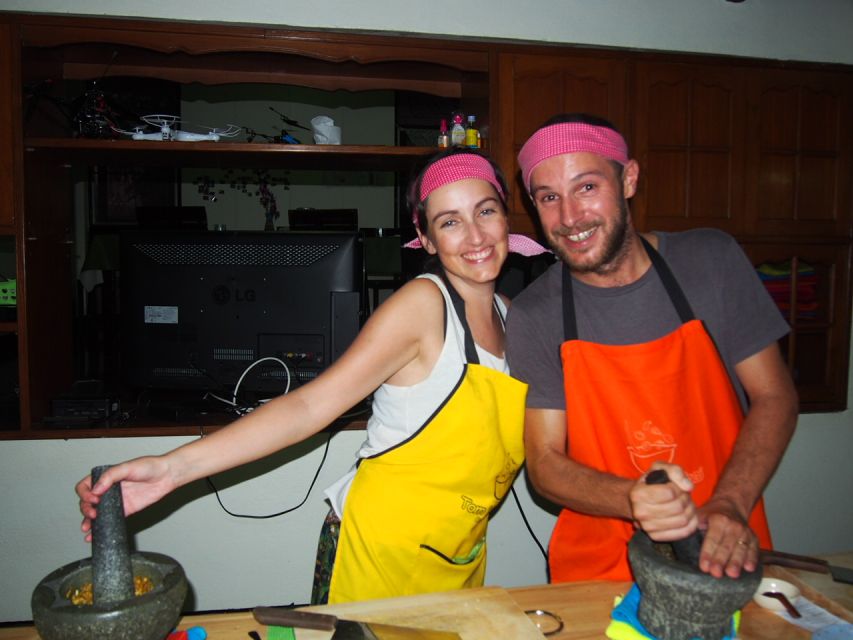
Review · CHIANG MAI
Half-Day Cooking Class with Market Tour
Chiang Mai’s best cooking lessons do more than hand you a recipe card. This half-day class starts at a local market, then moves into a family home where you prepare and eat five dishes of your choice. The result feels closer to being welcomed into someone’s kitchen than attending a formal culinary demonstration.
I especially like the freedom to choose your menu and the chance to make each dish yourself at an individual cooking station. The market visit also gives you a useful introduction to Thai vegetables, herbs, curry pastes, and seasonings before you see them in the pan. The main consideration is simple: you will eat a lot, so skip breakfast or lunch before arriving.
Key points to know
- Choose your own menu: Select one stir-fry, soup, appetizer, curry paste, and curry, then make sticky rice with mango.
- Market visit first: Learn about the ingredients and local shopping before cooking with them.
- Home-based setting: The lesson takes place in a family home rather than a large commercial school.
- Small groups: A maximum of 10 people keeps the class personal and leaves room for help.
- Good for dietary needs: Vegetarian, gluten-free, pescetarian, allergy, and other food requests can be discussed in advance.
- Useful take-home gift: You receive a recipe book so the class can continue in your own kitchen.
From Chiang Mai hotel to the local market
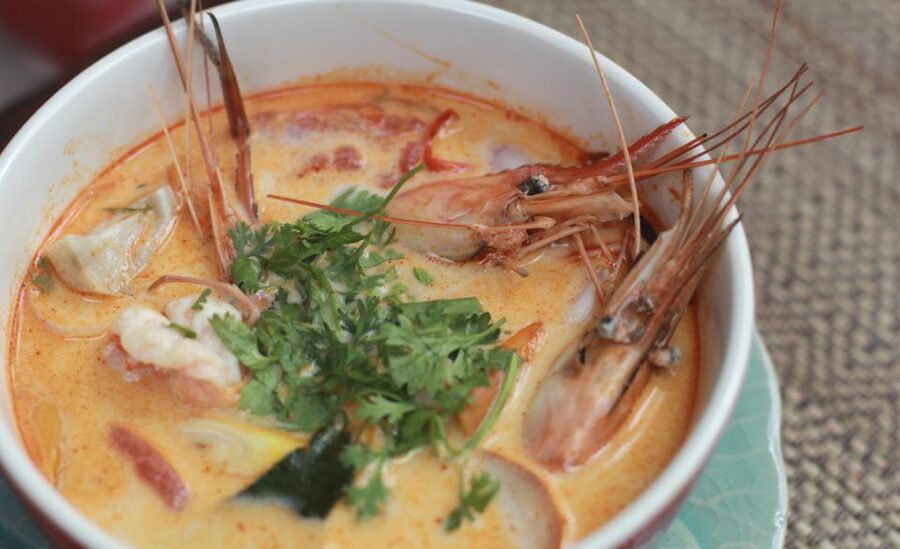
The experience begins with hotel pickup for properties within 3 kilometers of Chiang Mai’s old city. For the morning session, pickup is usually between 8:45 and 9:15 a.m. The afternoon class begins around 3:30 p.m., with pickup generally between 3 and 3:30 p.m. You should wait in your lobby or agreed pickup spot 10 minutes early.
This small pickup area is worth noting before booking. If your hotel sits outside the old city zone, you may need to arrange your own way to the meeting point. For those inside the included area, the transfer removes a bit of morning planning and makes the class easier to fit into a short Chiang Mai stay.
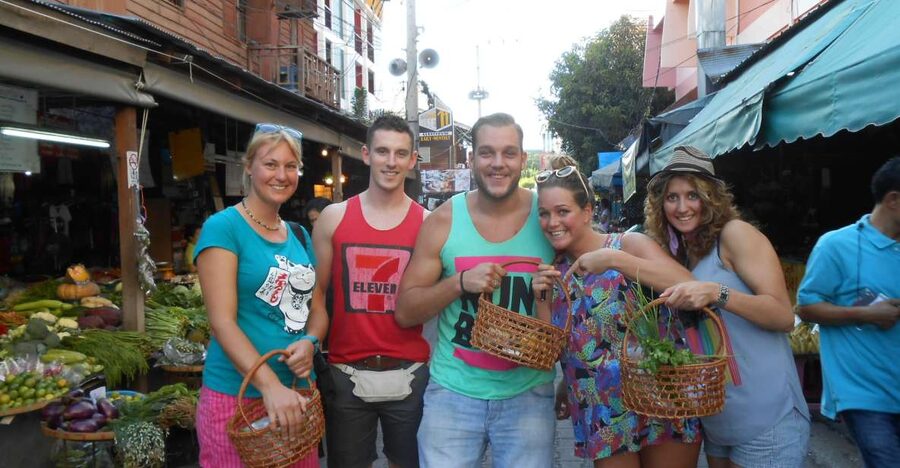
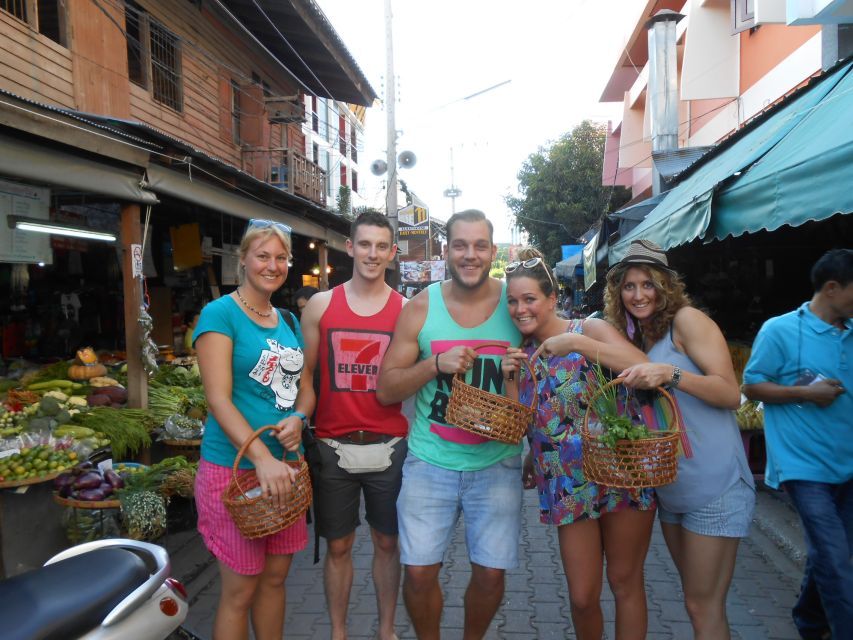
The first stop is a local market. This is not just a quick ingredient collection. You get time to see how people shop, examine produce, and learn what goes into the dishes you will prepare later. Thai cooking depends heavily on fresh herbs, vegetables, chilies, curry pastes, coconut milk, and seasonings, so seeing the ingredients whole makes the recipes easier to understand.
You may also try seasonal fruit and snacks along the way. The market is especially useful at the start of your trip because it helps you recognize foods on restaurant menus and at street stalls. After this visit, ingredients such as Thai vegetables or different curry pastes will not seem quite so mysterious.
More Market Tour Cooking Classes in Chiang Mai
- Chiang Mai: Cooking Class, Market & Thai Herbs Garden Tour
★ 4.9 · 4,824 reviews - Chiang Mai: Authentic Cooking Class with Market & Farm Visit
★ 4.9 · 4,546 reviews - Chiang Mai: Cooking Class with Market and Pickup
★ 4.9 · 1,365 reviews
A Thai kitchen inside a family home
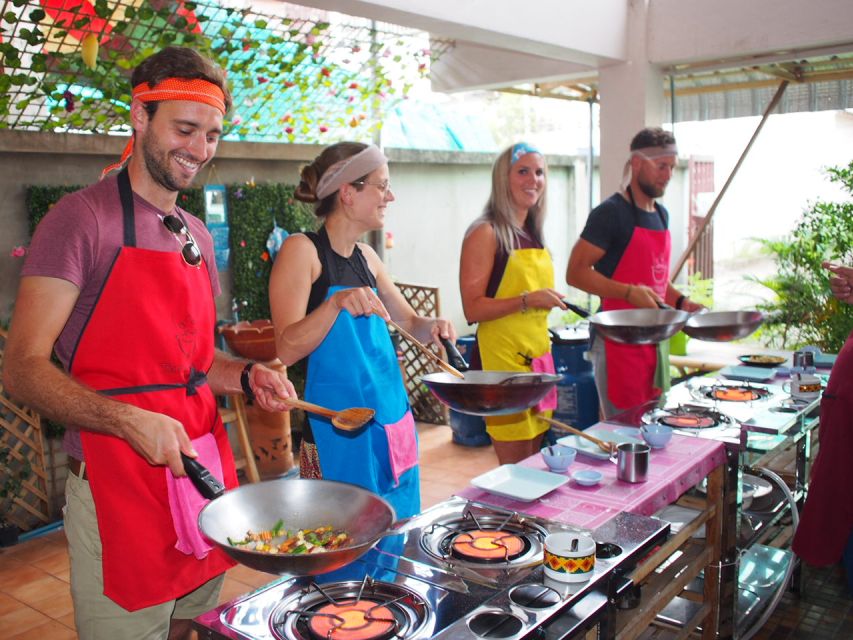
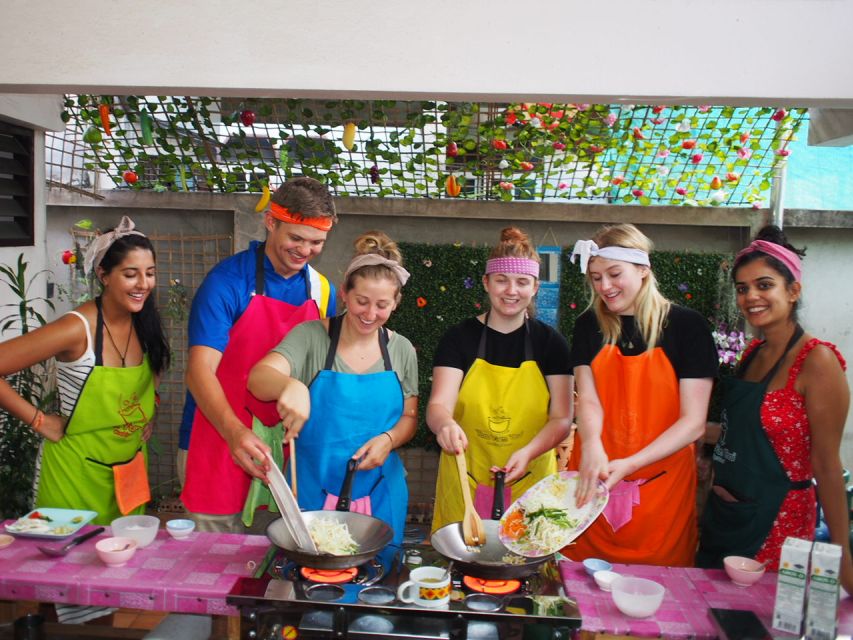
After the market, you continue to the cooking school, located in the instructors’ home. That setting shapes the entire experience. You are not simply watching a chef work behind a counter. You are welcomed into a working home kitchen, with a separate place for preparation, cooking, and eating.
The setup is practical. Each person has a cooking station and a skillet, while ingredients are prepared for you to cut and use. The kitchen has been described as clean and well equipped, and the class moves back and forth between cooking and eating as each dish is completed.
That rhythm matters. You do not wait until the end of the session to taste everything. You cook a dish, eat it, then move to the next part of the menu. It keeps the five-hour class active and gives you a chance to notice how a soup, stir-fry, curry, or salad changes as it sits.
The atmosphere also seems to be a major part of the appeal. Instructors such as Oun and Mind are described as friendly, funny, and easy to follow. Their teaching includes practical cooking advice as well as explanations of Thai food and culture. If you enjoy a relaxed lesson with plenty of conversation, this setting should suit you better than a strict, formal class.
Choosing five dishes from a generous menu
The menu is one of the strongest features because you are not locked into a single set meal. You choose one dish from each main category, and everyone prepares sticky rice with mango for dessert.
Your choices include:
Stir-fried dishes
- Pad Thai
- Cashew nut with chicken
- Pad See Ew
Soups
- Hot and sour prawn soup, or Tom Yum
- Chicken in coconut milk soup
- Thai noodle soup
Appetizers
- Spring rolls
- Papaya salad
- Cucumber salad
Curry pastes
- Green curry paste
- Panang curry paste
- Khao Soi curry paste
Curries
- Green curry
- Panang curry
- Khao Soi curry
The choice system works well for couples and friends who want to compare dishes. One person can select Pad Thai while another chooses Pad See Ew, or one can make Tom Yum while another prepares coconut milk soup. You still eat what you cook, so the meal becomes a chance to sample several styles when you are sharing.
The menu also reaches beyond the most familiar Thai restaurant standards. Khao Soi curry paste and Khao Soi curry bring a northern Thai touch that fits Chiang Mai particularly well. If you want to learn food connected to the region rather than only international Thai favorites, choose Khao Soi.
Ask about dietary needs before the class. Vegetarian adaptations have been handled, and the class can make adjustments for allergies and other eating styles. Still, Thai cooking often uses fish sauce, shrimp, oyster sauce, or shrimp paste, so be clear about what you cannot eat when you book.
What you actually learn while cooking
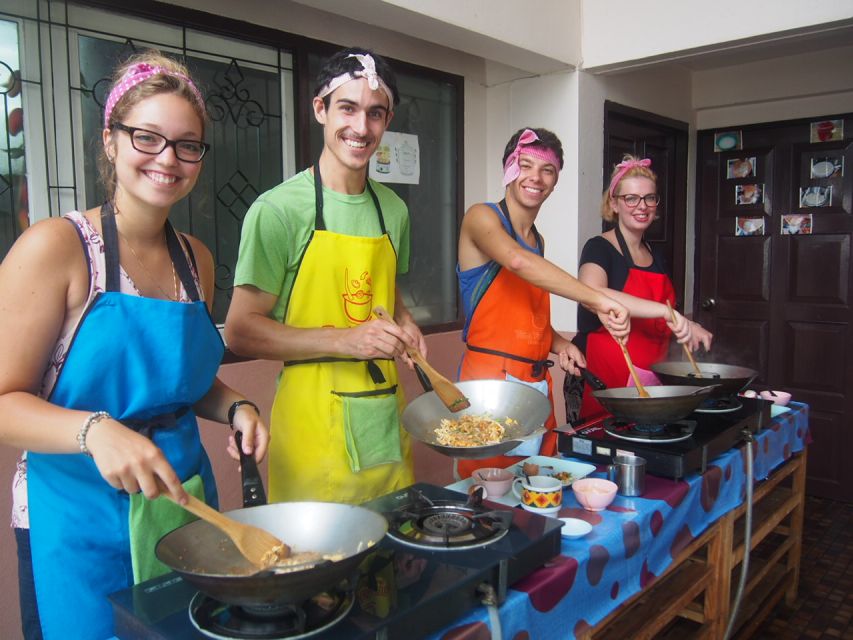
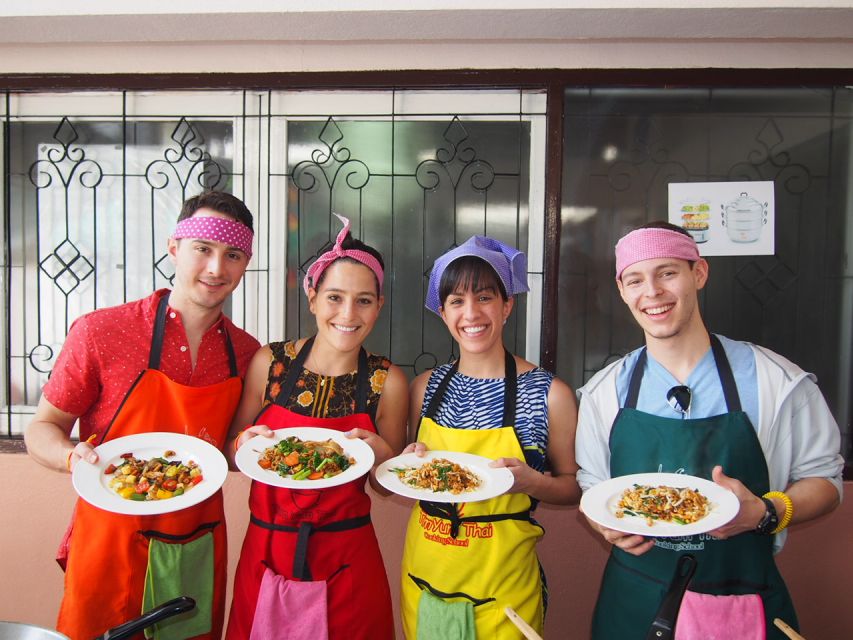
This is a hands-on lesson, but you do not need advanced kitchen skills. You cut ingredients, prepare them at your station, and cook them in your own skillet with guidance nearby. The instructors explain the process and step in when needed.
That arrangement gives beginners a comfortable way to learn. You get the satisfaction of doing the work without being left alone with an unfamiliar wok or a recipe full of unexplained steps. The class also leaves space for questions about spices, ingredients, and how to adjust the heat or seasoning.
The curry paste portion is especially useful. In Thai cooking, the paste often provides the backbone of the curry, and making it yourself helps explain the difference between green, Panang, and Khao Soi styles. It is the kind of lesson that can change how you order curry later, since you begin to notice that the pastes are not interchangeable.
The class also has a social side. The instructor’s humor and easy manner help keep the process light, even when several dishes are being prepared at once. At the same time, the group size is limited to 10, which should give you more personal attention than a large cooking school can offer.
English is the teaching language. The instructors have been able to explain the recipes clearly, answer questions, and help people with different levels of cooking experience. That is important in a lesson where small details, such as how much chili or coconut milk to use, affect the final result.
More Market Tour Cooking Classes in Thailand
- Chiang Mai: Evening Cooking Class and Local Market Visit
★ 4.9 · 648 reviews - Evening Cooking Class in Organic Farm with Local Market Tour
★ 5.0 · 394 reviews - Cooking Morning Class Chiang Mai Visit Organic Garden and Market
★ 5.0 · 211 reviews - Chiang Mai: Traditional Thai Cooking Class with Market Tour
★ 4.8 · 137 reviews
Eating the full five-course meal
Come hungry. You will cook and eat a stir-fry, soup, appetizer, curry, and curry-based dish or paste selection, followed by mango sticky rice. Several people have found the portions so filling that they needed no other food for many hours afterward.
The meal is not an afterthought. Eating each dish as you go lets you judge the balance of salty, sweet, sour, spicy, and creamy flavors while the instructor is still nearby. You can ask questions about what you made and compare your dish with another participant’s selection.
Spice levels can be adjusted, but Thai food may still have plenty of heat. If you are sensitive to chili, say so at the start rather than trying to manage it halfway through cooking. If you enjoy spicy food, the class gives you a chance to make the seasoning more to your taste.
Mango sticky rice is prepared by everyone, giving the class a shared finish even when participants have chosen different savory dishes. Seasonal fruit and snacks may also appear during the day, adding small tastes beyond the main meal.
The food is prepared from fresh ingredients purchased around the start of the class, and the experience emphasizes home-style cooking rather than restaurant presentation. That is a strength. You are learning food you can make again, not watching a chef perform techniques that are difficult to repeat at home.
Morning or afternoon class?
The morning schedule is listed as 9 a.m. to 1:30 p.m., while the afternoon and evening session runs from 3:30 to 8:30 p.m. The advertised duration is five hours, so allow some flexibility around the stated times, especially with pickup and transport.
The morning class is a good fit if you want your main meal early and plan to spend the afternoon exploring Chiang Mai. It also works well near the start of your visit, since you can use what you learn when ordering food for the rest of your trip.
The afternoon class gives you a slower start and turns into an evening meal. It can be a smart choice on a hot day, particularly if you prefer to avoid moving around Chiang Mai during the strongest afternoon heat. One person described enjoying the class on a rainy day, which is another benefit: the home kitchen offers a useful indoor plan when sightseeing conditions are poor.
Do not schedule a tightly timed activity immediately afterward. The class includes market time, several cooking stages, a full meal, and return transport. The relaxed pace is part of its charm, but it means you should not treat the end time as exact to the minute.
Is $36 good value?
At $36 per person, the price covers more than a cooking demonstration. You receive hotel pickup and drop-off within the included old city area, the market visit, drinks, seasonal snacks or fruit, the full meal, instruction, and a recipe book.
The meal alone would make the price reasonable for many people, but the real value comes from the number of dishes and the direct teaching. You choose your menu, cook at your own station, and leave with recipes you can try at home. Couples and families can also split their menu choices to learn more than five dishes between them.
The small group limit strengthens the value. A class of up to 10 is large enough for a friendly atmosphere but small enough for the instructor to help individual cooks. Transport adds convenience, especially if you are staying within the pickup zone.
This is less compelling if you only want to watch someone cook or if you dislike eating a large meal in the middle of your sightseeing day. It is also not the right choice for anyone seeking a luxury restaurant experience. The appeal is active participation, local ingredients, home cooking, and generous food.
Who will enjoy this Chiang Mai cooking class?
I would recommend it most strongly to first-time visitors who want a better grasp of Thai food. The market visit teaches you what the ingredients look like, while the class shows you how they work together. That knowledge makes later meals around Chiang Mai more interesting.
It is also a good pick for couples, families, and small groups with different tastes. Since each person chooses dishes, you can avoid spending the class making food you already know you do not like. Families should still be ready for a five-hour session and a substantial meal.
Vegetarians, pescetarians, and people with some dietary restrictions can request adjustments. Allergies should be reported in advance, and you should repeat them to the instructor at the beginning of the class. The menu has enough flexibility to support several eating styles, but clear communication remains important.
I would hesitate only if you have limited time and need a very predictable schedule, or if you are uncomfortable cooking in a home setting. The home is the point of the experience, but it is less polished and formal than a purpose-built culinary studio.
Booking details worth knowing
The class is conducted in English and accepts a maximum of 10 participants. Hotel pickup and drop-off are included only within 3 kilometers of Chiang Mai’s old city, so check your hotel location before booking.
Drinking water, tea, and coffee are included. You also receive a recipe book, which is useful if you want to recreate the dishes after returning home.
You can cancel up to 24 hours before the activity for a full refund, and you can reserve now while paying later. These options help if your Chiang Mai plans are still shifting.
Should you book it?
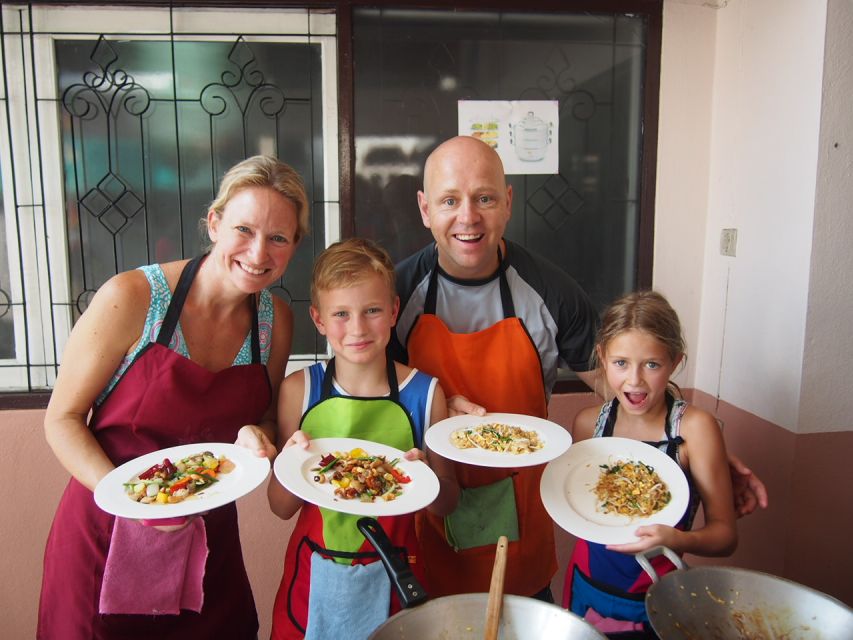
Book this class if you want more than a quick pad Thai lesson. The market, home kitchen, flexible menu, individual cooking stations, and recipe book create a full introduction to Thai food for $36.
My best advice is to book it early in your Chiang Mai stay, arrive very hungry, and choose at least one northern Thai dish such as Khao Soi. If you need strict timing, have complex dietary restrictions, or prefer a formal cooking school, check the details carefully first. For most food-minded visitors, though, this is a warm, practical, and unusually filling way to spend half a day.
FAQ
How long does the cooking class last?
The activity is advertised as lasting five hours. The morning session is scheduled from 9 a.m. to 1:30 p.m., and the afternoon session runs from 3:30 p.m. to 8:30 p.m.
Is hotel pickup included?
Yes. Pickup and drop-off are included for hotels within 3 kilometers of Chiang Mai’s old city. You should wait in the hotel lobby or pickup place 10 minutes before the scheduled time.
How many people can join the class?
The class is limited to 10 participants, making it a small-group activity.
What dishes can I choose?
You can choose one stir-fried dish, one soup, one appetizer, one curry paste, and one curry. Options include Pad Thai, Tom Yum, spring rolls, green curry paste, Panang curry, and Khao Soi. Everyone also makes sticky rice with mango.
Is the class suitable for vegetarians or people with allergies?
Dietary requests, food allergies, vegetarian choices, and other special requests can be accommodated when arranged in advance. Tell the provider about your needs before the class.
Is the market visit included?
Yes. The class includes a visit to a local market where you explore ingredients used in the cooking lesson and learn about local shopping.
What is included besides the cooking lesson?
The price includes the market visit, drinking water, tea, coffee, hotel pickup and drop-off within the stated area, the cooked meal, and a recipe book.
More Hands-On Workshops in Chiang Mai
- Half-Day Thai Cooking Class at Organic Farm in Chiang Mai
★ 5.0 · 19,087 reviews - Thai and Akha Cooking Class in Chiang Mai
★ 5.0 · 4,358 reviews - Chiang Mai: Cooking Class with Organic Farm at Mama Noi
★ 4.9 · 1,151 reviews - Cooking Class with Organic Farm in Chiang Mai at Mama Noi
★ 5.0 · 502 reviews
More Shopping Trips in Chiang Mai
- Chiang Mai: Morning Cooking Class with Market Visit
★ 4.9 · 81 reviews - Chiang Mai: Traditional Thai-Akha Cooking Class& Market Tour
★ 5.0 · 25 reviews - Chiang Mai: Half Day Evening Cooking Class with Market Tour
★ 4.9 · 19 reviews - Chiang Mai: Half Day Morning Cooking Class with Market Tour
★ 4.9 · 10 reviews
Just added around Chiang Mai
- Chiang Mai: Local Northern Thai Cooking Class at Grandma’s★ 5.0 · 33 reviews
- Chiang Mai: Half Day Morning Cooking Class with Market Tour★ 4.9 · 10 reviews
- Half-Day Thai Cooking Class on a Local Farm Near Chiang Mai★ 4.9 · 32 reviews
- Chiang Mai: Half Day Cooking Class at Organic Farm★ 4.8 · 96 reviews
- Full Day Thai Cooking Class in Organic Farm and Market★ 5.0 · 3 reviews
- Chiang Mai: Traditional Thai Cooking Class with Market Tour★ 4.8 · 137 reviews
- Chiang Mai: Traditional Thai-Akha Cooking Class& Market Tour★ 5.0 · 25 reviews
- Chiang Mai: Morning Cooking Class with Market Visit★ 4.9 · 81 reviews
Cooking Classes with a Market Tour, compared.
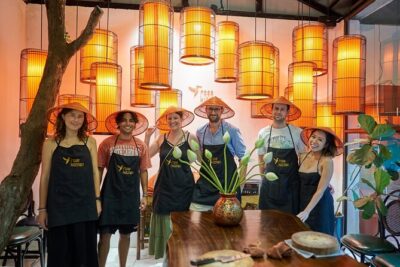
Hanoi Cooking Class: Culture, Local Market & Meaning CSR Impact
Read our review →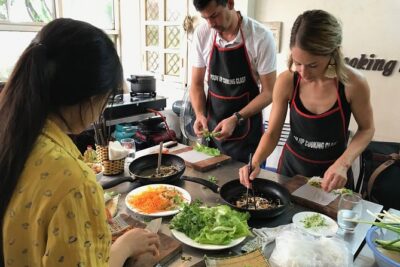
5 Traditional Dishes Hanoi Cooking Class with Market Trip
Read our review →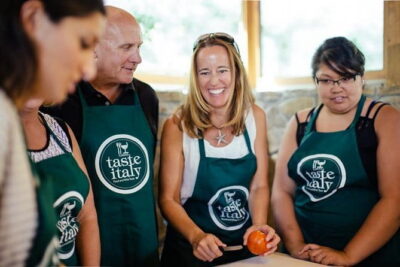
Cooking Class and Lunch at a Tuscan Farmhouse with Local Market Tour from Florence
Read our review →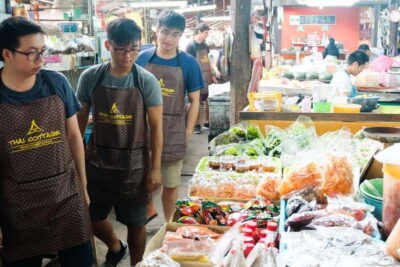
Chiang Mai: Cooking Class, Market & Thai Herbs Garden Tour
Read our review →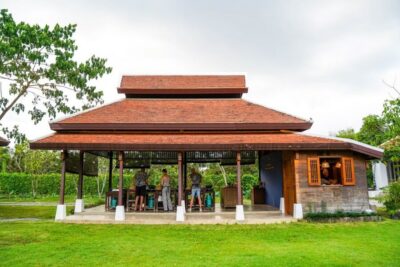
Chiang Mai: Authentic Cooking Class with Market & Farm Visit
Read our review →
Barcelona: Paella Cooking Experience & Boqueria Market Tour
Read our review →
Cooking Class Hoi An:Local Market, Basket Boat, Fishing & Cooking
Read our review →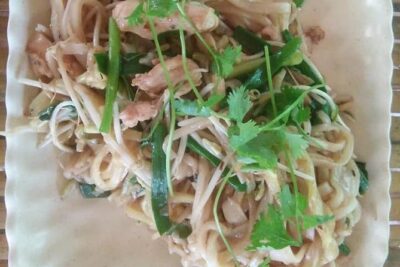
Hoi An Cooking Class(Market,BasketBoat Crabfishing&Cooking Class)
Read our review →Browse the lists this tour appears in