
Review · MOROCCAN
Join Best Moroccan Cooking Class with Chef Khadija ( Over 35 years Experience )
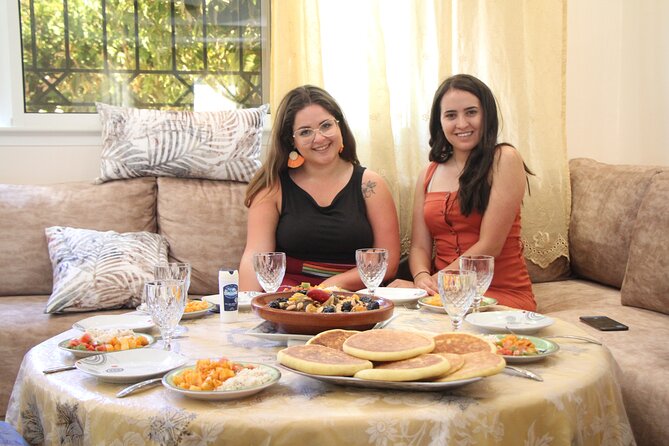
The best part of this Rabat experience is that you cook in Chef Khadija’s traditional villa home, not in a polished hotel kitchen built for tourists. You begin with mint tea and homemade sweets, then move into the kitchen to prepare tagine, breads, couscous, and vegetable dishes under her guidance.
I like the personal scale, with a maximum of six people, and I like the practical touches: Khadija provides paper for notes, shares the cooking steps, and may offer takeout containers for leftovers. One consideration is the timing and group-size information, which varies slightly: the class is listed at about two and a half hours, while the advertised schedule runs from 10:30am to around 2pm and some sessions last three and a half to four hours.
Key Points Before You Book
- Cook in a family home: The setting is a traditional Moroccan villa in Agdal Riyad, Rabat, with tea, sweets, and a warm household welcome.
- Learn from Chef Khadija: She has more than 35 years of cooking experience and teaches dishes such as chicken tagine, couscous, pastilla, batboute bread, and vegetable salads.
- Menus can be adjusted: Vegetarian and vegan meals are available, and you can discuss your preferred menu before cooking.
- Small groups keep it personal: The activity lists a maximum of six people, although another description says groups of up to eight, so confirm the final size when booking.
- Plan extra time: The advertised class lasts about two and a half hours, but the full visit can run longer, especially when several dishes are prepared.
- Expect a local address: The meeting point is by Mosquée Sheikh Saif on Avenue As Sanaobar in Agdal Riyad. A taxi may be the simplest way to reach the villa.
A Moroccan Meal Begins with Tea and Sweets
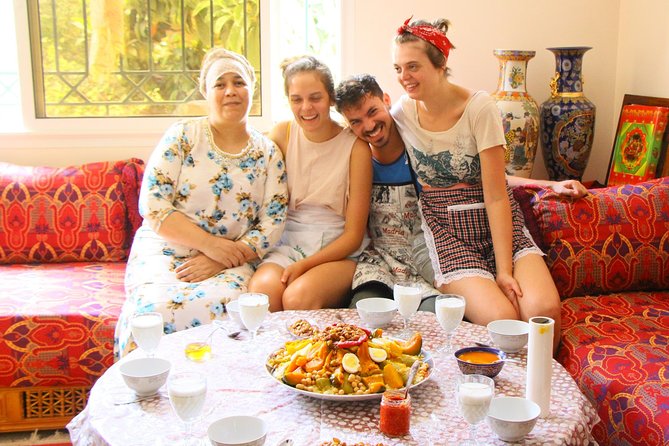
Chef Khadija’s class starts in the most Moroccan way possible: with sweet green mint tea and small sweets in her home. This first pause matters. It gives you time to meet Khadija, discuss the food, and settle into the rhythm of a household rather than rushing straight to a work station.
The tea is not just a drink before the activity. Moroccan tea is part of the welcome, and the class uses it to set a friendly, informal tone. You may also meet members of Khadija’s family, including her son or sister, depending on the day.
The home setting is one of the strongest reasons to choose this class. You get a glimpse of how hospitality works in Morocco, and the meal feels connected to a real family kitchen. The trade-off is that this is not a formal culinary school. The space may feel less structured than a purpose-built cooking studio, and Khadija may do much of the work when the menu is large.
If you want to take photographs or short videos, you are welcome to do so. Ask before photographing family members, and keep your phone out of the way when knives, hot pans, or simmering tagines are in use.
More Moroccan Cooking Classes in Morocco:
- Marrakech: Moroccan Cooking Class with Pickup
★ 4.6 · 1,862 reviews - Marrakech: Traditional Moroccan Cooking Class & Market Visit
★ 4.8 · 1,861 reviews - Marrakesh: Moroccan Dishes Cooking Class with a Local Chef
★ 5.0 · 1,615 reviews
Choosing Between Tagine, Couscous, Pastilla, and More
The menu is discussed before cooking if it has not already been arranged. That flexibility is useful because Moroccan food covers several very different styles.
A chicken tagine is one of the most common choices. It may be served with breads and vegetable sides, and the class can include two accompaniments such as zaalouk, a cooked eggplant dish. Batboute, a soft Moroccan bread, is another popular lesson. Making bread adds a hands-on element that you do not get from simply watching a tagine simmer.
Couscous offers a different lesson. One described menu combines beef with zucchini, pumpkin, caramelized onions, almonds, and dates. That gives you a chance to see how sweet and savory flavors work together, as well as how vegetables are arranged and served.
Pastilla is a more involved choice. Its layered pastry and detailed preparation make it appealing if you want a special-occasion Moroccan dish, but it may require more time and attention than a simple lunch menu. Ask Khadija what can realistically be prepared during your session.
Vegetarians and vegans can be accommodated. The useful step is to discuss this before arrival rather than waiting until the cooking begins. You can also ask for a particular dish you have enjoyed in Morocco, such as zaalouk, and see if it can be included.
Because ingredients and recipes are not fixed in the information provided, do not assume that every menu includes every dish. Confirm the main course, side dishes, bread, and dessert or tea service before booking.
What You Actually Do in the Kitchen
This is a participatory class, but it is not a strict demonstration where you prepare every part alone. You will help wash, peel, chop, mix, and prepare ingredients, then follow Khadija’s directions as the meal comes together.
The amount of hands-on work depends on the menu and the size of the group. When several dishes are prepared, Khadija may handle the main cooking while you assist with preparation. That is not a flaw if you want a relaxed introduction to Moroccan food, but it matters if you are seeking an intensive professional course.
Several practical details make the lesson more useful at home. Khadija provides paper and a pencil or pen so you can record measurements and steps. One especially helpful detail is her explanation of local measurements, including what a half tea cup means when used for liquid ingredients.
Her teaching style is warm and patient. English may be limited, but the class can still work through demonstration, repetition, and simple instructions. On some occasions, her sister Marla has helped with English. If precise language instruction is important to you, ask about translation support when you reserve.
The cooking also has a family feel. Khadija is described as a caring and humorous host, and children have been welcomed during the activity. A child who enjoys chopping, mixing, or watching bread and tagine preparation may find this more engaging than a standard sightseeing stop.
Why the Home Setting Matters
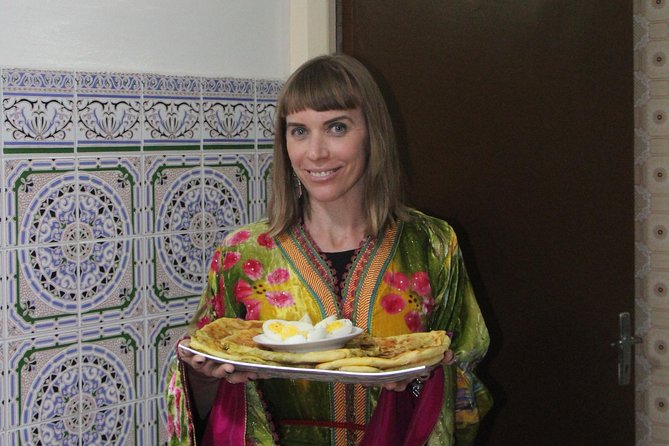
Rabat has plenty of restaurants where you can order Moroccan food, but a cooking class gives you a better idea of how the dishes are built. You see the vegetables being seasoned, the bread being shaped, and the meal being assembled in stages.
A home kitchen also changes the pace. You may pause for tea, ask questions, watch a family member pass through the room, or learn a small household tip that would never appear on a fixed restaurant menu. The experience is social as well as culinary.
The setting is a traditional villa in the Agdal Riyad area. The meeting point is given as Mosquée Sheikh Saif, Avenue As Sanaobar, with the location code X45C+832. The activity ends back at the same meeting point.
The address is relatively easy to reach by taxi, and the area is near public transportation. Still, I would allow time to find the exact entrance. A meeting point beside a mosque and a villa address may not feel as obvious as a hotel lobby, so keep the confirmation details handy on your phone.
More Hands-On Workshops in Morocco:
- Moroccan Cooking Class & Marrakech Market Visit with Chef Khmisa
★ 5.0 · 1,504 reviews - Half-Day Cooking Class with Local Chef Laila in Marrakech
★ 5.0 · 952 reviews - Marrakech: Moroccan Cooking Class with a Local Family
★ 4.9 · 668 reviews - Marrakech: Moroccan Cuisine Cooking Class in Local Home
★ 4.8 · 508 reviews
Eating What You Prepare
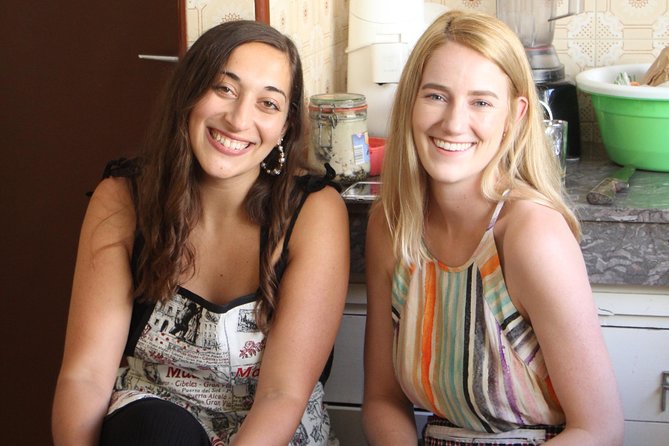
The final meal is the reward, but it is also where the class makes sense. After preparing the dishes, you sit down to eat Moroccan food that you have helped make.
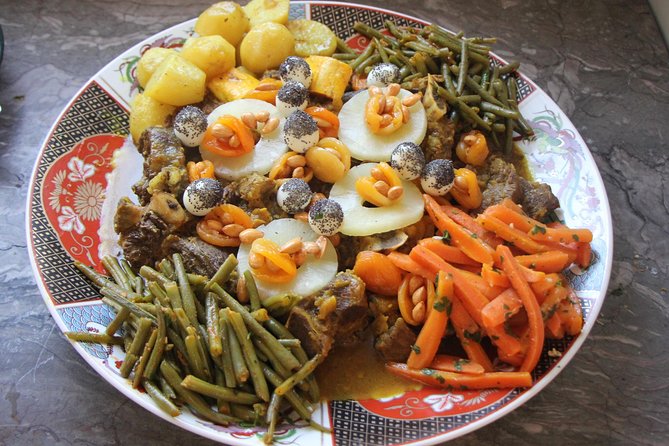
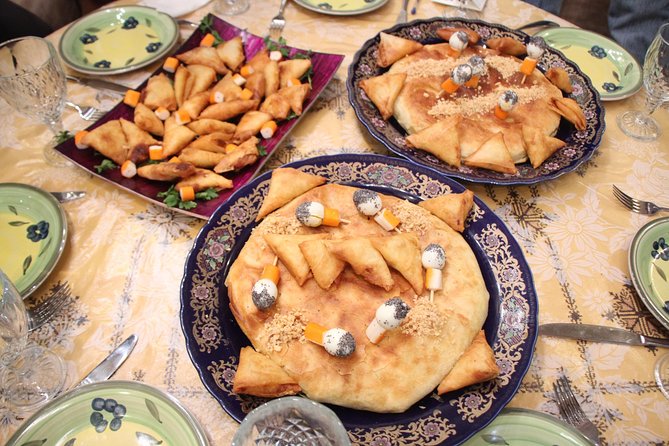
The food described in the experience includes chicken tagine, breads, vegetable sides, couscous, beef, pumpkin, zucchini, carrots, sweet potatoes, caramelized onions, almonds, dates, and eggplant. The exact combination depends on your chosen menu.
The vegetable dishes receive particular attention. Moroccan cooking can make simple produce the center of the meal, with spices and slow cooking doing much of the work. Zucchini, green beans, carrots, sweet potatoes, and eggplant can all become memorable side dishes rather than filler around the main course.
You may also receive containers for leftovers. That is a thoughtful detail, especially if your group prepares a large meal or if the class lasts longer than expected. Confirm whether containers are available on your date, since household arrangements can vary.
One small point is worth knowing: the meal may not always be a shared sit-down occasion with Khadija. Her role as cook and host can keep her busy, and one account notes that she did not eat with the group. If sitting down with your host is essential to you, ask about this in advance.
Timing, Group Size, and the Shape of the Day
The class is offered every day, with starting times listed at 10:30am and 3pm. The morning session is described as beginning around 10:30am and finishing near 2pm, which makes it suitable for lunch.
The stated duration is approximately two hours and thirty minutes. In practice, the full visit may take three and a half to four hours when tea, preparation, cooking, conversation, and the final meal are included.
I would not schedule a museum visit or train immediately afterward. The class is meant to be enjoyed at an easy pace, and the cooking time depends on the menu. Pastilla, several side dishes, bread, and a main course will naturally take longer than one simple tagine.
The published capacity also needs a quick check. The additional information gives a maximum of six people, while the description says you can attend alone or with a group of up to eight. The safest assumption is that the operating limit may depend on the booking arrangement. Ask for the confirmed group size if privacy or quiet instruction matters to you.
A small group should give you more chances to ask questions and handle ingredients. A solo booking can be especially appealing if you want to focus on a particular menu, though the price is still charged per person.
Is $52.34 Good Value?
At $52.34 per person, this is not the cheapest way to eat lunch in Rabat. A restaurant meal costs less, and you could buy prepared Moroccan food without spending several hours on the activity.
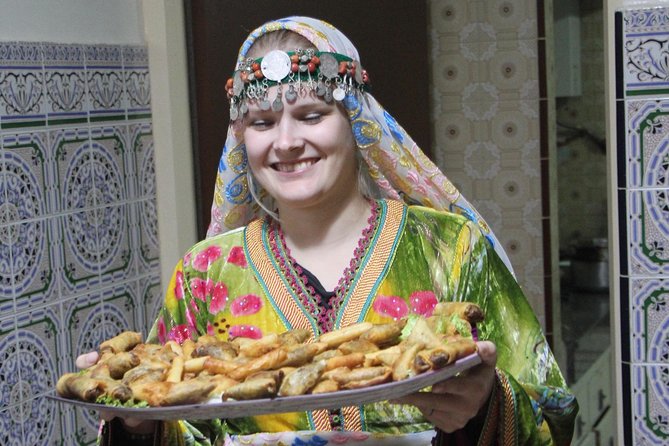
The value comes from what is included beyond the plate. You get a home welcome, tea and sweets, cooking instruction, hands-on preparation, a full meal, written notes, and the chance to ask how to repeat the recipes. You also get an experience based in a local home rather than a commercial dining room.
The price makes the most sense for people who want to carry a piece of Morocco home with them. A restaurant gives you flavor. This class can give you a method, a measurement, and enough confidence to try tagine, bread, couscous, or zaalouk in your own kitchen.
It is also good value for families and small groups who enjoy food-based activities. Children can take part, and the relaxed atmosphere may work better than a long guided walk for younger visitors.
The value is weaker if you want advanced culinary training or a tightly timed professional lesson. Khadija may prepare much of the food herself, and the level of instruction can vary with the menu, language, and group size. Think of it as a warm home cooking lesson with a shared meal, not chef certification.
Who Should Book This Rabat Cooking Class?
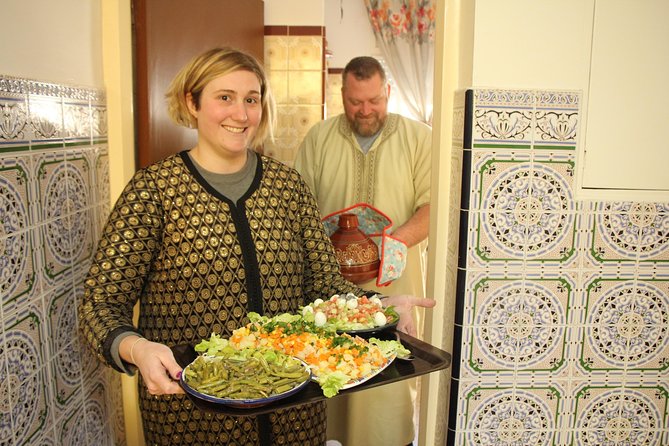
I would choose this experience if you want to understand Moroccan food through a local household. It suits first-time visitors who want more than restaurant meals, home cooks who like to collect recipes, and families looking for an activity that works across age groups.
It is also a good fit for solo visitors. One person can attend, ask focused questions, and choose a menu that matches personal interests. If you are traveling alone, the family setting can also make the experience feel more social.
Vegetarians and vegans should consider it, provided the menu is arranged ahead of time. The ability to customize the meal is a real advantage, though you should confirm exactly what will be prepared.
I would hesitate if your schedule is extremely tight, if you dislike home-based activities, or if you expect to do every cooking step yourself. The class is informal and flexible, which is part of its charm, but that also means it will not feel as standardized as a cooking school.
You can check Chef Khadija’s Instagram at food-yazane before booking. That may help you see the style of dishes being prepared and decide what you would like to request.
Cancellation and Practical Booking Notes
Confirmation is provided at booking, and free cancellation is available if you cancel at least 24 hours before the start time. Changes or cancellations made within 24 hours are not refundable.
The activity requires a minimum number of participants. If that minimum is not met and the session is canceled, you will be offered another date or experience, or receive a full refund.
Bring comfortable clothing suitable for kitchen work. Khadija has provided aprons and even spare shoes on some occasions, but do not assume those items are guaranteed. Wear something you can move in, and tell the host about dietary needs before the class begins.
Should You Book Chef Khadija’s Class?
Yes, if your priority is personal contact, home cooking, and practical recipes rather than a polished classroom. Chef Khadija’s long experience, family welcome, flexible menus, and generous meal make this one of the more personal food activities in Rabat.
Book it with realistic expectations. You may help rather than lead every stage, the class may run longer than the stated two and a half hours, and language support may vary. Confirm the menu, timing, and group size before you go.
For a visitor who wants to taste Morocco and then recreate it at home, the combination of mint tea, tagine, bread, vegetable dishes, written notes, and a family kitchen is worth the time and price.
FAQ
Where does the cooking class take place?
The class takes place in Chef Khadija’s traditional villa home in Rabat. The meeting point is at Mosquée Sheikh Saif on Avenue As Sanaobar, X45C+832, in Agdal Riyad, Morocco.
How long does the class last?
The listed duration is about two hours and thirty minutes. The morning session is described as running from around 10:30am until 2pm, and some sessions may last three and a half to four hours.
What time can I attend?
Sessions are available every day with starting times listed at 10:30am and 3pm.
Can vegetarians and vegans join?
Yes. Vegetarian and vegan menus can be arranged, but you should discuss your dietary preference and menu choice before the class.
What dishes might I learn to prepare?
Possible dishes include chicken tagine, couscous, pastilla, batboute bread, zaalouk, other vegetable sides, beef with vegetables, and dishes featuring pumpkin, carrots, sweet potatoes, almonds, dates, or caramelized onions. The exact menu should be confirmed before arrival.
How many people can join?
The activity information lists a maximum of six people, while the main description allows groups of up to eight. Confirm the final group size when booking if this is important to you.
Just added around Morocco
- Small Group Cooking Classes with Tour of Rabat old medina★ 4.5 · 8 reviews
- Rabat Family Cooking Class★ 5.0 · 43 reviews
- Rabat Restaurant Cooking Class★ 5.0 · 3 reviews
- Private Berber Cooking Class at Fint Oasis with Lunch★ 5.0 · 4 reviews
- Mezouga cooking class★ 5.0 · 3 reviews
- Vegetarian and vegan cooking class★ 4.5 · 35 reviews
- Moroccan Cooking Class with Market Visit and Meal★ 4.5 · 18 reviews
- Moroccan cooking class with maket in the Medina of Marrakech★ 5.0 · 173 reviews
Moroccan Cooking Classes, compared.
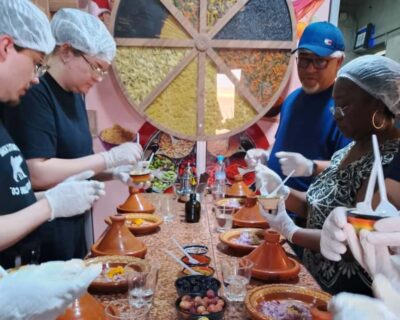
Marrakech: Moroccan Cooking Class with Pickup
Read our review →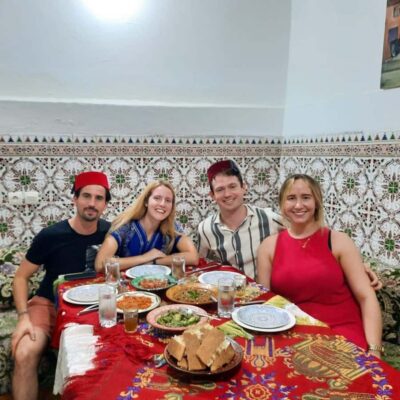
Marrakech: Traditional Moroccan Cooking Class & Market Visit
Read our review →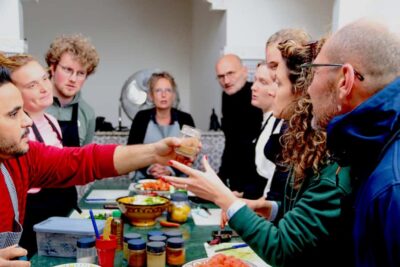
Marrakesh: Moroccan Dishes Cooking Class with a Local Chef
Read our review →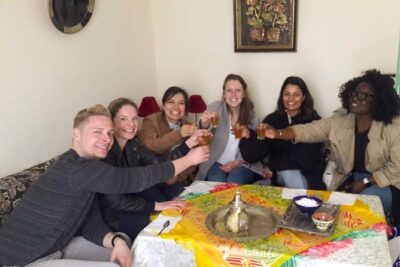
Moroccan Cooking Class & Marrakech Market Visit with Chef Khmisa
Read our review →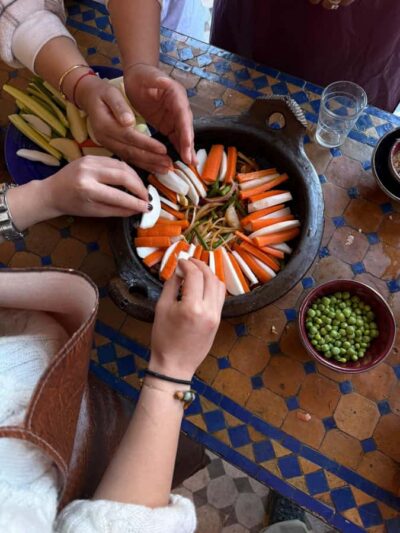
Marrakech: Moroccan Cooking Class with a Local Family
Read our review →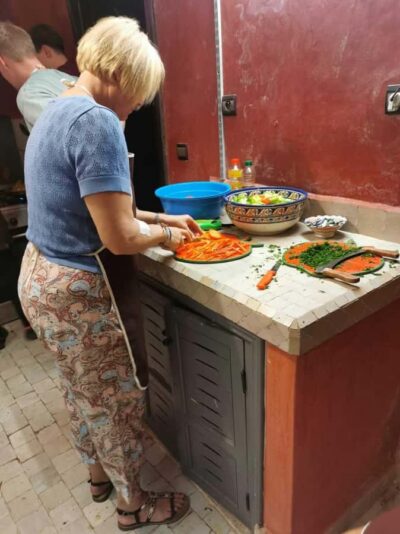
Marrakech: Moroccan Cuisine Cooking Class in Local Home
Read our review →
Marrakech: Moroccan Cooking Workshop at La Maison Arabe
Read our review →
Marrakech: Tajine Cooking Class in a Traditional Riad
Read our review →Browse the lists this tour appears in