
Review · MOROCCO
Rabat Restaurant Cooking Class
Rabat’s best food lesson starts before the stove. You walk through the old local market with a restaurant chef, choose fresh ingredients, and then use them to prepare a three-course Moroccan lunch. That market visit gives the cooking real context instead of treating Moroccan food as a set of disconnected recipes.
I like the hands-on format and the small, private setting. I also like the family-style feel described by a past participant, including tagine cooked on a stovetop and served from the tagine at the table. The main consideration is timing: this is a three-hour activity beginning at 11:00 am, so it takes up most of your lunch period and does not include transportation.
Key points to know before booking
- The souk visit comes first: Shop for the ingredients with the chef and guide before cooking begins.
- You prepare three courses: The lesson is built around a full Moroccan lunch, not a single demonstration dish.
- A restaurant chef leads the cooking: The chef is from Dar El Medina in Rabat.
- The meal is part of the lesson: After cooking, you eat what you prepared and choose coffee or Moroccan mint tea with cookies.
- This is a private activity: Only your own group participates, which makes it easier to ask questions and work at a comfortable pace.
- The meeting point is central: Begin at Station Tramway Bab Chellah on Avenue Hassan II at 11:00 am, then return there at the end.
Starting at Bab Chellah at 11:00 am
Your morning begins at Station Tramway Bab Chellah on Avenue Hassan II. The meeting point is important because this is a walking-and-cooking activity, not a hotel pickup tour. You need to make your own way there, and transportation is not included.
The start time works well for a lunch-focused outing. You will first visit the market, then cook, then eat. If you have another major activity scheduled for early afternoon, allow some breathing room. The stated duration is about three hours, but cooking with a group can sometimes take a little longer than a tightly timed demonstration.
The private format is one of the strongest practical features. Only your group participates, so you are not trying to see over a crowded counter or wait for several unrelated groups to finish chopping. You can ask about ingredients, cooking customs, and techniques as they come up.
More Dining Experiences in Morocco:
- Pasta Making & Wine Tasting with Dinner in Frascati from Rome
★ 5.0 · 1,326 reviews - Rome: Pasta Making with Wine Tasting and Dinner in Frascati
★ 4.9 · 979 reviews - Palermo: Pizza and Gelato Cooking Class with Dinner and Wine
★ 4.9 · 951 reviews
Shopping for lunch in Rabat’s old market
The first part takes place in the old local market. You walk with the chef and guide while shopping for the fresh products needed for the meal. This is more useful than simply receiving a prepared basket of ingredients because you see how the cooking begins at the point of purchase.
The guide explains the activities and discusses Moroccan culinary customs along the way. That matters because food shopping is part of daily life, not just a prelude to the class. You get a better sense of how a Moroccan meal is assembled, what ingredients are selected, and why freshness matters.
The market visit also solves a common problem. Finding a cooking class is easy in many cities; arranging a market visit, translating food choices, buying the right quantities, and getting back to a kitchen on time is harder. Here, those pieces are organized for you.
Do not expect the souk portion to be a long sightseeing tour. Its purpose is practical: buy what you need, understand the ingredients, and move on to the kitchen. If you are most interested in food rather than shopping, that focused approach should suit you.
Cooking three Moroccan courses with a Dar El Medina chef
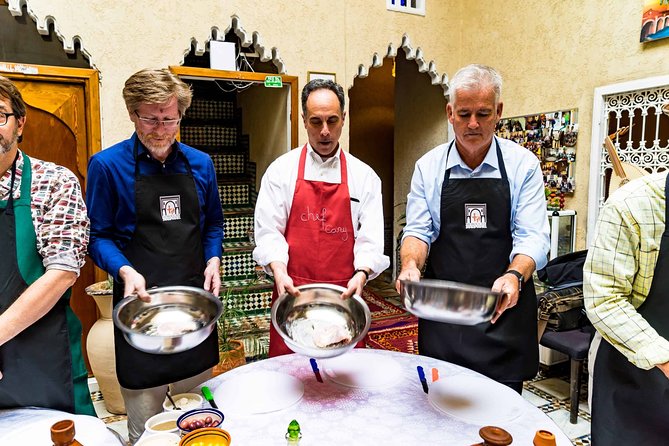
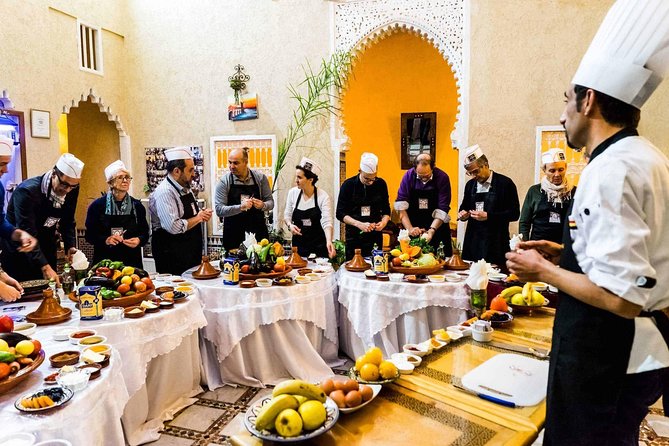
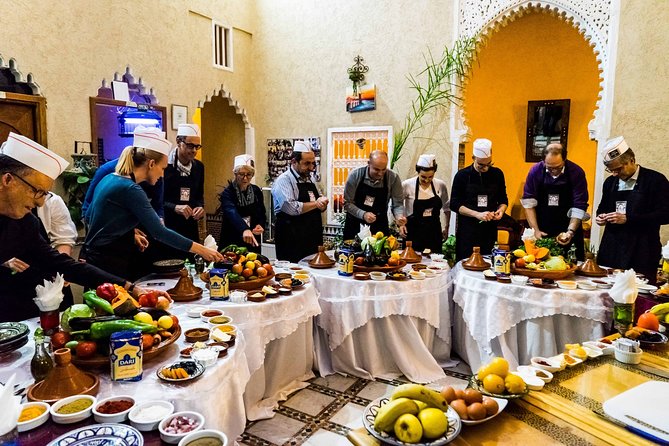
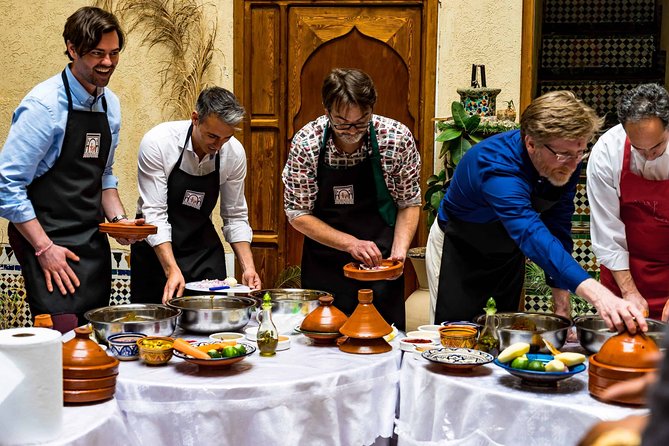
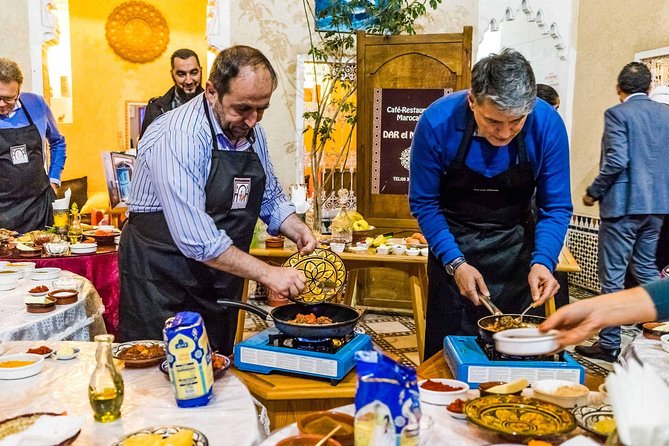
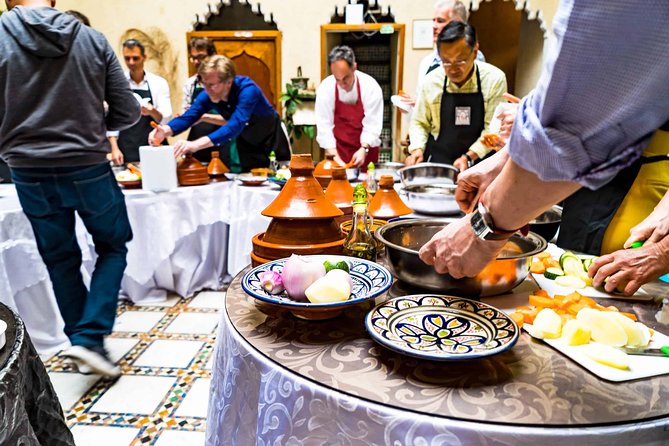
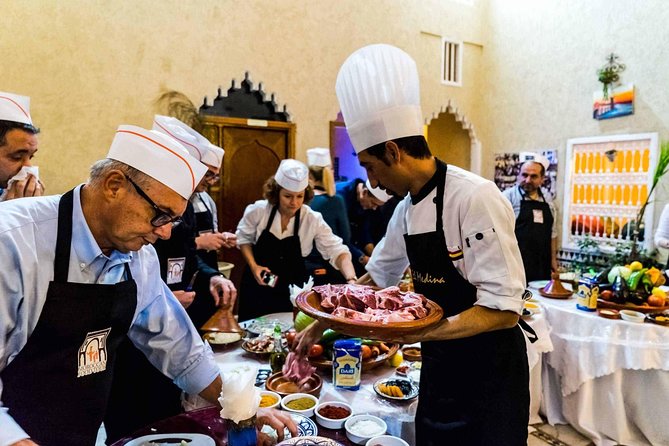
After the market, you take the ingredients to the kitchen and begin cooking with the chef from Dar El Medina, a restaurant in Rabat. The format is interactive, with hands-on practice and time for questions. You are not simply watching someone prepare lunch while you sit back with a notebook.
The exact dishes are not specified in the available information, so you should not book this expecting a named menu. What is clear is that the class covers three courses and ends with the meal you helped prepare. The focus is on learning the process and customs rather than checking off one famous Moroccan dish.
One especially useful detail is the reference to tagine cooking on a stovetop. You may work with tagine in that style, and the finished food may be served in the tagine at the table. That is a practical point for anyone hoping to recreate the meal at home, though you should not assume the same menu or exact cooking method is guaranteed every time.
The chef-led structure should appeal to cooks at different levels. If you already cook often, you can ask about technique and seasoning. If you rarely cook, you still get direct guidance rather than being left to guess what to do next. Because the activity is private, the pace can be more comfortable for your group than a large public class.
The class is also a good choice for people who care about the connection between food and culture. Culinary customs are discussed as part of the activity, so the lesson is not limited to measurements and cooking times. You learn why the food is prepared and served in a particular way.
Sitting down to the lunch you prepared
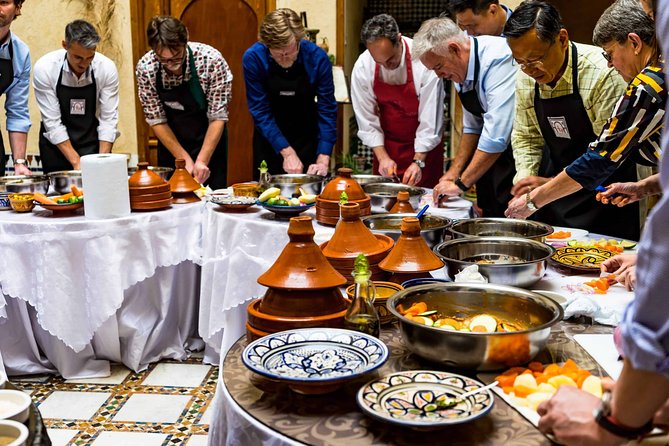
The most satisfying part comes after the work. You sit down to eat the three-course meal, with lunch included in the price. The meal gives the class a clear purpose: you are not practicing a dish only to watch it disappear into someone else’s kitchen.
A past participant described a family-style welcome, stories about food, and moist, flavorful tagine served on the table in its cooking vessel. That points to the personal character this experience can have. Still, the host arrangement and menu may vary, so treat that warm home-style atmosphere as a possibility rather than a promise of a specific household setting.
The meal is also where you can judge the class as a practical experience. A good cooking lesson should leave you with more than photographs. You should come away understanding how the dishes were built, what ingredients mattered, and how the meal was presented.
The included bottled water is a small but useful touch, especially after walking through the market and spending time near the stove. Snacks are also included, along with coffee and/or tea.
More Hands-On Workshops in Morocco:
- Marrakech: Moroccan Cooking Class with Pickup
★ 4.6 · 1,862 reviews - Marrakech: Traditional Moroccan Cooking Class & Market Visit
★ 4.8 · 1,861 reviews - Marrakesh: Moroccan Dishes Cooking Class with a Local Chef
★ 5.0 · 1,615 reviews - Moroccan Cooking Class & Marrakech Market Visit with Chef Khmisa
★ 5.0 · 1,504 reviews
Moroccan mint tea, coffee, and cookies
After lunch, you choose between coffee and Moroccan mint tea, with cookies served alongside. The tea service gives the experience a proper closing rather than ending immediately after the last course.
If you want the most distinctly Moroccan finish, choose the mint tea. Coffee is available for people who prefer it, so you are not locked into one drink. Alcoholic drinks are not included, and none are promised as part of the activity.
This final pause is useful for questions. Once you have eaten the food, it is easier to discuss what you made, how the ingredients were selected, and what you might change when cooking at home. The cookies add a simple sweet note without turning the activity into a separate dessert class.
What the $69.30 price includes
At $69.30 per person, the cost covers more than a cooking demonstration. You are paying for the chef’s instruction, the market accompaniment, the ingredients used for the class, lunch, snacks, bottled water, coffee or tea, and all fees and taxes.
The value depends on what you want from a food activity. If you only want to eat a Moroccan meal, a restaurant will likely be a simpler option. If you want market access, instruction, conversation, and a private meal built around your own work, the price is easier to justify.
The private format adds value for couples, families, and small groups. You are not paying for a large class filled with people you do not know, and you have more room to ask questions. The price is less attractive for a solo visitor who is mainly looking for a quick lunch, since the activity lasts about three hours.
The food itself is part of the cost, but the bigger value is the connection between shopping and cooking. You see the ingredients before they are prepared, then take part in turning them into lunch. That sequence makes the price feel more reasonable than a standard meal with a short kitchen presentation.
The booking pattern suggests planning ahead. This activity is booked an average of 24 days in advance, so last-minute availability may be limited. If the date matters, reserve earlier rather than assuming you can arrange it after arriving in Rabat.
Who will enjoy this Rabat food experience most
This class suits you if you enjoy learning by doing. It is also a good fit if you want an introduction to Moroccan cooking without spending a full day on a formal culinary course.
Families can benefit from the private setup, especially if children or beginners need a slower pace. Couples and small groups may like the shared meal at the end. Food-focused visitors get both the market and the kitchen, while first-time visitors to Rabat get a guided introduction to local food customs.
You may want to choose another activity if you dislike market shopping, cannot spend three hours on a midday program, or need transportation included. The activity starts and ends at the listed meeting point, so you must plan your own route.
The unspecified menu is another small uncertainty. If you need to learn a particular dish, ask about the menu before booking. The information confirms three courses and Moroccan cooking, but it does not name the recipes.
Practical details that affect your day
Confirmation is provided at booking, and the ticket is mobile, so you can show it from your phone. The experience is private and returns to the same meeting point at Station Tramway Bab Chellah.
Free cancellation is available up to 24 hours before the 11:00 am start for a full refund. Changes or cancellations made less than 24 hours before the start are not accepted for a refund. The activity also requires a minimum number of participants. If that minimum is not reached and the provider cancels, you are offered another date or experience, or a full refund.
Plan to arrive with enough time to find the station and meet the group. Wear something comfortable for walking and cooking, though the supplied information does not specify a dress code or kitchen requirements. Since transportation is not included, check your route to Avenue Hassan II before the morning begins.
The experience currently has a 5 out of 5 rating from three posted ratings. The strongest praise centers on the personal welcome, food stories, stovetop tagine, and the pleasure of eating a meal prepared during the class. Those details make the activity sound more personal than a simple cooking show, but the small number of ratings means you should keep expectations sensible.
Should you book the Rabat Restaurant Cooking Class?
Book it if you want to understand Moroccan food through the full chain of events: market shopping, preparation, cooking, and lunch. The private format, restaurant chef, three-course meal, and tea service make this a useful choice for people who value contact and participation over a quick photo stop.
Skip it if you want a short food tasting, a named recipe guaranteed in advance, or transportation from your hotel. At $69.30, it is best value for someone who will take part fully and ask questions, not someone who simply wants to eat.
For most food-minded visitors with a free morning and early afternoon in Rabat, this is a sensible booking. Reserve ahead, meet at Bab Chellah on time, and think of the meal as the final lesson rather than the only reason to go.
FAQ
Where does the Rabat cooking class begin?
The activity begins at Station Tramway Bab Chellah on Avenue Hassan II in Rabat, Morocco.
What time does the experience start?
The start time is 11:00 am.
How long does the cooking class last?
The experience lasts approximately three hours.
Where does the activity end?
The activity ends back at the meeting point at Station Tramway Bab Chellah.
Is the cooking class private?
Yes. Only your group participates in this private activity.
Who leads the cooking lesson?
A professional restaurant chef from Dar El Medina in Rabat leads the cooking lesson.
Does the experience include a market visit?
Yes. You visit the old local market with the chef and guide to shop for the ingredients needed for the meal.
How many courses do you prepare?
You prepare a three-course Moroccan lunch.
Are lunch and drinks included?
Lunch, snacks, bottled water, and coffee and/or Moroccan mint tea are included. Alcoholic drinks are not included.
Is transportation included?
No. Transportation is not included, so you need to make your own way to the meeting point.
Can you cancel for a full refund?
Yes. You can cancel at least 24 hours before the local start time for a full refund. Cancellations or changes made less than 24 hours before the start are not accepted for a refund.
Just added around Morocco
- Small Group Cooking Classes with Tour of Rabat old medina★ 4.5 · 8 reviews
- Rabat Family Cooking Class★ 5.0 · 43 reviews
- Join Best Moroccan Cooking Class with Chef Khadija ( Over 35 years Experience )★ 5.0 · 56 reviews
- Private Berber Cooking Class at Fint Oasis with Lunch★ 5.0 · 4 reviews
- Mezouga cooking class★ 5.0 · 3 reviews
- Vegetarian and vegan cooking class★ 4.5 · 35 reviews
- Moroccan Cooking Class with Market Visit and Meal★ 4.5 · 18 reviews
- Moroccan cooking class with maket in the Medina of Marrakech★ 5.0 · 173 reviews
Cooking Classes, compared.
Half-Day Thai Cooking Class at Organic Farm in Chiang Mai
Read our review →
Florence: Pasta Cooking Class with Unlimited Wine
Read our review →
3 in 1 Cooking Class near Navona: Fettuccine, Ravioli & Tiramisu
Read our review →
Hanoi Cooking Class: Culture, Local Market & Meaning CSR Impact
Read our review →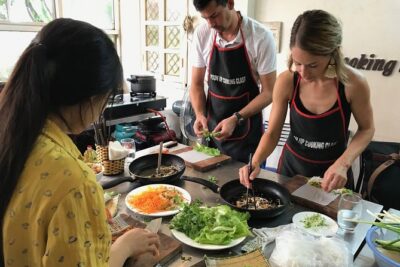
5 Traditional Dishes Hanoi Cooking Class with Market Trip
Read our review →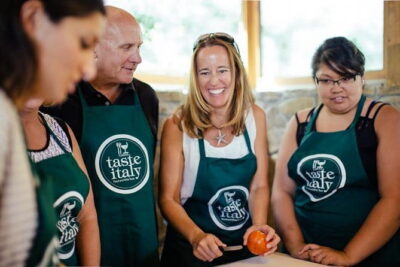
Cooking Class and Lunch at a Tuscan Farmhouse with Local Market Tour from Florence
Read our review →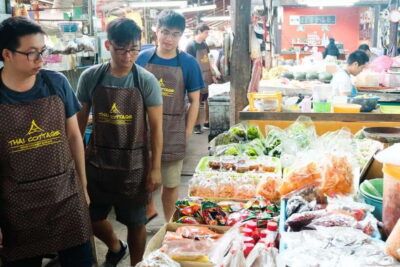
Chiang Mai: Cooking Class, Market & Thai Herbs Garden Tour
Read our review →Browse the lists this tour appears in