
Review · KHAO LAK
Khaolak Elephant Sanctuary, Cooking Class and Waterfall Tour
The heart of this half-day outing is watching elephants and mahouts work together, rather than treating the animals like props. You’ll learn how mahouts read an elephant’s mood, approach carefully, and build trust while the animals remain free to refuse activities.
I like the local market stop and the chance to make herbal vitamin snack balls, which give the tour more purpose than a quick photo stop. I also like the small maximum of 20 people. The main caution is that the title promises a cooking class and waterfall visit, but the detailed schedule describes neither clearly. Also, bathing and feeding are officially not permitted.
Key points to know before you book
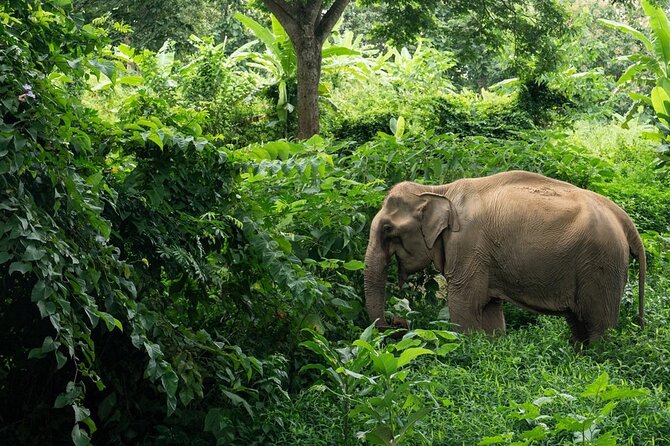
- Mahout-led elephant viewing: Watch how the mahouts communicate with and care for the rescued elephants.
- No bathing or visitor feeding: The stated policy puts animal welfare ahead of hands-on contact.
- Local food shopping: Visit local stores to buy food for the elephants and learn a little about the surrounding community.
- Herbal snack preparation: Help make vitamin snack balls for the elephants before watching them eat.
- Morning pickup and lunch: Hotel collection in Khao Lak is scheduled for 8 am, followed by a buffet lunch at 12:30 pm.
- Check the title carefully: The detailed program does not include a named waterfall stop or a full cooking class.
A more careful kind of elephant encounter
Elephant tourism in Thailand can mean very different things. Some places center on bathing, riding, repeated feeding, or staged photographs. This Khao Lak program takes a different route. You are there to observe the relationship between the elephant and its mahout, the person responsible for the animal’s daily care.
That difference matters. You may get fewer dramatic hands-on photos, but you also get a clearer look at how trust is built. The guide is expected to explain how to approach an elephant, judge its temperament, and notice the animal’s responses. You are not simply told to stand beside a giant animal and smile.
The sanctuary says its rescued elephants are not forced to perform activities they do not want to do. It also says the elephants will not be made to pose for photographs. That is a useful policy for anyone trying to choose an animal visit with care.
The trade-off is simple: you need to be comfortable watching rather than touching. If your main goal is washing an elephant in a river, this is not the right program according to the stated rules.
More Hands-On Workshops in Thailand:
- Half-Day Thai Cooking Class at Organic Farm in Chiang Mai
★ 5.0 · 19,087 reviews - Chiang Mai: Cooking Class, Market & Thai Herbs Garden Tour
★ 4.9 · 4,824 reviews - Chiang Mai: Authentic Cooking Class with Market & Farm Visit
★ 4.9 · 4,546 reviews
The 8 am pickup sets an early pace
Your day begins with hotel pickup in Khao Lak at 8 am. Pickup is included as an option, which makes the tour easier if you do not have your own transport. The activity lasts about four and a half hours, so the morning is full without taking over the whole day.
At the start, your guide gives you a briefing on safety and explains how to act like a mahout. That does not mean you become an elephant handler. It means you learn the basic discipline of moving calmly, approaching with care, and paying attention to the mahout’s instructions.
This briefing is especially important because elephants are large, strong animals with individual moods. Even a calm elephant needs space. The stated rules about no forced activities, no bathing, and no visitor feeding make the safety message easier to understand.
The maximum group size is 20 people. That is not a private tour, but it is more manageable than a large bus group. Your view may depend on where you are standing, so stay close enough to hear the guide while giving the elephants plenty of room.
Changing into a mahout outfit at 9 am
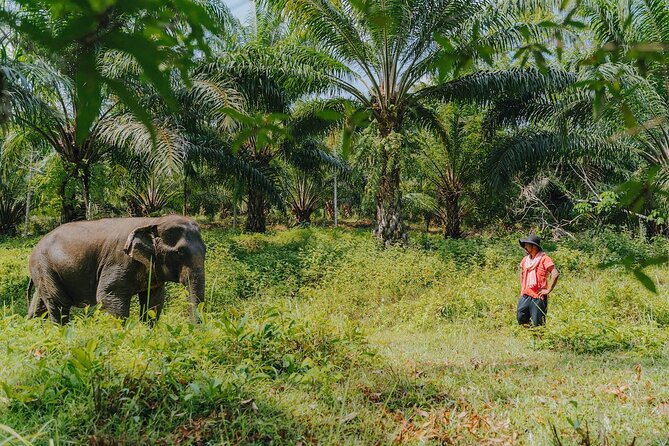
At about 9 am, you visit the mahout’s hut and change into a mahout-style outfit. This adds a bit of ceremony to the morning, and it also marks the point when the elephant portion begins.
After changing, you take a short walk to meet the elephants alongside a real mahout. The useful part here is the explanation of behavior. You are meant to learn how to approach, how to judge temperament, and how the mahout gains trust over time.
Watch the mahout’s body language. Notice how the elephant responds. The value of this section is not a big stunt or a close-up pose. It is the chance to see care as a routine relationship, built through patience and repeated contact.
Photography is allowed, but the sanctuary says it will not force the elephants into positions. Bring your camera, but keep your attention on the animals rather than chasing the perfect picture. The best moments may be quiet ones, such as an elephant reaching for food with its trunk or responding to a familiar mahout.
Buying elephant food at 10:30 am
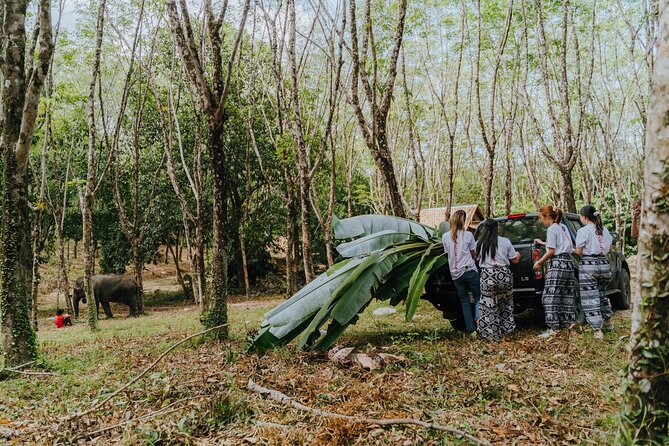
At 10:30 am, the tour moves to local stores to buy food for the elephants. This is a welcome change from a sealed-off animal park. You see that caring for the elephants requires supplies, planning, and contact with the nearby community.
The stop also gives the morning a local angle. You are not only watching an attraction; you are seeing part of the practical work behind it. The details provided do not specify which foods you buy or how much time you spend in the stores, so expect a short community visit rather than a full market tour.
This is a good point to ask your guide questions about the elephants’ diets and daily care. The program specifically focuses on how the mahouts feed and look after the animals, so the food stop should make that lesson more concrete.
If you want a highly active morning, this part may feel modest. Its value comes from context, not entertainment. You get a better sense of what the elephants eat and how the sanctuary prepares for them.
A few more cooking classes around Thailand worth a look
- Thai and Akha Cooking Class in Chiang Mai
★ 5.0 · 4,358 reviews - Phuket Thai Cooking Class with Market Tour Option
★ 5.0 · 2,665 reviews - Bangkok: Hands-on Thai Cooking Class and Market Tour
★ 4.9 · 1,614 reviews - Chiang Mai: Cooking Class with Market and Pickup
★ 4.9 · 1,365 reviews
Making herbal vitamin snack balls at 11:30 am
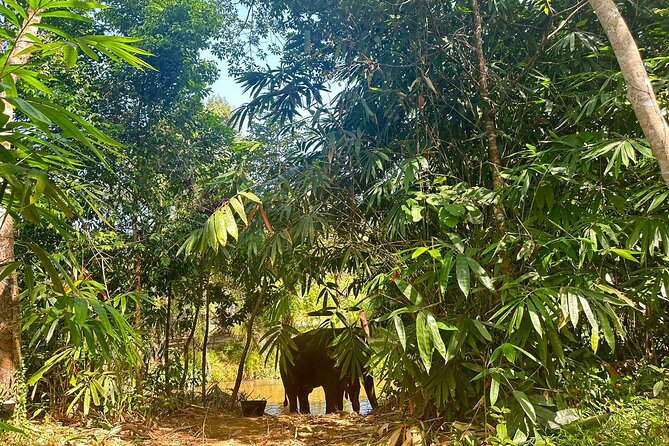
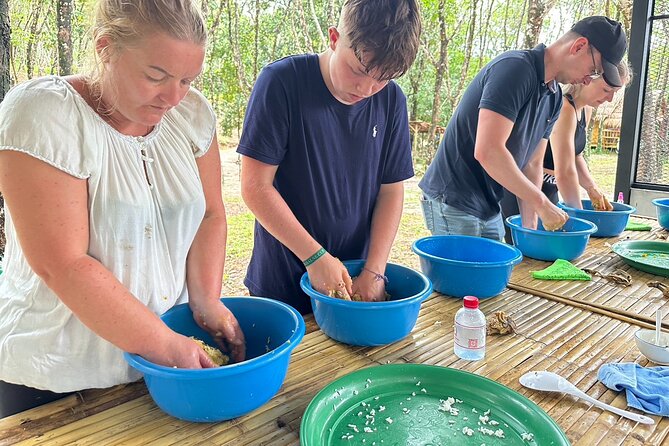
At about 11:30 am, you help prepare food and make herbal vitamin snack balls for the elephants. This is the closest thing in the detailed schedule to a cooking activity.
It is a hands-on task, but it is not described as a Thai cooking class for people. The activity focuses on elephant nutrition. You prepare the snacks, then watch the elephants use their trunks to scoop up the food.
That moment can be surprisingly absorbing. An elephant’s trunk is both powerful and precise, and feeding behavior gives you a good look at how the animals use it. Still, remember the stated rule: visitors are not permitted to bathe or feed the elephants. The published information is inconsistent here, because the tour title and some promotional wording suggest food preparation and feeding, while the additional information says visitor feeding is not permitted.
I would clarify this point before booking. You should expect to help prepare the snack balls and observe the mahouts caring for and feeding the elephants, not assume that you will personally place food in an elephant’s trunk.
The same advice applies to the cooking-class label. The schedule does not set out a Thai meal lesson, recipe, or chef-led class. A separate account connected with the experience refers to learning Pad Thai, but that is not part of the timed itinerary provided here. If a real cooking lesson is important to you, ask the operator what is included on your date.
Lunch at 12:30 pm, then back to Khao Lak
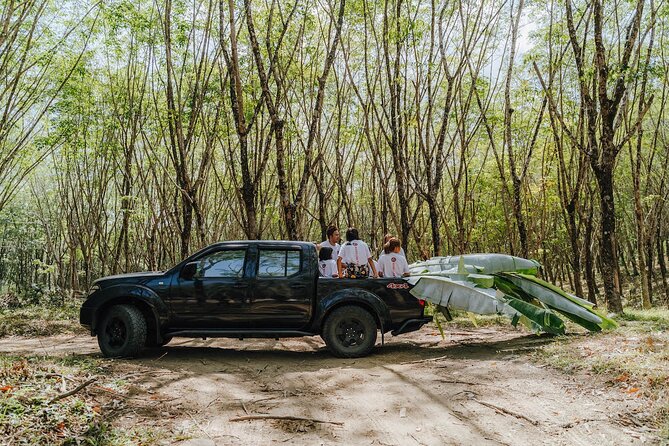
At 12:30 pm, you eat a buffet lunch at the elephant camp. That timing works well after the morning’s activities, and it means you are not left to find food on your own before returning to your hotel.
The details do not list the dishes or dietary arrangements, so ask ahead if you have allergies or special food needs. The word buffet suggests a shared meal rather than a private dining experience. Think of it as a practical finish to the sanctuary visit.
After lunch, you depart for your hotel. The full outing lasts about four hours and 30 minutes, with the listed schedule running from the 8 am pickup through the post-lunch return. Actual timing may depend on pickup routes and conditions.
One important point: despite the tour name, the supplied itinerary lists only Khao Lak as the stop. It does not describe a waterfall visit. If a waterfall is a deciding factor, confirm the route before paying.
Is $126.35 good value?
At $126.35 per person, this is not a budget morning outing. The value depends on what you want from an elephant visit.
You are paying for hotel pickup, a guide, access to the sanctuary, mahout instruction, the local food-shopping stop, snack preparation, elephant observation, and buffet lunch. A maximum of 20 people also helps keep the outing from feeling like a mass attraction.
The strongest value is educational and ethical. You get time to watch the mahouts explain care and communication, rather than simply arriving for a short photo opportunity. The sanctuary’s refusal to force the elephants to perform or pose is another reason the price may make sense to people who care about animal welfare.
The value is weaker if you are buying it for a waterfall, a full cooking class, or guaranteed close physical contact. Those elements are either not described in the schedule or conflict with the stated restrictions.
The experience is recommended by 93 percent of the published rating sample and carries a 4.7 rating from 15 reviews. That is encouraging, but it is still a small sample. I would give more weight to the clear animal-contact rules and the exact schedule than to the headline rating.
What the conflicting activity details mean
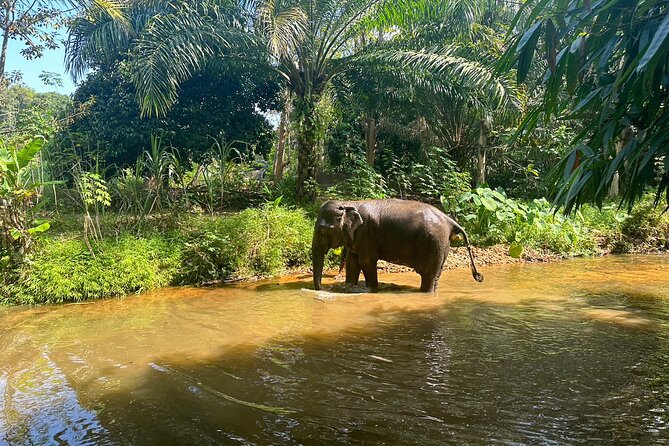
The description presents a fairly clear principle: no bathing, no visitor feeding, and no forced elephant activities. That is the version you should use when deciding if the program suits you.
Some of the supplied praise describes bathing elephants, feeding bananas, walking to a river, scrubbing elephants with mud, cutting sugar cane, and swimming in the water. Those details do not match the official additional information or the timed itinerary.
This may indicate that the sanctuary has offered different programs, changed its rules, or used broad promotional material across several experiences. It could also mean that older visitors experienced a different format. Either way, you should not book expecting a river-bathing session.
The same caution applies to the waterfall and cooking-class wording. The detailed schedule includes shopping for food and making herbal snack balls, but no named waterfall and no full human cooking lesson. A quick message to MY Holiday Centre before booking can prevent a disappointing mismatch.
Who will enjoy this morning most?
I would choose this tour if you want a calmer, more responsible look at elephant care. It suits adults, families, and children who can listen to safety instructions and accept that the animals are not there to perform on demand.
It also suits anyone who wants a little local context. The market stop and food preparation make the sanctuary feel connected to everyday work, rather than separated from the community.
Families should note that the experience has earned praise for patience with children, but the official information does not give a minimum age or specific child policy. Ask about that before booking if you are traveling with young children.
I would skip it if you want guaranteed bathing, direct feeding, swimming, or a long waterfall outing. You might also prefer another activity if your main goal is a formal Thai cooking course.
The four-and-a-half-hour format works well for a half day in Khao Lak. You still have the afternoon free, though the 8 am pickup means this is an early start.
Practical details worth knowing
Confirmation is received at booking, and the activity is near public transportation. Most people can participate, but the schedule involves walking, standing, changing clothes, and staying alert around elephants. The supplied information does not give detailed accessibility guidance, so ask the operator if mobility is a concern.
Free cancellation is available up to 24 hours before the start time for a full refund. Changes made inside that 24-hour window are not accepted, and the payment is not refunded for a late cancellation.
The tour needs good weather. If poor weather causes cancellation, you are offered another date or a full refund. The same choice applies if the minimum number of participants is not reached.
Should you book the Khao Lak elephant tour?
Book it if you want to observe elephants through the mahout relationship, help prepare herbal food, visit local shops, and support a program that says it will not force animals to bathe, perform, or pose.
Do not book it based only on the words cooking class, waterfall, bathing, or feeding. Those promises are not supported consistently by the detailed schedule. Confirm what operates on your date, especially the rules about visitor contact.
For me, the strongest reason to choose this tour is its restraint. The elephant is treated as the main subject, not as a photo accessory. At $126.35, that approach is worth considering, provided you want observation and learning more than hands-on thrills.
FAQ
Where does the tour take place?
The tour takes place in Khao Lak, Thailand, with the elephant sanctuary and local store visit included in the program.
Is hotel pickup available?
Yes. Pickup is offered from hotels in Khao Lak, with the stated pickup time at 8 am.
How long does the experience last?
The tour lasts approximately four hours and 30 minutes.
What time do you meet the elephants?
After the 8 am pickup and an introductory briefing, you change into a mahout outfit at about 9 am and then walk out to meet the elephants.
Can visitors bathe or feed the elephants?
The additional information states that bathing and feeding the elephants are not permitted. The sanctuary also says elephants are not forced to take part in activities or pose for photographs.
Is a waterfall visit included?
The detailed itinerary lists Khao Lak as the stop but does not describe a waterfall visit. Confirm this with the operator before booking if a waterfall is important to you.
Is there a cooking class?
The scheduled activities include buying elephant food and making herbal vitamin snack balls. The supplied itinerary does not set out a full cooking class for human meals.
What happens if bad weather cancels the tour?
If poor weather causes cancellation, you are offered a different date or a full refund. A different date, another experience, or a full refund is also offered if the minimum number of participants is not reached.
Just added around Thailand
- The Best Cooking Class at Thai Charm Cooking School in Krabi★ 5.0 · 49 reviews
- Thai Cooking School in Aonang★ 5.0 · 54 reviews
- Ya’s Krabi Thai Cookery School★ 5.0 · 8 reviews
- Thai Charm Cooking School Krabi★ 5.0 · 16 reviews
- Aonang Thai Cookery School in Krabi★ 5.0 · 12 reviews
- Smart Cook Thai Cookery School in Aonang, Krabi★ 5.0 · 39 reviews
- Small-Group Smart Thai Cooking Class in Krabi★ 5.0 · 90 reviews
- Penny Thai Cooking Class Krabi★ 5.0 · 3 reviews
Cooking Classes, compared.
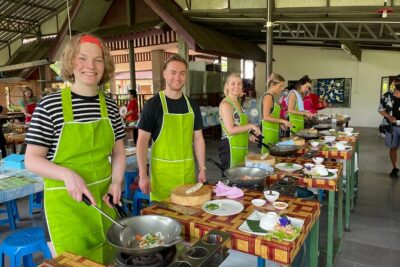
Half-Day Thai Cooking Class at Organic Farm in Chiang Mai
Read our review →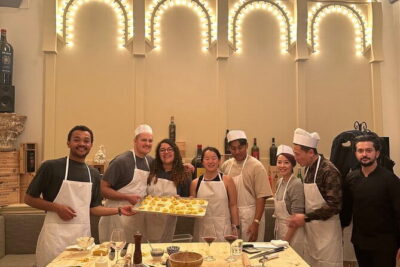
Florence: Pasta Cooking Class with Unlimited Wine
Read our review →
3 in 1 Cooking Class near Navona: Fettuccine, Ravioli & Tiramisu
Read our review →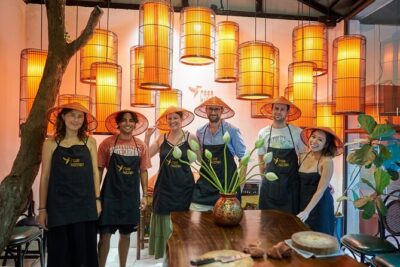
Hanoi Cooking Class: Culture, Local Market & Meaning CSR Impact
Read our review →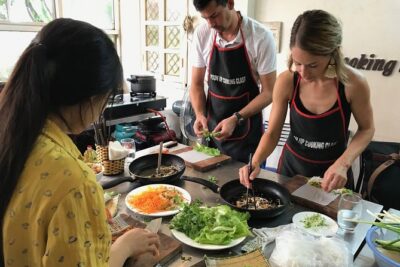
5 Traditional Dishes Hanoi Cooking Class with Market Trip
Read our review →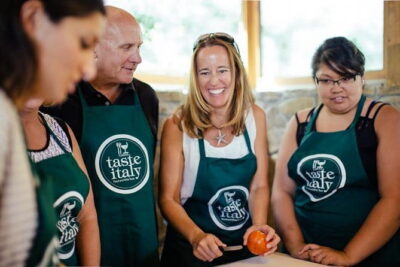
Cooking Class and Lunch at a Tuscan Farmhouse with Local Market Tour from Florence
Read our review →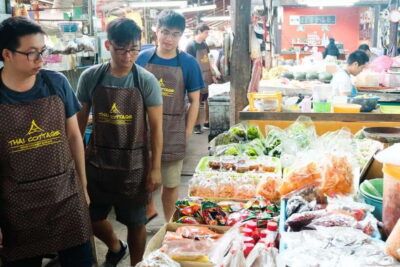
Chiang Mai: Cooking Class, Market & Thai Herbs Garden Tour
Read our review →Browse the lists this tour appears in