
Review · MOROCCAN
Moroccan Cooking Classes
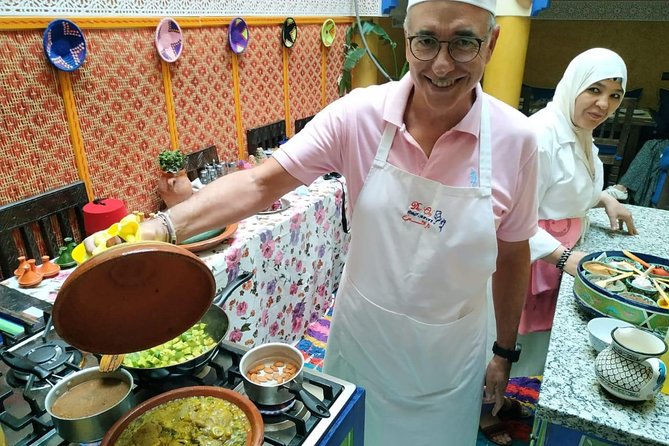
Moroccan cooking becomes much less mysterious when you start with a market basket and finish with lunch. This three-hour class near Rue Kennaria takes you into Marrakech’s Old City, where you select fresh ingredients before cooking with a local family and Moroccan women. I like that the food lesson begins with shopping, not just a prepared demonstration. I also like the small maximum of 10 people, which should make it easier to follow the work and ask questions.
The main drawback is that the exact menu is not fixed in the details provided. You will prepare typical Moroccan dishes, but you should not book expecting a named recipe unless the day’s menu is confirmed with the provider. The 9:30 AM start also means an early morning in Marrakech, though that timing works well for a class that ends around lunch.
Key points to know before booking
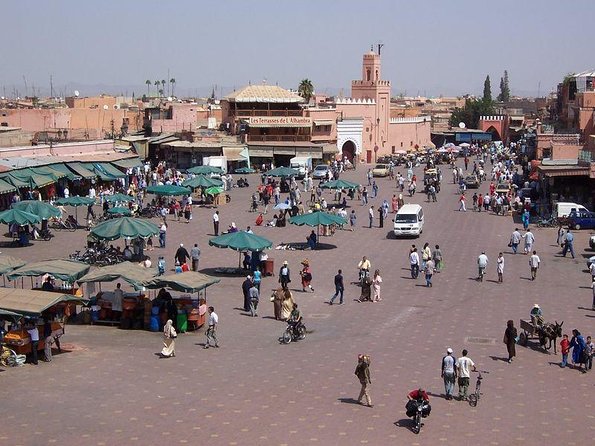
- The market visit comes first: You select fresh, local ingredients in Marrakech’s Old City before cooking.
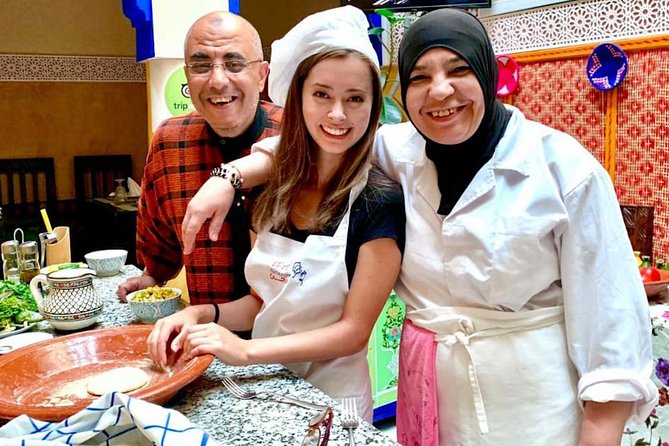
- Cooking is family-led: A local family and Moroccan women guide you through traditional food preparation.
- Abdel helps welcome you: The experience includes Abdel, along with the chef and the woman responsible for the class.
- The group is capped at 10 people: This is a more personal format than a large demonstration.
- The class lasts about three hours: It runs from 9:30 AM to 12:30 PM and returns to the meeting point.
- The price is $57.27 per person: That covers a guided market visit, hands-on cooking, and the meal you prepare and enjoy.
Starting on Rue Kennaria in Marrakech
The class begins on Rue Kennaria, Marrakesh 40000, a practical meeting point in the Old City. You return to this same point when the activity ends, so there is no separate drop-off to arrange at the end.
The morning schedule is fixed at 9:30 AM to 12:30 PM, every day of the week during the listed operating period. Plan to arrive ready to start on time. A cooking class has a natural rhythm, and arriving late could mean missing the market portion, which is one of the most useful parts of the morning.
The meeting point is near public transportation, which helps if you are staying outside the Old City. Still, you will want to allow time to find Rue Kennaria. Marrakech’s central streets can be confusing, and a few extra minutes are better than racing into the class after the group has already left for the market.
More Moroccan Cooking Classes in Marrakech:
- Marrakech: Moroccan Cooking Class with Pickup
★ 4.6 · 1,862 reviews - Marrakech: Traditional Moroccan Cooking Class & Market Visit
★ 4.8 · 1,861 reviews - Marrakesh: Moroccan Dishes Cooking Class with a Local Chef
★ 5.0 · 1,615 reviews
Choosing ingredients in the Old City market
The first real lesson is shopping. Instead of walking into a kitchen where every ingredient has already been measured, you help select the food that will become your meal. That small change matters. It connects the finished dish to the colors, smells, and everyday products of Marrakech.
You will learn how to identify fresh local ingredients and get a closer look at the herbs and spices used in Moroccan cooking. The class also explains typical Moroccan flavors, so you are not simply adding spices by instruction. You begin to understand how those seasonings shape the food.
The market visit gives the class a stronger local focus than a cooking lesson held entirely in a studio. You see the ingredients in the setting where people buy them, then carry them into the kitchen. That link between market and meal is a real strength for anyone who wants more than a recipe card.
There is also a practical benefit. If you plan to cook Moroccan food at home, knowing the ingredients is just as important as knowing the steps. You may learn what certain herbs look like, how local products are chosen, and which flavors belong together. The exact shopping list depends on the day’s menu, so consider this a lesson in Moroccan ingredients rather than a guaranteed trip to buy one specific dish.
Cooking with Moroccan women and a local family
After shopping, you cook with a local family and Moroccan women. The activity is designed as a hands-on lesson, not simply a demonstration from a distance. You use the ingredients gathered at the market and prepare typical Moroccan dishes with guidance along the way.
This family setting is the heart of the experience. Food is a useful way to understand daily life because the lesson naturally includes choices about herbs, spices, preparation, and serving. You get context as you work, rather than trying to absorb a long talk about Moroccan cuisine before touching the ingredients.
The class is also described as inspiring and memorable because it is built around direct contact with local cooks. That does not mean the morning is formal or elaborate. Its appeal is simpler: you work alongside people who prepare Moroccan food and see how the process comes together in a household setting.
A particularly warm welcome comes from Abdel, the chef, and the woman responsible for the class. Abdel is named among the people connected with the experience, while the chef and the person in charge help lead the cooking. The available details do not identify them all by name, so you should not expect a named celebrity chef or a formal culinary school setting. This is a local cooking experience, with the emphasis on people and food rather than professional credentials.
Learning Moroccan herbs, spices, and flavor
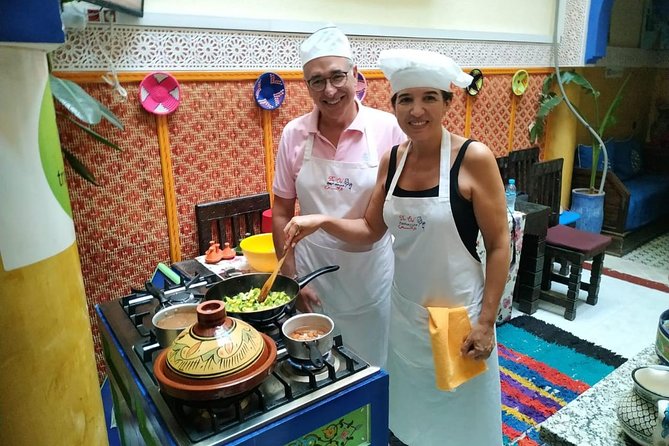
Moroccan food can seem complicated when you meet it only on a restaurant menu. A class gives you a way to separate the flavors and see how they work together.
You will learn about common Moroccan herbs and spices, including the role they play in typical dishes. The exact seasonings are not specified, so I would treat the class as a broad introduction to Moroccan flavor rather than a guaranteed lesson in one particular spice blend.
That broad approach suits first-time cooks. You do not need advanced kitchen skills to get value from the class. The process is explained while you work, and the local cooks can show you how the ingredients are handled in practice. You get the benefit of seeing the texture, order, and proportions instead of relying only on written instructions.
The class may be especially useful if you have eaten Moroccan food but never understood how it was made. You can connect the food on your plate with the products you saw in the market that morning. That makes the meal more memorable, and it gives you a better chance of recreating some of the ideas at home.
More Hands-On Workshops in Marrakech:
- Moroccan Cooking Class & Marrakech Market Visit with Chef Khmisa
★ 5.0 · 1,504 reviews - Half-Day Cooking Class with Local Chef Laila in Marrakech
★ 5.0 · 952 reviews - Marrakech: Moroccan Cooking Class with a Local Family
★ 4.9 · 668 reviews - Marrakech: Moroccan Cuisine Cooking Class in Local Home
★ 4.8 · 508 reviews
Eating the meal you helped prepare
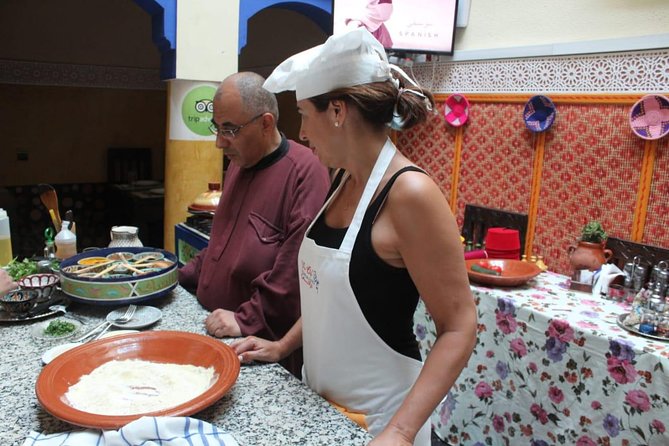
The morning ends by enjoying the meal made with the ingredients you selected. This is more satisfying than tasting a dish prepared entirely by someone else because you have followed the food from market to kitchen to table.
The meal also gives you time to think about what you learned. You can compare the ingredients in their raw form with the finished flavors, and you may find that familiar products taste different after they have been combined in a Moroccan style.
No fixed menu is provided, so the dishes can vary. The experience promises typical Moroccan food, but you should ask the provider if you need to know the recipes in advance. This is important for anyone with dietary restrictions or strong food preferences. The available information does not state that vegetarian, vegan, allergy, or religious dietary requests can be accommodated.
For most people, though, the meal is a natural finish to a morning of shopping and cooking. You do not just watch food being made, then leave. You take part in the process and eat what the group prepares.
What the three-hour format really gives you
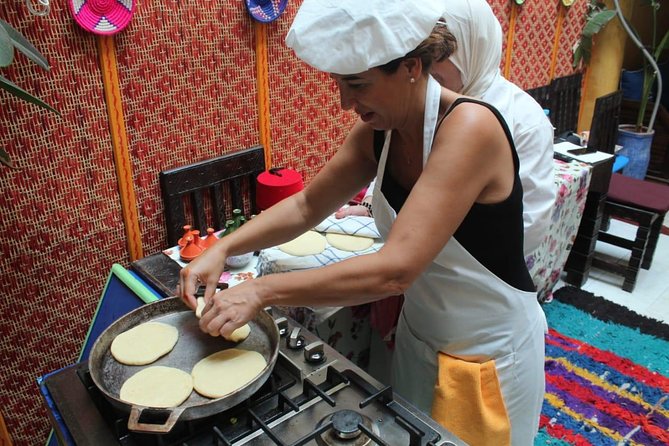
Three hours is enough time for a clear introduction without taking over your whole day in Marrakech. The schedule runs from 9:30 AM to 12:30 PM, leaving the afternoon open for museums, gardens, shopping, or more time in the Old City.
The length also suggests a focused class rather than a full culinary course. You will learn the basics of selecting ingredients, preparing typical Moroccan dishes, and understanding local flavor. You should not expect a long series of recipes or advanced training in three hours.
The timing has another advantage. You finish around lunchtime, when a freshly prepared meal feels like a proper part of the day rather than a small tasting. If you have other plans, remember that the listed duration is approximate. Cooking and eating with a group can take a little flexibility, even when the official schedule ends at 12:30 PM.
A small group capped at 10 people
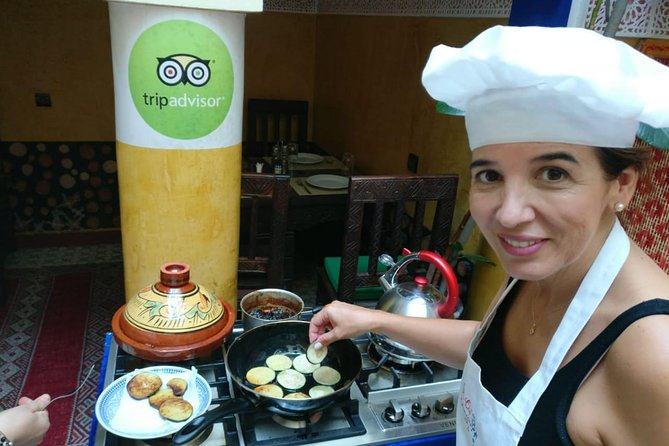
The maximum group size is 10 people. That is small enough to make the class feel personal, while still large enough to include a mix of cooking abilities and personalities.
A small group matters here because the experience involves several stages. You need space to see the market choices, follow the cooking, and take part in the meal preparation. In a large group, you might spend much of the class watching from behind someone else. A 10-person limit reduces that risk.
The group size does not guarantee private instruction. You will still be sharing the class with other people, and the amount of hands-on time can vary depending on the menu and how the cooking is organized. If you want an intimate private lesson, confirm that option directly with Dar Chef before booking.
The format suits couples, solo visitors, and small groups who want a social activity with a strong local connection. It may be less appealing if you prefer to explore markets independently or want complete control over the menu.
Is $57.27 a fair price?
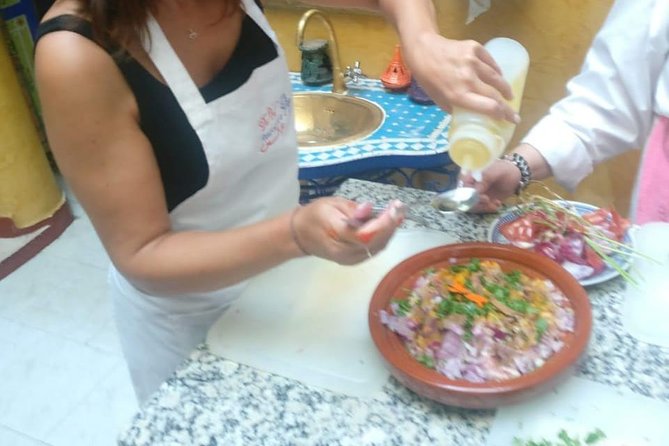
At $57.27 per person, the value depends on what you want from a food experience. You are paying for more than a meal. The price includes the market visit, help choosing ingredients, cooking instruction, contact with a local family, and the meal prepared during the class.
That makes the cost reasonable for someone who wants a structured cultural activity in Marrakech. A restaurant meal alone may cost less, but it would not give you the market lesson or the chance to cook with local women. On the other hand, this is not the right choice if you only want the cheapest way to eat Moroccan food.
The strongest value comes from the complete sequence. You see the ingredients, learn about the spices, prepare the food, and eat it. Each part supports the next. If you are likely to use what you learn after returning home, the price becomes easier to justify.
The small group also helps. You are not paying for a huge commercial demonstration with limited contact. The maximum of 10 people gives the morning a more personal scale, though the experience remains a shared class rather than a private one.
Who will enjoy this class most
I would recommend this experience to you if you want food to be your way into Moroccan culture. It suits first-time visitors who are curious about the Old City, interested in local ingredients, and happy to learn by doing.
It is also a good match for home cooks. You will not receive a fully specified menu in advance, but you will gain practical understanding of Moroccan herbs, spices, and preparation. The connection between market shopping and cooking is useful if you want to take Moroccan ideas back to your own kitchen.
Families with older children might find the format appealing, although the supplied information does not state a minimum age or special child arrangements. Couples and solo visitors can also fit comfortably into a group capped at 10.
You may want to skip it if you dislike group activities, need a guaranteed menu, or have dietary needs that must be confirmed in advance. The listed details do not promise accommodations for allergies or specific diets.
Booking, meeting details, and cancellation
Confirmation is provided when you book. The activity is offered daily from 9:30 AM to 12:30 PM, and it ends back at Rue Kennaria. A mobile ticket is included, so keep the booking available on your phone.
The class is often booked about seven days in advance. That is a useful planning clue, especially if your Marrakech stay is short. Booking roughly a week ahead gives you a better chance of fitting the morning into your schedule, although availability can change.
Free cancellation is available if you cancel at least 24 hours before the start time. You receive a full refund within that window. Cancellations or changes made less than 24 hours before the activity are not accepted for a refund, and the cut-off follows Marrakech local time.
Should you book Moroccan Cooking Classes at Dar Chef?
Book this class if you want to connect a Marrakech market visit with a real cooking session and a shared meal. The strongest parts are the local family setting, the chance to cook with Moroccan women, the small group, and the simple market-to-table structure.
I would be more cautious if you need a fixed menu or specific dietary arrangements. Ask Dar Chef about those points before paying. For everyone else, $57.27 is a fair price for a three-hour introduction to Moroccan food that gives you more than a plate of prepared dishes. You leave with a better sense of the ingredients, flavors, and people behind the meal.
FAQ
Where does the Moroccan cooking class begin?
The activity begins at Rue Kennaria, Marrakesh 40000, Morocco.
Where does the activity end?
The class ends back at the meeting point on Rue Kennaria.
What time does the class run?
It runs from 9:30 AM to 12:30 PM, Monday through Sunday.
How long does the experience last?
The cooking class lasts approximately three hours.
How much does the class cost?
The listed price is $57.27 per person.
How many people can join the class?
The activity has a maximum of 10 travelers.
Is the experience available every day?
Yes. The listed opening hours are Monday through Sunday, from 9:30 AM to 12:30 PM.
What does the cooking class include?
You visit a traditional market in the Old City, select fresh ingredients, cook with a local family and Moroccan women, learn about Moroccan herbs and spices, and enjoy the food you prepare.
Is a mobile ticket available?
Yes. The experience includes a mobile ticket.
Can I cancel for a full refund?
Yes, if you cancel at least 24 hours before the experience starts. Cancellations or changes made less than 24 hours before the start time are not refunded.
Just added around Marrakech
- Moroccan Cooking Class with Market Visit and Meal★ 4.5 · 18 reviews
- Moroccan cooking class with maket in the Medina of Marrakech★ 5.0 · 173 reviews
- Morocco’s Top Cooking Classes For Authentic berber Cuisine in the Atlas Mountain★ 3.5 · 8 reviews
- Cooking class with transfer★ 5.0 · 22 reviews
- Shared 4 Hours Cooking Class in Marrakesh★ 5.0 · 49 reviews
- Cooking course with genuine Berber Family at Atlas Mt★ 5.0 · 10 reviews
- Moroccan Cooking Class with chef Mama Nouzha★ 5.0 · 4 reviews
- 3 Hour Moroccan Cooking Class in Marrakech★ 5.0 · 41 reviews
Moroccan Cooking Classes, compared.
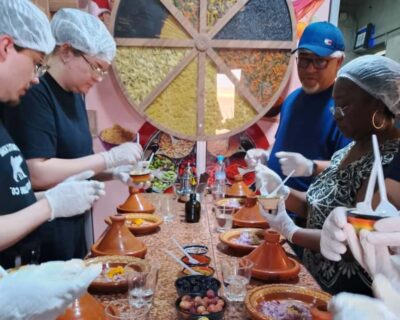
Marrakech: Moroccan Cooking Class with Pickup
Read our review →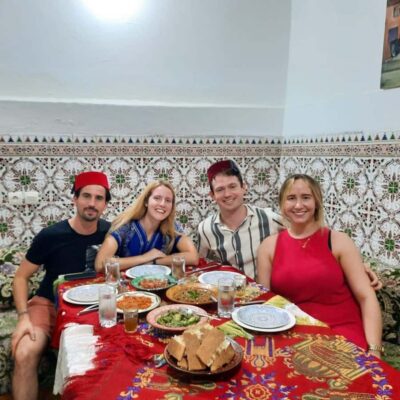
Marrakech: Traditional Moroccan Cooking Class & Market Visit
Read our review →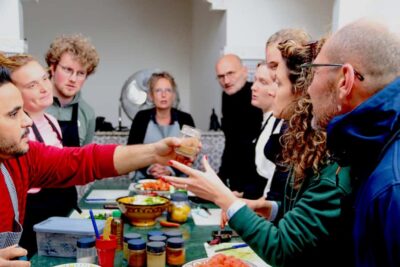
Marrakesh: Moroccan Dishes Cooking Class with a Local Chef
Read our review →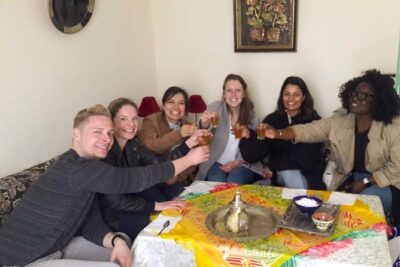
Moroccan Cooking Class & Marrakech Market Visit with Chef Khmisa
Read our review →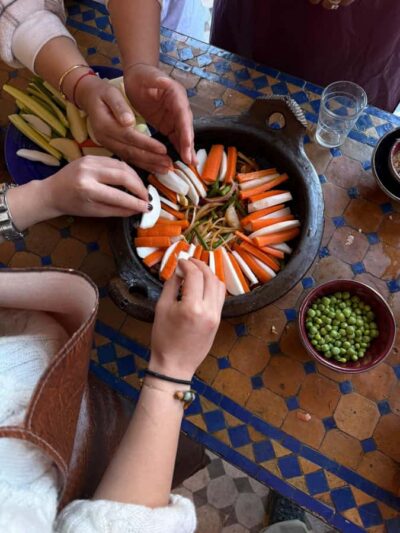
Marrakech: Moroccan Cooking Class with a Local Family
Read our review →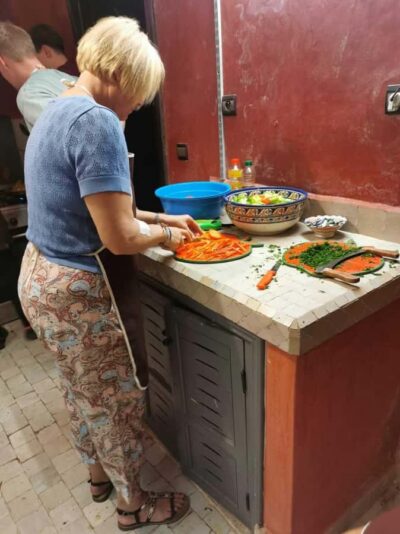
Marrakech: Moroccan Cuisine Cooking Class in Local Home
Read our review →
Marrakech: Moroccan Cooking Workshop at La Maison Arabe
Read our review →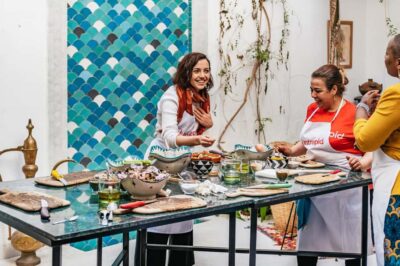
Marrakech: Tajine Cooking Class in a Traditional Riad
Read our review →Browse the lists this tour appears in