
Review · SRI LANKA
Nilaveli: Sri Lankan Cooking Class with a Local Family
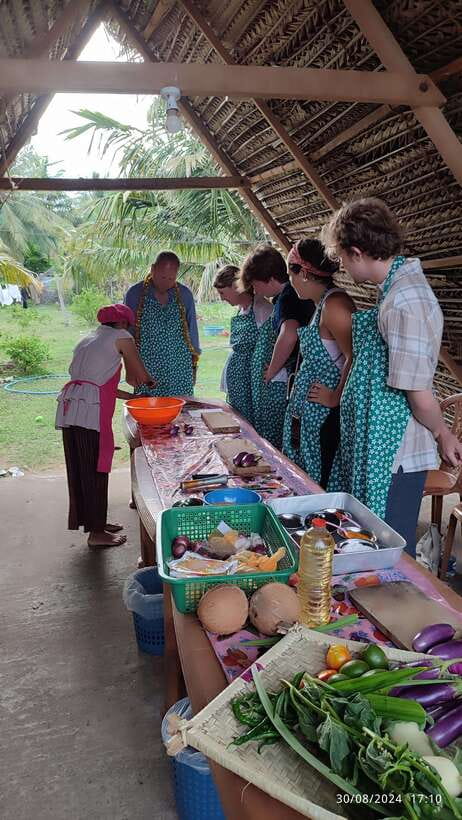
Sri Lankan cooking makes the most sense when you see it happen at home. In Nilaveli, Nimali Dinushika and her family show you how everyday dishes come together over firewood and wood stoves, from grinding and mixing spices to cooking rice, curries, hoppers, string hoppers, pittu, rotti and milk rice. This is not a quick demonstration. You spend about four hours cooking, followed by roughly an hour eating.
I like the personal setting and the chance to shape the meal around your tastes. You can ask about vegetarian food, fish or meat, and the class includes recipes, ingredients, cooking equipment, water and refreshments. I also like the small details that make the session memorable, such as opening a fresh coconut with a billhook and using it for sambol, as one participant did.
The main consideration is the length. Five hours is a serious block of your day, and cooking beside a traditional stove can be hot and hands-on. Fish or chicken curry costs an extra 2,000 LKR per person, while seafood has an additional price based on your request. People with food allergies should not book this activity.
Key points to know before booking
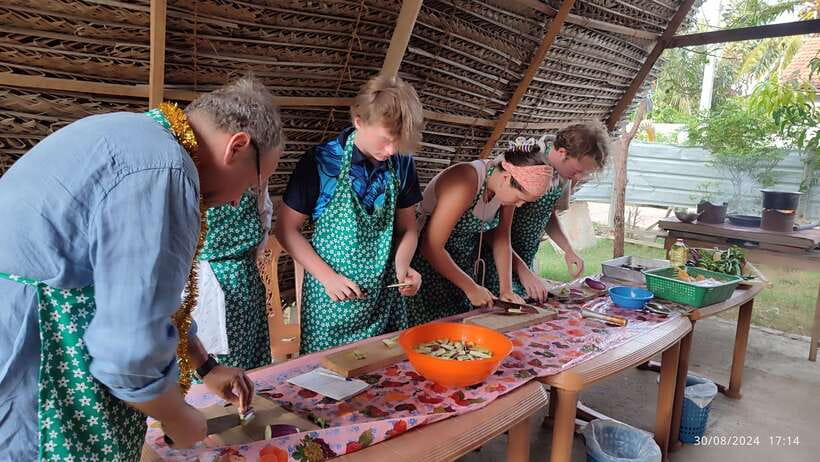
- Cooking takes place with Nimali Dinushika and her family: You get a personal introduction to the food and the family’s daily cooking traditions.
- The menu covers far more than curry: Depending on your choices, you may prepare rice, several curries, hoppers, string hoppers, pittu, rotti, milk rice, sambols and sweets.
- Traditional heat is part of the experience: Wood stoves and firewood add a real sense of place, but they also mean heat, smoke and a more physical cooking session.
- Plan on five hours: The cooking portion can take about four hours, with another hour for the meal.
- The base price is $22 per person: That is strong value for a meal, instruction, ingredients, equipment and family interaction, though meat and seafood cost extra.
- The meeting point is easy to identify: Go to Pigeon Island Tours, at The Rice and Curry seafood restaurant and The Dive Shop, where you will find the cooking arrangement with Nimali.
Meeting Nimali’s family in Nilaveli
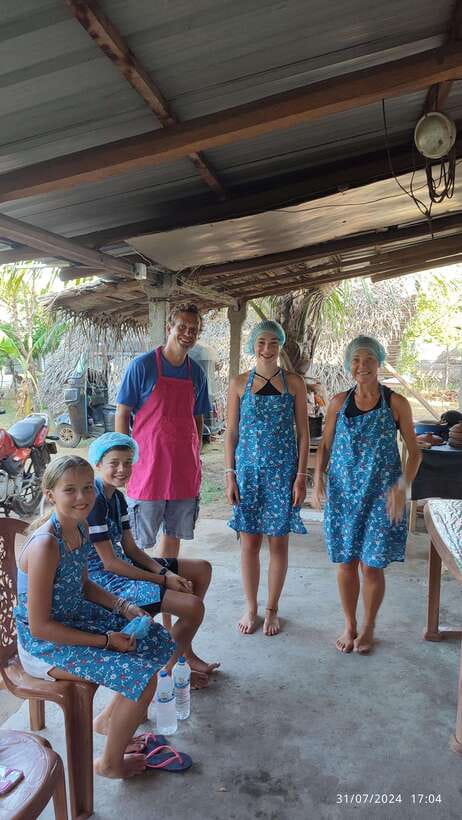
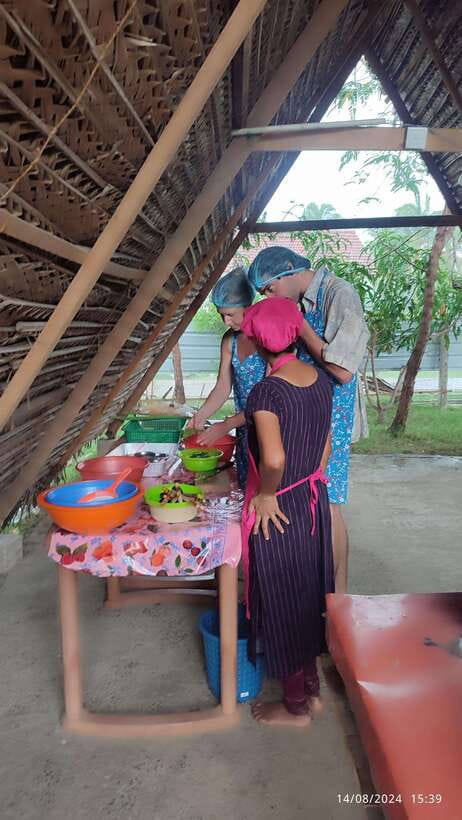
The class begins at Pigeon Island Tours, at the same location as The Rice and Curry seafood restaurant and The Dive Shop. From there, you meet Nimali Dinushika and her family. The cooking takes place in a traditional Sri Lankan home setting, with one account describing the group working in the garden beside the house.
That setting matters. You are not standing in a polished restaurant kitchen watching a chef work at a distance. You are learning in the kind of surroundings where these foods are prepared for family meals. Nimali and her family explain the ingredients, spices and cooking methods as you work.
The class is conducted in English and Sinhalese. English is the main language for the activity, so you can ask questions about the dishes and preparation. The family setting also makes this a social experience, not just a lesson. One group shared the session with other visitors from different countries, which can make the long cooking period feel more relaxed and communal.
You should arrive ready to take part rather than simply observe. Comfortable clothing is sensible, and a hat and sunscreen are useful if part of the activity takes place outdoors. Smoking, alcohol, drugs and pets are not allowed.
More Home Cooking Classes in Sri Lanka:
- Organic Cooking Class sigiriya home Kitchen(Kumara & family)
★ 5.0 · 116 reviews - Galle: Cooking Class at a Local Home and Market Tour
★ 5.0 · 47 reviews - Authentic Sri Lankan Cooking Class in Kandy by Local Family
★ 4.9 · 15 reviews
Four hours of cooking, one hour at the table
The schedule is generous because Sri Lankan food is built in stages. You will not simply stir one curry and sit down. The work can include preparing several dishes, handling fresh ingredients, making spice mixes and learning how different foods are cooked.
The precise menu can be shaped around your preferences. Vegetarian dishes are available, while fish or chicken curry can be added for 2,000 LKR per person. Seafood is priced separately according to what you request. It is best to state your food choices and any restrictions before the class begins.
The included ingredients cover the cooking session, and personal cooking equipment is provided. You also receive water and a refreshment. This is helpful in Nilaveli’s warm climate, especially when you are spending time near a wood stove.
A useful point to understand is that the advertised five hours includes both preparation and eating. One detailed account described about four hours of cooking and one hour for the meal. If you are planning another activity immediately afterward, leave yourself enough time. The cooking process may be the main event, but sitting down to eat is an important part of the experience.
Rice and curry, the heart of the meal
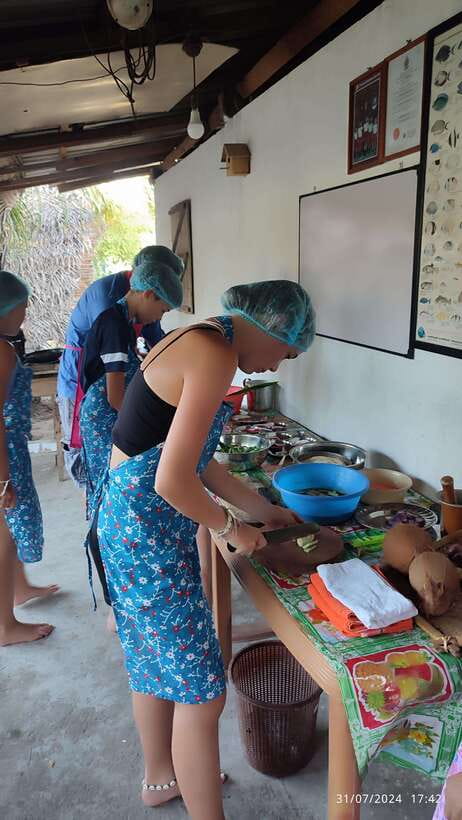
Rice and curry is not one fixed dish. It is a meal made up of rice, several vegetable or meat curries, sambols and other side dishes. This class gives you a chance to see how those parts are prepared rather than treating curry as a single sauce.
You may work with several spices and ingredients used in Sri Lankan cooking. The family explains how the ingredients are combined, and you learn the methods behind the final flavors. The value here is practical: you leave with recipes and a better sense of how the dishes fit together.
The menu can include jackfruit, several curries, rice and sambol. A sample meal described by one participant included jackfruit, string hoppers, rice, several curries, fresh orange juice and a sweet dish. Since the final selection depends partly on your requests, do not assume every listed item will appear in exactly the same meal.
The class can also help you understand the difference between Sri Lankan home cooking and a restaurant meal. At a restaurant, you taste the finished curry. Here, you can see how the family builds it, what goes into the spice mixture and how the cooking method changes the result.
Hoppers, string hoppers and pittu
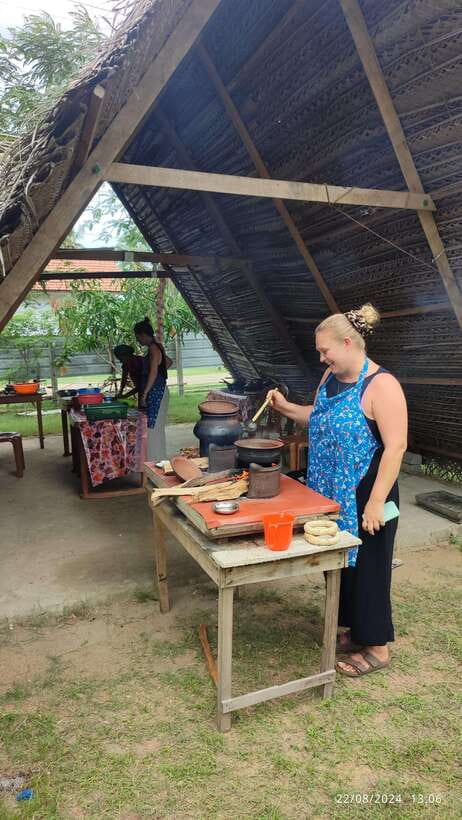
The class covers several foods that are easy to recognize on a Sri Lankan menu but less obvious to prepare at home.
Hoppers are bowl-shaped pancakes, while string hoppers are delicate pressed rice-flour noodles. Pittu is another traditional preparation, usually made from rice flour and coconut. Rotti offers a different texture and cooking method, and milk rice gives you a chance to prepare a well-known rice dish with a softer, richer character.
Preparing these foods takes more than reading a recipe. You need to understand the texture of the mixture, how it behaves on the cooking surface and when it is ready. That is where direct instruction helps. Nimali and her family can show you the feel and timing that a written recipe often leaves out.
The class also includes milk rice and Sri Lankan sweets. One participant described making halapa, a traditional sweet served with tea, and another worked with sambols made from a freshly opened coconut. These details give the class a broad range of flavors, from savory curries to sweet foods and coconut-based accompaniments.
If you enjoy cooking, this variety is one of the strongest reasons to book. You are not repeating one recipe for five hours. You are moving through several staple foods and seeing how rice, coconut, flour, spice and heat work together.
More Hands-On Workshops in Sri Lanka:
- Ella: Traditional Sri Lankan Cooking Class
★ 4.9 · 788 reviews - Organic cooking class sigiriya (kumara & family)
★ 5.0 · 650 reviews - Sri Lanka Cooking Class with Granny
★ 5.0 · 587 reviews - Kandy Village Cooking Class
★ 5.0 · 536 reviews
The wood stove changes the pace
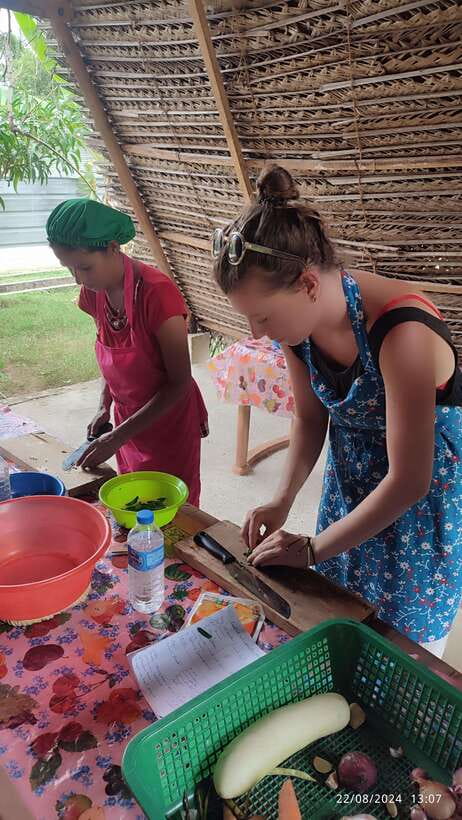
Cooking with firewood is one of the most distinctive features of this activity. It connects the lesson to older household methods and makes the process feel grounded in local life. You can see how food develops over a live heat source rather than an electric hob.
There is a tradeoff. A wood stove brings heat, smoke and a slower pace. You should wear comfortable clothes that are suitable for cooking, and avoid anything you would not want near smoke or food splashes. The experience is best for people who enjoy getting involved, handling ingredients and working in a less controlled kitchen.
The stove also adds a practical lesson. Traditional cooking is not just about ingredients. It is about managing heat, timing several dishes and working with the equipment available. That is useful context if you plan to cook Sri Lankan food after returning home, even if your own kitchen uses modern appliances.
You may also encounter fresh coconut as part of the preparation. One participant opened a coconut that had recently fallen from a palm and drank the water before using the coconut for two sambols. This is the sort of unscripted, hands-on detail that makes a family cooking class more memorable than a standard cooking demonstration.
Eating what you prepare
After the cooking, you sit down for the meal. Dining is included in the $22 price, along with ingredients, equipment, recipes, water and a refreshment. The meal gives you a chance to taste the dishes while they are fresh and to understand how the separate parts work together.
I like this format because the meal is not an afterthought. You have spent the morning or afternoon preparing the food, so you can compare your own work with the family’s guidance. It also gives you time to talk with Nimali and her family without rushing from one recipe to the next.
A meal may include rice, curries, sambols, string hoppers, jackfruit, sweets or other dishes from the class. The exact menu depends on availability and your choices. Vegetarian cooking is possible, while fish, chicken and seafood require additional payment.
If you want fish or chicken curry, budget an extra 2,000 LKR per person. Seafood costs extra according to the dish you request. Ask about the price before cooking begins so the final cost is clear.
What the $22 price really covers
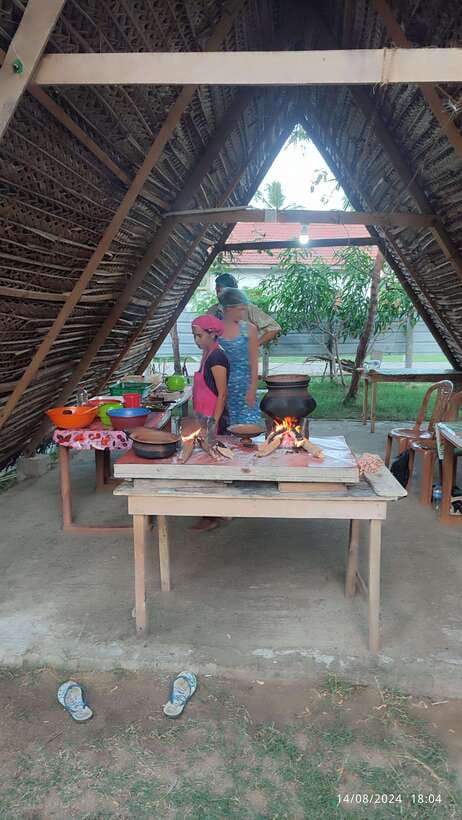
At $22 per person, this is good value if you want more than a meal. The price includes five hours of instruction and participation, ingredients, personal cooking equipment, recipes, water, a refreshment and the food you prepare. It also gives you time with a local family in their home setting.
The price does not include hotel pickup or drop-off. You need to make your own way to Pigeon Island Tours, The Rice and Curry seafood restaurant and The Dive Shop. It also does not include a shopping tour, so this is focused on cooking rather than market visits or ingredient buying.
The extra charges are reasonable to factor into your decision. A vegetarian meal keeps the starting price simple. Meat, fish and seafood make the experience more expensive, but they also let you create a meal closer to your preferences.
For comparison, the value is strongest for people who want several dishes and personal instruction. If you only want to taste Sri Lankan food, a restaurant meal will take less time and cost less effort. If you want to understand how the food is made and take recipes home, the five-hour format makes more sense.
Who will enjoy this class most
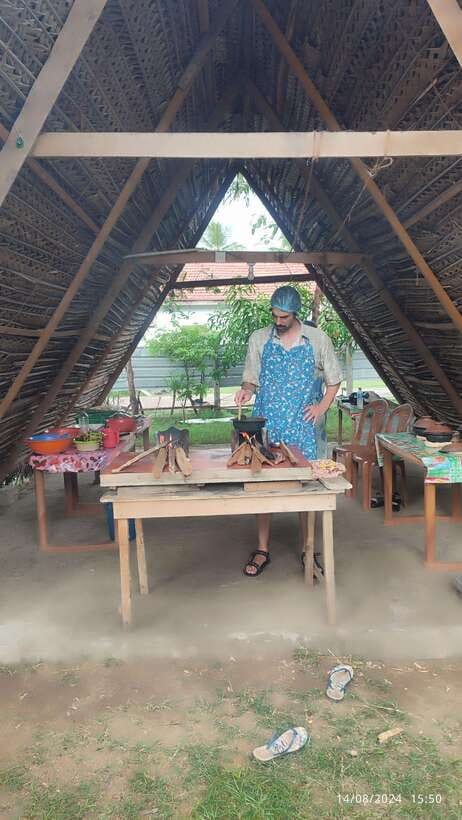
I would recommend this to curious eaters, home cooks and anyone who wants a closer look at daily life in Nilaveli. The family setting suits people who prefer a personal activity over a formal culinary school.
It can also work well for families with young children. A four-year-old and a six-year-old were able to take part in one session, with the children getting involved in the cooking. However, the stated rules say the activity is not suitable for children under two, and the heat and equipment mean adults should judge what older children can safely handle.
Vegetarians have a clear advantage because the base activity includes a range of plant-based dishes. If you eat meat, fish or seafood, you can request them, but you should plan for the extra charge.
This is not a good choice for people with food allergies. The activity specifically says it is not suitable for people with food allergies, and you will be handling many ingredients in a family kitchen. Dietary restrictions should be shared in advance, but people with serious allergies should choose another activity.
The session is wheelchair accessible according to the activity details. Since it takes place in a traditional home setting, you may want to confirm the specific access arrangements before booking if you need particular facilities.
Practical booking advice for Nilaveli
The meeting point is Pigeon Island Tours, shared with The Rice and Curry seafood restaurant and The Dive Shop. Hotel pickup and drop-off are not included, so arrange your own transport to that location.
The activity runs for five hours, with starting times depending on availability. I would keep the rest of your schedule light. The class can include several recipes, and the meal takes time. Rushing away halfway through would spoil the best part.
You can reserve now and pay later, and cancellation is free up to 24 hours in advance for a full refund. That gives you some flexibility if your Nilaveli plans change.
Bring a hat, sunscreen and comfortable clothes suitable for cooking. Do not bring pets, alcohol or drugs. Tell the family in advance what you want to eat, especially if you would like fish, chicken or seafood.
Should you book the Nilaveli cooking class?
Book this class if you want a personal food experience, several traditional recipes and time with a Sri Lankan family. The strongest features are the home setting, Nimali’s direct instruction, the wide menu and the use of wood stoves. At $22, the package offers good value for a five-hour activity with food and recipes included.
Skip it if you dislike long cooking sessions, heat, smoke or shared home-style settings. You should also choose another activity if you have food allergies or need hotel transport included.
For most food-focused visitors in Nilaveli, this is a worthwhile choice. You get a meal, but the real value is learning how the meal comes together and sitting down with the people who taught you to make it.
FAQ
Where does the cooking class meet?
The meeting point is Pigeon Island Tours, at The Rice and Curry seafood restaurant and The Dive Shop. The cooking takes place in a traditional Sri Lankan home setting.
How long does the activity last?
The class lasts five hours. About four hours may be spent cooking, followed by about one hour for the meal.
Who teaches the cooking class?
The class is hosted by Nimali Dinushika and her family. Instruction is available in English and Sinhalese.
What dishes can I learn to make?
The class can include rice and curry, string hoppers, hoppers, pittu, rotti, milk rice, Sri Lankan sweets, curry powder and sambols. The final dishes can depend on your preferences.
Is food included in the price?
Yes. The activity includes cooking ingredients, personal cooking equipment, dining, water and a refreshment. Recipes for traditional Sri Lankan dishes are also included.
Does fish, chicken or seafood cost extra?
Fish or chicken curry costs an additional 2,000 LKR per person. Seafood has an extra charge based on the dish you request.
Is the class suitable for children and people with allergies?
Children under two are not suitable for the activity. The class is not suitable for people with food allergies, and you should share dietary restrictions in advance.
Just added around Sri Lanka
- Sri Lankan Cookery with Nilu★ 5.0 · 34 reviews
- Sri Lanka: Cooking Class★ 4.4 · 6 reviews
- Private Traditional Sri Lankan Cooking Class in Kandy★ 5.0 · 7 reviews
- Private cooking class – Personalized classic menu★ 5.0 · 5 reviews
- Mirissa: Cooking Class with Beer and Meal★ 3.3 · 4 reviews
- Kandy: Village Cooking Class 12 Dishes with Market Tour★ 5.0 · 6 reviews
- Kandy Cooking Class with Granny★ 4.9 · 95 reviews
- Hands-On Cooking Class in Anuradhapura: Cook Like a Local★ 5.0 · 5 reviews
Home Cooking Classes, compared.
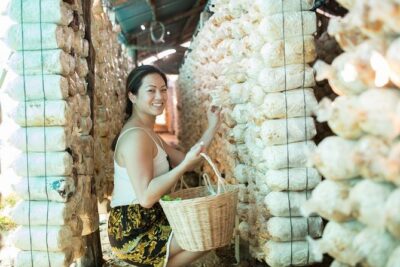
Khmer Cooking Class at a Local’s Home in Krong Siem Reap
Read our review →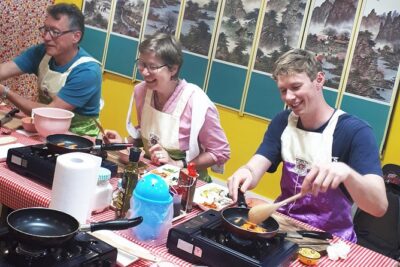
Local Home Korean Cooking Class & Market Adventure in Seoul
Read our review →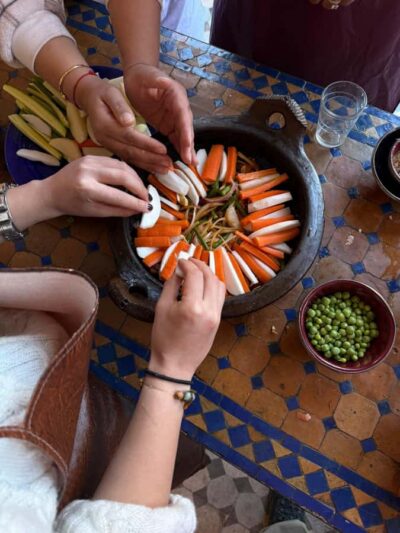
Marrakech: Moroccan Cooking Class with a Local Family
Read our review →
Mexican Cooking from Scratch in a Local Home in Tulum
Read our review →
Pastamama, Home Cooking Classes at Grace’s Home
Read our review →
Marrakech: Moroccan Cuisine Cooking Class in Local Home
Read our review →
Hoi An: Traditional Cooking Class & meal with Local Family
Read our review →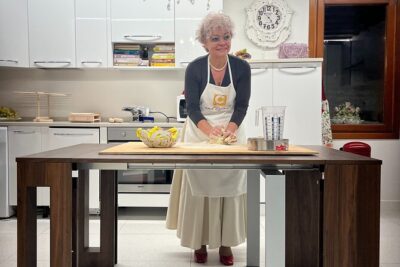
Browse the lists this tour appears in