Review · COOKING CLASSES
Rio de Janeiro: Brazilian Cooking Class in Rio de Janeiro
The best thing about this Copacabana cooking class is that you do not just watch a chef prepare Brazilian food. You make the meal yourself, from fried cheese with spicy guava jam to feijoada or seafood moqueca, then sit down and eat it with two drinks. Chef Simone leads the class, with help from her daughter on some occasions.
I like the small format, with no more than seven participants, and the practical menu. The ingredients can be found around the world, so you can repeat the recipes at home. I also like the cultural side: Simone talks about Brazilian food and the country behind it, not just cooking times and measurements.
The main drawback is the price, $220 per person, which is a serious spend for a three-hour activity. Also check the day carefully: feijoada is offered on Saturdays, while moqueca is scheduled for Mondays, Wednesdays, and Fridays. The description also refers to a four-hour class, so confirm the exact duration when booking.
Key points to know before booking
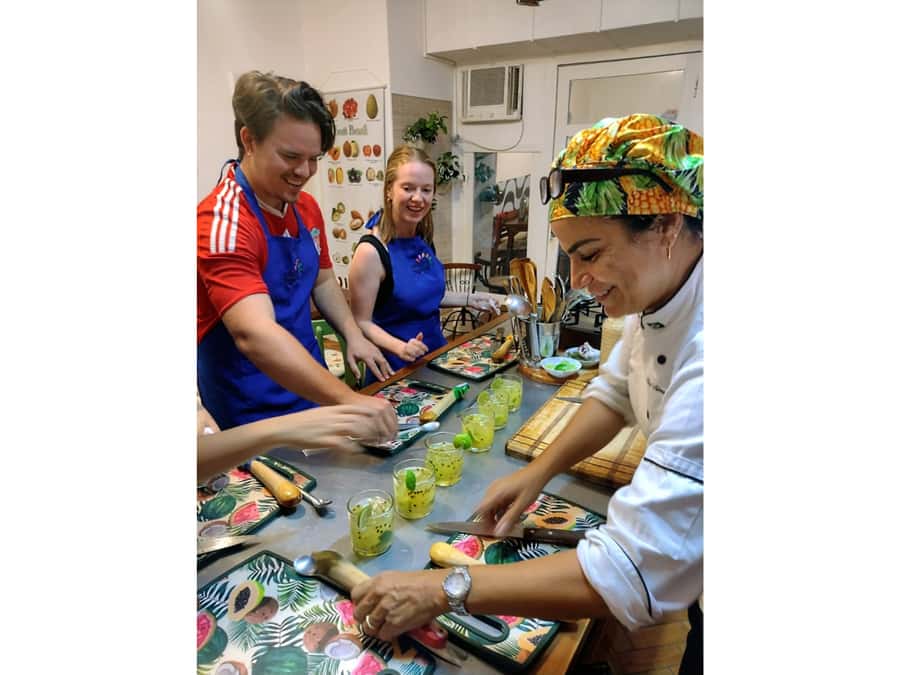
- Chef Simone leads the class: She teaches in Portuguese, English, or Spanish and is noted for her friendly, attentive approach.
- Your main dish depends on the day: Choose Saturday for pork and bean feijoada, or Monday, Wednesday, and Friday for seafood moqueca.
- You cook seven Brazilian recipes: The menu includes savory dishes, drinks, a main course, sides, and a changing dessert.
- The class stays small: A maximum of seven participants allows room for questions and direct help.
- Two drinks are included: You prepare a lime caipirinha and batida de coco, with alcoholic drinks included alongside the meal.
- Transport is not provided: You make your own way to the cooking studio in the Copacabana area.
Cooking Brazilian food instead of just eating it
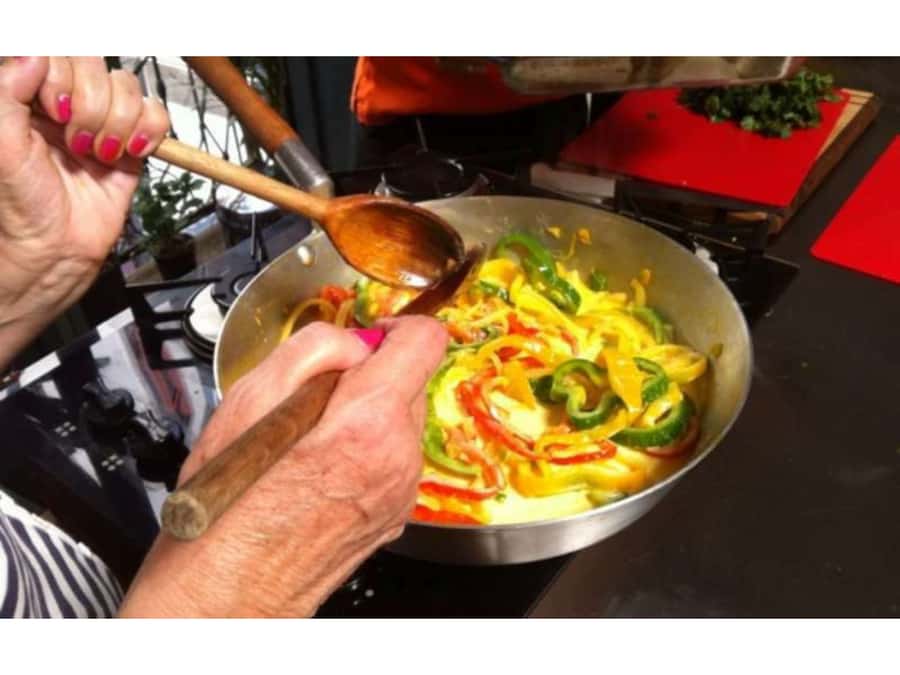
Rio has no shortage of places to order Brazilian food, but a cooking class gives you something a restaurant cannot: a working understanding of how the dishes come together. Here, you handle the ingredients, follow the preparation, and eat the finished meal at the same table.
That matters most with dishes such as feijoada and moqueca. They are not just names on a menu. They show different sides of Brazilian cooking, from the slow, hearty combination of pork and beans to the fragrant seafood preparation served with rice and farofa.
The class is designed for beginners, so you do not need formal cooking experience. If you already cook often, you will still have plenty to ask about, especially when discussing Brazilian ingredients, regional food customs, and ways to recreate the meal at home.
The setting in Copacabana also makes practical sense. You can fit the class into a day or evening in one of Rio’s best-known areas, though you need to arrange your own transport because pickup and drop-off are not included.
More Hands-On Workshops in the world:
- Half-Day Thai Cooking Class at Organic Farm in Chiang Mai
★ 5.0 · 19,087 reviews - Florence: Pasta Cooking Class with Unlimited Wine
★ 4.9 · 10,285 reviews - 3 in 1 Cooking Class near Navona: Fettuccine, Ravioli & Tiramisu
★ 5.0 · 7,376 reviews
What Chef Simone brings to the table
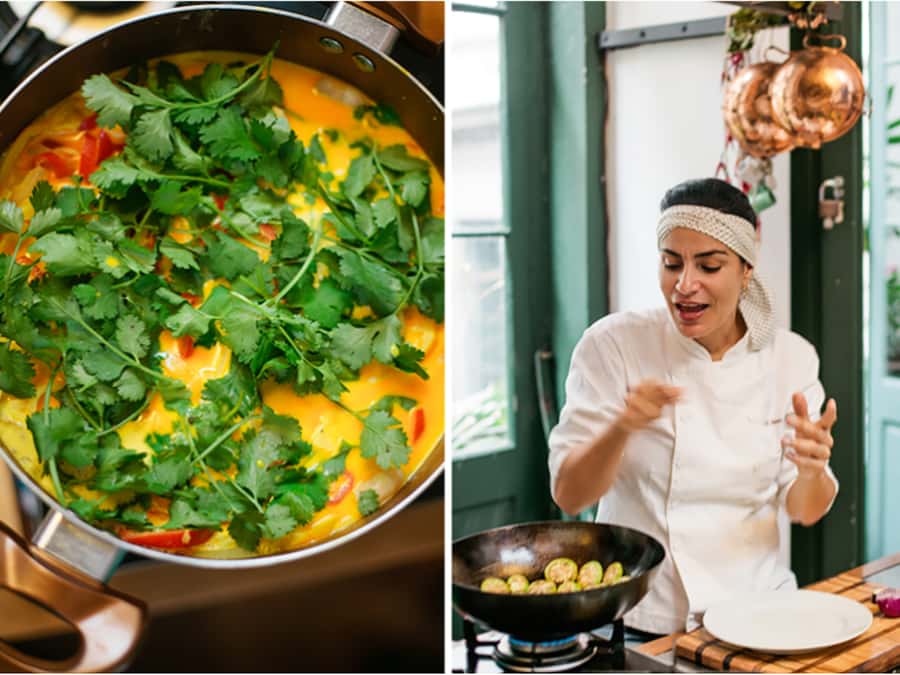
Chef Simone is the central personality of the experience. She teaches in English, Portuguese, or Spanish, which makes the class accessible to a wide range of visitors. Her role goes beyond giving instructions. She explains Brazilian food and culture, answers questions, and guides you through each stage of the meal.
The personal side of the class is one of its strongest features. With a maximum of seven participants, you are not lost in a large group while trying to chop, stir, or follow a recipe. The small size also helps if you want to ask about substitutions or cooking methods.
Simone’s daughter may assist during the class. That family element can give the session a relaxed, social feel, rather than making it seem like a formal demonstration. The focus remains on cooking, but conversation is part of the experience.
You should also expect more than a lesson in recipes. Simone can offer context about Brazil and the place food holds in daily life. That makes the class useful for anyone who wants to understand what they are eating in Rio, not simply copy a list of ingredients.
The opening dishes set the Brazilian tone
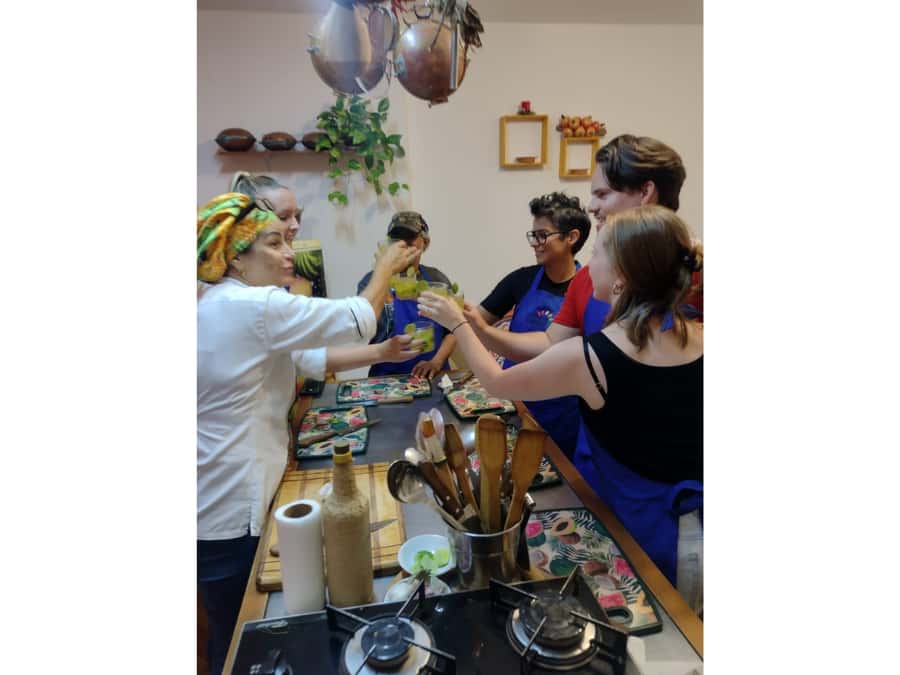
The meal begins with small dishes that introduce sweet, salty, spicy, and savory flavors. One is fried cheese with spicy guava jam. That pairing gives you a quick lesson in contrast: crisp cheese, sweet fruit, and heat in the same bite.
You also prepare scrambled fried sausage slivers. This is a straightforward dish, but it gives you a chance to work with familiar ingredients in a Brazilian style. These opening recipes are approachable for beginners and help build confidence before the main course.
The menu is described as five courses with two drinks, but it also lists seven recipes or components. In practice, you can expect a meal that includes the opening snacks, a main dish, sides, dessert, and drinks rather than seven separate restaurant-sized courses.
That distinction is worth keeping in mind when you compare the cost. You are paying for instruction, ingredients, equipment, and a full meal, not only for the food placed in front of you.
Making the caipirinha and batida de coco
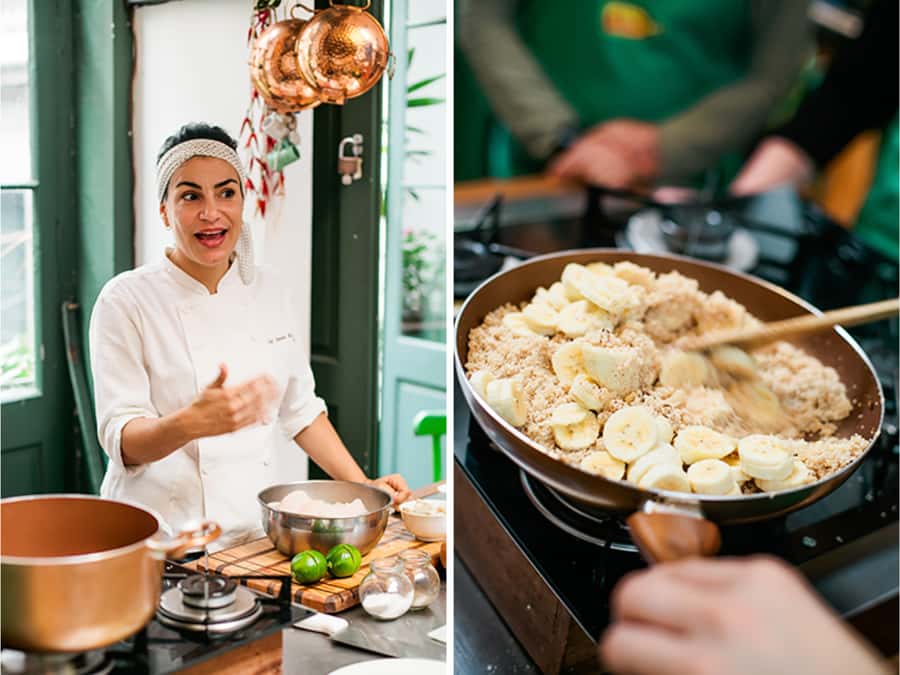
Two drinks are part of the class: a lime caipirinha and a batida de coco. Since you prepare the drinks yourself, they fit the cooking format rather than arriving as separate refreshments.
The caipirinha is one of Brazil’s best-known drinks, and learning to make it adds a useful skill you can take home. The coconut drink gives you a different flavor and texture, so the two drinks provide a clear contrast.
Both alcoholic drinks are included. That is important if you are comparing this activity with a standard cooking lesson, where drinks may cost extra. If you do not drink alcohol, the supplied information does not specify nonalcoholic alternatives, so ask before booking.
Because the class includes food preparation and drinking, the pace is likely to be social as well as instructional. You will want to leave enough time to eat and talk rather than treating this as a quick recipe demonstration.
A few more cooking classes around the world worth a look
- Florence: Pasta & Tiramisu Cooking Class with Unlimited Wine
★ 4.9 · 6,708 reviews - Florence: Pasta Cooking Class with Unlimited Wine
★ 5.0 · 6,413 reviews - Hanoi Cooking Class: Culture, Local Market & Meaning CSR Impact
★ 5.0 · 5,147 reviews - 5 Traditional Dishes Hanoi Cooking Class with Market Trip
★ 5.0 · 4,890 reviews
Choosing between feijoada and seafood moqueca
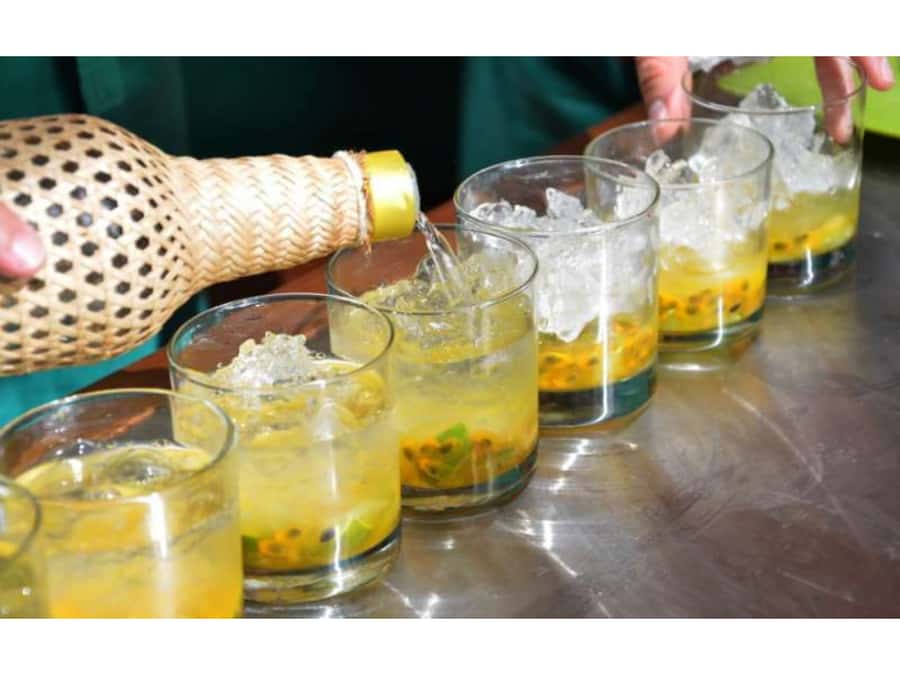
Your main dish depends on the day you attend. Saturdays feature feijoada, a pork and black bean dish. Mondays, Wednesdays, and Fridays feature seafood moqueca.
Saturday feijoada
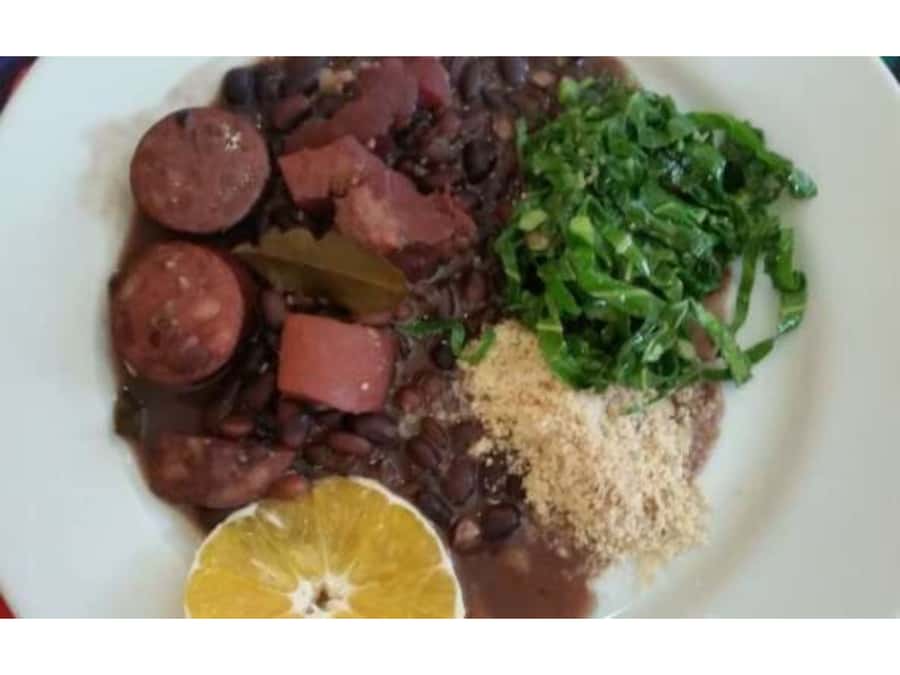
Feijoada is the heartier choice. The combination of pork and beans makes it a good pick if you want a filling, traditional Brazilian meal. One particularly useful tip is to choose Saturday if this is the dish you most want to learn, since the schedule does not list it for the other class days.
The class also pairs the feijoada with cassava sticks, banana farofa, and flavored rice. Those sides matter because they add texture and balance to the beans and pork. Farofa, made here with banana, gives the meal a distinctly Brazilian character and is one of the components worth learning for future home cooking.
Monday, Wednesday, or Friday moqueca
Moqueca is the seafood option. It offers a lighter direction than feijoada, though the meal still includes cassava sticks, rice, farofa, dessert, and drinks.
Choose one of these days if you are more interested in Brazilian seafood cooking or if you prefer the fish dish described in the menu. The seafood recipe also received specific praise for its taste and for the food history explained during the class, making it a good choice for someone who wants both cooking and cultural context.
The exact seafood used is not specified. If you have an allergy or strong preference, ask about the ingredients before confirming your place.
Cassava, banana farofa, and flavored rice
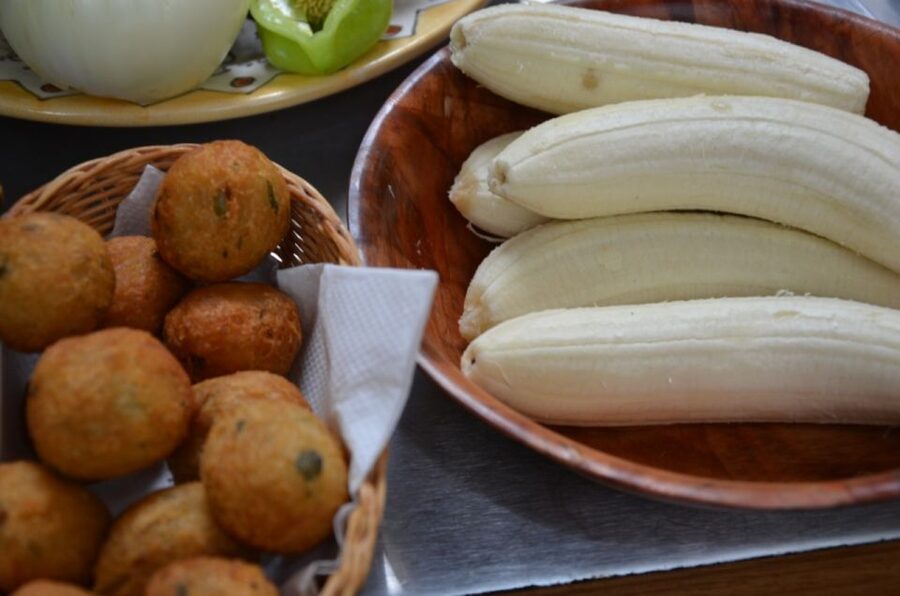
The side dishes are not filler. Cassava sticks bring a crisp, starchy element to the plate, while flavored rice gives the main dish a familiar base. Banana farofa adds something more distinctive.
Farofa is made from toasted cassava flour and is common in Brazilian cooking. This version includes banana, which brings sweetness to a savory meal. It is also one of the more useful recipes to repeat at home because it can change the character of a simple lunch without requiring complicated equipment.
The ingredients are described as widely available around the world. That is a real advantage for a cooking class. Some food lessons teach dishes that are hard to repeat because key ingredients are local or expensive. Here, you should be able to recreate much of the meal after returning home.
Still, widely available does not mean identical. Ingredients can vary by country, and the seafood for moqueca may not be the same as what you find in Brazil. The value is in learning the method, flavor balance, and basic structure.
Dessert changes with the available ingredients
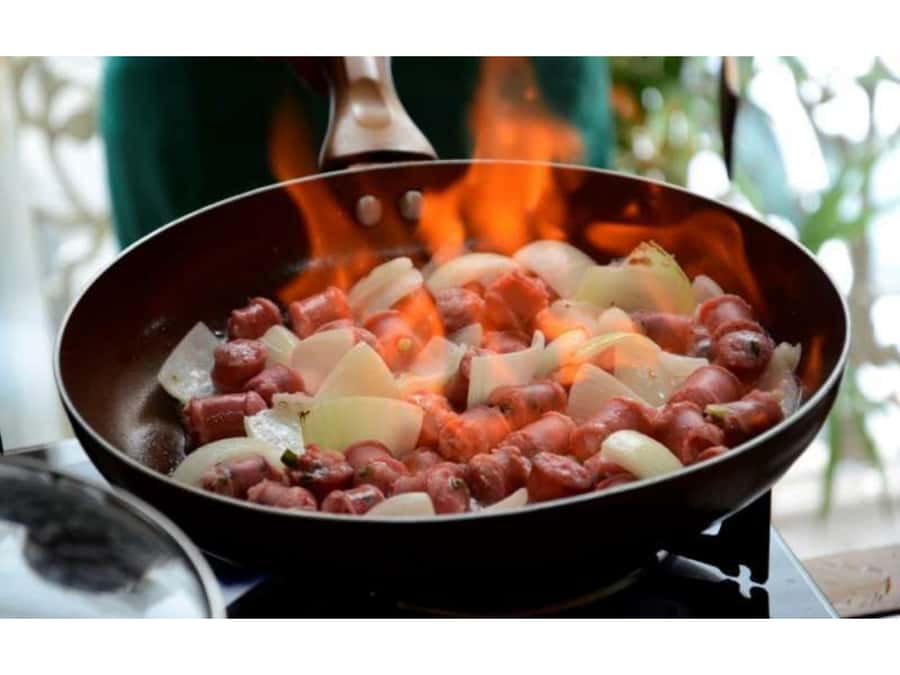
Dessert is a surprise and can vary according to the exotic fruits available or sweets prepared by the chef’s farm. Examples include brigadeiro and doce de leite.
That changing element adds a little uncertainty, but it also means the dessert is not locked into one standard recipe. Brigadeiro is a popular Brazilian sweet, while doce de leite offers a milk-based finish. The class may also use fruit, depending on what is available.
If dessert is a major reason for booking, you will not know the exact final course in advance. If you like trying local variations, the flexible menu is a plus.
A private, small-group format in Copacabana
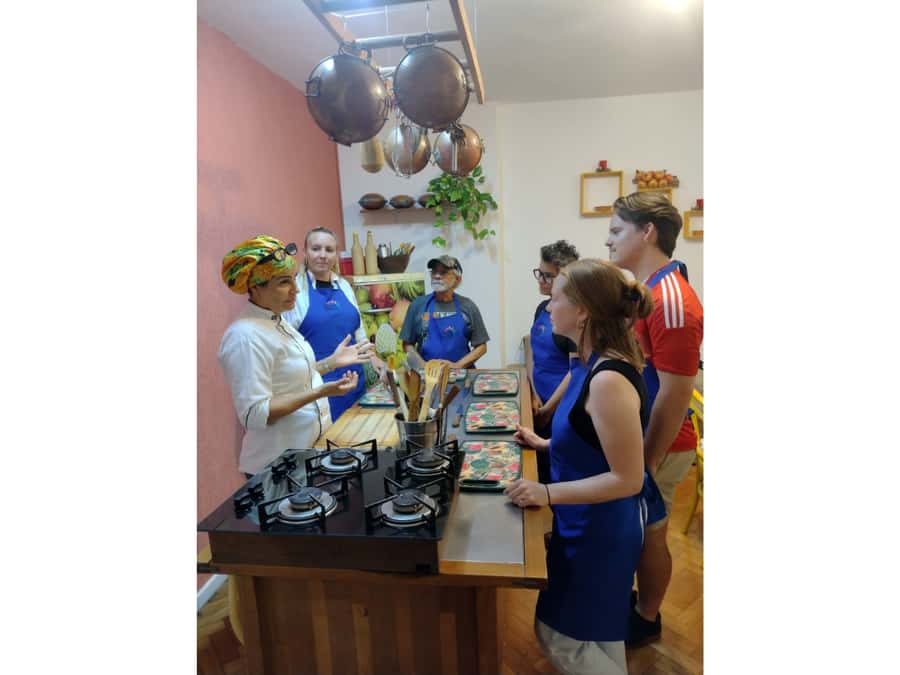
The activity is described as a private group experience with a maximum of seven participants. That combination is worth clarifying when you book, since private group can mean your party receives its own session, while the seven-person limit gives the instructor a manageable class size.
Either way, this is not designed as a large cooking school with dozens of people watching from the back. You should have a better chance to follow the steps, ask questions, and get help when needed.
The class takes place in a cooking studio in the Copacabana area. Transportation is not included, so plan your route separately. The exact starting time depends on availability, and the supplied details describe the activity as three hours while also calling it a four-hour cooking class. Confirm the timing before you build it into a busy Rio schedule.
The small size and hands-on format make this a good choice for couples, families, and small groups of friends. It may also suit solo visitors who enjoy meeting people over a shared meal, although the private-group wording means you should check how your booking is arranged.
Is $220 per person a fair price?
At $220 per person, this is not a budget meal or a casual market lesson. The fee includes the cooking class, ingredients, equipment, five dishes, two drinks, taxes, and handling charges.
I would judge the price by asking what you want from the experience. If you want a cheap introduction to Brazilian food, the cost is high. You can eat local dishes for much less in Rio.
If you want an organized, guided session with a native chef, a small participant limit, a full meal, and two drinks, the value becomes easier to see. You are also learning recipes you can make at home, which gives the experience a longer life than a single restaurant meal.
The personal instruction is especially important here. A large class might offer a similar menu at a lower price, but you would likely get less direct help. At this price, I would book only if the cooking instruction and conversation with Simone matter as much to you as the meal itself.
Who should book this class?
This class suits you if you like to take part rather than sit back. You should be willing to chop, stir, prepare drinks, and follow instructions. No experience is required, so a beginner can join without feeling out of place.
It also works well for anyone who wants a food-focused cultural activity in Rio. Simone’s explanations about Brazilian food and culture add meaning to the recipes, while the meal gives you a clear payoff at the end.
Families should note that the class includes alcoholic drinks, but the provided information does not give an age policy. Ask about that before booking with children.
Food allergies and dietary restrictions also deserve a direct question. The menu includes cheese, sausage, pork, beans, seafood, coconut, and sweets, but no substitutions are specified.
Should you book the Rio cooking class?
Book it if you want a small, hands-on lesson led by Chef Simone, and if you value learning recipes as much as eating them. The strongest reasons are the seven-part menu, the two included drinks, the chance to choose between feijoada and moqueca by day, and the personal attention that comes with a group of no more than seven.
Skip it if $220 feels too high for a meal, if you prefer a quick food tasting, or if you need a fixed duration and menu without checking details first. For the best match, choose Saturday for feijoada and Monday, Wednesday, or Friday for moqueca. Confirm the class length, start time, drink options, and any dietary needs before paying.
FAQ
How long does the cooking class last?
The activity information gives a duration of three hours, while the class description also refers to a four-hour cooking class. Confirm the exact timing and start time when booking.
Where does the class take place?
The cooking studio is in the Copacabana area of Rio de Janeiro.
Which days feature feijoada?
Feijoada, the pork and black bean dish, is offered on Saturdays.
Which days feature seafood moqueca?
Seafood moqueca is offered on Mondays, Wednesdays, and Fridays.
How many people can join the class?
The class has a maximum of seven participants and is described as a private group experience.
Are drinks and ingredients included?
Yes. The price includes all ingredients and equipment, plus two alcoholic drinks: a lime caipirinha and a batida de coco.
Just added around the world
- Romagna: Piadina Cooking Class★ 5.0 · 3 reviews
- Riomaggiore: Cooking Class at a Local’s Home★ 5.0 · 3 reviews
- Rio de Janeiro: Brazilian Cooking Class with Hotel Pickup★ 5.0 · 5 reviews
- Rimini: Pasta & Tiramisu Cooking Class at a Local’s Home★ 4.9 · 38 reviews
- Recco: Cooking Class with Market Visit and Sea Views★ 5.0 · 3 reviews
- Rhodes: Winery Tour, Tasting and cooking with the Winemaker★ 4.8 · 21 reviews
- Rimini:Cooking Class at a Local’s Home★ 5.0 · 3 reviews
- Ramen Making from Scratch +Akihabara Tour –Cooking Class★ 5.0 · 25 reviews
Cooking Classes, compared.
Half-Day Thai Cooking Class at Organic Farm in Chiang Mai
Read our review →
Florence: Pasta Cooking Class with Unlimited Wine
Read our review →
3 in 1 Cooking Class near Navona: Fettuccine, Ravioli & Tiramisu
Read our review →
Hanoi Cooking Class: Culture, Local Market & Meaning CSR Impact
Read our review →
5 Traditional Dishes Hanoi Cooking Class with Market Trip
Read our review →
Cooking Class and Lunch at a Tuscan Farmhouse with Local Market Tour from Florence
Read our review →