
Review · FARM & COUNTRYSIDE
Samarkand: Uzbek Cooking Class in a Village Home
The best part of this Samarkand excursion is not simply learning a recipe. It is sitting in a village home with Bekjon, his mother, and other family members, then helping prepare food in the same open-air setting used for family meals. Plov over a wood fire gives the class its centerpiece, while mantu offers a more hands-on lesson in dough, filling, and shaping.
I like two things especially: the chance to see rural life beyond Samarkand’s grand monuments, and the warm, personal teaching style reported from Bekjon and his family. You may also visit the garden, feed cows, sheep, chickens, or donkeys, and drink tea under a grapevine while the food cooks. The main consideration is the one-hour drive each way and the fact that the cooking centers on meat, so this is not a good fit for vegans, vegetarians, or people with food allergies.
Key points
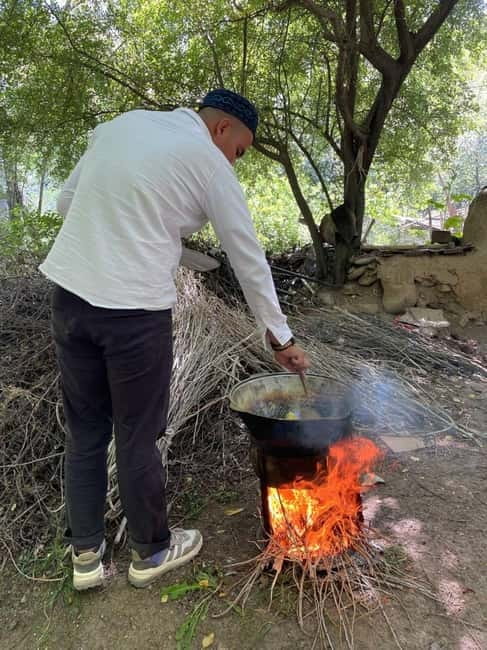
- Open-fire plov: Help cook Uzbekistan’s national dish in a large cast-iron qozon with rice, carrots, onions, meat, and spices.
- Mantu from scratch: Roll dough, add the filling, shape the dumplings, and steam them in a traditional mantuvarka.
- Family-home setting: Bekjon, his mother, and other relatives provide the instruction and hospitality.
- Countryside break: Visit a village garden, meet farm animals, and see a quieter side of the Samarqand Region.
- Useful transport: Pickup and return are included from a Samarkand hotel, train station, or airport.
- Flexible booking: The five-and-a-half-hour experience includes free cancellation up to 24 hours before departure.
Leaving Samarkand for a village kitchen
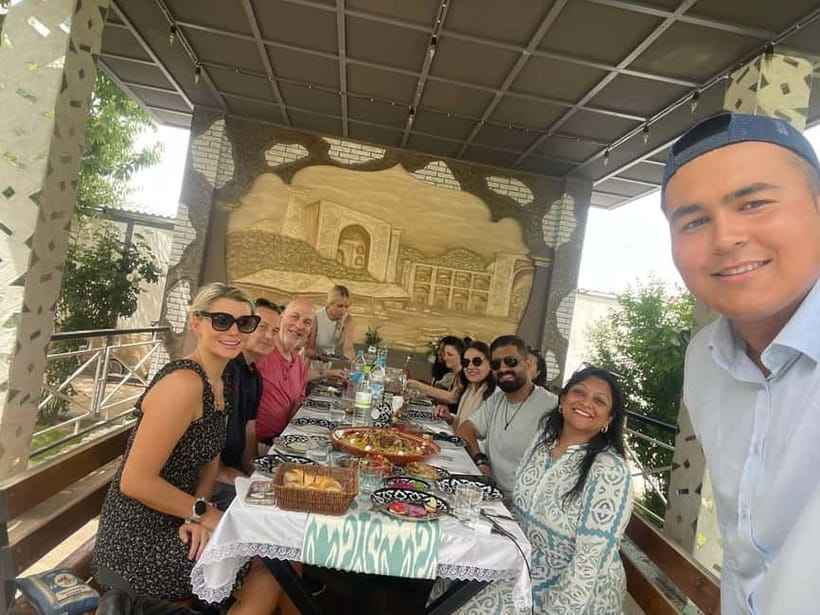
Samarkand is packed with tiled monuments and busy sightseeing stops. This experience gives you a different view of the region, one hour outside the city, where daily life follows gardens, animals, family meals, and the seasons.
The total outing lasts about five and a half hours. That includes transport from Samarkand, roughly three hours and forty minutes of cooking and village time, and the return journey. Since pickup is included, you can request collection from a hotel, train station, or airport. Give the provider your exact pickup address in advance, especially if you are arriving by train or flying in.
The drive is part of the experience, but it also affects the value. You are giving up a half day that could otherwise be spent in central Samarkand. In return, you get access to a private family setting and a practical cultural activity that is hard to reproduce in a restaurant kitchen. I would choose this on a day when you want a slower pace, rather than on a tightly packed sightseeing day.
Bekjon handles the guiding in English and has been praised for communicating promptly before pickup and answering questions about Uzbek culture, history, and village life. His approach appears flexible. One visitor was asked in advance about food preferences and expectations, which is a useful touch for a cooking class.
More Farm Cooking Classes in the world:
- Half-Day Thai Cooking Class at Organic Farm in Chiang Mai
★ 5.0 · 19,087 reviews - Cooking Class and Lunch at a Tuscan Farmhouse with Local Market Tour from Florence
★ 5.0 · 4,831 reviews - Chiang Mai: Authentic Cooking Class with Market & Farm Visit
★ 4.9 · 4,546 reviews
Arrival at the clay-brick family home
The cooking takes place at a traditional village home surrounded by fruit trees, vegetable patches, and open fields. The setting is simple rather than polished, which is precisely the point. You are not entering a staged demonstration kitchen. You are being welcomed into a working family environment.
You can expect to meet Bekjon’s mother and, depending on the day, other relatives such as his sister-in-law or friend Zulfiya. His mother receives particular praise for demonstrating the cooking techniques and patiently explaining the steps. Translation apps may sometimes help with family conversations, but the guide speaks English and handles the main explanations.
Before cooking begins, you may have time to look around the garden and meet the animals. Cows, sheep, chickens, and donkeys are part of the home’s daily life. Feeding them gives children and animal lovers an extra reason to enjoy the visit, although anyone with animal allergies should think carefully before booking.
The village tour also helps explain why Uzbek cooking uses the ingredients and methods it does. A vegetable patch is not just scenery. It connects the meal to local produce, household work, and the way food is prepared for family gatherings. You will get more from this visit if you ask questions rather than treating it as a quick cooking demonstration.
Making plov in a qozon
Plov, also called pilaf or pilov, is the main event. It is Uzbekistan’s national dish, and it carries a social role as well as a culinary one. Families prepare it for gatherings, celebrations, and large shared meals. Here, you take part in the process instead of simply receiving a plate at the end.
The ingredients include rice, carrots, onions, lamb or beef, and spices. You help select and prepare the ingredients, then learn how they are layered in a large cast-iron qozon. The plov cooks over a wood-fired stove or open fire, which adds a strong sense of place and makes the timing of the meal part of the lesson.
This is not likely to feel like a fast recipe class. Plov needs time to cook, and the dish develops slowly as the ingredients soften and the rice takes on flavor. You may stir, taste, and assist while the host explains what is happening. That waiting time is useful rather than empty. You can explore the garden, feed the animals, try tea and local snacks, or sit under a grapevine.
I like that this process shows the work behind a famous national dish. In a Samarkand restaurant, plov arrives ready to eat. Here, you see how much attention goes into the rice, meat, vegetables, heat, and timing. The drawback is that the experience centers on meat, and the supplied information specifically says it may not suit vegetarians or vegans. Ask about your needs before booking if you have allergies or dietary restrictions.
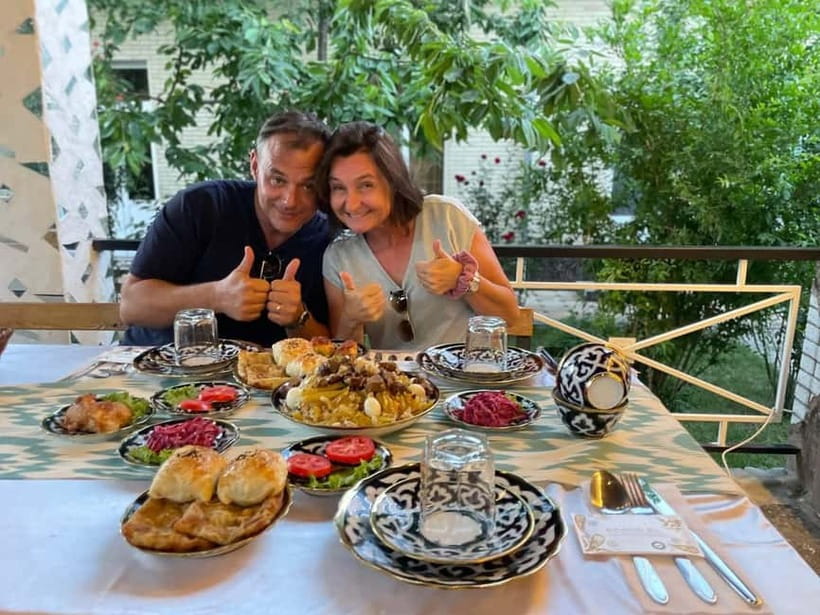
The portion can also be generous. One person found the serving too large to finish alone and shared it with Bekjon’s mother. That communal way of eating is part of the appeal, but it means you should not expect a small tasting plate.
Shaping mantu by hand
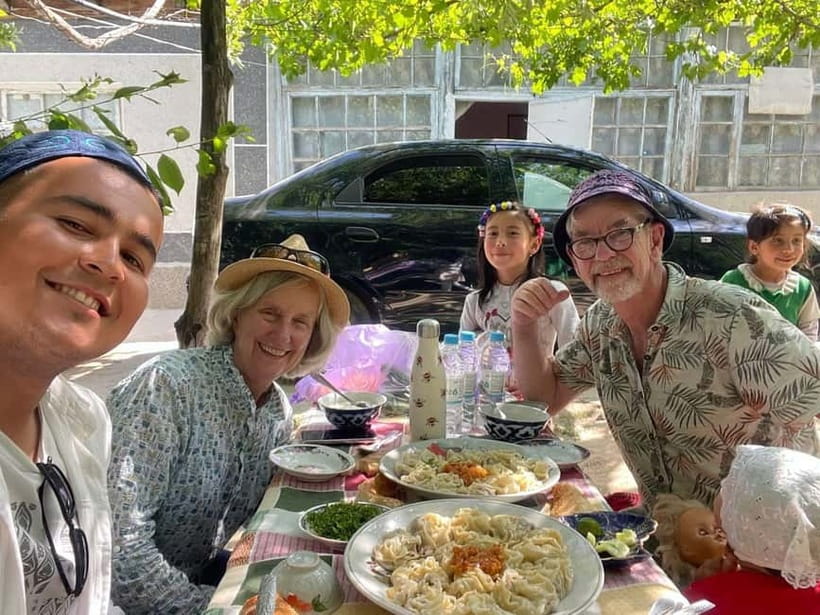
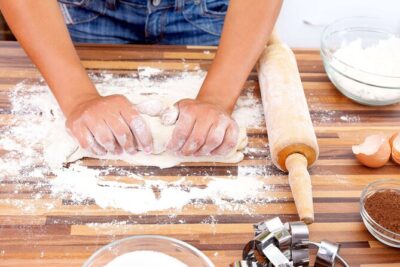
The second cooking focus is mantu, delicate steamed dumplings filled traditionally with minced meat and onions. You roll out thin dough, add the filling, shape the dumplings, and place them in a multi-layered mantuvarka for steaming.
Mantu requires more handwork than plov. You get to practice the dough and folding rather than simply watching a pot simmer. The shapes may take a little patience, especially if you have never made dumplings before. That is where the local guidance matters. Bekjon and his family can show you the traditional method and help correct your technique.
The dish also opens a window onto household traditions. Mantu preparation is often shared among women in village homes during holidays and family gatherings. Making the dumplings together gives the class a social quality. It feels less like a formal lesson and more like helping with a family meal.
Vegetarian fillings such as pumpkin or potato are offered for mantu. That is helpful, but it does not make the whole experience vegetarian. Plov and the wider cooking activity involve meat, so vegetarians and vegans should not book on the assumption that a substitute meal will cover everything.
Different visits may focus more heavily on plov or mantu. The description presents both as central possibilities, while several detailed experiences focus on plov and others include both dishes. If one dish matters most to you, confirm the plan with Bekjon before the day.
More Hands-On Workshops in the world:
- Florence: Pasta Cooking Class with Unlimited Wine
★ 4.9 · 10,285 reviews - 3 in 1 Cooking Class near Navona: Fettuccine, Ravioli & Tiramisu
★ 5.0 · 7,376 reviews - Florence: Pasta & Tiramisu Cooking Class with Unlimited Wine
★ 4.9 · 6,708 reviews - Florence: Pasta Cooking Class with Unlimited Wine
★ 5.0 · 6,413 reviews
Tea, snacks, and time with the family
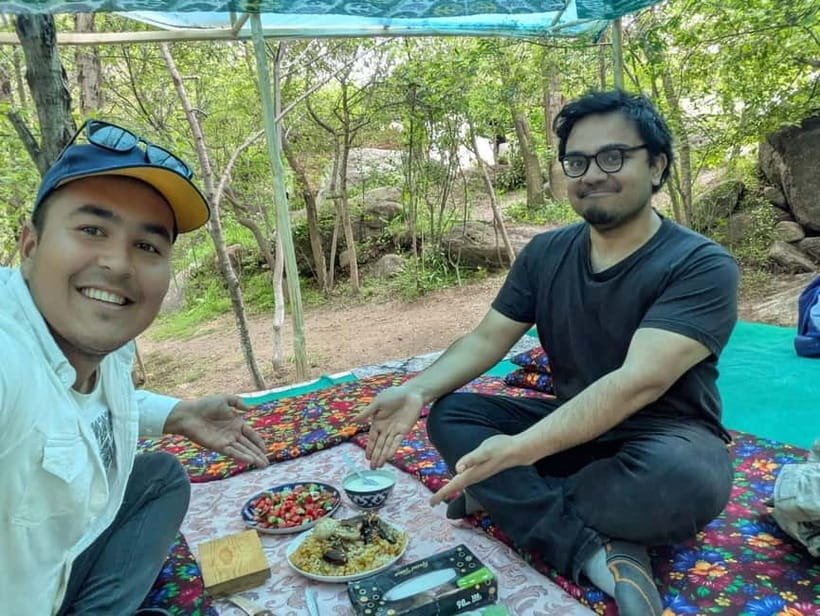
Food is only half the reason to come. The other half is the chance to sit with an Uzbek family in their own home. Tea under the grapevine gives the day a relaxed pause, and local snacks may be served while the main dish cooks.
The strongest part of the experience is the informal conversation. Bekjon can discuss Uzbek history, customs, village life, and food traditions in English. Past visitors also learned about Amir Temur, local paper making, and traditional wedding clothing during their time with him. These extras are not guaranteed as a fixed part of the cooking schedule, so treat them as possible additions rather than promised stops.
Trying traditional wedding clothes has particular appeal if you want a cultural activity beyond food. Still, the core booking is the cooking class and village visit. Do not choose it mainly for a history tour or craft demonstration.
The family setting also means the pace can feel personal and unhurried. That is good if you like conversation and want to ask about daily life. It may feel less structured than a professional culinary school. You are visiting a home, not moving through a tightly timed restaurant workshop.
What the transport and timing mean for you
Pickup and drop-off in Samarkand are included, and transport receives a perfect score from all listed ratings. Bekjon is reported to arrive on time and keep communication clear before the activity. That matters because a one-hour trip each way can become stressful if pickup arrangements are vague.
The provider accepts pickup from a hotel, train station, or airport, but you need to send the address. I would do this as soon as you book and confirm the start time again if you have a train to catch later that day. The five-and-a-half-hour duration is an estimate for the full activity, so do not schedule a close connection immediately afterward.
The English-language guiding is another practical strength. Bekjon’s English has been described as solid, and he answers questions about history and culture during the ride and cooking. Communication at the family home may sometimes rely on translation apps, especially with relatives who are not the main guide.
Wear comfortable clothing. You will be handling ingredients, working around a fire, and possibly sitting or standing for extended periods. Sunscreen and a camera are sensible. Fireworks are not allowed, which is an unusual but clear rule. People with back problems, recent surgery, or certain medical conditions should consider the physical demands before booking.
Is $52 a fair price?
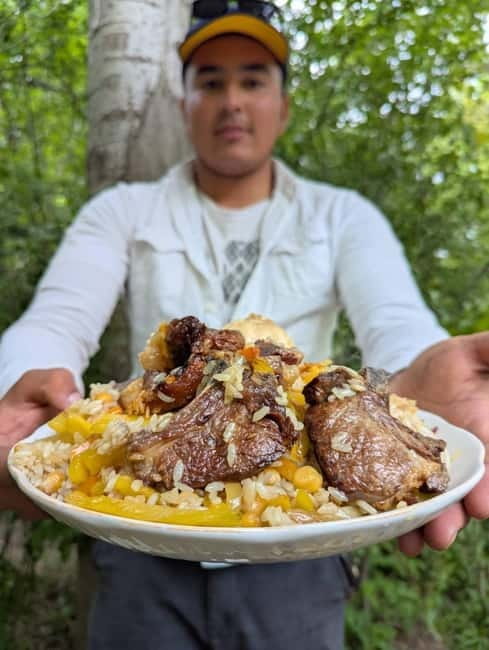
At $52 per person, the value depends on how much you want a personal village experience rather than a simple meal. The price includes round-trip transfer from Samarkand, the cooking masterclass, ingredients, a guided village visit, tea under a grapevine, and the finished food.
That is a reasonable package for a five-and-a-half-hour outing, especially since transport alone would add cost and planning if arranged privately. You also get direct access to a family home, an open-fire cooking method, and the chance to prepare two important Uzbek dishes.
It is less compelling if your only goal is to taste plov. Samarkand has restaurants where you can order it more cheaply and quickly. The value here comes from the process: shopping or preparing ingredients, learning the cooking method, meeting the family, seeing the garden and animals, and sharing the meal.
The price also works better for people who enjoy participation. If you prefer to sit back while a guide cooks, you may find the drive and half-day commitment too much. If you want to learn a dish you can attempt at home, the hands-on format gives you something lasting beyond lunch.
Who should book this experience?
I would recommend it to people who have already allowed time for Samarkand’s main sights and want to see daily life outside the city. It suits food lovers, curious cooks, couples, families with older children, and anyone who prefers small personal encounters to formal sightseeing.
It is also a good choice for visitors who want context for Uzbek hospitality. Sharing plov from one large serving dish, sitting with the family, and drinking tea during the cooking process explain the social side of the cuisine better than a restaurant meal alone.
I would hesitate if you are vegetarian, vegan, allergic to food ingredients, allergic to animals, or managing diabetes. The activity information also lists people with back problems, recent surgeries, babies under one year, and people over 95 as unsuitable. Those restrictions may seem broad, but the provider gives them clearly, so take them seriously and ask before paying.
Cancellation is free up to 24 hours before the activity, and you can reserve now and pay later. That gives you some flexibility if your Samarkand plans are still moving around.
Should you book the village cooking class?
Book it if you want to cook plov over a wood fire, shape mantu by hand, and spend time with an Uzbek family in a real village home. Bekjon’s prompt communication, English guiding, and family involvement make the day easier for first-time visitors, while the garden, animals, tea, and shared meal give it a personal feel.
Skip it if you have very limited time in Samarkand, dislike meat, need a fully vegetarian menu, or want a formal cooking school with exact timings. For everyone else, the $52 cost buys more than lunch. It buys a half day of food, conversation, countryside, and a practical look at how Uzbek family hospitality works.
FAQ
How far is the village from Samarkand?
The village is about one hour from Samarkand. The total experience lasts approximately five and a half hours, including the drive there and back.
Is pickup included?
Yes. Pickup and return transfer are included from a Samarkand hotel, train station, or airport. You need to provide the exact pickup address.
What language is the tour conducted in?
The live guide speaks English. Translation apps may help with conversations involving family members who are not the main guide.
What dishes will I learn to make?
The class focuses on Uzbek plov and mantu. The exact emphasis can vary, so confirm with the provider if you especially want to make one of the two dishes.
Is the plov cooked over an open fire?
Yes. Plov is prepared in a large cast-iron qozon over a wood-fired stove or open fire.
What is mantu?
Mantu are steamed dumplings made with thin dough and a filling traditionally made from minced meat and onions. They are cooked in a multi-layered pot called a mantuvarka.
Are vegetarian options available?
Vegetarian pumpkin or potato mantu are offered. However, the overall activity involves cooking with meat, so it is not suitable for vegetarians or vegans according to the activity information.
Are ingredients included?
Yes. The ingredients used for the cooking class are included in the price.
What should I bring?
Bring comfortable clothes, sunscreen, and a camera. Fireworks are not allowed.
Can I cancel the booking?
Yes. You can cancel up to 24 hours in advance for a full refund. Reserve now and pay later is also available.
Just added around the world
- Salzburg: Dinner Cooking Class and Music★ 4.9 · 48 reviews
- Sambo cooking class★ 5.0 · 3 reviews
- Samarkand: Village Tour with Plov Cooking Class & Home Visit★ 5.0 · 29 reviews
- Samarkand: Cooking class with local family★ 5.0 · 3 reviews
- Salento: Authentic Cooking Experience with Fresh Pasta and Local Products★ 5.0 · 8 reviews
- Salerno: Private Cooking Class at a Local’s Home★ 4.9 · 12 reviews
- Sal Island: Catxupa Cooking Class with a local family★ 4.7 · 72 reviews
- Barcelona: Paella Seafood Master Cooking Class with Sangria★ 5.0 · 73 reviews
Farm & Countryside Cooking Classes, compared.
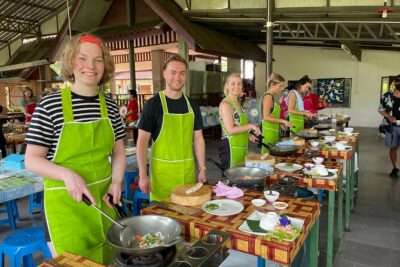
Half-Day Thai Cooking Class at Organic Farm in Chiang Mai
Read our review →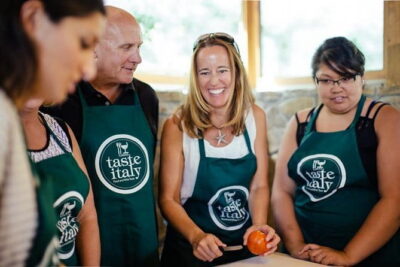
Cooking Class and Lunch at a Tuscan Farmhouse with Local Market Tour from Florence
Read our review →
Chiang Mai: Authentic Cooking Class with Market & Farm Visit
Read our review →
Ubud: Balinese Cooking Class at an Organic Farm
Read our review →
Ubud: Authentic Cooking Class in a Local Village
Read our review →
Chiang Mai: Cooking Class with Organic Farm at Mama Noi
Read our review →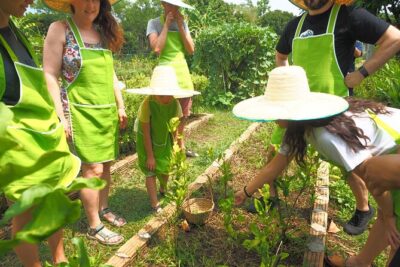
Hands-On Cooking Class & Farmhouse Tour on the Amalfi Coast
Read our review →Browse the lists this tour appears in