
Review · BANGKOK
Tingly Thai Cooking School Evening Class
Thai cooking is best learned with a wok in front of you, not from a restaurant table. At Tingly Thai Cooking School, you prepare a multi-course dinner, learn how ingredients work together, and eat the results while the evening is still young. Dinner is included, so arrive hungry.
I like the small class size, capped at 12 people, and the clear three-part setup: prep table, cooking stations, and dining tables. I also like that you leave with recipes and practical advice on storing Thai food and finding packaged ingredients at home. The main catch is that the evening class does not include the market visit, and one dish may still taste hot even after you request mild spice.
Key points to know before booking
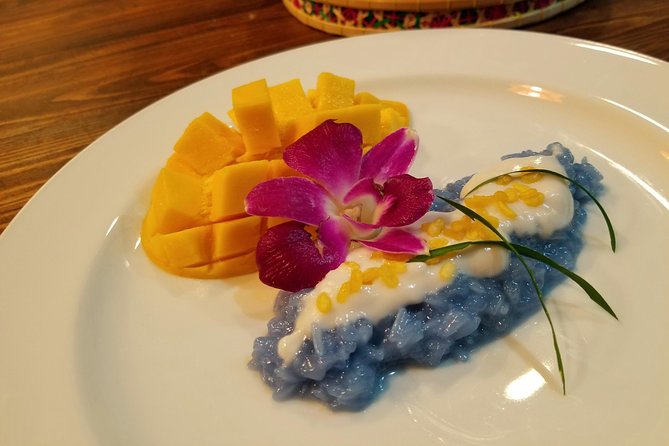
- A full Thai dinner is cooked and eaten during the class, with sample menus including pad Thai, curry, soup, and mango sticky rice.
- The 6 to 9 pm class is designed for beginners, with instructors such as Nam, Song, Cho, Sho, and Chon guiding each step.
- The room is air-conditioned and clean, a welcome feature when Bangkok is hot and humid.
- Ingredients are prepared in advance and portioned out, keeping the class moving but limiting some of the market-to-kitchen work.
- A market tour is not part of the evening schedule, so book an earlier class if that feature matters to you.
- The price is $40.76 per person, including dinner, bottled water, equipment, a recipe booklet, and vegetarian options.
Three hours of cooking instead of another Bangkok dinner
The class runs from 6 to 9 pm, a useful slot for your Bangkok schedule. You can spend the afternoon sightseeing, return to your hotel to cool off, then head to Suriyawong for a meal that gives you something to take home besides another restaurant bill.
The evening is not a demonstration where you sit and watch a chef do everything. You handle ingredients, prepare dishes, cook at your station, and eat each course as it is finished. That makes the meal feel like an activity as well as dinner.
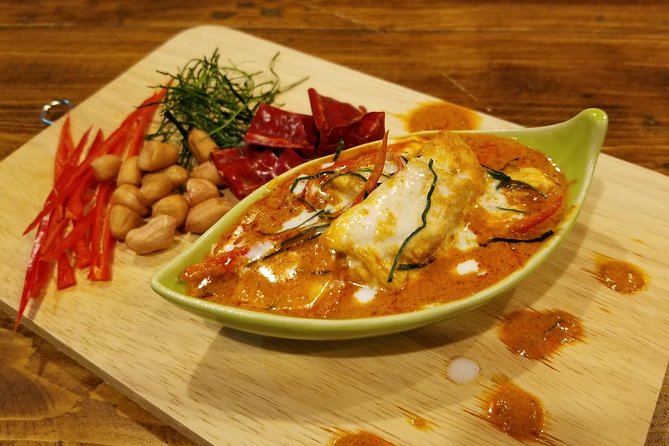
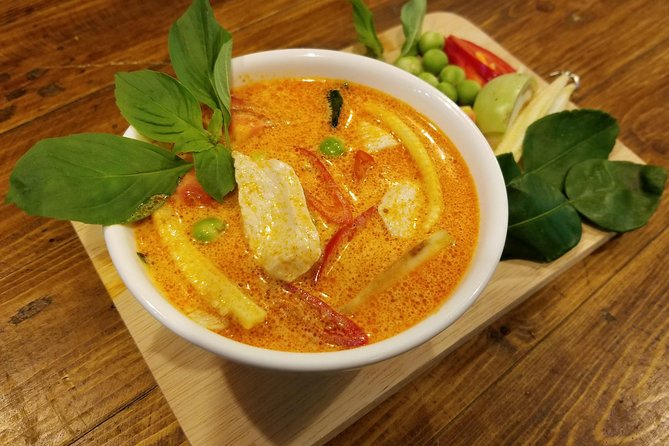
The menu changes by day, so you should not book with one exact dish guaranteed unless the school confirms it. Possible dishes include chicken green curry, tom yum or another hot and sour soup, pad Thai or fried noodles with prawns, panang curry, and sticky rice with mango.
One particularly appealing menu combination includes tom yum soup, pad Thai, panang curry, and mango sticky rice. It gives you four different lessons in Thai cooking: a broth with sharp heat and sourness, noodles cooked quickly in a wok, a creamy curry, and a sweet coconut-based dessert.
More Thai Cooking Classes in Bangkok:
- Bangkok: Hands-on Thai Cooking Class and Market Tour
★ 4.9 · 1,614 reviews - Bangkok: Tingly Thai Cooking School Half-Day Cooking Class
★ 4.9 · 1,191 reviews - Bangkok: Maliwan Thai Cooking Class with Market Tour
★ 4.9 · 1,133 reviews
What happens from the first chopping board
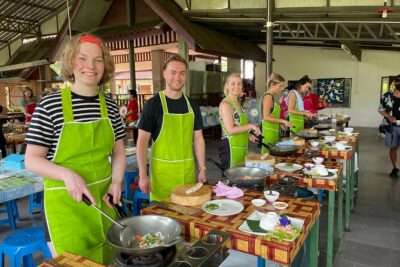
The class uses three working areas: dining tables, a preparation table, and cooking stations. You begin by learning about the ingredients and preparing them at the central table. The ingredients are already portioned, so you spend less time measuring and more time learning what each item does.
This setup is practical for a short evening class. You are not sent through a long shopping trip or asked to spend half the session grinding and weighing ingredients. The tradeoff is that you get less practice selecting produce or building a curry paste from scratch.
After preparation, you carry the ingredients to the cooking stations. The instructor explains when to add each item and how to work the pan. You then cook your portion before returning to the dining area to eat it.
The cycle repeats for each course. While you eat, the support staff tidy the cooking area and prepare for the next dish. This keeps the class orderly and gives you a pause between cooking tasks.
You should expect a lively room rather than a quiet lesson. Instructors use humor and plenty of encouragement, and the group often cooks and eats together. That tone works especially well if you are new to Thai food or nervous about cooking in front of other people.
Instructors who keep beginners involved
The school uses several instructors, and the teacher assigned to your class may be Nam, Song, Cho, Sho, Scho, or Chon. The strongest part of the teaching style is the mix of clear instruction and easy humor.
Nam is known for keeping the pace energetic and entertaining. Song is described as friendly, funny, and careful to involve everyone in the tasks. Cho brings a positive, witty approach, while Sho and Scho are praised for their energy and personality. Chon has been noted for explaining portions and ingredients clearly.
These details matter because a cooking class can feel awkward if the instructor talks over the group or lets one confident cook take over. Here, the format is built around participation. You should still speak up if you need help or if the instructions move too quickly.
One useful caution comes from the class pace. Ingredients are prepared in advance, but the cooking instructions can still come in quick bursts, especially when several people are working at once. If you need extra time, ask the instructor to repeat a step before adding anything to the pan.
The class is suitable for beginners, including families with teenagers. You do not need to arrive with serious cooking skills. The instructor tells you when to add each ingredient, and the prepared portions reduce the chance of making a major mistake.
Four dishes, one very filling dinner
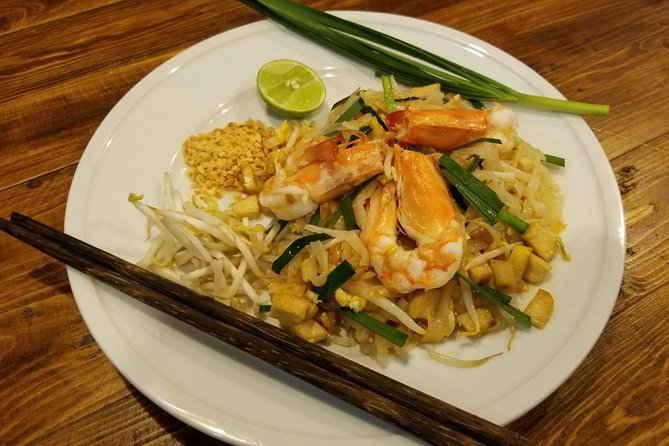
The amount of food is one of the best reasons to arrive hungry. Several menus include four dishes, and you eat each course after preparing it. This is more satisfying than a class where you cook one small plate and leave to find dinner elsewhere.
Pad Thai gives you a quick introduction to balancing sweet, salty, sour, and spicy flavors. The noodle dish also teaches timing, since ingredients need to reach the pan in the right order. A version with prawns may appear on the menu, but the exact dish depends on the day.
Green curry and panang curry show a different side of Thai cooking. You learn how a curry base works with coconut milk and how herbs and peppers build flavor. The green curry may be served with chicken, while panang curry provides a thicker, sweeter, and often hotter style.
Tom yum or another hot and sour soup brings lime, herbs, and chili into a lighter dish. It is a useful lesson in balance because the soup should taste sharp and fragrant rather than simply hot.
Mango sticky rice provides a calm finish after the savory courses. You learn how the rice, coconut mixture, and fruit fit together, then eat dessert while the kitchen is reset.
The dishes are designed to be manageable at home. You are not expected to master every Thai technique in three hours, but you do gain a working sense of ingredient order, portion size, and flavor balance.
More Hands-On Workshops in Bangkok:
- Hands on Thai Cooking Class and Market Tour
★ 5.0 · 660 reviews - Tingly Thai Cooking Class with Morning Market Tour
★ 5.0 · 589 reviews - Hands-on Thai Cooking Class & Market Tour in Sukhumvit
★ 5.0 · 571 reviews - Pink Chili – Thai Cooking Class and Market Tour in Bangkok
★ 5.0 · 416 reviews
Spice levels deserve a clear conversation
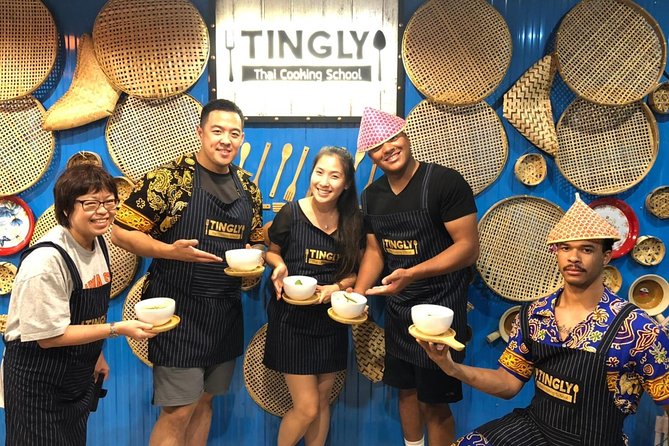
You can request a mild version, and the school offers vegetarian options. Still, spice adjustment may not be perfect for every dish.
The main issue is curry made with peppers. A red curry may need those peppers to achieve its color and character, so an instructor may reduce the heat only so far. If you are sensitive to chili, tell the instructor before cooking begins, not when the curry is already in the pan.
This is also a good class for people with different preferences in the same group. One person can ask for more heat while another requests less, although the amount of adjustment may depend on the recipe. Ask what can be changed before you start.
The menu may contain fish sauce, prawns, chicken, or other animal products, depending on the day. Vegetarian choices are available, but you should state your needs clearly when booking or at the start of class.
Fresh ingredients and useful advice for home
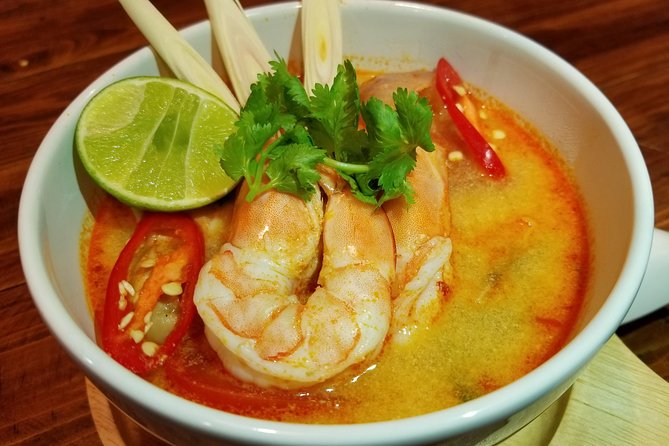
The class places real attention on Thai ingredients, not just on following a recipe. You learn what goes into the dishes and how the parts work together. That makes the recipe booklet more useful than a simple list of ingredients.
The school also explains how to store Thai food properly. This is a small detail, but it matters if you plan to buy herbs, curry paste, coconut products, or other ingredients after the class and cook later at home.
You may also receive advice on what packages and products to look for in a shop. This is helpful for cooks outside Thailand, where ingredient labels and brands may look different from those in Bangkok.
The recipes are a practical souvenir. They let you recreate the dishes for friends and family instead of leaving the techniques behind in Thailand. You will still need access to the right ingredients, but the class gives you a clearer starting point.
The evening does not include the market tour described as part of the school’s broader cooking instruction. That distinction is important. If learning how to choose fresh vegetables or seeing ingredient stalls is central to your plans, check the schedule carefully and consider an earlier class.
A clean, air-conditioned room in Suriyawong
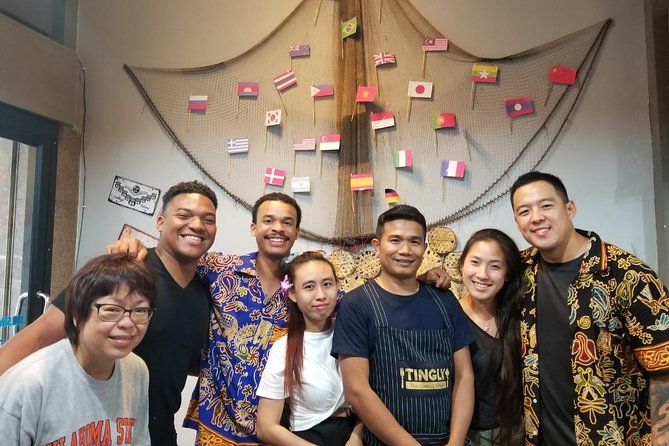
The meeting point is Tingly Thai Cooking School at Suriyawong 17/1 Soi Prachum in Bang Rak. The activity ends at the same place.
The classroom is air-conditioned and clean, which makes a real difference during an evening of standing near cooking stations. You also receive bottled water, and kitchen equipment is provided, so you do not need to bring cooking tools.
There can be two addresses connected with the school on map services. One is the reception office, where you check in, and the actual kitchen classroom is a short walk away. Follow the school’s directions rather than assuming the first map pin is the cooking room.
The school is near public transportation, though one class attendee estimated about a 15-minute walk from the train station. Allow extra time for finding the correct office and moving to the kitchen. Arriving early is wiser than reaching the meeting point at 6 pm and feeling rushed.
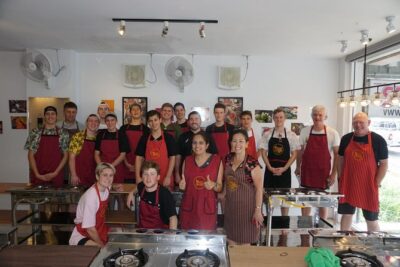
The group limit is 12 people. Some sessions may be smaller, which gives you more room to ask questions and makes it easier for the instructor to watch each cooking station. A small class also helps if you are traveling alone and want a social evening without joining a huge group.
Is $40.76 good value?
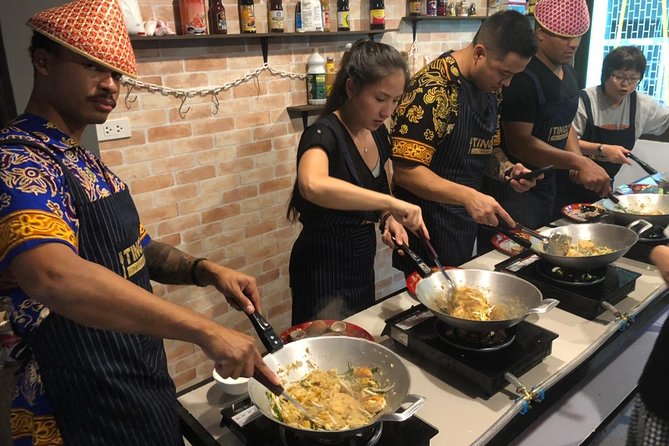
At $40.76 per person, the price is reasonable for a three-hour activity that replaces dinner. You receive the class, food, bottled water, kitchen equipment, vegetarian options, and recipes. Alcohol is not included, but that is easy to plan around.
The value is strongest if you arrive hungry and treat the class as both a meal and a lesson. Four dishes in a Bangkok restaurant could easily cost a similar amount, especially if you are ordering for more than one person. The added value here is the instruction and the recipes you take home.
The price is less compelling if you want a serious professional cooking course. Ingredients are portioned in advance, and the instructor guides you through a set menu. You will not spend the evening shopping, designing a menu, or learning every stage of curry-paste production.
For most visitors, that simplicity is a benefit. You get a fun introduction without needing to understand Thai cooking before you arrive. The class offers enough hands-on work to feel involved, while the structure prevents the evening from becoming confusing.
Who will enjoy this evening most?
I would choose this class if you want to learn several classic Thai dishes in one sitting and prefer doing the work yourself. It suits first-time cooks, couples, families, teenagers, and anyone who wants a social Bangkok evening with a clear start and finish.
It is also a good pick if you have already eaten plenty of restaurant food and want a different way to understand Thai cuisine. Preparing the dishes helps you notice the role of lime, chili, coconut, herbs, noodles, and curry pastes more clearly.
You may want another format if a market visit is essential, if you dislike group activities, or if you need strict control over chili levels. The class can reduce spice, but a pepper-based curry may not become fully mild.
The cooking stations and short walking transfer also mean you should wear comfortable clothes and shoes. The provided information does not state a dress code, so keep it simple and practical.
Should you book Tingly Thai Cooking School?
I would book it if you want a well-organized, beginner-friendly evening that gives you a full dinner and recipes for home. The strongest reasons are the small group limit, air-conditioned classroom, upbeat instructors, hands-on cooking, and generous four-course format.
Book with realistic expectations. You are learning a practical version of Thai cooking, not becoming a master chef in three hours. Confirm the day’s menu and ask about spice adjustments if those details matter to you, and do not assume the evening class includes a market visit.
Free cancellation is available up to 24 hours before the 6 pm start time. Changes or cancellations within 24 hours are not refundable, and poor weather may lead to a new date or full refund. If you arrive hungry, allow time to find the reception point, and bring an appetite, this is a strong-value Bangkok activity.
FAQ
What time does the Tingly Thai Cooking School evening class start?
The class starts at 6 pm and runs until about 9 pm.
Where does the cooking class meet?
You meet at Tingly Thai Cooking School, Suriyawong 17/1 Soi Prachum, in Bang Rak, Bangkok. The activity ends back at the meeting point.
Is dinner included?
Yes. You cook and eat the dishes prepared during the class. Bottled water is also included.
Are vegetarian options available?
Yes. Vegetarian options are available, but you should make your dietary needs clear when booking or at the start of class.
Does the evening class include a market tour?
No. The evening class specifically excludes the market tour. Market visits may be connected with other class schedules, so confirm before booking if that is important to you.
How many people can join the class?
The activity allows a maximum of 12 participants. Some sessions may have fewer people.
Can I cancel for a full refund?
Yes, if you cancel at least 24 hours before the experience start time. Cancellations or changes made within 24 hours are not refunded.
More Evening Classes in Bangkok
- Chiang Mai: Evening Cooking Class and Local Market Visit
★ 4.9 · 648 reviews - Paris Evening Cooking Class French Dinner and Market Visit Option
★ 5.0 · 430 reviews - Evening Cooking Class in Organic Farm with Local Market Tour
★ 5.0 · 394 reviews - Valencian Paella Cooking Class, Tapas & Sangria – Evening
★ 5.0 · 303 reviews
Just added around Bangkok
- Bangkok Udomsuk Thai Cooking Class with local market tour★ 5.0 · 5 reviews
- Thai Cooking Class in Bangkok★ 5.0 · 23 reviews
- Hands-On Thai Cooking Class Bangkok with Local Chef (Small Group)★ 5.0 · 119 reviews
- Thai cooking class experience in Bangkok with Tingly Thai cooking school★ 5.0 · 59 reviews
- White Lotus Thai Cooking Class in Bangkok★ 5.0 · 31 reviews
- Thai Cooking Class★ 5.0 · 25 reviews
- Sompong Thai Cooking School in Bangkok★ 5.0 · 4 reviews
- Baipai Thai Cooking School: Authentic Cooking Class Tour★ 5.0 · 3 reviews
Thai Cooking Classes, compared.
Half-Day Thai Cooking Class at Organic Farm in Chiang Mai
Read our review →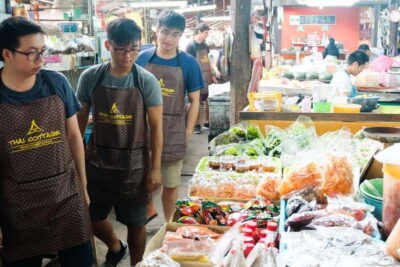
Chiang Mai: Cooking Class, Market & Thai Herbs Garden Tour
Read our review →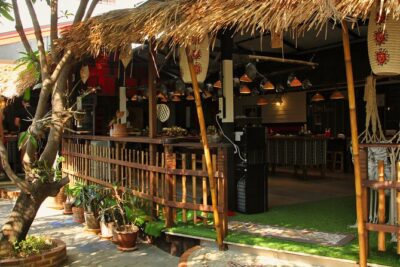
Phuket Thai Cooking Class with Market Tour Option
Read our review →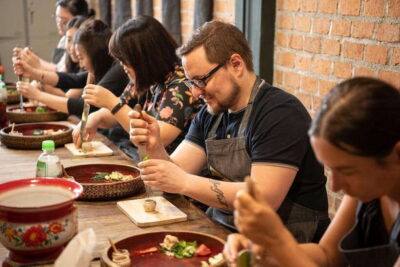
Bangkok: Hands-on Thai Cooking Class and Market Tour
Read our review →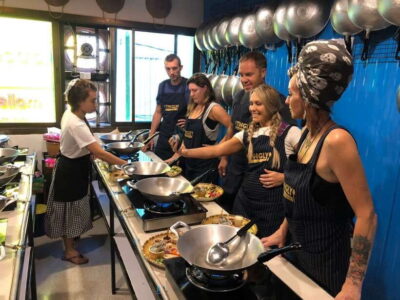
Bangkok: Tingly Thai Cooking School Half-Day Cooking Class
Read our review →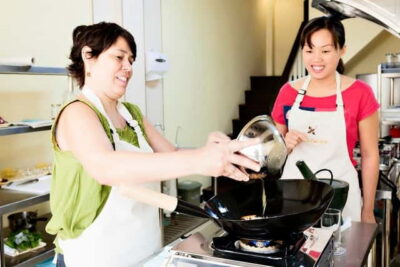
Bangkok: Maliwan Thai Cooking Class with Market Tour
Read our review →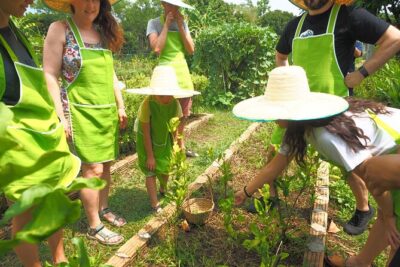
Browse the lists this tour appears in