Review · SAN GIMIGNANO
3-hour Tuscan Cooking Class with Wine & Oil Tasting
The clever twist here is that you start with dessert, then work backward through a Tuscan meal. At Podere La Marronaia, you’ll bake a traditional sweet, prepare four kinds of bruschetta, shape Pici and ricotta gnocchi, and sit down to eat what you made with wine, olive oil, and balsamic vinegar.
I like the tiny group size, capped at six, and the way the class connects cooking with the farm’s own production. I also like that the food is practical rather than showy. You learn dishes you can try again at home, not just watch a chef perform.
The main consideration is the price, about $227.67 per person. That is a serious spend for three hours, though the meal, wine tasting, olive oil tasting, host, and hands-on instruction are included. You’ll also need to arrange your own transport unless you select an option that includes pickup.
Key points at a glance
- Dessert comes first: You begin by baking a traditional Tuscan dessert before moving on to savory dishes.
- Four kinds of bruschetta: Fresh seasonal vegetables form the base of several simple but distinct preparations.
- Two handmade pastas: You’ll make both Pici and ricotta gnocchi, each served with its own seasonal sauce.
- A maximum of six people: The small format gives you more time to ask questions and work directly with the host.
- Farm-made pairings: Organic wines, olive oils, and balsamic vinegar accompany the food you prepare.
- A San Gimignano farm setting: The class takes place at Podere La Marronaia, a biodynamic winery and farm.
Cooking at Podere La Marronaia near San Gimignano
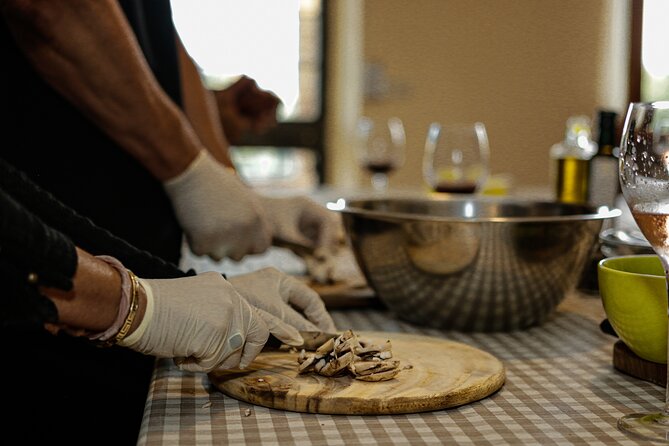
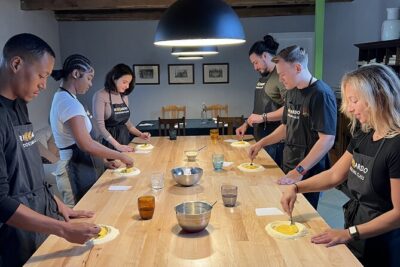
This is not a cooking demonstration where you sit at a counter and take notes. You are expected to work with the ingredients, follow instructions, and help create the meal. That matters because Tuscan cooking is built around a few basic methods done well.
The setting is Podere La Marronaia, a biodynamic winery and farm at Via Martiri di Citerna 2, just outside or near the San Gimignano area. The first part of the visit introduces the farm’s history and production methods. You get a useful sense of place before putting on an apron and entering the rustic kitchen.
The class is offered in English. The host is described as friendly, professional, and informative, and chef Leonardo is one named chef associated with the experience. If he leads your session, you can expect a practical lesson rather than a formal lecture.
The small format is one of the strongest features. With only two to six people, the host can watch your technique, answer questions, and keep the work moving. A larger class might offer a lower price, but it would also mean less access to the person teaching you.
More Cooking Classes with Wine Tasting in Italy
- Florence: Pasta Cooking Class with Unlimited Wine
★ 4.9 · 10,285 reviews - Florence: Pasta & Tiramisu Cooking Class with Unlimited Wine
★ 4.9 · 6,708 reviews - Florence: Pasta Cooking Class with Unlimited Wine
★ 5.0 · 6,413 reviews
Why starting with dessert works
Many cooking classes begin with the starter or main course. This one begins at the end of the meal, which is both fun and practical. You bake a traditional Tuscan dessert first, giving it time to finish before the rest of the cooking is complete.
The exact dessert is not specified in advance, so you should not book this expecting one particular sweet. The value is in learning the method and seeing how a traditional Tuscan recipe fits into the rhythm of a full meal.
Starting with dessert also gives the class a relaxed opening. You can settle into the kitchen, learn how the host explains each step, and get comfortable handling the equipment before moving on to pasta.
If you enjoy taking notes, this is a good point to record measurements and techniques. The food is described as simple enough to recreate at home, which is useful after a trip when you want to make something tied to your time in Tuscany.
Four bruschetta preparations with seasonal vegetables
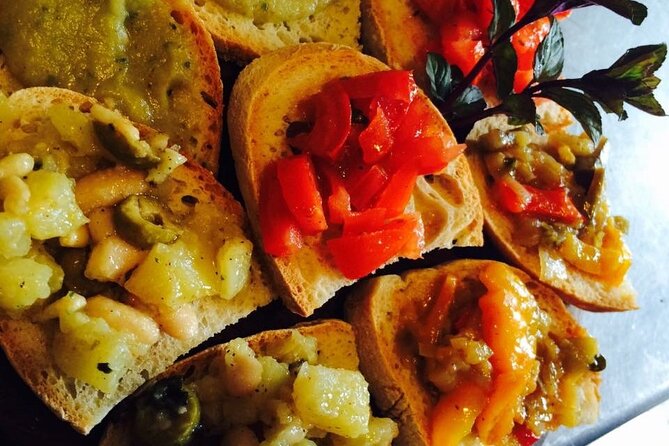
Next comes bruschetta, one of the best dishes for learning how Tuscan cooking handles simple ingredients. The class includes four kinds of bruschetta, made with fresh seasonal vegetables.
The appeal is not complexity. Bruschetta is toasted bread with toppings, but the quality depends on balance: good bread, a well-seasoned topping, proper use of olive oil, and ingredients that are allowed to taste like themselves.
You will prepare three delicious variations using seasonal vegetables, while the sample menu lists four kinds of bruschetta. Since the exact versions change with the season, you should expect variety rather than a fixed menu.
This is also where the olive oil tasting becomes especially useful. You can taste the oil on its own, then notice how it changes the bruschetta. The class includes organic olive oils and balsamic vinegar, so you get more than a quick drizzle over the finished plate.
For me, this part has strong value because it teaches a basic Italian habit: use a small number of good ingredients and avoid burying them under heavy seasoning. You can bring that lesson home without buying special equipment.
Making Pici by hand
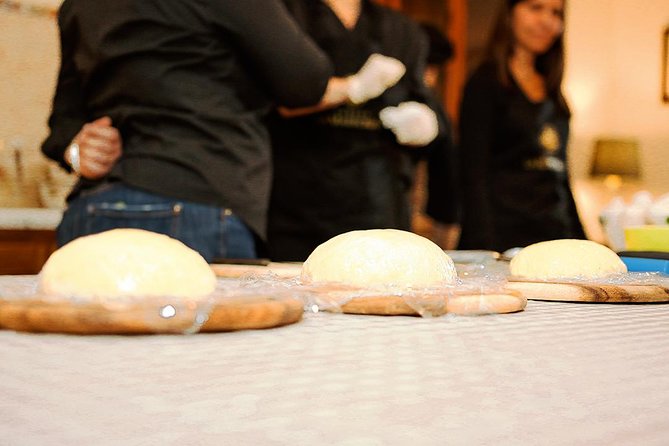
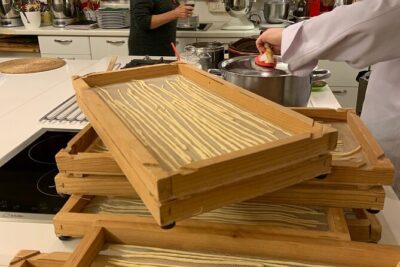
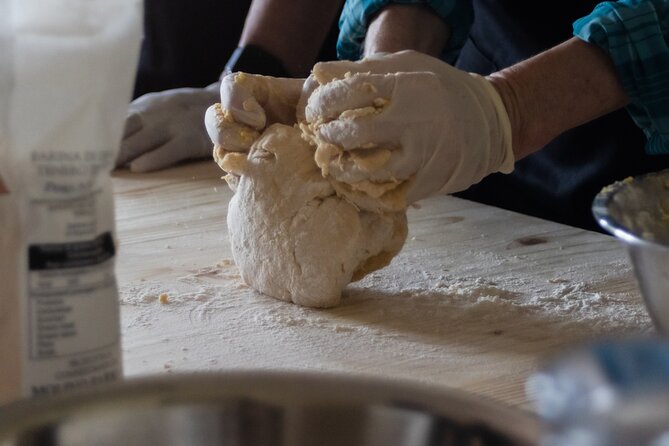
Pici is a thick Tuscan pasta, traditionally shaped by hand. It is rustic, satisfying food, and well suited to a short class because the technique is direct. You work the dough, roll or stretch it into long strands, and pair it with a seasonal sauce.
The class does not list the exact sauce, and that is likely to change with available produce. The point is the pasta-making method and the way the sauce supports it.
Handmade Pici gives you a different experience from using a pasta machine. You learn how the dough feels, how thick the strands should be, and how uneven shapes can still cook into a delicious dish. You do not need restaurant-level precision for this style of pasta.
I would pay close attention to the host’s advice about dough texture. That is the part most difficult to judge from a printed recipe. A recipe can tell you how much flour to use, but your hands tell you when the dough is ready.
More Italian Cooking Classes in Italy:
- Cooking Class and Lunch at a Tuscan Farmhouse with Local Market Tour from Florence
★ 5.0 · 4,831 reviews - Naples: Neapolitan Pizza and Tiramisù Making Class
★ 4.8 · 839 reviews - Tuscan Cooking Class and Dinner in Florence
★ 4.5 · 732 reviews - Rome Pasta Making Class with Italian Sauces and Wine Included
★ 5.0 · 645 reviews
Ricotta gnocchi and a second seasonal sauce
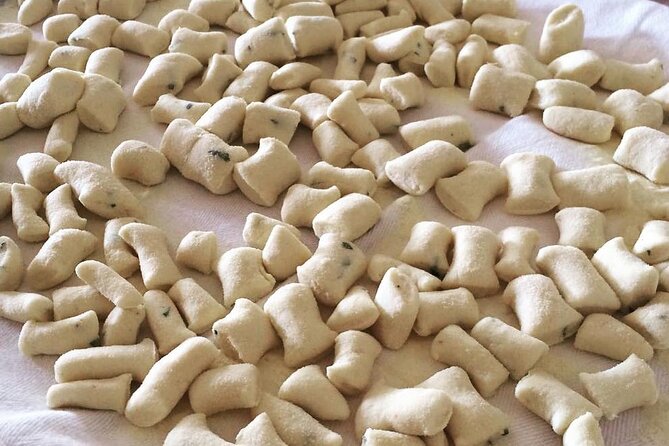
The second main dish is homemade ricotta gnocchi. These are softer and lighter than potato gnocchi, and they give the class a useful contrast with the chewy Pici.
You will prepare the gnocchi and serve them with a different seasonal sauce. Again, the sauce is not fixed in the supplied menu, so the meal reflects the time of year rather than following one identical recipe every day.
Ricotta gnocchi can be delicate. If you have cooked gnocchi at home, you know that handling the dough too much can make the result heavy. A small group helps here because the host can correct your technique before you shape the entire batch.
The two pastas also make the meal feel substantial. You are not simply making one bowl of pasta and calling it lunch or dinner. You prepare two different forms, each with its own texture and sauce, then eat both at the table.
Wine, olive oil, and balsamic tasting at the table
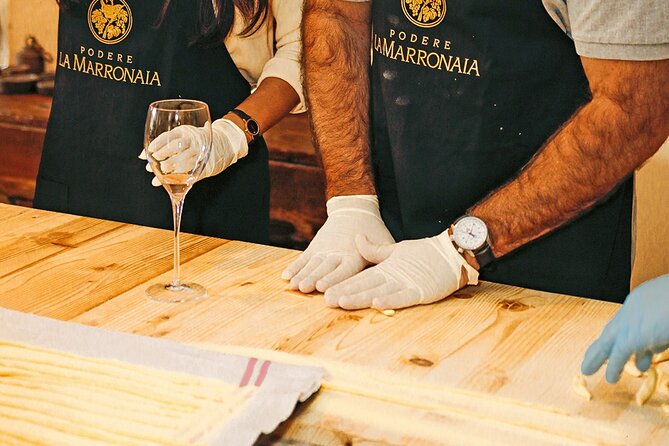
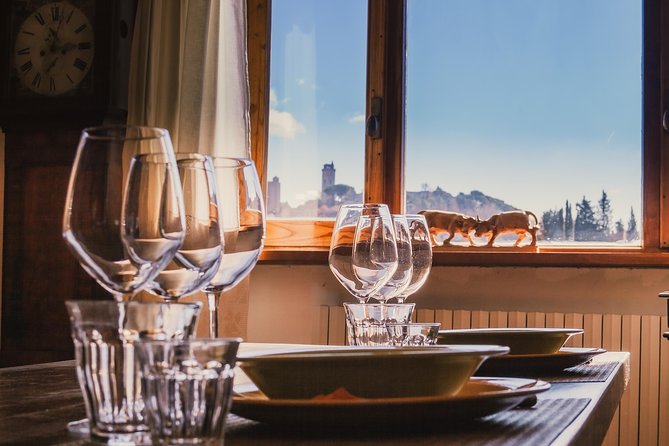
Once the cooking is finished, you sit down and eat what you made. The meal is paired with organic wines, olive oils, and balsamic vinegar produced or selected by the farm.
The experience includes wine tasting, and the minimum drinking age is 18. If you do not drink, the food and cooking remain the main focus, but the supplied details do not specify nonalcoholic pairings, so ask about that when booking.
The wine component is not just an extra glass poured alongside lunch. It connects the class to Podere La Marronaia as a working winery and farm. You can compare the wine with the bruschetta, Pici, gnocchi, and dessert rather than tasting it in isolation.
The olive oil tasting is especially worthwhile for anyone who uses olive oil often at home. You can learn to notice differences in flavor and intensity, then understand why a Tuscan cook might use one oil for finishing and another for cooking.
The experience is described as ending back at the meeting point. The supplied information refers to both lunch and dinner as included, so the exact meal time depends on the departure you book. Treat it as the meal that follows your class, rather than assuming it is always an evening event.
What the three-hour schedule means
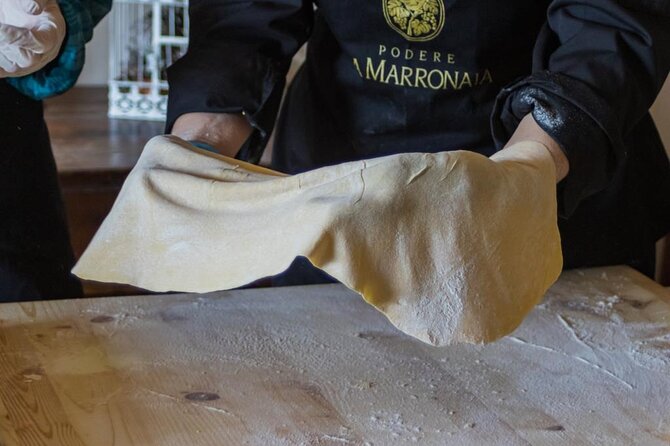
Three hours is enough time for a hands-on meal, but it is not an all-day food program. You will have to keep moving from dessert to bruschetta to pasta, with the farm introduction and tasting included.
That compact schedule suits you if you want a focused activity between sightseeing in San Gimignano. It may feel fast if you prefer long conversations, a slow winery visit, or a full lesson on every stage of production.
The format also means you should arrive ready to participate. The apron is prepared, ingredients are set up, and the class is organized, according to the practical description of the experience. You are not spending the first part of the visit arranging supplies.
The group requirement is a minimum of two people and a maximum of six per booking. Confirmation arrives within 48 hours, subject to availability. Since the class is booked an average of 51 days ahead, I would reserve early if your Tuscan schedule is fixed.
Is $227.67 a fair price?
At $227.67 per person, this is not a bargain cooking lesson. You are paying for a small group, a farm setting, a host, the cooking instruction, a full meal, wine tasting, olive oil, balsamic vinegar, and the chance to eat the food you prepare.
The price makes more sense if you value personal attention. Six people is a very different experience from a class of 15 or 20. You have more room to ask how to make the dough, how to season the bruschetta, or how to handle ricotta gnocchi.
It also makes more sense if you were already planning to visit a winery or farm near San Gimignano. Combining the food lesson and tasting in one stop saves you from arranging separate activities.
The value is weaker if your main goal is a cheap meal or a quick pasta demonstration. You can eat more cheaply in town, and you may find shorter cooking lessons elsewhere. This experience earns its price through the combination of instruction, food, tasting, and setting.
Getting there and planning your visit
The meeting point is Via Martiri di Citerna 2, 53037 San Gimignano SI, Italy. Hotel pickup and drop-off are not included unless you select an option that specifically offers it, and transportation to and from attractions is also not included.
That detail matters. Check your route before booking and allow enough time to reach the farm. The location is near public transportation, but the supplied information does not name a specific bus, stop, or transfer time, so you should confirm the final connection yourself.
The activity ends back at the meeting point. That makes it easier to continue your day from the farm, but it does not provide a ride onward to another town or attraction.
You should provide dietary restrictions when booking. A vegetarian meal option is available, but the exact substitutions are not listed. If you have allergies or follow a strict diet, give clear details before confirmation rather than waiting until you arrive.
Service animals are allowed. The minimum age is 12, which makes the class suitable for older children and teenagers who are comfortable taking part in food preparation. Alcohol service remains restricted to those 18 and older.
Who will enjoy this cooking class most?
I would recommend this experience to you if food is a major part of your trip and you want to do more than photograph a plate of pasta. It suits couples, families with older children, and small groups who like practical activities.
It is also a good choice if you want recipes you can repeat. The dishes are based on familiar Tuscan cooking rather than elaborate restaurant techniques, and the class gives you several useful skills in one session.
Wine lovers will appreciate the farm connection and tasting. Olive oil enthusiasts will find extra value in comparing the oils with the food. San Gimignano visitors who want a break from churches, towers, and town walks will welcome the change of pace.
I would think twice if you dislike group cooking, cannot drink wine and want a nonalcoholic pairing guaranteed, or want a long, slow farm tour. The three-hour format is active and organized, not a leisurely day in the countryside.
Should you book the Podere La Marronaia class?
Book it if you want a small, hands-on Tuscan food experience with a full meal at the end. The strongest reasons are the six-person limit, the chance to make both Pici and ricotta gnocchi, and the pairing of your cooking with wine, olive oil, and balsamic vinegar.
The high price is easier to justify when you use the class as both a cooking lesson and a farm tasting. It is less appealing if you only want to learn one pasta shape or find the lowest-cost activity.
For the best fit, reserve well ahead, confirm your transport, share dietary restrictions, and check whether your session is scheduled as lunch or dinner. If those details work for you, this is a tasty and useful way to spend three hours near San Gimignano.
FAQ
Where does the cooking class take place?
The class takes place at Podere La Marronaia, a biodynamic winery and farm, at Via Martiri di Citerna 2, 53037 San Gimignano SI, Italy.
How long does the experience last?
The cooking class lasts approximately three hours.
How many people can join the class?
The experience requires at least two people and allows a maximum of six people per booking.
What food will I prepare?
You will prepare a traditional Tuscan dessert, bruschetta with seasonal vegetables, handmade Pici, and handmade ricotta gnocchi with two seasonal sauces.
Is a vegetarian option available?
Yes, a vegetarian meal option is available. You should provide any dietary restrictions when booking.
Is wine included?
Yes. The experience includes wine tasting, along with organic wines, olive oils, and balsamic vinegar served with the meal. The minimum drinking age is 18.
Is transportation included?
Hotel pickup and drop-off are not included unless you choose an option that specifically includes them. Transportation to and from attractions is not included.
Can I cancel for a full refund?
Yes. You can cancel for a full refund if you cancel at least 24 hours before the experience start time. Changes or cancellations made less than 24 hours before the start time are not accepted for a refund.
More Hands-On Workshops in Italy
- 3 in 1 Cooking Class near Navona: Fettuccine, Ravioli & Tiramisu
★ 5.0 · 7,376 reviews - Naples: Pizza-Making Workshop with Drink and Appetizer
★ 4.9 · 5,411 reviews - Authentic Pizza Making Class in Naples with Appetizers and Drink
★ 5.0 · 3,178 reviews - Rome: Pasta Making Class with Wine, Limoncello, and Dessert
★ 4.9 · 3,177 reviews
More Food and Drink Tours in Italy
- Small Group Cooking Class & Market Food Tour in Florence
★ 5.0 · 1,574 reviews - Pasta Making & Wine Tasting with Dinner in Frascati from Rome
★ 5.0 · 1,326 reviews - Rome: Pasta Making with Wine Tasting and Dinner in Frascati
★ 4.9 · 979 reviews - Super Fun Pasta & Gelato Class by Vatican with Wine + Oil Tasting
★ 5.0 · 726 reviews
Just added around Italy
- Cesarine: Home Cooking Class & Meal with a Local in Brindisi★ 5.0 · 7 reviews
- Small Group Market tour and Cooking class in Brindisi★ 4.5 · 8 reviews
- Apulian cooking class and typical dinner★ 4.5 · 5 reviews
- Dining Experience at a local’s Home in Martina Franca with Show Cooking★ 4.5 · 7 reviews
- Cooking class in a garden: handmade pasta★ 5.0 · 4 reviews
- 3 Hour Private Italian Tradition Cooking Class in Brescia★ 5.0 · 21 reviews
- Dining experience at a local’s home in Brindisi with show cooking★ 4.0 · 6 reviews
- Italian Pasta Cooking Course★ 5.0 · 27 reviews
Italian Cooking Classes, compared.
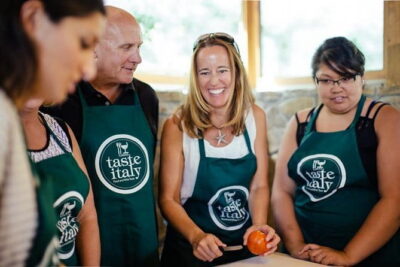
Cooking Class and Lunch at a Tuscan Farmhouse with Local Market Tour from Florence
Read our review →
Naples: Neapolitan Pizza and Tiramisù Making Class
Read our review →
Rome Pasta Making Class with Italian Sauces and Wine Included
Read our review →
Milan: Italian Cooking Class with Food and Wine
Read our review →
Florence: Cooking Class at a Tuscan Farm & Local Market Tour
Read our review →