
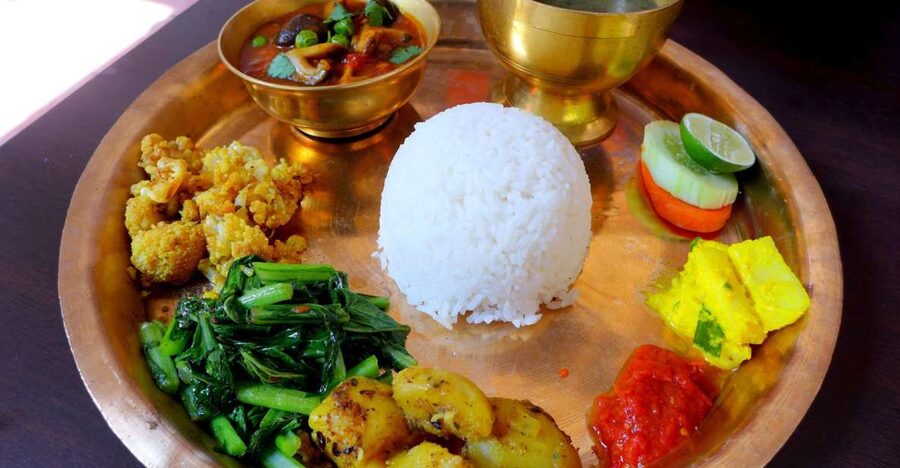
Review · KATHMANDU
Kathmandu: Nepali Cooking Class with Hotel Pickup
Kathmandu’s food story comes alive when you shop for ingredients before you cook them. This experience pairs a rickshaw ride to Ason market with a hands-on lesson in momo, curries, roti, and sel roti, so you see the ingredients first and then learn how they reach the plate.
I like the mix of market life and practical cooking, and I like that the class includes Nepali folk music and a few useful phrases. The main caution is timing: although the activity is sold as four hours, one booking ended after about two hours, and another finished with the participant back at the hotel by 11:30 a.m.
Key points to know
- Ason market by rickshaw: You begin with a short local transport experience and a look at Kathmandu’s busy shopping hub.
- Four classic foods: The class covers momo, several curries, roti, and sel roti, Nepal’s ring-shaped fried bread.
- English-speaking instruction: An experienced chef leads the lesson and explains local ingredients and food customs.
- Music and language: Nepali folk music plays during cooking and the meal, with simple Nepali phrases included.
- Thamel pickup included: Hotel pickup and drop-off apply to the Thamel area.
- Timing can be shorter: Treat the advertised four hours as a guide, not a guarantee.
From Thamel to Ason market by rickshaw
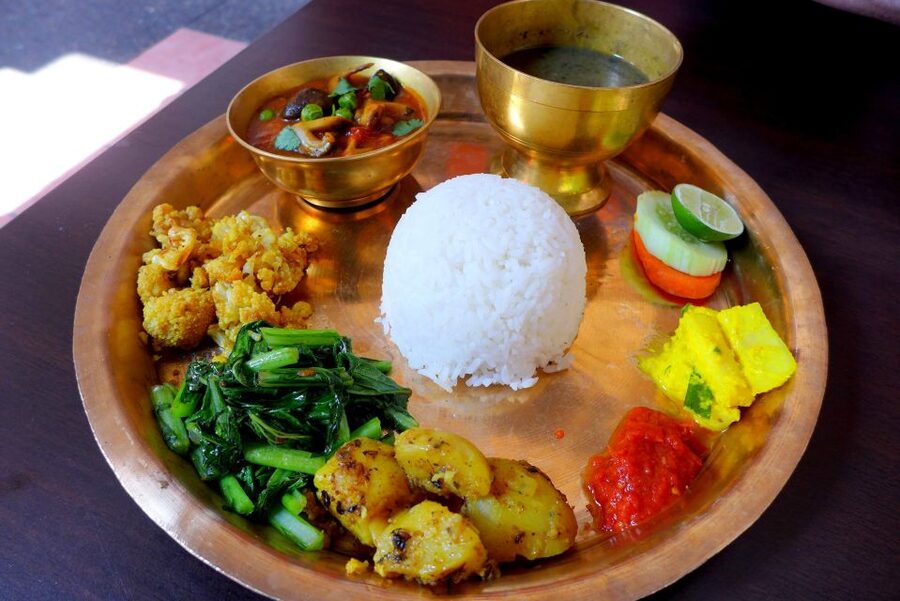
Your day begins with hotel pickup in Kathmandu’s Thamel area. From there, you ride by rickshaw to Ason, a well-known local shopping area where merchants sell everyday goods and cooking ingredients.
The rickshaw is part of the appeal. You are not simply delivered to a cooking school in a vehicle, then handed an apron. The route gives you a small taste of getting around Kathmandu and puts you closer to the street-level movement of the city.
Ason is described as a typical local market and a busy shopping hub. You can expect the visit to focus on seeing merchants, noticing the pace of trade, and selecting ingredients for the meal. That makes the stop useful, since the food lesson begins before anyone turns on a stove.
Still, keep your expectations measured. The market portion has not always been extensive. One participant found it felt more like a visit to a local shop than a full market tour. If you want a long guided walk through many stalls, this may feel brief.
That is an important distinction. The Ason stop works best as a short introduction to Kathmandu’s food shopping, not as a stand-alone market tour. You get the setting and the ingredient connection, but the cooking class is the main event.
More Hands-On Workshops in the world:
- Half-Day Thai Cooking Class at Organic Farm in Chiang Mai
★ 5.0 · 19,087 reviews - Florence: Pasta Cooking Class with Unlimited Wine
★ 4.9 · 10,285 reviews - 3 in 1 Cooking Class near Navona: Fettuccine, Ravioli & Tiramisu
★ 5.0 · 7,376 reviews
Turning market ingredients into a Nepali meal
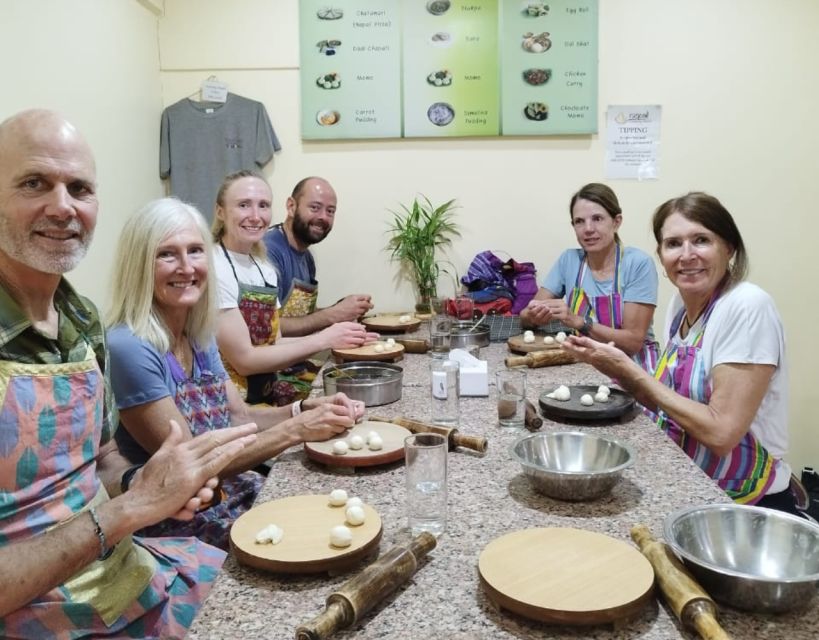
After the market visit, you move into the cooking class with an English-speaking chef. The instructor explains how local dishes are prepared and what types of ingredients are used.
The class is meant to be active. You are not only watching a chef cook from a distance. You take part in preparing a traditional Nepali meal and learn the basic steps behind several much-loved foods.
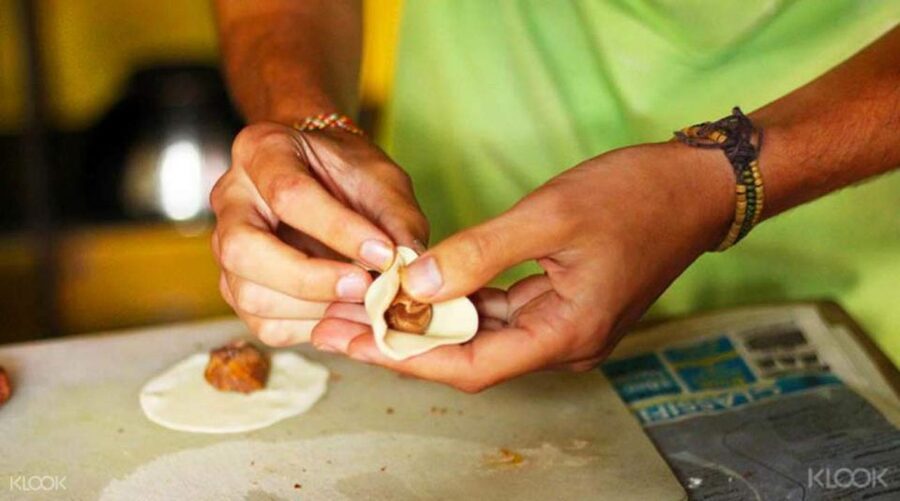
Momo will likely be the most familiar dish for many people who have spent time in Nepal. These filled dumplings are a staple of Nepali eating, and making them gives you a practical look at shaping, filling, and cooking one of the country’s best-known foods.
The class also includes different curries. The exact varieties are not specified, so do not book this expecting a fixed menu of named dishes beyond the foods listed. What you can count on is learning about local curry ingredients and cooking methods as part of the meal.
Roti adds a simple bread lesson to the menu. Then comes sel roti, a distinctive Nepali fried bread with a shape and texture that can remind you of a doughnut. It is one of the more interesting parts of the class because it is less familiar than momo and gives you a taste of a food strongly linked with Nepal.
The menu offers a good range for a four-hour activity: dumplings, curries, flatbread, and fried bread. You get several cooking techniques rather than one narrow recipe. That variety is one of the strongest reasons to choose this class over a basic demonstration.
Nepali music, phrases, and the social side of cooking
Food classes work best when they explain more than ingredients. Here, the instructor also talks about regional food culture and the place of traditional dishes in everyday life.
Nepali folk music plays during the class and meal. That detail matters because it gives the session a clear local character without requiring a separate cultural performance. You cook, eat, listen, and pick up a few Nepali phrases along the way.
I like this combination. A cooking class can otherwise feel much the same in any country, especially if the lesson is reduced to chopping and following a recipe. Music and language give you small but useful links to the place you are visiting.
The class is conducted in English, and an audio guide is also listed in English. The instructor is described as an experienced chef, though one participant found the chef was a local student in Kathmandu. That does not rule out a good lesson, but it is a reminder not to expect a celebrity chef or a polished culinary school setting.
The strongest praise is simple: bookings describe the experience as great, 10 out of 10, and very enjoyable. One person who rated it three out of five still called the course interesting and educational, and described the instructors as friendly and kind. That points to the class itself as the dependable part of the activity.
How much time should you set aside?
The stated duration is four hours, with the cooking class itself listed as three to four hours. In practice, the schedule may be shorter.
One booking reported a two-hour class rather than four. Another person was back at the hotel by 11:30 a.m. and felt the morning had not lasted as long as expected. These comments are too specific to ignore, especially if you are planning another activity immediately afterward.
I would leave a generous buffer around this experience rather than building your whole day around a precise end time. Rain does not cancel the tour, since it operates rain or shine, but weather and local timing can still affect how the market visit feels.
The shorter timing can be a benefit if you want a light morning activity. It becomes a drawback if you are paying for a full four-hour food program and expect a long market visit, a lengthy lesson, and a relaxed meal.
Ask for the expected start and finish time when you book or confirm. The official information says to check availability for starting times, but it does not provide a fixed daily schedule. Your hotel pickup time will depend on the selected date and availability.
A few more cooking classes around the world worth a look
- Florence: Pasta & Tiramisu Cooking Class with Unlimited Wine
★ 4.9 · 6,708 reviews - Florence: Pasta Cooking Class with Unlimited Wine
★ 5.0 · 6,413 reviews - Hanoi Cooking Class: Culture, Local Market & Meaning CSR Impact
★ 5.0 · 5,147 reviews - 5 Traditional Dishes Hanoi Cooking Class with Market Trip
★ 5.0 · 4,890 reviews
Is $60 a fair price?
At $60 per person, this is not the cheapest way to eat in Kathmandu. You are paying for instruction, hotel transport from Thamel, the rickshaw ride, the market visit, ingredients, and the structure of a guided activity.
The value is strongest if you want a cooking lesson tied to local food culture, rather than a meal alone. You get to handle ingredients, learn several dishes, and sit down to eat what you prepared. The included pickup and drop-off also help if you are staying in Thamel and do not want to arrange transport yourself.
The value is weaker if the activity runs closer to two hours or if the market stop is very short. In that case, the price may feel high for the amount of scheduled time. The experience should be judged by the quality of the cooking instruction and the chance to make several Nepali foods, not by the market visit alone.
For a food-focused visitor, the range of dishes helps justify the cost. A single momo lesson would offer less variety. Here, you get momo, curries, roti, and sel roti, plus an explanation of ingredients and food customs.
I would also factor in your interest level. If you enjoy cooking and want to understand what you are eating in Nepal, the price is easier to defend. If you mainly want to sample local food, a restaurant meal will cost less and take less time.
Who will enjoy this cooking class?
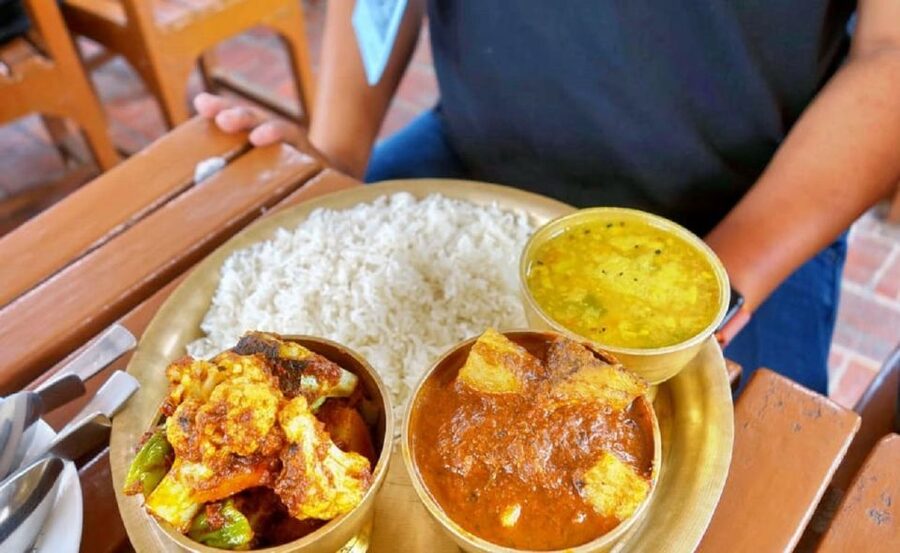
This experience suits you if you like hands-on activities and want a break from temple visits, viewpoints, and guided city walks. It is a good choice for couples, families, and small groups who enjoy preparing food together.
It also fits first-time visitors who want a gentle introduction to Nepali cuisine. You do not need to arrive knowing how to make momo or sel roti. The chef explains the ingredients and cooking process in English, and the class includes basic Nepali phrases.
The activity may appeal to people who want a cultural experience without committing to a full-day tour. Its listed four-hour length keeps it manageable, though the shorter sessions reported in practice may make it even easier to fit into a crowded Kathmandu schedule.
It is less suitable if your priority is a detailed Ason market tour. The market stop can be brief, and one person felt it was only a local shop visit. It is also not ideal if you need a guaranteed four-hour program with a fixed finish time.
Wheelchair access is listed, which is useful for planning, though the rickshaw ride and market setting may still make the outing feel different from a fully controlled indoor class. The available information confirms accessibility, but it does not give further details about the route or equipment.
Practical details before you book
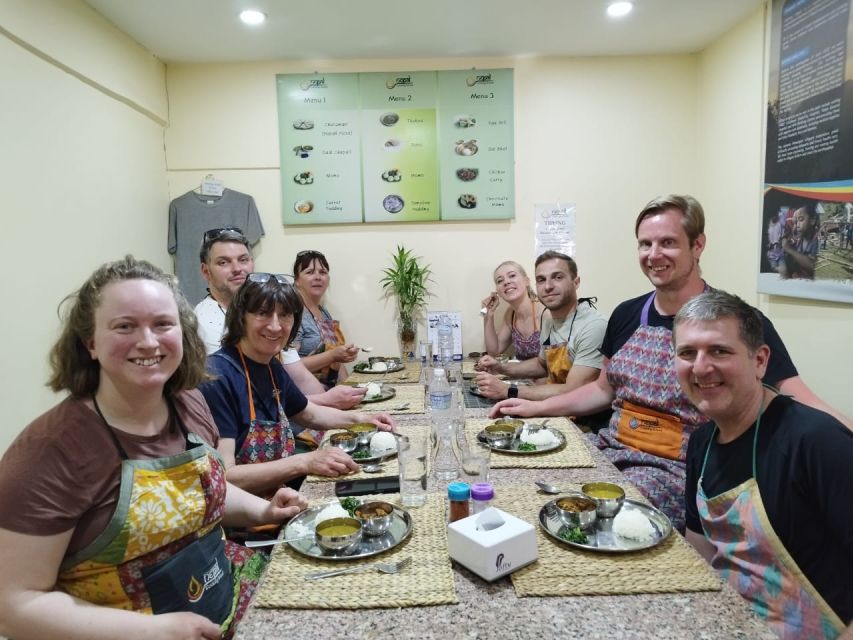
Pickup and drop-off are included for hotels in the Thamel area. If you are staying elsewhere in Kathmandu, confirm transport before booking, since the included service is specifically described for Thamel.
Bring a passport or identification card. A copy is accepted, so you do not necessarily need to carry the original document.
The activity runs in all weather. Bring clothing that works for a cooking session and for a market visit, though the supplied details do not specify an apron or protective clothing. Alcohol and drugs are not allowed.
Cancellation is flexible up to 24 hours before the activity for a full refund. You can also reserve now and pay later, which helps if your Kathmandu plans are still changing.
The available rating is 4.1 from five bookings. That is a positive result, but the small number of ratings means I would not treat it as a precise measure of every class. The pattern is clearer: the cooking lesson and friendly instruction receive the strongest praise, while the market length and total duration create the main doubts.
My recommendation
Book this if you want to cook several Nepali dishes, learn a little about local food customs, and enjoy a simple cultural activity with transport from Thamel. The combination of momo, curries, roti, and sel roti gives you more substance than a single-dish demonstration.
Go in expecting a short Ason market introduction, not a major market expedition. Also allow for the possibility that the session may finish earlier than four hours. If those limits suit your plans, the friendly instruction, hands-on cooking, folk music, and unusual sel roti make this a worthwhile way to spend a Kathmandu morning.
FAQ
Where does the cooking class take place?
The activity takes place in the Kathmandu area of Nepal and includes hotel pickup and drop-off from the Thamel area.
How long does the experience last?
The stated duration is four hours, with the cooking class listed as three to four hours. Actual timing may vary, and some bookings ended sooner.
Is hotel pickup included?
Yes. Hotel pickup and drop-off are included for hotels in the Thamel area.
Is the market visit included?
Yes. The experience includes a trip to Ason, a local market area in Kathmandu, by rickshaw.
What foods will I learn to cook?
The class includes momo, varieties of curries, roti, and sel roti, a Nepali fried bread with a shape somewhat similar to a doughnut.
What language is used during the class?
The instructor teaches in English, and an English audio guide is included.
What should I bring?
Bring a passport or identification card. A copy of the document is accepted.
Can I cancel the booking?
Yes. You can cancel up to 24 hours in advance for a full refund. Reserve now and pay later is also available.
Just added around the world
- Montreal: Cooking Class & Lunch with Michelin-Trained Chef★ 4.4 · 32 reviews
- Mojo Workshop Cooking Class in Ancient Canarian Village★ 4.9 · 127 reviews
- MoMo or Dal Bhat Cooking Class at Aama Kitchen in Pokhara★ 4.9 · 28 reviews
- Mirissa: Cooking Class with Beer and Meal★ 3.3 · 4 reviews
- Modena: Home Cooking Class Tagliatelle and Ragu and Tiramisu★ 5.0 · 23 reviews
- Moires: Cooking Class and Olive Oil Tasting at a Family Farm★ 5.0 · 93 reviews
- Milan: Private Cooking Class at a Local’s Home★ 5.0 · 9 reviews
- Rome Pizza & Gelato Cooking Class★ 4.6 · 49 reviews
Cooking Classes, compared.
Half-Day Thai Cooking Class at Organic Farm in Chiang Mai
Read our review →
Florence: Pasta Cooking Class with Unlimited Wine
Read our review →
3 in 1 Cooking Class near Navona: Fettuccine, Ravioli & Tiramisu
Read our review →
Hanoi Cooking Class: Culture, Local Market & Meaning CSR Impact
Read our review →
5 Traditional Dishes Hanoi Cooking Class with Market Trip
Read our review →
Cooking Class and Lunch at a Tuscan Farmhouse with Local Market Tour from Florence
Read our review →
Chiang Mai: Cooking Class, Market & Thai Herbs Garden Tour
Read our review →Browse the lists this tour appears in