
Review · ITALY
Monopoli: Parco Rurale Guided Tour with Pasta-Making Lab
The best part of this Monopoli experience is the pairing of hands-on pasta making with a walk through Masseria Spina’s old fortified farm. You are not simply shown a plate of orecchiette and told it is traditional. You shape the pasta yourself, then explore the buildings and work spaces that explain how rural life once functioned here.
I especially like the small group limit of 10, which should make it easier to follow the pasta lesson and ask questions. I also like the range of sights packed into 2.5 hours, from the underground olive press and citrus grove to the red Masseria Spina Grande and the Baroque Church of the Immaculate Conception.
The main thing to know is that this is a pasta-making class, not a pasta lunch. You use the included ingredients and can take your finished shapes home, but food and drinks are not included, and the pasta is not cooked and served during the activity.
Key points at a glance
- Three traditional pasta shapes: Learn to make typical Apulian forms by hand, with the guide leading each stage.
- A working rural setting: Walk through Masseria Spina’s citrus grove, old olive press, dye works, and fortified structures.
- A striking red farmhouse: Masseria Spina Grande gives the tour one of its most memorable architectural sights.
- Small-group attention: The group is limited to 10 people, useful during the practical pasta lesson.
- English or Italian guidance: You can join with a live guide in either language.
- Bring-home pasta: Your handmade shapes can be taken with you for later tasting, but cooking is not part of the scheduled activity.
Why this Monopoli experience works so well
Many food classes in Apulia focus only on the kitchen. This one gives you a stronger sense of place first. You walk through the old Masseria Spina site, then sit down to make pasta connected to the region’s everyday cooking.
That order matters. After seeing the olive press, citrus grove, fortified tower, and rural buildings, the pasta lesson feels tied to Apulia rather than added as a generic tourist activity. You get a little archaeology, architecture, agriculture, and cooking in one compact visit.
I also like the pace. At 2.5 hours, the experience is long enough to feel worthwhile but short enough to fit into a busy day in Monopoli. You can schedule it around time in the historic center, a beach visit, or a separate meal.
The rating of 4.9 from 13 ratings reflects strong satisfaction with both parts of the experience. Specific praise centers on the beautiful grounds, the clear instruction, the guide’s help, and the chance to learn three different pasta shapes. Elaina is named as a particularly well-informed guide during the historical portion.
More Pasta Making Classes in Italy:
- Florence: Pasta Cooking Class with Unlimited Wine
★ 4.9 · 10,285 reviews - 3 in 1 Cooking Class near Navona: Fettuccine, Ravioli & Tiramisu
★ 5.0 · 7,376 reviews - Florence: Pasta & Tiramisu Cooking Class with Unlimited Wine
★ 4.9 · 6,708 reviews
Starting at Masseria Spina Resort
You meet your guide at Masseria Spina Resort in the Parco Rurale, the site used for historical tours, tastings, and other experiences. Hotel pickup and drop-off are not included, so you need to arrange your own way to the meeting point.
That detail is easy to overlook when planning a day in Monopoli. Leave enough time to reach the resort without rushing, since the activity begins with the guided walk rather than with the pasta class.
The small-group format is a real advantage here. With no more than 10 participants, the guide can explain the route and the workshop without turning the experience into a large group lecture. It also gives you a better chance to get help when your pasta dough needs adjusting.
The live tour is offered in Italian and English. If you have questions about food traditions, the buildings, or the old farm system, you should have a chance to ask them directly.
Walking through the rupestrian settlement and necropolis
The walk begins with the rupestrian settlement, an early part of the site that helps set the scene for the rest of the visit. You then see the necropolis and the Minor Church, giving the tour a clear historical layer before it reaches the grander farmhouse buildings.
These stops make the experience more than a pretty-country-estate visit. They show that the area has been used and reshaped over a long period, with religious, agricultural, defensive, and domestic purposes close together.
The route also includes the Spina Piccola Fortified Tower, described as the first fortified structure on the site. Its presence explains why the Masseria was not just a farm but also a place built with protection in mind.
I would not choose this tour expecting a long archaeological lecture. The value is in seeing several connected parts of the site in a short time, with a guide explaining what you are looking at. The exact amount of detail can depend on the questions asked and the pace of your group.
The citrus grove, underground olive press, and dye works
The internal citrus grove adds a more sensory part to the walking route. One participant had the chance to try prickly pear, an enjoyable reminder that this is not only a collection of old buildings. It is also a place connected to local plants and food.
The ancient underground olive press is one of the most useful stops for understanding Apulian food culture. Olive oil is central to cooking in this part of Italy, and an underground press shows the work and facilities behind a product that usually arrives at your table in a bottle.
You also visit the dye works. Together, the olive press and dye works show that the Masseria supported more than one kind of rural production. The site becomes easier to understand when you see it as a small working world rather than a single historic residence.
The route includes outdoor areas and old structures, so comfortable shoes are sensible. No special equipment is listed, but you should be prepared for a walking tour followed by practical work with dough.
A few more cooking classes around Italy worth a look
- 2 Hour Florence Pizza and Gelato Small Group Guided Cooking Class
★ 5.0 · 54 reviews - Tsukiji Fish Market Guided Tour and Sushi Making with Pro Chef
★ 5.0 · 775 reviews - Budapest Cooking Class & Market Tour with Local Guide & Wines
★ 5.0 · 553 reviews - Buenos Aires: Empanadas and Alfajores Guided Cooking Class
★ 4.8 · 486 reviews
Masseria Spina Grande and the Baroque church
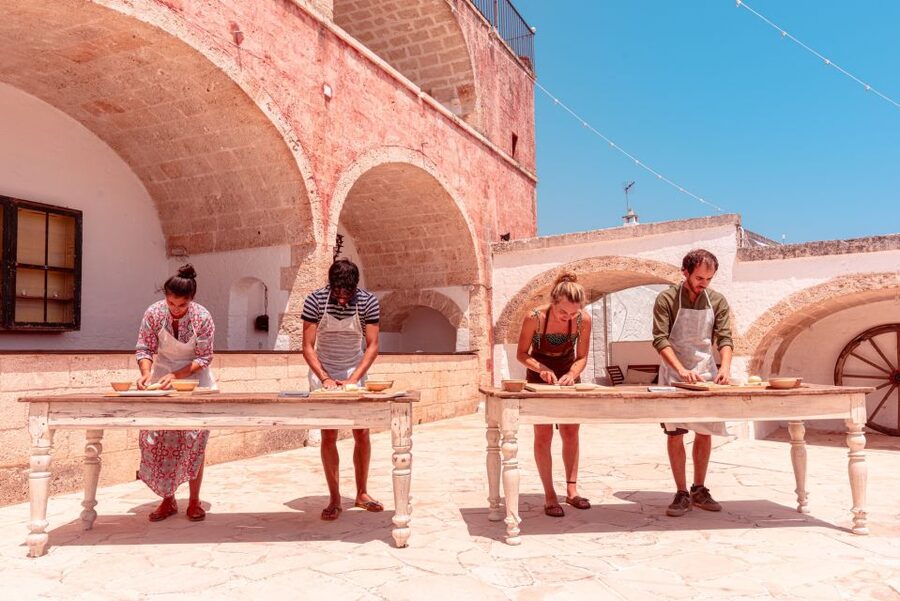
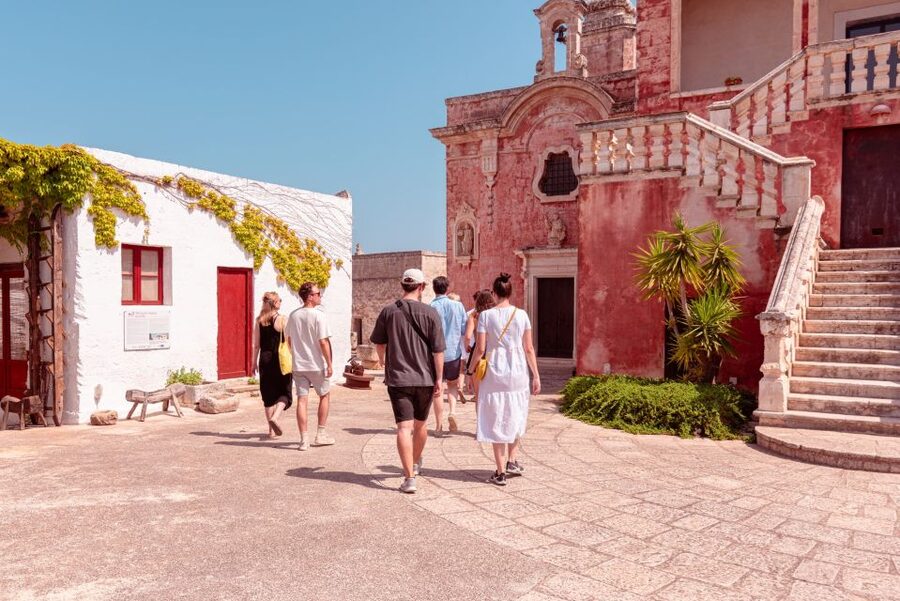
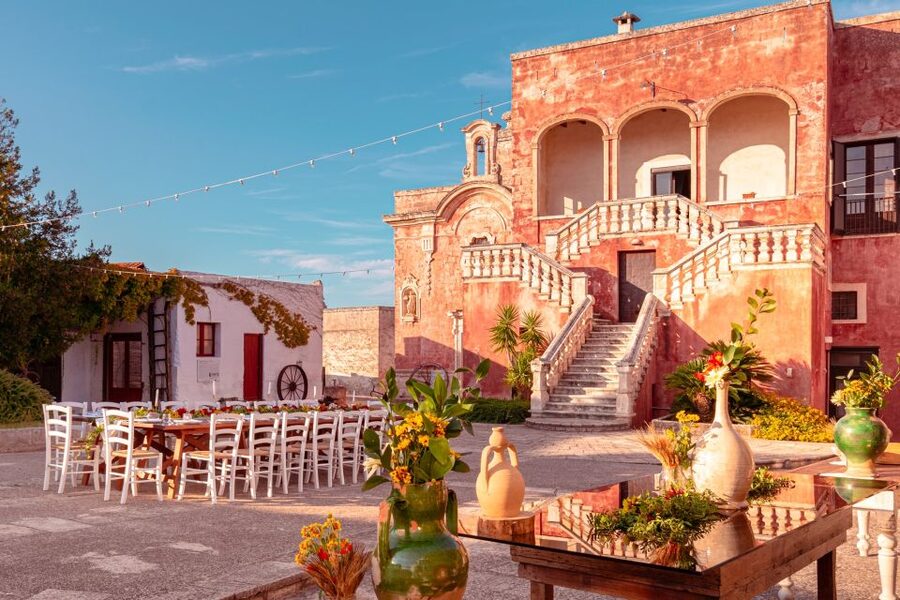
Masseria Spina Grande is the visual centerpiece of the walk. Its red exterior gives it a strong identity, and the architecture helps explain the scale and importance of the main structure.
You also see the Baroque Church of the Immaculate Conception. This is a useful contrast to the fortified and agricultural parts of the site. Within one short route, you move between defense, work, worship, and rural residence.
The setting is a good reason to bring a camera, though the appeal is not limited to photographs. The buildings give you a clearer sense of how Apulian estates combined practical needs with display and religious life.
The tour does not promise access to every room or a long interior visit. Its focus is a guided route through the historical park, with the major features presented in context.
Rolling out traditional Apulian pasta
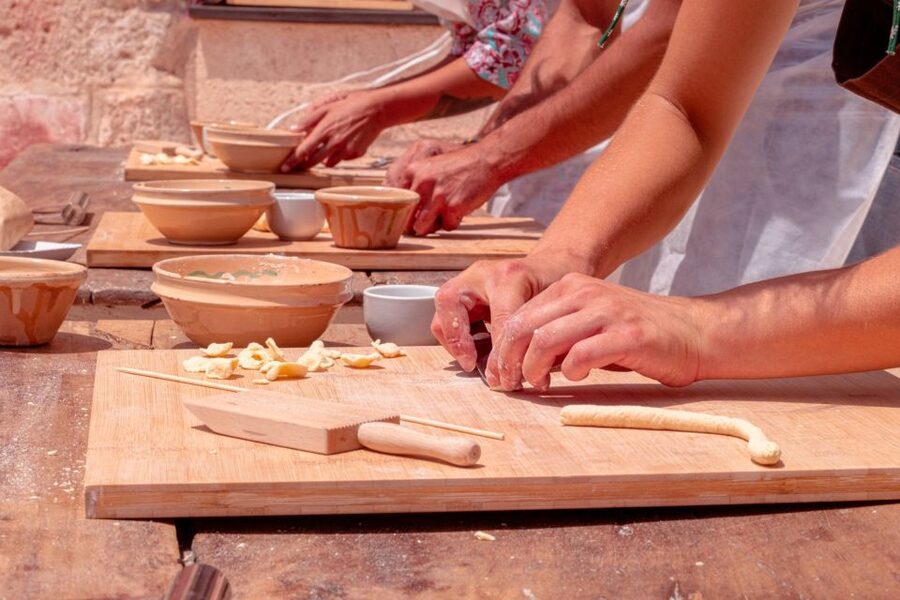
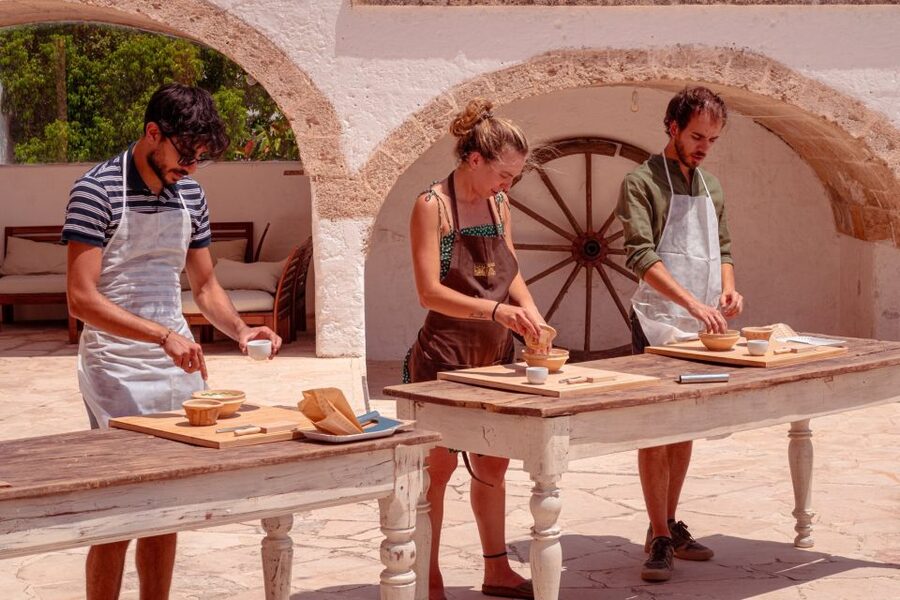
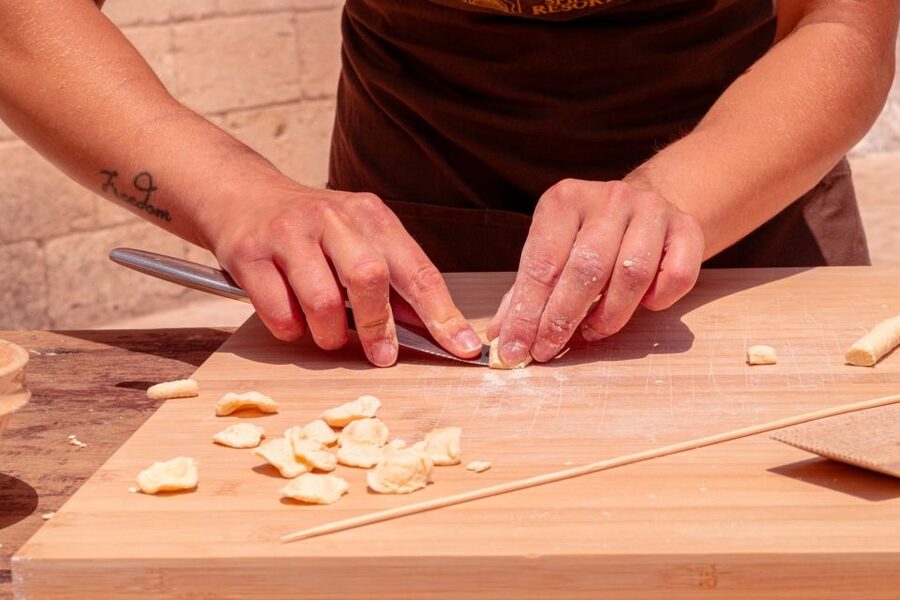
After the walk, you move to the pasta lab. The guide supplies the ingredients and leads you through the process of making typical Apulian pasta shapes from scratch.
This is the part where the experience becomes active. You roll, shape, and correct your work rather than simply watching a demonstration. For many people, that practical element will be more memorable than another food tasting.
One participant specifically enjoyed learning three different pasta shapes. That detail gives you a useful idea of the class: it is not limited to one quick shape made once for a photograph.
The lesson appears suitable for beginners because the guide takes you through the work step by step. You do not need to arrive with professional pasta skills. Still, handmade pasta takes patience, and your shapes may look more rustic than the examples. That is part of the fun, not a flaw.
The instructor is described as helpful, and one participant enjoyed working with the chef during the class. If you want a polished cooking demonstration with no mess, this may not be your ideal format. If you like learning by doing, it is a better fit.
What happens to the pasta you make
A key practical point: your pasta is not cooked and eaten as part of the scheduled activity. You can take your handmade shapes home, ready to taste later.
That arrangement has two sides. It lets you keep a tangible souvenir of the class and gives you a chance to cook the shapes yourself. On the other hand, you do not get the immediate reward of sitting down to a plate of the pasta you just made.
Food and drinks are not included in the listed price. Do not book this as a substitute for lunch or dinner. Plan a separate meal in Monopoli, and treat the class as a food lesson rather than a full dining experience.
A separate tasting may be available through the wider Masseria Spina program, but it is not part of the stated inclusions for this activity. If eating on site matters to you, check the exact arrangement before booking.
Is $71 a good value?
At $71 per person, this is not the cheapest way to make pasta in Apulia. But the price covers more than a short kitchen lesson: you get entry to the historical park, a guided walk, the live guide, the ingredients, and the pasta lab.
I think the value is strongest if you would otherwise pay for both a cultural site visit and a cooking class. The combined format saves you from arranging two separate activities and gives the food lesson a real setting.
The value is less convincing if your only goal is to eat traditional pasta. Food and drinks are excluded, and the pasta you make is not cooked for you. In that case, a restaurant meal plus a shorter food demonstration might suit you better.
The small group also matters when judging the cost. A class for up to 10 people should offer more personal help than a large commercial workshop, especially when you are learning several shapes.
Who should book this experience?
I would recommend it to couples, families with older children, and anyone who wants a break from churches and town sightseeing. The mix of walking and making something with your hands keeps the visit varied.
It is especially useful for first-time visitors to Apulia who want regional food and rural architecture in the same activity. You see the setting, hear about its past, then work with one of the region’s best-known foods.
Food lovers should book with realistic expectations. This is about learning how the pasta is made, not enjoying a prepared meal. Bring your appetite for the later restaurant stop, not for the workshop itself.
The tour may be less suitable if you have very limited time in Monopoli and are looking only for a central-city activity. You meet at Masseria Spina Resort in the Parco Rurale, and transport to and from the site is your responsibility.
Booking details that matter
The experience lasts 2.5 hours, with starting times dependent on availability. It includes skip-the-ticket-line entry to the historical park, though the important practical point is still getting to the resort on time.
You can cancel up to 24 hours in advance for a full refund. The reserve-now, pay-later option also makes it easier to hold a place while your Apulia plans are still changing.
The tour is offered in English and Italian. The group is limited to 10 participants, and the activity provider is Parco Rurale, Monopoli.
Should you book it?
Book this experience if you want a small-group pasta class with a genuine historic setting, not just a kitchen counter and a prepared lunch. The red Masseria Spina Grande, underground olive press, citrus grove, fortified tower, and church give the walking portion real substance.
I would also book it if you like taking home something you made yourself. Just remember that the pasta is not cooked or served during the activity, and you will need to arrange your own food and transport.
For a compact introduction to Apulian rural history and pasta making, $71 is a fair price. It is a particularly good choice when you want your Monopoli itinerary to include local tradition, practical learning, and a memorable place.
FAQ
How long does the Masseria Spina tour last?
The full experience lasts 2.5 hours.
How much does the experience cost?
The listed price is $71 per person.
Where do I meet the guide?
You meet the guide at Masseria Spina Resort in Parco Rurale, Historical Tour, Tasting & Experiences.
Is hotel pickup included?
No. Hotel pickup and drop-off are not included.
What languages are available?
The live guided tour is available in Italian and English.
How large is the group?
The activity is offered as a small-group experience limited to 10 participants.
What historical sights will I see?
The route includes the rupestrian settlement, necropolis, Minor Church, Spina Piccola Fortified Tower, internal citrus grove, ancient underground olive press, dye works, Masseria Spina Grande, and the Baroque Church of the Immaculate Conception.
Is the park entrance included?
Yes. Entry to the Parco Rurale historical park is included.
Are pasta ingredients included?
Yes. The ingredients for the guided pasta lab are included.
Can I eat the pasta I make during the tour?
No. The pasta is not cooked and served as part of the activity. You can take your pasta shapes home, and food and drinks are not included.
Just added around Italy
- Montepulciano: Pasta-Making Class with Tasting and Wine★ 4.7 · 39 reviews
- Montone: Pasta Making and Dinner at Cardaneto Castle★ 5.0 · 4 reviews
- Modena: Private Pasta-Making Class at a Local’s Home★ 4.3 · 3 reviews
- Modena: Home Cooking Class Tagliatelle and Ragu and Tiramisu★ 5.0 · 23 reviews
- Milazzo: Sicilian Pasta Making Class with Dinner★ 5.0 · 5 reviews
- Rome Pizza & Gelato Cooking Class★ 4.6 · 49 reviews
- Milan: Private Cooking Class at a Local’s Home★ 5.0 · 9 reviews
- Milan: Cooking Class for Families with Children★ 5.0 · 5 reviews
Pasta Making Classes, compared.
Florence: Pasta Cooking Class with Unlimited Wine
Read our review →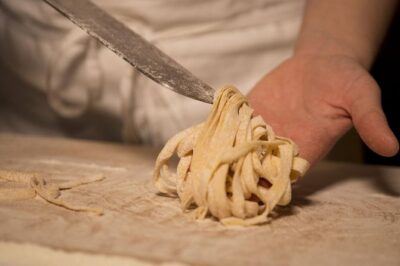
3 in 1 Cooking Class near Navona: Fettuccine, Ravioli & Tiramisu
Read our review →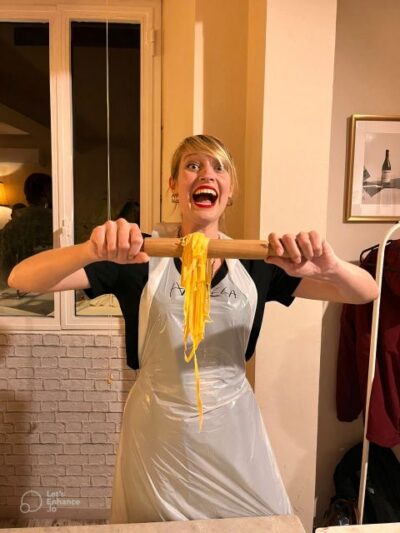
Rome: Pasta Making Class with Wine, Limoncello, and Dessert
Read our review →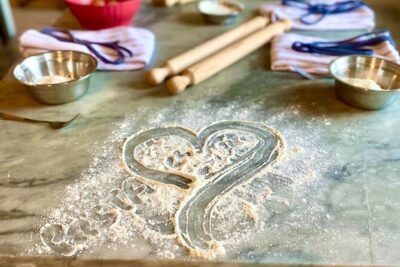
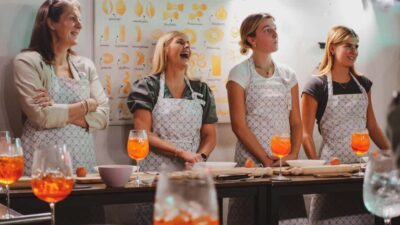
Rome Cooking Class: Make Pasta and 3 Spritz Cocktails
Read our review →
Rome: 3-in-1 Fettuccine, Ravioli, and Tiramisu Cooking Class
Read our review →
Rome: Fettuccine Pasta Cooking Class in Rome’s City Center
Read our review →Browse the lists this tour appears in