
Review · PARIS
Paris: Macaron Baking Class
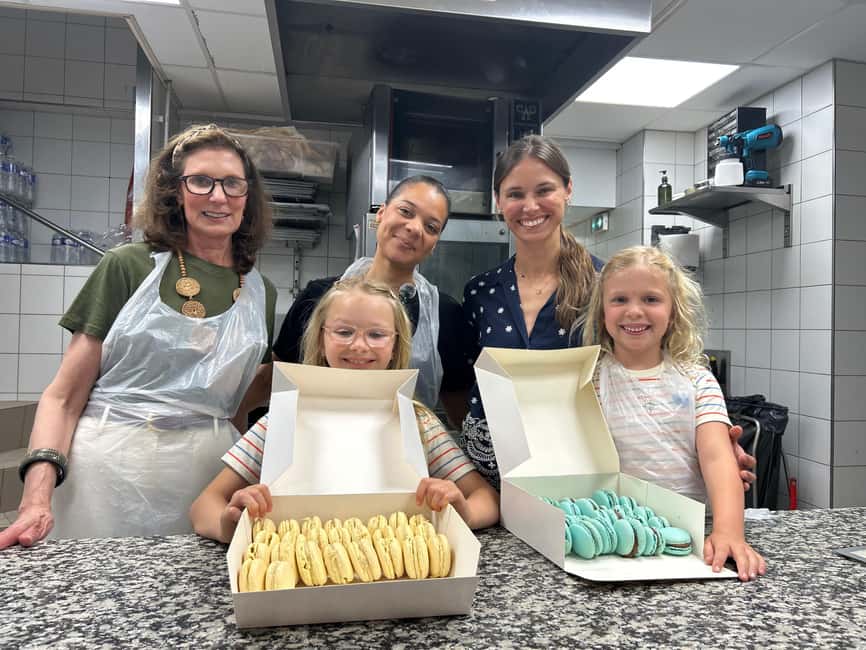
The most appealing part of this Paris experience is that you do not simply watch a pastry chef work. You mix, pipe, bake, and decorate your own macarons in the basement kitchen of Chez Manon, a bakery on Rue de Bretagne in Le Marais. The class is taught in English and limited to eight people, so there is room to ask questions and get help with the tricky parts.
I like the small-group format and the chance to choose flavors and colors instead of taking home a batch that looks exactly like everyone else’s. I also like the useful home-baking advice, including tips that can improve your success rate and give you smoother, prettier shells.
The main drawback is practical: the kitchen is down steep steps in a historic building, and you will stand for much of the two hours. The class is not wheelchair accessible, and one recent account raised serious concerns about the condition of the basement work area, so visitors who expect a polished modern cooking studio should keep that in mind.
Key points to know before booking
- A real hands-on class: You work with the ingredients and equipment rather than simply watching a demonstration.
- Only eight places: The small group leaves more time for questions and individual help.
- A Le Marais setting: The class meets at Chez Manon, 25 Rue de Bretagne, inside a working Paris bakery.
- Your macarons are personalized: You can select from available flavor and color options, though substitutions are not offered.
- A take-home souvenir: You finish with a box of the macarons you made, plus a guided tasting and refreshments.
- Plan for stairs and standing: The bakery has multiple steps, including steep stairs to the basement kitchen.
Starting at Chez Manon on Rue de Bretagne
Your class begins at Chez Manon, at 25 Rue de Bretagne in the 3rd arrondissement. The meeting point is inside the bakery, so tell the staff you are there for the baking class when you arrive. They will direct you to the correct place.
The address puts you in Le Marais, one of Paris’s most enjoyable areas for wandering before or after a class. You can combine the activity with a visit to the Marché des Enfants Rouges or a stroll through the surrounding streets, but leave yourself enough time to arrive without rushing. The class starts inside the bakery, not at a separate tour office.
The setting matters. You are working in a functioning Parisian bakery rather than a generic hotel classroom. That gives the experience a stronger connection to everyday French pastry making, though it also means the space may feel more practical than polished.
You will head to the bakery’s kitchen area, which is in a basement. The stairs are steep, and the building is historic, with multiple steps. If you have limited mobility, this is not a suitable activity. You should also expect to remain on your feet for an extended period.
More Baking Classes in France
- Paris Croissant Small-Group Baking Class with a Chef
★ 5.0 · 910 reviews - Paris: French Croissant Baking Class with a Chef
★ 4.9 · 712 reviews - Paris: Baking Insider Experience
★ 4.7 · 397 reviews
Your first taste before the work begins
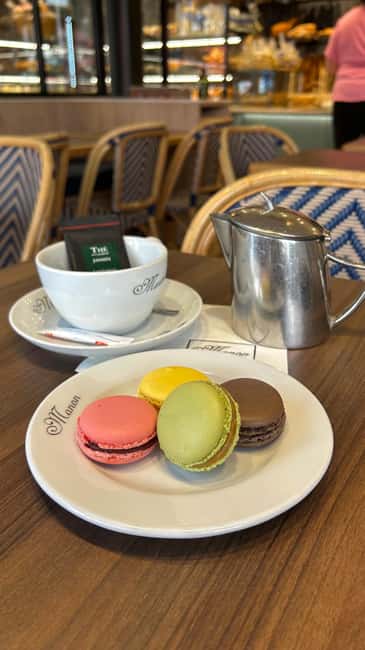
The class includes a macaron tasting and refreshments. One useful touch is that you may receive a complimentary macaron and a drink while waiting for the class to start. It is a small beginning, but it gives you an immediate taste of the pastry you are about to make.
Your instructor is a local pâtisserie expert, and the class is conducted in English. Specific instructors can vary. One particularly praised teacher is Paulette, while another participant described working with Jess during an evening class. The important point is that the teaching is designed for English speakers and includes time for questions.
The opening section also covers the background of the macaron. This is not just filler. Understanding the pastry’s place in French pâtisserie helps explain why technique matters so much. A macaron has a crisp outer shell, a softer center, and a filling that must work with both texture and flavor. Small changes in mixing, piping, or baking can affect the final result.
Mixing and preparing the macaron batter
The central part of the class takes you through the recipe from scratch. You will mix the batter under guidance, with the instructor explaining how to handle each stage. This is where the class earns much of its value for anyone who hopes to repeat the recipe at home.
Macarons look simple in a display case, but the method is not forgiving. The mixture needs the right consistency before it is piped. Too little mixing can leave the batter stiff and uneven. Too much can make it runny. A class gives you a chance to see the correct texture rather than relying on a recipe’s vague instruction to mix until ready.
The recipe uses almond powder and dairy. The macarons themselves are gluten-free, but the bakery also works with wheat products, so this is not a gluten-free facility. People with allergies or strict dietary requirements should take that distinction seriously.
The class follows a set recipe with several flavor choices. You can customize colors and choose among the available options, but substitutions are not offered. This is a useful detail for families and people with dietary restrictions. You get creative control within a fixed recipe, not a fully custom pastry consultation.
Piping, shaping, and learning from mistakes
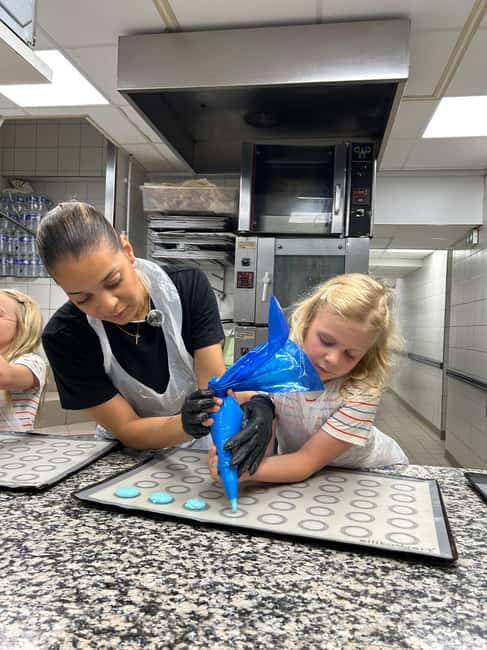
Once the batter is ready, you will pipe it into small rounds. This step is more difficult than it appears. Consistent size matters because matching shells will later be paired with filling, and uneven shapes can bake at different rates.
You will have the chance to try the technique yourself, with the instructor correcting your approach as needed. That hands-on practice is especially helpful for first-time bakers. At home, it is easy to waste a batch before you understand how much pressure to use or how to stop the flow cleanly.
The class is also suitable for families, provided children are old enough to take part safely. Children under five may attend free with an adult, but they cannot participate in the hands-on baking portion because of safety concerns. Children must be accompanied by an adult, and the English-language instruction may be difficult for a child who does not understand English.
A five-year-old child who did not speak English was still able to take part with gentle help from the instructors, but that should not be taken as a guarantee for every child. Younger children may enjoy watching and decorating more than following every explanation.
More Baking Classes in Paris
- Paris Macarons Small-Group Baking Class with a Chef
★ 5.0 · 316 reviews - Paris: Macaron Baking Class for Families and Kids
★ 4.7 · 270 reviews - Paris: Macaron Baking Class in Central Paris
★ 5.0 · 208 reviews - Paris Baking Insider Experience near Notre-Dame
★ 5.0 · 206 reviews
Baking and seeing the results take shape
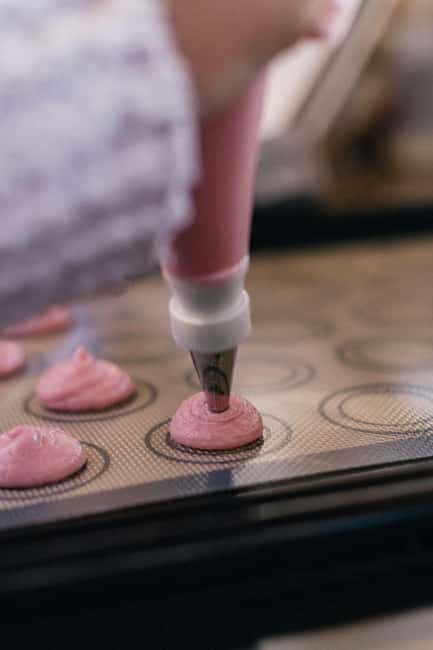
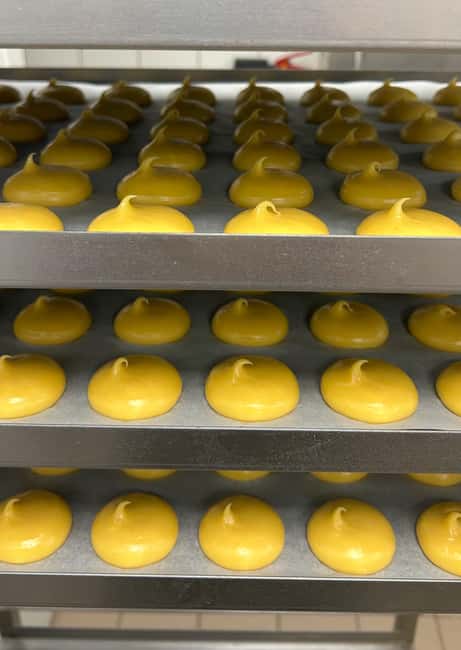
The macarons are baked during the class, giving you a clear connection between your preparation and the finished pastry. You will see how the piped shells change in the oven and learn what makes a successful batch.
The waiting period is also a chance to ask practical questions. Several participants valued the advice about baking at home, especially ways to improve the chance of getting attractive, properly formed macarons. That is the difference between a simple holiday activity and a class that can continue to be useful after you return home.
The activity lasts two hours, so the schedule is focused. You should not expect a full professional pastry course covering every possible macaron style. Instead, you get a concentrated introduction to one recipe, several flavor choices, the main techniques, and enough explanation to repeat the process with care.
Because the group is capped at eight people, you should have more opportunity to ask for help than you would in a large demonstration. That matters during piping and mixing, when a quick correction can save the batch.
Choosing colors and flavors
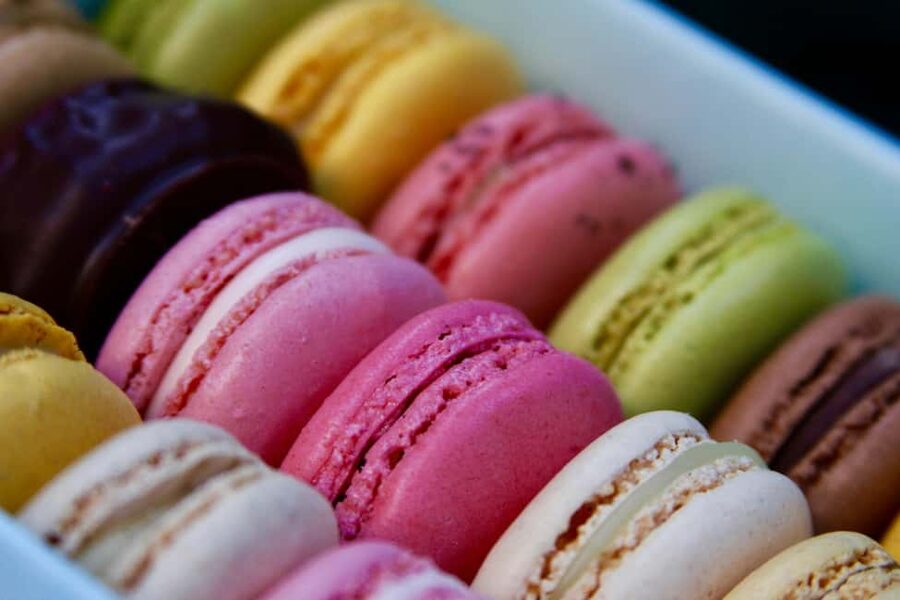
Customization is one of the class’s most enjoyable features. You can choose colors and flavors from the options provided, giving your batch a personal look. This makes the finished box feel more like your own work and less like a standard item collected from a bakery counter.
Do not expect unlimited combinations. The bakery uses a set recipe and does not make substitutions. If you have a specific flavor in mind, you should ask about the available choices before booking or at the start of the class.
The color choices also make this a good activity for families. Children can take part in a visible, creative way, even if the more exact technical work requires adult help. Adults who enjoy food photography will also find the finished macarons more personal than a standard boxed purchase.
Still, the focus is on making good macarons, not on producing perfect decorative art. The value comes from learning the process and taking part, not from expecting every shell to look like a professional pastry display.
The guided tasting and take-home box
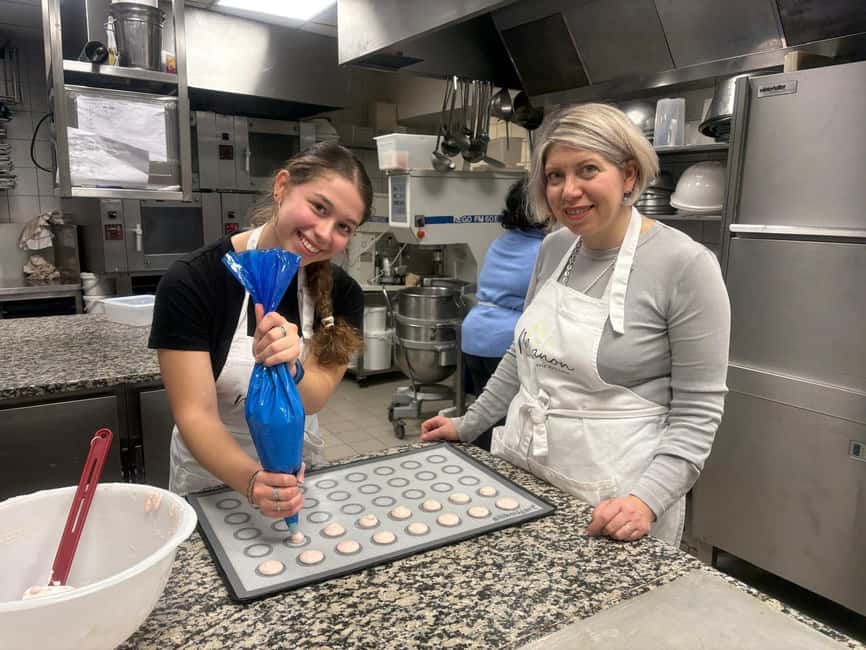
At the end, you taste the macarons and receive a box of your personalized creations to take with you. The box gives the class a satisfying finish and turns the activity into a souvenir you can share later.
The tasting is also useful because it lets you judge the texture you helped create. A good macaron should offer contrast between the shell, center, and filling. Tasting your own batch helps connect the technique to the result in a way that a demonstration cannot.
You should treat the box as a same-day food souvenir. The supplied information does not specify storage instructions or how many macarons you receive, so ask the instructor if you need advice about carrying them around Paris or taking them on a flight.
This is a better souvenir for someone who enjoys making things than for someone who simply wants the finest macarons in Paris. If your priority is buying a flawless luxury box, a specialist pastry shop may be the simpler choice. If you want a story behind the sweets, the class offers much more.
How the $117 price measures up
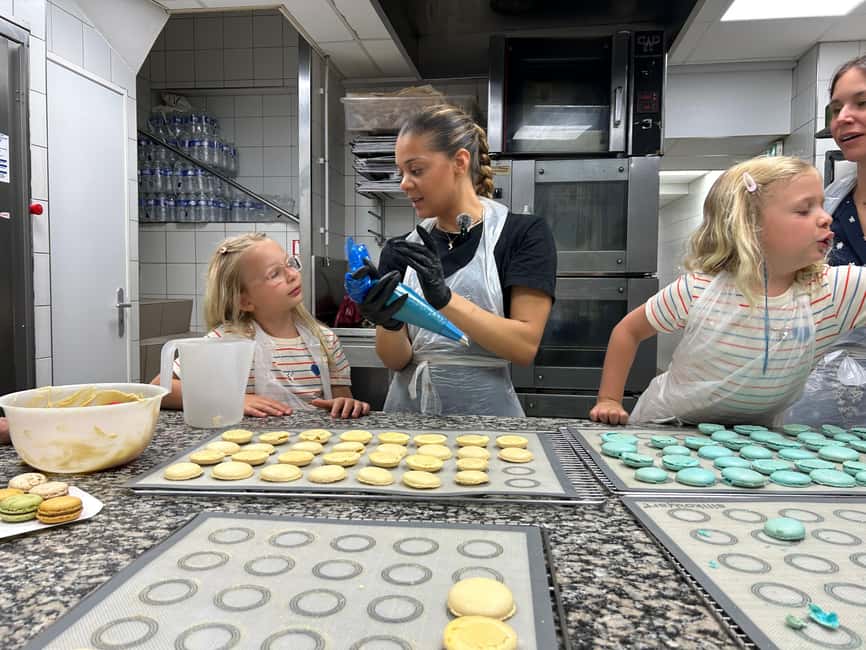
At $117 per person, this is not a cheap pastry tasting. You are paying for a two-hour English-language lesson, a local pâtisserie instructor, ingredients, refreshments, tasting, and a box of your own macarons.
The price makes more sense if you value the instruction. You are not just buying pastries. You are paying for guided practice, the chance to ask questions, and the ability to take the method home. A family may also find that the activity replaces another paid attraction while giving everyone something to do together.
The small group helps support the cost. Eight participants is a manageable number for a practical cooking class, especially when everyone needs space to mix and pipe. A larger class might be cheaper, but it would likely provide less direct help.
Value depends on your expectations. Food lovers, home bakers, and families who want a structured activity may find the price fair. People seeking a quick, inexpensive introduction to French sweets may find it high, especially since the experience lasts only two hours and follows one set recipe.
The class also includes no hotel pickup, drop-off, or additional food and drinks. You will need to make your own way to Rue de Bretagne and pay separately for anything you buy before or after the activity.
The basement setting and other practical concerns
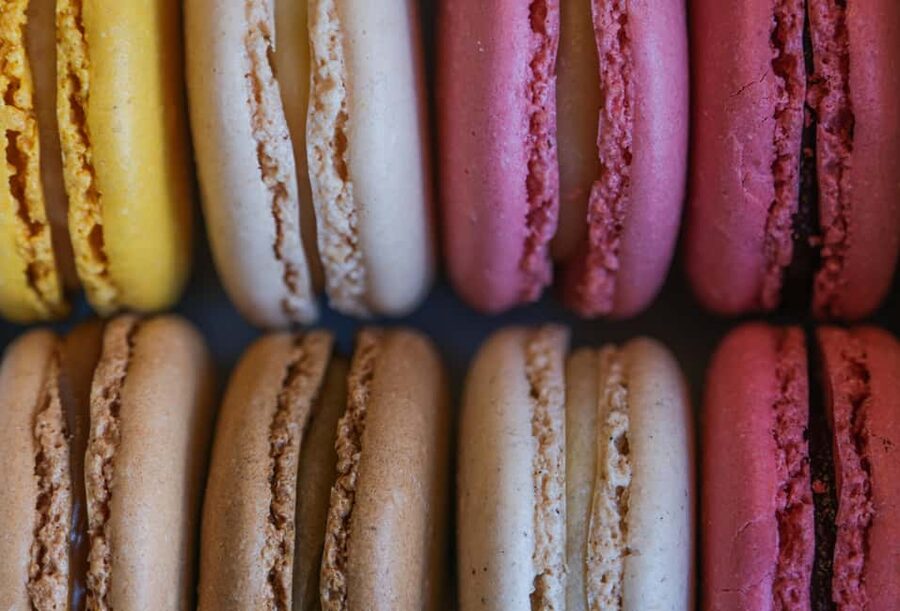
The historic bakery setting adds character, but it comes with trade-offs. You will take multiple steps, including steep stairs to the basement kitchen, and the space may not suit anyone who needs a wheelchair-accessible route.
You should wear comfortable clothes and shoes. The activity requires standing, and baking involves leaning, reaching, and working at a kitchen counter. The supplied information does not promise a polished studio, so dress for a working food-preparation area rather than a formal culinary school.
One recent account described the basement as having old equipment, dirty surfaces, and pest concerns. That is a serious allegation and does not fit the otherwise positive picture, but it is fair to keep in mind when deciding how much you care about kitchen presentation. If visible cleanliness and modern equipment are essential to you, ask for current details before booking or choose a more formal cooking school.
The class does use organic ingredients where possible, according to the experience description. Still, you should not assume every ingredient is organic, and the recipe includes almond powder and dairy. The bakery is not a gluten-free facility because wheat is used in other products.
Who will enjoy this class most
I would choose this activity for a food-loving couple, a parent and older child, or a small group of friends who want a shared project in Paris. It also suits home bakers who have tried macarons before and want help with the parts that usually go wrong.
The class works particularly well as a break from museums and monuments. It is active, social, and focused, but it does not require a full day. The Le Marais location makes it easy to pair with other plans in the 3rd arrondissement.
Children can join if accompanied by an adult, but the activity is not suitable for children under five as participants. Kids who do not speak English may still enjoy the practical work, though they may need extra help following instructions.
I would skip it if you have limited mobility, cannot stand for two hours, have a serious almond or dairy concern, or need a fully gluten-free kitchen. I would also think twice if you expect a spotless, modern training facility rather than a class held behind a working bakery.
Should you book the Paris macaron class?
Book it if you want to make something with your hands, learn a French pastry technique, and leave with a personal edible souvenir. The strongest reasons to go are the small group, English instruction, practical advice, and the chance to customize the final batch.
Approach it with realistic expectations. This is a short class in a historic bakery, not a professional pastry qualification or a private workshop. The steep basement stairs, standing time, fixed recipe, and reported concern about the kitchen condition are important considerations.
For most food lovers who can manage the stairs, the experience offers a pleasant mix of instruction, creativity, and tasting. If you want a polished culinary studio or strict allergy control, choose another activity. If you want to understand how macarons are made and enjoy the satisfaction of carrying your own box through Paris, this class is a sensible pick.
FAQ
Where does the macaron class take place?
The class meets inside Chez Manon at 25 Rue de Bretagne, 75003 Paris. Tell the bakery staff that you are there for the baking class, and they will direct you.
How long does the class last?
The experience lasts two hours.
What language is the class taught in?
The class is taught in English.
How many people are in the group?
The group is limited to eight participants.
What will I do during the class?
You will learn how to mix, pipe, and bake macarons from scratch. You can also customize available flavors and colors.
Do I get to take macarons home?
Yes. The experience includes a box of your personalized macarons to take with you.
Are tasting and refreshments included?
Yes. Macaron tasting and refreshments are included.
Can children join the class?
Children may join when accompanied by an adult. Children under five can attend free, but they cannot take part in the hands-on baking for safety reasons.
Is the activity wheelchair accessible?
No. The bakery is in a historic building with multiple steps, including steep stairs to the basement kitchen.
Are the macarons gluten-free?
The macarons use almond powder and dairy and are gluten-free, but the bakery also uses wheat in other products. It is not a gluten-free facility.
Can the recipe be changed for dietary needs?
No. The class follows a set recipe with various flavor options and does not offer substitutions.
What happens if I need to cancel?
You can cancel up to 24 hours in advance for a full refund. You can also reserve your place and pay later.
More Hands-On Workshops in Paris
- Paris Cooking Class and Lunch with Wine plus Market Visit Option
★ 5.0 · 1,024 reviews - Paris Cooking Class: Learn How to Make Macarons
★ 5.0 · 634 reviews - Paris: French Macaron Culinary Class with a Chef
★ 4.9 · 591 reviews - Paris Evening Cooking Class French Dinner and Market Visit Option
★ 5.0 · 430 reviews
Just added around Paris
- Paris: Montmartre Macaron Baking Workshop★ 4.9 · 143 reviews
- Paris: Macarons Cooking Class with Pâtisserie Chef Noémie★ 4.8 · 179 reviews
- Paris: Hands-On Small Group Cooking Class★ 4.9 · 19 reviews
- Paris: Millefeuille baking class with a chef★ 5.0 · 5 reviews
- Paris: Evening Cooking Class with Optional Market Visit★ 4.8 · 19 reviews
- Paris: Lemon Tart Baking Class with a Pastry Chef★ 5.0 · 4 reviews
- Paris: French Pastry and Baking Workshop★ 4.1 · 12 reviews
- Eclair Baking Class with A Pastry Chef★ 5.0 · 3 reviews
Baking & Bread Classes, compared.

Group Tour: Garni, Symphony of Stones, Geghard, Lavash Baking
Read our review →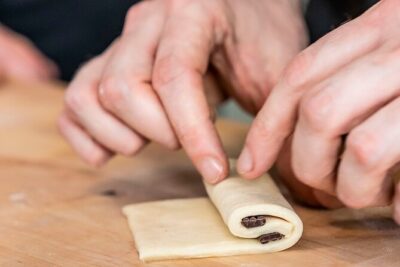
Paris Croissant Small-Group Baking Class with a Chef
Read our review →
Garni & Geghard Small-Group Day Trip with Lavash Baking
Read our review →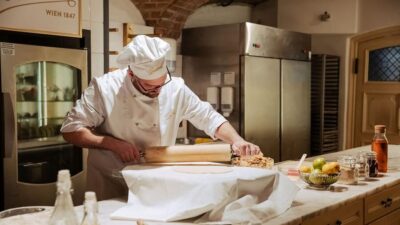
Vienna: Gerstner KuK Hofzuckerbäcker Baking Show & Tasting
Read our review →
Yerevan: Garni, Geghard, Symphony of Stones & Lavash Baking
Read our review →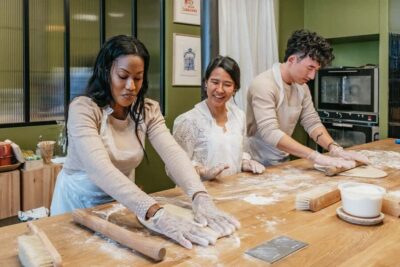
Paris: French Croissant Baking Class with a Chef
Read our review →
Laugarvatn Fontana: Geothermal Bread-Baking Experience
Read our review →Browse the lists this tour appears in