Review · COOKING CLASSES
Krakow Pierogi Cooking Class
The best part of this Krakow cooking class is that you do not just eat pierogi, you learn the whole process. You mix the dough, prepare one savory and one sweet filling, shape the dumplings, boil them, and sit down to eat them with a local drink. I like the hands-on format and the family stories shared by instructors such as Magda, Olga, and Sylwia.
I also like the friendly, small-group setup. A group of six has been reported, while larger groups can still be managed well. The main drawback is practical: the venue can be hard to spot after dark, with one attendee noting that there were no clear lights or signs outside.
Key Points
- Make pierogi from scratch: You handle the dough, fillings, shaping, and boiling rather than watching a demonstration.
- Try two styles: The class includes both a savory filling and a sweet filling, giving you a broader taste of Polish cooking.
- Hear family food stories: Local instructors share tips linked to their mothers’ and grandmothers’ kitchens.
- Finish with a drink: Your homemade pierogi come with a local beer or a glass of wine.
- Expect a personal class: Groups are kept small when possible, though instructors can also manage larger parties.
- Plan for the entrance: The restaurant near Krakow’s center may not have strong exterior lighting or signage.
Why this two-hour class works so well
Pierogi are one of Poland’s best-known foods, but they are easy to misunderstand if you only order them in a restaurant. The pleasure is not just in the finished dumpling. It is in the soft dough, the filling tucked inside, the neat fold around the edge, and the contrast between a savory version and a sweet one.
This class gives you that full process in about two hours. You are not sent home with a vague recipe and a quick sample. You make the dish from the first scoop of flour through the final boil, then eat what you have prepared with a beer or glass of wine.
I like that the class is built around participation rather than a formal cooking show. You can ask questions as you work, and the instructors are there to help with the fiddly parts. That matters if you have never made filled dumplings before, since the dough and sealing technique often take more practice than expected.
It is also a good way to learn about food in a personal setting. The instructors share family methods and memories from their mothers’ and grandmothers’ kitchens. Those details give you a better sense of why pierogi matter in Polish homes, especially beyond their role as a popular menu item.
More Hands-On Workshops in the world:
- Half-Day Thai Cooking Class at Organic Farm in Chiang Mai
★ 5.0 · 19,087 reviews - Florence: Pasta Cooking Class with Unlimited Wine
★ 4.9 · 10,285 reviews - 3 in 1 Cooking Class near Navona: Fettuccine, Ravioli & Tiramisu
★ 5.0 · 7,376 reviews
Finding the local restaurant near Krakow’s center
The class takes place at a local restaurant close to Krakow’s city center. That central location makes it practical to fit the activity into a day of sightseeing, though the exact starting time depends on availability when you book.
Give yourself enough time to find the entrance. One attendee had trouble locating the venue because the outside had no lights or signs. This is especially worth noting for an evening class, when a plain restaurant frontage can be easy to miss. I would save the meeting details on your phone and avoid arriving at the last minute.
Once inside, the setting is intended for cooking and eating rather than a large-scale show. Materials and equipment are provided, so you do not need to bring kitchen tools. The English-language instruction also makes the class suitable for visitors who want clear guidance while working with unfamiliar techniques.
The nearby city-center setting is useful, but it is not itself the main attraction. You are paying for the cooking session and the local instruction, not for a grand restaurant interior or a long tour of Krakow. Keep that distinction in mind when judging the price.
Starting with dough instead of shortcuts
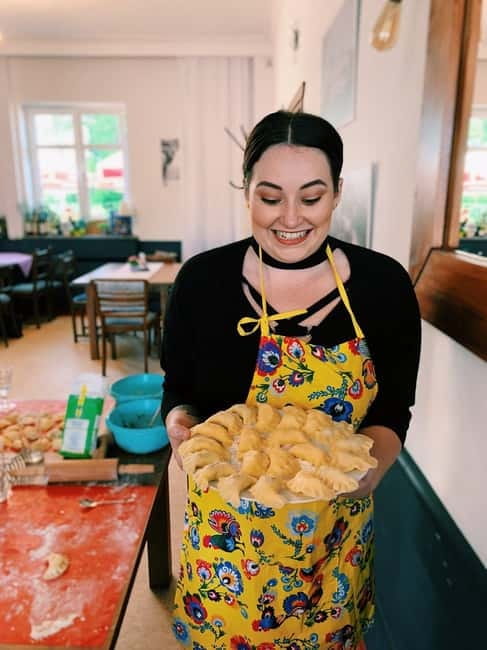
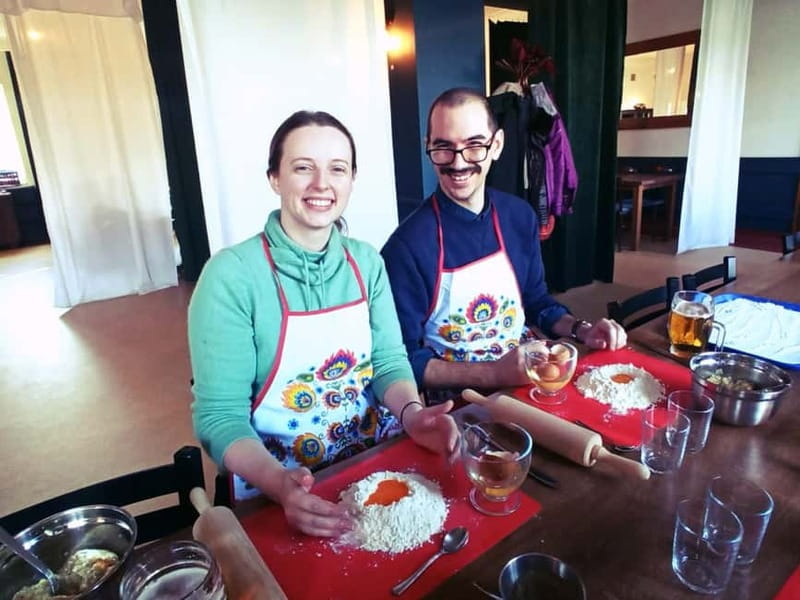
The class begins with pierogi dough made from scratch. This is an important part of the experience because the dough controls how easy the pierogi are to fill, fold, and boil.
You should expect to work through the process with an instructor beside you. The aim is not simply to copy a finished ball of dough. You learn the practical steps and receive tips intended for use at home. For a beginner, that guidance can prevent common problems such as dough that is too thick, too dry, or difficult to seal.
The cooking team draws on family techniques described as grandmother’s secrets. That does not mean the process is mysterious or advanced. The appeal is that the instructors can explain the small adjustments that often come from repeated home cooking, such as how the dough should feel and how to keep the edges together.
This is also where the class earns some of its value. A restaurant plate gives you a taste. A hands-on lesson gives you a method. If you plan to make pierogi after returning home, learning the texture and handling of the dough is more useful than simply memorizing ingredient amounts.
Two fillings, two different sides of Polish cooking
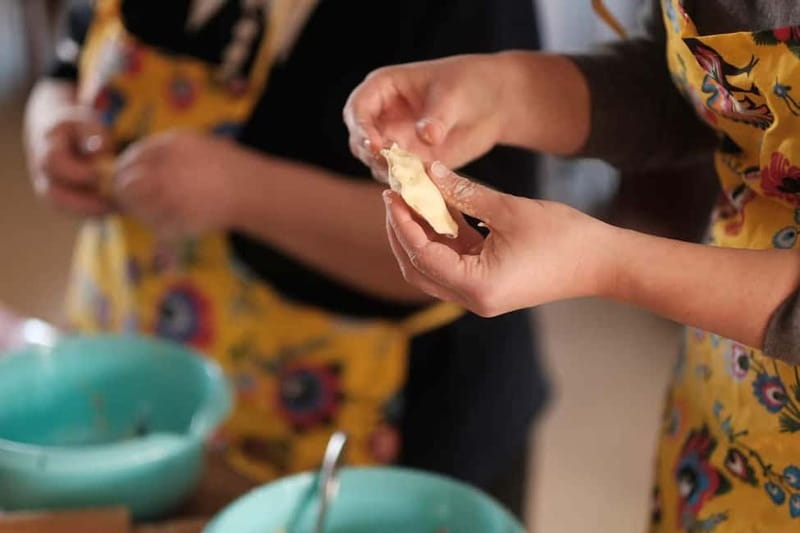
You prepare two fillings, one savory and one sweet. The exact fillings are not specified, so you should not book expecting particular ingredients. That said, the two-part format gives you a clear contrast and keeps the session from feeling repetitive.
The savory preparation shows the side of pierogi most people first associate with Poland: a filling suitable for a main meal or substantial snack. The sweet version shows how the same dough can shift into a dessert-style dish. You use the same basic idea, but the result feels entirely different.
Preparing both fillings also helps you understand the flexibility of pierogi. They are not limited to one traditional recipe. The format lets you think about fillings as a family of choices, which is helpful when you want to recreate the dish at home with ingredients available in your own kitchen.
I would consider this especially useful for couples, families, and friends who like to compare results while cooking. The class gives everyone a clear job and enough variety to keep the work moving. It also makes the final meal more interesting than a session focused on only one filling.
A few more cooking classes around the world worth a look
- Florence: Pasta & Tiramisu Cooking Class with Unlimited Wine
★ 4.9 · 6,708 reviews - Florence: Pasta Cooking Class with Unlimited Wine
★ 5.0 · 6,413 reviews - Hanoi Cooking Class: Culture, Local Market & Meaning CSR Impact
★ 5.0 · 5,147 reviews - 5 Traditional Dishes Hanoi Cooking Class with Market Trip
★ 5.0 · 4,890 reviews
Shaping pierogi is the hands-on test
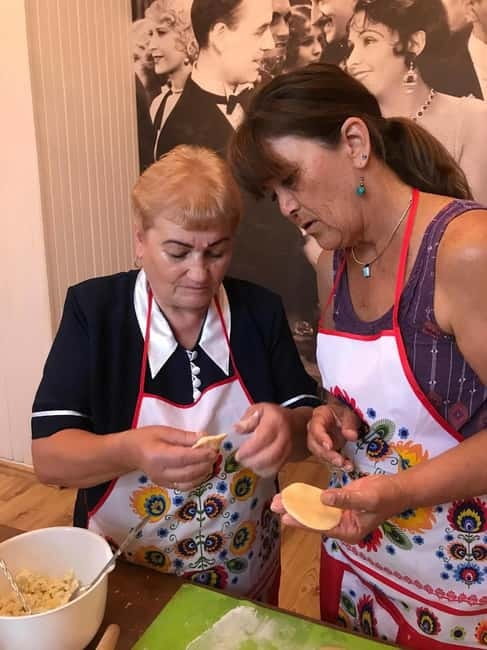
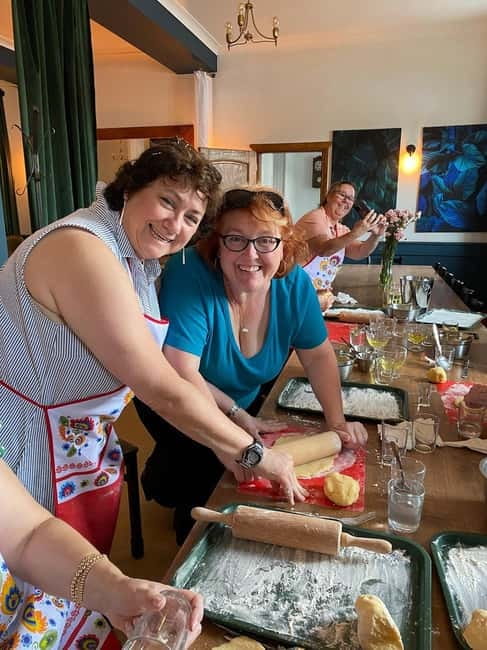
Once the dough and fillings are ready, you shape the pierogi. This is the part where the class becomes pleasantly practical. You portion the dough, add filling, fold the dumpling, and press the edges closed.
The first few may look uneven. That is normal, and it is part of the fun. The instructor can show you how much filling to use and how firmly to seal the edge. Too much filling makes the dumpling difficult to close, while too little leaves you with a lot of dough and not much flavor.
A small group makes this stage easier because the instructor has time to look at your technique. The activity is designed for personalized attention, and one class was described as having six people. At the same time, an instructor was praised for handling a large group well, so the experience does not depend entirely on having a tiny class.
The social side is one of the strongest reasons to choose this activity. You are working with your hands, not sitting silently at a table. That creates natural conversation with the instructor and the other participants. In one particularly personal session, the instructor and the participants discussed Polish family backgrounds and shared stories because the group was very small.
Boiling, eating, and pairing the finished dish
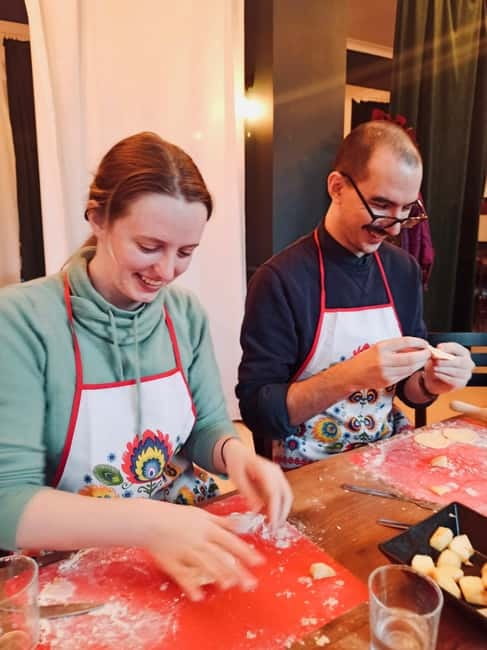
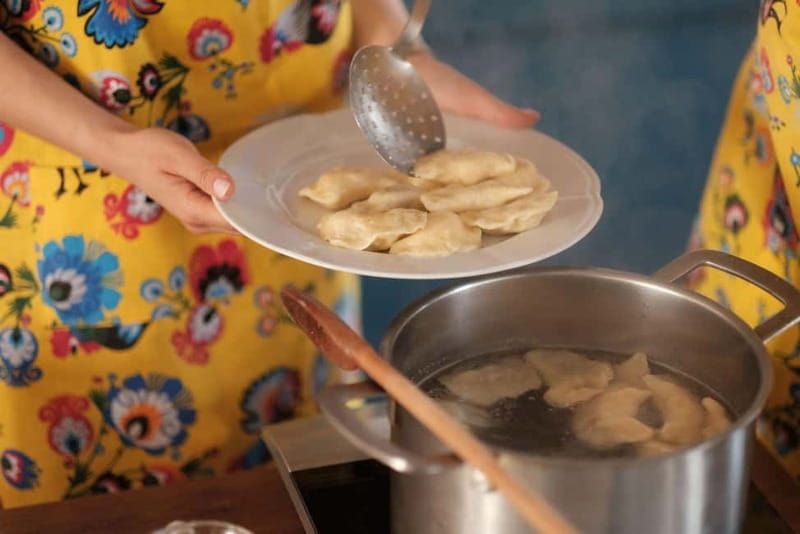
After the pierogi are formed, you boil them and prepare to eat. This final step gives the class a proper finish. You are not sent away with uncooked pieces or a small taste. The intention is to enjoy the food you have made.
The meal includes a local beer or a glass of wine. That drink pairing adds a relaxed restaurant feel to the end of the lesson and gives you time to talk with the instructor. It also helps the two-hour schedule feel complete rather than rushed.
The amount of food is another practical plus. One participant described making plenty of both sweet and savory pierogi. Exact serving sizes are not provided, so I would not treat the class as a substitute for a full day of eating, but you should expect to enjoy a proper portion of your own work.
The meal is also the best moment to ask final questions. You can discuss variations, filling ideas, and ways to repeat the recipe at home. The instructors are specifically there to share recipe tips and tricks, so use the last part of the class to clarify anything you found difficult.
The instructors shape the experience
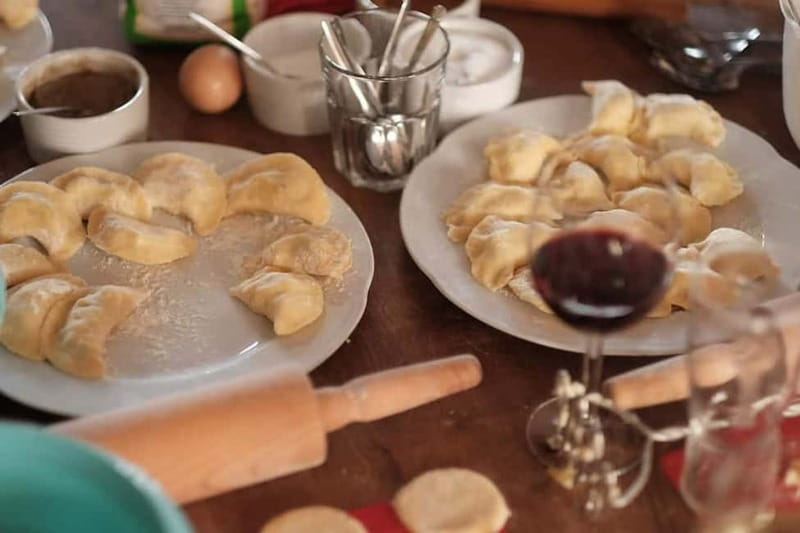
The named instructors connected with this class include Magda, Olga, and Sylwia, with the name also appearing as Sylvie or Sylvia in some accounts. The strongest praise centers on their manner as teachers: clear explanations, patience, warmth, and an ability to keep conversation flowing.
Magda was described as explaining each stage clearly and creating a very hands-on session. Olga was noted for strong explanations and for helping participants leave with a better understanding of the process. Sylwia, also referred to as Sylvie or Sylvia, was praised for personal stories, practical help, and an easy conversation about Polish family traditions.
Those details matter because cooking classes can vary greatly depending on the person leading them. Here, the instructor is not simply supervising a set of ingredients. The teacher is part of the cultural experience, bringing in memories from home kitchens and answering questions about Polish food.
You should still allow for some variation. Your class may be smaller or larger, and the atmosphere will depend partly on who attends. The available evidence points to a relaxed and engaging teaching style, but it would be unrealistic to expect a private lesson every time.
What the two-hour schedule means for you
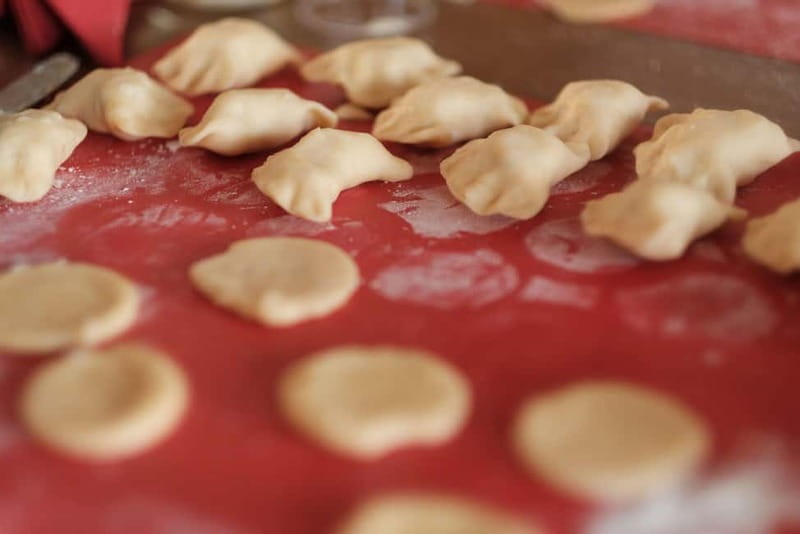
Two hours is long enough to complete the full process without turning the class into an all-day commitment. You can fit it before dinner, after a morning of sightseeing, or between other plans in Krakow.
The schedule is focused. You will not spend much time on a wide food tour, a market visit, or a long history lecture. Instead, the cultural information is tied to what you are doing at the table. That makes it easier to remember because you hear about Polish food while preparing a dish that has a real place in local homes.
The short format also has a limit. If you want a slow, highly technical cooking course with many recipes, this is not that. You prepare two fillings and one dough, then eat the result. For most visitors, that is a sensible balance, but serious home cooks may want more time for advanced techniques.
English is the listed teaching language. All materials and equipment are supplied, and the class welcomes both experienced cooks and beginners. You do not need special kitchen skills to take part.
Is $89 a fair price?
At $89 per person, this class is not the cheapest way to eat pierogi in Krakow. You can order the dish in a restaurant for much less. The price needs to be judged against what is included: two hours of instruction, ingredients, equipment, two fillings, a local drink, the meal itself, cultural conversation, and recipes to take home.
I think the value is strongest if you want an activity rather than a plate of food. You are paying for guidance and participation, plus the chance to make a Polish dish with local instructors. The family cooking tips are difficult to obtain from a menu or a standard sightseeing walk.
The price is less compelling if your only goal is to sample pierogi. In that case, a restaurant meal will be simpler and cheaper. You should also remember that the class is near the city center, but the venue’s exterior may be plain and the activity does not promise a wider tour of Krakow.
For a visitor who enjoys food, the amount of hands-on work makes the cost easier to justify. I would see it as a cultural activity with a meal included, not as an inexpensive lunch.
Who should book this class?
I would recommend it to:
- First-time pierogi makers: You get guidance from dough through boiling, with no need to bring equipment.
- Food-focused visitors: The class connects a familiar Polish dish with family methods and local stories.
- Couples and friends: The shared shaping and cooking work gives you something to do together.
- Families with older children: The activity is interactive, though the supplied information does not specify an age minimum.
- Visitors planning to cook at home: The recipe tips and practical handling advice have value after your trip.
- People seeking a relaxed cultural activity: You learn through conversation and food rather than a formal lecture.
I would be more cautious if you dislike group activities, expect a luxury dining setting, or want a broad cooking course with many dishes. The class is focused on one food, prepared in two styles.
Booking details worth knowing
The class lasts two hours and is taught in English. Starting times vary, so you need to check availability for your date.
Cancellation is free up to 24 hours in advance for a full refund. You can also reserve now and pay later, which helps if your Krakow schedule is still changing.
The experience is provided by Delicious Poland. Since the exterior signage may be limited, keep the venue information close at hand and allow a little extra time to locate the entrance.
Should you book the Krakow Pierogi Cooking Class?
Book it if you want to do more than order Poland’s signature dumpling. The class gives you a complete, practical lesson, two types of filling, a drink, and a meal you have made yourself. The warm teaching style associated with Magda, Olga, and Sylwia adds the personal touch that makes a food class worth remembering.
Skip it if you only want the cheapest possible pierogi or if a structured group activity does not appeal to you. For everyone else, $89 is a reasonable price for a two-hour cultural experience near Krakow’s center, especially if you plan to use the family-style tips once you get home.
FAQ
Where does the Krakow Pierogi Cooking Class take place?
It takes place at a local restaurant near Krakow’s city center in Lesser Poland, Poland.
How long does the class last?
The activity lasts two hours.
What will I make during the class?
You will make pierogi dough from scratch, prepare one savory filling and one sweet filling, shape the pierogi, and boil them.
Is a drink included?
Yes. You can enjoy your homemade pierogi with a local beer or a glass of wine.
Is the class taught in English?
Yes. English is the listed language for the instructor.
Can I cancel or pay later?
You can cancel up to 24 hours in advance for a full refund. The activity also offers reserve now and pay later booking.
Just added around the world
- Private Cape Malay Cooking Class in Cape Town with a Local Family★ 5.0 · 24 reviews
- Private Moroccan Cooking Class in Casablanca with a Local Expert★ 5.0 · 12 reviews
- Cooking Class and Wine Pairing in Capri★ 5.0 · 57 reviews
- South African Cooking in Cape Town with Local Chef Richard★ 4.5 · 10 reviews
- Langa Township and Bokaap Cooking Class Half Day Tour★ 5.0 · 4 reviews
- Private Authentic Mexican Cooking Class in Cancun with Alberto★ 5.0 · 3 reviews
- Private Authentic Cape Malay Cooking Class in Manenberg with Locals★ 5.0 · 5 reviews
- Cape Town Shore Excursion| South African Cooking & Port Transfers★ 5.0 · 3 reviews
Cooking Classes, compared.
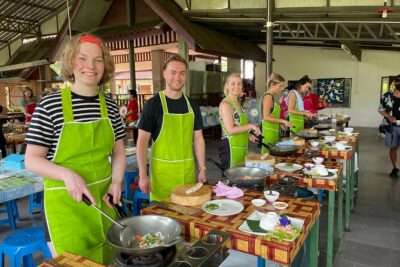
Half-Day Thai Cooking Class at Organic Farm in Chiang Mai
Read our review →
Florence: Pasta Cooking Class with Unlimited Wine
Read our review →
3 in 1 Cooking Class near Navona: Fettuccine, Ravioli & Tiramisu
Read our review →
Hanoi Cooking Class: Culture, Local Market & Meaning CSR Impact
Read our review →
5 Traditional Dishes Hanoi Cooking Class with Market Trip
Read our review →
Cooking Class and Lunch at a Tuscan Farmhouse with Local Market Tour from Florence
Read our review →