
Review · HO CHI MINH CITY
M.O.M COOKING CLASS
Vietnamese cooking is best understood with your hands, not just your appetite. At M.O.M Cooking Class, you begin with ingredients at a local Saigon market, then prepare five dishes from scratch in an air-conditioned classroom. I especially like the market visit and the chance to cook dishes such as pho, banh mi, and spring rolls rather than simply watch a demonstration.
I also like the small group of up to eight, which gives the chef room to guide each person through the work. The main thing to watch is communication around allergies. Dietary needs can be handled, but you should list them clearly when booking and confirm them again with the chef, since one family found that ingredients were removed for everyone rather than adjusted separately.
Key points at a glance
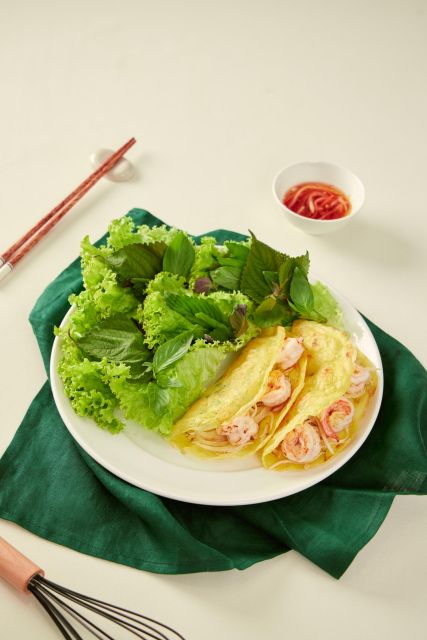
- Five dishes from scratch: You cook a full selection of Vietnamese food, with pho, banh mi, and spring rolls among the dishes that may appear.
- A real market visit: The half-day option shows you how to select fresh ingredients before you start cooking.
- Small class size: Groups are limited to eight people, making step-by-step help more practical.
- Flexible class times: Morning, afternoon, and evening sessions are available, depending on the date.
- Dietary requests are possible: Tell the chef about allergies or special diets at checkout, then repeat the details in person.
- Take-home recipes: Recipes are provided in English, Korean, or Chinese, along with a certificate.
Why this cooking class works in Saigon
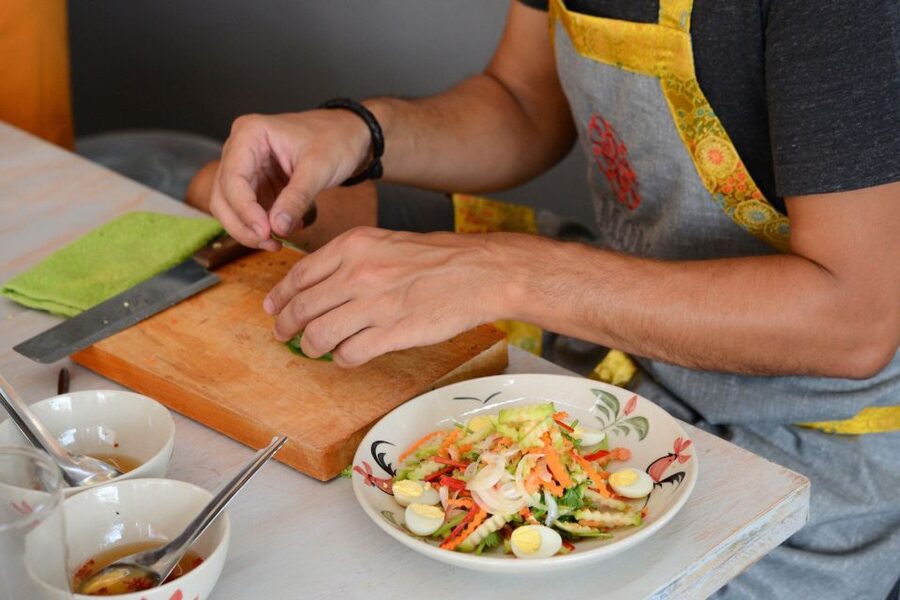
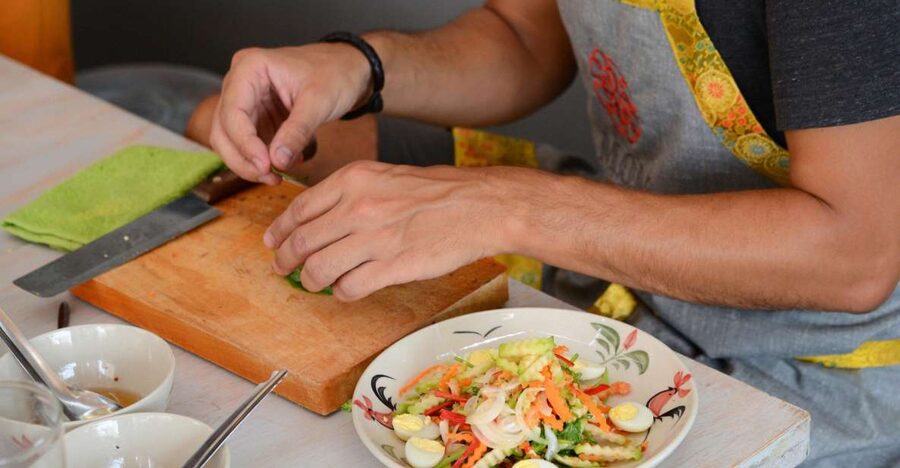
A cooking class can be a pleasant break from sightseeing, but the good ones do more than fill three hours. They explain why Vietnamese food tastes the way it does and show you how ordinary ingredients become dishes with very different textures and flavors.
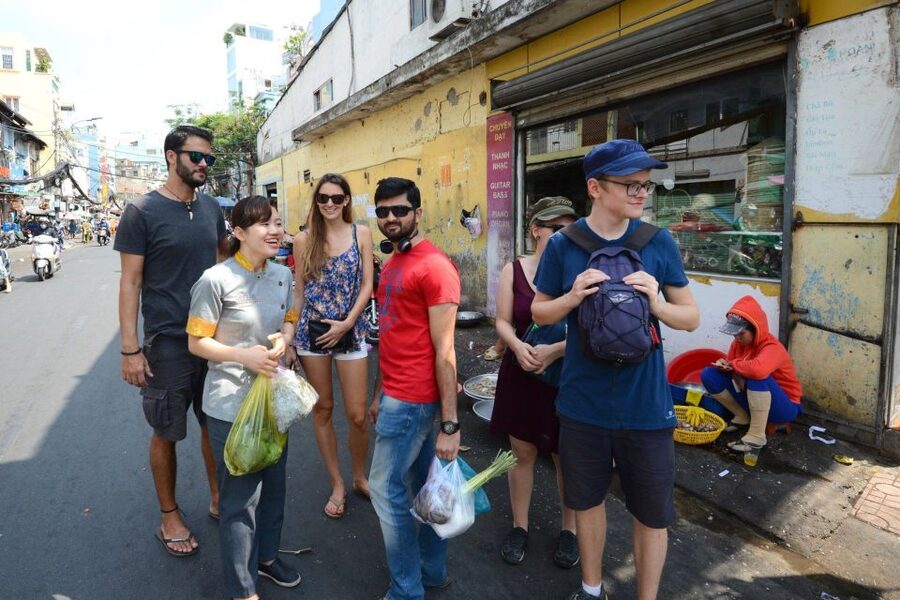
M.O.M begins with that practical approach. Instead of placing you straight in front of a chopping board, the half-day option takes you to a local market. You learn how to choose ingredients for Vietnamese cooking, which is useful if you hope to repeat the recipes at home rather than leave the experience behind in Vietnam.
The class then shifts to an air-conditioned classroom. That matters in Saigon, especially if you have spent the morning outside. You can concentrate on knife work, sauces, fillings, and cooking times without dealing with heat from the street or the kitchen.
The format is hands-on. You are not simply watching a chef prepare lunch while someone else does the difficult work. The chef guides you step by step, and you eventually eat the food you helped prepare. That makes the experience a good fit for curious eaters, home cooks, and anyone who wants a useful activity rather than another sightseeing stop.
More Hands-On Workshops in Ho Chi Minh City:
- Cai Be Mekong Delta Tour: Cooking Class, Cycling & Craft Villages
★ 5.0 · 1,881 reviews - Chef Vu Cooking Class Plus Market Trip in Saigon Center (Pick up by Cyclo)
★ 5.0 · 477 reviews - Immersive Cooking Class & Market Tour By Local Chef+Cookbook
★ 4.8 · 426 reviews
Starting at the local market
The market visit is one of the strongest parts of the experience. You are shown how to select produce for traditional Vietnamese dishes, rather than being handed a premeasured basket of ingredients with no explanation.
The available information does not name the market or list every ingredient, so you should not expect a fixed shopping route or a set lecture. The point is more direct: learn what to look for and how fresh produce fits into the dishes you will later cook.
This part also gives the class a stronger link to daily life in Saigon. Vietnamese food is built around ingredients that need to be chosen with care, and the market is where that process begins. You get a better sense of the food culture when you see the raw materials before they are cleaned, chopped, rolled, or simmered.
The market visit belongs to the half-day option, so check exactly which version you are booking. The class options and starting points can vary. The meeting point may also differ by option, and the activity finishes back at the meeting point.
Cooking five dishes from scratch
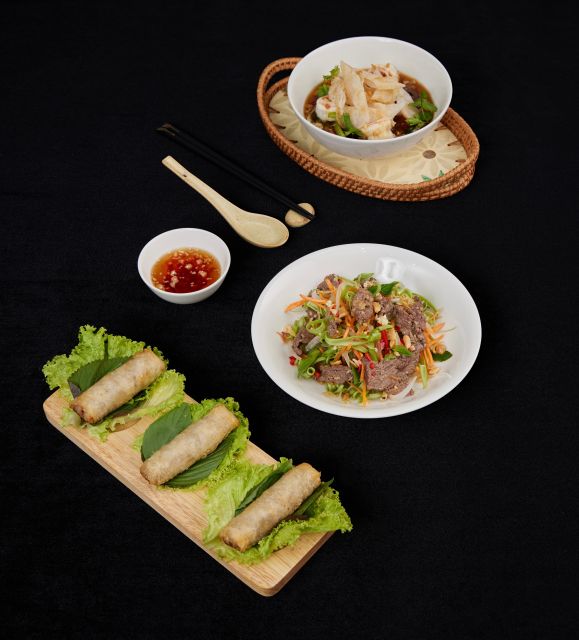
After the market, you prepare five well-known Vietnamese dishes. The exact menu is not fixed in the information provided, and the dessert changes daily, so you should treat the sample dishes as a guide rather than a promise.
Pho, banh mi, and spring rolls have all been part of the cooking experience. That is a satisfying mix because each dish teaches a different kind of kitchen skill. Pho introduces broth and seasoning, banh mi brings together bread and fillings, and spring rolls involve careful preparation and assembly.
The work is done from scratch, with step-by-step guidance from the chef. You can expect the pace to be active, but not like a professional kitchen. The aim is to help you understand the process and leave with recipes you can use later.
One useful detail is that the dessert is not fixed. It changes daily, which adds a little surprise, but it also means you should not book expecting a particular sweet dish. If dessert is important to you, ask about the day’s menu before the class.
What the small group changes
The class is limited to eight participants. That is a sensible size for cooking, since you need enough space to work and enough access to the chef to ask questions.
A larger group can turn a cooking class into a queue for a chopping board. Here, the smaller format should make it easier to follow the chef’s instructions and get help when something goes wrong. That is especially useful if you have little cooking experience or are unsure about a technique.
The class has English and Vietnamese instruction. One English-speaking instructor named Helen received particular praise for answering questions clearly, and two friendly instructors have also led sessions. Still, one participant had trouble communicating detailed allergy arrangements, so do not assume every dietary note has been understood perfectly just because it was entered online.
I would treat the group size as a practical benefit, not a guarantee of private instruction. You are joining a group class, and the amount of individual help can vary with the group’s needs.
A few more cooking classes around Ho Chi Minh City worth a look
- Mekong Delta 4 Islands, TukTuk, Boat, Try Khot Cake Local Cooking
★ 5.0 · 1,148 reviews - Immersive Cooking Class & Wet Market Tour by Local Chef +Cookbook
★ 5.0 · 367 reviews - From HCMC: Cu Chi Tunnels Tour with Cooking Experience
★ 4.7 · 172 reviews - Hands-On Vietnamese Cooking Lesson in Small Group
★ 4.9 · 102 reviews
Eating what you prepare
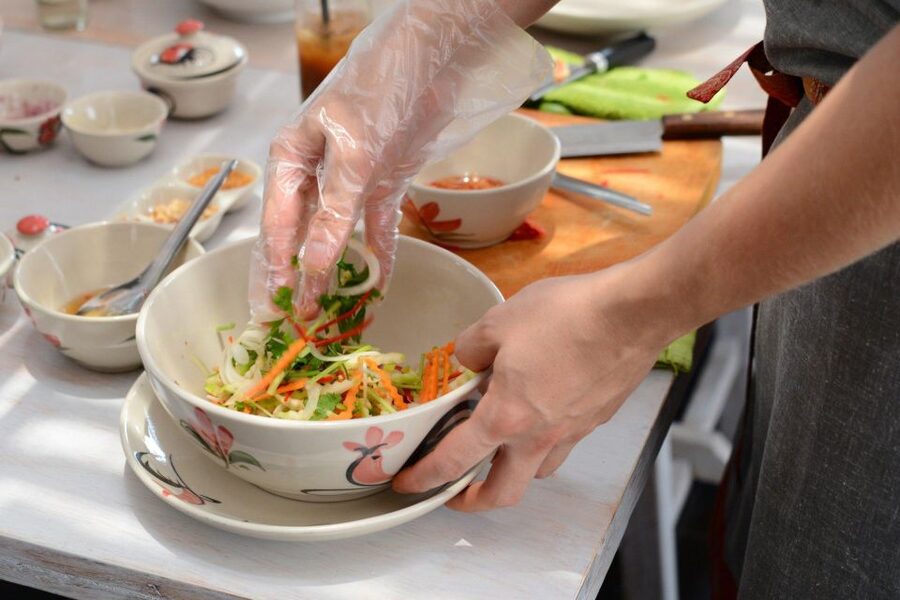
The meal is part of the experience. You eat the food you have cooked, and meals and beverages are included. Complimentary iced tea and water are also provided.
This is where the class earns much of its appeal. You have already seen the ingredients, prepared the dishes, and followed the cooking steps. Sitting down to eat gives you a chance to compare the finished food with the dishes you may have ordered in restaurants around Vietnam.
The portions can be generous. One afternoon group prepared banh mi, pho, and spring rolls, then found there was so much food that some banh mi was taken away for later. The exact amount will vary, but you should plan for a proper meal rather than a small tasting.
There is also a social side to cooking together. You work through the same recipes, see how other people handle the tasks, and eat at the end. If you prefer a quiet private lesson, this group format may not be your first choice. If you enjoy sharing a table and comparing results, it fits well.
Dietary needs and allergy planning
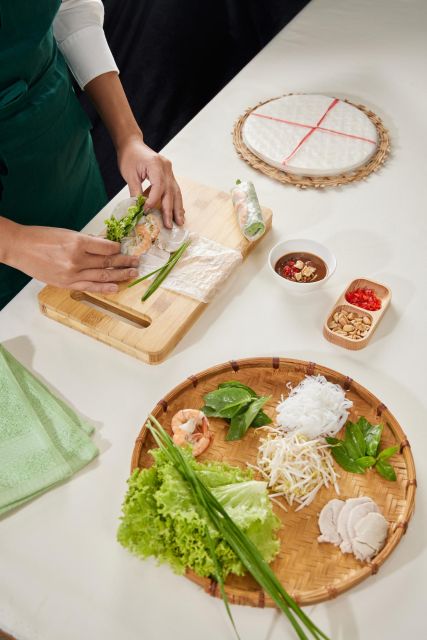
M.O.M can adapt the cooking class for different dietary needs, including vegetarian options. You must indicate special requirements during checkout, and I would also tell the chef again when you arrive.
Be specific. Naming the exact ingredient and explaining who cannot eat it is safer than giving one broad warning for a whole group. A family with several different allergies found that the instructors removed shrimp for all three people, even though one person could have eaten it. The class remained enjoyable, but the meal was less tailored than intended.
This is not a reason to avoid the class. It is a reason to prepare carefully. If you are vegetarian, have an allergy, or follow another restricted diet, write the request clearly and repeat it before any ingredients are handled.
The information does not promise that every possible diet can be accommodated, so you should ask if your needs are complex. The class can adapt in some cases, but the safest plan is clear communication before the cooking begins.
Choosing the right time and option
Classes are offered in the morning, afternoon, or evening, subject to availability. A morning session may fit neatly before other sightseeing, while an afternoon class can provide a break after time outdoors. An evening session turns the cooking class into dinner.
The duration is listed as three to four hours. That is long enough for a market visit, preparation, cooking, and a meal, but you should avoid scheduling another activity too tightly afterward. The final timing may depend on the option and the day’s pace.
There are two formats to consider. The half-day option includes the local market visit and cooking. The hands-on cooking class focuses on the kitchen session. The wording around the options is not fully detailed, so check the booking page carefully to confirm what is included in the version you select.
Meeting points vary by option, and the activity ends back at that meeting point. You should check the confirmed location before setting out, particularly if you are arranging transport or meeting friends afterward.
What you receive after class
The recipes are an important part of the value. You receive them after the session, so you can try to recreate the dishes at home rather than relying on memory.
Recipes are available in English, Korean, or Chinese. Tell the chef directly which language you prefer. This is a small detail, but it can make the difference between a recipe you use and one that sits in a suitcase.
You also receive a certificate. It is a modest souvenir, but it gives the experience a clear finish, especially if you are taking the class as part of a food-focused trip.
The class also includes the ingredients, chef guidance, the meal, beverages, iced tea, and water. You are paying for both the activity and the food, not just a demonstration.
Is $40 per person good value?
At $40 per person, this is not the cheapest way to eat Vietnamese food in Saigon. A local meal will cost far less, and you can order pho or banh mi without spending half a day in a class.
The value comes from the combination of services. You get a market visit in the half-day format, ingredients, instruction, five dishes, a full meal, drinks, recipes, and a certificate. The group is capped at eight, and the classroom is air-conditioned, which adds comfort in a hot city.
I think the price makes sense if you want skills and context, not just lunch. It is also a fair choice for people who cook at home and will actually use the recipes. If you mainly want a quick meal or a short demonstration, the three to four hour commitment may feel long.
The flexible cancellation policy also reduces the risk of booking ahead. You can cancel up to 24 hours before the activity for a full refund, and you can reserve now and pay later. Keep in mind that the final starting time and meeting point depend on availability and the option selected.
Who should book this experience?
I would recommend M.O.M Cooking Class to you if you want to connect Vietnamese food with the way ingredients are bought and prepared. The market visit makes the half-day version especially useful for first-time visitors who want more than a restaurant meal.
It also suits couples, friends, solo participants, and families with older children. Children under six are not accepted, so families should check the age rule before booking.
Home cooks will get the most from the class because the recipes continue to be useful after the trip. You may also like it if you want a relaxed activity with food at the center and prefer a small group to a large tour.
You may want to choose another experience if you need a fully private class, a guaranteed menu, or strict individual allergy handling without further discussion. The class can work with dietary needs, but the mixed allergy experience shows why you need to communicate clearly.
Final verdict: a practical food experience with one important caution
M.O.M Cooking Class gives you a useful look at Vietnamese food, from selecting ingredients at a local market to eating five dishes you helped make. I like the small group, the air-conditioned classroom, the flexible session times, and the fact that the recipes go home with you.
Book the half-day version if the market matters to you. Choose the class-only option if you mainly want the cooking. Before paying, confirm the menu format, state every dietary need in writing, and repeat it to the chef on arrival.
At $40, this is best viewed as a cooking lesson and a meal together. If that sounds more appealing than simply ordering another plate of pho, it is a sensible choice in Saigon.
FAQ
How long does the M.O.M Cooking Class last?
The experience lasts about three to four hours. Check availability for the starting times offered on your chosen date.
How much does the cooking class cost?
The price is $40 per person.
How many people are in each class?
The group is limited to eight participants.
Is the class offered in English?
Yes. Instruction is available in English and Vietnamese.
Does the experience include a market visit?
The half-day option includes a local market visit where you learn how to select ingredients for Vietnamese dishes. Check the exact option details when booking.
How many Vietnamese dishes will I cook?
You will cook five Vietnamese dishes from scratch. The exact menu can vary, and dessert changes daily.
Are pho, banh mi, and spring rolls included?
These dishes have been prepared during the experience, but the daily menu is not fixed. Confirm the menu if one particular dish is important to you.
Can the class handle vegetarian diets or allergies?
The class can adapt to various dietary needs, including vegetarian requests. State your requirements at checkout and confirm them directly with the chef.
What language are the recipes written in?
Recipes can be provided in English, Korean, or Chinese. Tell the chef which language you want.
Is the class suitable for young children?
Children under six are not permitted to join the activity.
Are food and drinks included?
Yes. Ingredients, the cooked meal, beverages, iced tea, and water are included.
Where does the activity start and finish?
The meeting point may vary depending on the option booked. The activity ends back at the meeting point.
Just added around Ho Chi Minh City
- Mama Lan’s Home Cooking Class with 30+ Years of Experience★ 5.0 · 3 reviews
- MY Kitchen – Vietnamese Home Cooking Class in Hoi An★ 5.0 · 6 reviews
- Ho Chi Minh: Local Cooking Class At Auntie’s Home★ 4.9 · 14 reviews
- Ho Chi Minh City: Vietnamese Homestyle Cooking Class★ 4.9 · 91 reviews
- Farm-To-Table Healthy Cooking Class: Half-Day Tour★ 4.8 · 41 reviews
- HCMc:Vietnamese Cooking Class with Local market tour & Meal★ 5.0 · 8 reviews
- HCM: 2-Day Mekong Floating Market with Cooking & Bike Ride★ 4.6 · 68 reviews
- Full-Day Farming & Cooking class at Agricultural Village★ 4.6 · 10 reviews
Cooking Classes, compared.
Half-Day Thai Cooking Class at Organic Farm in Chiang Mai
Read our review →
Florence: Pasta Cooking Class with Unlimited Wine
Read our review →
3 in 1 Cooking Class near Navona: Fettuccine, Ravioli & Tiramisu
Read our review →
Hanoi Cooking Class: Culture, Local Market & Meaning CSR Impact
Read our review →
5 Traditional Dishes Hanoi Cooking Class with Market Trip
Read our review →
Cooking Class and Lunch at a Tuscan Farmhouse with Local Market Tour from Florence
Read our review →
Chiang Mai: Cooking Class, Market & Thai Herbs Garden Tour
Read our review →Browse the lists this tour appears in