
Review · BEIJING
Online Cooking Class Beijing Dumplings and Cuisine by Sunflowerli Renowned Chef
The best part of this Beijing cooking class is that you do not just watch someone cook. You make the dough, fold the dumplings, season the filling, or pull the noodles yourself, with Chef Miss Sunflower Li guiding you live from Beijing. It is a useful way to get a taste of Chinese food culture without leaving your kitchen.
I like the flexible timing and the personal menu choice. I also like the practical preparation: you receive the ingredient list about three days ahead, with substitution advice if something is hard to find. The main drawback is simple: you must shop, measure, and prepare your kitchen before class, and the $20 price does not include ingredients.
Key points to know
- Chef Sunflower Li teaches live from Beijing: The private Zoom class connects you directly with a cooking teacher in China.
- You choose the dish: Options include dumplings, hand-pulled noodles, dim sum, wontons, steamed buns, fried rice, kung pao chicken, and more.
- The class fits your clock: Sessions can be arranged around your time zone and usually last 60 to 90 minutes.
- You cook from scratch: This is hands-on instruction, not a food demonstration.
- Vegan cooking is available: Tell the teacher about dietary needs so the menu can be adjusted.
- The class works for groups: Couples, families, and private groups can cook together, with group discounts available.
Why a Beijing kitchen class works so well online
Food gives you a more personal introduction to China than a slide show about famous sights. Dumpling folding, noodle pulling, and steamed bun making all involve small techniques that are easy to miss in a restaurant but make sense when a teacher shows them slowly.
This class also gives you a direct connection to Beijing. Chef Sunflower Li teaches from there, sharing food traditions and family meal stories while you work. The setting is your own kitchen, but the conversation brings in a clear sense of place.
I especially like the private format. You are not trying to keep up with a large public class or waiting for a teacher to answer ten other questions. The lesson can be adjusted to your level, your schedule, and the dish you want to make.
The online format has limits. You will not visit a market, enter a restaurant, or eat food prepared in Beijing. You also need a reliable Zoom connection and enough counter space to work comfortably. Still, for a low-cost introduction to Chinese cooking, the format makes good sense.
More Chinese Cooking Classes in China:
- Flavors of Beijing: Eat Like A Real Chinese
★ 5.0 · 78 reviews - Beijing: Dumpling Making Workshop with Meal and Tea
★ 4.7 · 69 reviews - Shanghai-Cooking Dumpling & Meal in Local Family-w/Vegan
★ 4.9 · 36 reviews
Choosing between dumplings, noodles, and full meals
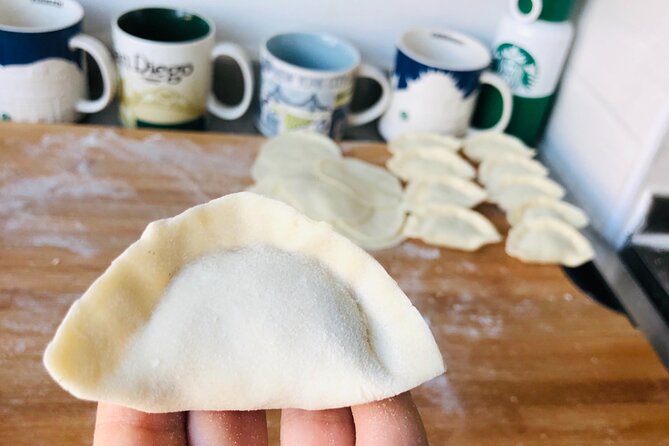
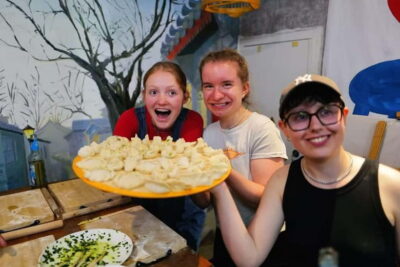
The menu is broad, so your choice matters. A dumpling class gives you one of the most social Chinese cooking activities. You learn to prepare the filling, handle the wrappers, fold the dumplings, and cook them. The folding takes practice, and your first few may look less polished than the teacher’s. That is part of the fun, and the finished dumplings can still taste excellent.
Hand-pulled noodles offer a different kind of challenge. You work with dough and learn how it is stretched into noodles by hand. This option suits you if you want a lesson built around technique rather than several separate dishes. A class with Sunflower Li included family food stories and plenty of instruction, with nearly two hours passing quickly.
Steamed buns and wontons provide another hands-on route. Steamed buns require shaping and careful handling, while wontons give you another style of filled dough. These are good choices for families and groups because shaping food together creates a natural rhythm for conversation.
You can also choose a fuller meal. Possible dishes include mapo tofu, kung pao chicken, sesame chicken, chicken with broccoli, orange chicken, fried rice, lo mein, dan dan noodles, dim sum, and bok choy with mushrooms. One class combined authentic dumplings, kung pao chicken, and bok choy with mushrooms, showing how much food you may be able to cover when the menu is planned for your group.
Ask for a vegan option if needed. The information provided does not name every vegan dish, but it confirms that vegan cooking is available and that the teacher asks about dietary restrictions before tailoring the menu.
The preparation three days before class
Your ingredient list arrives after you schedule the session, generally about three days before the class. That timing gives you a fair chance to shop, though you should not leave it until the last minute if you live somewhere with limited access to Chinese ingredients.
The list is meant to be clear and practical. It can include notes on substitutions, which is helpful when a specialty ingredient is not available locally. You should read it carefully and check quantities before the class begins.
The ingredients are not included in the $20 price. That keeps the booking cost low, but your final expense depends on the dish and what you already have at home. You also supply the cookware, utensils, mixing bowls, and cooking space. The exact equipment list is not specified, so ask about anything unclear before your session.
Set out your ingredients before joining Zoom. This is especially useful for a class with several dishes, such as dumplings with a main course and vegetable side. It lets you focus on technique rather than opening cupboards while the teacher moves ahead.
What happens when the Zoom class begins
The session starts online with Chef Sunflower Li. Timing is flexible and can be changed to fit your schedule and time zone, so the class may work for people in many parts of the world. The stated duration is about 90 minutes, while classes generally run from 60 to 90 minutes.
Expect a live, guided lesson rather than a recorded video. Sunflower Li demonstrates the process, explains each step, and watches your progress. Participants have described her as warm, patient, attentive, and energetic, qualities that matter when dough sticks, folding goes wrong, or a sauce needs adjusting.
A two-camera setup has been used in class, giving you a better view of the cooking and the hands-on work. That is a small but useful feature. Close views are particularly helpful when you are shaping dumplings, folding wontons, or trying to understand how dough should look.
You should be ready to pause and ask questions. Since the activity is private, your group can work at its own pace more easily than in a large class. The teacher can also adjust the lesson for beginners or more experienced home cooks.
More Hands-On Workshops in China:
- Half-Day Chengdu Cooking Class with a Local Market Visit
★ 5.0 · 465 reviews - Chengdu: Cooking Class with Fresh Market Half Day Experience
★ 5.0 · 42 reviews - Private Cooking Class: Make Your Own Dim Sum In Shanghai
★ 5.0 · 27 reviews - Half-Day steamed Buns Cooking Class with a Local Market Visit
★ 5.0 · 26 reviews
Dumpling class: the best all-around choice
If you are unsure which class to book, dumplings are the safest choice for most people. The activity is social, the ingredients are generally easy to understand, and the folding gives everyone something to do.
A typical lesson covers the preparation of the filling and the assembly of the dumplings, followed by cooking. The supplied information does not specify the cooking method for every session, so ask if you want steamed, boiled, or pan-cooked dumplings.
The class works well with children, but children must have an adult with them. It also suits couples and groups of friends who want an evening activity that ends with a meal.
Do not expect every dumpling to look like Sunflower Li’s. One useful part of the experience is seeing how a teacher corrects your folds and filling levels in real time. Shape may vary, but the taste can still be good.
Noodle making and the appeal of repetition
Hand-pulled noodles give you a more focused lesson. The appeal is in learning how dough changes as you work it, stretch it, and form the noodles. It is less about producing a perfect restaurant plate on the first try and more about understanding the technique.
This class may suit you if you enjoy tactile cooking and want a memorable skill to practice again later. It also leaves room for conversation, since the lesson includes cultural notes and family food traditions.
The chief concern is the same as with any live online class: your result depends on your ingredients, tools, timing, and ability to follow along. A private teacher can help, but she cannot physically handle your dough or correct it by touch.
Group cooking, family time, and special occasions
The class is private, so only your group takes part. That makes it a good choice for a couple, a family, or friends living in different places. Group discounts are available, though the exact discount is not specified.
One class included six people making traditional steamed buns. Another used Chinese New Year as the theme, with adults and children preparing pork dumplings together. These examples show how easily the activity can become a shared event rather than a standard lesson.
For a family, choose a dish with visible tasks such as dumplings, wontons, or buns. Younger children can help shape food while an adult handles hot pans, boiling water, or steaming equipment. The class information requires children to be accompanied by an adult, so plan on active supervision.
The online setup also helps groups avoid travel. Everyone needs access to the class and ingredients, but nobody needs to meet at the same physical kitchen. That can be useful for birthdays, holiday gatherings, or a virtual meal with friends.
The cultural value beyond the recipe
The cooking matters, but the conversation adds much of the character. Sunflower Li shares anecdotes about family meals and traditional food customs while teaching. That turns the session into a small lesson in everyday Chinese life.
You should not expect a formal history lecture. The value is more personal. You learn why certain foods fit family gatherings, how dishes are prepared at home, and why dumplings or steamed buns can carry meaning beyond their ingredients.
This is also where the class feels different from following an online recipe alone. A written recipe tells you what to add. A live teacher can explain what the dough should feel like, how a filling should look, or why a substitution may work.
Is $20 a good value?
At $20 per person, the class is inexpensive for a private live session. The price includes the Zoom cooking class and access to a teacher who can tailor the menu and instruction to your group.
The ingredients cost extra, and you must provide the kitchen equipment. Even so, the base price compares well with many in-person cooking lessons, especially because the private format can include several people from your own group.
The value is strongest if you cook the dish again after class. You leave with a recipe and a technique, not just a meal eaten during a short outing. Dumpling folding, noodle making, and steamed bun shaping can all be repeated at home.
The value is weaker if you want a fully prepared experience. You will need to shop, organize ingredients, and do the cooking yourself. That is the point of the class, but it may not suit someone looking for a passive virtual food tour.
Timing, booking, and practical limits
The experience is listed as starting and ending online from Beijing, with no physical transport involved. You schedule the session for a suitable time, and the timing can be changed to fit your time zone.
Confirmation is provided at booking. The class is usually 60 to 90 minutes, though the featured noodle experience lasted close to two hours. Allow extra time if you are cooking several dishes or working with a larger group.
Free cancellation is available if you cancel at least 24 hours before the start time. Cancellations or changes made less than 24 hours ahead are not accepted for a refund, and the cut-off follows the local time of the experience.
The activity requires a moderate level of physical fitness. That may simply mean standing, preparing food, and working at a kitchen counter for the class period. Service animals are allowed.
Who should book this Beijing cooking class?
I would recommend it to you if you want a hands-on cultural activity, enjoy cooking with other people, or have always wanted to try Chinese dishes from scratch. It is especially suited to couples, families, private friend groups, and people planning a virtual event.
It also works for beginners. Sunflower Li adjusts the class to your level and gives step-by-step instruction. You do not need to arrive as an experienced cook, though you should be comfortable using your own kitchen equipment.
You may want a different experience if your main goal is sightseeing, restaurant dining, or a structured culinary school lesson with professional equipment. This is a home cooking session, and the results depend partly on your own preparation.
Should you book it?
Book this class if you want to cook alongside a friendly teacher in Beijing and are willing to shop for ingredients before the session. Dumplings are the strongest first choice, while hand-pulled noodles suit anyone keen on a more focused dough technique.
At $20 per person, the private format offers good value, especially for a couple or group. Just remember that ingredients and other unlisted expenses are extra, and the class is only as smooth as your preparation. For a practical taste of Chinese food culture from home, this is an easy experience to recommend.
FAQ
Where does the cooking class take place?
The class takes place online with Chef Miss Sunflower Li teaching live from Beijing, China.
How long does the class last?
Classes usually last between 60 and 90 minutes. Some sessions may run longer, particularly when making several dishes.
Which platform is used for the class?
The private online class is held through Zoom.
What dishes can I learn to make?
Options include hand-pulled noodles, dumplings, fried rice, dim sum, sesame chicken, wontons, chicken with broccoli, lo mein, dan dan noodles, steamed buns, and orange chicken. Mapo tofu and kung pao chicken are also listed as possible dishes.
Is a vegan option available?
Yes. Vegan options are available, and the menu can be adjusted for dietary preferences.
Are ingredients included in the price?
No. You receive an ingredient list before class, but you must buy the ingredients yourself. Other expenses not listed as included are also your responsibility.
Is the class private?
Yes. Only your group participates in the activity.
Can children join the class?
Yes, but children must be accompanied by an adult.
What is the cancellation policy?
You can cancel for a full refund if you do so at least 24 hours before the experience begins. Cancellations or changes made less than 24 hours before the start time are not accepted for a refund.
Just added around China
- Private Cooking Class: Make Your Own Dim Sum In Shanghai★ 5.0 · 27 reviews
- Vegan Soup Dumpling Making in Shanghai★ 5.0 · 17 reviews
- Private Home Cooking Class with Shanghai Mama★ 5.0 · 14 reviews
- Private Home Cooking Class:Dumpling Cooking Class Tour in Xi’an★ 5.0 · 7 reviews
- Beijing: Vegan Home Cooking & Local Market Tour with Sanxia★ 4.8 · 4 reviews
- Shanghai-Cooking Dumpling & Meal in Local Family-w/Vegan★ 4.9 · 36 reviews
- Chengdu: Cooking Class with Fresh Market Half Day Experience★ 5.0 · 42 reviews
- Half-Day Professional Mapo Tofu Cooking with a Local Market Visit★ 5.0 · 19 reviews
Chinese Cooking Classes, compared.

Warsaw’s No 1 cooking class-Polish dumplings with liqueur tasting
Read our review →
Gyoza Cooking Class in Kyoto: Traditional Japanese Dumplings
Read our review →
Ramen & Dumpling Cooking in Tokyo with Chef/Vegan possible
Read our review →
Beijing: Dumpling Making Workshop with Meal and Tea
Read our review →
Shanghai-Cooking Dumpling & Meal in Local Family-w/Vegan
Read our review →Private Cooking Class: Make Your Own Dim Sum In Shanghai
Read our review →Browse the lists this tour appears in