
Review · SRI LANKA
Authentic Sri Lankan Cooking Class in Mirissa
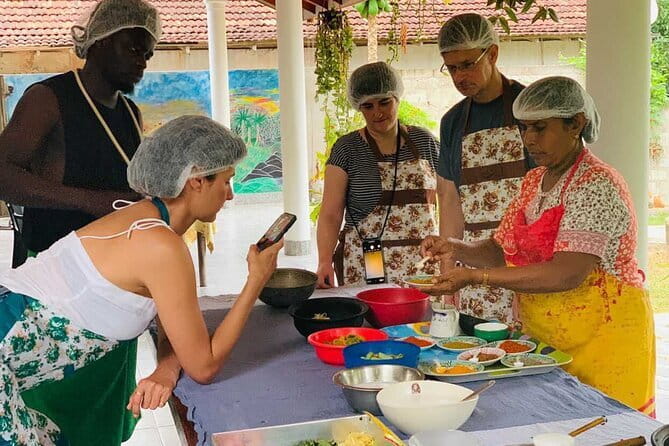
The best part of this Sri Lankan cooking class is its small, family-style setting. You meet Nona, Indra, or Prabodi at Indra Restaurant in Mirissa, shop for fresh ingredients, then cook a meal together in an outdoor kitchen and garden. It feels closer to being welcomed into a home than attending a formal demonstration.
I like the freedom to choose your dishes, and I like that the class covers more than one curry. You can prepare four choices from a long list, then sit down to eat them with rice and crispy papadams. The main consideration is that the experience needs at least two people, so solo visitors cannot book it at present.
Key points at a glance
- Shop before you cook: Visit a local vegetable stand with the hosts and learn about the ingredients you will use.
- Choose four dishes: Options include chicken or fish curry, dhal, pumpkin, beans, aubergine, okra, mushrooms, potato, coconut sambol, and more.
- Small maximum group: The class accepts no more than six people, which allows plenty of hands-on time.
- Relaxed garden setting: Cooking takes place in an outdoor space beside the family home and kitchen.
- A full evening meal: Your cooking is served with rice and papadams, so this is both a lesson and dinner.
- Plan around the minimum: The class starts at 4:00 pm, lasts about three hours, and requires two or more people.
A 4 pm start at Indra Restaurant
Your evening begins at Indra Restaurant, at the meeting point marked WFX5+XMF in Mirissa, Sri Lanka. The advertised location may also appear under Galle in booking details, so use the Mirissa meeting point and confirm the exact directions before setting out.
The start time is 4:00 pm. That timing works well if you have spent the day at the beach or exploring nearby sights and want a practical evening activity rather than another restaurant meal. The class ends back at the same meeting point, so you do not need to arrange a separate return location.
The class lasts about three hours. That gives you enough time to shop, prepare several dishes, cook rice, and eat without turning the evening into a rushed kitchen drill. You should arrive ready to take part, not simply watch someone else prepare dinner.
The group limit is six people. For a cooking class, that matters. A large group can leave you standing at the edge of the action, but this small format should give you more opportunities to chop, stir, season, and ask questions. The exact group size can vary, though the maximum is six.
More Hands-On Workshops in Sri Lanka:
- Ella: Traditional Sri Lankan Cooking Class
★ 4.9 · 788 reviews - Organic cooking class sigiriya (kumara & family)
★ 5.0 · 650 reviews - Sri Lanka Cooking Class with Granny
★ 5.0 · 587 reviews
Shopping for ingredients in Mirissa
The first practical step is shopping for fresh ingredients. The hosts take you to a local vegetable stand or shop, sometimes using a tuk-tuk, and explain what you are seeing and buying.
This short outing gives the meal some context. Instead of receiving a tray of prepared ingredients, you see the raw vegetables before they reach the cooking pot. You can learn about the flavors and origins of the produce and take part in choosing what will appear on your plate.
The shopping stop also connects the class to daily life in Sri Lanka. You are not just copying a recipe from a printed card. You are learning how a local meal begins, with available produce and decisions made around what looks good that day.
There is one limit to keep in mind: the final vegetable choices depend partly on what is available. That is a strength if you want a meal shaped by local ingredients, but it means you should not expect every listed dish at every session.
Choosing four curries and vegetable dishes
After shopping, you choose four dishes from the available options. The list gives you a broad taste of Sri Lankan cooking:
- Chicken or fish curry
- Dhal, or lentil, curry
- Pumpkin curry
- Green beans curry
- Aubergine fry
- Green leaf salad or stir-fry
- Mushroom dry curry
- Potato curry
- Okra, also called lady fingers, dry curry
- Coconut sambol
This choice is one of the class’s strongest features. You can build a meal around familiar favorites, choose several vegetable dishes, or try ingredients you have not cooked before. If chicken or fish is not what you want, the many vegetable choices give you plenty of room to shape the meal.
The phrase four delicious options should be read as four dishes, not four ingredients to sample briefly. The meal is designed around several curries and sides, served together with rice and papadams. Some people have also prepared five curries during the session, but the advertised structure is a choice of four, with the final selection guided by what is available.
You should tell the hosts your preferences early. That is especially useful if you have strong likes or dislikes, though the supplied information does not specify a separate vegetarian or dietary menu. The hosts can explain what is available on the day, but you should raise any food restrictions when booking.
Cooking in the outdoor kitchen and garden
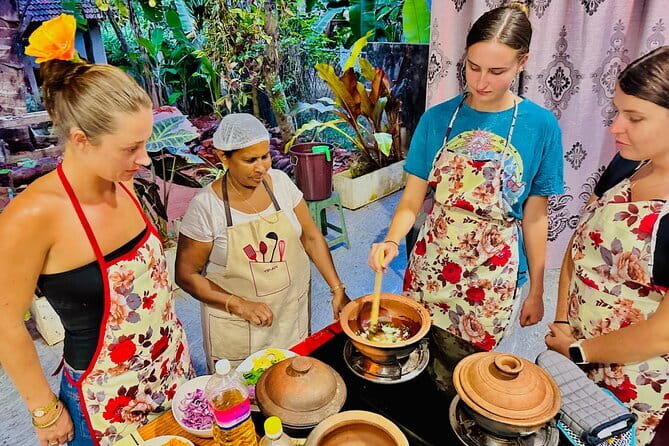
The cooking takes place in a garden setting with an outdoor kitchen. This is not described as a polished cooking studio, and that is part of the appeal. You get a more informal setting, with the lesson connected to the family’s own kitchen and garden.
Nona and Indra are central hosts, while Prabodi also leads or helps with sessions. You should expect a friendly, personal approach rather than a strict classroom format. Instructions are explained as the cooking progresses, and you are encouraged to help with the preparation.
The hosts focus on the basic skills behind a Sri Lankan rice-and-curry meal. That includes preparing the chosen dishes and learning how to make rice properly. The aim is not just to hand you a plate at the end, but to show you how the separate parts of the meal work together.
The class is described as hands-on and interactive. You may chop, stir, season, and help assemble the dishes, with the hosts showing you each stage. It is suitable if you are not a confident cook because the preparation is guided and does not require advanced kitchen skills.
Still, you should not expect a professional culinary qualification or a detailed written course. The value lies in learning directly from the family, watching the process, and asking questions as you go. If you want highly technical instruction or restaurant-level plating, this is probably not the right format.
A few more cooking classes around Sri Lanka worth a look
- Kandy Village Cooking Class
★ 5.0 · 536 reviews - Sea waves sri lankan cooking class
★ 5.0 · 467 reviews - Ella: Sri Lankan Cooking Class with Neranji at Homestay
★ 5.0 · 276 reviews - Ella : Cooking class with amazing Spice Garden Tour
★ 5.0 · 239 reviews
Why the rice and papadams matter
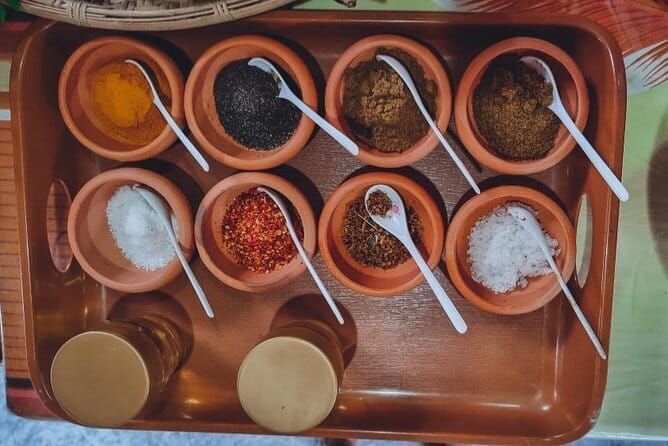
Sri Lankan food is not just a curry placed beside plain rice. The rice forms the base of the meal, and the curries, dry dishes, sambol, and papadams create different textures and flavors on the plate.
The hosts specifically teach the secrets to preparing good rice. That may sound basic, but it is an important part of taking the class home with you. A curry recipe is less useful if the rice is poorly cooked or the meal lacks balance.
The papadams add a crisp contrast to the softer curries and rice. Coconut sambol brings another texture and flavor to the table, while dry curries such as aubergine, mushrooms, or okra offer a different style from the saucier dishes.
At the end, the dishes are served with a generous portion of rice and crispy papadams. You should arrive hungry. This is not a small tasting session, and the meal is a major part of the three-hour experience.
A family meal rather than a formal demonstration

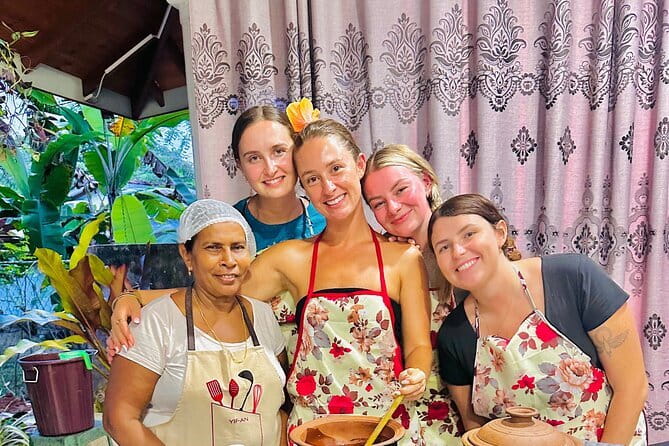
The strongest quality here is the personal atmosphere. The setting feels like a visit to a Sri Lankan home, with cooking, conversation, and a shared meal happening together.
The hosts have been described as welcoming and fun, and the mood can be playful. Some sessions have included dancing and plenty of laughter alongside the cooking. That will appeal to you if you want an easygoing evening with a social element, not just a recipe lesson.
The family-run format also means the experience may feel less uniform than a commercial cooking school. The number of dishes, the available vegetables, and the exact pace can change from one afternoon to the next. I see that as a fair trade for the local, personal character, but you should be comfortable with some flexibility.
English-language details about the teaching method are limited, so you should not assume a highly structured lesson plan. The available information does show that the cooking is explained clearly and that you are allowed to take part throughout the process.
Is $30 good value?
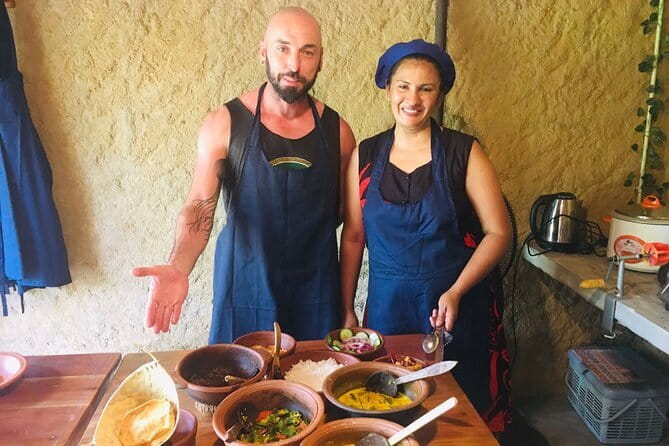
At $30 per person, this class offers more than a meal. You receive a roughly three-hour experience, a market or vegetable shopping visit, hands-on cooking, instruction in rice and curry preparation, and dinner with several dishes.
I consider that good value for someone who wants both food and cultural contact. A standard restaurant meal may cost less, especially if you order simply, but it will not include the shopping, cooking practice, or chance to ask a local family how the dishes are made.
The small group limit also supports the price. With no more than six people, your payment is not mainly covering a seat in a large demonstration. You are paying for time with the hosts and access to the cooking process.
The value is lower if you only want to eat and have no interest in helping. Much of the experience depends on your participation. You should also remember that the class requires a minimum of two people, so a solo booking is not possible at this time.
Who will enjoy this class most?
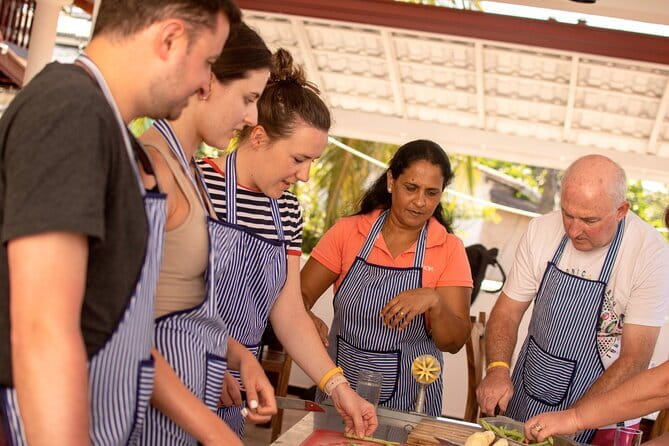
I would recommend it to couples, friends, and small family groups who want an evening activity with food at its center. It is also a good choice if you have already eaten Sri Lankan food and want to understand how the curries are prepared.
It suits beginners especially well. The cooking is guided, the atmosphere is relaxed, and you do not need advanced skills. You can take part without feeling that everyone is judging your knife work or seasoning decisions.
Vegetable lovers have plenty of choice. The menu includes pumpkin, green beans, aubergine, leafy greens, mushrooms, potato, okra, dhal, and coconut sambol, alongside chicken or fish. Since the exact selection depends on the day, you should discuss your preferences with the hosts before cooking.
It may not suit someone who needs a strict timetable, a guaranteed set menu, or a solo reservation. It is also not the best fit if you want a high-end restaurant setting. The appeal is the informal family kitchen, not polished luxury.
Practical details before you book
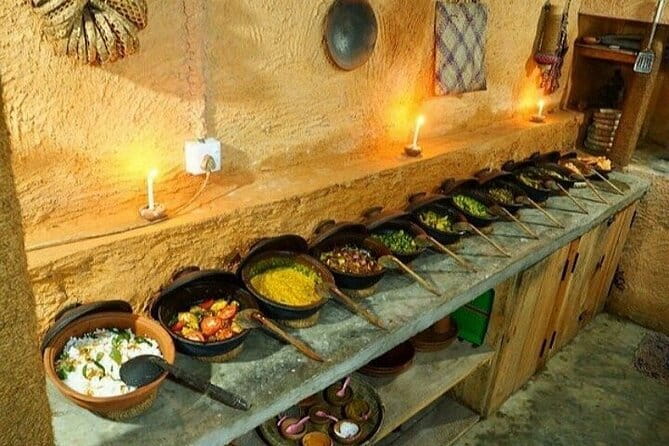
The activity begins at 4:00 pm and ends back at Indra Restaurant after about three hours. The meeting point is in Mirissa, and the location is near public transportation.
A mobile ticket is accepted, and confirmation is provided at booking. Service animals are allowed. The experience has a maximum of six people and requires at least two participants.
Free cancellation is available if you cancel at least 24 hours before the local start time. Cancellations made less than 24 hours before the start, along with changes during that period, are not accepted for a refund.
Because the evening includes shopping and cooking, wear something comfortable and suitable for an informal kitchen. The supplied details do not specify clothing requirements, transport from your accommodation, or a separate hotel pickup, so do not assume those services are included.
Should you book the Mirissa cooking class?
Book it if you want to cook with a local family, choose several Sri Lankan dishes, and finish with a generous dinner in a garden setting. The combination of shopping, hands-on preparation, and a shared meal gives the evening more substance than a simple restaurant visit.
I would especially choose this class for a pair or small group that enjoys relaxed activities and does not need everything to follow a rigid script. The $30 price is fair for the time, food, instruction, and personal setting.
Skip it if you are traveling alone, need a guaranteed dish list, or prefer a formal culinary school. For everyone else, this looks like a warm, practical way to leave Mirissa with a full stomach and a better understanding of Sri Lankan rice and curry.
FAQ
Where does the cooking class start?
It starts at Indra Restaurant, WFX5+XMF, in Mirissa, Sri Lanka.
What time does the class begin?
The class begins at 4:00 pm.
How long does the experience last?
The experience lasts approximately three hours.
Where does the activity end?
It ends back at the meeting point at Indra Restaurant.
How many people can join?
The maximum group size is six people.
Can I book the class alone?
No. The experience requires a minimum booking of two people and cannot currently accept solo bookings.
What dishes can I prepare?
Choices include chicken or fish curry, dhal, pumpkin curry, green beans curry, aubergine fry, green leaf salad or stir-fry, mushroom dry curry, potato curry, okra dry curry, and coconut sambol.
How many dishes do I choose?
You can choose four dishes from the available options, including other vegetables available that day.
Is food included?
Yes. The cooked dishes are served with rice and crispy papadams.
What is the cancellation policy?
You can cancel for a full refund if you do so at least 24 hours before the local start time. Cancellations or changes made less than 24 hours before the start are not accepted for a refund.
Just added around Sri Lanka
- Traditional Cooking Small-Group Class in Unawatuna★ 5.0 · 14 reviews
- Galle Fort cooking class★ 5.0 · 60 reviews
- Galle Unawatuna Cooking Class★ 5.0 · 142 reviews
- Ella Sri Lanka Cooking Class Experience★ 5.0 · 89 reviews
- Authentic Sinhalese Cooking Class in Colombo with a Local Family★ 5.0 · 9 reviews
- Market Tour and Cooking Class from Colombo★ 5.0 · 5 reviews
- 3 hour cooking experience★ 5.0 · 8 reviews
- Cooking class in Srilanka★ 5.0 · 8 reviews
Cooking Classes, compared.
Half-Day Thai Cooking Class at Organic Farm in Chiang Mai
Read our review →
Florence: Pasta Cooking Class with Unlimited Wine
Read our review →
3 in 1 Cooking Class near Navona: Fettuccine, Ravioli & Tiramisu
Read our review →
Hanoi Cooking Class: Culture, Local Market & Meaning CSR Impact
Read our review →
5 Traditional Dishes Hanoi Cooking Class with Market Trip
Read our review →
Cooking Class and Lunch at a Tuscan Farmhouse with Local Market Tour from Florence
Read our review →
Chiang Mai: Cooking Class, Market & Thai Herbs Garden Tour
Read our review →Browse the lists this tour appears in