Review · GENOA
Genoa: Hands-On Home cooking Class Pasta Pesto and more with wine
Genoa’s best food lesson may begin with a potato, a handful of basil, and a heavy marble mortar. In this small home cooking class, you make three kinds of gnocchi, including pesto-filled pieces, then sit down to eat what you prepared with wine and coffee. The setting feels more like a meal with local friends than a formal school.
I like the maximum group size of six, since you should get real help with kneading, shaping, filling, and saucing. I also like the old-fashioned pesto method: basil, ingredients, and patience worked by hand rather than rushed through a machine. The main caution is practical: the home can be hard to locate, and one past class involved many stairs, so leave extra time and ask for precise directions.
Key points to know before booking
- Three gnocchi preparations: Make natural-colored and tinted gnocchi, plus gnocchi filled with pesto.
- Pesto by mortar and pestle: Learn the traditional Genoese method for the city’s signature sauce.
- Small home setting: The class accepts no more than six people, allowing personal help from the host.
- A full shared meal: Focaccia, three kinds of gnocchi, wine, and coffee are included.
- Hosts can vary: Past sessions have been led by Alberto, Cristina, Silvia, Alessandra, and others.
- Plan for the arrival: The meeting point is in central Genoa, but it may be difficult to find and can involve stairs.
Why this Genoa cooking class feels different
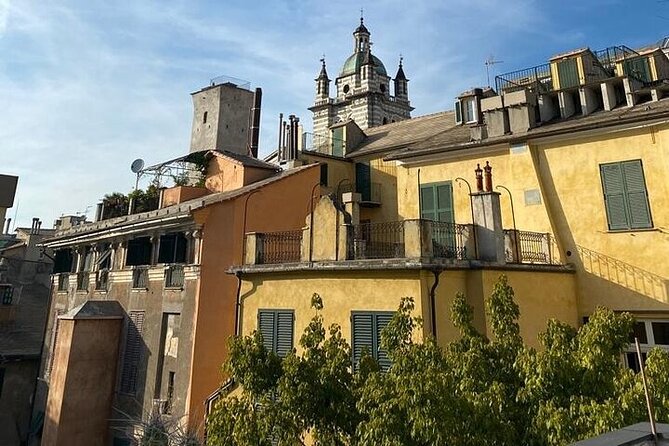
Many cooking lessons put you at a long counter with a printed recipe and a clock ticking nearby. This one takes place in a local home in central Genoa. Depending on the host and location, you might cook in a historic apartment or eat on a terrace with a view toward the sea or Old Port.
That change of setting matters. You are not simply watching a chef perform. You are working in a domestic kitchen, where the pace is relaxed and conversation is part of the meal. Hosts such as Alberto, Cristina, Silvia, and Alessandra have been praised for warm instruction and for talking about local food traditions as they teach.
The group limit is six people. That is small enough for you to ask questions without waiting behind a busload of classmates. You should have room to handle the dough, try the mortar, and get help when your gnocchi begin to look less like little pillows and more like odd bits of pasta.
The class lasts about three hours and begins at 10:00 am. It ends back at the meeting point, with lunch served during the session. That timing works well if you want a substantial midday meal and still have the afternoon for Genoa’s lanes, harbor, or museums.
More Cooking Classes with Wine Tasting in Italy
- Florence: Pasta Cooking Class with Unlimited Wine
★ 4.9 · 10,285 reviews - Florence: Pasta & Tiramisu Cooking Class with Unlimited Wine
★ 4.9 · 6,708 reviews - Florence: Pasta Cooking Class with Unlimited Wine
★ 5.0 · 6,413 reviews
Starting with Genoese welcome and local food
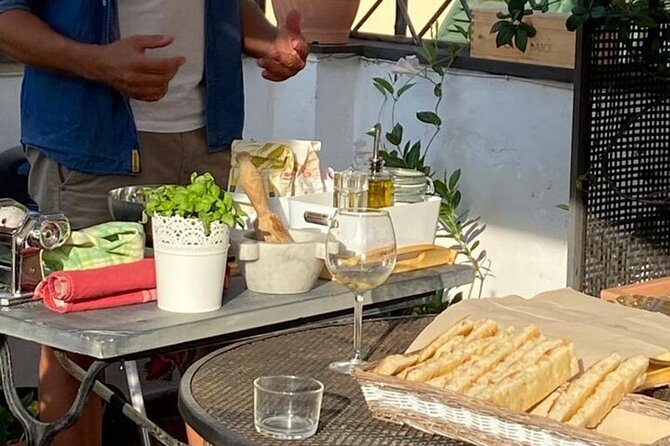
The food begins before the main cooking work. Focaccia is served as part of the meal, and some sessions have included additional Genoese specialties or savory pies. You may also find a simple dessert or another house-prepared extra, but the listed meal centers on gnocchi.
Focaccia is especially fitting here. Genoa is closely tied to this soft, olive-oil-rich bread, and eating it in a private home gives you a better sense of how ordinary local food fits into daily life. Do not expect a bakery workshop, though. Focaccia is included to eat, not listed as a separate recipe lesson.
The host sets the tone. Past classes have been described as relaxed, sociable, and generous with time. Alberto, in particular, has been praised for combining cooking instruction with stories about local customs and food. Cristina has hosted families with adults and children, while Silvia and Alessandra have been noted for patient, friendly teaching.
English ability may vary by host. One session involved some difficulty communicating in English, even though the food and hospitality were well received. If detailed verbal instruction is important to you, send any questions in advance and be ready to learn partly by watching and doing.
Making colorful gnocchi from natural ingredients
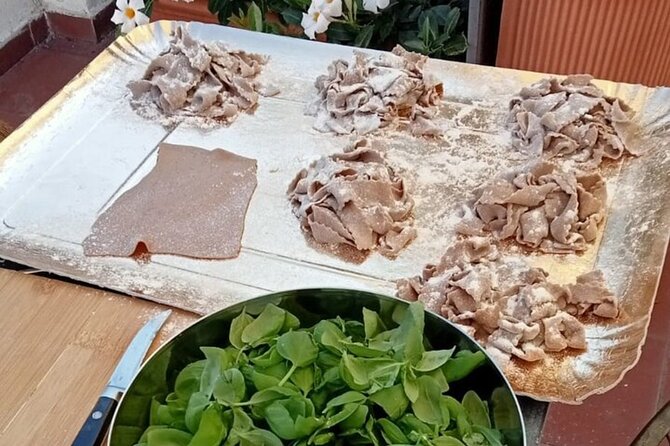
The first main task is making gnocchi. You work with natural ingredients to create pieces in white, red, and green shades. The colors are not just decoration. They give the meal a playful look and let you see how simple ingredients can change the dough.
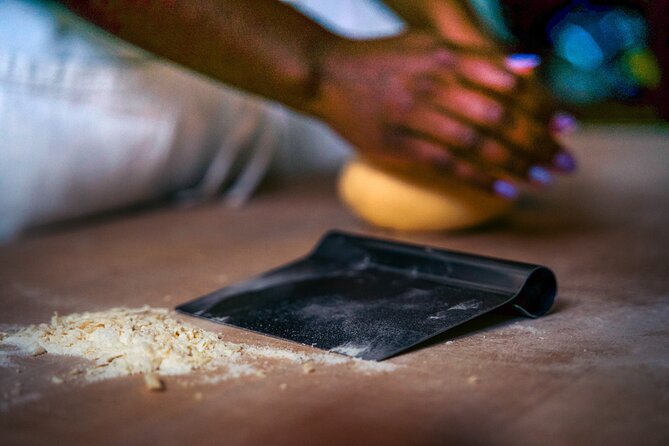
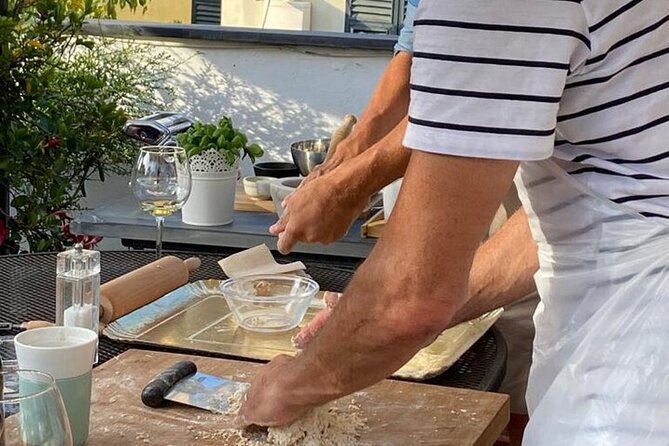
You will likely spend time mixing, kneading, rolling, cutting, and shaping. These steps are useful because gnocchi are forgiving but still sensitive to texture. Too much handling can make them heavy, while a soft dough can be difficult to shape. A small class gives the host a chance to correct your technique before you produce an entire plate of dense dumplings.
The class also includes filled gnocchi. These are prepared with fragrant pesto inside, then served with butter and sage. That combination gives you two lessons in one: how to form a dumpling that holds its filling, and how a mild sauce can let the pesto remain the star.
For you, the value is not only the plate you eat at lunch. You leave with a method you can repeat at home. Gnocchi do not demand a long ingredient list, but they do reward a light touch. Seeing the dough at each stage is more useful than reading a recipe later and guessing what soft but workable should mean.
Grinding pesto the old-fashioned way
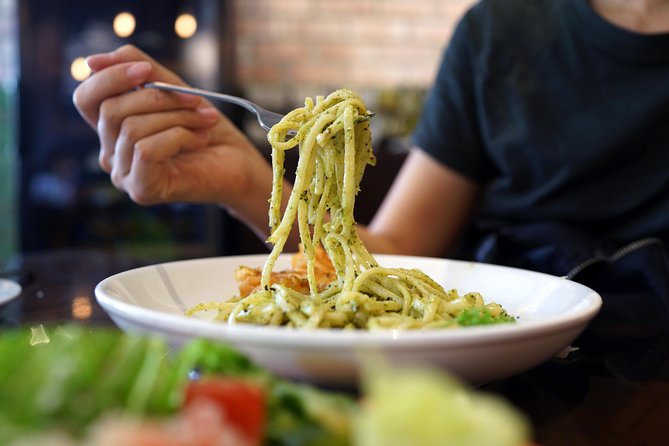
Pesto is the heart of this Genoese class. Instead of treating it as a jarred sauce or blending everything into a smooth paste, you prepare it with a mortar and pestle.
That work is slower, but it teaches you what the sauce is supposed to feel like. Basil, garlic, pine nuts, cheese, and oil come together gradually. You can watch the mixture change from leaves and separate ingredients into a fragrant sauce with texture and body.
The mortar and pestle also connect the lesson to Genoa itself. Pesto is one of Liguria’s best-known foods, and preparing it by hand makes the regional link clear. The host can show you how much pressure to use, when to add ingredients, and how to stop before the mixture loses its character.
This is one of the strongest reasons to choose this class over a general Italian cooking lesson. You are not making an interchangeable tomato sauce or basic pasta dish. You are learning a preparation closely tied to Genoese cooking, using a tool that makes the process part of the meal.
The pesto is used with the gnocchi, including the filled version. That lets you taste the sauce in more than one form rather than sampling it only from a spoon.
More Home Cooking Classes in Italy
- Pastamama, Home Cooking Classes at Grace’s Home
★ 5.0 · 521 reviews - Traditional Home Cooking Experience in Venice
★ 5.0 · 377 reviews - Catania: Pistachio Ravioli, Pasta Home Cooking Class w/ Wine
★ 4.7 · 204 reviews - 3-Recipe Italian Cooking Class in Como – Cesarine Best NYT Hosts
★ 5.0 · 186 reviews
Sitting down to the lunch you made
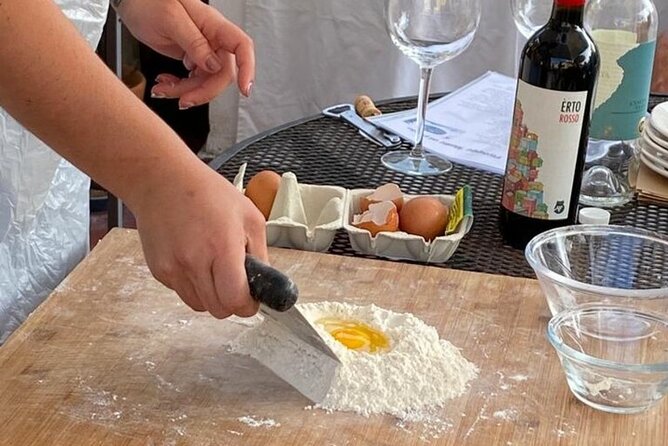
Once the cooking is finished, you eat together. The included lunch is a three-course meal built around different types of gnocchi. The exact service can vary, but the main promise is clear: you prepare the food and then enjoy the results at the same table.
Wine is included. Guests under 18, the legal drinking age in Italy, are not served alcohol, so families should plan on a nonalcoholic alternative if one is needed. Coffee or tea finishes the meal.
The meal is leisurely rather than rushed. That matters because the social side is part of the class. You have time to compare shapes, taste the pesto, and ask about the ingredients while the host explains how the dishes fit into Genoese food culture.
Some sessions have included focaccia, local pies, dessert, or a terrace setting. One host served melon with port wine, while another added Genovese pies to the meal. These extras are not the core guarantee, so book for the gnocchi, pesto, wine, and coffee. Treat any additional dish or special view as a pleasant possibility rather than a promise.
A terrace can make the lunch especially memorable, with one session offering a sea view. But the setting is not fixed. The activity may take place in a home overlooking the Old Port or in another historic central building. Ask for the current address and setting if the view matters to you.
What the $113.49 price really covers
At $113.49 per person, this is not a cheap lunch. You could spend far less on focaccia, pesto, and pasta in Genoa. The price makes more sense if you count the instruction, the small group, the ingredients, the wine, and the three-hour visit inside a local home.
The strongest value comes from access and attention. With no more than six people, the host can watch your technique and answer questions. You are paying for participation, not just food placed in front of you.
It is less good value for someone who mainly wants a restaurant meal. The ingredients themselves are simple, and one disappointed past participant felt the cost did not match the food served. That concern is fair if you expect an elaborate menu or a professional culinary facility.
I would book this for the social setting and the skills, not because it is the least expensive way to eat lunch. If you enjoy bringing home a useful cooking method, the price is easier to justify. If your priority is a large meal with many courses and no kitchen work, choose a restaurant instead.
Finding the home and handling the stairs
There is no hotel pickup. You meet at the designated location in Genoa, and the activity ends there. The meeting point is near public transportation, but finding a private home in central Genoa can take longer than expected.
Genoa’s old streets are not always easy to read, and one past participant recommended using a taxi or Uber-style ride to reach the class. Leave plenty of time. Do not schedule this with a tight connection, a timed museum entry, or a train departure immediately afterward.
Ask for exact arrival instructions before the day of the class. The address may lead to an apartment building rather than an obvious business entrance. One session required climbing many stairs, a detail that was not clear during booking. If stairs are difficult for you, contact the provider before reserving and ask about the specific host and building.
The mobile ticket is useful, but it does not replace directions. Keep the booking confirmation accessible and make sure your phone has enough battery to contact the host if needed.
Dietary needs, children, and drinking age
Tell the provider about dietary restrictions in advance. This is especially important in a small private kitchen, where the host needs time to plan ingredients and adjust the meal.
The activity can suit families, and a past session included both adults and children who took part in making pasta and pesto. Still, the class is hands-on, so children should be comfortable working around food preparation and following the host’s directions.
Alcohol is included, but anyone under 18 will not be served wine. The provided information does not promise a specific substitute, so ask ahead if a nonalcoholic drink is important for your group.
The class is also a good match for couples, solo visitors who like meeting people, and friends who want a shared activity. It may not suit someone seeking a quiet meal, a formal chef demonstration, or a fully accessible venue without stairs.
How the hosts shape the experience
The host is a major part of the day. Alberto has been described as kind, instructive, and generous with local food stories. Cristina has welcomed families into her home and made the class comfortable for both adults and children. Silvia and Alessandra have been praised for patient guidance and an atmosphere that felt like cooking with old friends.
Those names also tell you something important: this is not a single-chef brand experience with one fixed personality. The host can vary, and so can the home, terrace, menu extras, and exact flow of the lesson.
That variation is part of the charm, but it calls for realistic expectations. You may get a rooftop or sea view, or you may cook in a more ordinary apartment. You may receive extra Genoese dishes, or the meal may stay focused on the listed gnocchi preparations.
I would ask who is hosting your date if that matters to you. The provider is Curioseety SRLS, and confirmation is provided at booking. Sending dietary and arrival questions before the class is the best way to reduce surprises.
Cancellation and planning advice
Free cancellation is available if you cancel at least 24 hours before the 10:00 am start time. Cancellations or changes made less than 24 hours before the class are not accepted for a refund.
Because the class is limited to six people and often booked well ahead, reserve early if your Genoa dates are fixed. The average booking lead time is about 85 days. That does not guarantee every date sells out, but it is a useful sign that last-minute planning may be risky.
Wear something comfortable for kitchen work. The provided information does not specify a dress code or equipment list, so do not assume that special clothing or take-home tools are included. The important preparation is simpler: arrive early, confirm the address, report dietary needs, and bring an appetite.
Should you book this Genoa class?
Book it if you want a personal home setting, a small group, and a real chance to make regional food with your own hands. The mortar-and-pestle pesto lesson and the filled gnocchi are the most distinctive parts, while the shared lunch gives the three-hour session a satisfying finish.
Think twice if you dislike uncertain locations, stairs, variable hosts, or informal instruction. The class is not a polished cooking school, and the menu may not match every older description of what was once served.
For most food-focused visitors, I think the experience earns its price when you value contact with a local host as much as the meal itself. Confirm the location, ask about stairs and dietary needs, then book early. If the thought of shaping gnocchi, grinding pesto by hand, and eating on a Genoese terrace sounds better than another restaurant table, this is a strong choice.
FAQ
How long does the cooking class last?
The class lasts approximately three hours.
What time does the activity begin?
The stated start time is 10:00 am.
Where does the class take place?
It takes place in a private home in central Genoa. The home may overlook the Old Port or be in another historic building, depending on the host and scheduled location.
How many people can join the class?
The maximum group size is six travelers.
What food will I prepare?
You will prepare colorful gnocchi, pesto-filled gnocchi, and Genoese pesto made with a mortar and pestle. The class includes three different types of gnocchi for lunch.
Is lunch included?
Yes. Lunch includes the gnocchi you prepare. Focaccia, wine, and coffee or tea are also included.
Can children drink the included wine?
No. Guests under 18, the legal drinking age in Italy, will not be served alcoholic beverages.
Can I cancel for a full refund?
Yes, if you cancel at least 24 hours before the local start time. Cancellations or changes made less than 24 hours before the start are not eligible for a refund.
More Hands-On Workshops in Italy
- Naples: Pizza-Making Workshop with Drink and Appetizer
★ 4.9 · 5,411 reviews - Cooking Class and Lunch at a Tuscan Farmhouse with Local Market Tour from Florence
★ 5.0 · 4,831 reviews - Authentic Pizza Making Class in Naples with Appetizers and Drink
★ 5.0 · 3,178 reviews - Rome: 3-in-1 Fettuccine, Ravioli, and Tiramisu Cooking Class
★ 4.9 · 2,704 reviews
More Pasta Making Classes in Italy
- 3 in 1 Cooking Class near Navona: Fettuccine, Ravioli & Tiramisu
★ 5.0 · 7,376 reviews - Rome: Pasta Making Class with Wine, Limoncello, and Dessert
★ 4.9 · 3,177 reviews - Pastamania – Florence Pasta Making Class
★ 5.0 · 3,050 reviews - Rome Cooking Class: Make Pasta and 3 Spritz Cocktails
★ 5.0 · 2,937 reviews
Just added around Italy
- Verona: Pasta and Tiramisu Cooking Class with Fine Wine★ 4.8 · 633 reviews
- Siena: Small group Cooking Class in Chianti Farmhouse★ 5.0 · 162 reviews
- Truffle Hunting and Cooking Class★ 4.5 · 26 reviews
- Cooking Class in a Secret Courtyard – Culurgiones (Sardinian Pasta)★ 4.5 · 55 reviews
- Cagliari Cooking Class: Sardinian Ravioli, Wine & Local Flavors★ 5.0 · 20 reviews
- Alghero Home Cooking Pasta Class at a Farmhouse with Wine★ 5.0 · 130 reviews
- 3-hour Tuscan Cooking Class with Wine & Oil Tasting★ 4.5 · 36 reviews
- Italian Cooking Class and Wine Tasting in Tuscany★ 5.0 · 30 reviews
Pasta Making Classes, compared.
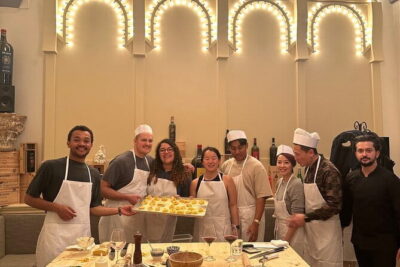
Florence: Pasta Cooking Class with Unlimited Wine
Read our review →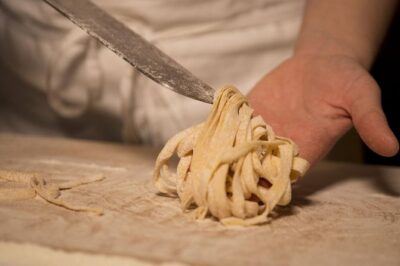
3 in 1 Cooking Class near Navona: Fettuccine, Ravioli & Tiramisu
Read our review →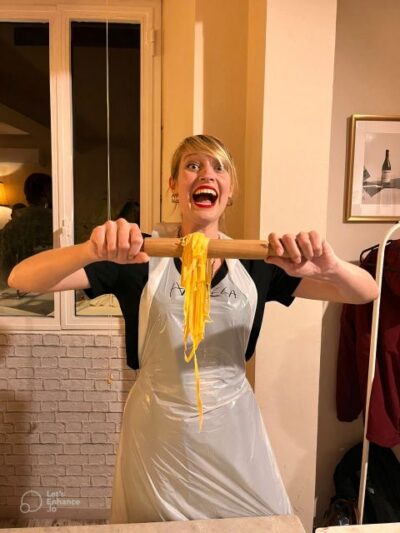
Rome: Pasta Making Class with Wine, Limoncello, and Dessert
Read our review →
Rome Cooking Class: Make Pasta and 3 Spritz Cocktails
Read our review →
Rome: 3-in-1 Fettuccine, Ravioli, and Tiramisu Cooking Class
Read our review →