
Review · TURKEY
Cappadocia Cooking Class
The best part of this Cappadocia cooking class is the change of setting. Instead of simply eating Turkish food in a restaurant, you shop for ingredients in Ürgüp, then head to a local home or kitchen to prepare a meal with a Turkish cook. The food matters, but the real prize is seeing how an ordinary meal comes together.
I like the small maximum of six people, which gives the afternoon or evening a friendly, personal feel. I also like the chance to meet hosts such as Basa, Ozgul, Feliz, or Nihat, with guide and translator Kadir often helping the conversation along.
One caution: the hands-on cooking can vary. Some groups prepare several dishes step by step, while others mostly chop vegetables and stir pots containing a few pre-cooked ingredients. If you want a formal lesson with individual workstations and printed recipes, this may feel loose.
Key points to know before you book
- Shop first in Ürgüp: You begin by visiting local shops for ingredients before cooking.
- Cook in a local setting: The class may take place in a family home, apartment, restaurant kitchen, or another host kitchen.
- Expect regional home cooking: Dishes can include yogurt soup, stuffed grape leaves, Turkish ravioli, meat and vegetable stews, salads, and a grape-molasses dessert.
- Kadir may guide and translate: He has helped with pickup, shopping, local context, and conversation for several groups.
- Choose lunch or dinner: Pickup is around 10 a.m. for lunch and 4 p.m. for dinner.
- Plan on four to six hours: The listed duration is about four hours, though relaxed meals and conversation can make the visit longer.
From Ürgüp market to the cooking table
Your day begins with hotel pickup. For lunch, pickup is scheduled around 10 a.m. For dinner, it is around 4 p.m. The service covers hotels in Göreme, Avanos, Uçhisar, Ortahisar, Çavuşin, Ürgüp, Mustafapaşa, Ayvalı, and Nevşehir.
The first stop is Ürgüp town, where you shop for ingredients. This is a useful touch. You get to see the everyday side of food buying, and you can ask about ingredients before they turn up in a pot. It also gives the class a stronger connection to Cappadocia than a lesson held entirely in a tourist restaurant.
The shopping portion is not presented as a separate market tour, so keep your expectations sensible. You are there to gather what you need for the meal, not to spend hours browsing every food stall. Still, this short stop helps you understand the ingredients behind Turkish cooking.
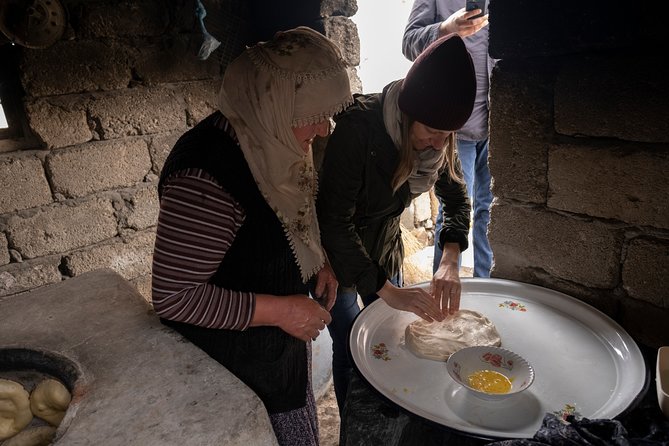
After shopping, you continue to the host’s home or cooking space. The exact setting can change. Some groups have cooked in a family apartment, some in a home, and some in a restaurant kitchen. One group worked in a restored old prison that had been turned into a restaurant, while others cooked in a neat modern apartment in Ürgüp.
That variety is worth noting. You are not buying a fixed classroom format. You are buying access to a small, host-led food experience, and the setting depends partly on who is cooking that day.
More Hands-On Workshops in Turkey:
- Farmers Market visit & Turkish Cooking Class
★ 5.0 · 60 reviews - Cooking Class at Exclusive Kings Valley
★ 5.0 · 54 reviews - Bodrum: Market Visit and Cooking Class
★ 4.9 · 41 reviews
What you may actually cook
The sample menu gives you a useful picture of the meal, though your dishes may differ. Possible starters include seasonal salad, purslane salad, minced seasonal vegetables, and stuffed grape leaves. Main dishes may include stewed vegetables, meat stew with vegetables, or Turkish ravioli.
Dessert is listed as aside, a Cappadocian sweet made with flour, grape molasses, and butter or sunflower oil. The food is hearty and home-style rather than polished restaurant fare. That is exactly the point.
Past menus have also included yogurt soup, meatballs wrapped in eggplant, rice with beans and pastrami sauce, semolina dessert, and other dishes that may not appear on standard restaurant menus. You could come away with recipes for five dishes, or with a smaller set of techniques and ideas, depending on the host.
The cooking itself may be quite hands-on. One family put bread into a traditional tandoor oven, which gave the children a task they could understand immediately. Other groups made salads, soups, meat dishes, and desserts with close guidance from the cook.
You should also know that hands-on does not always mean each person cooks a full dish from start to finish. One account described a large pot of each dish, with participants helping to cut vegetables and stir. A few ingredients were already prepared. That approach works well for a relaxed family meal, but it is less useful if your main goal is technical training.
The hosts make the difference
The cooking class is built around human contact. You may meet a host such as Basa, described as patient and welcoming, or Ozgul, who cooked with an 11-year-old participant and explained each step. Feliz welcomed a solo participant into her home and helped prepare yogurt soup, rice, salad, and dessert.
Nihat hosted a group in his apartment and arranged the kitchen so six people could work together. He also adapted the food for vegetarians and a participant who needed gluten-free dishes, including finding gluten-free flour for dessert. That is a strong sign that food needs can sometimes be handled thoughtfully.
Still, you should tell the operator about allergies or dietary restrictions before booking. The supplied information does not promise a special-diet menu, so do not assume every request can be met on the day.
The host may not speak English. In that case, a local interpreter stays with the group. Kadir is named repeatedly as a guide and translator, and Erkan has also handled pickup and assistance. Their role can make a big difference, especially during the market stop and when talking about family life, ingredients, and Turkish customs.
This is less like a chef demonstration and more like being welcomed into someone’s cooking routine. You may spend as much time talking as chopping. That is a strength if you want a social, cultural visit. It is less ideal if you prefer a tightly timed lesson.
A meal that feels more personal than a restaurant stop
After cooking, you sit down to eat what you have made. The meal includes three courses, along with water, black tea, or coffee. Alcohol is not included, and soda is also excluded.
Some groups have shared wine during the meal, but you should not count on alcohol being supplied. The official inclusions cover nonalcoholic drinks only, and the minimum drinking age is 21.
The meal can become the longest part of the visit. That is not a problem unless you are trying to fit the class between a balloon flight, a museum visit, and an evening show. One family spent five to six hours with the hosts because the cooking, conversation, and meal moved at an easy pace.
I would leave a generous block of time. The listed duration is about four hours, but the relaxed format can run longer. This is particularly true if you are enjoying the conversation and the hosts invite you to linger.
The food gives you a useful look at what people may cook at home, rather than only what restaurants serve to visitors. You might try dishes that are familiar in Turkish kitchens but absent from the menus you have seen in Cappadocia. That makes the meal more than a simple lunch stop.
A few more cooking classes around Turkey worth a look
- Traditional Home Cooking with a Local in İstanbul City Center
★ 5.0 · 82 reviews - Traditional Home Cooking with a Local in İstanbul Center
★ 4.9 · 78 reviews - Authentic Turkish Cooking at a Local’s Home in Istanbul
★ 4.9 · 24 reviews - Cooking Class in Authentic Etrim Village
★ 4.5 · 23 reviews
Stories, translation, and local conversation
Kadir has been praised for explaining Cappadocia and making conversation easy. The guide’s job is not only to translate instructions. It can also help connect the cooking to Turkish life, history, food habits, and modern culture.
One group enjoyed talking with young Turkish professionals about daily life, the economy, and society. Another described the guide as helpful with local context and the host as an excellent cook. These conversations are one of the strongest reasons to choose this class over a standard restaurant meal.
You should not expect a formal lecture. The discussion grows out of the meal and the people at the table. That makes it more natural, though the quality and depth will depend on your host, guide, and group.
The group limit of six is important here. A small group makes it easier to ask questions, work in the kitchen, and speak with the host. It can also lead to a private class if no other participants book the same departure.
Lunch or dinner, which should you choose?
The lunch class starts with a 10 a.m. pickup. It is a good fit if you want a substantial midday meal and a quieter afternoon afterward. It also leaves your evening open, though the actual length can vary.
The dinner class starts with a 4 p.m. pickup. This gives you a later meal and may suit a day when you have spent the morning visiting Cappadocia’s sights. You will want to avoid scheduling another fixed activity too close to the end.
Both options follow the same basic pattern: pickup, shopping in Ürgüp, cooking, eating, and hotel drop-off. Free pickup and return apply to the listed Cappadocia towns, which saves you the trouble of arranging a taxi.
One practical warning: one group had trouble when the driver became lost on the way to the class. It was an isolated problem in the information provided, but it is a reminder to keep your phone available and allow some flexibility around pickup.
Is $176.61 a fair price?
At $176.61 per person, this is not a cheap meal. You can eat Turkish food for far less in Cappadocia. The value comes from the extra time, transport, shopping, instruction, interpretation, and access to a local host.
The price makes more sense if you are traveling as a couple, family, or small group and want something personal. A private or nearly private class can feel much more worthwhile than a large demonstration. Families may also value the way children can take part in preparation and become more willing to try unfamiliar foods.
The price is harder to justify if you mainly want to eat. A normal restaurant meal will cost less and provide a more predictable menu. It is also a poor fit if you expect a professional cooking school with individual stations, exact measurements, and a printed recipe packet.
For me, the strongest value is the combination of food and conversation. You are paying for an evening with a host family or small cooking team, not just for three courses. If that kind of contact matters to you, the cost can be reasonable. If it does not, choose a restaurant and spend the difference on another activity.
Who will enjoy this class most?
This is a good choice for you if you want to:
- Learn about Turkish home cooking through actual preparation
- Meet local hosts in a relaxed setting
- Include children in a food activity
- Ask questions through an English-speaking guide or interpreter
- Try dishes that may not appear on typical tourist menus
- Take a break from sightseeing and spend several hours at a table
- Arrange a small-group or possibly private cooking visit
You may want to skip it if you need a strict schedule, dislike group meals, or want every minute to be formal instruction. The class can be somewhat improvised, and the amount of cooking depends on the host and menu.
People with food allergies or dietary restrictions should contact the operator before booking. The experience has accommodated vegetarian and gluten-free needs in the past, but this is not stated as a guaranteed feature.
Confirmation is provided at booking. Children must be with an adult, and service animals are allowed. Free cancellation is available until 24 hours before the start time. Cancellations or changes made inside that window are not accepted for a refund.
Should you book the Cappadocia cooking class?
Book it if you want a personal food experience with room for conversation, laughter, and a little kitchen improvisation. The strongest version of the class gives you a market visit, several dishes, a warm host, a helpful interpreter such as Kadir, and a meal that feels far removed from a tourist restaurant.
Go in expecting a shared cooking session, not a professional culinary course. You may make several dishes from start to finish, or you may help with chopping and stirring while the host manages the main pots.
For families, couples, and food-focused visitors, this can become one of the most memorable ways to spend a half-day in Cappadocia. For strict cooks on a budget, the price and variable format may be frustrating. The right choice depends on whether you value access to people and homes as much as the food itself.
FAQ
Where does the Cappadocia cooking class take place?
The experience begins with shopping in Ürgüp and then continues to a local host’s home or cooking space. Past arrangements have included homes, apartments, and a restaurant kitchen.
How long does the cooking class last?
The listed duration is approximately four hours. Some sessions may take five to six hours when cooking, conversation, and the meal continue at a relaxed pace.
What time does pickup take place?
The lunch class has pickup around 10 a.m. The dinner class has pickup around 4 p.m.
Is hotel pickup included?
Yes. Pickup and drop-off are included for hotels in Göreme, Avanos, Uçhisar, Ortahisar, Çavuşin, Ürgüp, Mustafapaşa, Ayvalı, and Nevşehir.
How many people can join?
The maximum group size is six people. A smaller booking may result in a private cooking session.
What food might be prepared?
Possible dishes include seasonal salads, purslane salad, stuffed grape leaves, stewed vegetables, meat stew, Turkish ravioli, yogurt soup, rice with beans and pastrami sauce, and a Cappadocian dessert made with flour, grape molasses, and butter or sunflower oil.
Are drinks included?
Water, black tea, and coffee are included. Alcoholic drinks and soda are not included.
Is an English-speaking guide available?
A local interpreter is included. Kadir has guided and translated for some sessions, while other guides and hosts may also be involved.
Can children join the class?
Yes, but children must be accompanied by an adult. Children have taken part in preparing food during previous sessions.
Can I cancel for a full refund?
Yes, if you cancel at least 24 hours before the experience start time. Cancellations or changes made less than 24 hours before the start time are not refunded.
Just added around Turkey
- Cooking Class at Exclusive Kings Valley★ 5.0 · 54 reviews
- Cappadocia Home Cooking Experience★ 5.0 · 11 reviews
- Farmers Market visit & Turkish Cooking Class★ 5.0 · 60 reviews
- Bodrum Cooking Class with Local Couple★ 5.0 · 6 reviews
- Cooking Class in Authentic Etrim Village★ 4.5 · 23 reviews
- Bodrum Cooking Class★ 5.0 · 3 reviews
- Turkish Cuisine Cooking Class at Local Home with Family★ 5.0 · 9 reviews
- Istanbul: Turkish Cooking Class with a Professional Chef★ 4.8 · 23 reviews
Cooking Classes, compared.
Half-Day Thai Cooking Class at Organic Farm in Chiang Mai
Read our review →
Florence: Pasta Cooking Class with Unlimited Wine
Read our review →
3 in 1 Cooking Class near Navona: Fettuccine, Ravioli & Tiramisu
Read our review →
Hanoi Cooking Class: Culture, Local Market & Meaning CSR Impact
Read our review →
5 Traditional Dishes Hanoi Cooking Class with Market Trip
Read our review →
Cooking Class and Lunch at a Tuscan Farmhouse with Local Market Tour from Florence
Read our review →
Chiang Mai: Cooking Class, Market & Thai Herbs Garden Tour
Read our review →Browse the lists this tour appears in