
Review · ISTANBUL
Istanbul: Turkish Cooking Class with a Professional Chef
Turkish cooking gets much more interesting once you move past kebabs. In this small-group class, you choose the menu, then prepare dishes from across Anatolia with a professional chef. The work runs from knife skills and spice pairings to traditional methods and careful plating, followed by a chef’s table meal.
I like the custom menu, since you can focus on mezes, a main course, dessert, or a full spread. I also like the practical teaching. You do not just watch someone cook. You chop, season, shape, plate, and take home the recipes. The main consideration is the changing teaching team. Names and language support can vary by session, so confirm your preferred language when booking.
Key points at a glance
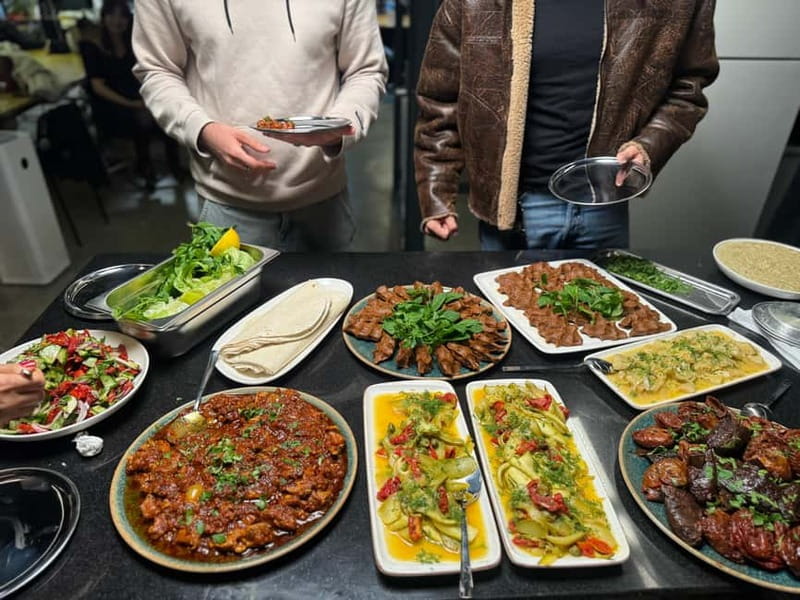
- Choose your own Turkish menu: Pick from soups, mains, mezes, salads, and desserts, with dishes such as İmam Bayıldı, Mantı, Çerkez Tavuğu, and Sütlaç.
- Learn in a small group: The class is limited to 10 participants, giving you more room to work at the counter.
- Meet an experienced chef: Teaching may be led by professionals such as Sermin Tayyar, Gül, Nurgül, or Yahya, depending on the session.
- Eat what you prepare: The class ends at a chef’s table with your finished dishes, drinks, and the recipes to use at home.
- Good for dietary needs: Vegan, vegetarian, and gluten-free menus can be arranged.
- Convenient central setting: The bright studio sits between Galataport and Galata Tower, diagonally right of Arada Beyrut Cafe and across from Lavander Cafe.
A Turkish kitchen class built around your menu
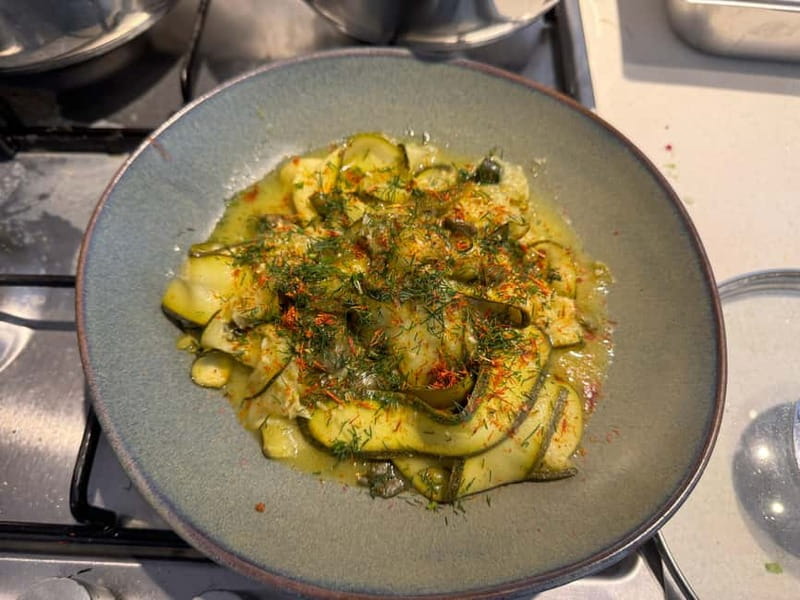
The best feature here is control. Instead of arriving to find one fixed recipe waiting for you, you select the kind of meal you want to make. You might choose a soup, a meze, a main course, and dessert, or concentrate on dishes you are most likely to cook again at home.
That matters in Istanbul. Turkish food changes from region to region, and a restaurant meal only gives you the finished result. In this class, you see how the parts fit together: how spices are paired, how ingredients are cut, how a dish is balanced, and how presentation changes the way food feels on the plate.
The menu can include Ottoman and Anatolian favorites such as İmam Bayıldı, a stuffed eggplant dish; Mantı, small filled dumplings; Çerkez Tavuğu, a chicken and walnut preparation; Sultan’s Delight; and Sütlaç, a traditional rice pudding. Exact choices depend on what you select and what the class can prepare that day.
I would choose dishes that are unfamiliar but still realistic for your home kitchen. One useful feature is that the ingredients are described as fresh and easy to understand, and one participant specifically found them available at home. That makes the class more useful than a flashy demonstration built around ingredients you cannot find after leaving Turkey.
More Hands-On Workshops in Turkey:
- Farmers Market visit & Turkish Cooking Class
★ 5.0 · 60 reviews - Bodrum: Market Visit and Cooking Class
★ 4.9 · 41 reviews - Cooking Class in Authentic Etrim Village
★ 4.5 · 23 reviews
Inside the studio near Galata and Galataport
The setting is a spacious, bright, high-ceiling studio rather than a busy restaurant kitchen. It is described as a calm, home-like workshop with music, and other creative activities may be taking place nearby.
That setting should appeal to you if you prefer a relaxed class over a formal culinary school. You can focus on the food without the pressure of a restaurant service. The studio atmosphere also gives the class a social side, since you share the work area and final meal with a limited number of participants.
The meeting point is specific but worth checking carefully. Find Arada Beyrut Cafe, then look diagonally to the right for the studio. It is directly across from Lavander Cafe. The location between Galataport and Galata Tower makes it easy to pair the class with sightseeing in central Istanbul, although the experience itself does not include transport or a guided city walk.
What happens during the three-hour session
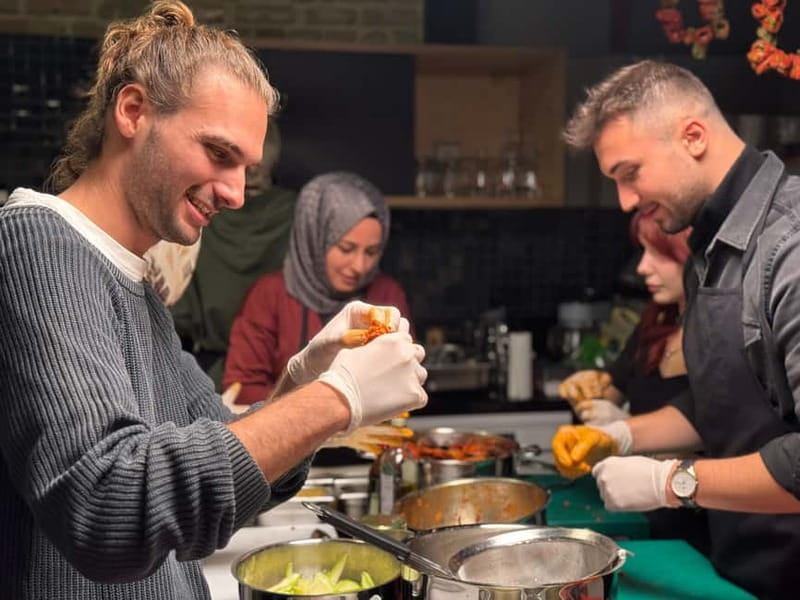
The experience lasts about three hours, although the description also presents it as a three to four-hour journey from preparation through dining. Plan enough time to avoid rushing away immediately afterward.
Choosing the dishes
The session begins with menu planning. You can select from soups, main courses, mezes, salads, and desserts. This is the point to explain dietary needs. Vegan, vegetarian, and gluten-free menus are available, and the chef can shape the selection around you.
I like this arrangement because it gives the class a clear purpose. If you already know you love Turkish mezes, you can spend your time learning several small dishes. If you want a complete meal, you can build one from soup through dessert.
The menu choices also create a useful cultural lesson. The chef explains the stories and regional background behind the food, including links to Ottoman palace kitchens and Anatolian cooking traditions. You are not just following a recipe card. You learn why certain ingredients and methods belong together.
A few more cooking classes around Turkey worth a look
- Traditional Home Cooking with a Local in İstanbul City Center
★ 5.0 · 82 reviews - Traditional Home Cooking with a Local in İstanbul Center
★ 4.9 · 78 reviews - Authentic Turkish Cooking at a Local’s Home in Istanbul
★ 4.9 · 24 reviews - Istanbul Turkish Home Cooking Class with a Local
★ 5.0 · 18 reviews
Preparing ingredients and learning knife skills
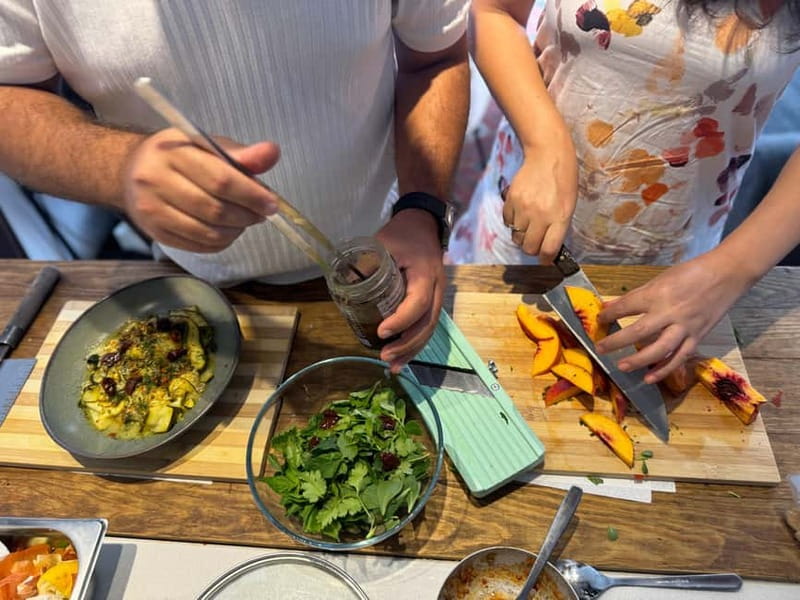
Once the menu is settled, the hands-on work begins. You learn basic knife handling, cutting, and ingredient preparation before moving into the recipes.
This part is especially useful if you cook at home. The class is not aimed only at experienced cooks. Beginners receive step-by-step guidance, while confident cooks can pay closer attention to seasoning, timing, and presentation.
The instruction also covers the chemistry of cooking and spice pairings. That does not mean a science lecture. It means you get some explanation for the choices behind the dish, rather than being told to add an ingredient without context.
Cooking traditional dishes
The class then moves through traditional cooking methods. Your chef guides the process, watches the work, and helps keep the dishes moving together.
The teaching style may differ by instructor. Sermin Tayyar has been praised for careful, personal guidance and for creating a welcoming chef’s table experience. Gül has led sessions with translator support when needed. Nurgül has been noted for patience, basic cooking instruction, and cultural context, while Yahya has been praised for traditional Turkish food knowledge and refined techniques.
The names are useful to know, but do not assume you will meet one particular person. The teaching team can vary. The important point is that the class is built around direct instruction rather than a chef performing while you watch.
Plating and the chef’s table
Near the end, you learn how to plate the dishes. This is a welcome touch. Turkish food can be generous and rustic, but good presentation helps you understand balance, color, portion, and texture.
Then you sit down and eat what you prepared. Hot drinks, water, and soft drinks are included. The meal is the payoff, but it is also part of the lesson. You can taste the result while the methods are still fresh in your mind.
The class provides a list of the chef’s recipes to take home. That makes the experience more than a pleasant meal in Istanbul. You leave with a practical record of what you made and a chance to reproduce it.
The chefs and language support
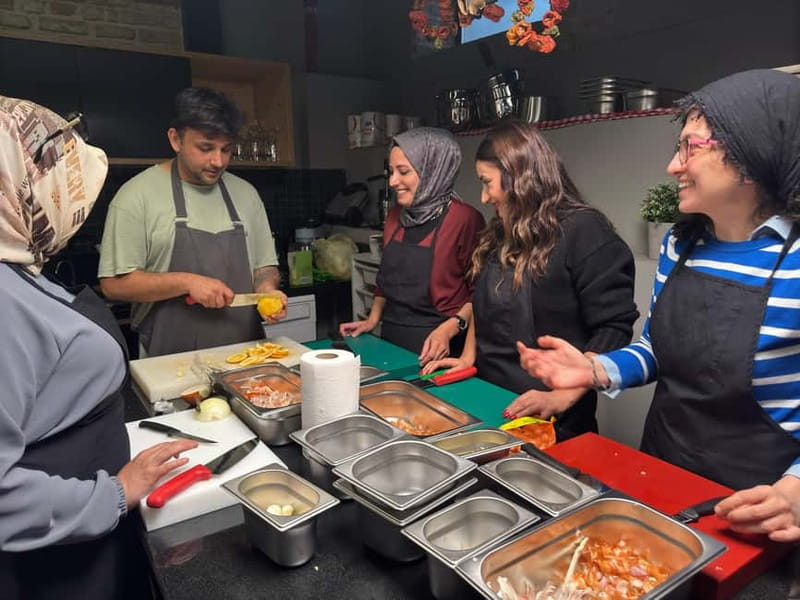
The chef has at least 20 years of professional experience, with a focus on Turkish cooking, food styling, and culinary presentation. Some individual instructors have even longer kitchen backgrounds. Gül, for example, has been described as having 35 years of experience.
Language support is a major practical advantage. Sessions are offered in English, Russian, and Turkish, while the wider experience information also lists German and Arabic support. One class used a translator for Gül, who did not speak English, and the arrangement worked well for that group.
Still, check the language before booking if detailed instruction is important to you. A translator can work well, but direct communication is simpler when you want to ask frequent questions about texture, timing, or substitutions.
The chef lineup has also included Armen as a translator. Instructor assignments can change, so treat the names as examples of the teaching team rather than a promise of one specific chef.
How much value do you get for $122?
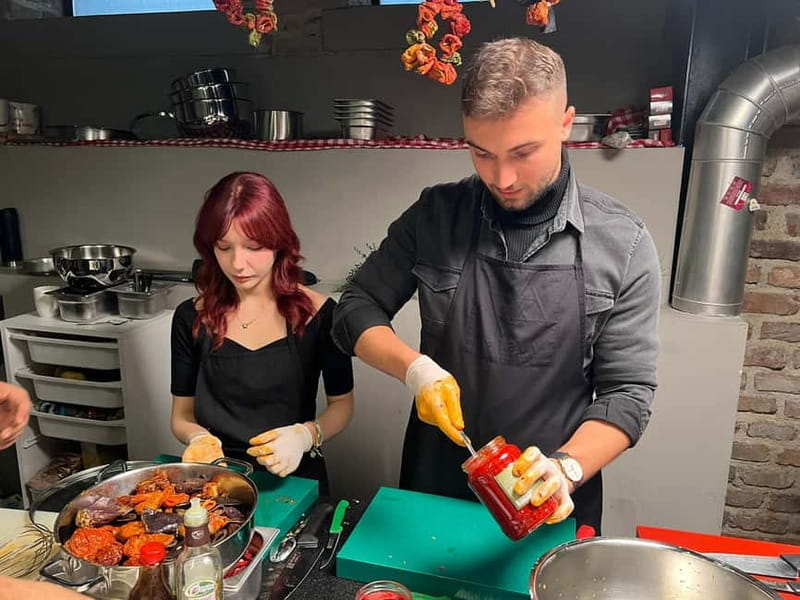
At $122 per person, this is not the cheapest meal or cooking activity in Istanbul. The price makes more sense when you count what is included: ingredients, instruction, knife training, cultural explanation, drinks, the meal itself, and the recipe list.
You are also paying for a small group of no more than 10 participants. That matters in a hands-on class. A large group can turn cooking into a queue for one cutting board. Here, you should have a better chance to take part in the preparation and ask questions.
The strongest value comes if you want skills you can use later. If you only want to eat Turkish food, a good restaurant costs less and requires no work. If you want a meal plus a personal lesson in how Turkish dishes are built, the price is more defensible.
Professional cooks have also found the class worthwhile, which suggests the instruction is not limited to first-time kitchen visitors. At the same time, beginners are clearly welcome. I would see this as a good middle ground: serious enough for an experienced cook, but friendly enough for someone who rarely handles a knife.
What the class does especially well
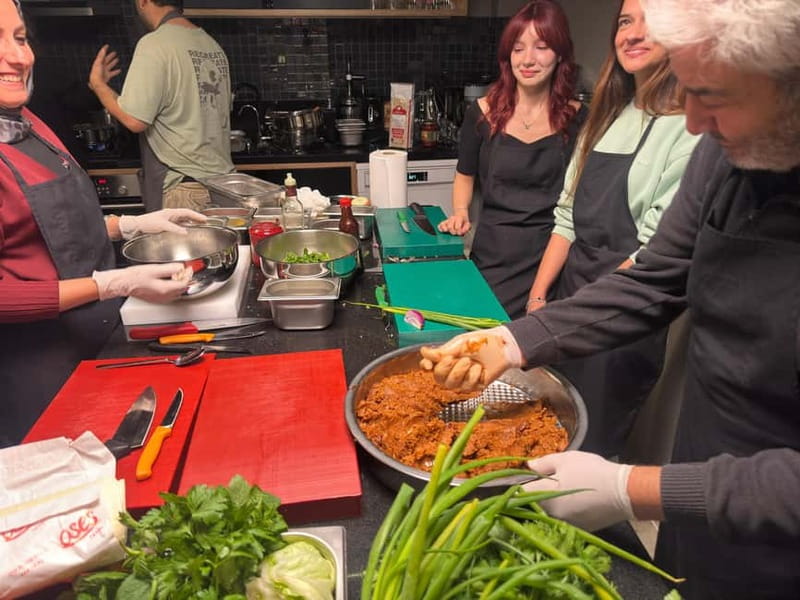
The most consistent strength is the teaching. The chefs are repeatedly described as warm, patient, professional, and skilled. That combination matters. A technically strong cook who cannot explain a process is not much help in a class.
The food itself is another major strength. Sultan’s Delight was singled out as a favorite dish during a long trip that included Michelin-starred meals. That does not mean every menu will produce the same dish, but it shows how much a well-taught traditional recipe can deliver.
I also value the cultural detail. You learn about regional dishes, Ottoman influences, ingredient pairings, and the place food holds in Turkish life. This gives you more context than simply ordering an unfamiliar dish from a menu.
Finally, the class has a relaxed social character. You work alongside people from different countries, then share the results. If you book early in your Istanbul stay, it can also help you understand what foods to seek out for the rest of your visit.
Points to consider before booking
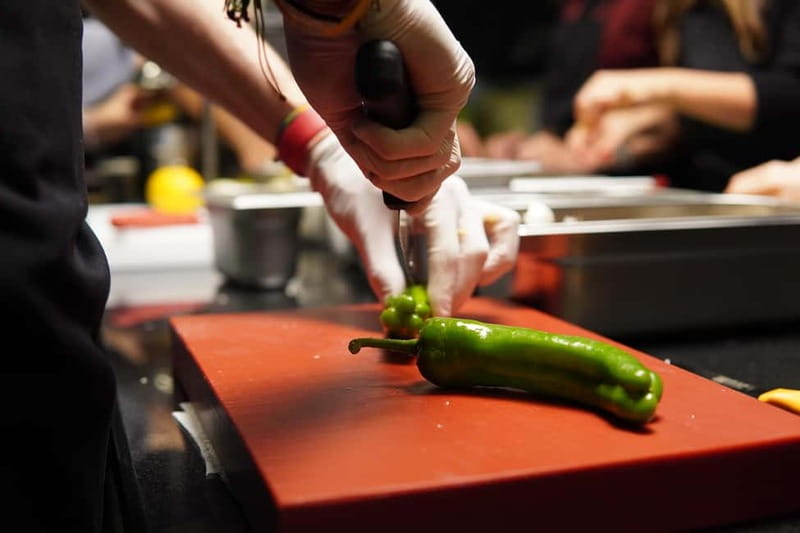
The class is not a fixed tasting menu, so you need to participate. If you want to sit back with a drink while someone else handles the cooking, this is the wrong choice.
The three-hour schedule can also feel full if you select several dishes. Cooking, plating, and eating take time, especially when the menu includes multiple courses. Keep your later plans flexible.
The studio is described as a cozy office-style setting, not a grand restaurant or historic mansion. That will suit you if you care more about instruction than atmosphere. If you are hoping for a polished fine-dining room, the setting may feel plain.
Language is another point to check. English, Russian, and Turkish are listed, with additional support in German and Arabic. But the exact instructor and translator arrangement may change.
Finally, the experience does not promise a market visit, hotel pickup, or a walking tour. Its focus is cooking in the studio. That focused approach is a benefit if you want kitchen time, but it may disappoint you if you expected a broader food tour.
Who should book this cooking class?
I would recommend it to couples, solo visitors, families with an interest in food, and anyone who wants a practical cultural activity in Istanbul. It is especially useful for people who enjoy cooking at home and want recipes that can be repeated with familiar ingredients.
It also suits experienced cooks. The menu choice, food styling, and regional background give skilled participants more to think about than basic chopping alone.
You should be comfortable taking part for much of the session. The class is limited to 10 people, but it remains a shared workshop rather than a private lesson. For strict dietary needs, mention them in advance so the menu can be tailored properly.
Free cancellation is available up to 24 hours before the start, and you can reserve without paying immediately. The class is priced at $122 per person.
Should you book it?
Book this class if you want to understand Turkish food from the inside, learn useful techniques, and eat a meal you helped create. The custom menu, small group, recipe list, and strong teaching are the best reasons to choose it.
Skip it if you only want a quick tasting, a market tour, or a fixed luxury dining experience. For everyone else, especially people who cook at home, this offers a pleasant mix of skill, culture, and a very satisfying table at the end.
FAQ
How long does the Turkish cooking class last?
The advertised duration is three hours. The full preparation-to-dining experience is also described as lasting three to four hours, so allow some flexibility.
Where does the class take place?
It takes place in a spacious, bright studio between Galataport and Galata Tower. The studio is diagonally to the right of Arada Beyrut Cafe and directly across from Lavander Cafe.
How many people can join the class?
The class is a small group limited to 10 participants.
What dishes can I prepare?
You can choose from soups, main courses, mezes, salads, and desserts. Examples include İmam Bayıldı, Mantı, Çerkez Tavuğu, Sultan’s Delight, and Sütlaç.
Can I choose my own menu?
Yes. The menu is customized, and you choose which types of dishes you want to prepare with the chef’s guidance.
Are vegan and vegetarian menus available?
Yes. Vegan and vegetarian options are available, along with gluten-free choices.
What languages are supported?
The listed teaching languages are English, Russian, and Turkish. German and Arabic support is also described, but the exact language arrangement can vary by session.
Are ingredients and drinks included?
Yes. Cooking ingredients are included, along with hot drinks, water, and soft drinks.
Do I receive the recipes afterward?
Yes. You receive the chef’s recipe list so you can recreate the dishes at home.
Can I cancel the booking?
You can cancel up to 24 hours in advance for a full refund. You can also reserve now and pay later.
Just added around Turkey
- Farmers Market visit & Turkish Cooking Class★ 5.0 · 60 reviews
- Bodrum Cooking Class with Local Couple★ 5.0 · 6 reviews
- Bodrum Cooking Class★ 5.0 · 3 reviews
- Cooking Class in Authentic Etrim Village★ 4.5 · 23 reviews
- Turkish Cuisine Cooking Class at Local Home with Family★ 5.0 · 9 reviews
- Istanbul: Vegan/Vegetarian Cooking Class with Locals at Home★ 5.0 · 8 reviews
- Bodrum: Market Visit and Cooking Class★ 4.9 · 41 reviews
- Authentic Turkish Breakfast Cooking at Home with Locals★ 5.0 · 5 reviews
Cooking Classes, compared.
Half-Day Thai Cooking Class at Organic Farm in Chiang Mai
Read our review →
Florence: Pasta Cooking Class with Unlimited Wine
Read our review →
3 in 1 Cooking Class near Navona: Fettuccine, Ravioli & Tiramisu
Read our review →
Hanoi Cooking Class: Culture, Local Market & Meaning CSR Impact
Read our review →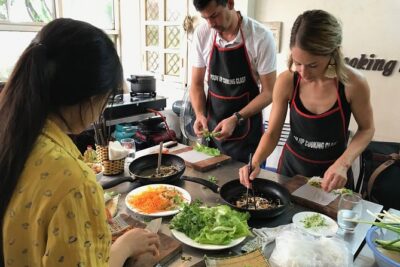
5 Traditional Dishes Hanoi Cooking Class with Market Trip
Read our review →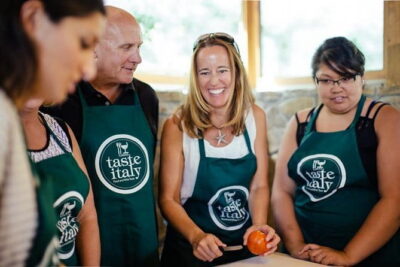
Cooking Class and Lunch at a Tuscan Farmhouse with Local Market Tour from Florence
Read our review →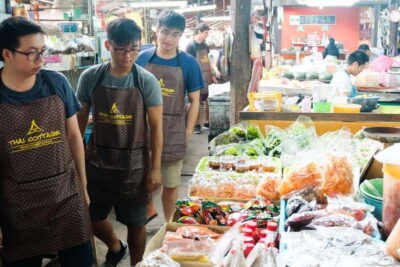
Chiang Mai: Cooking Class, Market & Thai Herbs Garden Tour
Read our review →Browse the lists this tour appears in