
Review · ISTANBUL
Çiğ Köfte Cooking Class/Night with Traditional Music At Home
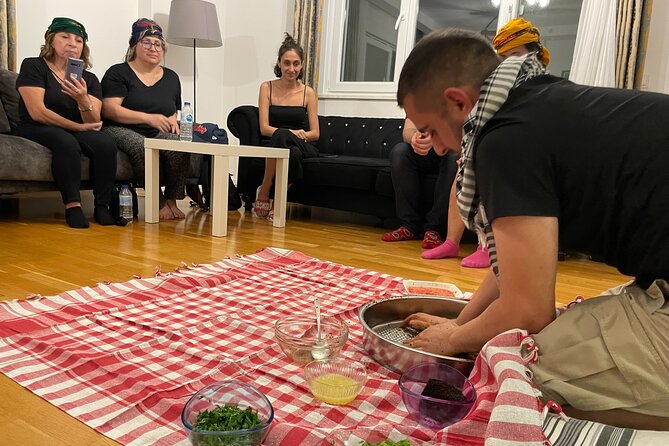
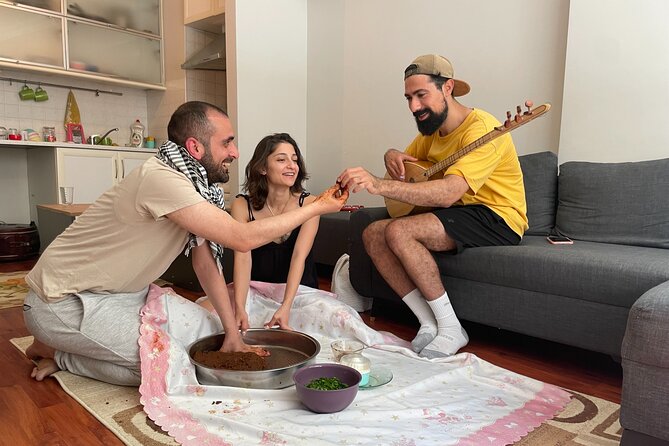
Çiğ köfte is more than a quick Turkish snack here. In this Kadıköy home experience, you learn how the dish connects food, music, humor, and group tradition. Büşra, Burak, and Bawer welcome you into their home, explain the spices, then invite you to knead the mixture alongside them.
I like two things right away: the small maximum of eight people, which makes conversation possible, and the way the evening treats çiğ köfte as a social custom rather than a simple cooking lesson. Traditional music plays while you work, and the hosts keep the mood light with jokes and taste tests.
The main consideration is location and format. You meet and finish at the same address in Kadıköy, not at a central sightseeing landmark, so you need to plan your ride. This is also an intimate home gathering, not a polished restaurant class, which is exactly its appeal for some people and less suitable for others.
Key points to know before booking
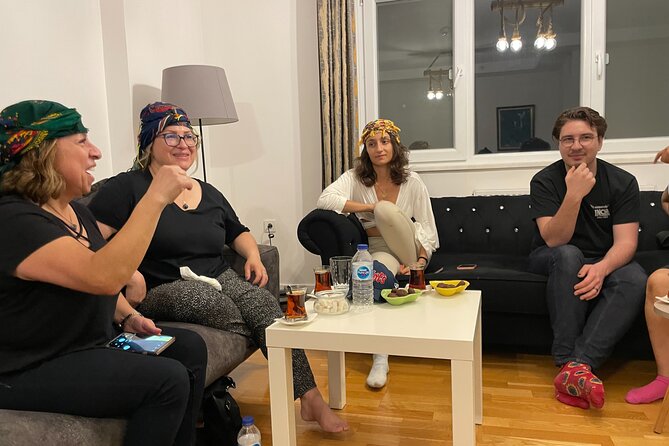
- A real home setting: You spend the evening in the hosts’ home rather than in a commercial cooking studio.
- Urfa tradition: The class explains the southeastern roots of çiğ köfte and its group kneading custom.
- Music while you cook: Traditional music accompanies the preparation, giving the lesson a cultural side.
- Small group size: The activity accepts no more than eight people, useful for personal conversation and hands-on participation.
- Two and a half hours: The pace allows time for introductions, ingredients, kneading, tasting, and conversation.
- Kadıköy meeting point: You meet and finish at 19 Mayıs, on Şemsettin Günaltay Caddesi.
Why this çiğ köfte evening feels different
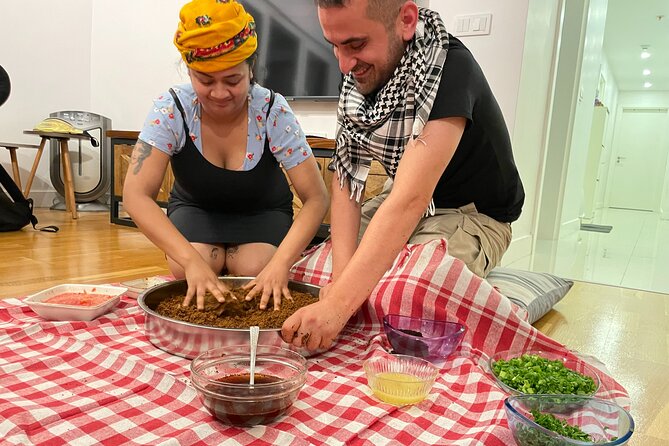
Many food classes focus on a recipe. This one focuses on the setting and the custom around the recipe. Çiğ köfte comes from Şanlıurfa, often shortened to Urfa, in southeastern Turkey. The traditional idea is communal: some people knead while others sing and play music nearby.
That background matters because the class is not built around rushing through a list of steps. You are shown the ingredients and special spices, then brought into the social rhythm of the dish. You can take part as much as you want, so you are not forced to perform if you would rather watch, listen, and taste.
I like that balance. A hands-on cooking class can become awkward when everyone is expected to keep up with a professional chef. Here, the hosts aim to make you feel at home first. That gives the evening a relaxed shape, with room for conversation and the occasional joke.
The highly praised part of the experience is the welcome. Büşra, Burak, and Bawer are named as the hosts, and their role goes beyond explaining food. They create the kind of evening where you sit with people and talk as if you have known them longer than a few hours. That warmth is a central part of what you are paying for.
More Hands-On Workshops in Turkey:
- Farmers Market visit & Turkish Cooking Class
★ 5.0 · 60 reviews - Cooking Class at Exclusive Kings Valley
★ 5.0 · 54 reviews - Bodrum: Market Visit and Cooking Class
★ 4.9 · 41 reviews
Arriving at the Kadıköy home
The meeting point is at 19 Mayıs, Şemsettin Günaltay Caddesi no:186, 34738 Kadıköy, Istanbul. The activity begins and ends there, so you do not need to arrange a separate return point after the meal.
The address is near public transportation, which helps. Still, give yourself enough time to find the building and arrive without stress. This is a home visit, not a large venue with a prominent sign and a reception desk. Your booking confirmation will be provided at the time of booking, so keep the meeting details available.
The fixed meeting point makes the evening simple once you arrive. You do not spend part of the activity moving between restaurants or sightseeing stops. The tradeoff is that you must make your own way there and back. If your Istanbul plans are centered far away, check the route before booking.
Kadıköy also gives this experience a different feel from a class designed around the main historic sights. You are going to a residential part of the city for a particular evening activity. That makes it a better fit for people who want a local home setting than for those who want a tour linked to monuments or a broad city route.
The first lesson: ingredients, spices, and the Urfa connection
The evening begins with an explanation of the ingredients and special spices used for çiğ köfte. The point is not only to tell you what goes into the dish, but to show why the preparation has meaning in southeastern Turkish culture.
The menu is focused: the main dish is çiğ köfte. That is useful to know before you pay. You are not booking a long Turkish cooking course with several courses or a full restaurant-style menu. You are booking one traditional dish, prepared and shared in a social setting.
For a food-focused experience, that narrow focus can be a strength. You have time to understand the dish instead of trying to memorize several unrelated recipes. You also get to see how the ingredients come together during kneading, which is the central act of the evening.
The description presents çiğ köfte as one of Turkey’s best-known street foods, while also explaining that its original form was far more tied to tradition and group preparation than to a quick street-food purchase. That contrast is one of the most interesting lessons here. You are looking past the finished snack to the custom that shaped it.
Kneading together, at your own pace
After the introduction, you sit together and begin kneading the çiğ köfte. You can participate as much as you wish. That small detail makes the activity more flexible than a strict demonstration, especially if you are unsure about handling the mixture or simply want to observe before joining in.
Kneading is the heart of the experience. It turns the food into a shared task, and the traditional music keeps the activity connected to the original group custom. Some people will enjoy getting fully involved. Others may prefer to take a short turn, ask questions, and watch the hosts show the technique.
The group limit of eight is important here. With a larger class, the hands-on part could become a distant demonstration. A maximum of eight people gives you a better chance to speak with the hosts and take your turn without feeling lost in a crowd.
You should not expect a silent, step-by-step workshop. The class includes jokes, conversation, and different ways of checking the flavor and intensity of the çiğ köfte. The mood is part of the lesson. If you enjoy food with a story and a social side, this is where the class earns its price.
More Evening Classes in Turkey:
- Chiang Mai: Evening Cooking Class and Local Market Visit
★ 4.9 · 648 reviews - Paris Evening Cooking Class French Dinner and Market Visit Option
★ 5.0 · 430 reviews - Evening Cooking Class in Organic Farm with Local Market Tour
★ 5.0 · 394 reviews - Tingly Thai Cooking School Evening Class
★ 5.0 · 335 reviews
Music, jokes, and the pleasure of not rushing
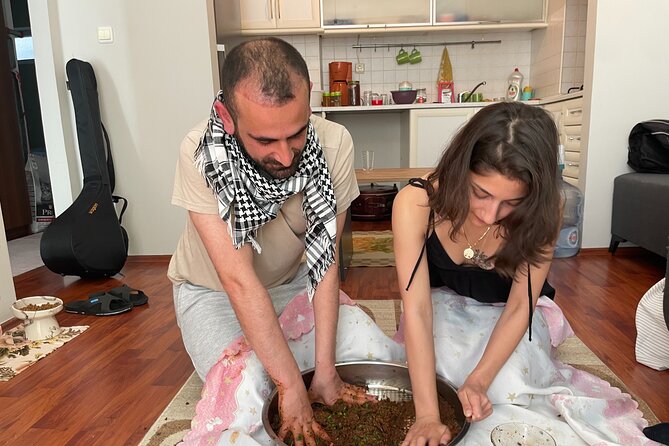
Traditional music is not added as background decoration. It reflects the way çiğ köfte preparation was organized in Urfa, with people kneading while others played and sang. That link between food and music gives the evening a stronger cultural purpose.
The hosts also use jokes and playful taste tests during the preparation. Those details may sound small, but they help prevent the class from feeling like a formal lecture. You are learning through conversation and participation, not just listening to instructions.
I would choose this activity for an evening when I wanted contact with local hosts, not another scheduled sightseeing stop. The two-and-a-half-hour duration gives the gathering time to settle. You can warm up, learn the ingredients, knead, taste, and talk without having to leave after a rushed hour.
The possible downside is that the social style will not suit every mood. If you want a quiet cooking lesson with precise measurements and a printed recipe, the available information does not promise that format. The emphasis is on tradition, atmosphere, and shared preparation.
What the $60 price includes in practical terms
At $60 per person, this is not the cheapest way to eat çiğ köfte in Istanbul. You can find street food for far less. The value comes from the access and the time: a home setting, local hosts, traditional music, an explanation of the dish, active preparation, and a shared evening lasting about two and a half hours.
The price makes more sense if you value cultural context. You are paying for more than a portion of the finished dish. You are also paying for a small group experience where the hosts can talk with you directly and include you in the preparation.
It is harder to justify if you only want to sample çiğ köfte or if your schedule is packed. This is a dedicated evening appointment, not a quick stop between major attractions. The focused menu also means you should not book it expecting a broad survey of Turkish cuisine.
Group discounts are available, which may improve the value if you are booking with companions. The activity is offered in English, so the cooking explanation and conversation are accessible to English-speaking participants.
Who will enjoy this home cooking experience most
I would recommend it most to people who value personal contact over polished presentation. Couples, friends, solo participants, and small groups who enjoy talking over food should find the format appealing. The group cap makes it easier to ask questions and join the kneading.
It also suits anyone curious about how Turkish food works as a social tradition. The evening gives you a specific example: çiğ köfte prepared through group effort, accompanied by music and conversation.
Families and mixed-age groups may also appreciate the flexible participation. You can join in as much as you want rather than being required to complete every cooking step. Still, the provided details do not specify children’s ages, so families should confirm that point before booking if it matters.
You may want to choose another activity if you prefer a formal school kitchen, a large menu, or a sightseeing tour with several stops. This is a home gathering built around one dish and the people preparing it.
Timing, transport, and the small details that matter
The activity lasts about two hours and thirty minutes. Since it starts and ends at the meeting point, allow extra time on both sides for your journey to and from the Kadıköy address.
The location is near public transportation, but the exact best route depends on where you are staying in Istanbul. Check the route before the evening, particularly if you are unfamiliar with Kadıköy or plan to return late. A mobile ticket is accepted, and confirmation arrives when you book.
The experience is offered in English. That makes the explanations easier to follow, especially when the hosts discuss ingredients, spices, and the cultural meaning of kneading.
Bookings are often made about 26 days ahead on average. That does not guarantee that every date sells out, but it is a useful planning clue. Since the maximum is only eight people, I would avoid leaving this until the last minute if the date matters to you.
Free cancellation is available if you cancel at least 24 hours before the start time. Cancellations or changes made less than 24 hours ahead are not accepted for a refund, and the cut-off uses local Istanbul time.
Should you book the Lokal Bond çiğ köfte night?
Book it if you want an intimate, food-centered evening with local hosts and you like the idea of joining a Turkish tradition rather than simply eating the final dish. The strongest reasons are the home setting, the small group, the traditional music, and the warmth created by Büşra, Burak, and Bawer.
Think twice if you are looking for a broad cooking course, a full Turkish meal, or an activity close to the major historic sights. The $60 cost is fair for a two-and-a-half-hour home gathering, but it is not a bargain street-food purchase.
For the right person, this is a memorable way to spend an evening in Istanbul. You leave with a better sense of why çiğ köfte belongs to a group setting, not just a takeaway counter.
FAQ
Where does the çiğ köfte experience take place?
It takes place in a private home at 19 Mayıs, Şemsettin Günaltay Caddesi no:186, 34738 Kadıköy, Istanbul, Turkey.
Where does the activity end?
The activity ends back at the meeting point.
How long does the experience last?
The experience lasts approximately two hours and thirty minutes.
How much does the experience cost?
The listed price is $60 per person.
How many people can join?
The activity has a maximum group size of eight participants.
Is the experience offered in English?
Yes. The experience is offered in English.
What food will be prepared?
The main dish is çiğ köfte, a well-known Turkish street food with roots in Urfa.
Is public transportation available near the meeting point?
Yes. The meeting point is near public transportation.
Can I cancel for a full refund?
Yes, if you cancel at least 24 hours before the experience start time. Cancellations made less than 24 hours before the start time are not refunded.
Just added around Turkey
- Istanbul Turkish Coffee Cooking and Tasting with Locals at Home★ 5.0 · 3 reviews
- Cooking Class in Istanbul – Home Cooking with a Local★ 5.0 · 3 reviews
- Turkish Anatolian Cooking Class and Food Styling Workshop★ 5.0 · 6 reviews
- Cooking Class in Turkey From Istanbul★ 4.5 · 23 reviews
- Cooking Class at Exclusive Kings Valley★ 5.0 · 54 reviews
- Cappadocia Home Cooking Experience★ 5.0 · 11 reviews
- Cappadocia Cooking Class★ 5.0 · 29 reviews
- Farmers Market visit & Turkish Cooking Class★ 5.0 · 60 reviews
Cooking Classes, compared.
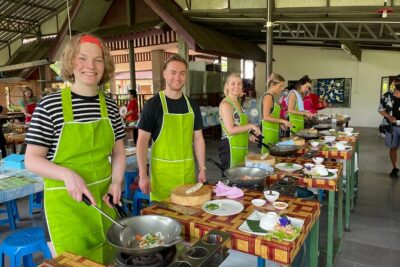
Half-Day Thai Cooking Class at Organic Farm in Chiang Mai
Read our review →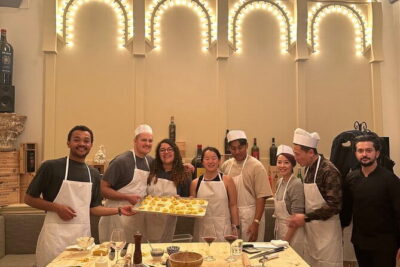
Florence: Pasta Cooking Class with Unlimited Wine
Read our review →
3 in 1 Cooking Class near Navona: Fettuccine, Ravioli & Tiramisu
Read our review →
Hanoi Cooking Class: Culture, Local Market & Meaning CSR Impact
Read our review →
5 Traditional Dishes Hanoi Cooking Class with Market Trip
Read our review →
Cooking Class and Lunch at a Tuscan Farmhouse with Local Market Tour from Florence
Read our review →
Chiang Mai: Cooking Class, Market & Thai Herbs Garden Tour
Read our review →Browse the lists this tour appears in