

Review · INDIAN
Cooking Class With Indian family
The best part of this Jaisalmer experience is simple: you enter an Indian home, watch a family prepare food, and then sit down to eat what you helped make. This is more personal than a restaurant meal and more useful than a cooking demonstration where you only watch.
I like the small group limit of six, which should give you room to ask questions and see what is happening at the stove. I also like the choice of a lunch or dinner session, plus tuk tuk pickup from your hotel. The main consideration is that the class is described as lasting from one to four hours, so the exact pace and amount of hands-on cooking may vary.
Key points to know before booking

- Home cooking in Jaisalmer: You visit a local family and learn how Indian food is prepared in a real household setting.
- Lunch or dinner choice: Pick the meal time that fits your sightseeing plans and appetite.
- Maximum six people: The limited size makes this feel more like a family visit than a large demonstration.
- Tuk tuk transfer included: Pickup from your Jaisalmer hotel helps with the practical challenge of finding a private home.
- Eat what you prepare: The lesson ends with a shared meal, not simply a recipe handout.
- $25 price point: For transport, instruction, and food, this can be good value, though the exact menu is not specified.
A home kitchen instead of a tourist restaurant
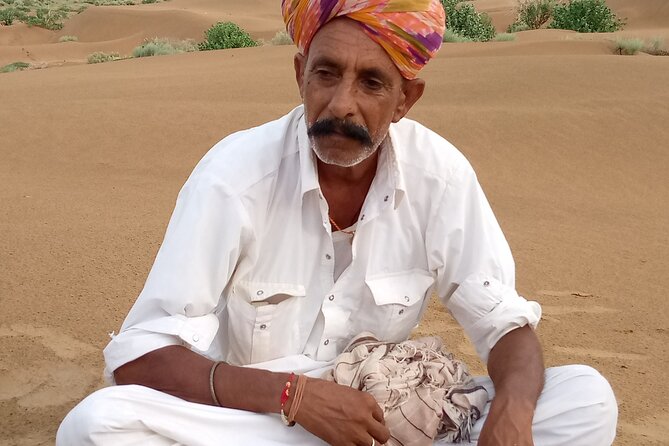
Jaisalmer is famous for its golden fort, desert excursions, carved buildings, and rooftop dining. Those sights matter, but food gives you a different way to understand the city. In this class, you are invited inside a local family’s home to see how an Indian meal comes together in an ordinary domestic setting.
That distinction is important. A restaurant can serve you a polished plate, but it usually hides the work behind the kitchen door. Here, you get to see the ingredients before they become dinner, watch the cooking methods, and ask why particular seasonings are used. The experience is less about mastering a formal recipe and more about seeing how food is handled in a Jaisalmer household.
The available information does not give a fixed menu. That is both a limitation and a small advantage. You cannot plan around a named dish, but the meal may reflect what the family normally cooks rather than a set menu designed only for visitors.
Expect the class to feel informal. You are not being trained in a professional culinary school. You are being shown local methods by people who cook this food as part of daily life.
More Indian Cooking Classes in India:
- Indian Cooking Class in an Authentic Local Home – Learn 6 Dishes
★ 5.0 · 195 reviews - Authentic Indian Cooking Classes at Palolem Beach Road Goa
★ 5.0 · 132 reviews - Indian Traditional Hands On Cooking Classes with local Family
★ 5.0 · 69 reviews
What happens after hotel pickup
Pickup is offered by tuk tuk from your hotel in Jaisalmer. That removes one of the most awkward parts of a home visit: locating an address in an unfamiliar city. You still need to provide a clear hotel location at booking, since the starting point is in Jaisalmer and the experience takes place in the Jaisalmer district.
The tuk tuk ride is part of the local character of the outing. It is not a private luxury transfer, and you should expect a basic city ride rather than a polished tourist vehicle. For a short trip to a family home, that is usually a sensible match for the experience.
The meeting point is listed as Jaisalmer, Rajasthan 345001, India, while pickup is offered from your hotel. Confirm the exact pickup arrangement before the day of the class, especially if you are staying outside the main town area.
The booking information names Shree Ganesham Tour as the provider. Some related arrangements appear connected with Naru and Narpat Singh, while Silvia is also named in the local service information. If a particular guide or contact matters to you, ask who will handle your cooking visit before you go. The provided details do not promise that any one named person will teach every class.
Entering the family home
The visit gives you a chance to see an Indian house from inside, not just pass residential streets on the way to the fort. That is a valuable part of the experience, but it also means you should arrive with a respectful, flexible attitude.
A private home is not arranged like a museum. The kitchen may be compact, the seating may be simple, and the working area may not allow everyone to stand directly at the cooking surface. The group limit of six helps, but your position in the room can still affect how much you see.
You may be shown the ingredients first, then introduced to the preparation and cooking process. The description specifically emphasizes local ingredients, seasonings, and cooking techniques. Pay attention to those details. The most useful lesson may not be a precise measurement, but how the cook decides when to add seasoning, how ingredients are combined, and how the food changes during cooking.
Ask questions as you go. You can ask what each spice contributes, how the method differs from restaurant cooking, and which steps are common in the family’s everyday meals. Since the class is in a home, conversation is likely to be as important as the cooking itself.
Learning through ingredients and seasoning
The strongest food lesson here is likely to be the way flavor is built. The available description specifically points to the ingredients the family uses and the way seasonings are handled. That gives you a chance to connect the food on your plate with the process behind it.
Indian cooking is often reduced by outsiders to a list of spices. That misses the point. Timing, heat, texture, and the order in which ingredients are added can matter just as much. Watch closely when the cook adds seasonings and how the mixture changes. If you cook at home later, those observations may prove more useful than a printed recipe.
You should also expect the class to be participatory, though the exact amount of hands-on work is not stated. The wording says you will learn how to cook and share a meal after your work, but it does not promise that every person prepares every dish from start to finish. If you want substantial time at the stove, ask about that in advance.
The class is a good fit for curious eaters, couples, families, and small groups of friends. It is less suitable if you want a highly structured lesson with exact recipes, professional equipment, or a guaranteed list of dishes.
More Hands-On Workshops in India:
- Pink City Cooking Class
★ 5.0 · 452 reviews - Five Course Cooking Class & Meal
★ 5.0 · 250 reviews - Veg and Non veg : Private Cooking Class in Delhi home (7 meal)
★ 5.0 · 226 reviews - Private Guided Cooking Workshop Experience in Jodhphur
★ 5.0 · 158 reviews
Choosing lunch or dinner in Jaisalmer

You can choose a lunchtime or evening class. That flexibility helps because Jaisalmer sightseeing can fill a day quickly. A lunch session may fit between morning and afternoon visits, while dinner can follow a day at the fort or a return from another outing.
A meal at home can also be a welcome change from repeated restaurant stops. If you have been eating in hotel dining rooms or rooftop cafés, the family setting offers a different rhythm. You prepare food, talk, and eat together instead of arriving at a table after all the work is finished.
The exact duration is listed as approximately one to four hours. That is a wide range, so do not schedule a tight connection immediately afterward. A short visit may focus on the cooking and meal, while a longer one may allow more conversation and a slower pace.
Dinner may be the more social option, but lunch could be easier if you want to preserve your evening for a desert trip or an evening walk around Jaisalmer. Choose based on your plans, not on the assumption that one meal is better than the other.
Eating the food you helped prepare
The shared meal is the payoff, but it is also where the cultural exchange becomes most natural. You are not simply tasting a dish in isolation. You have seen the ingredients, watched the method, and then sat down with the people who prepared it.
The meal is described as authentic Indian food, but no fixed dishes are named. That means you should not book this expecting a specific curry, bread, dessert, or regional specialty. Instead, think of it as an introduction to the family’s style of home cooking.
One account of the experience describes sharing dinner with a Jaisalmer family and paying close attention to the preparation and use of seasonings. That is exactly the sort of detail to focus on. Notice how the meal is served, what is eaten together, and how the family explains the food.
If you have allergies, dietary restrictions, or strong dislikes, raise them before booking. The available information does not state how dietary requests are handled, so you should not assume the family can adjust the meal at short notice.
Why the six-person limit matters
A maximum of six people is one of the better features here. In a large group, a home cooking lesson can turn into a crowded viewing session. With six, you have a better chance of hearing the instructions, seeing the ingredients, and taking part in the conversation.
Small groups also make the visit feel less like a performance. The family can spend more time answering questions, and you have more space to behave naturally. That matters in a private home, where a low-key exchange is more respectful than a noisy group arriving and leaving quickly.
Still, six is a maximum, not a promise that you will be the only person attending. If you want a private class, confirm that before booking. The details say the experience has a maximum of six, but they do not say that every departure is private.
The class may be especially worthwhile for solo visitors who want a personal connection without arranging a full private guide. It also suits couples who prefer food and conversation to another standard sightseeing stop.
The $25 question: is the price fair?
At $25, this is priced as an accessible cultural activity rather than a luxury culinary event. The value comes from several elements working together: tuk tuk pickup, local instruction, time in a family home, and a meal.
That is a good package if the visit runs toward the longer end of the stated one-to-four-hour range. Even a shorter class can be worthwhile if you receive clear instruction and enough time to eat and talk. The uncertainty is the variable duration and the lack of a fixed menu.
You should also remember that the experience is not presented as a professional cooking certification or an elaborate chef-led workshop. If you want polished presentation, detailed recipe cards, or a broad menu, another class may suit you better. If you want a personal introduction to home food in Jaisalmer, the low price makes this an easy addition to a sightseeing schedule.
I would judge the value by the quality of the exchange, not by the number of dishes. One well-explained family meal can teach you more about local eating habits than several hurried tastings.
Practical details and comfort
Confirmation is provided at booking. Pickup is offered, and mobile tickets make it easier to keep the booking available on your phone. The activity requires a moderate level of physical fitness, though the information does not explain whether that relates mainly to getting into the tuk tuk, walking, or moving around the home.
Service animals are allowed. If mobility, seating, or access inside the home is important to you, ask for details before booking, since the information supplied does not describe the house layout.
The experience requires good weather. If poor weather causes cancellation, you are offered another date or a full refund. You can cancel for a full refund up to 24 hours before the start time. Cancellations or changes made less than 24 hours before the start time are not accepted for a refund, and the cut-off follows local time.
These rules are worth noting if your Jaisalmer plans are unsettled. Give yourself room in the itinerary, and avoid booking this immediately before a long transfer.
Who should book this Jaisalmer cooking class?
I would recommend it most strongly to you if food is part of the reason you travel. It suits people who enjoy conversation, small groups, local homes, and the chance to see everyday life beyond the main sights.
It also works well for first-time visitors who want a gentle introduction to Indian food. The family setting can help you understand dishes and seasonings in context, rather than simply ordering something from a menu and guessing what it is.
Families with older children may enjoy the hands-on element, provided everyone can manage the physical demands of the visit. Couples and solo visitors should also find the format comfortable because the group is small and the meal creates an easy reason to talk.
I would hesitate if your top priority is a guaranteed menu, exact timing, air-conditioned comfort, or a formal cooking curriculum. The experience is built around local hospitality, and that requires some flexibility.
Should you book it?
Book this class if you want to trade one restaurant meal for time in a Jaisalmer home. The $25 price, hotel tuk tuk pickup, lunch or dinner choice, and six-person limit make it a practical way to add local food culture to your stay.
Go in expecting a personal household lesson, not a staged culinary show. Confirm the pickup point, the expected duration, the menu, dietary needs, and who will lead the visit. If you do that, this can be one of the more human parts of your time in Jaisalmer, especially after a day spent seeing the city from the outside.
FAQ
Where does the cooking class take place?
The class takes place at a local family’s home in the Jaisalmer district of Rajasthan, India.
How much does the experience cost?
The listed price is $25.
How long does the cooking class last?
The approximate duration is listed as one to four hours.
Can I choose lunch or dinner?
Yes. The experience offers a choice between a lunchtime and dinnertime cooking class.
How many people can join?
The maximum group size is six travelers.
Is hotel pickup available?
Yes. Tuk tuk pickup is offered from your hotel in Jaisalmer.
Just added around India
- Jodhpur Private Cooking Class With Family★ 5.0 · 68 reviews
- Private Guided Cooking Workshop Experience in Jodhphur★ 5.0 · 158 reviews
- Large Group / Family Vegetarian Cooking Class in Jaipur with an Expert Home Cook★ 5.0 · 3 reviews
- Jaipur Pink City Cooking Class★ 5.0 · 73 reviews
- Family cooking experience in Jaipur, including transport & meals★ 5.0 · 9 reviews
- Best cooking class with family in Jaipur – Activity in jaipur★ 5.0 · 17 reviews
- Private 3-Hour Cooking Lesson and Meal in a Local Home in Jaipur★ 5.0 · 7 reviews
- Indian Traditional Hands On Cooking Classes with local Family★ 5.0 · 69 reviews
Indian Cooking Classes, compared.
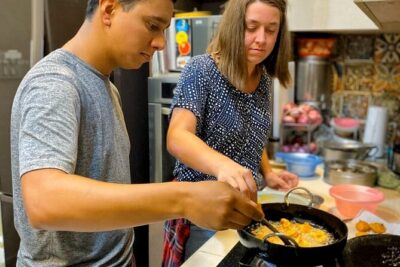
Indian Cooking Class in an Authentic Local Home – Learn 6 Dishes
Read our review →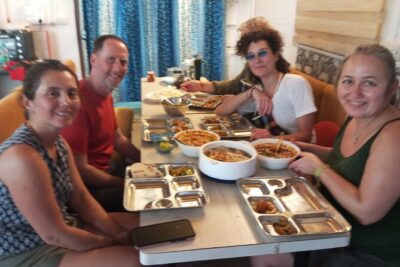
Authentic Indian Cooking Classes at Palolem Beach Road Goa
Read our review →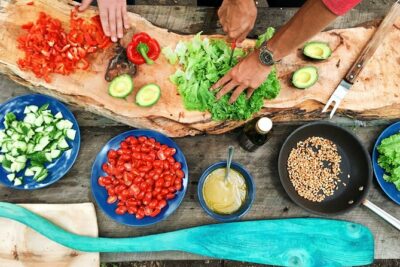
Indian Traditional Hands On Cooking Classes with local Family
Read our review →
Traditional Indian Cooking Class in Goa, Anjuna [vegetarian]
Read our review →
Mumbai: Indian Cooking Class & Cultural Delights
Read our review →
Indian Cooking Class with Local Family in Jaipur
Read our review →
New Delhi: Traditional Indian Cooking Class & Market Visit
Read our review →Browse the lists this tour appears in