
Review · LISBON
Traditional Portuguese Cooking Class in Lisbon
Portugal’s best food lesson may be the one where you stop simply ordering dishes and start making them. This three-hour Lisbon cooking class puts you to work on a seasonal four-course meal, from caldo-verde and cod to pastel de nata. I especially like the generous drinks and finger foods, plus the chance to cook with a small group rather than watch a chef perform.
I also like that the class welcomes complete beginners and children, with instructors such as Miguel, Beatriz, Pedro, and Teresa guiding the work in a relaxed way. The main consideration is that the food is prepared family style, so you may help with parts of several dishes rather than personally cook every recipe from start to finish. Also confirm the exact location before setting out, since two locations have caused occasional confusion.
Key points to know before booking
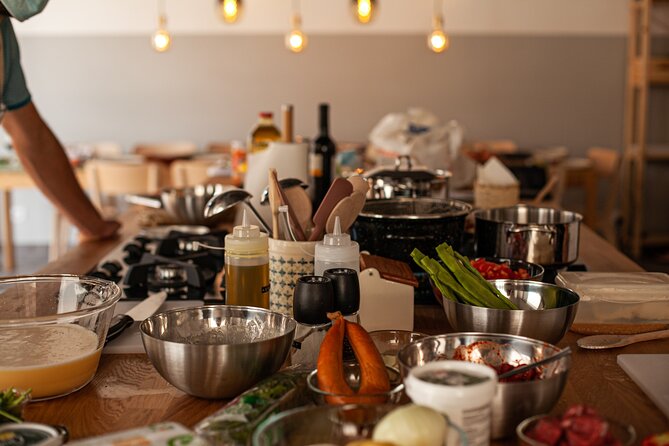
- Seasonal four-course menu: Dishes change with the time of year, so the meal reflects what is available rather than following one fixed menu.
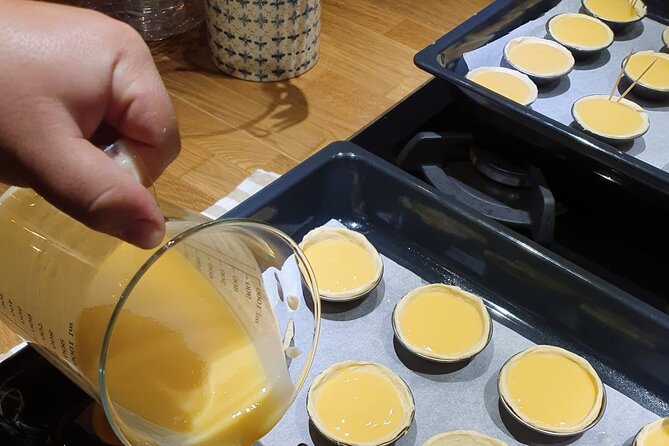
- Pastel de nata included: You prepare and bake Portugal’s famous custard tart, using pre-prepared puff pastry.
- Small group of up to 10: You get a real chance to chop, stir, season, and ask questions.
- Wine, beer, and snacks included: Portuguese drinks, finger foods, and nonalcoholic options are part of the class.
- Family-style cooking: You share tasks and eat together, which makes the class social but less like a private cooking lesson.
- Morning or evening timing: An 11 a.m. lunch class and evening sessions let you fit the experience around a day in Lisbon.
What this Lisbon cooking class is really like
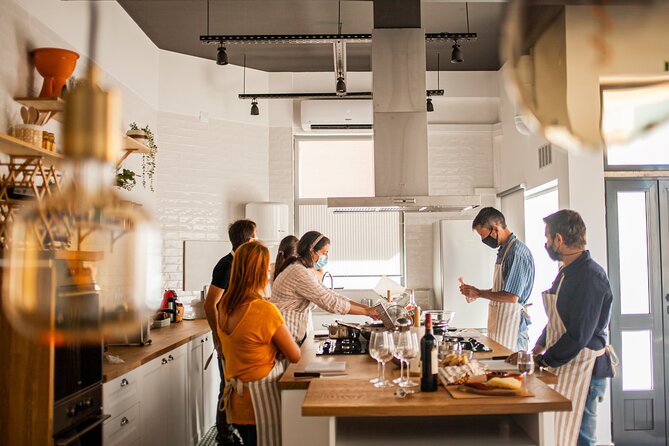
Homecooking Lisbon presents the class as a food lesson, but it is also a relaxed social meal. You arrive at R. Aliança Operária 54 in Lisbon, settle into a modern kitchen and dining space, and meet the instructor and the rest of the group. The maximum group size is 10, although one class had seven people and felt spacious rather than crowded.
That size matters. You are not standing at the back of a demonstration while somebody else handles the knife work. The format gives you tasks to do, while the instructor explains how the food is prepared and why particular ingredients matter. It is practical, informal, and aimed at ordinary home cooks, not culinary professionals.
The setting is reported as clean, modern, and inviting. One useful detail is that two groups may sometimes share the same space, so the room can get loud. If you want a hushed, private lesson, this may feel too social. If you enjoy talking over a glass of wine and meeting people from different places, the shared room works in your favor.
More Hands-On Workshops in Portugal:
- Lisbon: Pastel de Nata Baking Class
★ 4.9 · 2,106 reviews - Porto: Pastel de Nata Cooking Class with Grandma’s Recipe
★ 5.0 · 1,565 reviews - Porto: Pastel de Nata Pastry-Making Workshop
★ 4.9 · 1,542 reviews
Starting with snacks, drinks, and Portuguese food culture
The class does not begin with an empty stomach and a long wait for dinner. Finger foods and drinks are served during the cooking process, giving you something to nibble while the meal comes together. Portuguese wine and beer are included, along with water, juice, tea, and other nonalcoholic choices.
Alcohol is not served to anyone under 18. That is handled simply, with water, juice, or tea available instead. The drinks are not just a bonus. They help create the easy pace that makes this feel like a meal with instruction, rather than a three-hour kitchen examination.
The instructors also connect the dishes to Portuguese customs and local food culture. Beatriz, for example, is described as sharing family stories and background about the food. Other instructors, including Miguel and Pedro, are noted for clear explanations and a friendly approach. The useful part is not only learning a recipe. You begin to understand why cod appears so often in Portuguese cooking, how simple ingredients become filling dishes, and where sweets such as pastel de nata fit into the country’s eating habits.
The four-course menu changes with the season
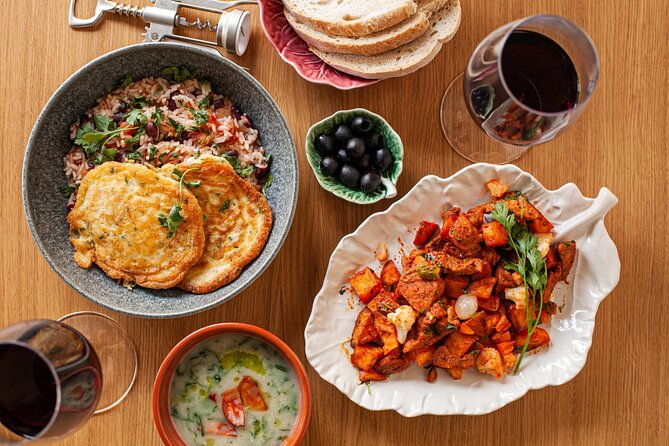
Do not arrive expecting the exact sample menu. The dishes change seasonally so the kitchen can use fresher ingredients. A bean and chorizo stew such as feijoada transmontana makes more sense in cool weather than during Lisbon’s summer heat, and the class adjusts accordingly.
The sample choices show the range of food you might encounter:
- Caldo-verde, a comforting soup made in the Portuguese tradition
- Pica-pau, a small-plate dish often served as a snack or starter
- Amêijoas à Bulhão Pato, clams with garlic, herbs, and a flavorful sauce
- Bacalhau à Brás, shredded salted cod with potatoes and egg
- Pataniscas de bacalhau, cod fritters
- Carne de porco com amêijoas, pork with clams
- Migas with pork ribs
- Pastel de nata, Portuguese custard tart
- Arroz doce, rice pudding
- Torta de laranja, orange roll
The list contains several possible starters, mains, and desserts, not a promise that you will prepare every one. In practice, the class works with a selected seasonal menu. You may help assemble several dishes and then eat the finished meal family style.
That arrangement has a clear advantage: you get a broad taste of Portuguese cooking in one sitting. The tradeoff is that you will not master every dish in full. One participant found that the hands-on work was divided among the group, with different people handling different parts of the meal. Recipes are provided afterward through a link, which helps you recreate the dishes at home.
Cooking the savory dishes together
The savory portion is where the class earns its keep. You might work on a cod dish, a pork preparation, a soup, or a side, depending on the menu that day. The instructor breaks the process into manageable steps and keeps an eye on timing, seasoning, and kitchen safety.
Bacalhau à Brás is especially useful for first-time students because it shows how Portuguese cooks turn a few familiar ingredients into something distinctive. Salted cod, potatoes, and egg create a soft, savory dish with plenty of flavor, but the technique remains approachable. Cod fritters offer a different lesson, showing how the same ingredient can become crisp and snackable.
The pork and clam combination is another good example of Portugal’s food traditions. It is not the sort of pairing everyone expects before visiting Portugal, so making it yourself gives the meal some context. The class is at its best when the instructor explains not only what to do, but why the dish is built that way.
Do expect some kitchen bustle. Participants work on separate jobs, pass ingredients around, and bring dishes together near the end. Teresa’s relaxed teaching style was described as inclusive, though the family-style arrangement felt a little chaotic at first. That is a fair warning for serious home cooks who prefer a tightly controlled lesson. For most people, the looseness is part of the fun.
A few more cooking classes around Portugal worth a look
- Porto: Pastel de Nata Cooking Class with Port Wine – Sé
★ 4.8 · 888 reviews - Lisbon: Traditional Portuguese Cooking Class
★ 4.9 · 592 reviews - Porto: Pastel de Nata Cooking Class from Scratch
★ 4.9 · 468 reviews - Lisbon: 2-Hour Pastel de Nata Cooking Class
★ 4.8 · 461 reviews
Making pastel de nata, the class favorite
Pastel de nata is likely the dish that draws many people to a Portuguese cooking class, and it receives proper attention here. You prepare and bake the custard tarts with puff pastry that is already prepared. That means you learn the filling, shaping, and baking process without spending much of the class making pastry from scratch.
This is a sensible compromise. Homemade puff pastry can take a long time and would crowd out the rest of the menu. You still take part in the recognizable stages of making the tart, then eat it fresh as part of dessert.
The dessert course may also include arroz doce or torta de laranja. Rice pudding gives you a softer, home-style taste of Portugal, while the orange roll brings a brighter finish. Since the menu changes, you should treat these as examples rather than guaranteed dishes.
A social meal, not a private chef lesson
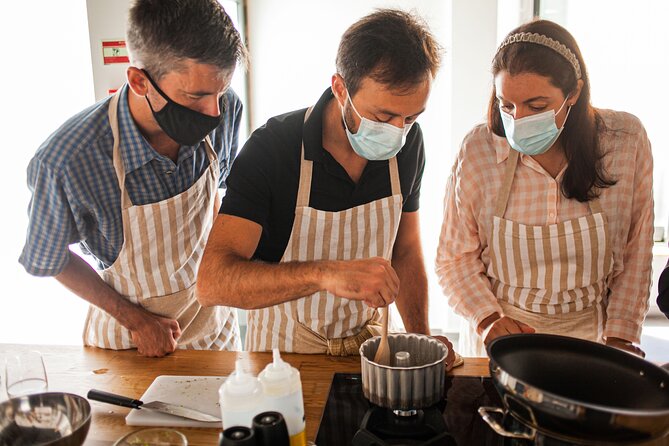
The communal format shapes the whole experience. You cook alongside couples, families, solo visitors, and small groups of friends. One solo participant found the setup welcoming because it encouraged conversation instead of leaving anyone on the sidelines.
That makes this a good choice if you want to meet people while learning about Lisbon through food. It also works well for families. Children aged 10 and 12 took part successfully, and the class is described as child-friendly. Younger children may need more help with kitchen tasks, but the provided information supports the experience for school-age children and older.
The meal is served family style, so everyone shares the results. That has practical value: you taste more dishes than you might cook alone, and you see how a Portuguese meal works as a group occasion. It also means you should not expect an individual plated tasting menu or a personal station for every recipe.
The class has a generous, informal mood. Wine, beer, snacks, and conversation continue as the food is prepared. Some sessions include small personal touches, such as singing happy birthday. Those details are not guaranteed, but they show the kind of friendly atmosphere the format can create.
Timing, location, and getting there
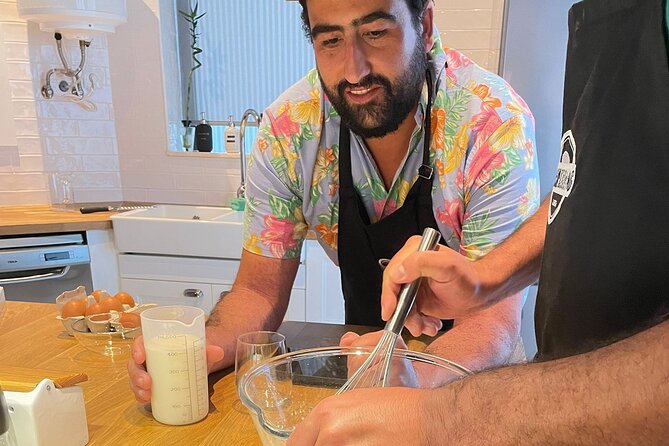
You can choose a morning or evening class. An 11 a.m. session functions as lunch and gives you the rest of the day afterward. An evening class can be a pleasant alternative to a standard restaurant dinner, since you spend the meal learning how it came together.
The stated meeting point is R. Aliança Operária 54, 1300-049 Lisboa, and the activity ends there. It is near public transportation, but one person found it easier to take a taxi to the venue and a bus back toward central Lisbon. Another important practical point: two locations have been used, and at least one booking showed the wrong address for the intended session. Check the confirmed address with Homecooking Lisbon before leaving your hotel.
The class is not presented as being in the middle of Lisbon’s main sightseeing zone. Allow extra time for the journey, particularly for a morning start or if you are traveling with children. Arriving late may not ruin the experience, since an instructor was kind to a late-arriving participant, but you should still aim to be on time so you do not miss the opening explanations.
Is $102.84 a fair price?
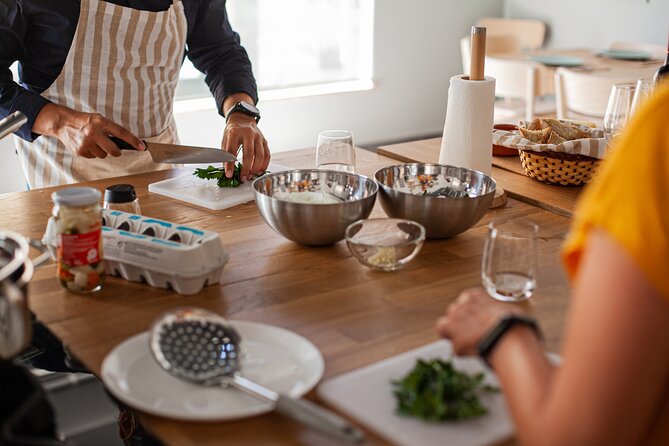
At $102.84 per person, this is not a cheap lunch. It is fair value if you would otherwise pay for a good meal, drinks, and a separate food activity. The price includes roughly three hours of instruction, the ingredients, the four-course meal, finger foods, Portuguese wine and beer, and nonalcoholic drinks.
The real value depends on what you want. If you are looking for the lowest-cost way to eat in Lisbon, restaurants and neighborhood cafés will cost less. If you want a private, technical cooking lesson where you personally prepare every plate, this is not the right format.
I think the price makes more sense for people who value a meal plus cultural context. You are paying for the food, the instruction, the kitchen space, the social setting, and the chance to ask questions. The high satisfaction rating of 4.9 from 287 reviews, with 97 percent recommending the experience, supports the idea that most people find the package worthwhile, though it does not remove the family-style limitation.
Who should book this experience?
I would recommend it to first-time visitors who want a practical introduction to Portuguese food. It is also a strong choice for solo visitors, couples, families with older children, and anyone who enjoys cooking but does not want a demanding culinary course.
You will probably get the most from it if you are happy to share tasks, talk with other people, and taste dishes you may not recognize. The class does not require advanced cooking ability, and the instructors are used to guiding beginners.
I would hesitate only if you need a quiet room, a private class, or a fixed menu. People with strict dietary needs should also confirm suitability before booking, since the supplied details do not specify dietary substitutions. The same applies to anyone set on eating a particular dish, because seasonal menus change.
Booking well ahead is sensible. The class is booked an average of 40 days in advance, and the maximum is 10 participants. Free cancellation is available up to 24 hours before the start time. Cancellations or changes inside that window are not refunded or accepted, and a session canceled for poor weather or too few participants is offered another date or a refund.
Should you book the Lisbon cooking class?
Book it if you want to eat Portuguese food and understand it at the same time. The strongest parts are the small group, the friendly instructors, the hands-on tasks, the included drinks, and the chance to make pastel de nata along with savory dishes.
Go in expecting a shared kitchen rather than a private cooking studio. You may not personally cook every recipe, the room can become noisy, and the menu depends on the season. For most people, those are reasonable tradeoffs for a relaxed three-hour meal that feels social, useful, and closely tied to Portuguese home cooking.
FAQ
How long does the Portuguese cooking class last?
The class lasts approximately three hours.
Where does the cooking class start and finish?
It starts at R. Aliança Operária 54, 1300-049 Lisboa, Portugal, and ends back at the meeting point.
What food will I prepare?
The menu changes seasonally. Possible dishes include caldo-verde, pica-pau, clams Bulhão Pato style, bacalhau à Brás, cod fritters, pork with clams, pork ribs with migas, pastel de nata, arroz doce, and orange roll.
Is pastel de nata included?
Yes. You prepare and bake pastel de nata using pre-prepared puff pastry.
Are drinks included?
Yes. Portuguese wine and beer are included, along with other nonalcoholic drinks, finger foods, and snacks. Participants under 18 receive water, juice, or tea instead of alcohol.
How many people can join the class?
The activity has a maximum of 10 participants.
Can I cancel for a full refund?
Yes, if you cancel at least 24 hours before the experience starts. Cancellations or changes made less than 24 hours before the start time are not refunded or accepted.
Just added around Portugal
- Private Lisbon Market Tour & Portuguese Cooking Class with Paula★ 5.0 · 89 reviews
- Lisbon Cooking Class with Market Experience★ 5.0 · 13 reviews
- Market Tour, Cooking Class And Lunch At Mercado de Arroios★ 5.0 · 23 reviews
- Lisbon Market and Food Tour with Cooking Class and Lunch★ 5.0 · 117 reviews
- Porto Hands On Cooking Class-3 course-wine included-trained chef★ 5.0 · 34 reviews
- Portuguese Cooking Class in Porto with Portuguese Wine★ 5.0 · 110 reviews
- Porto Local Market Visit & Cooking Class / Showcooking★ 5.0 · 206 reviews
- Pasteis de Nata Baking Class from Lisbon★ 5.0 · 248 reviews
Cooking Classes, compared.
Half-Day Thai Cooking Class at Organic Farm in Chiang Mai
Read our review →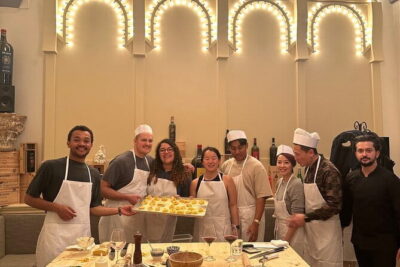
Florence: Pasta Cooking Class with Unlimited Wine
Read our review →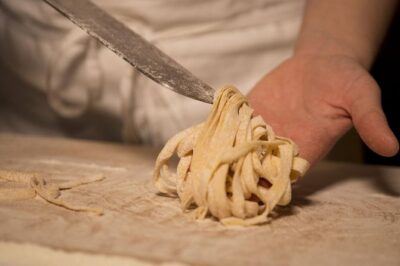
3 in 1 Cooking Class near Navona: Fettuccine, Ravioli & Tiramisu
Read our review →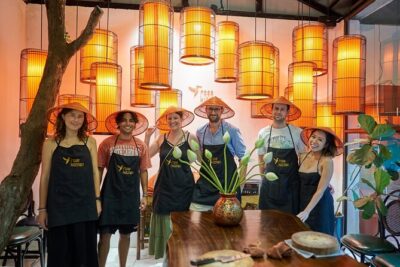
Hanoi Cooking Class: Culture, Local Market & Meaning CSR Impact
Read our review →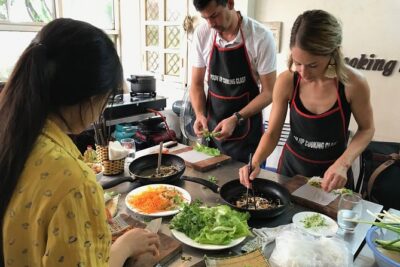
5 Traditional Dishes Hanoi Cooking Class with Market Trip
Read our review →
Cooking Class and Lunch at a Tuscan Farmhouse with Local Market Tour from Florence
Read our review →
Chiang Mai: Cooking Class, Market & Thai Herbs Garden Tour
Read our review →Browse the lists this tour appears in