
Review · MARRAKECH
Marrakech Cooking Class
Marrakech cooking starts before the stove. You first visit Souk Ishaak to choose the ingredients, then carry that market experience into a traditional riad kitchen. The class gives you a useful look at Moroccan food, from the spice shelves to the finished dinner.
I like the small maximum of 12 people and the fact that ingredients, tools, tea, coffee, and dinner are included. I also like the market stop, since a guide can handle the language gap while you focus on the produce and spices. The main caution is consistency: one reported session had a late pickup and a cramped kitchen where the chef did most of the cooking.
Key points at a glance
- Souk Ishaak comes first: Shop for the ingredients before cooking, rather than arriving at a kitchen with everything already prepared.
- A traditional riad provides the setting: Cooking takes place at Riad Star or a similar Marrakech riad.
- The menu may be chosen on arrival: One account describes selecting a three-course menu from the riad’s cookery book over mint tea and cookies.
- The group is capped at 12 people: That is small enough for a personal class, though hands-on time can still depend on the kitchen setup.
- Dinner is part of the price: You eat the food prepared during the class, with coffee or tea included.
- Plan your own way there: Private transportation is not included, and the activity begins and ends at World Storytelling Cafe.
From Souk Ishaak to the riad kitchen
The best idea here is the order of the experience. You do not simply sit down and copy a chef. You begin at the historical market, where the ingredients for the meal are selected, then move to the kitchen and use them.
That sequence helps you understand Moroccan cooking as a daily food tradition rather than a list of recipes. Spices and herbs make more sense when you see them in the market, smell them, and then use them at the stove. You also get a feel for the way shopping, cooking, and eating connect in Marrakech.
The meeting point is World Storytelling Cafe, a vegan cafe at 23 Route Ahel-Fes. The start time is 2 pm, so you should allow enough time to reach the cafe without rushing. The class ends back at the same meeting point, which makes the return simple, but you are responsible for getting to the start.
The walk or transfer between the meeting point, Souk Ishaak, and the riad is not described in detail. That means the exact pace may depend on the day, the market, and the kitchen schedule. Ask for the meeting instructions when you book, especially if you are staying outside central Marrakech.
More Hands-On Workshops in Marrakech:
- Marrakech: Moroccan Cooking Class with Pickup
★ 4.6 · 1,862 reviews - Marrakech: Traditional Moroccan Cooking Class & Market Visit
★ 4.8 · 1,861 reviews - Marrakesh: Moroccan Dishes Cooking Class with a Local Chef
★ 5.0 · 1,615 reviews
What the market visit adds
A market visit can be the difference between a basic cooking demonstration and a useful food experience. Here, the guide helps you shop for the ingredients, which matters if you do not speak Arabic or French. You can ask questions through the guide instead of guessing what you are buying.
This is also the point where you see how broad the ingredient list can be. Moroccan cooking depends on the balance of herbs, spices, vegetables, and other fresh products. The market gives those ingredients a setting and a purpose before you use them.
Do not expect a long shopping expedition. The stated duration is about three hours for the complete activity, including the market and cooking. The visit is therefore likely to be focused on the meal rather than a broad tour of every part of the souk.
The market can be busy and crowded, and the experience may involve walking on uneven streets. That is normal for a traditional market visit, but it is worth keeping in mind if you have mobility concerns. The activity is near public transportation, though private transport is not included.
Choosing the menu over mint tea
One account of the class describes beginning with mint tea and cookies while choosing a three-course menu from the riad’s cookery book. That detail gives you a useful sense of the rhythm: you get a short welcome, look over the possible dishes, and then move into the practical work.
The menu choice can make the class more personal. If you are especially interested in Moroccan soup, salads, tagines, couscous, or pastries, ask what options are available before the cooking begins. The exact menu is not fixed in the information provided, so you should not book this expecting one guaranteed dish.
Mint tea is more than a drink here. It gives you a gentle start and puts the cooking in a Moroccan setting without taking up much of the limited three-hour schedule. Cookies are also included in the described welcome, though the formal inclusions list specifically confirms coffee or tea and dinner.
The class is suitable for first-time visitors because the guide handles the sequence for you. You do not need to know the market, identify every spice, or bring kitchen supplies. The tradeoff is that you may have less control over the menu than you would in a private lesson.
Cooking in Riad Star or a similar riad
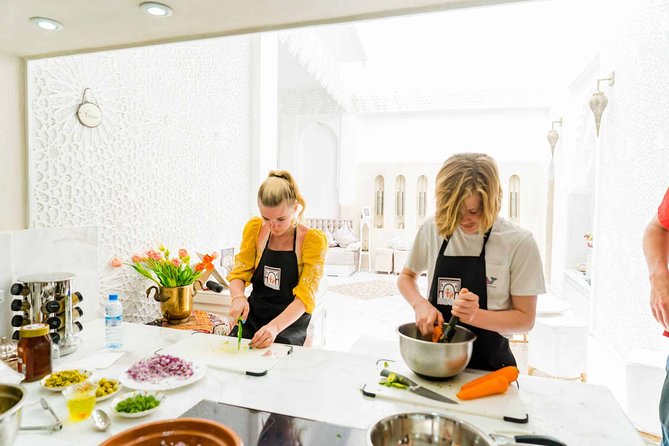
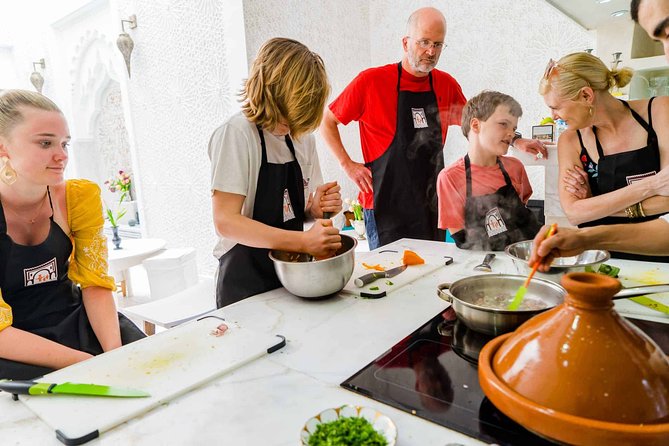
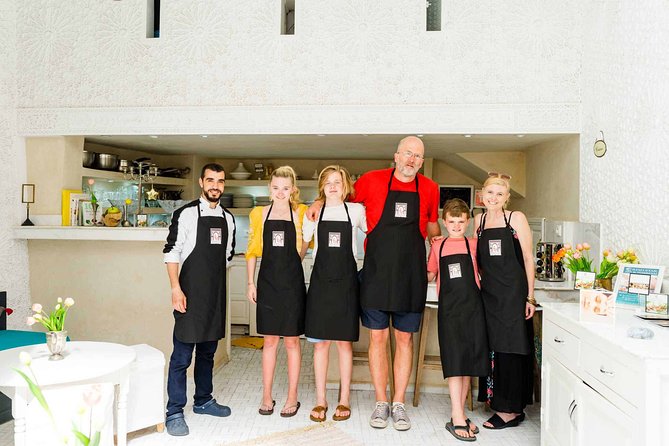
After the market, you go to Riad Star or another beautiful traditional riad operated through Marrakech Riads. The riad setting is an important part of the experience. You are not simply cooking in a plain classroom. The building gives the meal a stronger connection to local architecture and home-style hospitality.
The kitchen is equipped with the needed tools and supplies, so you only need to arrive ready to work. The experience description also refers to advanced cooking equipment, which may be useful if you want to learn methods that are hard to reproduce with limited equipment at home.
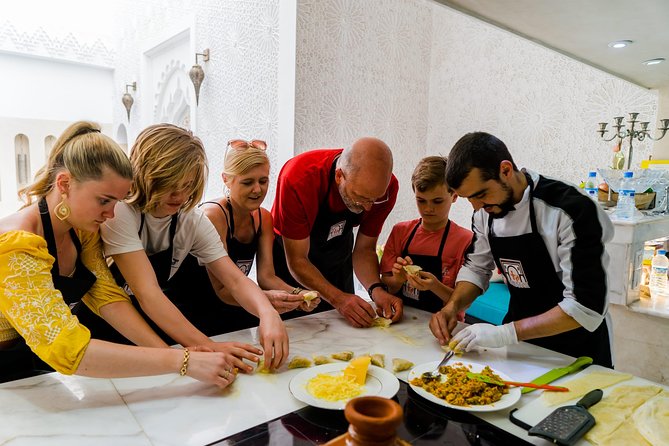
Still, you should keep your expectations practical. A traditional riad kitchen may not be designed like a large cooking school. One account describes a small, crowded kitchen where the chef did most of the cooking, with limited hands-on work. That is the clearest weakness to consider before paying the price.
The class seems best when the group is actively involved in preparing food. With a maximum of 12 people, that can work well if the kitchen has enough room and the chef divides the tasks clearly. If all 12 people attend, you may spend part of the lesson watching rather than chopping, stirring, or seasoning.
When you arrive, ask how the cooking will be shared among the group. It is reasonable to ask for a task and to confirm how much of the meal you will prepare yourself. This small step can help you get more from the class.
A few more cooking classes around Marrakech worth a look
- Moroccan Cooking Class & Marrakech Market Visit with Chef Khmisa
★ 5.0 · 1,504 reviews - Half-Day Cooking Class with Local Chef Laila in Marrakech
★ 5.0 · 952 reviews - Marrakech: Moroccan Cooking Class with a Local Family
★ 4.9 · 668 reviews - Marrakech: Moroccan Cuisine Cooking Class in Local Home
★ 4.8 · 508 reviews
The role of the chef and guide
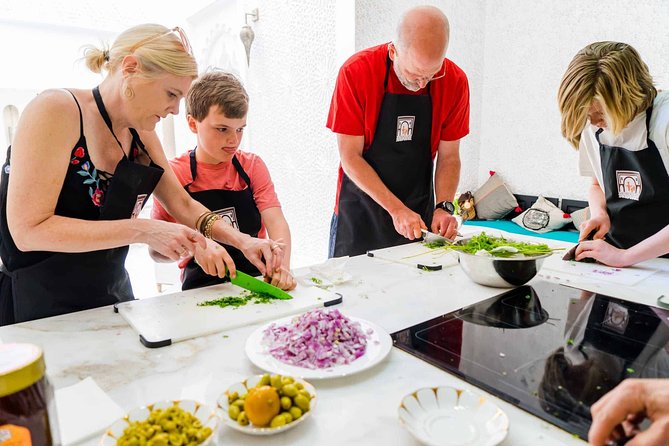
The guide matters here because the experience has two jobs: leading a market visit and teaching a cooking class. Oumaima is named in connection with a session that included the menu selection, mint tea, cookies, and a three-course meal. Her role combined food instruction with guiding the group through the experience.
Mohamed is also associated with a food tour connected to the activity. The information does not promise that either guide will lead every departure, so treat these names as examples rather than a guarantee. If you have a strong preference, ask the provider before booking.
A good guide can make the market much easier. You can learn what you are buying, understand how ingredients fit the dishes, and avoid losing time over language problems. The guide also sets the tone in the kitchen, where clear instructions matter more than fancy equipment.
The experience is not designed as a formal chef certification course. You will learn basic Moroccan cooking skills and use ingredients and tools that may be difficult to find at home. Think of it as a practical introduction with a meal at the end, not a full professional training session.
Dinner gives the class a clear finish
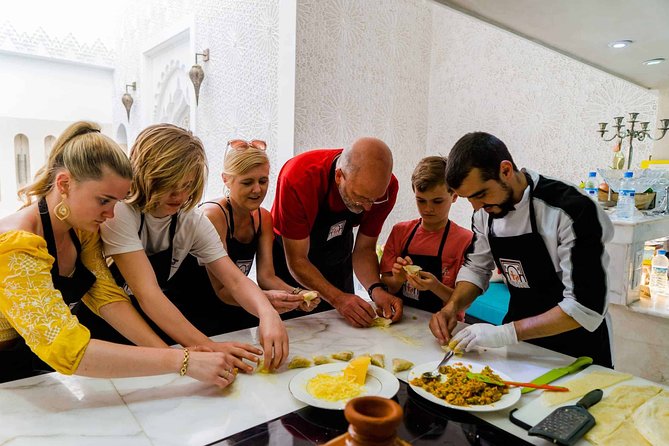
The payoff is dinner. After the cooking is complete, you eat the food you helped prepare. Dinner is included in the price, along with coffee or tea, ingredients, kitchen supplies, tools, chef assistance, and the market visit.
That makes the class more satisfying than a demonstration where you watch a dish disappear into the kitchen. It also lets you taste the balance of the finished meal and decide which flavors you would like to recreate later.
Alcohol is not included. You should not assume that wine, beer, or other drinks will be available as part of the package. Coffee or tea is the confirmed beverage inclusion.
The food itself is not specified in enough detail to promise a certain menu. If you have allergies, dietary needs, or strong dislikes, contact the provider before booking. The experience begins at a vegan cafe, but that does not confirm that the cooking class itself is vegan or vegetarian.
Is $87.86 good value?
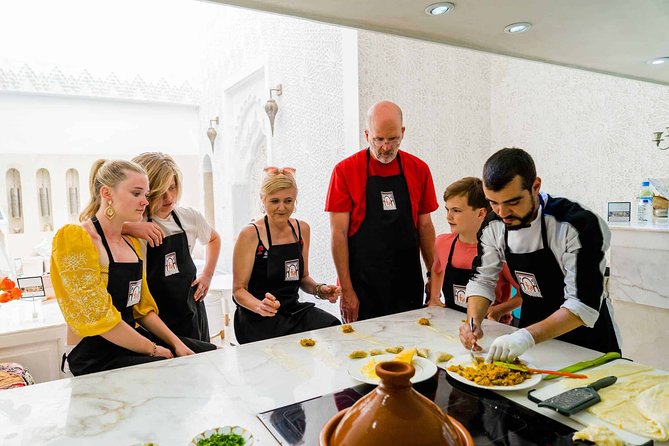
At $87.86 per person, this is not the cheapest way to eat in Marrakech. It can still be good value if you want several parts in one booking: a guided market visit, chef assistance, cooking equipment, ingredients, a meal, and a traditional riad setting.
You are paying for access as much as for dinner. At home, you may be able to buy a Moroccan meal for far less, but you would not get the market guidance, the organized instruction, or the chance to use the ingredients in a riad kitchen.
The value drops if the session becomes mostly a demonstration. That is why the kitchen setup matters. A small, well-run group can make the price feel fair. A crowded kitchen with limited participation makes the same price harder to justify.
The maximum group size of 12 is encouraging, but it does not guarantee equal hands-on time. I would book this for the setting, the market, and the chance to learn basic techniques, while treating the dinner as part of the package rather than the sole reason to go.
Timing, meeting point, and practical planning
The class starts at 2 pm and lasts about three hours. Because the market visit comes before the cooking, you should arrive ready for an afternoon that includes walking, shopping, food preparation, and dinner.
The activity begins and ends at World Storytelling Cafe, 23 Route Ahel-Fes, Marrakech 40000. There is no private transportation included. The location is near public transportation, so check your route before the day of the class and leave extra time for Marrakech traffic and finding the cafe.
A mobile ticket is provided, and confirmation is received when you book. Service animals are allowed. The activity requires a minimum number of people, so a departure could be changed or canceled if that number is not reached.
You can cancel for a full refund up to 24 hours before the start time. Changes or cancellations inside that 24-hour window are not accepted for a refund. The cut-off follows local Marrakech time.
Who will enjoy this class most?
I would recommend it to food lovers who want more than a restaurant meal. It also suits first-time visitors who want a guided introduction to Moroccan ingredients without having to organize a market visit and cooking lesson separately.
The experience works well for people who enjoy learning through food, especially if you like asking questions and trying unfamiliar ingredients. The small group limit gives you a reasonable chance to interact with the chef, though you should still confirm how hands-on the class will be.
It may be less suitable if you want a polished cooking school with spacious counters and a guaranteed personal workstation. It is also not the right pick if your main goal is a fixed menu or a long market tour. The ingredients and dishes are not specified in enough detail for that kind of planning.
Should you book the Marrakech cooking class?
Book it if you want a compact food experience that combines Souk Ishaak, a traditional riad, and dinner in one afternoon. The market stop and guide assistance are the strongest reasons to choose it, especially if language makes independent shopping difficult.
Before booking, ask two practical questions: which riad will host your date, and how much hands-on cooking will each person receive? Those answers will tell you whether the $87.86 price fits your expectations.
I would choose this class for its structure and local setting, while accepting that the kitchen experience may vary. If you want a relaxed introduction to Moroccan food and do not mind a little uncertainty about the exact menu or workspace, it is a sensible choice.
FAQ
Where does the Marrakech cooking class begin?
It begins at World Storytelling Cafe, a vegan cafe at 23 Route Ahel-Fes, Marrakech 40000, Morocco.
What time does the activity start?
The scheduled start time is 2 pm.
How long does the cooking class last?
The complete activity lasts approximately three hours.
What market does the class visit?
The class includes a visit to the historical market called Souk Ishaak, where you shop for the ingredients used during cooking.
Where does the cooking take place?
Cooking takes place at Riad Star or a similar traditional riad through Marrakech Riads.
Is dinner included?
Yes. Dinner, coffee or tea, ingredients, kitchen supplies, tools, chef assistance, and the market visit are included.
Is private transportation included?
No. Private transportation is not included. The activity ends back at the original meeting point, and the location is near public transportation.
Just added around Marrakech
- Vegetarian and vegan cooking class★ 4.5 · 35 reviews
- Moroccan Cooking Class with Market Visit and Meal★ 4.5 · 18 reviews
- Moroccan cooking class with maket in the Medina of Marrakech★ 5.0 · 173 reviews
- Morocco’s Top Cooking Classes For Authentic berber Cuisine in the Atlas Mountain★ 3.5 · 8 reviews
- Cooking class with transfer★ 5.0 · 22 reviews
- Shared 4 Hours Cooking Class in Marrakesh★ 5.0 · 49 reviews
- Cooking course with genuine Berber Family at Atlas Mt★ 5.0 · 10 reviews
- Moroccan Cooking Class with chef Mama Nouzha★ 5.0 · 4 reviews
Cooking Classes, compared.
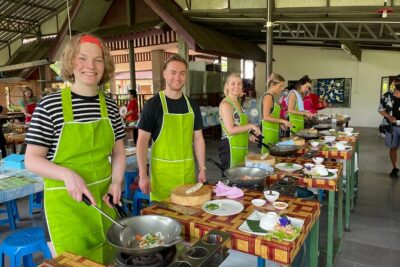
Half-Day Thai Cooking Class at Organic Farm in Chiang Mai
Read our review →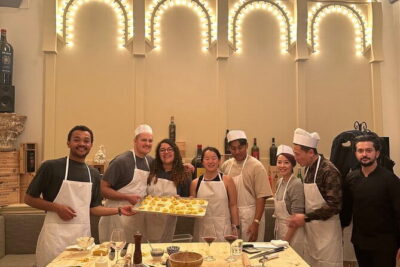
Florence: Pasta Cooking Class with Unlimited Wine
Read our review →
3 in 1 Cooking Class near Navona: Fettuccine, Ravioli & Tiramisu
Read our review →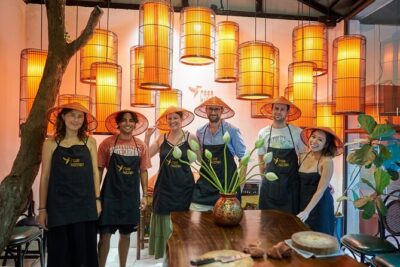
Hanoi Cooking Class: Culture, Local Market & Meaning CSR Impact
Read our review →
5 Traditional Dishes Hanoi Cooking Class with Market Trip
Read our review →
Cooking Class and Lunch at a Tuscan Farmhouse with Local Market Tour from Florence
Read our review →
Chiang Mai: Cooking Class, Market & Thai Herbs Garden Tour
Read our review →Browse the lists this tour appears in