
Review · COOKING CLASSES
Traditional Bosnian Cooking Class in Mostar with Lunch and Drinks
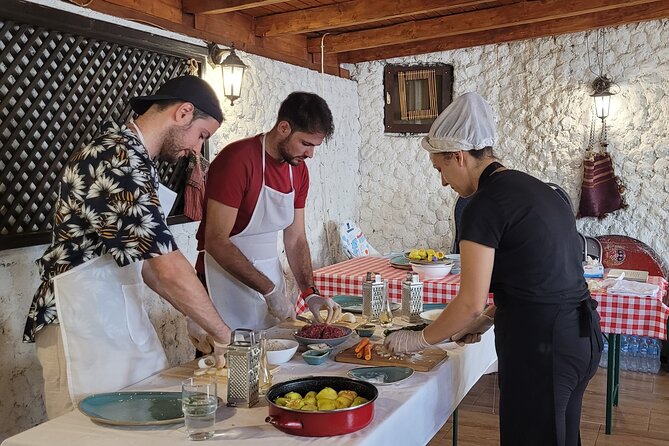
Mostar’s old town is easy to admire in a few hours. This class gives you a better reason to slow down. You’ll work with traditional Bosnian recipes, learn techniques such as rolling pastry with a long, thin pin, and then eat the food you helped prepare. Amina is especially good at guiding each step without taking over.
I like two things here: you get a real hands-on role, and the meal includes local drinks rather than ending when the cooking is done. The main thing to check is the start time. The advertised schedule includes morning or afternoon departures, while the meeting details list 5:00 pm, so confirm your exact time before you go.
Key points to know before booking
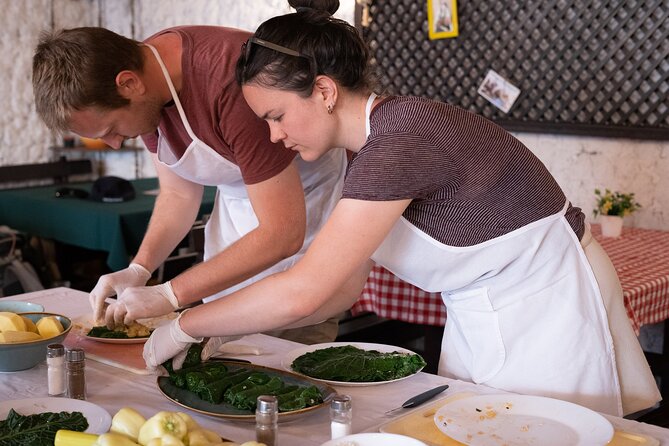
- You prepare several Bosnian specialties: Depending on the session, dishes can include dolma, japrak, stuffed vegetables, burek, pastry spirals, and hurmasice.
- Amina leads the class when available: She is patient, thorough, and lets you knead, roll, stir, and season the food yourself.
- The meal is part of the experience: You sit down afterward for a three-course lunch or dinner with local wine or beer, plus a rakija welcome drink.
- You meet at Food House Mostar: The class begins and ends at Rade Bitange 12, in Mostar.
- It suits families and couples: The minimum age is 9, and one family found the class especially successful with children.
- Allow about three hours: You need enough time for introductions, cooking, eating, and conversation.
Why a cooking class works so well in Mostar
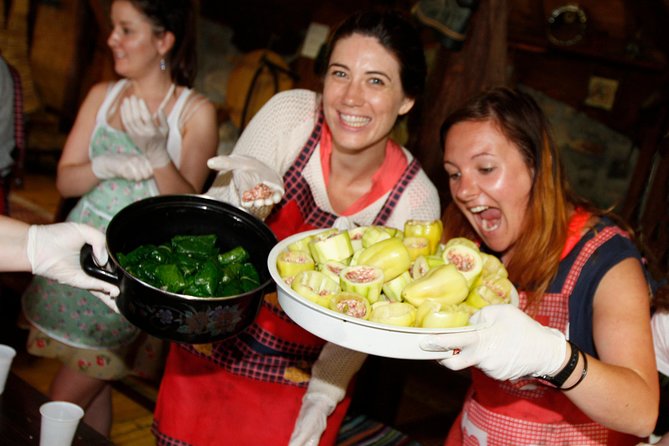
Mostar can tempt you into a quick visit: see the famous bridge, stroll the stone lanes, take a few photos, and move on. Food gives you a more lasting connection to the city. You learn how Bosnian home cooking works, then understand the meal in front of you because you helped make it.
The class takes place at Food House Mostar, at Rade Bitange 12. It is described as a commercial kitchen with the tools, ingredients, and spices ready for use. That matters because you do not need to bring equipment or spend time shopping for unfamiliar ingredients. You can focus on the techniques and the food.
The experience lasts about three hours. That is long enough to feel substantial, but short enough to fit into a compact Mostar stay. You can schedule it around sightseeing, though the stated 5:00 pm departure makes it particularly suitable for an evening meal. Some sessions are offered in the morning, so check the confirmed time carefully if you have a tight plan.
The group can reach up to 20 people. That is not the same as a private class, and the feel may depend on the number booked. A smaller group should give you more room at the work surface, while a full session may feel more social and lively. The experience requires at least two people per booking.
More Cooking Classes with Lunch in the world:
- New Orleans Demonstration Cooking Class with Meal
★ 5.0 · 3,000 reviews - New Orleans Hands-On Cooking Class with Meal
★ 5.0 · 1,183 reviews - Palermo: Pizza and Gelato Cooking Class with Dinner and Wine
★ 4.9 · 951 reviews
Meeting Amina and starting with Bosnian hospitality
The first step is an introduction. The welcome includes a small glass of rakija, a traditional fruit brandy often served as a sign of hospitality. The drinking age for the experience is 18, so younger participants can take part in the cooking but should not expect the alcoholic welcome drink.
Morning sessions may begin with coffee and a board of small bites. That detail is useful if you choose an early departure, since the class is not simply a formal lesson that starts with a recipe. There is time to settle in, meet the guide, and get comfortable with the kitchen.
Amina has received particular praise for her teaching style. She is patient, easy-going, and willing to let you try each part of the process. That is important in a cooking class. A demonstration followed by a plate of food is pleasant, but it does not teach you much. Here, you may be rolling pastry, filling vegetables, stirring mixtures, and adjusting seasoning yourself.
The guide may be multilingual upon request, but English is the standard language stated for the experience. If you need another language, ask when booking rather than assuming it will be available.
Making burek and working with traditional pastry
Burek is one of the most memorable parts of the class. It is a savory pastry made with thin dough and a filling, then shaped and cooked. The exact filling and format can vary by session, but the important lesson is the handling of the dough.
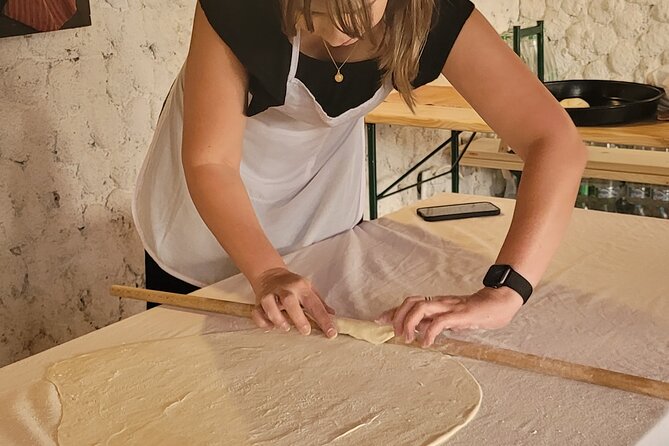
You may use a long, thin Bosnian rolling pin to stretch the pastry. This is a simple tool, but it takes practice. One class participant described the pastry rolling as a challenge, which is a useful warning for anyone expecting perfect results on the first attempt. The point is not to produce bakery-standard pastry immediately. The point is to feel how the dough behaves and understand the method.
Amina’s teaching approach is well suited to beginners. She can demonstrate the technique, then let you try it. You should expect some uneven edges and perhaps a few imperfect shapes. That is part of the fun, and the finished food is still yours to eat.
Burek also offers a practical taste of Bosnian food culture. It is familiar enough to enjoy quickly, but the preparation shows why homemade pastry takes care and time. You leave with a better sense of the work behind a dish that can look simple on the plate.
Stuffed vegetables, japrak, and dolma
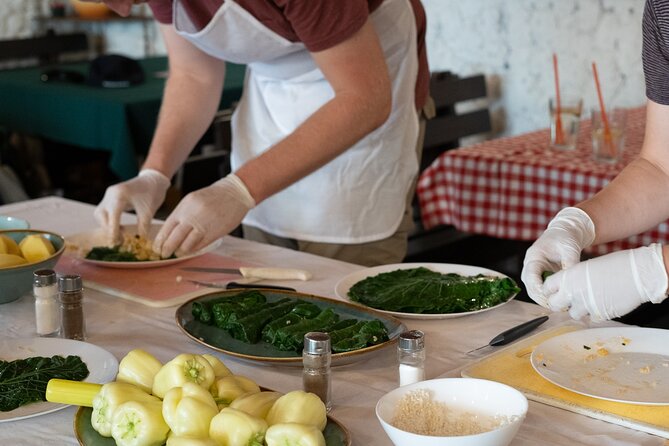
The class menu centers on stuffed dishes. The listed menu includes japrak and dolma, while other sessions have featured stuffed peppers and kale leaves. Recipes can change, so do not book expecting one fixed set of ingredients every time.
Japrak generally refers to stuffed leaves, while dolma is a broader family of stuffed vegetables or leaves. In this setting, you learn how the filling is prepared, how the vegetables or leaves are handled, and how the pieces are filled and arranged for cooking.
This is where the class connects food with home kitchens. Stuffed dishes require patience and care. You need to portion the filling, fold or roll the wrapper, and avoid packing everything too tightly. The work is repetitive in a satisfying way, especially when everyone at the table has a different idea of the perfect shape.
Children can take part from age 9, and this section may be especially appealing to families. A parent and child can share the rolling and filling jobs, though younger cooks may need help with hot surfaces and sharp tools. The supplied details do not describe specific safety arrangements, so it is sensible for adults to stay involved.
More Lunch Experiences in the world:
- Cooking Class and Lunch at a Tuscan Farmhouse with Local Market Tour from Florence
★ 5.0 · 4,831 reviews - Paris Cooking Class and Lunch with Wine plus Market Visit Option
★ 5.0 · 1,024 reviews - Austrian Apple Strudel Cooking Class including Lunch in Salzburg
★ 5.0 · 929 reviews - Phuket: Elephant Sanctuary Tour, Cooking Class & Lunch
★ 4.9 · 856 reviews
Dessert with hurmasice and other sweet finishes
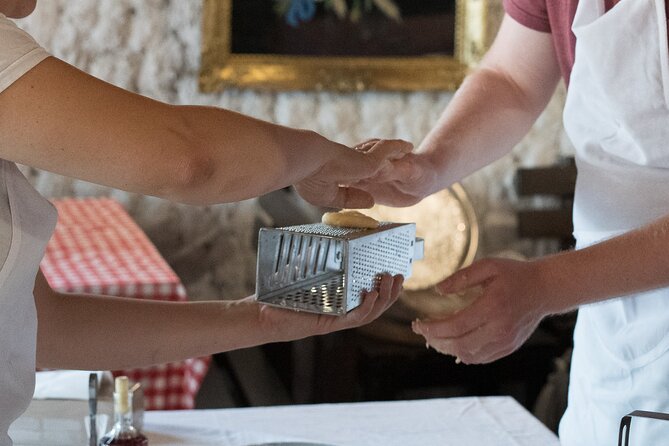
Dessert is listed as hurmasice, a traditional Bosnian sweet. Other sessions have included sweet lemon-vanilla cookies and butternut squash pie, so the final dish may vary with the day.
Hurmasice are a fitting finish for this kind of class because they show another side of Bosnian cooking. After working with savory fillings and pastry, you get to see how the meal shifts toward something sweet and fragrant. The class is not only about one famous dish. It gives you a sample of the range of a Bosnian home table.
If you enjoy cooking at home, pay attention to the small details here. The useful part may be the order of the steps, the way the dough is handled, or how the guide explains texture. You may not recreate every dish perfectly, but you can take home ideas that are easier to remember because you cooked them yourself.
Sitting down for the three-course meal
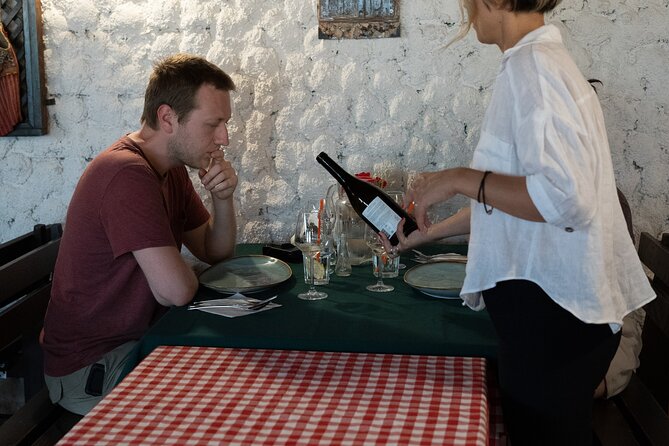
After the cooking, you eat what you prepared. The meal is described as a three-course lunch or dinner, with a Bosnian mezze platter as the starter, stuffed dishes such as japrak and dolma for the main course, and hurmasice for dessert.
The mezze course gives you a relaxed beginning. A platter format also works well for a group because people can sample several items rather than receiving one fixed appetizer. It is a good moment to compare your own cooking with the dishes prepared by the kitchen.
The main course is the heart of the experience. You are not merely tasting restaurant food. You are eating food connected to the techniques you just practiced. That makes the meal more satisfying and gives you a clearer sense of how the recipes fit together.
Local wine or beer is included with the meal. Additional beverages are not included, so do not assume every drink at the venue is covered. The class also includes the rakija welcome drink. Nonalcoholic drink options are not specified, so anyone with dietary or drink preferences should ask ahead.
Some participants have been able to take leftovers with them. This is a welcome bonus, but it should not be treated as guaranteed. If you have a fridge at your accommodation, leftovers can turn one dinner into another small taste of Mostar the next day.
The conversation beyond the recipes
The class also works as a cultural meeting point. Food opens the door to questions about family customs, local ingredients, and the way people eat at home. Amina has been open to conversations about Bosnia’s war and its effect on the country, sharing personal stories when asked.
That part will not suit everyone. If you want only a light cooking lesson, you can keep the conversation focused on food. If you want more context about Bosnia and Mostar, this is a setting where thoughtful questions may lead to a more personal discussion than you would get on a standard sightseeing walk.
The tone appears informal and friendly. Coffee, snacks, local drinks, and time around the table all help the class feel less like a timed demonstration. You should still remember that the experience lasts about three hours, so the pace must keep moving from introduction to preparation, cooking, and eating.
What the $90.11 price includes
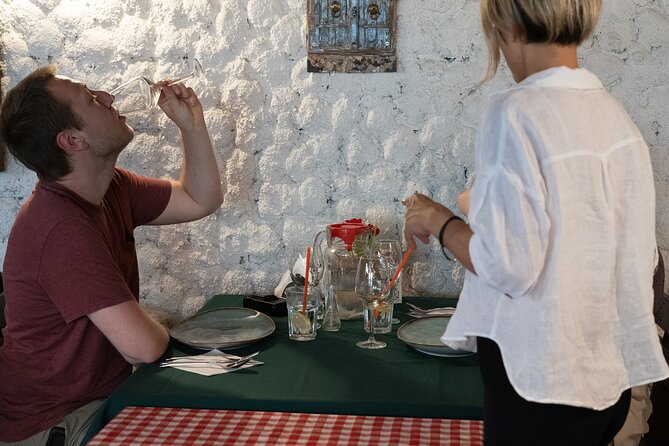
At $90.11 per person, this is not the cheapest meal in Mostar. You are paying for more than dinner, though. The price includes the cooking lesson, an English-speaking guide, the commercial kitchen, ingredients and equipment, the rakija welcome drink, and a three-course meal with local wine or beer.
I see the value most clearly if you want an activity rather than another restaurant meal. You receive instruction, food, drinks, and a cultural exchange in one booking. The class can also help fill a rainy afternoon or give structure to an evening when you have already seen the main sights.
The value is weaker if you dislike group activities or have little interest in cooking. A three-hour class takes a serious portion of your day, and you may prefer to spend that time walking Mostar’s streets or eating at your own pace. The maximum group size of 20 is another consideration. Ask about the expected group size if a small class matters to you.
The ability to eat the food you prepare improves the calculation. You are not paying for a short lesson followed by an ordinary meal elsewhere. The meal is the payoff for the work, and the included drinks help round it out.
Timing, booking, and practical points
The meeting point is Food House Mostar, Rade Bitange 12, Mostar 88104. The activity ends at the same location, and hotel pickup or drop-off is not included. Plan your own route to the venue and leave enough time to find it.
The details list a 5:00 pm start, while the experience is also offered with morning or afternoon departures. Confirm the exact time shown on your booking. A previous scheduling error resulted in someone receiving the wrong time and missing part of the class, so this is worth checking rather than leaving to chance.
Confirmation is sent within 48 hours of booking, subject to availability. The class requires a minimum of two people per booking, and it may be canceled if the minimum number is not reached. In that situation, you are offered another date or experience, or a full refund.
You can cancel for a full refund up to 24 hours before the start time. Changes made less than 24 hours before the experience are not accepted, and the local time in Mostar controls the cutoff. Tell the provider about dietary requirements when you book, not after you arrive.
The minimum age is 9. The minimum drinking age is 18. The activity is offered in English, with a multilingual guide possibly available by request.
Who should book this Mostar cooking class?
I would choose this for a couple looking for a shared evening activity, a family with children old enough to take part, or anyone who wants more than a quick introduction to Bosnian food. It is also a good choice for cooks who enjoy learning traditional techniques rather than simply watching a chef work.
You will get the most from it if you arrive hungry, curious, and ready to use your hands. Come prepared to roll pastry imperfectly, ask questions, and sit at the table for a full meal afterward.
I would hesitate if you have strict dietary needs that cannot be adjusted, dislike alcoholic drinks and cannot confirm suitable alternatives, or have a tightly packed schedule. I would also double-check the group size and start time if those details matter to you.
Should you book it?
Yes, if you want a friendly, food-focused way to understand Mostar beyond its famous bridge. The strongest reasons are the hands-on teaching, Amina’s patient approach, the chance to make several traditional dishes, and the meal with local drinks afterward.
Book it with two cautions: confirm the departure time, and share dietary requirements in advance. At $90.11, it makes sense as a three-hour cooking lesson plus dinner, not as a cheap meal. For an authentic activity that combines Bosnian food, conversation, and practical skills, it is a strong choice.
FAQ
Where does the cooking class begin and end?
The class begins at Food House Mostar, Rade Bitange 12, Mostar 88104, Bosnia and Herzegovina. It ends back at the same meeting point.
How long does the experience last?
The cooking class lasts approximately three hours, including the introduction, cooking lesson, meal, drinks, and farewell.
What food will I prepare?
The menu includes Bosnian mezze, japrak, dolma, and hurmasice. Depending on the session, you may also prepare burek, stuffed peppers, kale leaves, pastry spirals, or another traditional Bosnian dish.
Are drinks included?
A rakija welcome drink and local wine or beer with the three-course meal are included. Additional beverages are not included.
What is the minimum age?
The minimum age for the activity is 9. The minimum drinking age is 18.
Can I cancel the booking?
You can cancel up to 24 hours before the experience start time for a full refund. Cancellations or changes made less than 24 hours in advance are not accepted.
More Hands-On Workshops in the world
- Half-Day Thai Cooking Class at Organic Farm in Chiang Mai
★ 5.0 · 19,087 reviews - Florence: Pasta Cooking Class with Unlimited Wine
★ 4.9 · 10,285 reviews - 3 in 1 Cooking Class near Navona: Fettuccine, Ravioli & Tiramisu
★ 5.0 · 7,376 reviews - Florence: Pasta & Tiramisu Cooking Class with Unlimited Wine
★ 4.9 · 6,708 reviews
Just added around the world
- Private Cooking Demonstration of Indian Fusion Cuisine in San Diego★ 5.0 · 3 reviews
- Private Samarkand Cooking Class with Market Tour & Transfers★ 5.0 · 14 reviews
- Plov Cooking Class at Local Uzbek House★ 5.0 · 5 reviews
- Cooking class in Samarkand with local life experience★ 5.0 · 19 reviews
- Sound of Music Tour with Edelweiss Cooking Class in Salzburg★ 5.0 · 15 reviews
- Cooking Class in the Village with Local Family in Samarkand★ 5.0 · 11 reviews
- Apple Strudel & Prezel Cooking Class incl. Dinner & Music★ 5.0 · 113 reviews
- Dinner Cooking Class – Prezels, Dumplings, Apple Strudel & Music★ 5.0 · 99 reviews
Cooking Classes with Lunch or Dinner, compared.
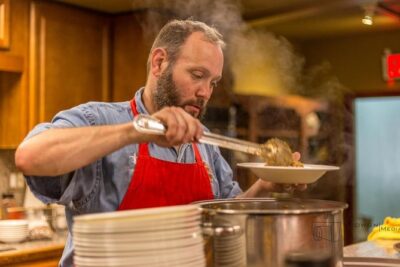
New Orleans Demonstration Cooking Class with Meal
Read our review →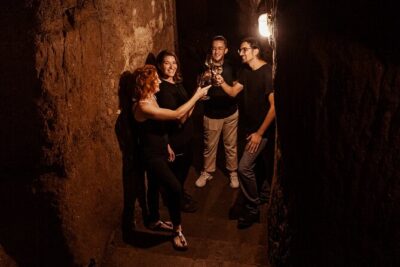
Pasta Making & Wine Tasting with Dinner in Frascati from Rome
Read our review →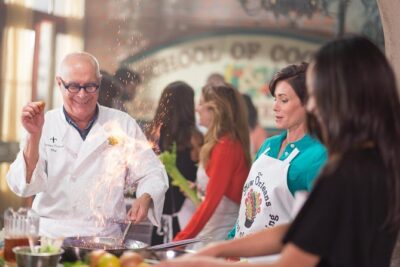
New Orleans Hands-On Cooking Class with Meal
Read our review →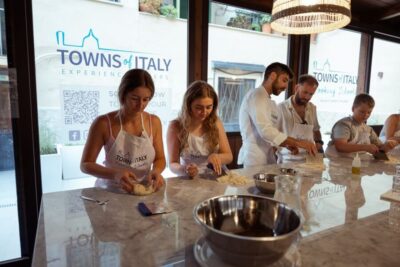
Palermo: Pizza and Gelato Cooking Class with Dinner and Wine
Read our review →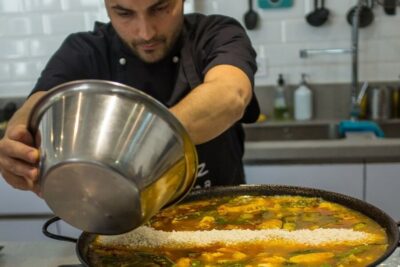
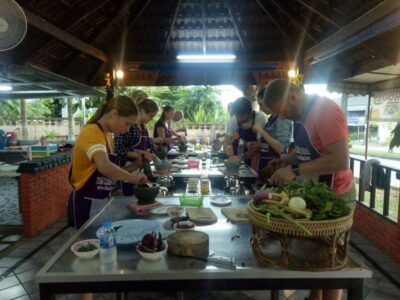
Krabi: Cooking Class at Thai Charm Cooking School with Meal
Read our review →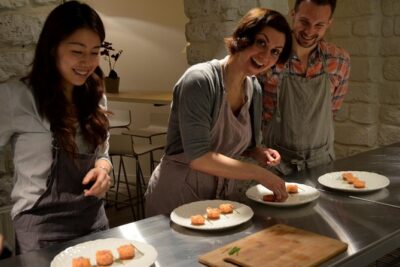
Paris Evening Cooking Class French Dinner and Market Visit Option
Read our review →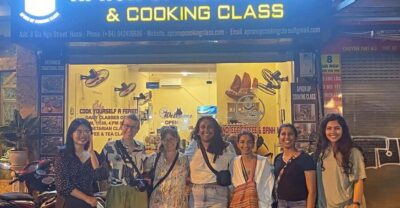
Hanoi: 5 Local Dishes Cooking Class with Meal & Market Visit
Read our review →Browse the lists this tour appears in