
Review · FARM & COUNTRYSIDE
Cooking Class in the Village with Local Family in Samarkand
The best part of this Samarkand experience is the shift from market stall to family kitchen. You begin with a hotel pickup and a stop at a local bazaar, then head into the countryside to cook Uzbek food in a private home. Plov, samsa, and family conversation give the day its character.
I like two things here. First, you shop for ingredients before cooking, so the meal has a clear connection to daily life. Second, the family setting feels more personal than a restaurant class. Hosts such as Goli, Gulrux, Navro’z, and Narboz have helped visitors learn recipes and talk about Uzbek customs. The one consideration is pace: the cooking can be slow, and you may do less hands-on work than you expect.
Key points to know before booking
- Market first, cooking second: Start at a local bazaar and see how ingredients are chosen before heading to the village.
- A private family visit: Only your group takes part, making conversation easier and the schedule more flexible.
- Uzbek staples on the menu: Dishes may include plov, shashlik, samsa, manti, and dolma, depending on the host and arrangements.
- More than a cooking class: The outing can include the Konigil paper factory, oil meal production, and a pottery workshop.
- Flexible timing: The experience lasts about five hours, with a start time arranged to suit your day.
- Good value for a private outing: At $65 per person, the price covers transport, market time, cooking, food, and cultural visits rather than a single short lesson.
From Samarkand hotel to neighborhood bazaar
Your day begins with pickup from your Samarkand hotel. The starting time is flexible, which helps if you are fitting this around an early train, a late arrival, or a morning visit to the city’s famous monuments. Confirm the exact pickup time when you book, since the published opening window runs from 9:00 AM to 10:00 PM.
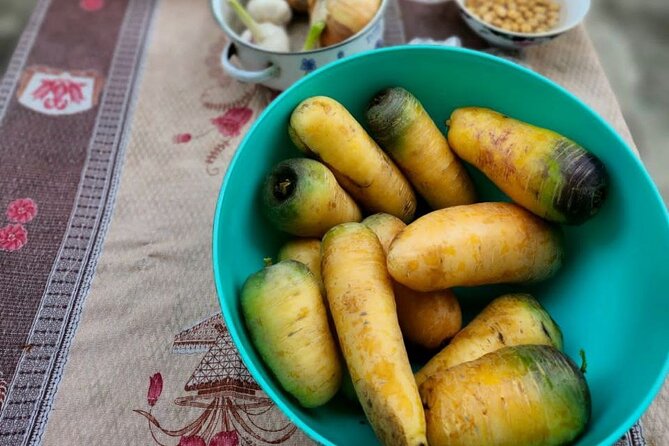
The first stop is a local bazaar. This is not just a quick grocery run. You get to watch the daily trade of produce and other food, speak with vendors through your guide, and see the ingredients that shape Uzbek cooking. The market gives you useful context before you enter the kitchen. Plov is not an abstract national dish when you have just seen the rice, carrots, onions, and other ingredients being selected.
The bazaar also gives the outing a natural rhythm. You are not dropped straight into a cooking demonstration with no sense of place. Instead, the food begins in the market, passes through the family kitchen, and ends at the table. For me, that sequence is one of the strongest reasons to choose this experience.
Vegetarian requests have been handled successfully, including a market visit planned around vegetarian food. Still, tell Navruz about dietary needs before the day begins. The menu can include meat-based dishes such as shashlik and traditional plov, so clear communication matters.
More Home Cooking Classes in the world:
- Khmer Cooking Class at a Local’s Home in Krong Siem Reap
★ 5.0 · 2,731 reviews - Local Home Korean Cooking Class & Market Adventure in Seoul
★ 5.0 · 1,024 reviews - Marrakech: Moroccan Cooking Class with a Local Family
★ 4.9 · 668 reviews
Cooking plov in a village home
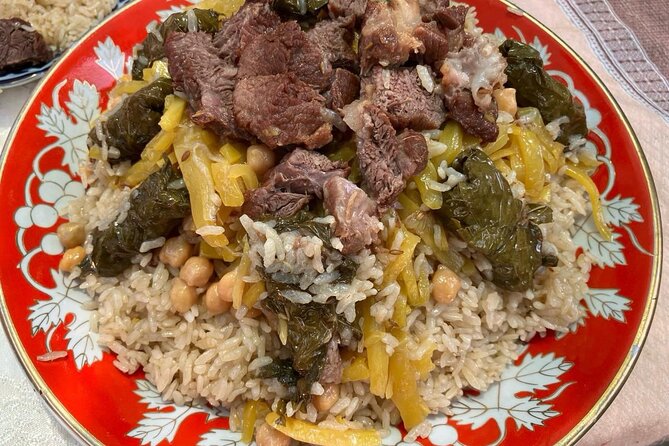
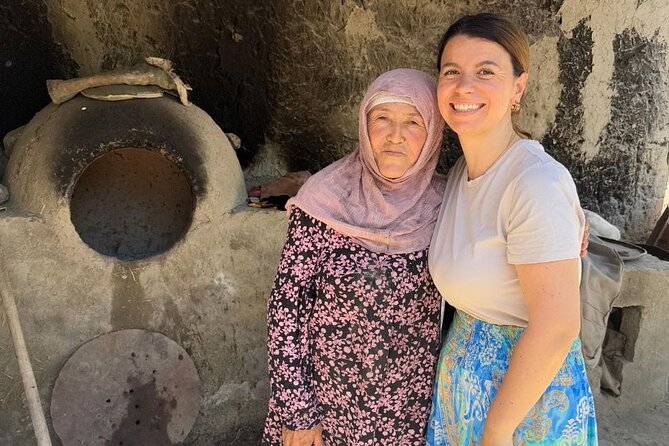
After the market, your driver takes you to a village outside the city. There, you join a local family in their home and prepare traditional food. The exact menu can vary, but the experience has included plov, shashlik, samsa, manti, and dolma.
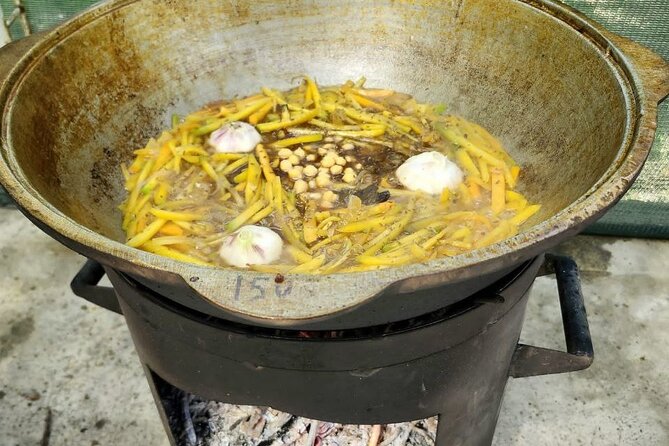
Plov is the natural centerpiece. It is more involved than a simple pot of rice, and the cooking process gives you a chance to see how timing, heat, and preparation fit together. Gulrux has taught the dish step by step, with a focus on the stages that make plov work. You should expect a practical demonstration and some participation, but not necessarily a restaurant-style class where every guest handles every task.
That distinction is important. One visitor wanted more active work, such as gathering firewood and rolling dough. The cooking was enjoyable, but the host handled some of the process. If you want a highly structured lesson with a printed recipe and constant hands-on practice, this may feel informal. If you prefer a relaxed family meal where you can ask questions and watch real household methods, the slower pace is a strength.
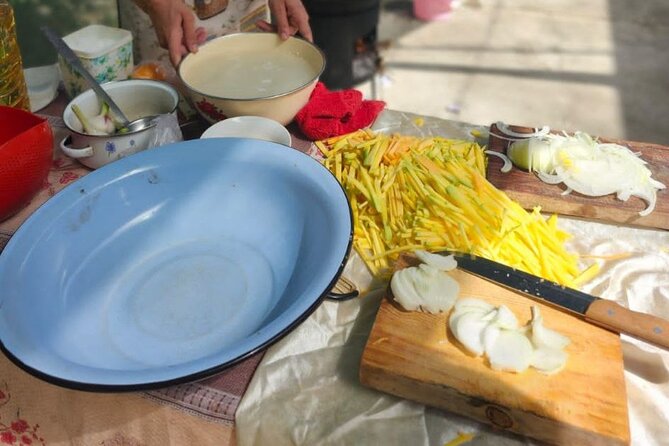
The same applies to the other dishes. You may help shape dough for samsa or manti, prepare ingredients, or observe how the family organizes the meal. The information available does not promise one fixed menu or a specific task list, so ask what you will cook when arranging the booking.
The food itself is only half the point. You sit with the family, learn about daily routines, and talk about customs and traditions. A game of chess may be part of the visit. The tone is social rather than formal, and family members may join the meal. That makes the experience feel like an introduction to home life, not simply a lesson designed for tourists.
Meeting hosts such as Goli, Gulrux, and Navro’z
The provider is Navruz, while the hosts connected with the experience include Goli, Gulrux, Navro’z, and Narboz. Gulrux has been specifically praised for her English and for explaining plov clearly. Other hosts have helped with market visits, vegetarian requests, and conversations about food production.
Because this is a private activity, your group gets the family’s attention rather than sharing a large class. That is useful if you want to ask about Uzbek food, family customs, or village life. It also lets the host adjust the pace and menu more easily.
Language ability may differ by host, so I would confirm your preferred language if detailed conversation is important to you. The experience is built around communication, but the listing does not promise a particular language for every guide.
The strongest part of the family visit is its ordinary quality. You are not only shown a polished cooking space. You are invited into a home, share food, and have time for conversation. That can be more revealing than a standard city tour because food opens the door to questions about celebrations, household routines, and regional habits.
At the same time, home visits are less predictable than professional cooking schools. The kitchen may not be arranged for a class, and the host may take over parts of the preparation. Go in ready to participate where possible, but do not expect a tightly timed lesson.
Konigil paper, oil, and pottery stops
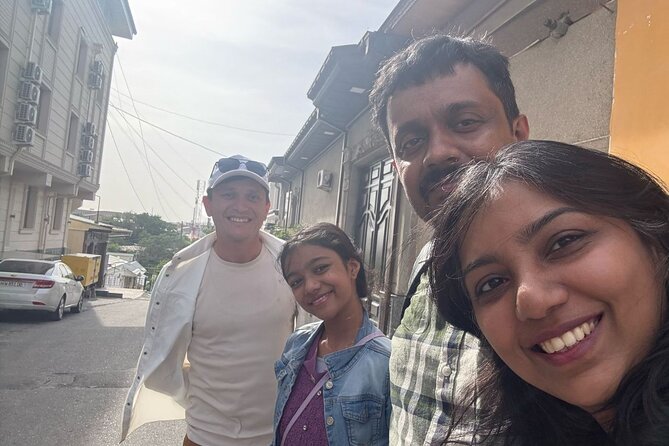
The day can include more than food. The program lists the Konigil paper factory, an oil meal workshop, and a pottery workshop. These stops add a craft and production side to the visit.
Konigil is known for traditional paper production, and the paper factory gives you a break from the kitchen while showing another local craft. The supplied details do not state how long you stay or whether a demonstration is guaranteed at every visit, so treat it as part of the possible route rather than a fixed-length museum tour.
The oil meal stop offers another look at local production. It connects with the ingredients and working life behind the food you have been discussing. The pottery workshop adds a different material and skill, giving the day more range than a cooking class alone.
These visits are useful if you want a broader village experience. They are less important if your only goal is to learn a particular recipe. Ask Navruz to confirm which stops are included in your planned itinerary, since the description gives several possible additions but does not assign a fixed timetable to each one.
More Farm Cooking Classes in the world:
- Half-Day Thai Cooking Class at Organic Farm in Chiang Mai
★ 5.0 · 19,087 reviews - Cooking Class and Lunch at a Tuscan Farmhouse with Local Market Tour from Florence
★ 5.0 · 4,831 reviews - Chiang Mai: Authentic Cooking Class with Market & Farm Visit
★ 4.9 · 4,546 reviews - Ubud: Balinese Cooking Class at an Organic Farm
★ 5.0 · 1,786 reviews
Why the five-hour format works
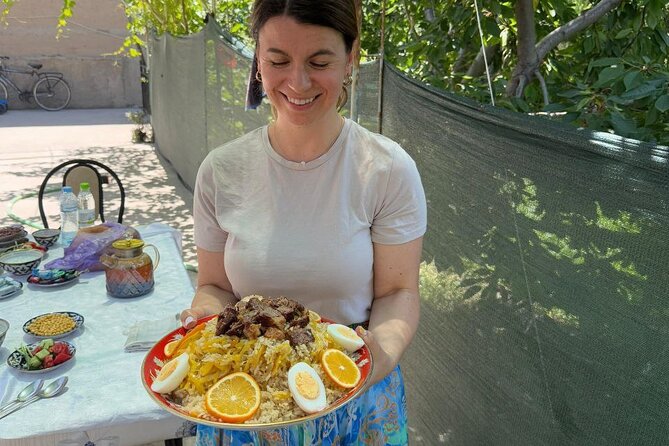
The experience lasts about five hours. That is long enough to include hotel pickup, the bazaar, the village drive, cooking, the shared meal, and possible craft stops without turning the day into a full-day commitment.
The flexible start time is a practical plus. Samarkand has plenty to fill a schedule, and you may want to visit Registan Square, the Bibi-Khanym Mosque, or other city sights before or after this outing. Since no fixed meeting point is required for most guests and pickup is offered, the day can fit more easily into a short visit.
The trade-off is that five hours can pass quickly. If the family conversation runs long or the cooking takes its natural pace, there may be limited time for each workshop. You should not book this expecting a long, detailed tour of every listed stop.
A private group also changes the feel of the day. You do not have to keep up with a busload of people, and the host can respond to your interests. For couples, families, and small groups, that privacy adds real value. It also means the experience depends heavily on the host and the exact plan for your date.
Is $65 a fair price?
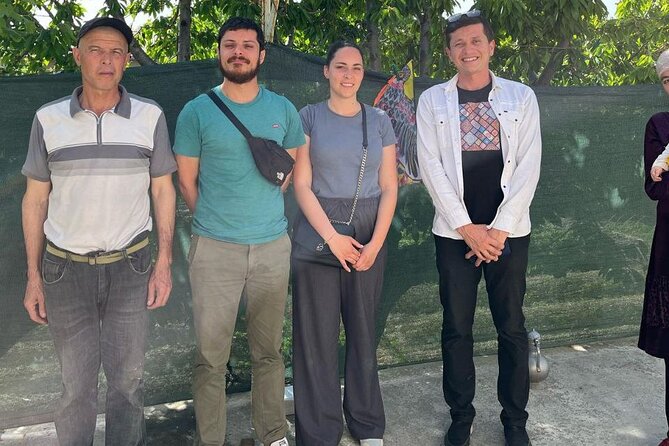
At $65 per person, this is not the cheapest way to eat in Samarkand. It is also not simply the price of a cooking lesson. You are paying for hotel pickup, transport to the bazaar and village, market time, a family-hosted meal, cooking instruction, and possible visits to paper, oil, and pottery workshops.
That makes the price reasonable if you value access and context. A restaurant can serve you plov, but it will not usually take you shopping, introduce you to a family, or show you how the meal is prepared at home. A formal cooking school may offer more precise instruction, but it may not include a village visit or family conversation.
The value drops if you want only hands-on technique. Some of the cooking may be demonstrated rather than assigned to you, and the schedule is flexible rather than tightly programmed. You are paying for the whole social experience, not for five hours of nonstop kitchen work.
The price also works better for a private group than for a solo visitor who is comparing it with a low-cost market meal. Since only your group participates, you can ask questions freely and request attention to dietary needs. Confirm any special menu before booking so the experience matches your expectations.
Who will enjoy this Samarkand experience most?
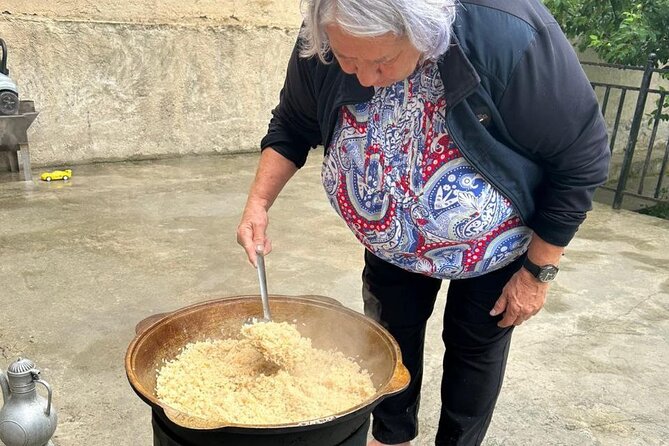
I would choose this outing if you want food to be your doorway into Uzbek culture. It suits people who enjoy talking with local families, watching everyday cooking, and seeing how ingredients move from market to table.
It is also a strong choice for families and mixed-age groups. The market, meal, village setting, chess, and craft stops offer more variety than a single kitchen lesson. The private format helps if children or older family members need a gentler pace.
Vegetarians can consider it too, since vegetarian arrangements have been made before. Tell the provider in advance, and do not assume the standard menu will be vegetarian without confirmation.
You may want to skip it if your priority is advanced culinary training. The relaxed home setting is friendly and personal, but the exact amount of participation can vary. Someone hoping to roll every pastry, prepare every ingredient, or leave with a formal recipe packet may prefer a dedicated cooking school.
This also may not suit someone who dislikes flexible plans. The start time, menu, and added visits can depend on the host and the day. That uncertainty is part of the home-visit character, but it requires an open mind.
Booking, pickup, and cancellation details
Pickup is offered from your hotel, and mobile tickets are accepted. The activity is private, with only your group taking part. Confirmation is received at booking, and service animals are allowed. The experience is also listed near public transportation.
You can cancel for a full refund up to 24 hours before the start time. Cancellations or changes made within 24 hours are not refunded or accepted, and the cut-off uses Samarkand local time.
I would confirm four points before the day: the pickup hour, the host’s name, the dishes planned, and which of the paper, oil, and pottery stops are included. Those questions remove most of the uncertainty without taking away the relaxed feel.
Should you book this cooking class?
Book it if you want a personal day built around Uzbek food rather than a quick demonstration. The market visit, village home, shared meal, and chance to talk with a family give you a side of Samarkand that monuments alone cannot provide.
The best reason to go is the human contact. Hosts such as Goli and Gulrux have made the cooking feel warm and conversational, while the private format keeps the day comfortable. Just remember that this is a family experience with cooking, not a formal culinary course. If you accept a slower pace and ask for the hands-on tasks you want, the $65 price offers solid value.
FAQ
How long does the cooking experience last?
The experience lasts approximately five hours in total, including hotel pickup, the bazaar visit, the drive to the village, cooking, and the family visit.
Is hotel pickup available?
Yes. Pickup from your hotel in Samarkand is offered.
Is the start time fixed?
No. The starting time is flexible, but you should arrange the exact time when booking.
Is this a private activity?
Yes. Only your group participates in the activity.
What food might I learn to cook?
The experience can include traditional Uzbek dishes such as plov, shashlik, samsa, manti, and dolma. The exact menu may depend on the host and your arrangements.
Can I cancel for a full refund?
Yes. You can cancel at least 24 hours before the experience start time for a full refund. Cancellations or changes made less than 24 hours before the start are not refunded or accepted.
More Hands-On Workshops in the world
- Florence: Pasta Cooking Class with Unlimited Wine
★ 4.9 · 10,285 reviews - 3 in 1 Cooking Class near Navona: Fettuccine, Ravioli & Tiramisu
★ 5.0 · 7,376 reviews - Florence: Pasta & Tiramisu Cooking Class with Unlimited Wine
★ 4.9 · 6,708 reviews - Florence: Pasta Cooking Class with Unlimited Wine
★ 5.0 · 6,413 reviews
Just added around the world
- Private Cooking Demonstration of Indian Fusion Cuisine in San Diego★ 5.0 · 3 reviews
- Private Samarkand Cooking Class with Market Tour & Transfers★ 5.0 · 14 reviews
- Plov Cooking Class at Local Uzbek House★ 5.0 · 5 reviews
- Cooking class in Samarkand with local life experience★ 5.0 · 19 reviews
- Sound of Music Tour with Edelweiss Cooking Class in Salzburg★ 5.0 · 15 reviews
- Apple Strudel & Prezel Cooking Class incl. Dinner & Music★ 5.0 · 113 reviews
- Dinner Cooking Class – Prezels, Dumplings, Apple Strudel & Music★ 5.0 · 99 reviews
- Private Cooking Class at a Cesarina’s Home in Salerno★ 5.0 · 11 reviews
Home Cooking Classes, compared.
Khmer Cooking Class at a Local’s Home in Krong Siem Reap
Read our review →
Local Home Korean Cooking Class & Market Adventure in Seoul
Read our review →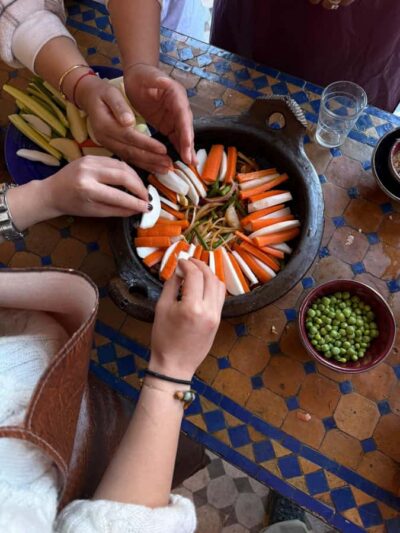
Marrakech: Moroccan Cooking Class with a Local Family
Read our review →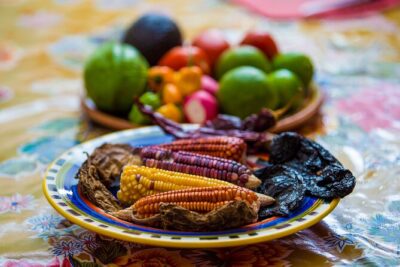
Mexican Cooking from Scratch in a Local Home in Tulum
Read our review →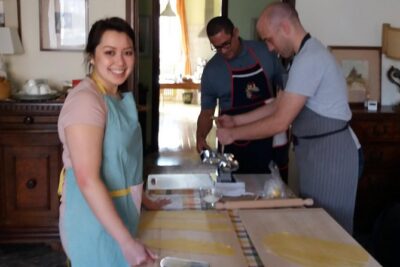
Pastamama, Home Cooking Classes at Grace’s Home
Read our review →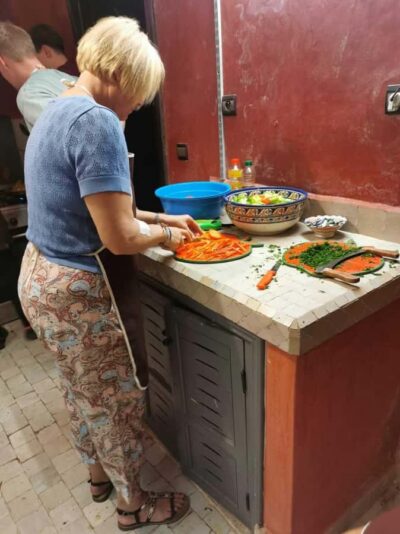
Marrakech: Moroccan Cuisine Cooking Class in Local Home
Read our review →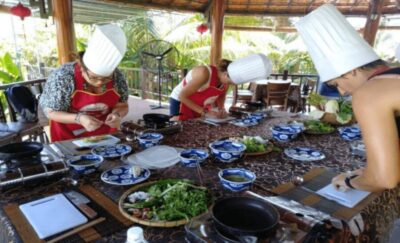
Hoi An: Traditional Cooking Class & meal with Local Family
Read our review →
Browse the lists this tour appears in