
Review · PARIS
Paris French Baking Class Baguettes and Croissants in a Bakery
The best part of this Paris experience is getting behind the counter of a working bakery rather than simply eating another pastry at a café. You watch a French baker turn flour, water, and technique into baguettes, croissants, and sometimes pain au chocolat, then handle the dough yourself. I especially like the small maximum of 10 people and the English interpreter, which make the fast-moving lesson easier to follow.
I also like the mix of food and culture. Didier explains French bread traditions, flour, ingredients, and equipment, and the bakery mills its own flour. The main consideration is that the class focuses much more on baguettes than on making croissants from scratch, and $264.95 is a serious price for a two-and-a-half-hour activity.
Key points at a glance
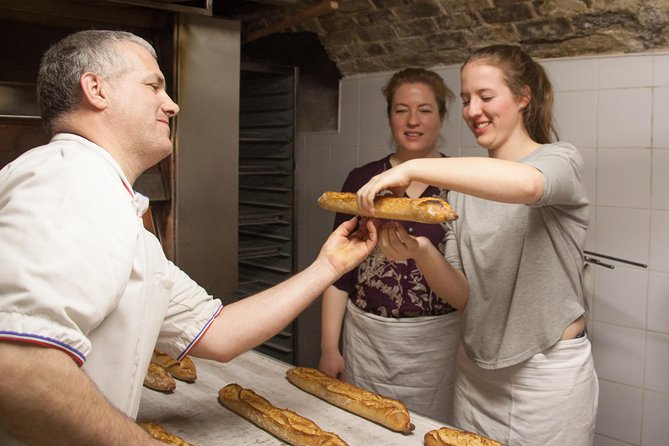
- A real bakery setting: You work inside Boulangerie Pâtisserie Le Petit Mitron at 8 Rue Oberkampf in Paris.
- Baguettes take center stage: Most of the hands-on work centers on shaping and handling baguette dough.
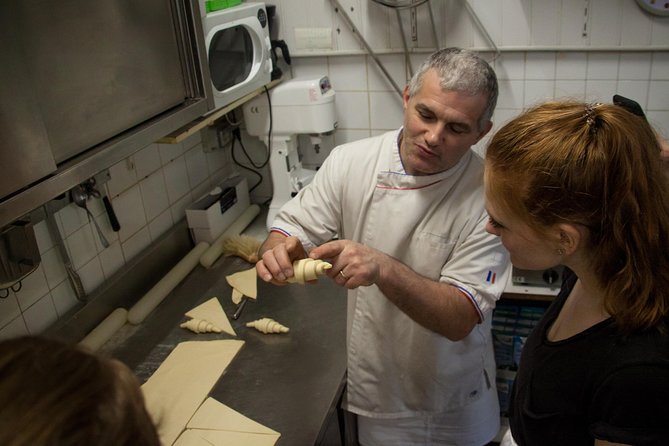
- Croissants are demonstrated: You learn the process, roll laminated dough, and may also make pain au chocolat, but you do not spend the whole class producing croissants from start to finish.
- English support is provided: The baker may teach in French, with an interpreter such as Luz explaining the lesson in English.
- Warm tasting at the end: You eat fresh baguette and pastry from the oven, with recipes to take home.
- Family-friendly format: Children from age 6 can join, provided a parent or other adult accompanies them.
Inside Le Petit Mitron near Oberkampf Bastille
You meet at Boulangerie Pâtisserie Le Petit Mitron, 8 Rue Oberkampf, in the 11th arrondissement. The activity begins and ends at the bakery, and the location is near public transportation, so it can fit neatly into a day spent around Oberkampf and Bastille.
This is not a polished cooking school built only for demonstrations. The appeal is the working bakery atmosphere. You go into the kitchen area, see the tools used by the baker, and watch the process at close range. That setting gives the lesson a practical edge. You are not just hearing that dough needs careful handling. You are watching how a professional handles it.
The class lasts about two hours and 30 minutes. That is long enough to cover background, demonstrations, hands-on work, baking, and tasting, but it is also a fairly concentrated session. Baking information comes quickly, especially during the baguette portion. If you want to remember everything, take mental notes and plan to use the recipes soon after returning home.
The group limit is 10 people. That matters here because dough work is easiest to understand when you can see the baker’s hands. A smaller group also gives you a better chance to ask questions and get help with shaping.
More Baking Classes in France
- Paris Croissant Small-Group Baking Class with a Chef
★ 5.0 · 910 reviews - Paris: French Croissant Baking Class with a Chef
★ 4.9 · 712 reviews - Paris: Baking Insider Experience
★ 4.7 · 397 reviews
Meeting a passionate Parisian baker
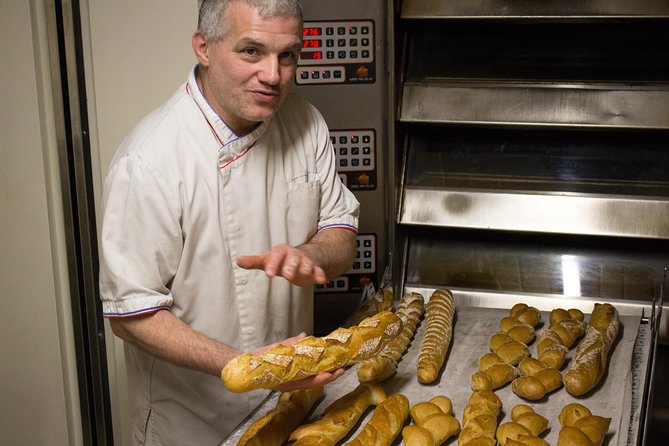
The baker most often associated with this class is Didier, whose teaching style comes across as lively, humorous, and energetic. He is clearly serious about good bread, but the lesson is not stiff. He talks about the craft, shares stories about French food and bread, and keeps the group involved.
Didier does not speak English, so an interpreter is part of the experience. Luz is named by several participants as an English interpreter, and the translation helps bridge the language gap throughout the lesson. This is important because the class includes a lot of small technical points about ingredients, dough, flour, and timing.
The translation may add a little back-and-forth to the pace. You will not get a nonstop English lecture from one instructor. Instead, you watch Didier demonstrate, hear the interpretation, then try the technique. For many people, that rhythm works well because the hands-on action makes the meaning clear.
A useful detail is the baker’s attention to the student’s level. People with home baking experience can ask more specific questions, while beginners can follow the basic steps with help. You do not need to be an experienced baker, but some familiarity with dough will help you get more from the rapid instruction.
The baguette lesson takes most of your time
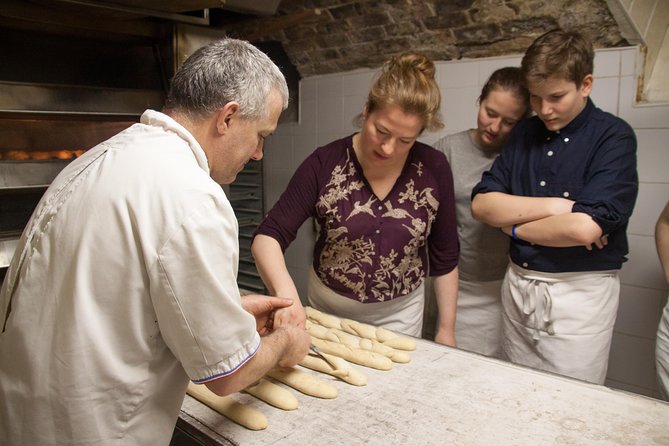
Expect baguettes to be the main event. The baker shows how the dough is prepared and handled, then explains how to shape it properly. You get a close look at the baker’s movements before trying the process yourself.
The hands-on work is the strongest part of the class. You roll and shape baguettes, work on patterns, and learn how small changes in handling affect the final loaf. The bakery’s own flour adds an unusual point of interest. The baker mills grain on site, and the discussion of flour gives you a better sense of why French bread depends on more than a simple list of ingredients.
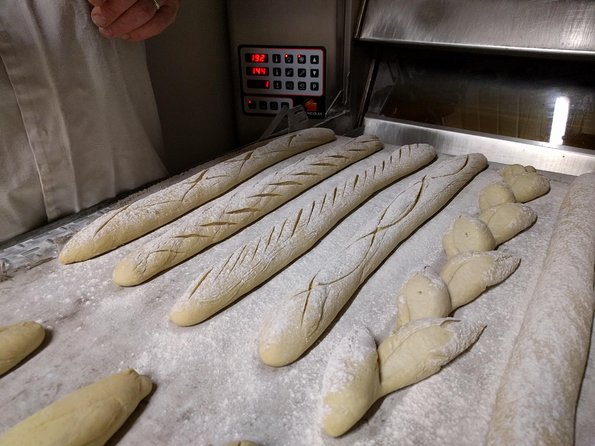
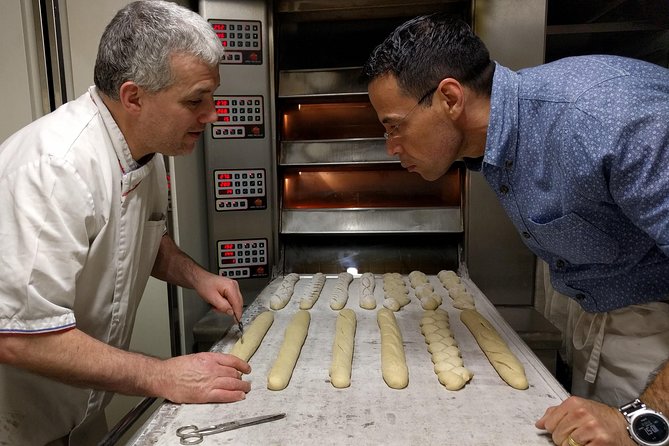
You may also help score the dough and create different patterns on the surface. One memorable task is taking bread from the oven with a long wooden paddle. It is a small job, but it makes the baking process feel real. You are not simply watching a loaf appear on a tray.
The baguette section can be information-heavy. The baker covers ingredients, technique, equipment, and the background of French bread in a short period. If your main goal is to master a home baguette, this is where you will gain the most practical value.
One point deserves clear wording: you may not prepare baguette dough entirely from the beginning. The class is built around demonstrations, handling, shaping, and baking rather than a full recipe session in which each person starts with flour and finishes with a loaf. That is not a flaw, but it is worth knowing before you book.
Croissants, laminated dough, and pain au chocolat
The pastry section introduces the buttery, layered side of French baking. You watch the baker explain croissant preparation and demonstrate how laminated dough is handled. You then get a chance to roll the dough and work with the shapes.
The pastry portion is shorter than the baguette work. You should not book this expecting a full croissant-making course with every stage completed from scratch. The class teaches you how croissants are made and lets you take part in important steps, but the baguette lesson receives more attention.
Pain au chocolat may also be included, adding a welcome variation to the plain croissant. The combination lets you see how similar dough can be shaped into two familiar French pastries. At the end, you taste the baked results while they are still warm.
For a beginner, this demonstration-first format makes sense. Croissant dough involves more steps and careful handling than baguette dough. Watching an expert perform the difficult parts gives you a useful model, even if you do not leave having made a full batch alone.
For an experienced home baker, the class may feel less technical than expected during the pastry section. You will learn tips and see professional handling, but the class is not designed as a specialist pastry course.
More Baking Classes in Paris
- Paris Macarons Small-Group Baking Class with a Chef
★ 5.0 · 316 reviews - Paris: Macaron Baking Class for Families and Kids
★ 4.7 · 270 reviews - Paris: Macaron Baking Class in Central Paris
★ 5.0 · 208 reviews - Paris Baking Insider Experience near Notre-Dame
★ 5.0 · 206 reviews
History, flour, and the craft behind French bread
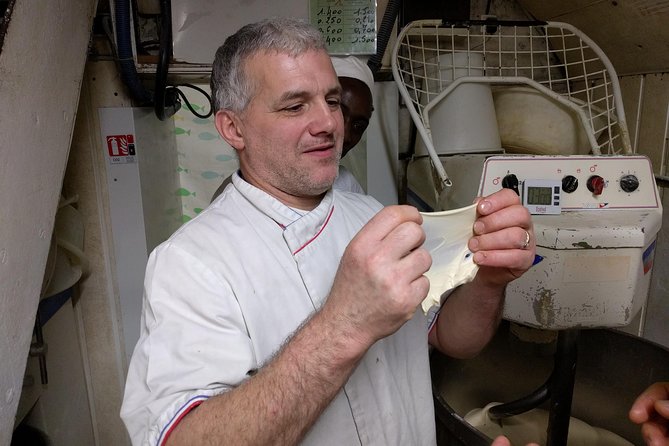
This workshop is more than a recipe exchange. Didier explains how baguettes and croissants developed, along with the role of ingredients and traditional methods. That background helps explain why a French bakery treats flour, fermentation, shaping, and baking as a craft rather than a quick kitchen task.
The on-site milling is one of the more unusual details. The bakery makes its own flour from grain and places strong attention on the ingredients. You get to ask about different flours and see how the baker’s choices affect the finished bread.
I like this because it gives you something useful to take home beyond a souvenir loaf. You begin to understand why a recipe that looks simple on paper can produce very different results depending on flour, handling, and equipment.
The instructor also shares advice for adapting the work to a home kitchen. You may not have the same professional tools, but the class includes tips for working without them. Recipes are supplied after the workshop, along with practical guidance discussed during the lesson.
The warm tasting is the payoff
The final tasting is simple and satisfying. You try baguette and pastry fresh from the oven, including the buttery croissant-style baking that forms the sweet part of the class. The included food is not a separate meal, so arrive expecting a tasting rather than lunch or dinner.
You also get to take your own freshly baked baguette with you. That makes the timing important. If you schedule the workshop early in your Paris day, the loaf can become part of an informal picnic later. A stop at a cheese shop would make a natural pairing, though cheese is not included.
The tasting also helps you judge the techniques you have just practiced. You can see the crust, crumb, flakiness, and flavor while the process is still fresh in your mind. For children, this immediate reward helps hold attention during the longer explanations.
Is $264.95 a fair price?
At $264.95 per person, this is not a budget activity. The price includes the cooking class, the baguette and pastry tasting, and the recipes, but not transportation to the bakery or hotel pickup and drop-off.
The value depends on what you want from Paris. If you only want to eat a croissant, you can do that for a small fraction of the cost at many bakeries. You are paying here for access to the kitchen, an English-supported lesson, a professional baker’s time, a small group, and the chance to handle and bake the dough yourself.
The group limit of 10 helps justify some of the cost. A large demonstration class would offer less personal attention, especially during shaping. Still, the price is high enough that you should book only if the workshop itself is a major part of your Paris plans.
It is a better value for two people who enjoy cooking, baking, or food traditions than for someone seeking a quick tourist activity. Families also get more from the price when adults and children actively take part rather than simply watching.
Who will enjoy this class most?
This works best for people who enjoy learning by doing. You do not need to bake regularly, but you should be willing to stand, watch closely, handle dough, and focus for about two and a half hours.
It suits:
- Home bakers: You can ask detailed questions and take home ideas for better baguettes and croissants.
- Families with older children: The minimum age is 6, and minors must have an adult with them. Children who can focus for the full session can take part in shaping and tasting.
- Food-focused visitors: The history of French bread and the discussion of flour add context beyond a standard pastry stop.
- Couples or small groups: The intimate setting gives you time to work together and ask questions.
- Visitors wanting a break from museums: The class provides a hands-on change of pace from monuments and galleries.
It may not suit you if you have a serious airborne allergy. The activity is specifically not recommended for people with sensitive airborne allergies. It is also less suitable if your main goal is a full technical course in croissant production.
Timing, booking, and a practical warning
You can choose a morning or afternoon class, which makes it easier to fit around museum visits and meals. Allow extra time to reach the bakery, even though it is near public transportation, and confirm the final meeting time carefully.
The class requires a minimum number of participants. If that number is not reached, the provider may cancel after confirmation and offer another date or a full refund. One important practical lesson is to check any schedule change directly in your booking details. A changed time that is not reflected clearly in your final confirmation can cause a serious problem, especially if your Paris stay is short.
Free cancellation is available up to 24 hours before the start time for a full refund. Changes or cancellations inside that 24-hour window are not accepted for a refund. The cut-off uses local Paris time.
Should you book the French baking class?
I would book this if you want an intimate food lesson with a real baker, care about the story behind French bread, and will use the recipes at home. The lively teaching, English interpretation, small group, on-site flour milling, and warm tasting give it more substance than a quick pastry demonstration.
I would hesitate if $264.95 feels high for a short activity, or if you expect to make croissants completely from scratch. The class spends most of its time on baguettes, while croissants are mainly demonstrated and shaped.
For the right person, this is a memorable way to understand a daily Paris pleasure. Just arrive knowing that the baguette is the star, the croissant is the supporting player, and the value comes from learning the craft rather than simply eating the result.
FAQ
Where does the baking class meet?
The class meets at Boulangerie Pâtisserie Le Petit Mitron, 8 Rue Oberkampf, 75011 Paris, France.
How long does the activity last?
The workshop lasts approximately two hours and 30 minutes.
Is the class offered in English?
Yes. The activity is offered in English through an interpreter. The baker may teach in French, with English interpretation during the session.
What will I make?
You will learn about and work with baguette dough, croissant dough, and possibly pain au chocolat. The class focuses mainly on baguettes, while the croissant process is demonstrated and the dough is rolled and shaped.
Can children join the class?
Yes. The minimum age is 6 years old. Minors must be accompanied by an adult.
What is included in the price?
The price includes the cooking class, tastings of baguettes and pastries, and recipes. Hotel pickup and drop-off are not included.
Can I cancel for a full refund?
Yes, if you cancel at least 24 hours before the experience start time. Cancellations or changes made less than 24 hours before the start time are not accepted for a refund.
More Hands-On Workshops in Paris
- Paris Cooking Class and Lunch with Wine plus Market Visit Option
★ 5.0 · 1,024 reviews - Paris Cooking Class: Learn How to Make Macarons
★ 5.0 · 634 reviews - Paris: French Macaron Culinary Class with a Chef
★ 4.9 · 591 reviews - Paris Evening Cooking Class French Dinner and Market Visit Option
★ 5.0 · 430 reviews
Just added around Paris
- Private French Home Cooking Class in Paris with Local Chef Ioana★ 5.0 · 3 reviews
- Hands-On Cooking Class in the Heart of Les Batignolles, Paris★ 5.0 · 90 reviews
- Private Market Tour and Classic French Cooking Class in Paris★ 5.0 · 7 reviews
- French Cooking Class & Château Tour near Paris with Caroline★ 5.0 · 5 reviews
- Paris Small Group French Christmas Cooking Class★ 5.0 · 4 reviews
- French Baking Class in a Local Montmartre Bakery★ 5.0 · 116 reviews
- Macaron Baking Class – near Eiffel Tower★ 5.0 · 10 reviews
- Croissants Baking Class near Eiffel Tower★ 4.5 · 6 reviews
Baking & Bread Classes, compared.

Group Tour: Garni, Symphony of Stones, Geghard, Lavash Baking
Read our review →
Paris Croissant Small-Group Baking Class with a Chef
Read our review →
Garni & Geghard Small-Group Day Trip with Lavash Baking
Read our review →
Vienna: Gerstner KuK Hofzuckerbäcker Baking Show & Tasting
Read our review →
Yerevan: Garni, Geghard, Symphony of Stones & Lavash Baking
Read our review →
Paris: French Croissant Baking Class with a Chef
Read our review →
Laugarvatn Fontana: Geothermal Bread-Baking Experience
Read our review →Browse the lists this tour appears in