
Review · PARIS
Paris Baking Insider Experience near Eiffel Tower
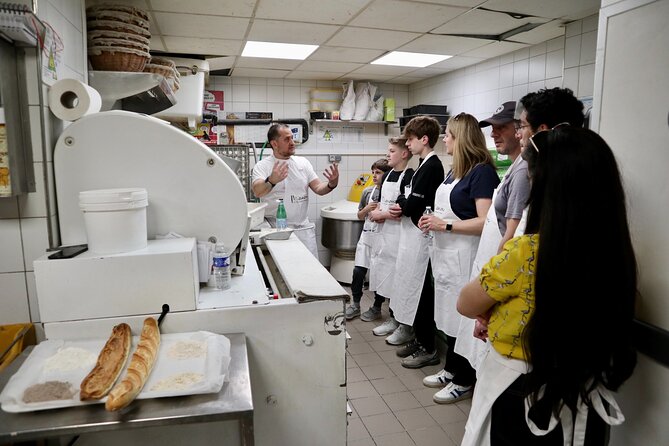
The best part of this Paris baking class is its setting: you work inside a real operating boulangerie, not a polished cooking school built only for visitors. You learn baguette shaping, croissant rolling, flour types, yeast, sourdough, and French pastry customs while bakers carry on their daily work nearby.
I like two things in particular. First, the small maximum of eight makes it easier to ask questions and get help. Second, you do not simply watch a demonstration: you handle dough, taste bread and pastries, and leave with baked goods to share or pack for later.
The main caution is space. The bakery workshop is compact, and a full group of eight can feel crowded around the work counter. Also, parts of the croissant work may involve prepared dough, so this is more about technique and French baking culture than making every item from raw ingredients.
Key points at a glance

- Work inside a functioning boulangerie: See professional bakers making bread and pastries around your class.
- Practice baguette shaping: This is the most hands-on and widely praised part of the session.
- Learn the building blocks of French baking: Compare flours, yeast, sourdough, baguette styles, and lamination.
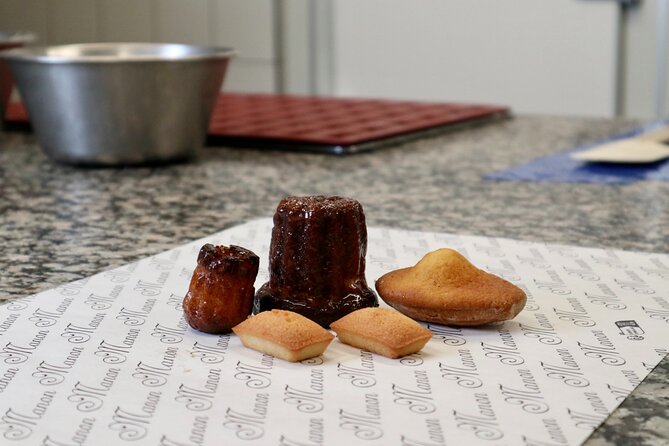
- Taste as you learn: Snacks and bakery samples help you understand how texture and flavor change.
- Take home more than a memory: Baguettes, croissants, financiers, cookies, or other treats may be part of your haul.
- Expect a compact setting: You must climb 15 steps to the second-floor bakery and stand for much of the two-hour class.
Inside the Paris bakery near the Eiffel Tower
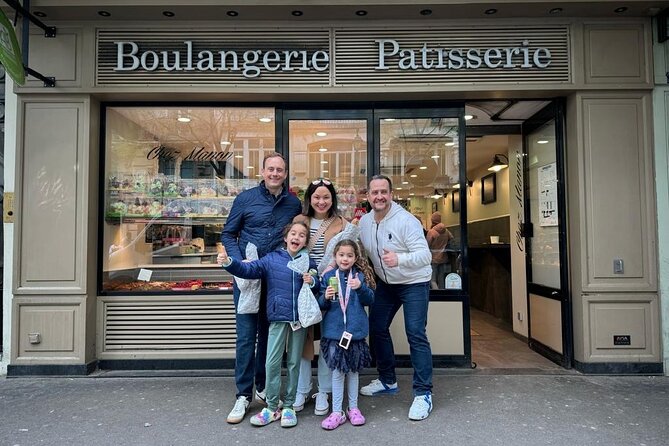
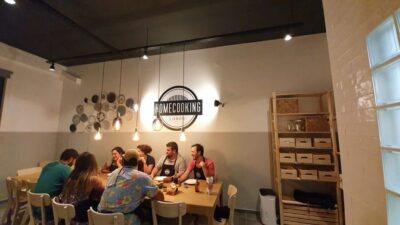
This is not a grand pastry academy with rows of individual workstations. You meet at 31 Rue de l’Annonciation in the 16th arrondissement, near public transportation, then head up 15 steps to the bakery on the second floor.
That climb matters if you have mobility concerns. There is no elevator, and the class requires you to stand for an extended period. Service animals are allowed, but the physical layout is worth considering before you book.
Once inside, you get the feel of a working bakery. The staff continue with their regular baking duties while your guide explains what is happening. That gives the class a useful connection to daily Paris life. You are not only shaping dough in a quiet room. You are watching the craft take place around you.
The setting also explains the mixed comments about space. A small group of two or four should have an easier time moving around the counter. With eight people, the room can feel tight, and you may spend part of the session standing shoulder to shoulder.
More Baking Classes in France
- Paris Croissant Small-Group Baking Class with a Chef
★ 5.0 · 910 reviews - Paris: French Croissant Baking Class with a Chef
★ 4.9 · 712 reviews - Paris: Baking Insider Experience
★ 4.7 · 397 reviews
A warm start with pastries and conversation
The exact order can vary, but the session includes snacks and tastings along the way. One morning class began with croissants, a drink, and time to settle in before the practical work started.
I like this approach. Tasting first gives you a point of comparison. You can look at a croissant’s layers, feel the crust of a baguette, and then try to understand how flour, butter, fermentation, and shaping affect the result.
The guide also uses these early samples to explain French bread culture. You learn that a baguette is not simply one long loaf. Different flour choices, recipes, shaping methods, and baking decisions create noticeable differences.
This is a good moment to ask questions. The guides have included Jess, Nisha, Candice, Candice, Rachel, Pierre, and Priya at different sessions. Their style may differ, but the strongest sessions combine practical instruction with stories about French bread, pastries, and local baking customs.
Flour, yeast, sourdough, and the logic of the dough
The class goes beyond rolling pastry into familiar shapes. You learn how different bread flours behave and how yeast and sourdough affect the finished loaf.
That basic information is useful even if you never become a serious baker. At home, it can help you understand why one loaf is chewy and another is soft, why one crust is dark and crisp, and why a pastry can feel light instead of heavy.
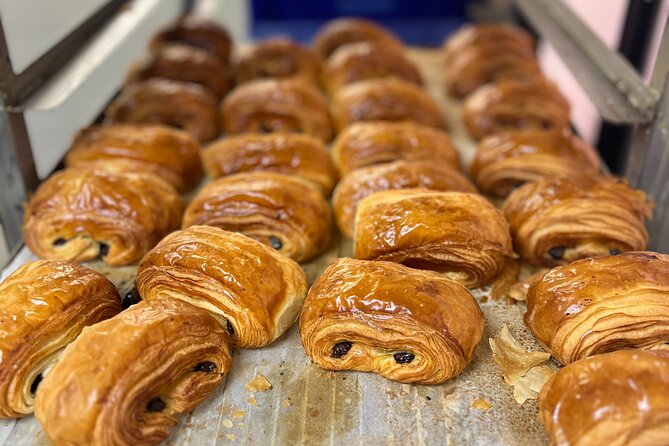
You also learn about lamination, the process of folding fat and dough into layers. This is the key idea behind the flaky structure of puff pastry and croissants. The lesson gives you a practical look at why the folds matter and how the dough must be handled.
Do not expect a full professional pastry apprenticeship in two hours. The session gives you a working grasp of the main techniques, not every stage of a long bakery production cycle. That is part of the tradeoff. You get a broad introduction and plenty of tasting, but not an exhaustive course in fermentation or pastry chemistry.
Shaping baguettes is the star of the class
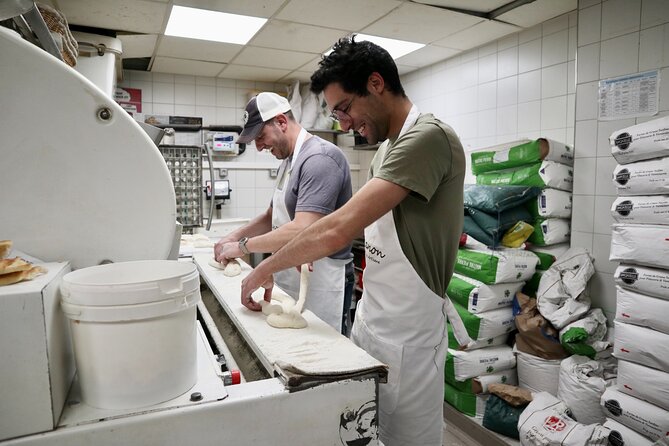
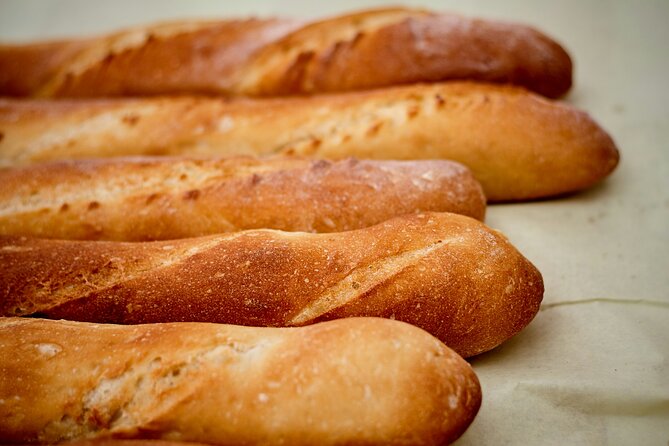
The baguette section is where the experience feels most useful. You learn how to shape the dough, form the loaf, and understand the difference between a basic baguette and a traditional baguette.
The technique looks simple until you try it. Too much pressure can flatten the dough. Too little control can leave the loaf uneven. The class gives you a chance to see how bakers create a consistent shape and prepare it for the oven.
Several guides receive special praise for making this approachable. Nisha is described as patient and entertaining, while Jess is noted for explaining flour types, baguette styles, and shaping clearly. Rachel is praised for keeping the class fun while still giving enough instruction.
You may also see professional baguettes being made in the bakery. That comparison is valuable. Your loaf does not need to look perfect to teach you something. Seeing the bakery’s finished bread beside your own work helps you notice the skill involved.
The baguettes you take away can become part of dinner later. That is a practical bonus, especially if you are staying in an apartment or want an easy picnic food for the day.
More Baking Classes in Paris
- Paris Macarons Small-Group Baking Class with a Chef
★ 5.0 · 316 reviews - Paris: Macaron Baking Class for Families and Kids
★ 4.7 · 270 reviews - Paris: Macaron Baking Class in Central Paris
★ 5.0 · 208 reviews - Paris Baking Insider Experience near Notre-Dame
★ 5.0 · 206 reviews
Croissants and financiers: useful technique, with a caveat
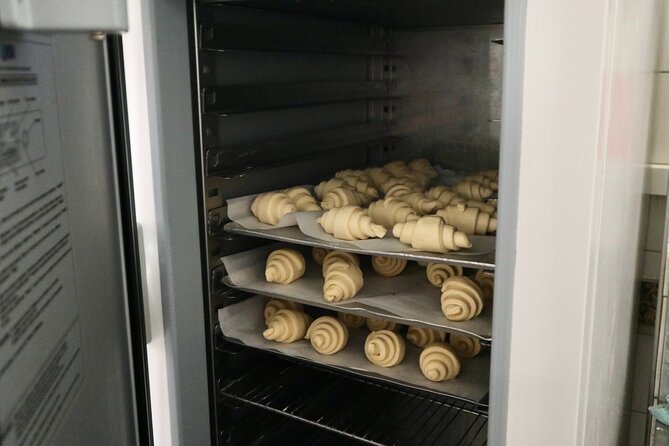
The croissant portion covers laminated dough and the rolling or shaping of croissants. You learn how the layers are formed and how the pastry is rolled into its familiar crescent shape.
This is also the section where you should set reasonable expectations. At least one participant felt that the croissant dough was already prepared and that the hands-on work mainly involved rolling it out. Another described the activity as a useful way to learn the complex process, but not a complete from-scratch lesson.
I would treat this as a demonstration and technique workshop rather than a full croissant production class. You get a better understanding of lamination and shaping, but you may not personally perform every step from mixing flour to final bake.
Financiers add a sweet change of pace. These small French cakes are less familiar to many people than croissants or baguettes, so making and tasting them gives the session a broader pastry focus. Some participants took home enough financiers and other treats to share with family or friends.
That generous amount of food can be a plus or a problem. If you have room in your luggage, the baked goods make a pleasant souvenir. If you are leaving Paris soon, the pastries may not keep well, and two people may find the quantity hard to eat before it goes stale.
What the two-hour schedule feels like
The experience lasts about two hours. That is long enough to cover several types of bread and pastry without taking half a day from your Paris plans.
I think the timing works best in the morning or early afternoon, when you still have energy for standing and can enjoy the bakery atmosphere. You may also want to visit the bakery itself before or after the lesson. The surrounding area gives you a chance to combine the class with a meal, a neighborhood walk, or sightseeing in western Paris.
The session has a sensible rhythm:
- You arrive, meet the guide, and begin with a drink or bakery sample.
- You hear about French bread, pastry traditions, flour, and yeast.
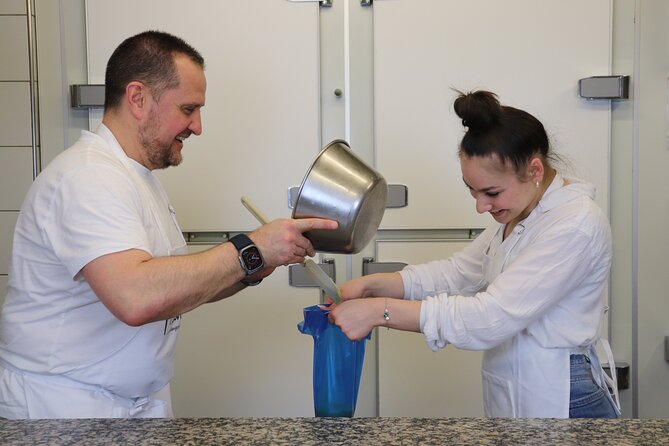
- You work with bread dough and practice shaping baguettes.
- You learn about laminated dough and roll or shape croissants.
- You prepare or shape financiers and other pastries, depending on the session.
- You taste the results and collect baked goods to take with you.
This is not a guaranteed minute-by-minute program. Bakery work changes with the day, and the class takes place in an operating business. That flexibility adds realism, though it can also mean that the hands-on time is not identical at every session.
The guides make a real difference
The guide is the bridge between the bakery and the class. You need someone who can explain technique in plain terms, keep people involved, and handle questions while the bakery continues working.
Jess is praised for warmth, patience, and clear explanations of bread and pastry. Nisha receives strong marks for making the lesson informative and entertaining. Candice is frequently described as good with families and children, while Rachel is noted for an easy, fun teaching style. Pierre is described as personable and welcoming, and Priya is praised for managing a larger group well.
One useful feature is translation between the class and the pastry chef when needed. That lets you hear more directly about the work taking place in the bakery.
The class also suits different experience levels. A teenager considering professional baking can learn from seeing the back of a working bakery. A complete beginner can focus on the basic movements without needing prior skill. Families can work together, though younger children need close adult supervision.
Children under five may join free, but they cannot take part in the hands-on baking for safety reasons. Older children are allowed when accompanied by an adult.
How much value do you get for $108.84?
At $108.84 per person, this is not a cheap pastry stop. You are paying for instruction, a small group, tastings, the working bakery setting, and the baked goods you take away.
The value is strongest if you care about food and want more than a standard Paris sightseeing stop. A pastry tasting gives you flavor. This experience gives you context, technique, and a look behind the counter. You leave with a better idea of why French bread takes skill and why a good baguette is more than flour, water, yeast, and a quick trip through the oven.
The price is harder to justify if you mainly want to eat croissants. Paris has excellent bakeries where you can spend far less. It is also less convincing if your main goal is to make croissants entirely from scratch, since parts of the pastry work may use dough prepared before the class.
The small maximum of eight helps support the price. In a group of two or four, you are more likely to get direct guidance. A group of eight can still work, but the compact counter may limit how freely everyone moves.
The high rating of 4.9 from 111 ratings and a 97 percent recommendation rate point to strong overall satisfaction, but the practical details matter more than the number. You should book because you value the setting and instruction, not simply because the score is high.
Who will enjoy this most
I would choose this for:
- Families who want a shared activity that is calmer and more memorable than a bus tour.
- Couples who enjoy food and want a practical Paris experience.
- Home bakers curious about flour, lamination, and baguette shaping.
- Teenagers who have an interest in baking or culinary work.
- First-time visitors who want contact with ordinary French food culture.
- People staying near the 16th arrondissement or looking for an activity near western Paris.
I would think twice if you dislike standing, have difficulty climbing stairs, or need a spacious work area. I would also choose another class if you expect to mix every dough from raw ingredients and complete a full professional baking process yourself.
Bring an appetite. Also bring a plan for the food you take home. A bag of baguettes, croissants, cookies, and financiers can be a joy, but it is not especially convenient if you are heading straight to the airport.
Booking, cancellation, and practical details
The activity is offered in English, and confirmation is provided when you book. It is typically reserved about 30 days ahead, so I would not leave it until the last morning of your Paris trip.
You can cancel for a full refund up to 24 hours before the start time. Changes or cancellations made less than 24 hours before the activity are not accepted for a refund, and the cut-off follows local Paris time.
The meeting point is 31 Rue de l’Annonciation, 75016 Paris. The activity ends at the same location. Public transportation is nearby, but you should allow time to find the address and arrive ready to climb stairs and remain on your feet.
Should you book the Paris Baking Insider Experience?
Book it if you want to understand French bread by handling dough, watching a real bakery at work, and tasting the results. The baguette shaping, bakery access, friendly instruction, and take-home treats give the class real character.
Skip it if you want a large teaching kitchen, guaranteed individual workstations, or a completely from-scratch croissant lesson. The setting is compact, and the pastry work may be partly prepared in advance.
For most food-focused visitors, I think the class earns its price because it connects a familiar Paris pleasure, the bakery, with the work behind it. Just arrive ready for a practical workshop, not a polished cooking show.
FAQ
Where does the Paris Baking Insider Experience meet?
The meeting point is 31 Rue de l’Annonciation, 75016 Paris, France. The activity ends back at the same location.
How long does the baking experience last?
The experience lasts approximately two hours.
Is the class offered in English?
Yes. The experience is offered in English.
How many people can join the class?
The maximum group size is eight people.
What baking skills will I learn?
You learn about bread flours, yeast, sourdough, baguette styles, baguette shaping, laminated dough, croissant rolling, and French pastries such as financiers.
Can children take part?
Children may join when accompanied by an adult. Children under five can join free, but they cannot take part in the hands-on baking because of safety concerns.
Is the bakery accessible by elevator?
No. You must climb 15 steps to reach the bakery on the second floor, and there is no elevator. The activity also requires standing for an extended period.
Just added around Paris
- Private French Home Cooking Class in Paris with Local Chef Ioana★ 5.0 · 3 reviews
- Hands-On Cooking Class in the Heart of Les Batignolles, Paris★ 5.0 · 90 reviews
- Private Market Tour and Classic French Cooking Class in Paris★ 5.0 · 7 reviews
- French Cooking Class & Château Tour near Paris with Caroline★ 5.0 · 5 reviews
- French Baking Class in a Local Montmartre Bakery★ 5.0 · 116 reviews
- Paris Small Group French Christmas Cooking Class★ 5.0 · 4 reviews
- Macaron Baking Class – near Eiffel Tower★ 5.0 · 10 reviews
- Croissants Baking Class near Eiffel Tower★ 4.5 · 6 reviews
Baking & Bread Classes, compared.

Group Tour: Garni, Symphony of Stones, Geghard, Lavash Baking
Read our review →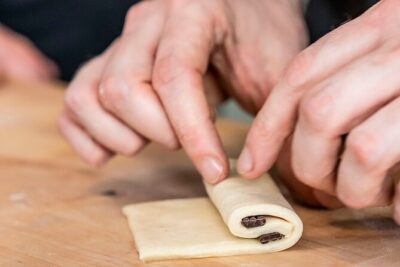
Paris Croissant Small-Group Baking Class with a Chef
Read our review →
Garni & Geghard Small-Group Day Trip with Lavash Baking
Read our review →
Vienna: Gerstner KuK Hofzuckerbäcker Baking Show & Tasting
Read our review →
Yerevan: Garni, Geghard, Symphony of Stones & Lavash Baking
Read our review →
Paris: French Croissant Baking Class with a Chef
Read our review →
Laugarvatn Fontana: Geothermal Bread-Baking Experience
Read our review →Browse the lists this tour appears in