
Review · PARIS
Paris: Croissant Baking Class with a Chef
A warm croissant fresh from the oven is a fine Paris souvenir, but making one yourself is far more useful than simply buying another pastry. At Studio Pâtisserie, Chef Leo or Chef Maria guides a group of up to eight through the demanding work of mixing, rolling, folding, resting, shaping, and baking.
I like the small class size, which gives the chef time to correct your technique, and I like the balance of practical work and pastry science. You learn why butter matters, why dough must rest, and how proofing affects the final texture. The one catch is physical: rolling laminated dough takes arm strength, and this is not a good choice for children under 15.
Key points
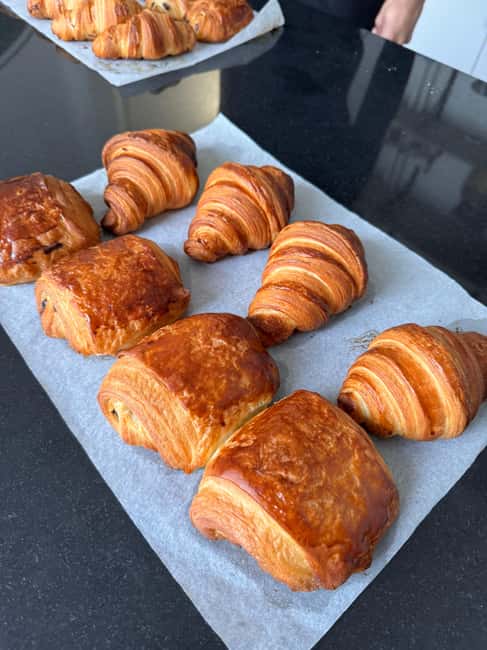
- Make a generous batch: You may produce four classic croissants and four pain au chocolat, giving you plenty to eat and take away.
- Learn in a small group: A maximum of eight participants allows Chef Leo or Maria to offer individual help.
- Work through the full process: You handle the dough, folding, cutting, rolling, shaping, proofing, and baking.
- Taste the results warm: The best part comes from the oven, when your pastries are still fresh and crisp.
- Choose a creative upgrade: On selected days, the bi-colour class adds colored dough to the standard croissant techniques.
Why three hours is the right length for croissants
Croissants are not a quick stir-and-bake project. The dough needs time to rest and rise, so a three-hour class includes natural pauses as well as hands-on work. That makes the pace more relaxed than a rushed demonstration, though you should not expect every minute to involve kneading.
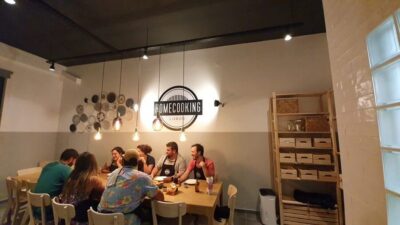
You begin in the bakery kitchen at Studio Pâtisserie, a compact professional setting with the equipment and tools needed for the class. The group gathers around a shared workstation while the chef explains the task ahead. English is used throughout, so you can ask questions freely even if baking terms are new to you.
The class is designed for beginners, but it is not merely a show-and-tell session. You handle the dough yourself at each important stage. That matters because croissant making depends on touch. You need to feel whether the dough is workable, see how the butter sits inside the layers, and learn how much pressure to use when rolling.
The rest periods also serve a purpose. While the dough sits, the chef explains what is happening inside it. You learn about butter quality, yeast, proofing, temperature, and the reasons behind the folding process. Those pauses turn waiting time into useful instruction.
More Baking Classes in France
- Paris Croissant Small-Group Baking Class with a Chef
★ 5.0 · 910 reviews - Paris: French Croissant Baking Class with a Chef
★ 4.9 · 712 reviews - Paris: Baking Insider Experience
★ 4.7 · 397 reviews
Mixing, rolling, and folding the dough
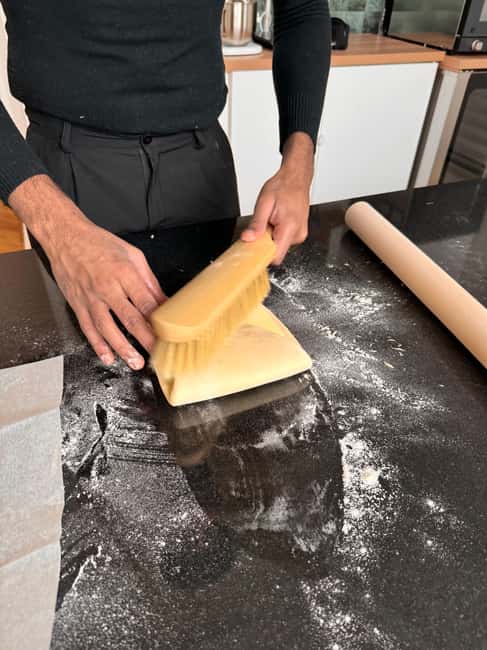
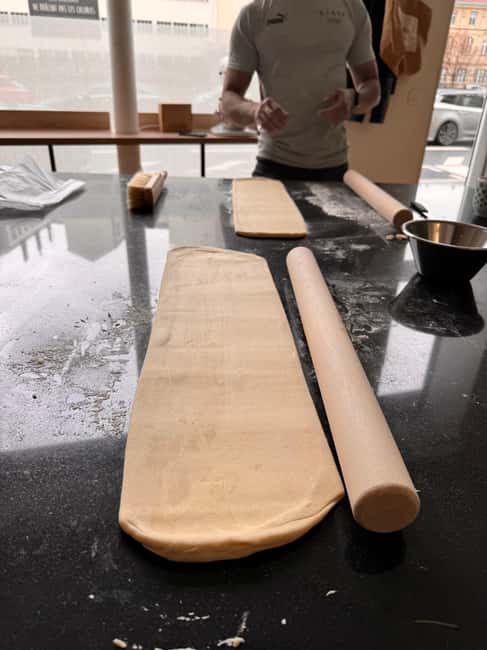
The first serious test is working the dough. Croissant dough has to be strong enough to hold its shape but supple enough to roll. You will use your arms, not just your fingertips, and the work can be tiring if you are unused to pastry making.
The chef demonstrates the method before you try it. Chef Leo is known for keeping the room lively while still giving clear directions, and Chef Maria brings the same friendly, patient approach. The important thing is that the class does not leave you alone with a recipe and a mound of dough.
Lamination is the key technical step. Butter is enclosed in the dough, then the package is rolled and folded to create thin layers. If the dough is handled too roughly, the butter can break through. If it becomes too warm, the layers lose definition. The chef watches your work and gives practical corrections before small mistakes become large ones.
This is where the class offers more than a standard baking demonstration. You are not simply told that the dough must be folded a certain number of times. You learn what the folding achieves and why the dough must rest between stages.
I would treat this part as a learning experience rather than a chance to produce perfect pastries immediately. Croissant dough is fussy, and home kitchens rarely match a professional bakery. Still, the hands-on practice gives you a much better starting point than following a recipe without knowing what the dough should feel like.
Shaping croissants and pain au chocolat
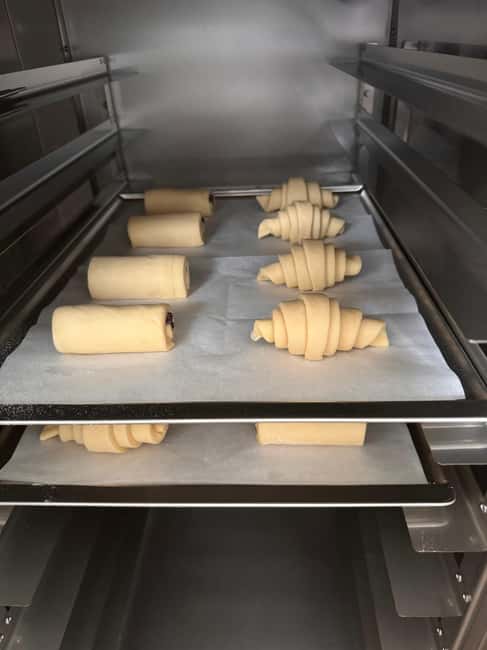
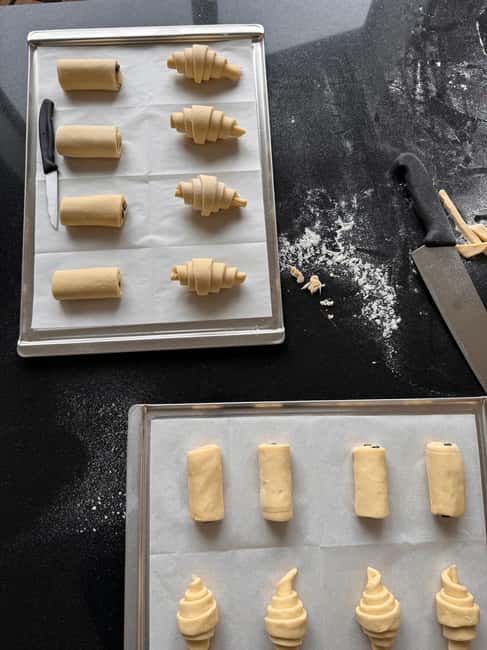
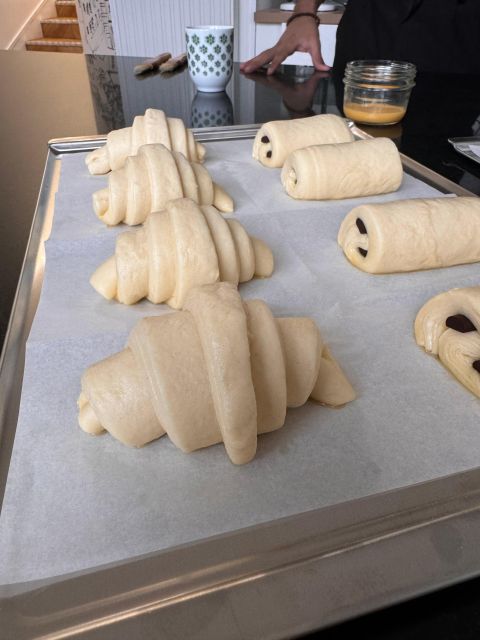
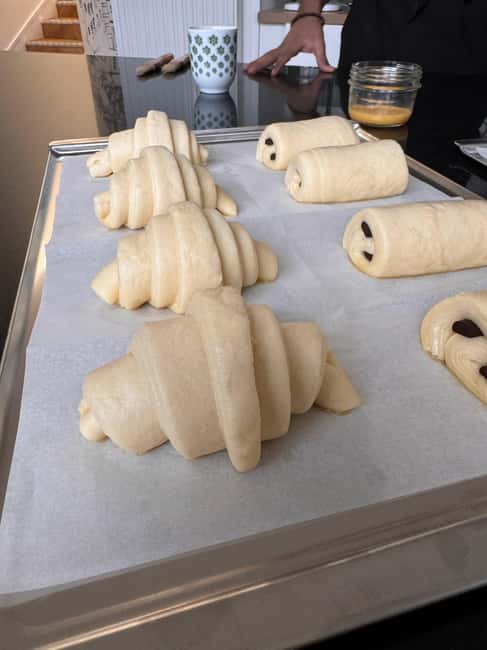
Once the dough is ready, the group cuts it into pieces and shapes the pastries. The classic croissant is rolled into a crescent, while pain au chocolat is formed around chocolate. Several participants have made both, often producing four of each per person.
Shaping looks easy when a pastry chef does it quickly. Your first attempts may be less uniform. The chef shows you how to cut the dough, position each piece, roll it without crushing the layers, and create the familiar curved form.
This is an enjoyable part of the class because the dough finally begins to look like breakfast. It is also a useful lesson in restraint. You need to roll with enough pressure to form the pastry, but not so much that you flatten the layers you worked to create.
Chef attention makes a difference here. With eight people or fewer, the instructor can move around the workstation and check each person’s technique. That personal help is especially useful if you have never worked with laminated dough.
The class is suitable for mixed ability levels. People who bake regularly can focus on finer points, while beginners can rely on the chef’s demonstrations and corrections. If you are attending with a partner, parent, teenager, or friend, you can work side by side without needing to arrive with baking experience.
The science behind a flaky result
The class gives you a useful explanation of why croissants succeed or fail. Butter is not just a filling or a source of flavor. Its quality and consistency affect the layers, and the temperature of the dough affects how those layers develop.
Proofing is another important topic. The shaped pastries must rise before baking, but they cannot be rushed. The chef explains how proofing changes texture and volume, helping you understand why a pastry can look attractive yet bake up dense.
These details are practical once you return home. You will leave with a recipe, but the recipe alone is not the whole lesson. Knowing what the dough should look and feel like gives you a better chance of adjusting when your own kitchen, flour, butter, or room temperature differs from the studio.
I also like the chance to ask questions during the pauses. You can ask about folding, shaping, butter, proofing, or mistakes you have made at home. The chef’s tips are the sort of small details that are easy to miss in a printed recipe.
More Baking Classes in Paris
- Paris Macarons Small-Group Baking Class with a Chef
★ 5.0 · 316 reviews - Paris: Macaron Baking Class for Families and Kids
★ 4.7 · 270 reviews - Paris: Macaron Baking Class in Central Paris
★ 5.0 · 208 reviews - Paris Baking Insider Experience near Notre-Dame
★ 5.0 · 206 reviews
From the oven to your table
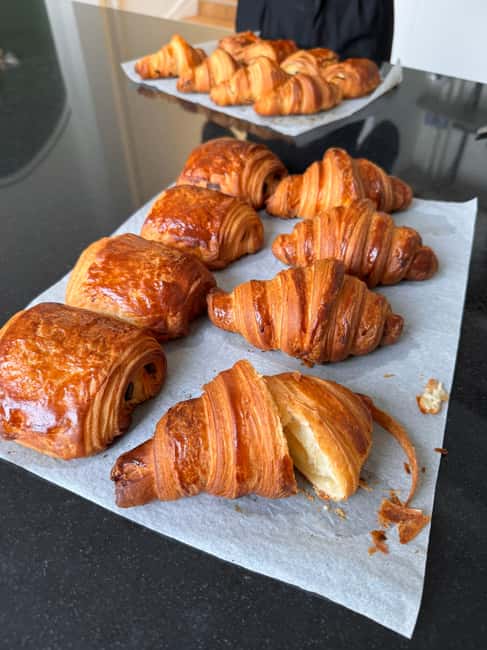
The reward comes when the pastries bake. You get to sample the croissants you made, often with a drink at the end, and you can take the remaining pastries with you. A batch of four croissants and four pain au chocolat per person is generous for a three-hour class.
Plan for this before you arrive. You may have more pastry than you can eat in one sitting, especially if you are attending as a pair. A bag of fresh pastries can make a pleasant breakfast later in your Paris stay, though the experience does not include special packaging details, so bring a little care when carrying them.
Eating one warm from the oven is part of the point. You immediately see how the rolling, folding, and proofing affected the result. Even if your shapes are not perfectly identical, the final pastry can still be crisp, buttery, and satisfying.
The class also has a social side without feeling like a large tour group. The small room allows conversation between participants, while the chef keeps the mood relaxed. Chef Leo is especially playful and energetic in his teaching style. Chef Maria is equally well regarded for humor, patience, and clear explanations.
The bi-colour option for extra flair
On selected days, you can choose the bi-colour croissant class. This adds colored dough to the process, giving the finished pastries a more decorative look.
The option makes the most sense for someone who has already baked croissants or wants a more creative project. It does not replace the core lessons in dough, folding, proofing, and shaping. You still need to master the same basic pastry work, then add the visual element.
Check the selected date and option carefully when booking, since bi-colour ingredients and instruction are not presented as part of every session. If your main goal is to understand classic French pastry, the standard class is enough. If you want striking pastries for photographs or a more unusual baking challenge, the extra option may be worth considering.
What the $140 price means in practice
At $140 per person, this is not a cheap breakfast. You can buy an excellent croissant in Paris for a small fraction of that amount. The value comes from the instruction, the professional kitchen, the small group, the ingredients, the equipment, the recipe, and the quantity of pastries you make.
I would compare it with other hands-on cooking classes rather than with a bakery purchase. You are paying for three hours of guided work and for skills you can try again at home. The class is also a practical choice for a special occasion, a rainy morning, or a food-focused day when you want to do something more active than visit another museum.
The amount of pastry helps. Four croissants and four pain au chocolat per person means you are not paying a high fee to produce a single sample. Still, the price makes this a better fit for someone who values instruction and the memory of making the food, not someone seeking the least expensive way to eat pastry in Paris.
The recipe gives the experience lasting value, although success at home will depend on your oven, work surface, ingredients, and patience. The class can teach you the method, but it cannot remove the fiddly nature of laminated dough.
Getting to Studio Pâtisserie
The meeting point is Studio Pâtisserie, in a building with a gray-colored storefront. It is served by public transport, with Metro Line 2 at Rome and Metro Line 3 at Villiers listed as the nearest stations.
Give yourself time to find the storefront, especially if you are unfamiliar with Paris addresses. The location is described as easy to find, but a cooking class runs on a schedule and you do not want to begin with a rushed arrival.
The class is taught in English. That makes it straightforward for English-speaking visitors, and the small group gives you a chance to ask for a demonstration again if a step is unclear.
You can cancel up to 24 hours ahead for a full refund, and the reserve-now, pay-later option can help if your Paris plans are still changing. Starting times vary, so check the available session when you choose your date.
Who should book this class
I would recommend it most strongly to:
- Couples looking for a shared Paris activity
- Families with teenagers who enjoy food or baking
- First-time bakers who want close instruction
- Experienced home bakers who want to improve laminated dough
- Visitors who prefer making something to taking home another souvenir
- Food lovers who want a classic French skill explained in plain English
The class has also worked well for mixed-age groups, including a teenager and an older adult. The physical work is the main limitation. Children under 15 are not suitable for the activity, and anyone under 17 must attend with a paying adult.
If you have limited hand or arm strength, think carefully before booking. Rolling dough is part of the experience, not a minor detail. You can ask the chef for help, but the class is built around participation.
Should you book it?
Book this class if you want to understand how a French croissant is made and are happy to put in real work. The strongest reasons are the small group, the chef’s close guidance, the full process from dough to oven, and the generous batch of pastries at the end.
Skip it if your main aim is simply to eat the best croissant in Paris for the lowest price, or if rolling dough for several stages sounds unpleasant. For everyone else, the $140 cost buys more than food. It buys a practical lesson, a recipe, warm pastries, and a skill you can attempt again after Paris has become a memory.
FAQ
How long does the croissant baking class last?
The class lasts three hours. Starting times vary, so check the available dates and times when booking.
Who teaches the class?
The class is taught in English by an in-house pastry chef. Chef Leo and Chef Maria are named instructors associated with the sessions.
How many people are in each class?
The group is limited to eight participants, allowing for individual help from the chef.
What pastries will I make?
You make classic croissants, and the class also includes pain au chocolat. Several participants have made four of each per person.
Is a bi-colour croissant class available?
Yes. A bi-colour option is offered on selected days and includes the ingredients and instruction needed to add colored dough to the croissants.
Are ingredients and equipment included?
Yes. The class includes all necessary ingredients, professional-grade kitchen equipment, and tools.
Do I receive a recipe?
Yes. A recipe is provided for you to take home and use for future baking.
Where is the meeting point?
Meet at Studio Pâtisserie, in the building with the gray-colored storefront. The nearest listed metro stations are Rome on Line 2 and Villiers on Line 3.
Can children attend the class?
Children under 15 are not suitable for the activity. Anyone under 17 must be accompanied by a paying adult, and the dough requires physical strength to roll.
More Hands-On Workshops in Paris
- Paris Cooking Class and Lunch with Wine plus Market Visit Option
★ 5.0 · 1,024 reviews - Paris Cooking Class: Learn How to Make Macarons
★ 5.0 · 634 reviews - Paris: French Macaron Culinary Class with a Chef
★ 4.9 · 591 reviews - Paris Evening Cooking Class French Dinner and Market Visit Option
★ 5.0 · 430 reviews
Just added around Paris
- Market Visit and Cooking Class with a Parisian Chef★ 4.4 · 51 reviews
- Paris: Full-Day Cooking Class, Market Tour and Lunch★ 4.9 · 113 reviews
- Croissant Baking Class, Mastering the Art with a Pastry Chef★ 5.0 · 116 reviews
- Paris Desserts and Pastries Small Group Cooking Class with a Chef★ 4.5 · 49 reviews
- Paris Cooking Class: Chocolate Éclairs and Cream Puffs★ 5.0 · 87 reviews
- Paris: 2.5-Hour French Pastry Cooking Class★ 4.9 · 71 reviews
- Paris Baking Insider Experience near Notre-Dame★ 5.0 · 206 reviews
- Paris: Macaron Baking Class in Central Paris★ 5.0 · 208 reviews
Baking & Bread Classes, compared.

Group Tour: Garni, Symphony of Stones, Geghard, Lavash Baking
Read our review →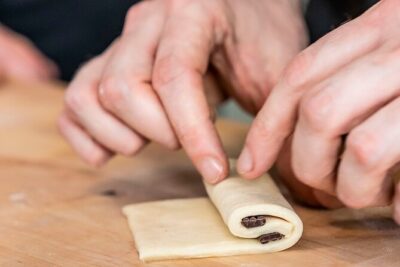
Paris Croissant Small-Group Baking Class with a Chef
Read our review →
Garni & Geghard Small-Group Day Trip with Lavash Baking
Read our review →
Vienna: Gerstner KuK Hofzuckerbäcker Baking Show & Tasting
Read our review →
Yerevan: Garni, Geghard, Symphony of Stones & Lavash Baking
Read our review →
Paris: French Croissant Baking Class with a Chef
Read our review →
Laugarvatn Fontana: Geothermal Bread-Baking Experience
Read our review →Browse the lists this tour appears in