
Review · SRI LANKA
Ella Sri Lanka : Mom’s Kitchen Cooking class
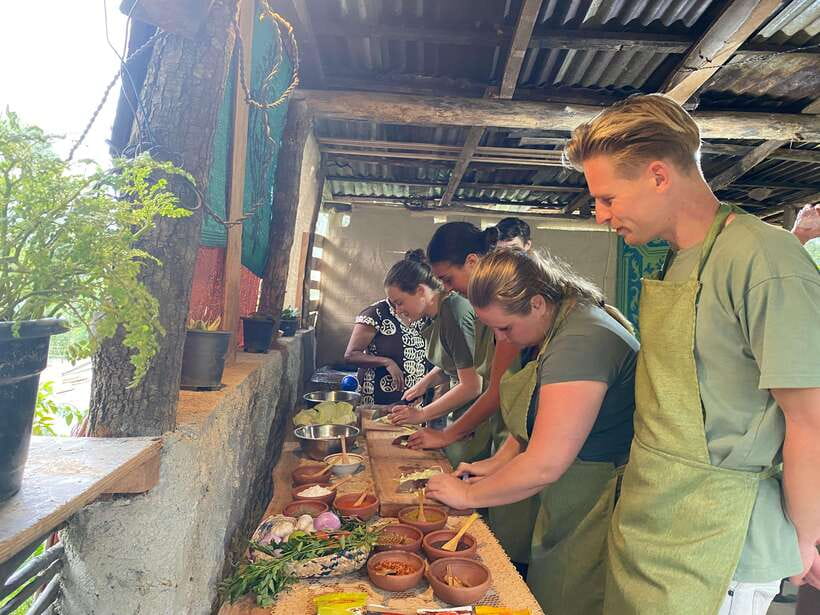
Sri Lankan cooking makes a lot of flavor from a short list of ingredients. At Mom’s Kitchen, Kamala and her daughter Irosha show you how, using a wood fire, fresh coconut, stone grinding, and a handful of familiar spices to prepare several curries in an outdoor family kitchen. The setting feels personal, not like a cooking school built for tour buses.
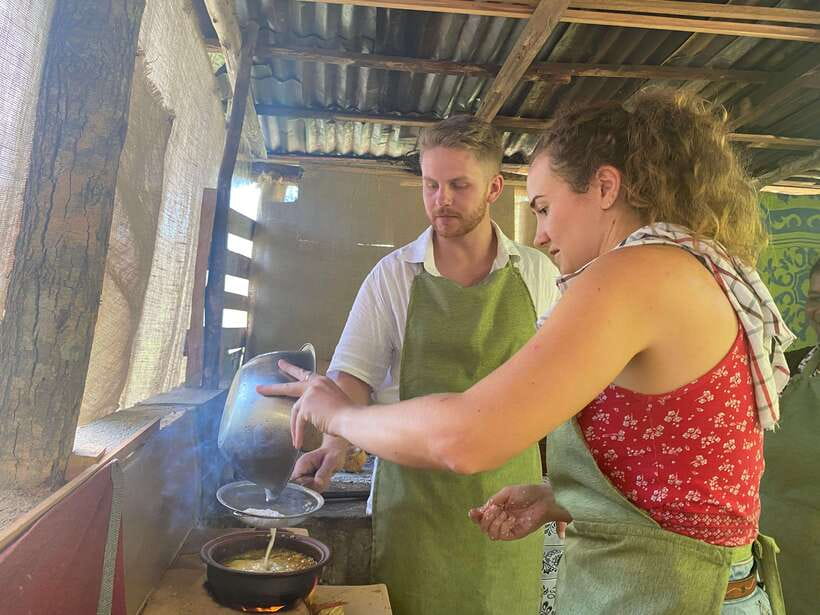
I like the hands-on format and the practical recipes. You chop, peel, wash, grind, fry, season, and cook, rather than stand back while someone else does the work. I also like the clear English explanations from Irosha and the recipe instructions sent afterward, which give you a fair shot at making the food at home. The main consideration is that the class lasts only two hours, so expect a focused introduction rather than a slow, detailed course on every corner of Sri Lankan cuisine.
Key points at a glance
- Mother and daughter hosts: Kamala cooks from traditional family recipes, while Irosha explains the steps clearly in English.
- Outdoor kitchen: You cook in a simple space near the family home, surrounded by nature and views across Ella.
- Several dishes in one class: Expect a spread that can include four or five curries, rice, coconut sambol, and papadam.
- Traditional techniques: You may cook over wood fire, aromatize oil, grind spices on stone, and grate fresh coconut.
- Useful for home cooks: The dishes rely on a small group of spices and straightforward methods.
- Small group format: Places are limited to six participants, so you should have an active role at the stove and preparation table.
A family kitchen above Ella
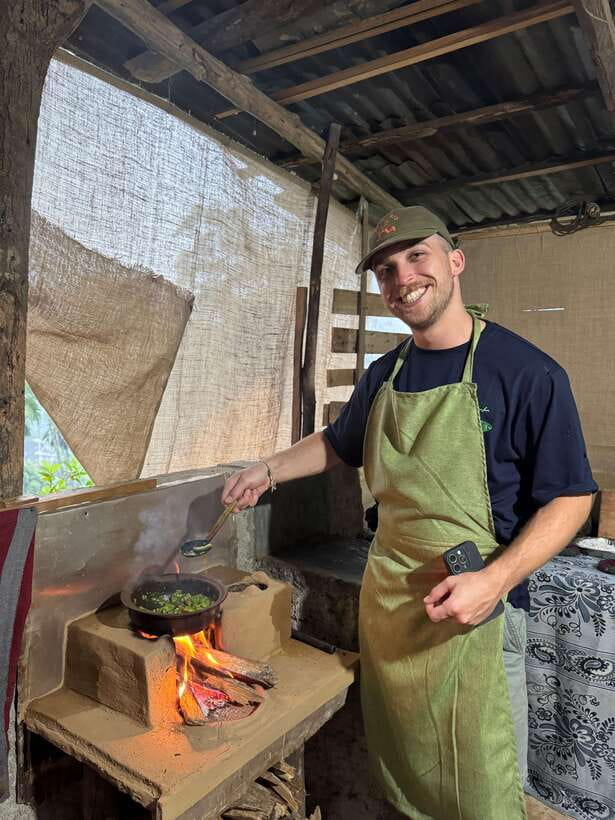
The best part of Mom’s Kitchen is the setting. You cook in an outdoor kitchen beside the family home, with Ella’s green hills and tropical surroundings around you. It has the simple charm of a working home kitchen, not the polished feel of a restaurant demonstration room.
That matters because the food is presented as everyday Sri Lankan cooking. You are not just watching a chef plate a fancy version of curry. You are learning how a mother and daughter prepare familiar dishes with ordinary tools and fresh local ingredients.
Kamala is the experienced cook. She knows the recipes by heart and brings the practical habits of someone who has made these dishes many times. Irosha helps explain the process and translates the small details that can make a recipe easier to follow. Her English is described as clear, and that is useful when you are trying to understand how long to fry an ingredient or how much seasoning to add.
The family atmosphere is a major part of the experience. It can feel especially comfortable for couples, families, and solo visitors who prefer a personal class over a large group demonstration. Children can take part too, with one family describing how warmly the hosts included a seven-year-old.
More Hands-On Workshops in Sri Lanka:
- Ella: Traditional Sri Lankan Cooking Class
★ 4.9 · 788 reviews - Organic cooking class sigiriya (kumara & family)
★ 5.0 · 650 reviews - Sri Lanka Cooking Class with Granny
★ 5.0 · 587 reviews
What happens during the two hours
The class begins with an introduction to the ingredients, tools, and dishes. You get a basic explanation of Sri Lankan cooking and the role of spices, coconut, vegetables, and curry preparation. The cultural background is present, but the focus stays on getting you cooking quickly.
That is a good use of a short class. You are unlikely to spend half the session listening to a long talk before touching an ingredient. Instead, the hosts bring you into the work and explain things as you go.
Expect a shared preparation process. Depending on the day’s menu, you may:
- Wash and peel vegetables
- Chop ingredients
- Prepare and season curry bases
- Heat oil and add aromatics
- Grind spices using traditional tools
- Grate fresh coconut
- Cook over a wood fire and gas stove
- Mix coconut sambol
- Fry papadam
- Help prepare rice and several curries
The exact dishes can vary, but the format is generous. Classes have included chicken, bean, beetroot, mango, and dhal curries, along with coconut sambol, rice, and papadam. Some sessions prepare four curries, while others include five or even six types. This gives you a useful lesson in how one basic spice approach can produce very different flavors.
One particularly helpful point is that the recipes do not depend on a huge shopping list. You learn how to use a small set of spices in different ways. That makes the class more useful after your holiday. You may not have every Sri Lankan ingredient at home, but you can understand the method and adapt it.
Fire, stone, coconut, and real kitchen technique
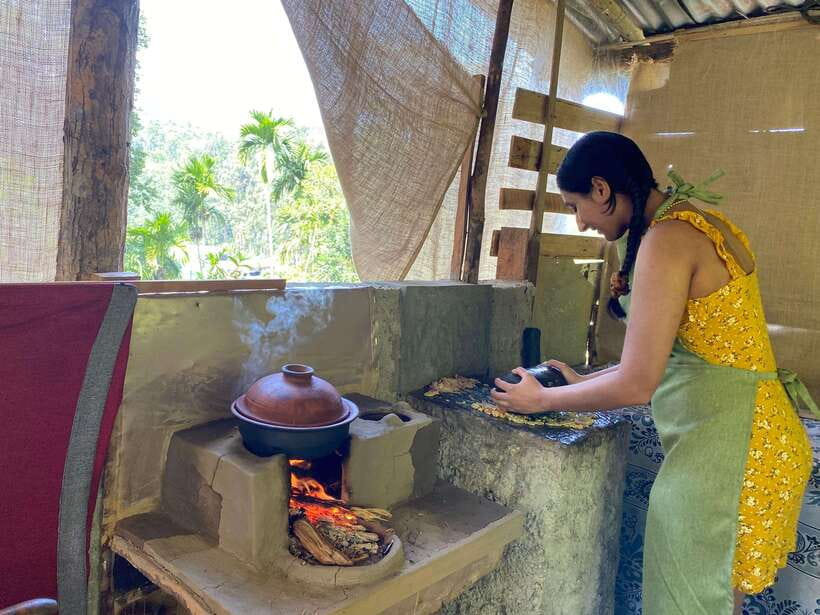
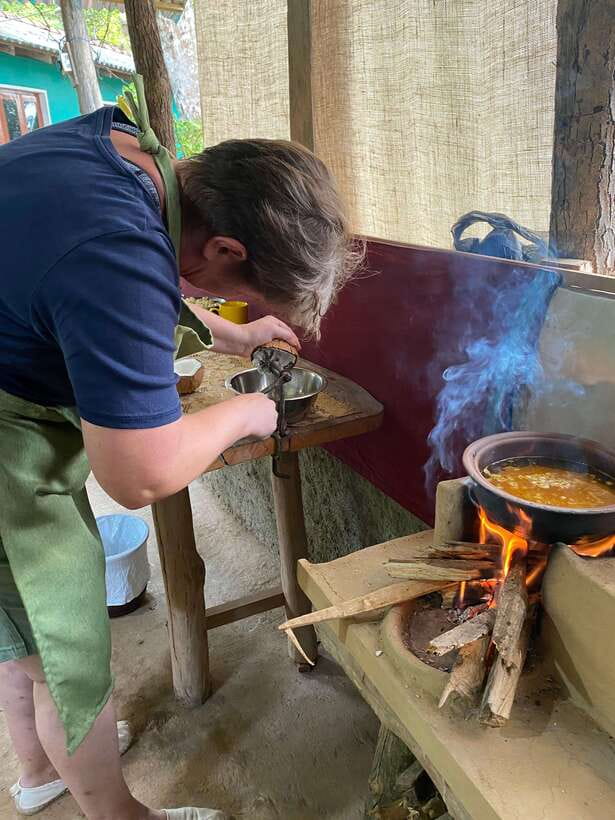
The traditional tools are not just decoration. Cooking over a wood fire changes the atmosphere and gives you a feel for the slower, more physical side of home cooking. You can hear the oil sizzle, smell garlic and spices hitting the heat, and see how the fire affects the cooking pace.
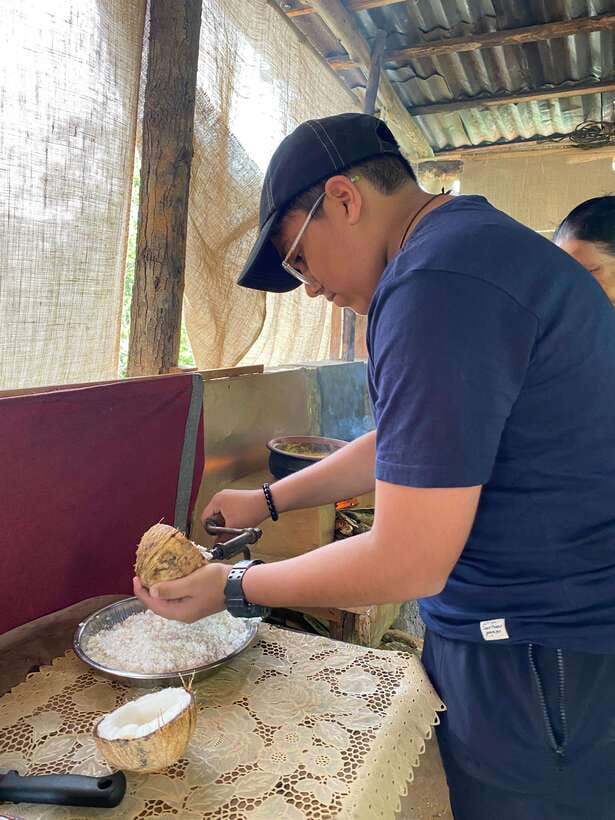
You may also use a stone grinder or stone roller for spices and coconut. This takes more effort than using a food processor, but it helps you understand the texture the hosts are looking for. Freshly grated coconut is another memorable part of the session. These tasks give you something to do with your hands and make the class feel connected to local habits.
The hosts also share time-saving tips. That is important because traditional food can look complicated when you see several pots on the stove. The lesson shows how similar spices and simple preparation can produce several separate dishes without requiring professional kitchen skills.
The class is active, but it should not be confused with advanced chef training. The emphasis is on approachable food, clear steps, and methods you can repeat. If you already cook Sri Lankan food often, you may find the instruction fairly basic. If you are new to the cuisine, the pace and simplicity are a strength.
The meal is part of the lesson
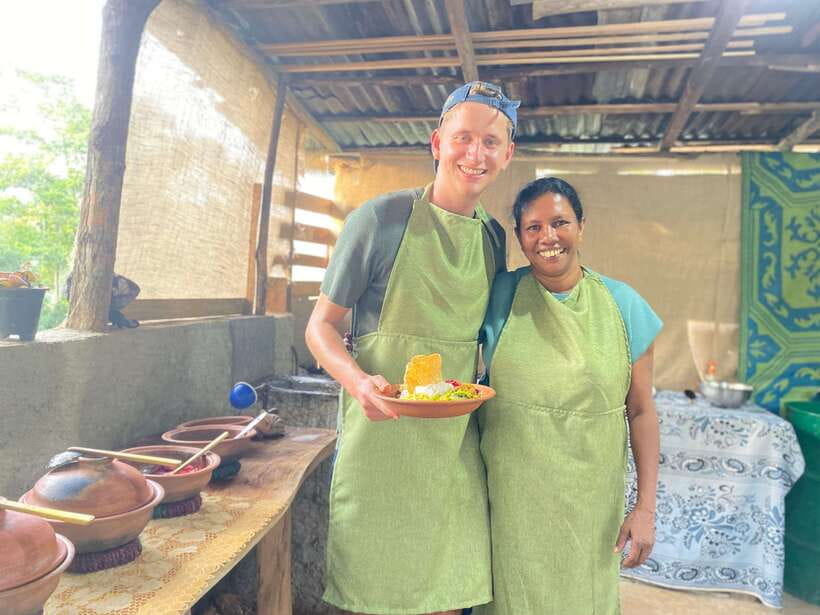
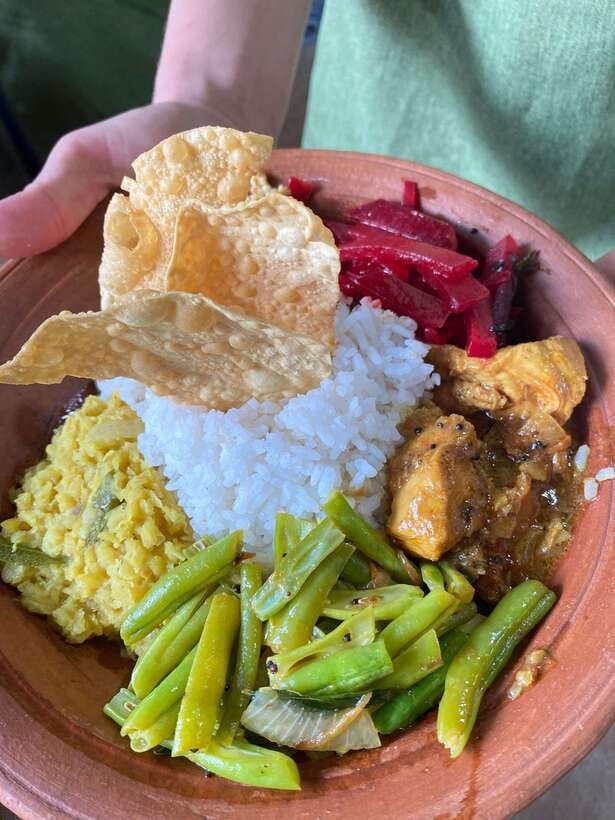
Once the cooking is done, you sit down and eat what you helped prepare. The meal can be substantial, with several curries served alongside rice, coconut sambol, and papadam. This is not a tiny tasting portion. One account describes the meal as large enough to leave everyone very full.
Eating the food immediately helps you understand the balance of the dishes. You can compare a vegetable curry with a chicken curry, try the heat with coconut sambol, and see how rice brings everything together. The result is more useful than taking home a recipe without knowing how the finished dish should taste.
The outdoor dining setting adds to the occasion. Several sessions have included views toward Ella, and one included a sunset meal. You might also find the setting lively, with birds or a squirrel appearing nearby. These details are not guaranteed, but they help explain why the meal feels like part of a family visit rather than the final course in a formal restaurant.
Food handling is another practical point. The cooking area has been described as clean, and the hosts take care with preparation. That should reassure you if you are particular about kitchen hygiene while still wanting a rustic cooking experience.
A few more cooking classes around Sri Lanka worth a look
- Kandy Village Cooking Class
★ 5.0 · 536 reviews - Sea waves sri lankan cooking class
★ 5.0 · 467 reviews - Ella: Sri Lankan Cooking Class with Neranji at Homestay
★ 5.0 · 276 reviews - Ella : Cooking class with amazing Spice Garden Tour
★ 5.0 · 239 reviews
Why the recipes work for home cooks
Many holiday cooking classes are fun in the moment but hard to repeat. Mom’s Kitchen makes a stronger effort to bridge that gap. You receive the recipes after the class, including through WhatsApp, and the methods use ingredients in a fairly simple way.
You also learn more than a list of measurements. Irosha and Kamala explain the ingredients, cooking methods, and small adjustments that affect the final dish. You can ask questions during the work, which is useful when you want to know how to alter a recipe for your own kitchen.
The shared spice base is especially practical. You may prepare several curries with related ingredients, yet each one tastes different because of the vegetables, cooking time, seasoning, or finishing touches. That gives you a foundation rather than a single dish to copy.
Dietary requests have been accommodated during the class. Still, you should explain your needs when booking or before the session, since the available menu and substitutions are not specified in detail. The same applies to spice preferences.
Price, group size, and the value of the experience
At $20 per person, this is good value if you want both an activity and a meal. The price includes the cooking class, locally sourced ingredients, and the food you prepare. You also receive recipes to use later, which adds value beyond the two-hour session.
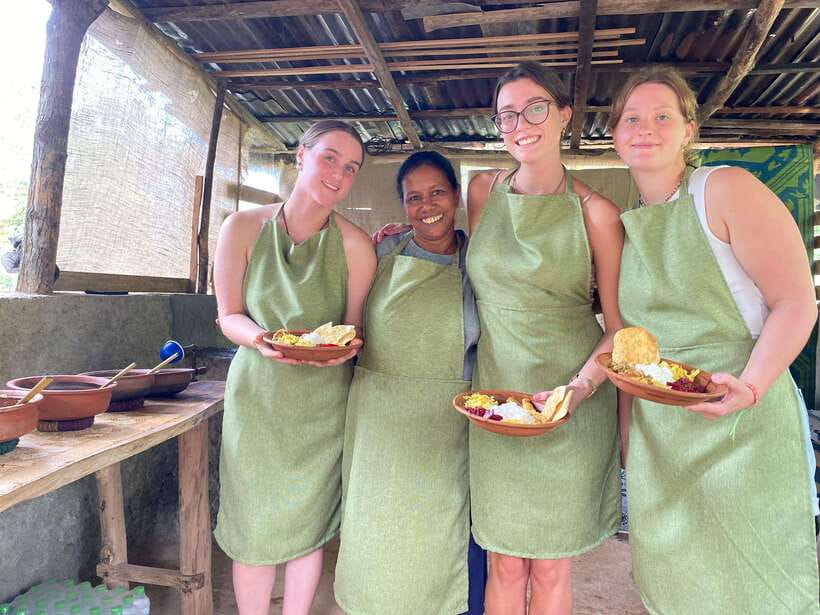
The small group limit is six people. That number matters in a hands-on class. With too many participants, you might only chop one vegetable and watch the rest. Here, you should expect a real task during most stages, though the exact amount of individual stove time will depend on the group.
Some bookings have been very small, including a class held for one person and another for just a couple. That can make the instruction feel more personal. Larger groups can still work well because the preparation is shared, but you may spend part of the session working alongside other participants rather than receiving one-to-one attention.
The two-hour length suits a morning or afternoon in Ella. It is long enough to prepare and eat a full meal without taking over your whole day. It is also short enough to fit around sightseeing. The tradeoff is that the menu moves at a steady pace, so ask questions as they arise instead of saving everything for the end.
Cancellation is flexible: you can cancel up to 24 hours in advance for a full refund. You can also reserve now and pay later, which helps if your Ella plans are still shifting.
Who should book Mom’s Kitchen
I would choose this class if you want to understand Sri Lankan food through a local family rather than a hotel kitchen. It suits curious eaters, home cooks, couples, families, and solo visitors. Children can take part, and the small group format makes it easier to stay involved.
It is also a good choice if you have already eaten rice and curry around Sri Lanka and want to learn what goes into it. The class explains the process behind the flavors, from frying aromatics to grinding spices and balancing coconut-based sides.
You may want a different experience if you are looking for a long professional course, a market tour, or detailed instruction in pastry and desserts. The available information centers on Sri Lankan curries, rice, sambol, and papadam. The class is about family-style savory cooking, not a broad survey of every regional dish.
The outdoor format may also matter to you. It adds atmosphere and views, but it is not the same as an air-conditioned culinary studio. Weather has not always been perfect, although the class has continued during heavy rain. Ask about conditions if you are visiting during a wet period.
Should you book this Ella cooking class?
Yes, if you want a friendly, practical way to learn Sri Lankan food and eat a generous meal afterward. The strongest reasons to book are the mother and daughter teaching team, the wood-fire and stone-grinding techniques, the small group size, and the recipes you can carry into your own kitchen.
At $20, it offers more than a meal out because you also get instruction, local contact, and a look at a real family cooking setup. Book it early if you want a private or very small session, and tell the hosts about dietary needs or spice preferences in advance. If your ideal class is formal, technical, and chef-led, this may feel too homespun. For an authentic family-style introduction to Ella’s food, that homespun quality is exactly the point.
FAQ
Where does Mom’s Kitchen Cooking Class take place?
The class takes place in an outdoor kitchen at the family home near Ella, Sri Lanka. The cooking area has views of the surrounding Ella scenery and is close to nature.
How long does the cooking class last?
The activity lasts two hours. Starting times depend on availability.
How much does the class cost?
The price is $20 per person.
Who teaches the class?
The class is taught by Kamala and her daughter Irosha. Kamala leads the traditional cooking, while Irosha explains the recipes and cooking steps in English.
How many people can join?
The class is limited to six participants, making it a small group experience.
What food will I prepare?
The menu can include several Sri Lankan curries, rice, coconut sambol, and papadam. Dishes mentioned include chicken, bean, beetroot, mango, and dhal curries. The exact selection can vary.
Are the ingredients included?
Yes. Locally sourced ingredients and the meal are included in the price.
Will I receive the recipes?
Yes. Recipes are provided after the class, including through WhatsApp, so you can try making the dishes at home.
Can I cancel or pay later?
You can cancel up to 24 hours in advance for a full refund. You can also reserve your place and pay later.
Just added around Sri Lanka
- Udawalawe: Farm to Table Cooking & Authe: Village Experience★ 4.7 · 4 reviews
- Ella: Sri Lankan Authentic Cooking expirience★ 5.0 · 59 reviews
- Ella Cook With Sadamali★ 5.0 · 70 reviews
- Cooking with Arun & Tamil Family★ 5.0 · 14 reviews
- Cooking Class: Sajee’s Place Cooking Class sigiriya★ 5.0 · 117 reviews
- Colombo: Local Market Tour & Cooking Demo with Lunch★ 4.6 · 3 reviews
- Authentic Sri Lankan Cooking Class in Kandy by Local Family★ 4.9 · 15 reviews
- Galle: Cooking Class at a Local Home and Market Tour★ 5.0 · 47 reviews
Cooking Classes, compared.
Half-Day Thai Cooking Class at Organic Farm in Chiang Mai
Read our review →
Florence: Pasta Cooking Class with Unlimited Wine
Read our review →
3 in 1 Cooking Class near Navona: Fettuccine, Ravioli & Tiramisu
Read our review →
Hanoi Cooking Class: Culture, Local Market & Meaning CSR Impact
Read our review →
5 Traditional Dishes Hanoi Cooking Class with Market Trip
Read our review →
Cooking Class and Lunch at a Tuscan Farmhouse with Local Market Tour from Florence
Read our review →
Chiang Mai: Cooking Class, Market & Thai Herbs Garden Tour
Read our review →Browse the lists this tour appears in