
Review · SRI LANKA
Udawalawe: Farm to Table Cooking & Authe: Village Experience
Udawalawe’s most hands-on cultural outing begins with a walk through a reconstructed village, then turns its garden produce into lunch. You can see an old gem mine, watch cinnamon being peeled, and work alongside local women in a traditional kitchen. I especially like the garden-to-plate format and the chance to make familiar Sri Lankan dishes rather than simply watch a demonstration.
The setting is close to Udawalawe Elephant Orphanage, which makes it an easy add-on. The main caution is value: at $30 per person, the visit is not cheap for a two-hour activity, and one visitor was charged much higher prices for drinks bought with the meal without being told in advance. Ask what is included before ordering anything extra.
Key points to know before you book
- A reconstructed 200-year-old village: You walk through a setting designed to show how an older agricultural community lived and cooked.
- A real hands-on kitchen session: Pick vegetables from the garden, grind spices, and help cook with local women.
- Two different welcome drinks are listed: The description mentions cinnamon tea, while the inclusions list a king coconut, so confirm what you will receive.
- The old gem mine adds variety: You see how miners once searched for Sri Lankan stones and hear about the mining process.
- The walking matters: The full visit involves about 90 minutes on foot, so wear practical shoes and expect an active outing.
- Private groups and flexible cancellation: English and Sinhala tours are available, with free cancellation up to 24 hours before the start.
Entering the village near Udawalawe
The Ceylon 1850 site sits about 1.2 kilometers from Udawalawe Elephant Orphanage. That location is useful if you are already in the area for elephants, though the short distance does not automatically mean transport is provided. Check your own route to the meeting point before you set out.
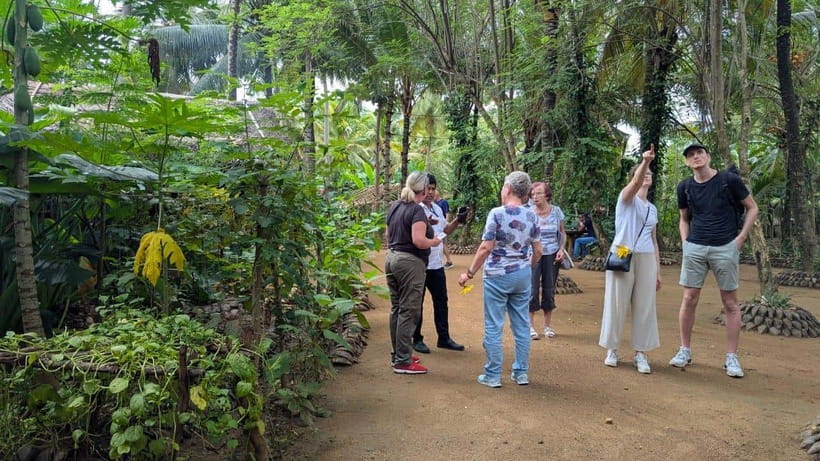
The village has been reconstructed to represent a Sri Lankan agricultural community from roughly 200 years ago. That framing gives the visit a clear purpose. You are not simply eating lunch at a restaurant decorated with rural objects. You move through different parts of the site, see working demonstrations, and take part in food preparation.
I like this kind of activity because food explains daily life better than a row of display cases. A cinnamon stick, a garden vegetable, and a clay or open-fire cooking method all connect to work, trade, family life, and local taste. You get a small but useful picture of how food was gathered and prepared before modern kitchens made every step invisible.
The tour is offered as a private group, which should make it easier to ask questions and take part at your own pace. English and Sinhala are available. No guide names are provided, but the cooking session is led by local women, who are the people you will spend the most time with.
More Farm Cooking Classes in Sri Lanka
- Organic cooking class sigiriya (kumara & family)
★ 5.0 · 650 reviews - Kandy Village Cooking Class
★ 5.0 · 536 reviews - Organic Cooking Class sigiriya home Kitchen(Kumara & family)
★ 5.0 · 116 reviews
A cool drink, then an old mine
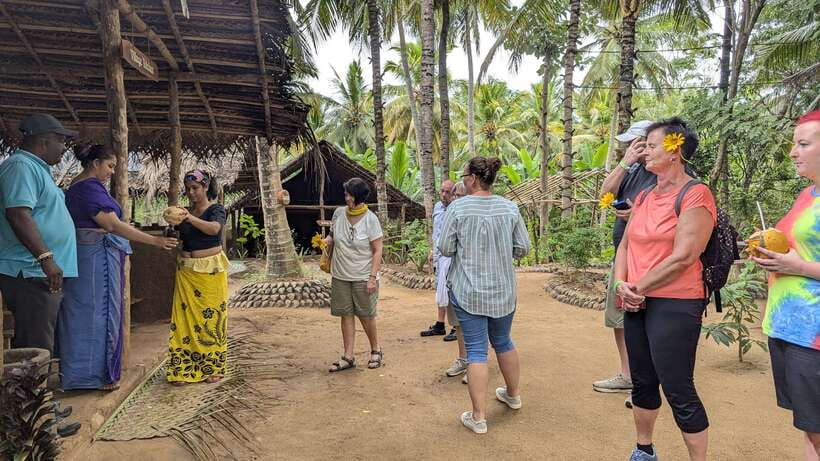
Your visit begins with a welcome drink. The main description calls it cinnamon tea, while the included-items section lists a refreshing king coconut. Since those are different drinks, confirm the exact welcome refreshment when you book or arrive. It is a small detail, but clear information at the start helps avoid confusion later.
The ancient gem mine is the first major stop. Sri Lanka is well known for its stones, and this part gives the activity a link to an important local trade. You learn how miners searched for stones and see a demonstration of the methods used in earlier times.
The wording promises a guided visit and a demonstration, not a chance to mine for a stone yourself. That distinction matters. Think of this as a short cultural explanation rather than a full mining excursion. It should suit you if you want context about local work and trade, but it may feel brief if you have come specifically for geology or gem buying.
Still, the mine helps the day avoid becoming only a cooking lesson. You see another side of village life, where farming was not the only source of income. Keep your expectations practical: the experience provides an introduction to the mining process, not a detailed technical course.
Watching cinnamon become a useful spice
The cinnamon-peeling demonstration is another welcome change of pace. Skilled workers show how the bark is prepared, giving you a close look at a process many people know only from the finished sticks in a spice jar.
Cinnamon has an important place in Sri Lankan food and trade. Here, the value is in seeing the manual work behind the ingredient. The demonstration also gives you something concrete to watch before you begin handling food yourself.
You may not spend long at this stop, since the whole visit lasts two hours and includes several activities. If cinnamon interests you, ask questions while the demonstration is taking place. This is the sort of moment where a short explanation from the artisan can add more than a long speech from a guide.
Picking vegetables from the garden
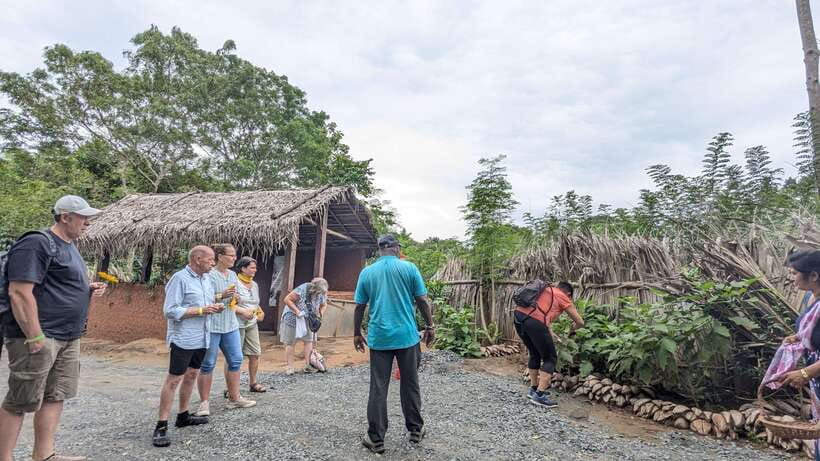
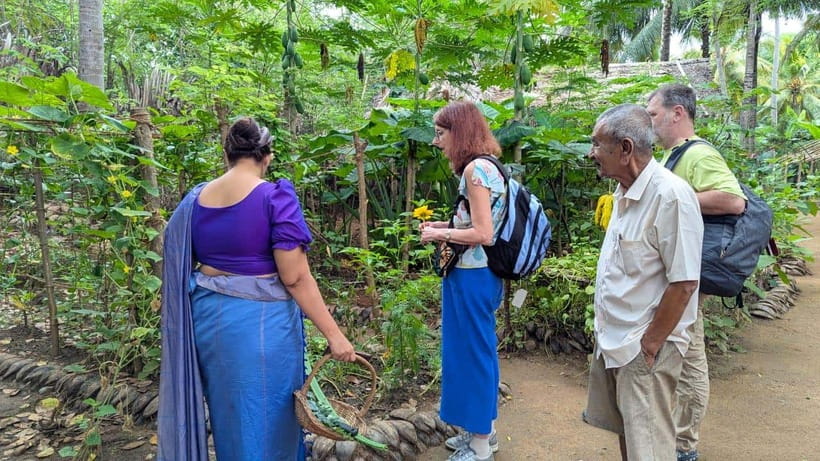
The cooking session begins in the garden. You walk among the crops and pick vegetables for the meal you are about to prepare. That simple act changes the tone of the class. Instead of receiving a premeasured basket, you see where at least some of the ingredients begin.
This was one of the strongest parts of the experience for me. The garden is not just scenery. It explains the relationship between the village, its food, and the kitchen. You can look at the produce, ask what it is used for, and then recognize it again when it reaches the cooking pot.
The garden visit also makes the activity suitable for families and first-time cooks. You do not need advanced skills to take part in picking vegetables. The setting gives you something to do right away, and the staff are there to show you what to choose.
The material describes the produce as fresh and organic. That is part of the appeal, but you should not assume you will harvest every ingredient used in the meal. The activity promises hands-on vegetable picking, not a complete account of the farm’s growing methods.
Same place, a different menu:
- Ella: Traditional Sri Lankan Cooking Class
★ 4.9 · 788 reviews - Sri Lanka Cooking Class with Granny
★ 5.0 · 587 reviews - Sea waves sri lankan cooking class
★ 5.0 · 467 reviews - Ella: Sri Lankan Cooking Class with Neranji at Homestay
★ 5.0 · 276 reviews
Cooking with local women in a traditional kitchen
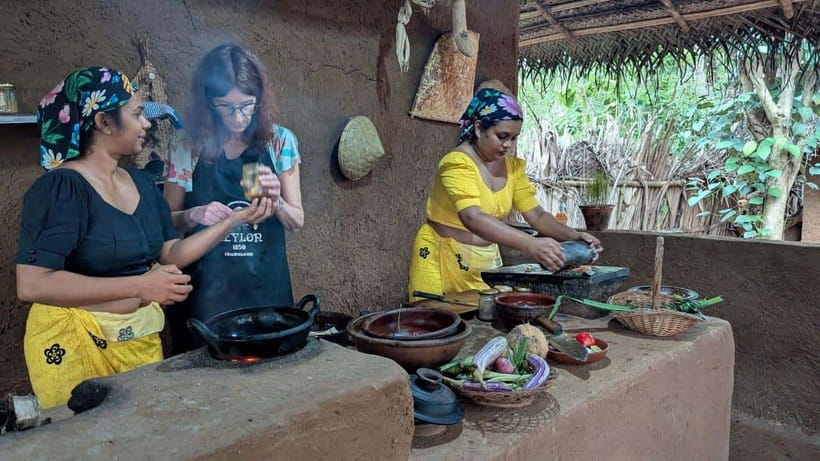
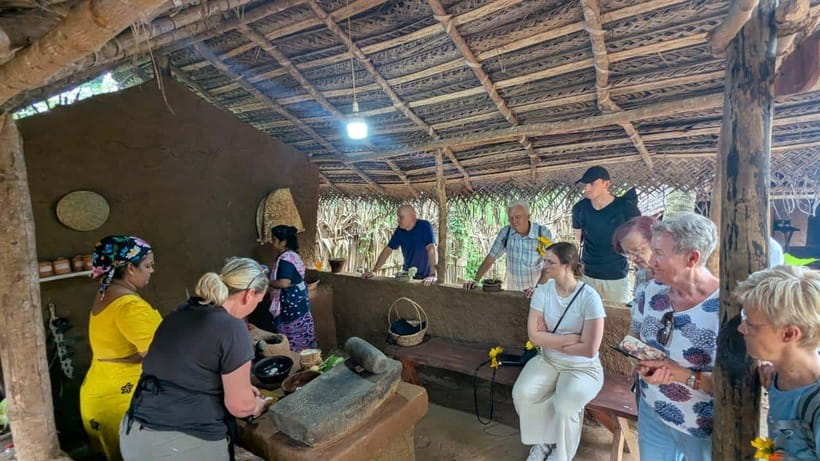
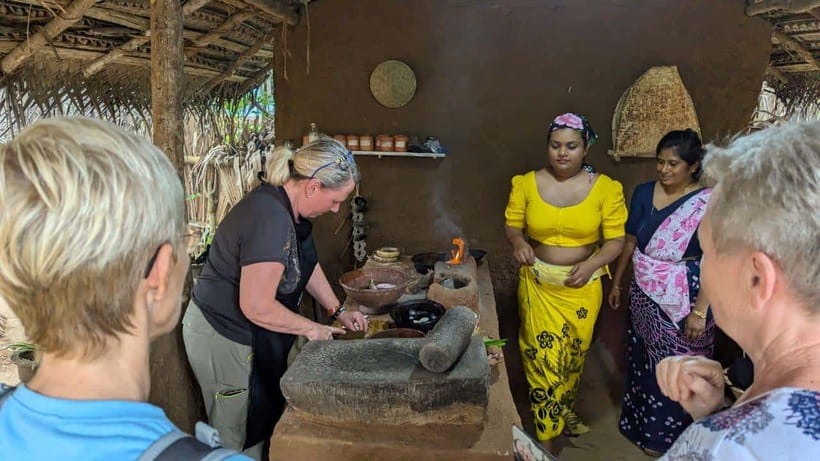
The heart of the visit is the cooking class. You join local women in a village kitchen and help prepare Sri Lankan dishes using older recipes and techniques. The session includes grinding spices and cooking over an open flame, which brings you closer to the work than a demonstration from behind a counter.
This is where the $30 price starts to make more sense. You are paying for participation, not just a plate of food. You pick produce, prepare ingredients, learn how the dishes are put together, and then eat the result.
The cooking has received the warmest praise from the available feedback. The class has been described as informative and enjoyable, with especially good coconut sambal and dhal. Those dishes are useful introductions to Sri Lankan food because they show two important sides of the meal: the creamy, seasoned lentil dish and the sharp, fresh contrast of coconut and spice.
Expect a social kitchen rather than a polished cooking studio. That is a good thing if you want to see how food is made in a village setting. It may be less suitable if you want printed recipes, exact measurements, or a formal chef-led lesson. The information provided does not promise recipe cards or a take-home cookbook.
The open-flame cooking also means the class is about method as much as ingredients. You can see how heat, spice, and timing shape the food. Ask about the seasonings as you work, especially if you want to repeat the dishes at home.
Eating the meal you helped prepare
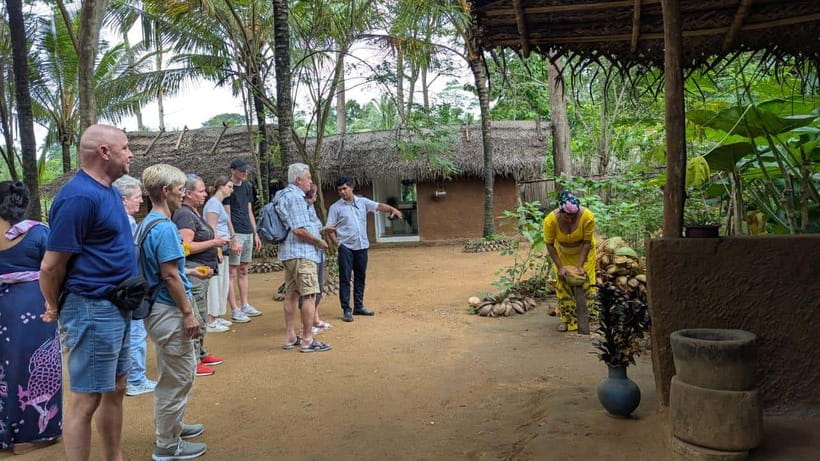
After the class, you sit down to eat the dishes made during the session. This shared meal is more satisfying because you have handled the ingredients and taken part in the work. It also gives you a chance to slow down after the walking and cooking.
The meal is included in the price. Drinks are the important exception to watch. One person was surprised to find beverages charged separately at prices several times higher than shop prices, without being told ahead of time. I would ask two direct questions before ordering: which drinks are included, and what will any extras cost?
That warning does not cancel out the value of the food. It simply means you should not assume that every item placed on the table is part of the package. The meal itself is the main included food experience, while additional beverages may be treated separately.
The communal setting is part of the point. You are eating in the same place where the food was prepared, with the cooking process still fresh in your mind. If you prefer a quiet restaurant meal with a broad menu, this is not that. If you like knowing how lunch came together, it is a better fit.
The melas and the limits of a two-hour schedule
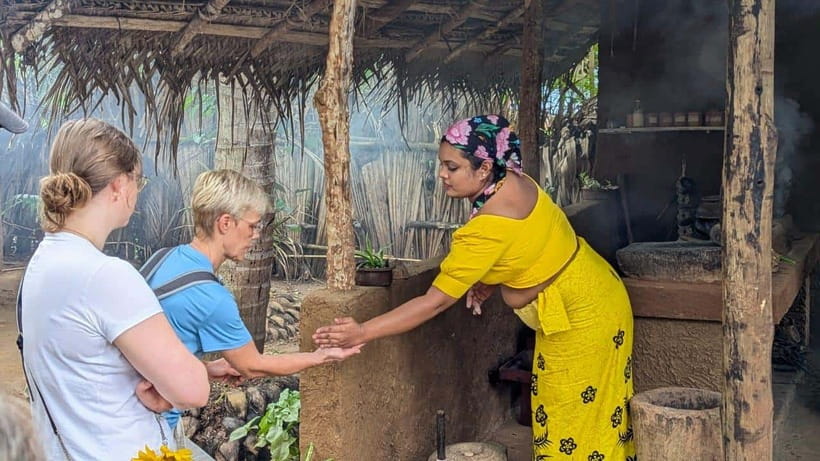
The experience also includes participation in local melas, described as traditional fairs with music, dance, crafts, and local delicacies. This promises a wider look at community life beyond the kitchen.
The timing deserves a question. The advertised duration is two hours, and the walking portion is described as about 90 minutes. The program also includes the mine, cinnamon demonstration, garden, cooking class, meal, and melas. Ask how the activities are arranged on your chosen day, since a two-hour visit cannot allow long, leisurely time at every stop.
You might see a compact presentation of the melas rather than a full village festival. That does not make it pointless, but it helps set the right expectation. The exact scale and timing are not specified, so do not book this expecting an entire evening fair.
The walking itself is worth noting. A full 90 minutes on foot, combined with time standing in the garden and kitchen, makes comfortable shoes a must. The activity is not suitable for wheelchair users. Anyone who finds uneven outdoor paths or extended standing difficult should ask about the route before paying.
Is $30 a fair price?
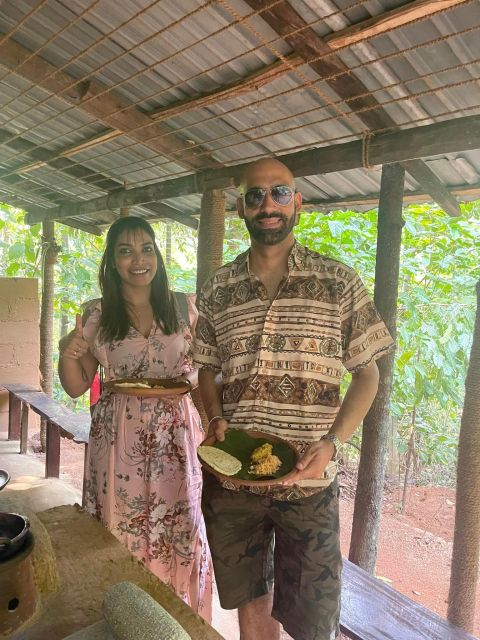
At $30 per person, this is priced above a simple Sri Lankan lunch or a short garden visit. The value depends on how much you want to do. You are paying for a private-group format, a series of demonstrations, a garden visit, hands-on cooking, and the prepared meal, all near one of Udawalawe’s main attractions.
I would call it fair value for someone who wants a structured cultural activity and an active kitchen session. The cooking class is the strongest reason to book. The old mine, cinnamon work, and village setting add useful variety, but the meal and the chance to work with the local women carry most of the appeal.
The price feels less convincing if you only want to watch. Since the activity is short, you need to take part to get your money’s worth. Pick the vegetables, help grind spices, ask questions, and stay involved during preparation.
The extra-drink issue also affects the final cost. Bring the advertised $30 into your comparison, then allow for the possibility of separate beverage charges. Confirm those prices before accepting anything beyond the included meal and welcome drink.
Who will enjoy this Udawalawe experience?
I would recommend it to you if you want more than a wildlife stop in Udawalawe. It works especially well for:
- First-time visitors to Sri Lankan food: You learn by handling ingredients and eating what you prepare.
- Families and private groups: The garden and hands-on tasks give different ages something to do.
- Cooks and food lovers: The spice grinding, open-flame methods, sambal, and dhal offer useful local detail.
- Visitors with a spare afternoon: The location near the elephant orphanage makes it easy to pair with other Udawalawe plans.
- People interested in rural work: The mine and cinnamon demonstration add context beyond the meal.
I would be more cautious if you want a long, detailed history lesson, a professional cooking certificate, or a fully accessible route. The program is compact, active, and practical. It is not designed as a museum tour or a specialist mining course.
Booking details worth checking
The tour lasts two hours, with availability depending on the starting time you choose. It is offered for private groups and has live guidance in English or Sinhala.
You can cancel up to 24 hours before the activity for a full refund. A reserve-now, pay-later option is also listed, which helps if your Udawalawe plans depend on wildlife viewing or changing road conditions.
Before confirming, I would check three things: the exact welcome drink, the cost of additional beverages, and how the melas fit into the short schedule. Those questions address the only notable uncertainties in the information provided.
Should you book it?
Book this experience if you want a personal, food-focused look at village life and are happy to walk, stand, and take part. The garden-to-kitchen format is the real strength, and the coconut sambal and dhal are likely to be the most memorable results.
Skip it if you want a low-cost meal, a long formal tour, or easy wheelchair access. At $30, you should treat it as a cultural workshop with lunch, not as a cheap restaurant visit. Confirm the drink charges first, then book if the cooking and local setting sound like the reason you came to Udawalawe.
FAQ
Where is the experience located?
The village is about 1.2 kilometers from Udawalawe Elephant Orphanage in Sri Lanka’s Sabaragamuwa Province.
How long does the activity last?
The advertised duration is two hours. About 90 minutes of the visit involves walking around the site.
What languages are available?
Live guidance is available in English and Sinhala.
Is the cooking class included?
Yes. The experience includes picking vegetables from the garden and taking part in a traditional cooking class with local women. The meal made during the class is also included.
Is the welcome drink included?
A welcome drink is included, but the information gives two different descriptions: cinnamon tea in one place and king coconut in another. Confirm the exact drink when booking.
Is the activity suitable for wheelchair users?
No. The activity is listed as unsuitable for wheelchair users because it involves walking around the village site.
Just added around Sri Lanka
- Ella: Sri Lankan Authentic Cooking expirience★ 5.0 · 59 reviews
- Ella Cook With Sadamali★ 5.0 · 70 reviews
- Ella Sri Lanka : Mom’s Kitchen Cooking class★ 5.0 · 113 reviews
- Cooking with Arun & Tamil Family★ 5.0 · 14 reviews
- Cooking Class: Sajee’s Place Cooking Class sigiriya★ 5.0 · 117 reviews
- Colombo: Local Market Tour & Cooking Demo with Lunch★ 4.6 · 3 reviews
- Authentic Sri Lankan Cooking Class in Kandy by Local Family★ 4.9 · 15 reviews
- Vegan Cooking Class Colombo with Market Tour★ 5.0 · 9 reviews
Farm & Countryside Cooking Classes, compared.
Half-Day Thai Cooking Class at Organic Farm in Chiang Mai
Read our review →
Cooking Class and Lunch at a Tuscan Farmhouse with Local Market Tour from Florence
Read our review →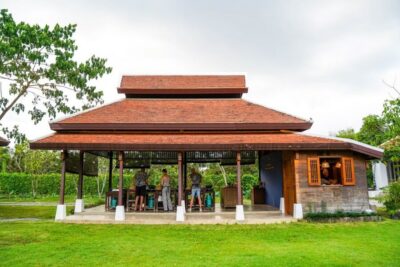
Chiang Mai: Authentic Cooking Class with Market & Farm Visit
Read our review →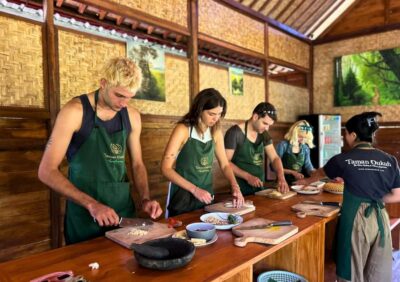
Ubud: Balinese Cooking Class at an Organic Farm
Read our review →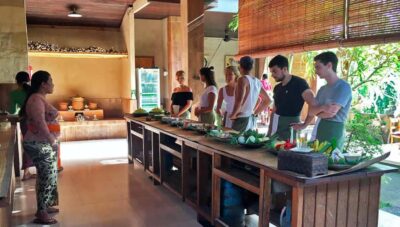
Ubud: Authentic Cooking Class in a Local Village
Read our review →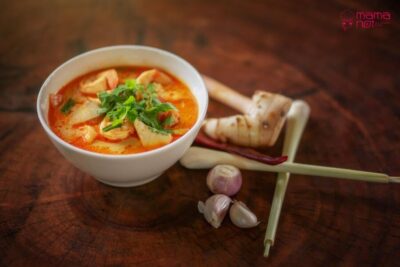
Chiang Mai: Cooking Class with Organic Farm at Mama Noi
Read our review →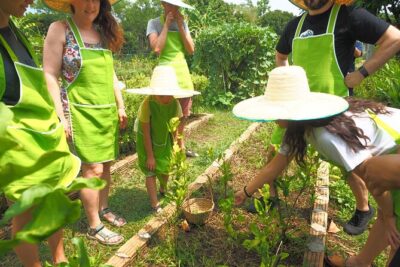

Hands-On Cooking Class & Farmhouse Tour on the Amalfi Coast
Read our review →Browse the lists this tour appears in