
Review · INDIA
Alleppey Homely Cooking Class
Kerala cooking becomes much easier to understand when you see it made in a family kitchen. At this three-hour Alleppey class, Shilpa introduces you to local ingredients, traditional tools, and everyday recipes before serving the food with rice or appam. The meal is shared in a private home setting, not a restaurant classroom.
I like the warm family welcome and the chance to learn dishes you may already have tasted in Kerala, such as fish curry and avial. I also like the practical details, from seeing a coconut grater in use to adjusting the spice level to suit you. The main consideration is that this may feel more like helping with a family meal than a formal, hands-on cooking school. You may not receive printed recipes, so take notes.
Key points to know before you book
- Shilpa hosts the class in her family home, with her husband, daughter, parents, and nearby relatives part of the local family setting.
- The menu covers a full Kerala meal, including fish pollichathu, fish curry, prawns puttu, avial, thoran, pickle, papad, payasam, and tea.
- You may help prepare the dishes, though the balance between demonstration and hands-on work can vary.
- The meal is served traditionally, with rice or appam and, in one experience, food eaten from a banana leaf.
- The spice level can be adjusted, making the class more approachable for people unused to Kerala heat.
- Transportation is not included, and the class is not suitable for people with food allergies.
Entering Shilpa’s home kitchen in Alleppey
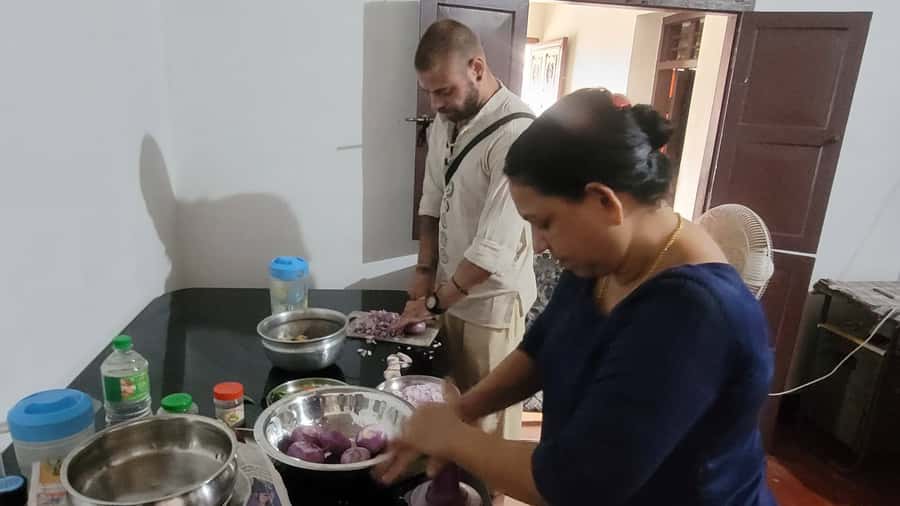
The special part of this experience is the setting. You are welcomed into a real family home in Kerala, where cooking is tied to daily life rather than presented as a polished performance for visitors. The host, Shilpa, speaks English and explains the dishes, ingredients, and cooking methods as the meal comes together.
Her family lives nearby and has been connected to the home for a long time. That gives the class a personal feel. You may meet Shilpa’s husband and daughter, and the conversation can move beyond food into ordinary life in Alleppey. Joseph particularly enjoyed hearing stories about life in the area, while Lucie described the family as friendly and caring.
I like this kind of introduction to Kerala because food does the work of breaking down cultural barriers. You are not just memorizing a recipe. You are seeing how coconut, curry leaves, seafood, souring agents, and spice are used in a local household.
The format is private, so you are not placed in a large group with strangers. That matters if you want to ask questions, compare cooking methods, or discuss how to recreate a dish at home. It also means the pace can feel more personal.
More Hands-On Workshops in India:
- Pink City Cooking Class
★ 5.0 · 452 reviews - Five Course Cooking Class & Meal
★ 5.0 · 250 reviews - Veg and Non veg : Private Cooking Class in Delhi home (7 meal)
★ 5.0 · 226 reviews
The ingredients and tools that explain Kerala food
The class begins with an introduction to the ingredients used in Kerala cooking. Expect to learn about vegetables, seafood, coconut, spices, curry leaves, pickles, and the ingredients that give each dish its sour, hot, salty, or sweet edge.
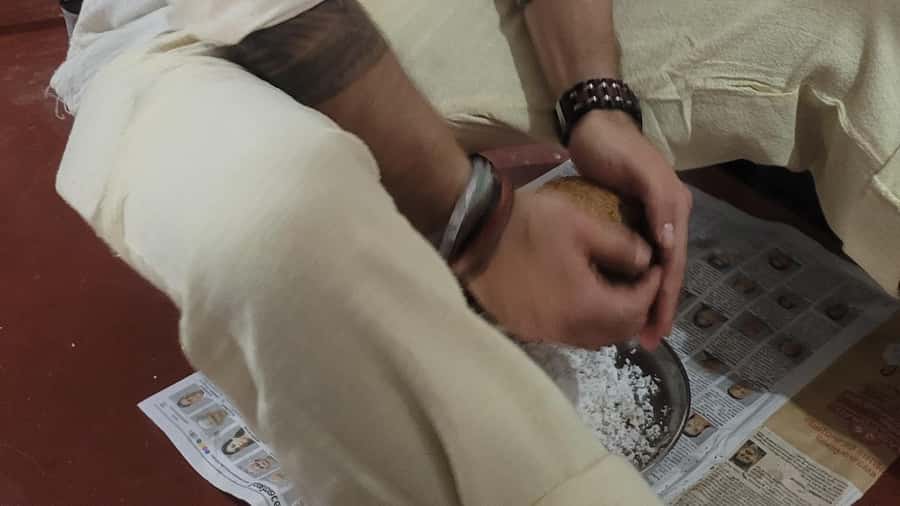
One detail that stayed with Sarah was the traditional coconut grater. It is the sort of tool that can look simple until you see how central fresh coconut is to Kerala food. Coconut is not just a garnish here. It can thicken a dish, add sweetness, provide texture, or form the base of a vegetable preparation.
This ingredient introduction is useful because Kerala recipes can look difficult when you first encounter a long list of spices. Shilpa explains what goes into each dish and offers cooking tips as she works. That helps you understand the purpose of an ingredient instead of treating the recipe as a strict formula.
You should bring a notebook or use your phone to record notes. One person felt the class would have been even more useful with written recipes and an ingredient list. That is a fair point. If you want to cook the dishes at home, ask Shilpa if she can share the measurements or write down the main steps during the class.
Fish pollichathu and Kerala’s seafood tradition
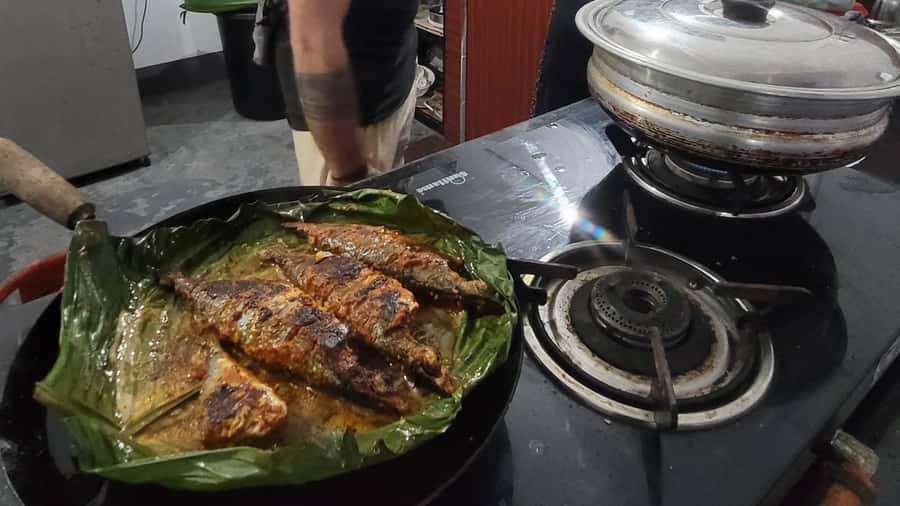
Fish pollichathu is one of the most distinctive dishes on the menu. The fish is marinated with spices, wrapped in a banana leaf, and then grilled or steamed. The leaf helps hold in moisture and adds its own gentle scent to the finished dish.
This is a good example of how Kerala cooking uses simple materials in clever ways. The banana leaf is not there just for decoration. It helps protect the fish while it cooks and makes the dish feel connected to the region.
Fish curry brings a different lesson. Kerala fish curry often combines seafood with coconut milk, spices, and a sharp note from tamarind or raw mango. That sour edge is important. It keeps the curry from tasting heavy and gives it the clean, lively flavor associated with many coastal Kerala dishes.
You eat these dishes with rice or appam. Appam is a soft, lacy rice pancake with a slightly sweet center, and it works especially well with a sauce. The supplied meal description confirms rice or appam, though you should check which is being served when you book.
Prawns puttu adds a less familiar dish
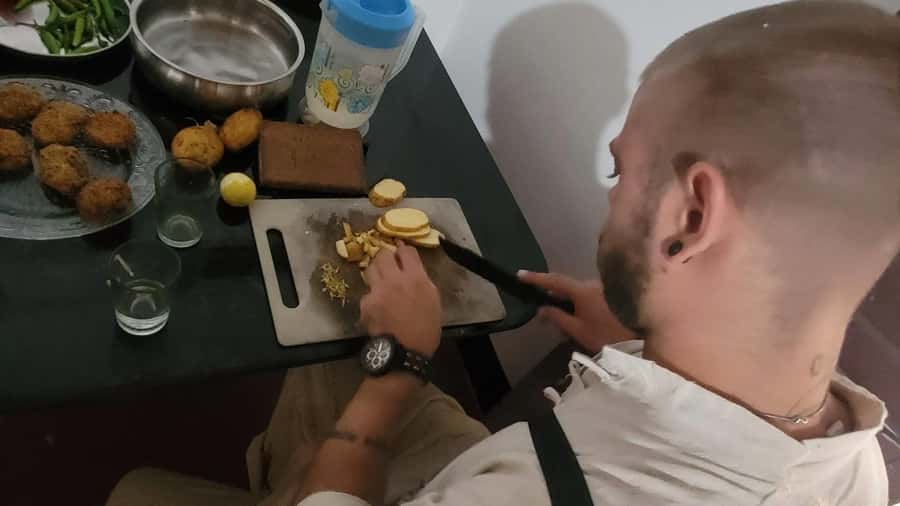
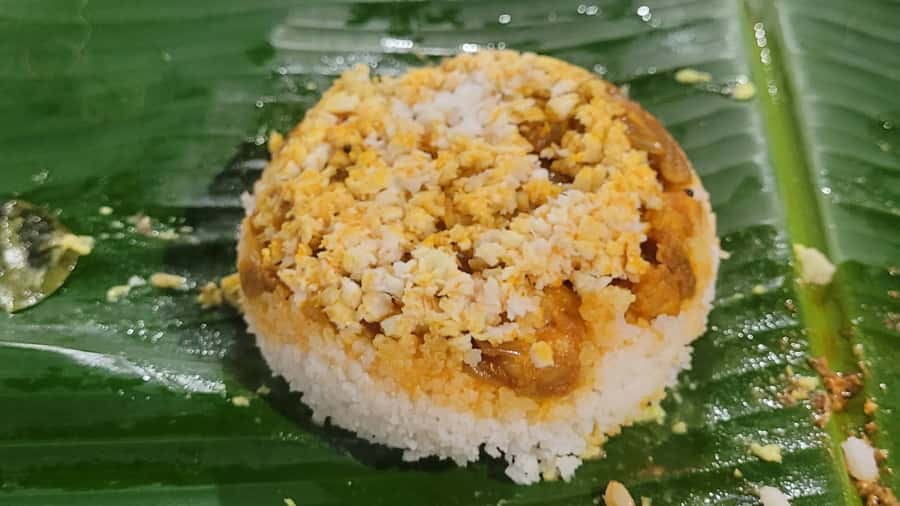
Prawns puttu may be the most unusual item for many people. It combines ground prawns, grated coconut, and spices, then cooks the mixture by steaming it in a mold or traditional container.
Puttu is often associated with steamed layers of rice and coconut, but this seafood version gives you a different way to experience the dish. It shows how familiar Kerala ingredients can be arranged into something with a new texture and shape.
The menu is not limited to the dishes most commonly found on a restaurant menu. That is one reason this class is more useful than simply ordering a Kerala meal. You get a look at home-style food, including dishes that may not be the first things offered to an international diner.
The seafood focus also makes the class a better match for people who want to understand coastal Kerala cooking. If you do not eat fish or prawns, this is probably not the right activity for you. The experience is also not suitable for people with food allergies.
A few more cooking classes around India worth a look
- Indian Cooking Class in an Authentic Local Home – Learn 6 Dishes
★ 5.0 · 195 reviews - Authentic Indian Cooking Classes at Palolem Beach Road Goa
★ 5.0 · 132 reviews - Jaipur Market Tour & Vegetarian Rajasthani Home Cooking Class
★ 5.0 · 113 reviews - Cooking Class in Jaipur – Family Experience with Meal & Transport
★ 5.0 · 101 reviews
Avial, thoran, and the vegetable side of the meal
Kerala food is not only about seafood. Avial is a mixed vegetable dish cooked with coconut and yogurt, then finished with coconut oil and curry leaves. It is mild and slightly tangy, giving the meal a softer counterpoint to the sharper fish curry.
Thoran is drier and more textured. Vegetables such as beans, cabbage, or carrots are cooked with grated coconut, mustard seeds, and curry leaves. It is the sort of side dish that looks modest but adds a great deal to a plate of rice.
These vegetable dishes are useful for anyone trying to bring more balance to home cooking. They show how coconut can create body without relying on a thick cream sauce, and how a small amount of seasoning can make vegetables the main event rather than an afterthought.
I also like the way these dishes help you understand a traditional Kerala meal as a collection of small contrasts. You get soft rice or appam, crisp papad, moist curry, dry vegetables, sharp pickle, and a sweet finish. Each item has a job on the plate.
Pickle, papad, payasam, and spiced tea
Pickle gives the meal a strong salty and sour accent. Mango and lime are common choices, preserved with spices, salt, and oil. You only need a little, but that little can wake up the rest of the plate.
Papad is the crisp element. In Kerala, it may be made with rice flour and served as a side dish or starter. Break it over rice, use it to scoop up food, or simply enjoy the contrast with the softer dishes.
Save room for payasam. This creamy dessert can be made with milk, sugar, or jaggery, and may include cardamom, saffron, or nuts. Ada pradhaman, made with rice flakes and jaggery, is a well-known version.
Paige specifically felt the dessert was worth making room for. That is useful advice because a large Kerala meal can leave you full before the sweet course arrives. If you have a choice, ask about the day’s payasam and make a little space.
The class also includes tea. Kerala is known for strong tea made with milk and sugar, sometimes flavored with cardamom or ginger. Tea gives the session a relaxed finish and offers one more small look at everyday food habits.
A cooking class, or a family meal demonstration?
You should set your expectations carefully. The activity is described as a cooking class, and you will learn about recipes, ingredients, and preparation. Still, the experience may not follow the structured format of a professional school, where every participant prepares each dish at a separate station.
Fanny’s experience was more observational. She watched several dishes being prepared and received clear explanations, but felt it was less hands-on than expected. Other people helped Shilpa cook and spent hours discussing the recipes, so the amount of participation can vary.
I would treat this as a home cooking lesson with shared meal, rather than a technical chef’s workshop. That is a strength if you want conversation, local context, and a welcoming family setting. It may be a weakness if you want exact measurements, printed recipes, and full control over every dish.
Ask at the start how much you will be able to prepare yourself. You can also ask Shilpa to slow down for any step you want to repeat at home. A few notes on spice quantities, cooking times, and ingredient substitutions will make the experience more useful later.
Eating in the traditional Kerala style
The meal is served with rice or appam, and one class included eating with the family from a banana leaf. This is a memorable part of the experience because the serving style is tied closely to Kerala food culture.
A banana leaf gives the meal a different rhythm. Rather than treating each dish as a separate course, you combine small portions in different ways with rice, curry, vegetables, pickle, and papad. The result is informal, social, and very much about balance.
You should not expect a quiet restaurant meal. The family setting encourages conversation, and the food is served as part of the visit rather than simply placed in front of you. That makes the experience personal, though people who prefer a quick, private meal may find the pace less predictable.
The portions can be generous. One person wished it had been possible to take leftovers home. There is no doggy bag listed as part of the activity, so ask politely if you are concerned about waste, but do not count on taking food away.
What three hours feels like
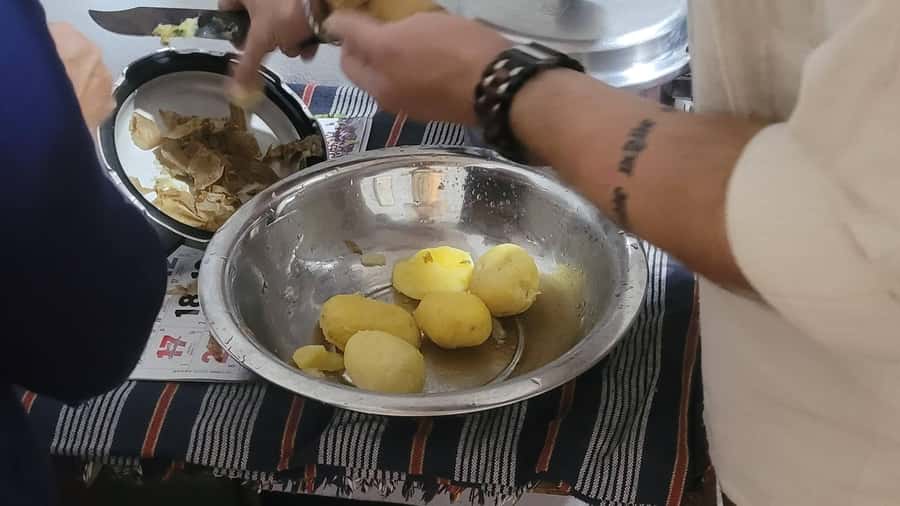
Three hours is long enough to cover the menu without turning the experience into an all-day commitment. You have time to discuss ingredients, watch or help with preparation, eat the meal, and finish with tea.
The schedule has some flexibility because this is a private home experience. Starting times depend on availability, and the meal may feel more like an extended visit than a tightly timed class. That is useful if you enjoy conversation, but less suitable if you have a packed sightseeing schedule immediately afterward.
You should allow time to get to the home yourself. Pickup and transportation are not included. One person described receiving pickup and drop-off help, but that should be treated as a personal arrangement rather than a standard inclusion. Confirm the meeting details before you go.
The meeting point is the host’s home. Since it is a private residence, make sure you have the exact address and a clear way to contact the host. Shilpa has been praised for responding promptly to messages, which helps with practical planning.
Is $32 good value?
At $32 per person, the price is fair if you value the family setting and the amount of food included. You receive a three-hour cooking experience, an English-speaking host, lunch or dinner, tea, and a broad menu of Kerala dishes.
The value is stronger than a simple meal because you are also paying for the explanation of ingredients, cooking methods, and local food customs. You get several seafood and vegetable preparations, dessert, and tea rather than one main dish.
The price is less compelling if you want a formal class with individual workstations, written recipes, or a professional chef teaching precise techniques. Those features are not promised. The activity is best judged as a personal introduction to home-style Kerala cooking.
For a first visit to Alleppey, I think the price works well for people who want food and conversation in equal measure. It gives you a meal you may not easily recreate from a restaurant menu and a better understanding of how the dishes fit together.
Who will enjoy this Alleppey cooking class?
I would recommend it to couples, solo visitors, and small private groups who enjoy meeting local families. It is also a good choice if you have already eaten Kerala food and want to understand what goes into dishes such as fish curry, avial, or thoran.
It suits curious home cooks, though you should be comfortable learning by watching and asking questions. A professional chef may find the techniques interesting, as one participant who works as a chef did, but should not expect a commercial kitchen setup.
The class is less suitable if you have seafood restrictions, food allergies, or a strong dislike of coconut and spice. It is also not the best fit if you need transportation included or want a fully documented recipe course.
The spice level can be adapted, which is helpful. Tell Shilpa what you normally eat and how much heat you can manage. You will get more from the meal if you can enjoy the range of flavors instead of trying to avoid every spicy element.
Should you book the Alleppey Homely Cooking Class?
Book this if you want a personal, family-based introduction to Kerala food rather than a polished cooking school. Shilpa’s warmth, the wide menu, the traditional serving style, and the chance to talk about Alleppey life make it a strong choice for food-focused visitors.
Before booking, accept that participation may vary and recipes may not be supplied in writing. Confirm the meeting address, arrange your own transport, mention allergies, and ask how hands-on the session will be.
For $32, the experience offers good value when you care as much about the people and setting as the food. If you want exact culinary training, look for a class that promises printed recipes and individual preparation. If you want to sit down in a Kerala home, learn the logic behind a full meal, and finish with payasam and tea, this is an easy one to recommend.
FAQ
Where does the cooking class take place?
The class takes place in the host’s home in Alleppey, where the host’s family and nearby relatives have lived for a long time.
How long does the experience last?
The cooking class lasts three hours. Starting times depend on availability.
How much does the cooking class cost?
The price is $32 per person.
Who leads the cooking class?
Shilpa is the English-speaking host. Her family may also be present during the home visit.
What food is included?
The menu may include fish pollichathu, fish curry, prawns puttu, avial, thoran, pickle, papad, payasam, and tea. Food is served with rice or appam.
Is lunch or dinner included?
Yes. Lunch or dinner and tea are included in the activity.
Is transportation included?
No. Pickup and transportation are not included as standard parts of the activity.
Can the spice level be adjusted?
Yes. The spice level can be adapted to suit your preference.
Is the activity suitable for people with food allergies?
No. The activity is not suitable for people with food allergies. Alcohol and drugs are not allowed.
Just added around India
- Discover Bangalore’s Cuisine: Private Half-Day Cooking Experience★ 5.0 · 3 reviews
- Traditional Gowda Cooking Class and Meal in a Bangalore Home★ 5.0 · 31 reviews
- Private South Indian Cooking Class in Bangalore with a Local★ 5.0 · 11 reviews
- Private Cooking and Dining Experience in Bengaluru★ 5.0 · 35 reviews
- Cooking experience in Bangalore, a half day tour★ 5.0 · 5 reviews
- Bangalore: Traditional Cooking Classes & Dinner with Chef Family★ 3.5 · 4 reviews
- Agra Cooking Classes (Pick up and Drop available)★ 5.0 · 34 reviews
- Talk & Enjoy with Delhi locals at their home while Cooking★ 5.0 · 19 reviews
Cooking Classes, compared.
Half-Day Thai Cooking Class at Organic Farm in Chiang Mai
Read our review →
Florence: Pasta Cooking Class with Unlimited Wine
Read our review →
3 in 1 Cooking Class near Navona: Fettuccine, Ravioli & Tiramisu
Read our review →
Hanoi Cooking Class: Culture, Local Market & Meaning CSR Impact
Read our review →
5 Traditional Dishes Hanoi Cooking Class with Market Trip
Read our review →
Cooking Class and Lunch at a Tuscan Farmhouse with Local Market Tour from Florence
Read our review →
Chiang Mai: Cooking Class, Market & Thai Herbs Garden Tour
Read our review →Browse the lists this tour appears in