
Review · ROME
Cooking Class in Rome: Chef in a Day
Rome’s Chef in a Day is much more than a pasta demonstration. You shop for ingredients at Campo de’ Fiori, carry them into a working kitchen in Trastevere, then prepare a full Italian meal with a professional chef. You make three pasta styles, three sauces, an appetizer, a meat course, and dessert before sitting down with wine.
I like the market-to-table format, because you learn how Italians choose produce, meat, cheese, and herbs before you cook. I also like the serious hands-on approach. You roll dough, shape pasta, chop vegetables, blend sauces, and plate the food instead of watching a chef do all the work.
The main consideration is the five-hour length and the group size, which can reach 11 people. Much of the class takes place standing, and the small kitchen may feel tight when everyone is working at once.
Key points at a glance
- Three pasta shapes in one class: Prepare a stuffed pasta, a long pasta, and a short or medium pasta, each with its own sauce.
- A real market visit: Shop for seasonal ingredients at Campo de’ Fiori with guidance from the chef.
- Two well-regarded instructors: Classes may be led by Federico Alessandri or Paola, both praised for clear teaching, humor, and patience.
- Lunch and wine included: Eat the meal you helped prepare, with Italian wines served along the way.
- Recipes sent after class: You receive the pasta recipes by email so the lesson does not end in Rome.
- Small, but not private: The class requires six people to run and accepts a maximum of 11.
From Piazza Farnese to Campo de’ Fiori
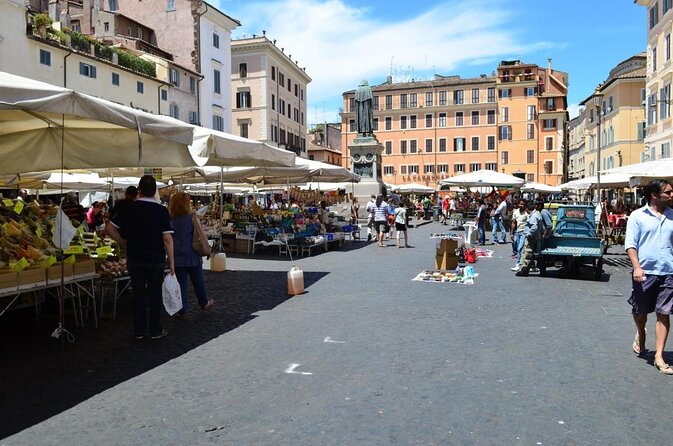
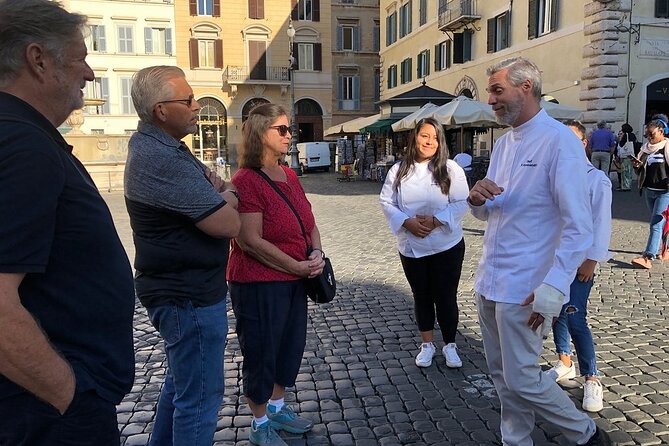
Your morning starts at 9:30 a.m. at Piazza Farnese, a handsome central square close to Campo de’ Fiori. This is a useful meeting point because the day begins with a short discussion of the menu and the ingredients you will need.
The chef sets the tone here. Depending on the date, you may work with Federico Alessandri or Paola. Federico is known for a lively teaching style, quick humor, and strong technical instruction. Paola is praised for her patience and for explaining not only what to do, but why a certain step matters.
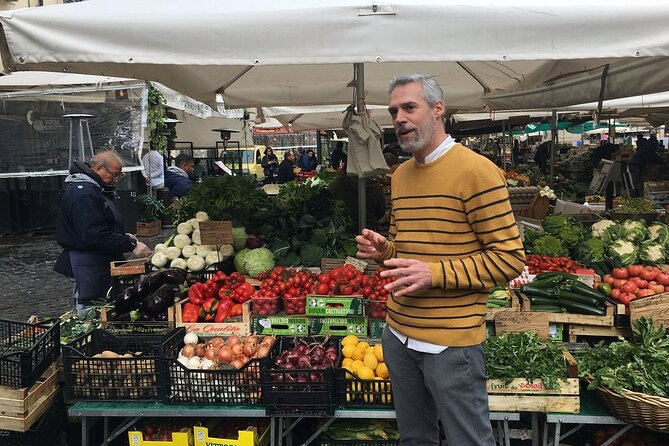
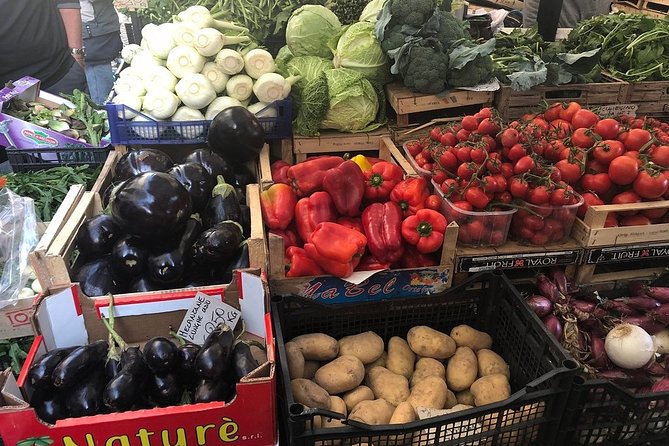
From Piazza Farnese, you head to Campo de’ Fiori. The market gives the class a sense of place that a standard pasta workshop cannot provide. Instead of arriving at a kitchen with every ingredient already measured, you see the raw materials first and help select what will go into lunch.
You may help choose vegetables, herbs, meat, cheeses, and other seasonal products. The exact menu changes, so this is not a fixed recipe show. That is a benefit if you want to understand Italian cooking as a flexible practice rather than a list of rigid instructions.
The market can also be the most crowded and active part of the morning. If you prefer a quiet, polished cooking studio from the first minute, this format may feel less tidy. If you enjoy seeing daily food shopping in central Rome, it adds useful context.
More Hands-On Workshops in Rome:
- 3 in 1 Cooking Class near Navona: Fettuccine, Ravioli & Tiramisu
★ 5.0 · 7,376 reviews - Rome: Pasta Making Class with Wine, Limoncello, and Dessert
★ 4.9 · 3,177 reviews - Rome Cooking Class: Make Pasta and 3 Spritz Cocktails
★ 5.0 · 2,937 reviews
What the market teaches you about Italian cooking
The Campo de’ Fiori stop is not just a scenic walk before the main event. The chef explains the produce, spices, herbs, meat, and cheese on offer, then uses those choices to shape the meal.
That matters because Italian cooking often depends on ingredient quality and timing. A sauce may change according to the tomatoes available. A vegetable may be prepared differently depending on its season. You learn to look at food before thinking about a recipe.
One particularly useful lesson is the connection between shopping and menu planning. You are not simply told to buy an ingredient because a printed recipe demands it. You see how a cook selects food and builds a meal around what looks good.
The class has also included items such as artichokes, chicory, puntarelle, tomato sauce, and seasonal fruit desserts. One group prepared puntarelle with anchovy, garlic, and olive oil, while another made a strawberry dessert with fresh mint. These examples show why the changing menu is part of the appeal.
Do not expect to control every menu choice. The experience promises seasonal cooking, not a private class designed entirely around your personal preferences. You should list dietary requirements in the booking notes so the chef can plan properly.
Crossing into a Trastevere cooking studio
After shopping, you make your way to the cooking space in Trastevere. Transport is not included, but the experience moves between the central meeting point, Campo de’ Fiori, and the kitchen on foot.
The cooking area is an open-plan apartment in the heart of Trastevere. Its layout allows the chef to demonstrate techniques while the group works nearby. It is a practical setting rather than a grand culinary school, which helps the class feel connected to an actual Roman home kitchen.
The group size is limited to 11 people, although six participants are required for the class to go ahead. That gives you a better chance of getting direct help than you would in a large demonstration, but it does not mean everyone has a private workstation.
One useful point from the class format is that an assistant may help with washing vegetables, clearing plates, and keeping the work moving. That matters during a five-hour session. Without some organization, a group class can spend too much time waiting for basic tasks to finish.
Still, space can become a concern when the class is full. One poor experience described difficulty hearing and rolling pasta in a crowded room, although the official maximum is 11 people. If you want complete personal attention or plenty of elbow room, ask about arranging a private class and expect a higher price.
Three pasta styles, three sauces
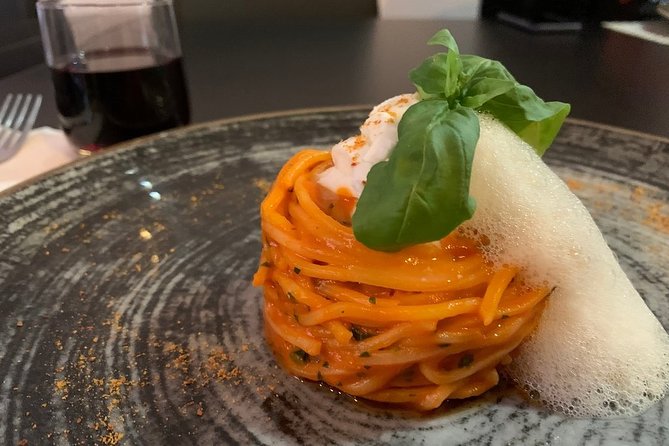
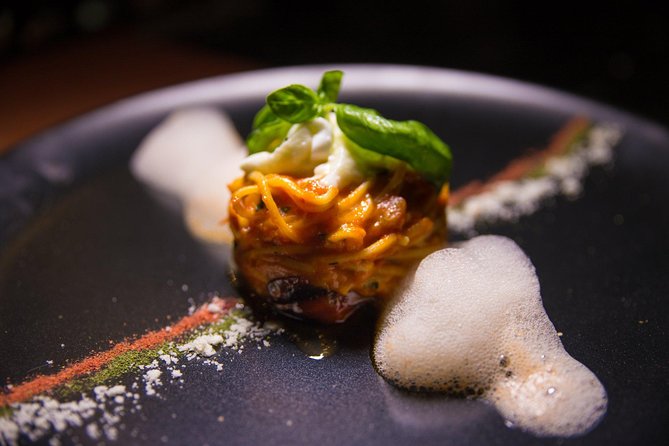
The central lesson is the preparation of three different pasta types. You make a stuffed pasta, a long pasta, and a short or medium pasta, then pair each with a different sauce.
This variety is one of the strongest reasons to choose the class. A short pasta lesson may teach you one dough and one sauce. Here, you compare different textures, shaping methods, and cooking needs in the same morning.
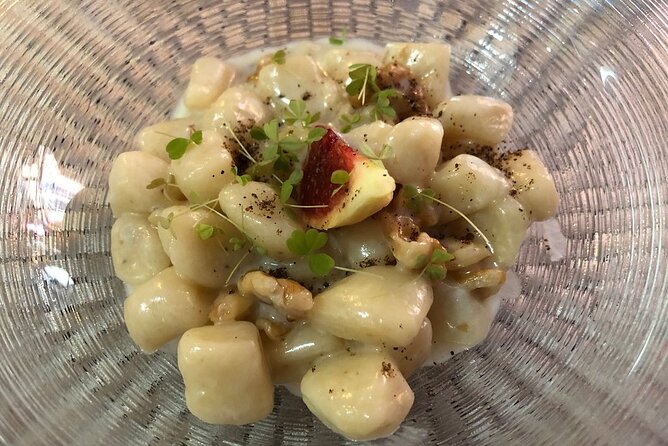
The class may include egg pasta made with flour, pasta made with semolina and water, and potato gnocchi. The precise selection depends on the seasonal menu and the chef, but the range gives you more than one model to practice at home.
You work with the dough yourself. That means mixing, kneading, feeling the texture, rolling, and shaping. You also chop vegetables, make sauces, and help present the finished dishes. The emphasis is on learning through your hands, not copying a chef from across the room.
That approach suits beginners because you receive help at each stage. It also works for experienced home cooks. Even people who already cook often appreciate instruction about dough texture, sauce balance, timing, and the reasons behind traditional methods.
The recipes are not the only take-home benefit. The chefs explain how to adjust a dish for seasonal ingredients and how to build a basic sauce that can support several meals. You may learn how to keep pesto fresh and bright, how to make a tomato sauce from scratch, or how to pair a sauce with a particular pasta shape.
A few more cooking classes around Rome worth a look
- Rome: 3-in-1 Fettuccine, Ravioli, and Tiramisu Cooking Class
★ 4.9 · 2,704 reviews - Rome: Fettuccine Pasta Cooking Class in Rome’s City Center
★ 4.8 · 2,414 reviews - Fettuccine & Tiramisù: Cooking Class with Wine & Limoncello
★ 4.9 · 2,103 reviews - Pasta Cooking Class Near the Colosseum with 3 Spritz Cocktails
★ 5.0 · 1,686 reviews
The meal includes more than pasta
Although pasta is the star, the menu is built as a full meal. It can include an appetizer, homemade pastas, a meat course, dessert, and wine.
This makes the $147.49 price easier to assess. You are paying for about five hours of instruction, a market visit, the ingredients, a multi-course lunch, wine, and recipes. It is not cheap if you only want to learn how to roll one sheet of pasta. It is fairer value if you want a long, active food experience that replaces a meal and teaches skills you can use later.
The meal also gives the class a satisfying finish. After standing, chopping, shaping, and cooking, you sit in the dining area and eat the food prepared by the group. Wine is included, with both red and white wine served during the meal.
The class is not simply a tasting. Your work affects what appears on the table, which makes the final lunch more rewarding. You also get to see how the separate parts of the menu come together, from appetizer to dessert.
Portions can be generous. You may leave very full, especially after several pasta dishes and wine. An espresso is not listed as included, so do not count on a coffee service at the end.
The teaching style matters
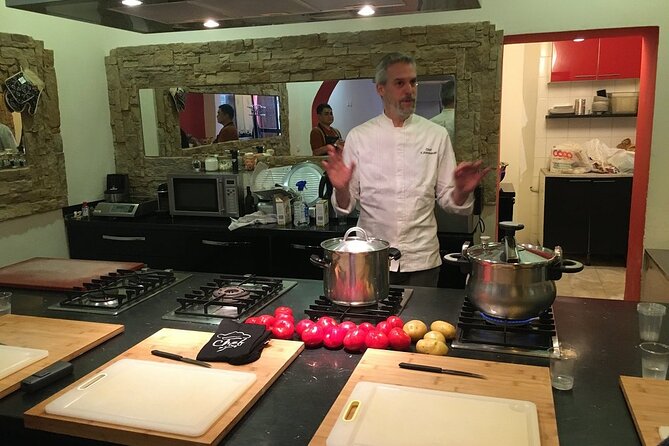
The strongest feature of this experience is the instruction. Federico Alessandri is described as entertaining and direct, with a style that combines jokes and serious cooking advice. Paola is praised for warmth, patience, and close guidance at the work surface.
That mix is important in a hands-on class. Pasta dough can be frustrating if the instructor only gives a quick demonstration. You need someone who can look at your dough, correct your technique, and explain what you should feel as you work.
The class also appears to welcome different skill levels. A family with teenagers can stay involved, while experienced home cooks can still pick up useful methods. Children must be accompanied by an adult, and the activity may suit older children and teenagers who are willing to stand and participate.
The tone can vary with the chef and the group. A humorous instructor may make the five hours pass quickly, but someone looking for a quiet, formal culinary lesson might find the personality-heavy style less appealing.
You should also be ready to ask questions. The class offers personal instruction, but a group of up to 11 means the chef must divide attention. Stay engaged, take notes if you want to remember the finer points, and speak up when you need help.
Time, walking, and practical details
The experience begins at 9:30 a.m. and lasts about five hours. It ends in Trastevere after lunch, so plan the rest of your day from that neighborhood rather than from Piazza Farnese.
Transport is not included. The route between the meeting point, market, and kitchen is handled as part of the activity, but you are responsible for getting to Piazza Farnese in the morning and continuing from Trastevere afterward.
Wear comfortable clothes and shoes. Much of the preparation takes place standing, although there are breaks and a seated meal at the end. Five hours is a long stretch if you are tired from sightseeing, so schedule this on a morning when you have enough energy to take part.
The class is offered in English, and confirmation is sent within 48 hours of booking, subject to availability. Because at least six participants are needed, the date can be changed or the class canceled if the minimum is not reached. If that happens, you are offered another date or experience, or a full refund.
You can cancel for a full refund up to 24 hours before the start time. Changes or cancellations inside that window are not accepted, so check your Rome plans before booking.
Who should book this Rome cooking class?
I would choose this experience if you want to learn techniques you can repeat at home, not just eat a pleasant lunch. The market visit, three pasta forms, several sauces, and follow-up recipes give you more lasting value than a short pasta demonstration.
It is also a strong choice for families with older children and teenagers. The work is divided among the group, and the format keeps participants active. Just remember that children need an adult with them and that the day involves standing.
Couples, friends, and solo participants can all fit into the format. The class requires a minimum of six, so you may share the experience with people you have not met before. That can make the meal more social, but it also means the experience is not designed as a private romantic activity.
I would skip it if you want a flexible start time, a short lesson, or a completely private kitchen. I would also think twice if you dislike group cooking or cannot stand for long periods.
Should you book Chef in a Day?
Book this class if you want Rome to teach you something practical. You shop at Campo de’ Fiori, work in Trastevere, prepare three kinds of pasta, eat a full lunch with wine, and receive recipes for later. The changing menu means you cannot predict every dish, but it also keeps the experience tied to the season.
At $147.49, the price makes sense for a five-hour lesson with food, wine, a professional chef, and a market visit. The main risk is a full class of 11 in an open-plan kitchen. For most people who want an active, social, skill-based food day, that is a reasonable trade.
FAQ
Where does the cooking class begin?
The class begins at 9:30 a.m. at Piazza Farnese in central Rome.
Where does the experience end?
The experience ends in Trastevere after the meal.
How long does the class last?
The activity lasts approximately five hours.
Is the class offered in English?
Yes. The experience is offered in English.
How many people can join the class?
The maximum is 11 participants. At least six people are needed for the class to run.
What food do I prepare?
You prepare three pasta varieties: a stuffed pasta, a long pasta, and a short or medium pasta. Each is paired with a different sauce. The wider menu can also include an appetizer, meat course, dessert, and seasonal ingredients.
Are lunch and wine included?
Yes. Lunch and wine are included in the experience.
Are recipes provided after the class?
Yes. The pasta recipes are emailed after the course.
Can I share dietary requirements?
Yes. Add your dietary requirements in the Special Requirements box when booking.
Is transportation included?
No. Transport is not included. You are responsible for reaching the Piazza Farnese meeting point and continuing from Trastevere after the class.
Just added around Rome
- Testaccio: Home Cooking Cacio e Pepe, Amatriciana, Carbonara★ 4.9 · 57 reviews
- Super Fun Pasta and Gelato Cooking Class by the Vatican★ 5.0 · 6 reviews
- Spritz and Spaghetti Traditional Cooking Class in Rome★ 4.9 · 30 reviews
- Rome: Vatican Food Tours, Cooking classes & Free Tours★ 4.9 · 11 reviews
- ROME:Hands-On Lasagna & Marsala Tiramisu Cooking Experience”★ 5.0 · 3 reviews
- Rome: Trastevere Pasta Making Class★ 4.9 · 33 reviews
- Rome: Traditional Pasta and Tiramisu Cooking Class★ 5.0 · 4 reviews
- Rome: Small Group Pasta cooking class near Piazza Navona★ 4.9 · 8 reviews
Cooking Classes, compared.
Half-Day Thai Cooking Class at Organic Farm in Chiang Mai
Read our review →
Florence: Pasta Cooking Class with Unlimited Wine
Read our review →
3 in 1 Cooking Class near Navona: Fettuccine, Ravioli & Tiramisu
Read our review →
Hanoi Cooking Class: Culture, Local Market & Meaning CSR Impact
Read our review →
5 Traditional Dishes Hanoi Cooking Class with Market Trip
Read our review →
Cooking Class and Lunch at a Tuscan Farmhouse with Local Market Tour from Florence
Read our review →
Chiang Mai: Cooking Class, Market & Thai Herbs Garden Tour
Read our review →Browse the lists this tour appears in