Review · BOLOGNA
Home Cooking: Pasta Making with Natural Colors in a Tiny Group
The most memorable part of this Bologna class is not just learning to make pasta. It is learning to turn dough into tiny works of edible art. In Sara’s apartment, you will shape tortellini, cappelletti, garganelli, and tagliatelle, then try playful forms such as hearts, boats, pyramids, and bonbons. Natural colors from vegetables, herbs, and seaweed give the pasta an extra twist.
I like the private format, since only your group takes part and Sara can keep the lesson relaxed and hands-on. I also like the practical result: you leave with fresh pasta you can cook at home, rather than only watching a demonstration. The main consideration is the price, $95.31 per person, which is fair for a private class but higher than a large group cooking lesson.
Key points at a glance
- Private class in a historic Bologna apartment: Only your group participates in a home setting filled with traditional pasta tools.
- Sara leads the lesson: She explains each step clearly and keeps the class personal rather than rushed.
- Natural pasta colors: Beetroot, purple potatoes, herbs, seaweed, and powders add color without relying on artificial dyes.
- Classic and playful shapes: You learn tortellini, cappelletti, garganelli, tagliatelle, lasagne, ravioli, and creative decorative forms.
- Vegetarian by design: Vegan, gluten-free, and lactose-free versions can be requested ahead of time.
- A useful take-home skill: You make pasta yourself and take the fresh results home to cook.
A pasta lesson inside Bologna’s old walls
The class begins at Via Saragozza, 27, in Bologna. You will enter an apartment inside a historic building, where modern furnishings meet antique touches and traditional pasta-making tools. That setting matters. This is not a polished cooking studio built only for tourists. It has the feel of being welcomed into a local home, with the work surface and tools arranged for making pasta the old-fashioned way.
The atmosphere is meant to be relaxed and playful. Pasta making can look fussy when you see a finished tortellino or a neatly folded little boat. At the table, though, the process becomes much less intimidating. You start with dough, learn the movements, and build confidence shape by shape.
The activity lasts about two and a half hours. That gives you enough time to work with the dough instead of rushing through a short demonstration. You should expect to spend most of the class using your hands. This is not the right choice if you want to sit back and simply watch someone else cook.
Sara leads the lesson, and the class is offered in English. The private setup means your group is the only group taking part. That is especially useful if some people in your party are experienced cooks while others are starting from scratch. You can work at your own pace and ask questions without competing with a large room full of other participants.
More Home Cooking Classes in Bologna
- Pastamama, Home Cooking Classes at Grace’s Home
★ 5.0 · 521 reviews - Authentic Bologna Home Cooking Class: Tagliatelle & Tortellini
★ 4.5 · 136 reviews - Cesarine: Home Cooking Class & Meal with a Local in Bologna
★ 5.0 · 75 reviews
Starting with organic dough and simple technique
The first practical step is preparing the dough with organic ingredients. The dough is the foundation for everything that follows, so this part deserves attention. You will learn how the ingredients come together before moving on to cutting and shaping.
Pasta dough is simple in theory, but the feel matters. It should become workable enough to roll and fold without turning sticky or tough. A hands-on lesson gives you a better sense of that texture than a recipe alone. Once you know what the dough should feel like, you can repeat the process later in your own kitchen.
The class is vegetarian, and the ingredients are described as vegetarian and cruelty free. If you need another diet, you can request vegan, gluten-free, or lactose-free options in advance. That request must be made ahead of time, so do not wait until the class begins.
One useful feature is that the lesson does not treat pasta as a single shape. You will work through several forms, learning how small changes in cutting, folding, and rolling create a completely different result. This makes the class useful for someone who wants more than a single recipe.
From tortellini to tagliatelle
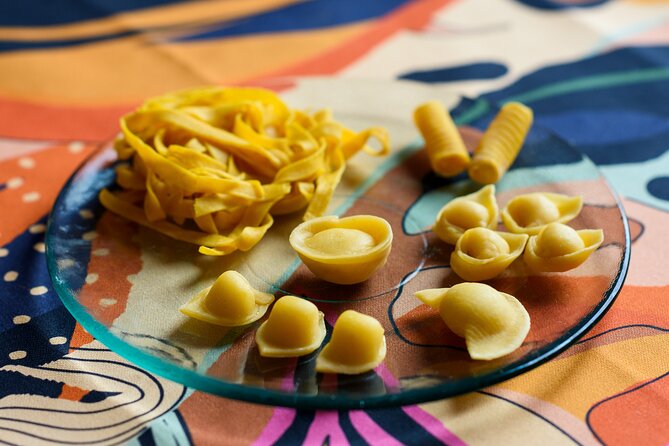
The classic shapes come first. You will learn tortellini, cappelletti, garganelli, tagliatelle, and lasagne, along with classic ravioli and other fresh pasta forms.
Tortellini and cappelletti teach you about filled pasta and careful folding. The pieces are small, so you need to pay attention to the amount of filling and the seal around the edges. This is where the class may feel a little like paper folding. The folds are not hard once you see them, but neat results take practice.
Garganelli gives you another kind of lesson. Instead of folding filled pasta, you shape ridged tubes. The ridges are useful because they hold sauce, and the shape shows how a simple piece of dough can gain character from a few careful movements.
Tagliatelle is more familiar to many people and usually offers a welcome change of pace. You work with rolled pasta and cut it into ribbons. Lasagne gives you a broader sheet and helps connect the smaller shapes with the pasta used in a layered dish.
You will also make ravioli. This adds another filled pasta form to the class and lets you compare the methods used for different shapes. The point is not to produce restaurant-perfect pieces on your first attempt. The point is to understand the basic moves well enough to continue at home.
Adding color with vegetables, herbs, and seaweed
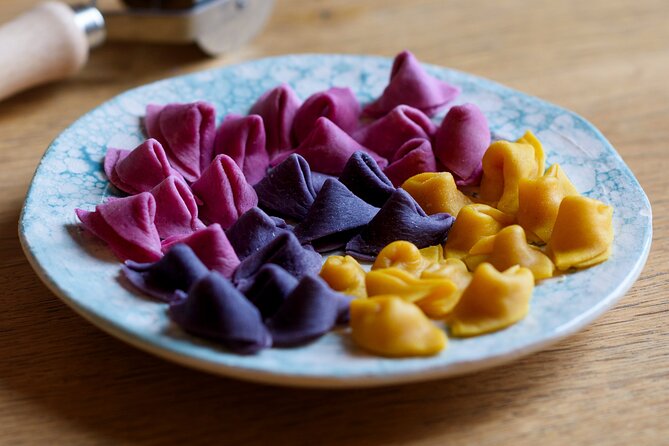
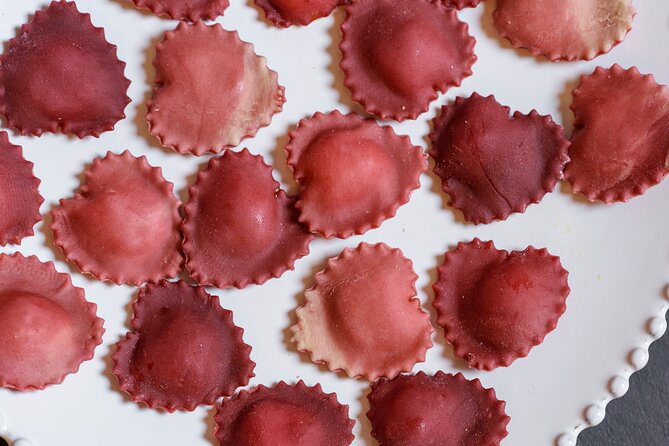
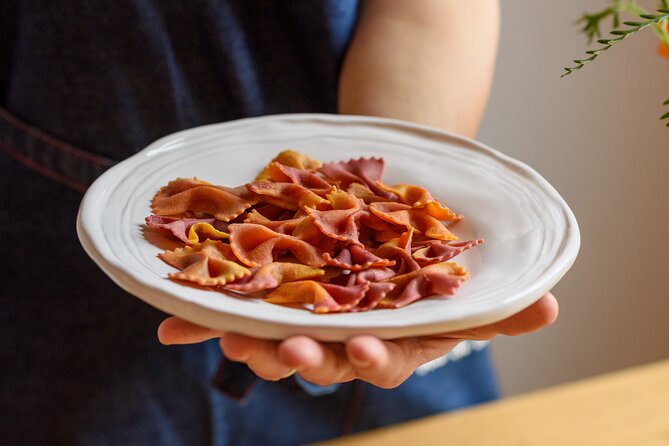
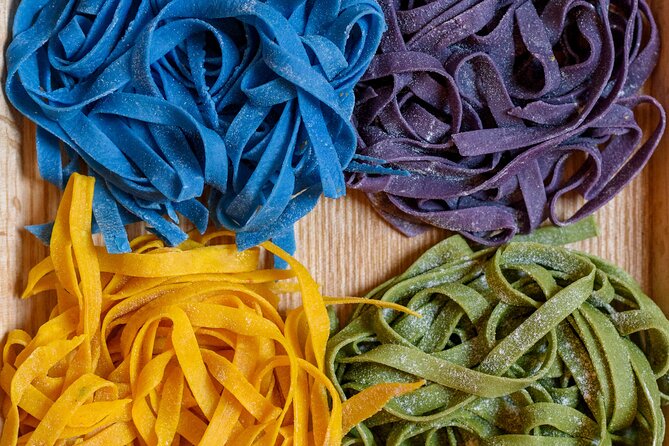
The most distinctive feature of this class is the use of natural colors. Purple potatoes, beetroot, seaweed, herbs, and powders bring color and patterns to the dough. This gives the lesson a creative side that many basic pasta classes do not offer.
Beetroot can add a strong pink or red tone. Purple potatoes create a darker color, while herbs and seaweed bring different shades and visual texture. The exact result can depend on the ingredients and the amount used, so you should think of this as a hands-on experiment rather than a perfectly controlled art project.
The natural coloring also keeps the activity connected to food. You are not decorating pasta with something meant only to look good. The color comes from ingredients that belong in the kitchen. That makes the technique useful for anyone who wants to make a special meal without artificial dyes.
Patterns add another layer. You may combine colored dough with plain dough or use powders and herbs to create markings. These details turn familiar shapes into something more personal. The result can be especially appealing if you are cooking for children, hosting a dinner, or simply want a more creative kitchen project.
Still, color is not the main reason to book the class. If you only want to learn a fast method for making everyday tagliatelle, the decorative work may feel like extra time. If you enjoy crafts, food presentation, or trying something unusual, it is likely to be one of the strongest parts of the experience.
More Home Cooking Classes in Italy
- Bologna: Tagliatelle & Ragù Home Cooking Class with wine
★ 4.5 · 55 reviews - Cesarine: Market Tour & Cooking Class at Local’s Home in Bologna
★ 5.0 · 19 reviews - Cesarine: Dining & Cooking Demo at Local’s Home in Bologna
★ 4.5 · 15 reviews - Traditional Home Cooking Experience in Venice
★ 5.0 · 377 reviews
Small shapes that feel like pasta origami
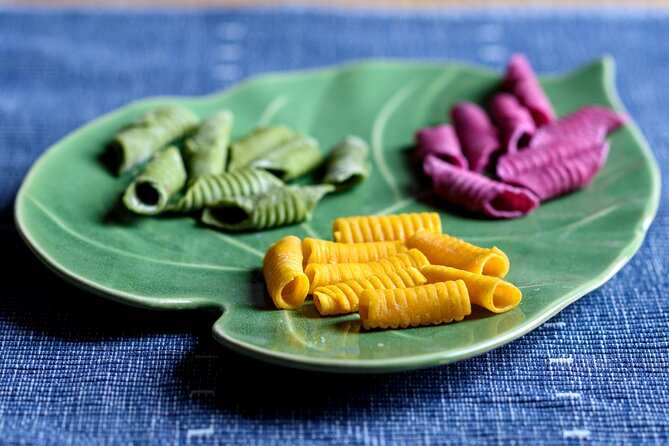
After the classic forms, the class moves into more playful designs. Hearts, little boats, pyramids, and bonbons are among the shapes you can explore.
These forms are a good reminder that handmade pasta is not just a practical way to prepare a meal. It can also be a creative activity. Some shapes are simple, while others require more folding and patience. You will be ready to make pasta right after the masterclass, but do not expect every piece to look identical at first.
The playful designs also make the lesson suitable for mixed groups. A serious home cook can focus on technique, while someone less interested in recipes may enjoy the shaping itself. Since the class is private, your group can spend more time on the forms that appeal to you.
There is a small trade-off. The more shapes you attempt, the less time you may have to perfect each one. If your priority is mastery of tortellini or tagliatelle, tell Sara early in the lesson. If your priority is variety, enjoy the wide range and accept a few uneven pieces.
What the private format adds
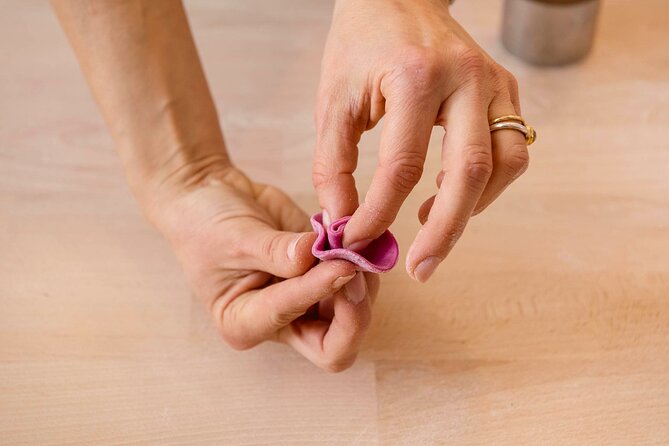
Only your group takes part, which changes the tone of the class. You are not trying to follow a demonstration from the back of a crowded room. You can watch closely, copy the movement, and stop for clarification.
I find that especially valuable for pasta making because hand position matters. A fold that looks obvious from a distance can be hard to copy when you cannot see the details. A small class lets Sara correct your technique as you work.
The private setting also makes the lesson more personal. Sara is described as friendly and clear in her explanations, and the experience takes place in her home, shared with her husband. That gives the activity a more intimate feel than a standard commercial kitchen.
The setting may not suit everyone. Some people prefer a dedicated culinary school with professional stations, printed recipes, or a more formal structure. Here, the appeal is the home atmosphere and direct instruction. Choose it for personal contact and active practice, not for a polished school-style production.
The fresh pasta you take home
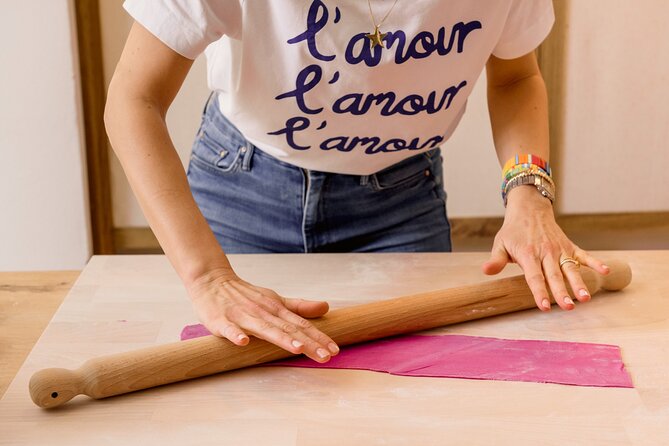
One of the best practical details is that you take the fresh pasta home and cook it there. That extends the experience beyond the two-and-a-half-hour class. You are not left with only photographs and a full stomach. You have something you made yourself.
The take-home pasta also gives you a chance to see how the shapes work in your own kitchen. You can cook it for a meal, share it with family, or save it for another time according to the guidance you receive during the class.
This is a useful distinction when comparing cooking activities in Bologna. Some classes focus mainly on eating during the session. Here, the emphasis is on making pasta and building a skill you can repeat. The value is partly in the finished food and partly in knowing how to make it again.
You should remember that handmade pasta takes time and care. The class will make the process clearer, but it will not turn every future pasta session into instant work. Your first homemade batch may still need practice. That is part of the appeal, especially if you enjoy learning by doing.
Is $95.31 a fair price?
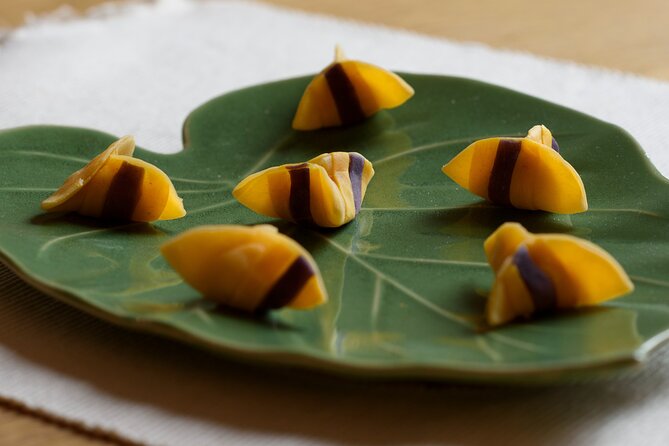
At $95.31 per person, this is not a budget activity. The price makes more sense when you consider what is included in the experience: a private class, about two and a half hours of instruction, a home setting, several pasta shapes, natural coloring techniques, and fresh pasta to take home.
A large group class may cost less, but it may not offer the same amount of direct attention. Here, only your group participates. That can be good value for couples, families, or friends who want a shared activity and prefer not to work beside strangers.
The price is harder to justify if you are mainly looking for a cheap meal or a quick cooking demonstration. This is a lesson first. You are paying for the time, the instruction, the chance to practice, and the variety of shapes.
I would also factor in the dietary flexibility. Vegetarian ingredients are part of the class, while vegan, gluten-free, and lactose-free options can be arranged ahead of time. For someone with dietary needs, that flexibility may be more useful than a lower price at a less adaptable class.
Who will enjoy this Bologna activity?
This class is a strong match for you if you want a hands-on experience and like the idea of learning a skill in a local home. It suits couples, families, friends, and small private groups who enjoy making things together.
It is also a good fit if you are already comfortable in the kitchen but want to learn traditional Italian shapes. The range goes well beyond basic noodles. You can work on filled pasta, cut pasta, ridged pasta, flat sheets, and decorative forms.
You do not need to be an expert cook. The activity is designed so you can start with the dough and follow the process step by step. The private format gives you room to ask questions and repeat a movement before moving on.
You may want to skip it if you dislike working with your hands, have very little time in Bologna, or want a formal restaurant-style meal instead. It also may not be the best value for someone who has already mastered these shapes and does not care about natural colors or decorative designs.
Practical details before you book
The meeting point is Via Saragozza, 27, 40123 Bologna BO, Italy. The activity ends at the same meeting point, so you do not need to arrange a separate return transfer.
The location is near public transportation. Since the class takes place in an apartment, check the meeting instructions carefully and allow enough time to arrive. The experience is offered in English, which makes the techniques easier to follow if you do not speak Italian.
Your booking is confirmed at the time of reservation. Free cancellation is available if you cancel at least 24 hours before the local start time. If you cancel or change the booking less than 24 hours before it begins, you will not receive a refund.
Ask about dietary changes before booking or as soon as possible afterward. Vegetarian ingredients are standard, while vegan, gluten-free, and lactose-free choices require advance notice.
Should you book the pasta class?
Book this experience if you want to make pasta rather than simply eat it. The private home setting, Sara’s clear instruction, the natural colors, and the wide range of shapes give the class a personality of its own.
The strongest reason to go is the balance between tradition and play. You learn Bologna-style pasta forms such as tortellini and tagliatelle, then move into hearts, boats, pyramids, and bonbons. You leave with fresh pasta and enough practice to keep working at home.
At $95.31, it is best viewed as a private cooking lesson and a cultural activity, not a cheap lunch. If that matches what you want from your time in Bologna, this is a thoughtful and tasty choice.
FAQ
Where does the pasta-making class take place?
The class takes place at Via Saragozza, 27, 40123 Bologna BO, Italy, inside an apartment in a historic building. The activity ends back at the meeting point.
How long does the experience last?
The class lasts approximately two hours and 30 minutes.
Is the class private?
Yes. Only your group participates in the activity.
Which pasta shapes will I learn?
The lesson includes tortellini, cappelletti, garganelli, tagliatelle, lasagne, ravioli, hearts, little boats, pyramids, and bonbons.
Can I request dietary options?
Yes. The ingredients are vegetarian and cruelty free. Vegan, gluten-free, and lactose-free options can be requested in advance.
What is the cancellation policy?
You can cancel up to 24 hours before the experience for a full refund. Cancellations or changes made less than 24 hours before the local start time are not accepted for a refund.
More Pasta Making Classes in Bologna
- Bologna: Pasta Cooking Class, Ragu, Spritz, Wine & Gelato
★ 4.9 · 775 reviews - Bologna Local Pasta Cooking Class, Ragu, Spritz, Wine & Gelato
★ 5.0 · 527 reviews - Bologna: Pasta and Tiramisu Cooking Class with Wine
★ 4.7 · 507 reviews - Bologna: Pasta and Tiramisu Small Group Cooking Class with Wine
★ 5.0 · 409 reviews
Just added around Bologna
- Bologna Walking Tour & Traditional Cooking Class with Wine★ 5.0 · 3 reviews
- 3 hour Lasagna Bolognese cooking class★ 5.0 · 6 reviews
- Lasagna Masterclass: Learn, Cook & Taste Authentic Bolognese★ 5.0 · 4 reviews
- Traditional Bolognese Cooking Class in Bologna with Giovanna S★ 5.0 · 6 reviews
- Private Market Tour and Cooking Class in Bologna with Giovanna C★ 5.0 · 20 reviews
- Pasta Making Class: Tagliatelle & Bolognese Sauce★ 5.0 · 15 reviews
- Cesarine: Market Tour & Cooking Class at Local’s Home in Bologna★ 5.0 · 19 reviews
- Bolognese Cooking Class with Margherita in the Historic Center★ 5.0 · 26 reviews
Pasta Making Classes, compared.

Florence: Pasta Cooking Class with Unlimited Wine
Read our review →
3 in 1 Cooking Class near Navona: Fettuccine, Ravioli & Tiramisu
Read our review →
Rome: Pasta Making Class with Wine, Limoncello, and Dessert
Read our review →
Rome Cooking Class: Make Pasta and 3 Spritz Cocktails
Read our review →
Rome: 3-in-1 Fettuccine, Ravioli, and Tiramisu Cooking Class
Read our review →